Bangladesh Defense

Saif
Senior Member
- Joined
- Jan 24, 2024
- Messages
- 22,238
- Likes
- 9,869
- Nation

- Axis Group

PM urges 50pc climate finance for adaptation
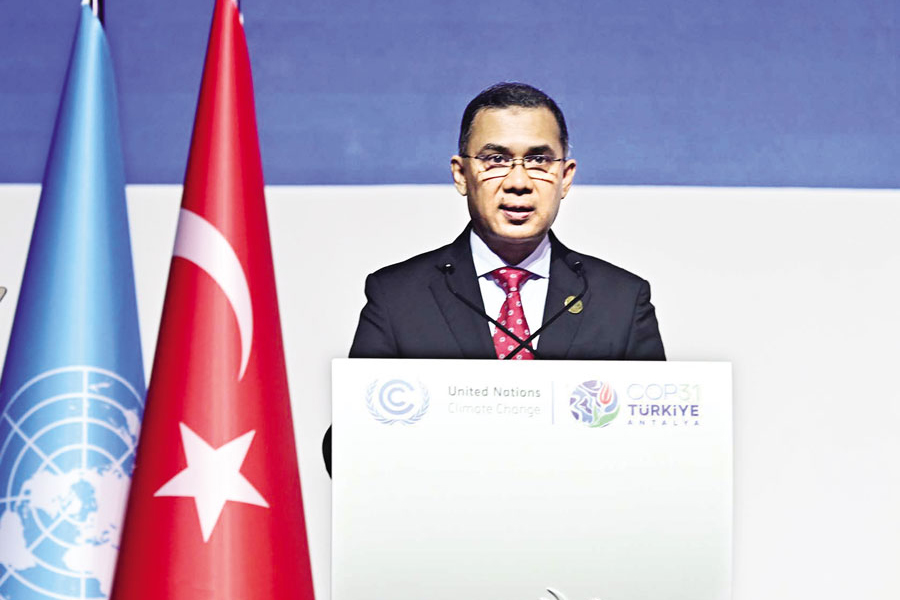
Prime Minister Tarique Rahman on Thursday called on the world to ensure at least 50 per cent of international climate finance for adaptation and to provide grants instead of loans to climate-vulnerable countries. "Climate-vulnerable countries need grants, not more loans that increase their debt,"
PM urges 50pc climate finance for adaptation
He says vulnerable nations need grants, not loans
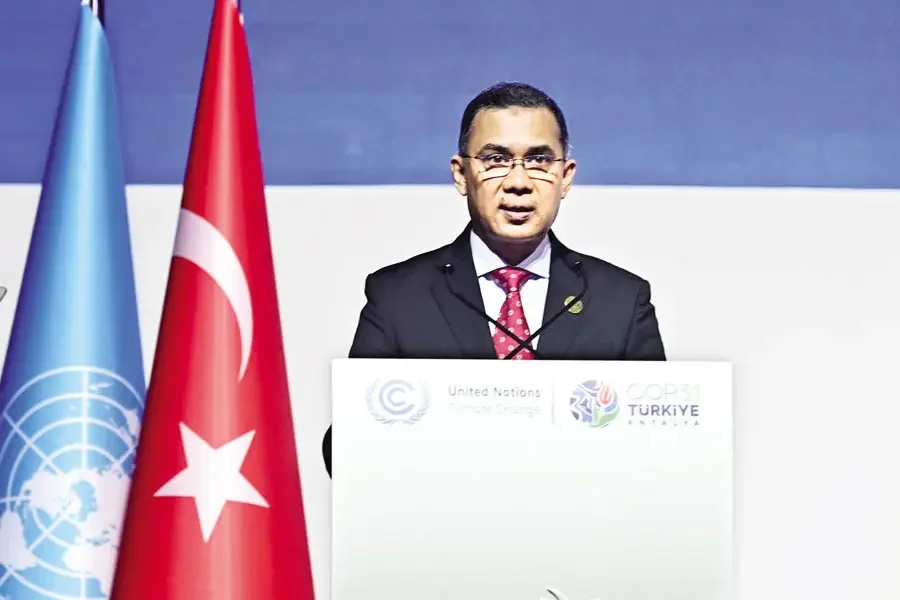
Prime Minister Tarique Rahman addresses the High-Level Segment of the 31st UN Climate Change Conference (COP 31) in Antalya, Turkey, on Thursday. — PID
Prime Minister Tarique Rahman on Thursday called on the world to ensure at least 50 per cent of international climate finance for adaptation and to provide grants instead of loans to climate-vulnerable countries.
"Climate-vulnerable countries need grants, not more loans that increase their debt," he said while addressing the High-Level Session of the UN Climate Change Conference (COP 31) in Antalya, Turkey.
Presiding over the session, the COP 31 president was joined by heads of state and government from around the world.
Tarique thanked the government of Turkey for hosting the summit and Australia for leading the negotiation process.
Stating that Bangladesh was at the forefront of climate change despite contributing less than 0.5 per cent of global greenhouse-gas emissions, the prime minister said his government, elected by popular vote and inspired by the philosophy of "Bangladesh First", was committed to building a one-trillion-dollar climate-resilient and sustainable economy, where economic growth and environmental protection would complement each other.
Outlining Bangladesh's climate actions, he said the government had set a target to meet 20 per cent of electricity demand from renewable sources by 2030 to achieve net zero in line with the Paris Agreement.
With special tax incentives, Bangladesh was working to produce 4,000 megawatts of solar power and promote waste-to-energy projects, he said.
He also said Bangladesh was promoting green industries, including nearly 300 LEED-certified garment factories, advancing electric vehicles, expanding eco-friendly products such as jute bags, and developing a national framework for carbon trading.
The prime minister announced a plan to plant 250 million trees in the next five years, implement the Padma Barrage and Teesta Barrage Master Plans, and dredge 20,000 km of rivers and canals to retain water, reduce flood risk, revive wetlands, and raise groundwater levels.
The government was also restoring mangroves on reclaimed coastal land to protect communities, he said.
Pointing out that the global climate finance system was inadequate and did not consider the priorities of developing nations, he said climate-induced loss and damage, rising debt servicing, and limited fiscal space were putting heavy pressure on economies like Bangladesh.
In this context, guided by the principle of Common but Differentiated Responsibilities and Respective Capabilities (CBDR-RC), he placed five urgent demands.
He said at least 50 per cent of international climate finance must be allocated for adaptation based on country priorities, alongside mitigation.
The prime minister demanded urgent debt relief for climate-vulnerable countries, including Climate-Resilient Debt Clauses and Debt-for-Climate Swaps.
He also demanded fair access to climate-friendly technologies and support for technology transfer to developing countries.
Tarique demanded acceleration of renewable energy transition through affordable finance, skills development and a just energy transition.
The Prime Minister later left Antalya for Istanbul en route to Dhaka, concluding his three-day official visit to Turkiye.
"A Turkish Airlines flight carrying the prime minister, his wife Dr Zubaida Rahman and members of his entourage departed Antalya Airport for Istanbul at 4:30pm local time," said PM's Deputy Press Secretary Hasan Shiplu.
Senior Turkish Foreign Ministry official and Ambassador Subutay Yuksel saw him off at the airport.
After a stopover in Istanbul, the prime minister was scheduled to leave for Dhaka on another Turkish Airlines flight at 7:30pm local time. The flight is expected to land at Hazrat Shahjalal International Airport at around 6:00 am.
He says vulnerable nations need grants, not loans
Prime Minister Tarique Rahman addresses the High-Level Segment of the 31st UN Climate Change Conference (COP 31) in Antalya, Turkey, on Thursday. — PID
Prime Minister Tarique Rahman on Thursday called on the world to ensure at least 50 per cent of international climate finance for adaptation and to provide grants instead of loans to climate-vulnerable countries.
"Climate-vulnerable countries need grants, not more loans that increase their debt," he said while addressing the High-Level Session of the UN Climate Change Conference (COP 31) in Antalya, Turkey.
Presiding over the session, the COP 31 president was joined by heads of state and government from around the world.
Tarique thanked the government of Turkey for hosting the summit and Australia for leading the negotiation process.
Stating that Bangladesh was at the forefront of climate change despite contributing less than 0.5 per cent of global greenhouse-gas emissions, the prime minister said his government, elected by popular vote and inspired by the philosophy of "Bangladesh First", was committed to building a one-trillion-dollar climate-resilient and sustainable economy, where economic growth and environmental protection would complement each other.
Outlining Bangladesh's climate actions, he said the government had set a target to meet 20 per cent of electricity demand from renewable sources by 2030 to achieve net zero in line with the Paris Agreement.
With special tax incentives, Bangladesh was working to produce 4,000 megawatts of solar power and promote waste-to-energy projects, he said.
He also said Bangladesh was promoting green industries, including nearly 300 LEED-certified garment factories, advancing electric vehicles, expanding eco-friendly products such as jute bags, and developing a national framework for carbon trading.
The prime minister announced a plan to plant 250 million trees in the next five years, implement the Padma Barrage and Teesta Barrage Master Plans, and dredge 20,000 km of rivers and canals to retain water, reduce flood risk, revive wetlands, and raise groundwater levels.
The government was also restoring mangroves on reclaimed coastal land to protect communities, he said.
Pointing out that the global climate finance system was inadequate and did not consider the priorities of developing nations, he said climate-induced loss and damage, rising debt servicing, and limited fiscal space were putting heavy pressure on economies like Bangladesh.
In this context, guided by the principle of Common but Differentiated Responsibilities and Respective Capabilities (CBDR-RC), he placed five urgent demands.
He said at least 50 per cent of international climate finance must be allocated for adaptation based on country priorities, alongside mitigation.
The prime minister demanded urgent debt relief for climate-vulnerable countries, including Climate-Resilient Debt Clauses and Debt-for-Climate Swaps.
He also demanded fair access to climate-friendly technologies and support for technology transfer to developing countries.
Tarique demanded acceleration of renewable energy transition through affordable finance, skills development and a just energy transition.
The Prime Minister later left Antalya for Istanbul en route to Dhaka, concluding his three-day official visit to Turkiye.
"A Turkish Airlines flight carrying the prime minister, his wife Dr Zubaida Rahman and members of his entourage departed Antalya Airport for Istanbul at 4:30pm local time," said PM's Deputy Press Secretary Hasan Shiplu.
Senior Turkish Foreign Ministry official and Ambassador Subutay Yuksel saw him off at the airport.
After a stopover in Istanbul, the prime minister was scheduled to leave for Dhaka on another Turkish Airlines flight at 7:30pm local time. The flight is expected to land at Hazrat Shahjalal International Airport at around 6:00 am.