[🇧🇩] Automobile Industry of Bangladesh including parts

Post a Reply — Share your thoughts or reply to this thread...
Reply
Quick Reply ✓ Posted!
[🇧🇩] Automobile Industry of Bangladesh including parts
91
10K
More threads by Saif

G Bangladesh Defense

Rancon, Mitsubishi form JV to make vehicles in Bangladesh

Japan-based company will take a 25 percent equity stake in Rancon Auto Industries Ltd

Star Business Report

1776904789793.webp


Amir Khosru Mahmud Chowdhury, minister for finance and planning, attends a strategic partnership announcement programme between Mitsubishi Corporation and Rancon Auto Industries Limited at Sheraton Dhaka in Banani today. Romo Rouf Chowdhury, group managing director of Rancon Holdings Limited, was also present. Photo: Mehedi Hasan

Rancon Auto Industries Ltd (RAIL) has entered a strategic partnership with Japan’s Mitsubishi Corporation to manufacture vehicles in Bangladesh for sale in domestic and regional markets.

Under the agreement, Mitsubishi will take a 25 percent equity stake in RAIL, which began local production of the Mitsubishi Xpander in June last year.

Announcing the joint venture at an event at Sheraton Dhaka today, Rancon Holdings Group Managing Director Romo Rouf Chowdhury said the partnership would mark a major step forward for the country’s automotive sector.

“This partnership between Mitsubishi Corporation and Rancon will play a pivotal role in advancing Bangladesh’s automotive industry by integrating global expertise with deep local market insights. This landmark strategic alliance -- the first of its kind in the country’s automotive sector -- underscores the strength of Bangladesh-Japan trade relations,” he said.

He added that the strategic investment is expected to enhance access to affordable and convenient vehicle financing, expand after-sales services, ensure spare parts availability, and strengthen distribution networks across the country.

“It will also facilitate the transfer of technology and knowledge to develop a highly skilled local workforce, while contributing to government revenue through VAT and taxes,” said Chowdhury, adding the company’s automobile arm has gradually built its manufacturing base since starting operations in 2017.

RAIL, which focuses on multi-brand vehicle manufacturing and assembly, began with the local assembly of the Mitsubishi Outlander. It later expanded its portfolio to include the Fuso BM117, Mercedes OF1623, Proton X70, as well as trucks and pickups from JAC and GMC.

The company upgraded its factory in 2023 with a modern paint facility. The following year, it launched the locally painted and assembled Mitsubishi Xpander, which quickly gained traction, with monthly sales exceeding 100 units, making it the highest-selling brand-new vehicle in Bangladesh.

Despite this growth, Chowdhury said the country’s automobile market remains largely underdeveloped.

With one of the lowest per capita vehicle ownership rates in the region and a population of around 200 million, he said Bangladesh offers strong long-term demand potential as the middle class expands.

Against this backdrop, Rancon initiated discussions with Mitsubishi Corporation to leverage its manufacturing and distribution expertise. The talks culminated in the joint venture, under which Mitsubishi Corporation acquired a 25 percent stake in Rancon Automobile Industries through foreign direct investment.

“This is a proud moment for us,” Chowdhury said, adding that the partnership reflects growing international confidence in Bangladesh’s industrial prospects.​
 

Latest models dominate Dhaka Auto Show
Staff Correspondent 23 April, 2026, 22:42

1776992791402.webp

Visitors look at cars on display at International Convention City Bashundhara in the capital on Thursday, the first day of the three-day event. | New Age photo

The three-day 19th Dhaka Auto Series of Exhibitions began in the capital on Thursday, showcasing the latest vehicle and electric vehicle models, as well as a wide range of electric motorcycles.

Organised by CEMS-Global USA, the multiple concurrent exhibitions began at the capital’s International Convention City Bashundhara as a strategic platform for industry growth, facilitating business development, networking, product launches, market expansion and technology transfer.

At Dhaka Motor Show, a part of the bigger event, Toyota Bangladesh Limited showcased its lineup, including the Toyota Corolla Cross, Toyota Avanza, Toyota Veloz and Toyota Rush.

Premmit Singh, managing director of Toyota Bangladesh Limited, told New Age that the company had showcased six models at the ongoing motor show, including three newly introduced hybrid vehicles, RA4 Hybrid, Yaris Cross Hybrid and Yaris Sedan Hybrid, as part of its strategy to promote hybrid technology as a suitable mobility solution for Bangladesh.

He said that the newly introduced models were priced between Tk 5 million and Tk 11 million, adding that special promotional offers had been introduced during the motor show.

‘The RA4 Hybrid is targeted at senior executives and banking professionals in top management positions, while the Yaris Cross Hybrid is designed for small families and young women drivers or early-career professionals,’ he added.

The hybrid sedan, meanwhile, is aimed at corporate executives and professionals in the broader business sector, he added.

He also said that Toyota Bangladesh had just begun its expansion in the country and planned to gradually broaden its product lineup, aiming to introduce more models in the coming days, with a focus on advanced technology, higher standards and improved safety features for Bangladeshi consumers.

A notable number of Chinese automakers also participated in the event. Chinese automaker Wuling has officially entered the Bangladesh market through RANCON Auto Industries.

They showcased three models, including plug-in hybrid ‘Darrion,’ while fuel-powered ‘Almaz RS’ and ‘Cortez’ are locally assembled.

The Cortez is priced at Tk 2.5 million, the Almaz RS at Tk 3.2 million and the Darrion at Tk 4.3 million. Englishlanguage tutoring

The seven-seater Darrion can travel up to 125 kilometres on battery alone and up to 1,000 km with a full fuel tank and charge combined.

Japanese brand Mitsubishi Motors unveiled its new model ‘Destinator,’ priced at Tk 6.5 million, marking its official entry into the local market.

Meanwhile, Bangladesh Auto Industries Limited showcased a prototype EV under the brand ‘MEV,’ named ‘Surge Z.’

The fully electric version is expected to offer a range of 350-450 kilometres per charge and the company plans to begin local assembly within six months, with an estimated price between Tk 4 and 4.5 million, said Mir Masud Kabir, the company’s managing director.

This year’s exhibition featured over 70 companies from 10 countries, including Japan, India, China, Malaysia, Germany and the United Kingdom.

Leading brands on display include Toyota, Mercedes-Benz, Honda, MG Motor, Proton, Changan, GAC Motor and Dongfeng Motor Corporation.

A number of global motorcycle brands also participated in the shows.

Meherun N Islam, president and group managing director of CEMS-Global USA and Asia Pacific, inaugurated the exhibitions with the presence of government officials from the relevant ministries and departments.

The exhibition will continue till April 25.​
 

Govt encouraging shift to EVs to reduce carbon emissions: Mintoo

UNB

Published :
May 20, 2026 22:12
Updated :
May 20, 2026 22:12

1779328749854.webp


Environment, Forest and Climate Change Minister Abdul Awal Mintoo has said the government plans to introduce electric vehicles in larger scale than they are today, in a bid to reduce carbon emission and build an environment-friendly transportation system in the country.

“The government is already planning to introduce 'electric vehicles' to develop an environmentally friendly transportation system and reduce carbon emissions,” he said.

The minister made this remark, when International Labour Organization (ILO) Country Director for Bangladesh Max Tuñón met him at his ministry office on Tuesday, said a PID handout on Wednesday.

He told the IL0 Country Director that the government has taken various effective initiatives under the ‘Extended Producer Responsibility (EPR)’ policy to ensure sustainable waste management. The government is working relentlessly to make plastic waste management more organised and mandatory, he said.

The Environment Minister said his ministry has taken various initiatives to strengthen Effluent Treatment Plant (ETP) installation for industrial waste management.

Besides, he said the government has taken initiatives to install large-scale solar panels (solar power) nationwide to reduce pressure on electricity and increase the use of renewable energy.

ILO Country Director for Max Tuñón expressed interest in expanding ongoing cooperation in Bangladesh’s environment, forest and climate sectors and placed special emphasis on Just Transition in issues of mutual interest involving the Environment Ministry and other ministries.

Noting that the Extended Producer Responsibility (EPR) workshop would be held in Gazipur next month, he emphasized the pioneering role of

the Environment Ministry in maintaining international standards in plastic recycling, waste management and environmental protection

He urged for working in coordination with various non-governmental organizations and development partner countries in this regard.

During the meeting, they also discussed strengthening cooperation in tackling plastic pollution, conservation of environment, sustainable development, pollution control, expansion of renewable energy, carbon credits, climate financing, circular economy and biodiversity conservation.

Two additional secretaries of the Environment Ministry and senior officials from the ILO country office in Bangladesh were present at the meeting.​
 

Charging ahead: EVs outpace growth predictions

Deutsche Welle

1781761802721.webp

Photo: Deutsche Welle

The global market for electric vehicles (EVs) is growing much faster than expected. In just six years, sales have increased tenfold, with around 21 million electric cars sold worldwide in 2025.

​
  • In 2019, EVs made up just 1% of new car sales globally​
  • In 2025, that figure rose to 25%​
  • By May 2026, 63% of new cars sold were electric​
  • Of the world's 1.4 billion cars, 85 million are now electric.​

China and Europe are leading the charge, but the market is growing rapidly in other parts of the world, too.

China leads the way in electric mobility

China has long been investing in solar and wind energy, as well as battery technology — the most critical component in electric vehicles.

Thanks to advanced research and mass production, electric car battery costs have dropped dramatically. Today, they cost just a quarter of what they did 10 years ago, and prices continue to fall.

China is the world's largest car market, and consumers are reaping the benefits of their government's industrial strategy. EVs have cost less than combustion engine cars since 2024, the state has been rapidly expanding charging infrastructure for years, and electricity in China is very affordable.

In 2015, electric vehicles made up just 1% of new car sales in China. By April 2026, that share had climbed to 61%.

Not all EVs are equal

Electric cars run on electricity and charge with a cable. Globally, two thirds of these EVs are so-called Battery Electric Vehicles (BEVs), which are powered by electricity alone. The remaining third also have a gas engine for backup on longer trips — these are known as Extended Range Electric Vehicles (EREVs) or Plug-in Hybrid Electric Vehicles (PHEVs).

So-called Hybrid Electric Vehicles (HEVs), by contrast, always require gas or diesel to power their combustion engine. An electric motor provides some assistance, with the electricity generated solely through regenerative braking. This technology reduces fuel consumption somewhat in city driving — but HEVs are not counted as electric vehicles in international statistics.

One in three new cars in Europe is now electric

In 2018, electric vehicles accounted for just 1% of new car registrations in the EU. By April 2026, almost one in three new cars sold was an EV.

Northern Europe is taking the lead. In Norway, nearly all new cars sold are now electric (99%), followed by Denmark at 82% and Sweden at 65%. Governments across the region support climate-friendly mobility and are expanding charging infrastructure.

In the UK, 39% of new cars registered in April 2026 were electric, followed by Germany at 37% and France at 32%. Across all three countries, EV sales doubled compared to the same month the previous year.

Fewer electric cars in the USA

The US market has stagnated in recent years. Between 2023 and 2025, EVs accounted for around 10% of new car registrations. By April 2026, that share had dropped to below 6%.

Tesla is widely regarded as a pioneer of the modern electric vehicle industry. Its Model Y and Model 3 remain the best-selling electric cars in the world, though they are followed by a string of Chinese models.

China dominates global EV production, manufacturing 71% of all electric vehicles worldwide. Europe is second at 17%, ahead of the US at just 5%. South Korea and Japan each account for 2%, with India at 1%.

Momentum in Asia and Latin America

In many developing and emerging economies, the share of EVs in new car sales is significantly higher than in the US. That's also the case elsewhere in Asia and Latin America. According to the International Energy Agency (IEA), several Asian countries are well ahead of the curve. In Nepal, 68% of new registrations were electric in 2025, followed by Singapore (63%), Vietnam (41%) and Thailand (23%). In Turkey, the figure stood at 22%.

Latin America is also seeing strong growth, with EV sales across the region tripling in just two years. Uruguay had the highest share of EVs in new car sales in the first quarter of 2026 at 31%, followed by Costa Rica (16%), Colombia (15%) and Brazil (10%). In Mexico, the US's southern neighbor, the figure was 6%.

E-Pioneer in Africa: Ethiopa

In Africa, Ethiopia stands out. In 2024, it became the first country in the world to ban the import of new and used combustion engine vehicles. Since then, the number of electric alternatives on its roads has nearly quadrupled to over 100,000.

Some 96% of Ethiopia's electricity comes from affordable hydropower, making EV driving around eight times cheaper than running a combustion-engine vehicle. The government's goal is to use domestically generated electricity to cut the country's costly dependence on imported oil.

Cost of EVs versus gas cars

Electric vehicles have historically carried a higher price tag than their combustion-engine counterparts. In 2025, according to the IEA, EVs were around 27% more expensive in the US, 19% more in Germany, and 11% more in Brazil and Turkey.

But prices are falling fast. Some models in China are available for under €10,000 ($11,600), and in 2025 new electric cars there cost on average 20% less than comparable combustion engine models.

In Europe, most EVs are still priced above €20,000. But cheaper models are increasingly coming to market, and government subsidies are helping to bring costs down further.

Improved tech leads to greater range

Premium electric vehicles once topped out at around 500 kilometers (310.7 miles) on a single charge, and fast-charging options were often limited.

Today, some high-end EVs can travel over 800 kilometers on a single charge. Fast-charging stations are being built at an increasing pace worldwide, and one premium BYD model can reportedly add 700 kilometers of range in just 10 minutes using what the manufacturer calls a "Flash Charger." Regular fast chargers take about 20 minutes to add a 300 km range.

EVs are efficient and cheaper to run

Gas engines waste around 80% of their energy as heat, and diesel engines around 60%. Electric motors, by contrast, utilize 80% of their energy, losing no more than 20% as heat.

This efficiency translates directly into lower energy consumption. A typical EV uses around 15 kilowatt-hours (kWh) per 100 kilometers, compared to 50 kWh for a comparable combustion engine vehicle, roughly equivalent to 6 liters (1.3 gallons) of gas.

Home charging is generally the cheapest option. In Europe and the US in 2024, it cost over 40% less than filling up at a gas station, and globally the saving averaged 60%.

Public fast charging is considerably more expensive. But even then, driving electric is on average 15% cheaper than driving a combustion engine car.

Iran war accelerates shift to electric vehicles

Electric cars are quiet, produce no toxic emissions and no CO2 on the road — benefiting both public health and the climate. Many countries are actively encouraging the transition for these reasons.

High oil prices driven by the Iran war, combined with falling battery costs, will push EV sales even higher, according to the IEA. The agency projects that around 23 million electric cars will be sold this year — nearly 30% of all new vehicles worldwide — with the trend continuing upward.

According to Bloomberg New Energy Finance's Electric Vehicle Outlook, EVs could account for as much as 80% of global new car sales by 2030.​
 

Local production of hybrid electric vehicles discouraged in FY27 budget: BAAMA

Mohammad Mufazzal

Published :
Jun 24, 2026 09:30
Updated :
Jun 24, 2026 09:30

1782275229209.webp


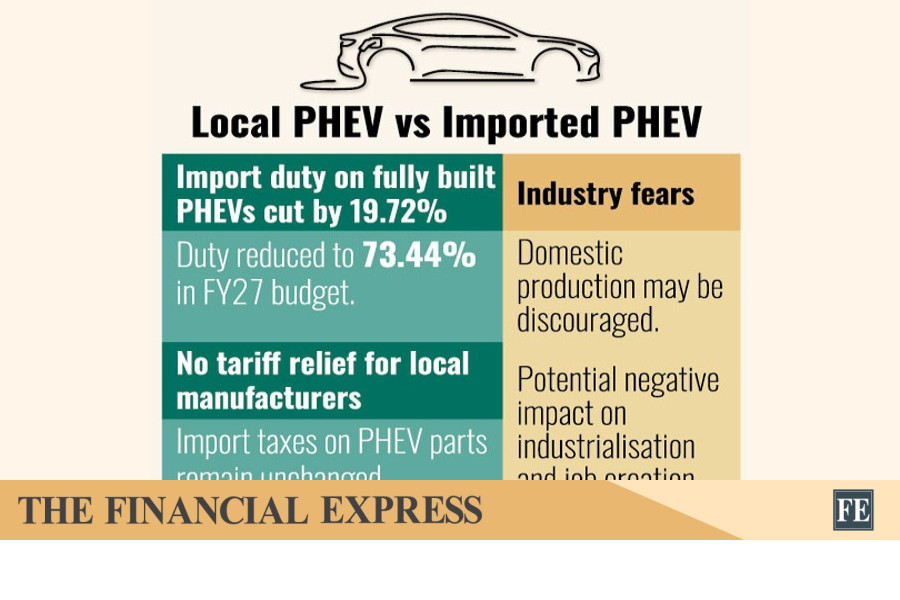
Local manufacturers of Plug-in Hybrid Electric Vehicles (PHEVs) anticipate an unfair competition with importers of such vehicles as the government has not offered any tariff benefit for them in the proposed budget for FY27.

The Bangladesh Automobile Assemblers and Manufacturers Association (BAAMA) raised the concern in a letter recently sent to the chairman of the National Board of Revenue (NBR).

In the budget for FY27, the government proposed a 19.72 per cent cut in import duty to 73.44 per cent on imports of CBU (completely built-up) plug-in hybrid electric vehicles.

However, no reduction in tariffs has been offered on imports of different parts required to manufacture or assemble PHEVs.

According to the association, they import hundreds of parts under different import codes and there are taxes levied at multiple layers.

For example, wheels and some other parts in a certain category are imported under the code HS-8708700. For the import, the applicable customs duty is 25 per cent, while the regulatory duty is 15 per cent, VAT 15 per cent, advanced income tax (AIT) 7.5 per cent and advanced tax (AT) 5 per cent.

As a result, the aggregate tariff on the goods under the said code stands at 67.5 per cent. Other imported parts of PHEVs involve more than 60 per cent tax.

Although the tax on vehicle components is 5.94 to over 10 percentage points less than the tax imposed on imported fully built PHEVs under the FY27 budget, local manufacturers fear that they would face an unfair competition which would discourage domestic production hindering new employment generation.

Aminur Rahman, head of corporate affairs of Runner Group, explained how local manufacturers would be at a disadvantage compared to importers of PHEVs.

He said manufacturers of PHEV vehicles need huge investments and the financing needs are met through bank loans. On the other hand, importers would not require any investment.

Free of financial liability, importers would be able to sell hybrid vehicles at lower prices following the reduction in import duty. But a manufacturer after huge investments made with bank credits would not be able to revise down selling prices.

"Ultimately, it will create an unfair situation discouraging the manufacturing of CBU plug-in hybrid vehicles," Mr Rahman said.

In its letter sent to the NBR chairman, the BAAMA said the use of hybrid passenger cars has been increasing very rapidly within the country.

"If incentives are offered for setting up local passenger Plug-in Hybrid Vehicle (PHEV) manufacturing industries, both domestic and foreign investors will be encouraged to establish factories, creating a favorable environment for new employment opportunities."

The association also said under the current duty structure, no matching incentives or duty benefits have been offered at any level for PHEV production, assembly, and local value addition.

"It is a matter of concern for the development of the country's automobile industry," reads the letter.

The manufacturers of CBU plug-in hybrid vehicles need policy support and tariff benefits for the sake of industrialisation and employment generation, Mr Rahman noted.

According to the BAAMA, the manufacturers are happy with budgetary supports offered to them for electric vehicle (EV) production and assembling.

The manufacturers involved in body building, welding, painting, and assembling EVs will avail themselves of reduced import tax under the proposed budget on raw materials and components.

For high value-added production (full assembly, welding, painting, bodybuilding), almost all duties and taxes are exempted with only a 3 per cent customs duty applicable to imported raw materials and components.

For lower value-added assembly operations, duties and taxes are exempted except a 15 per cent import duty on components.​
 

EV sector emerges as key strategy for energy security
Bangladesh Sangbad Sangstha . Dhaka 26 June, 2026, 00:26

1782432626319.webp

This combination photo shows electric cars of BYD and electric bikes in the capital recently. | New Age photo

Bangladesh’s transition toward electric mobility is taking shape as more than an environmental initiative, with the government positioning the electric vehicle (EV) sector at the centre of a broader strategy to strengthen energy security, reduce dependence on imported petroleum and promote sustainable industrialisation.

The National Budget for Fiscal Year 2026-27 and the Bangladesh Climate Budget Report 2026-27 outline a series of tax reductions and incentives designed to accelerate the adoption of environmentally friendly transportation while supporting the growth of a domestic EV ecosystem.

The move comes against the backdrop of Bangladesh’s heavy reliance on imported energy. According to the budget documents, the country currently imports approximately 95 percent of its petroleum requirements, making fuel dependency a significant national concern.

Finance minister Amir Khosru Mahmud Chowdhury underscored the strategic importance of the transition, saying, ‘A substantial increase in the use of solar power and electric vehicles will reduce the country’s dependence on imported fuel oil.’

To encourage EV adoption, the government has introduced substantial reductions in the total tax incidence (TTI) on imported electric vehicles. For EVs priced up to $25,000, the TTI has been reduced from 93 percent to 64 percent.

For vehicles priced between $25,000 and $50,000, the TTI has been lowered from 93 per cent to 80 per cent.

The budget also seeks to remove barriers to the expansion of charging infrastructure, a critical component of the electric mobility transition. The total tax incidence on EV chargers and charging stations has been reduced from 39.75 per cent to zero per cent.

At the same time, the withholding tax rate on the import of electric charging stations has been cut from 5 per cent to zero per cent.

Highlighting the government’s commitment to green transportation, the finance minister said, ‘To promote environmentally friendly transportation, the withholding tax rate on the import of electric buses, electric trucks, and electric charging stations will be reduced from 5 per cent to zero per cent.’

The budget introduces another major incentive by significantly reducing registration and renewal costs for electric vehicles. The existing flat Advance Income Tax (AIT) of Tk 200,000 has been replaced with a tiered structure.

Vehicles with capacities up to 200 KW will pay Tk 25,000, those between 200 KW and 300 KW will pay Tk 50,000, those between 300 KW and 400 KW will pay Tk 75,000, while vehicles above 400 KW will pay Tk 100,000.

Alongside measures to stimulate demand, the government is also encouraging domestic production. Enterprises undertaking high value-added processes, including body building, welding and painting of four-wheelers and three-wheelers, will enjoy exemption from all duties and taxes except a 3 percent import duty on raw materials and components.

Local manufacturers of electric buses and trucks will receive full exemption from all duties and taxes except a 5 per cent VAT on imported components, creating incentives for local industrial development in the EV sector.

The policy framework reflects a wider vision linking climate action with economic transformation. In the foreword to the Climate Budget Report, Amir Khosru Mahmud Chowdhury said, ‘Bangladesh stands at a critical juncture where climate vulnerability intersects with the pursuit of sustainable and inclusive development. ... In this context, climate finance is not merely a source of support; it is a key enabler of resilience, innovation, and sustainable development.’

He further said, ‘We are placing special emphasis on emerging and future-oriented economic sectors that hold significant potential... [including] the Green Economy... to build a sustainable, green, climate-resilient, and livable future for generations to come.’

The incentives announced in the FY27 budget collectively position electric mobility as a key pillar in the country’s pursuit of energy security, sustainable industrialisation and a greener future.​
 

EV sector faces infrastructure, energy crisis
Staff Correspondent 28 June, 2026, 00:34

1782606606371.webp

Dhaka Chamber of Commerce and Industry president Taskeen Ahmed presents the keynote paper at a seminar on ‘The Electric Vehicle (EV): Challenges and Prospects in Bangladesh’ at DCCI premises in the capital on Saturday. | Press release.

Energy crisis, inadequate charging infrastructure and high price remain major barriers to electric vehicle adoption in Bangladesh, said industrialists and experts on Saturday.

They, along with government officials, also pointed at lack of depots, battery ecosystem and coordination among stakeholders for development of the EV sector in the country.

The scenario emerged at a seminar on ‘The Electric Vehicle (EV): Challenges and Prospects in Bangladesh’ organised by the Dhaka Chamber of Commerce and Industry, in collaboration with the Bangladesh Sustainable and Renewable Energy Association, at DCCI premises in the capital.

DCCI president Taskeen Ahmed presented the keynote paper. He said that out of total 67.24 lakh registered motor vehicles under Bangladesh Road Transport Authority across the country only 669 were EVs.

The number of registered motorcycles is 49.8 lakh and unregistered electric auto-rickshaws is approximately 60 lakh, he continued.

Mentioning that the government has already introduced various policy measures, including tax and duty incentives for the EV industry, Taskeen further said that the sector was facing some structural challenges, including energy crisis, limited charging facilities, depot constraint, high upfront cost, uncertain payback and replacement and battery ecosystem gaps.

He urged the government to formulate a comprehensive national EV policy.

Md Aminur Rahman, director of the Sustainable and Renewable Energy Development Authority, informed that the authority had approved 32 EV charging stations so far, of which nine had already been established.

Bangladesh Energy and Power Research Council chairman Mohammad Wahid Hossain, attending as a special guest, said that uninterrupted electricity supply was the key factor for the EV sector’s success.

Stronger collaboration between the public and private sector and better policy coordination among all relevant government agencies are necessary for the expansion of the sector, he also suggested.

Industries ministry secretary Abdun Naser Khan, also a special guest, said that they had drafted a policy to reduce dependency on imported fossil fuels while enhancing the country’s energy security.

Bangladesh University of Engineering and Technology’s mechanical engineering professor Md Ehsan observed that Bangladesh had yet to fully assess and utilise its domestic capabilities in the EV sector.

Additional commerce secretary Shibir Bicitro Barua said that they were working with the National Board of Revenue to address both tariff and non-tariff barriers faced by the stakeholders in the sector.

BSREA president Mostafa Al Mahmud said that Bangladesh spent nearly TK 65,000 crore annually on fuel for the transport sector, most of which was import-dependent.

Increasing EV adoption would significantly reduce pressure on fuel imports and help conserve foreign exchange, he added.

Tanvir Ebne Bashar, vice-president of Infrastructure Development Company Limited, stressed the need for rapid expansion of charging infrastructure, simplification of import procedures and provision of long-term financing to accelerate EV adoption.

Sk Amin Uddin, chief executive officer of Akij Motors, said that the EVs reduced fuel costs by approximately 30 per cent, making them an economically viable transportation solution.

Road Transport and Highways Division joint secretary Md Moksed Ali, Bangladesh Automobiles Assemblers and Manufacturers Association president and Runner Automobiles PLC chairman Hafizur Rahman Khan, Bangladesh Power Development Board chief engineer Md Mofijul Islam, Bangladesh Reconditioned Vehicles Importers and Dealers Association president Abdul Haque and former DCCI vice-president M Abu Hurairah also spoke as panel discussants.

Following the seminar, DCCI secretary general (acting) AKM Asaduzzaman Patwary and BSREA general secretary Mohammad Ataur Rahman Sarker signed a memorandum of understanding on behalf of their respective organisations to promote collaboration in energy policy, innovation and market development.​
 

Runner Automobiles ties up with China's BYD in EV push

FE REPORT
Published :
Mar 25, 2026 11:39
Updated :
Mar 25, 2026 11:39

View attachment 25258

Runner Automobiles has approved a landmark supply and manufacturing agreement with China's electric vehicle giant BYD Auto Industry Company, a move widely seen as a turning point for Bangladesh's evolving automobile industry.

The decision came at a meeting of the board of directors of Runner Automobiles on March 20, where the board also reviewed the prevailing business climate and charted the company's strategic priorities.

"The partnership is expected to mark a significant milestone for Bangladesh's automotive sector, creating opportunities for local manufacturing and technology transfer," reads a stock exchange filing on Tuesday.

The board expressed strong confidence in the long-term strategic value of the partnership.

The agreement will enable Runner Automobiles to collaborate closely with BYD in supply, manufacturing, and potentially assembly operations.

The agreement marks one of the most high-profile collaborations in Bangladesh's automotive sector to date. For Runner Automobiles, it represents a strategic leap toward advanced manufacturing and technological integration.

The deal would facilitate technology transfer, allowing Runner to gain access to advanced EV platforms, battery systems, and manufacturing expertise-areas where BYD has established global dominance.

The partnership is also expected to accelerate the development of Bangladesh's domestic automobile manufacturing capabilities, which have so far remained limited compared to regional peers.

Following the news, Runner Automobiles' stock jumped 9.97 per cent to Tk 37.5 per share on Tuesday on the Dhaka Stock Exchange.

The Chinese firm, headquartered in Shenzhen, is a global leader in electric vehicles (EVs), batteries, and clean energy solutions.

BYD's expertise in battery technology and EV ecosystems positions the partnership as a potential catalyst for Bangladesh's transition toward greener mobility solutions.

The deal comes at a time when Bangladesh is exploring pathways to cleaner and more sustainable transportation. With global pressure mounting to reduce carbon emissions, electric vehicles are gaining traction as a viable alternative to traditional fossil fuel-powered cars.

Runner's business performance

Runner Automobiles returned to profit in FY25, driven by robust sales growth, particularly in the three-wheeler segment, after enduring losses for the previous two years.

The motorcycle manufacturer made a consolidated profit of Tk 102 million in FY25 against a loss of Tk 61 million in FY24. Runner also suffered a loss of Tk 880 million in FY23.

Returning to profit, the company declared a 10 per cent cash dividend for FY25, compared to the 11 per cent paid for the previous year.​

I had the opportunity to take rides on a friend's new BYD Seal vehicle in Dhaka recently. This BYD SUV is every bit as sophisticated as a Tesla Model Y (and for that matter, any Lexus. MBZ, Audi or Infiniti luxury vehicle) in ride refinement, quietness and Noise/Vibration/Harshness (NVH) parameters, probably more. Goes to show where China is heading in automotive technology.

Runner has taken the great step to assemble BYD vehicles in Bangladesh and is also setting up charging infra in Dhaka and other cities to support electric vehicles, I wish them all success in their endeavor.
 
Runner has taken the great step to assemble BYD vehicles in Bangladesh and is also setting up charging infra in Dhaka and other cities to support electric vehicles, I wish them all success in their endeavor.
When will Bangladesh start making cars instead of assembling them? India makes their own cars but other South Asian neighbors are just assembling Chinese and Japanese cars. Pathetic.
 
When will Bangladesh start making cars instead of assembling them? India makes their own cars but other South Asian neighbors are just assembling Chinese and Japanese cars. Pathetic.
India has the extra advantage of having an insanely large market, eight times the population of Bangladesh.

Naturally - economies of scale-wise, it makes sense to produce more cars there rather than assemble them. Plus they invited major car mfrs. to come to India (Bangalore and TN mostly) for exporting cars, so Govt. tax incentives made the magic happen.

But Bangladesh does other things better than India.

India still assembles their phones from Chinese assemblies. We saw what happened with Foxconn, Indian workers are too unruly.

We have far deeper indigenization in cellphones (Walton) as well as consumer durables like fridge, TV, Aircon (also Walton).

And of course, garments industry we have India beat by a mile.

Light engineering (advanced bicycles from scratch, like GFRP bikes) is also export success story in Bangladesh.

If govt. is serious about car export business (it is not currently, neither batteries, nor export of EVs), it has to,

1. Provide deep incentives
2. Train the workers

It's as simple as that. Some have suggested that India is working overtime to f*ck up our shipbuilding, leather and pharma industries but that episode ended with Hasina's ouster. There may be some truth to these allegations.

Shipbuilding is coming back with vigor, and so is leather and pharma (API mfg. as well).

But incentives (esp. export incentives) need to provided for sure - right now. Need of the day.
 

Transition from ICE vehicles to EVs

Published :
Jun 29, 2026 23:52
Updated :
Jun 29, 2026 23:52

1782789551002.webp


At a time when automobiles emit roughly 3.5 to 3.8 billion metric tons of CO2 globally, the urgency of transition to electric vehicles (EVs) is quite evident. The emission accounts for nearly 10 per cent of all energy-related exhaust fumes and 7.0 per cent of greenhouse gas (GHG). In Bangladesh, there are no precise data on CO2 emissions from automobiles but the indication is that the transport sector is responsible for release of 13-15 per cent of this energy-related gas. Clearly, Bangladesh's is a worst case scenario. While preparation is afoot worldwide to transition from internal combustion engine (ICE) vehicles to EVs, Bangladesh is lagging far behind.

A seminar titled "The Electric Vehicle: Challenges and Prospects in Bangladesh" held in the city, as reported in this newspaper, displays a growing awareness about such a transition among policymakers and business leaders. Deliberations at the seminar diagnosed the deficiency of infrastructural facilities and a lack of appropriate policies to drive up a comprehensive programme for a fast-track transition. A country that mostly depends on import of reconditioned cars and other vehicles for meeting its transportation need seems to have been caught off-guard by the rapid technological shift in the automobile sector. However, it could be used as a blessing in disguise. Since Bangladesh has not invested heavily in developing its automobile industry, it can take advantage of the updated electric technology now in vogue.

To reap the benefit of the latest technology in the transport sector, the first and foremost requirement is to formulate a pragmatic and forward-looking policy on EV. Happily, a draft policy has already been readied for review by different ministries concerned and the stakeholders. In this task, the experiences of countries known for their wide adoption of EVs can be studied before finalising the policy documents. Although northern European countries are far ahead in transitioning to EVs with Norway achieving the feat of 97-99 per cent sale of this type of cars, in absolute number of such vehicles China has no match. China is, moreover, credited with manufacturing 71 per cent of the world's EVs and more than 50 per cent sale. What is most important is that Chinese EVs are cheaper than combustion engine cars.

This is exactly where Bangladesh can learn from. If the country can locally manufacture EVs in collaboration with China saving costs, it will make economic sense. If the bilateral agreements signed between the two countries during Bangladesh prime minister's visit to that country included such collaboration in this respect, it would have expedited the process. Bangladesh has to make a choice between import of EVs or assembling the same or manufacturing those in collaboration with a country like China. So far as development of a network of charging stations is concerned, there is the prerequisite for unhindered supply of electricity. Import of Liquefied Natural Gas (LNG) and other fossil fuels is hardly inspiring. Addressing the crisis of environmental pollution from automobile emission is tied to the energy crunch. This has to be overcome by generating power from renewable sources. The policymakers have to think long and hard before devising a strategy for meeting both these challenges.​
 

Time to build an EV conversion ecosystem at scale

Nazma Sultana

1785022883684.webp

The global EV conversion kit market is projected to reach nearly $32 billion by 2034. FILE PHOTO: REUTERS

In Bangladesh, buying an electric car is perfectly legal. However, turning the car you already own into one is not. This gap says something about how this country’s entire EV conversation has been built so far. Every headline on the EV push in the country is about new vehicles rolling off a line or through a port. That’s worth celebrating, but this disregards the vehicle owners who cannot afford to replace them. We essentially need to provide them a second pathway to make our transition into a greener future more inclusive. It’s time we seriously and committedly thought about establishing an EV conversion ecosystem at scale. Any sensible policy would recognise that retrofitting existing vehicles is a much more resourceful alternative to simply scrapping them.

This is not a fringe idea. The global EV conversion kit market is projected to reach nearly $32 billion by 2034. The retrofit powertrain segment alone was worth over $68 billion in 2024. Other countries have already built this industry at real scale. India offers a blueprint. Half a decade ago, in 2021, India’s Ministry of Road Transport and Highways issued guidelines with regard to the conversion of petrol and diesel vehicles into electric ones. To ensure safety and performance, the Automotive Research Association established strict technical criteria that all electric kits must meet before they can be legally installed. Delhi got one step ahead and allowed owners of banned older diesel and petrol vehicles to continue driving them on condition that they would have to be retrofitted with an approved electric kit. For greater motivation, they also announced a 50,000 rupees cash incentive for the first wave of owners who would convert.

Nepal is another successful example. Nepal’s government first eased its ban on modifying a vehicle’s engine in 2022, only as a temporary exemption, then renewed it in 2025. This April, the cabinet agreed to build a permanent legal framework after Kathmandu University engineers and independent workshops proved that cars, vans, and even a bus could be converted safely. Neither country asks anyone to buy a new car. Both simply let people convert the ones they already have.

In Kenya, Opibus, a Nairobi-based company, began by converting the existing safari vehicles and utility trucks to electric power before it ever built anything from scratch. As its founder noted, fewer than 20 crore new vehicles are sold worldwide each year, while over a 100 crore are already on the road. We simply cannot replace the global fleet with new purchases only.

Bangladesh has done this before, and with success. When soaring petrol prices hit hard in the early 2000s, it responded by converting a massive share of its vehicle fleet to run on compressed natural gas (CNG). What is missing is not technical expertise or market demand, but a clear regulatory framework. The Electric Motor Vehicle Registration and Operation Guideline, 2023 mentions conversion only in passing. While it permits joint ventures for EV manufacturing and conversion, it completely fails to outline a defined, legal procedure for actually doing so. There is no defined process for converting an existing car, van, or three-wheeler, no kit certification standard, and no clarity on how a converted vehicle should be taxed.

Bangladesh can easily build this framework by borrowing from its neighbours. We need a safety certification process for conversion kits, lower advance income taxes for retrofitted cars, and an extension of the existing duty reliefs for EV manufacturers to set up conversion workshops. This won’t threaten new EV makers. Those who can afford a new car will still buy one. Conversion simply provides an option for the thousands who cannot.

The environmental case only strengthens this. An old, poorly maintained combustion engine is often the dirtiest thing on the road. Converting it removes the tailpipe emissions immediately, without the embodied carbon and cost of manufacturing an entirely new vehicle. A 2021 Dhaka University study found fossil fuel vehicles responsible for half of the capital’s air pollution. Conversion is the fastest, cheapest route to cleaner air that we currently need.

Bangladesh converted a nation of engines once already, out of necessity. It can be done again. The kits exist. The regulatory templates exist. The workshops and skilled hands already exist here. What is missing is a government decision to build the legal framework around them, and a private sector willing to treat this as seriously as it treats the new car showrooms. The greenest vehicle on the country’s roads five years from now might be the same one people already own.

The author acknowledges valuable insights and ideas from AKM Lutfur Rahman, an experienced transport director and automotive business leader.

Nazma Sultana manages the business development of Akij Renewable Energy and Automobiles Limited.​
 

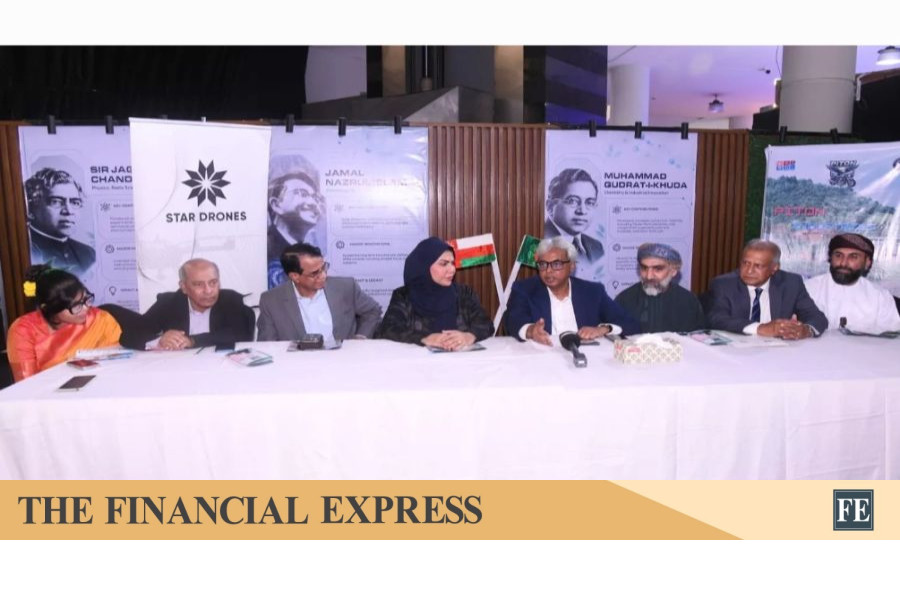
Bangladesh to export EV bikes to Oman

Piton Industries, Star Drones sign MoU

Bangladesh has opened a new avenue for exporting electric vehicle (EV) bikes to Oman after Piton Industries Limited and Oman's Star Drones (Modern Star Businesses LLC) signed a bilateral memorandum of understanding (MoU) on Monday.

The deal was signed at the venue lounge of Bangladesh Innovation Fair 2026 at the Novo Theatre in the city, in the presence of Anwar Hossain, the secretary of the Ministry of Science and Technology, reports UNB, citing a press release.

Impressed by the quality of Bangladeshi products and the talent of young entrepreneurs showcased at the fair, the visiting Omani delegation announced the investment and partnership.

As an initial step, electric bikes will be procured from Bangladesh for the delivery fleet of Bees, a popular food delivery app in Oman. Plans are also underway to set up a full assembly line in Oman later to meet growing demand across the Middle East.

Under the MoU, Oman will receive EV technology knowhow from Bangladesh, while reverse engineering will be used to strengthen the technological capabilities of both countries.

Sheikh Iqbal Zahedi, managing director of Piton Industries Limited, and Saeed Abdul Gafoor Saifuddin, founder and CEO of Modern Star Businesses LLC (Star Drones), signed the agreement on behalf of their respective organisations.

Welcoming the joint initiative, the secretary said this was the first time such an innovation fair had been organised in Bangladesh bringing together academia, local and foreign investors, and local entrepreneurs, and that the MoU between Piton Industries and Star Drones was a tangible outcome of that coordinated effort.

He added that the technology agreement would play a significant role in the national economy and the emerging green technology sector.

Star Drones plans to integrate its own drone-delivery technology with Bangladeshi EV bikes to build a modern, integrated delivery network. Under the agreement, capital and drone technology from Oman will be brought into Bangladesh for large-scale local investment.

A representative of Star Drones said Bangladesh's product quality and innovation had impressed them, adding, "This is not merely a bike procurement deal but a long-term plan to expand Bangladeshi technology across the Middle East and for Oman's joint investment in Bangladesh."

The partnership is expected to elevate economic and technological ties between the two countries and help establish Bangladesh's EV industry on the global stage, stakeholders said, adding that the joint venture will further strengthen technological and trade relations between Bangladesh and Oman and open a new horizon for eco-friendly EV technology in the country.​
 

Toyota Tsusho plans vehicle manufacturing in Bangladesh

Japanese conglomerate tells PM Tarique Rahman it aims to begin work on a hybrid electric vehicle plant in an economic zone in 2027

UNB, Dhaka


1791331368760.webp

Photo: UNB

Toyota Tsusho Corporation is exploring plans to manufacture vehicles in Bangladesh, with a high-level delegation from the Japanese company briefing Prime Minister Tarique Rahman on its proposed investment on Tuesday.

The delegation, led by Toyota Tsusho Vice Chairman Ichiro Kashitani, met the prime minister at his office in the Secretariat and informed him of the company’s plan to establish a Toyota vehicle manufacturing plant in Bangladesh, said PM’s Deputy Press Secretary Shahadat Hossain Shadhin.

The delegation said the initiative will contribute to employment generation, industrialisation expansion, technology transfer, and the development of skilled human resources in the country.

The two sides also discussed expanding Toyota’s operations in Bangladesh, potential investment opportunities, and the company’s long-term business plans.

Tarique welcomed Toyota Tsusho’s interest in expanding its investment and operations in Bangladesh.

He said the government is working to ensure a stable, competitive, and investment-friendly environment for both domestic and foreign investors.

The prime minister said the government is committed to providing necessary policy support, infrastructure facilities, and other opportunities to foreign investors.

He also highlighted the potential of waste-to-energy and renewable energy in Bangladesh, saying the government will provide necessary support if Toyota Tsusho is interested in investing in these sectors.

The Toyota delegation said its plan to expand Toyota Bangladesh’s distribution network to all divisional cities is already underway.

The expansion is aimed at making Toyota’s services and operations more accessible across the country.

The company also informed the prime minister that Toyota Bangladesh will begin work in 2027 to establish a Hybrid Electric Vehicle (HEV) manufacturing industry in an economic zone under the development vision of “With Bangladesh, for Bangladesh”, with full-scale production targeted for 2029.

Toyota also expressed interest in contributing to human resources development in Bangladesh, particularly by creating technical and vocational training opportunities for young people, enhancing their skills and developing a workforce suited to future industries.

Commerce Minister Khandakar Abdul Muktadir, Prime Minister’s Adviser on Finance and Planning Rashed Al Mahmud Titumir, State Minister for Foreign Affairs Humaiun Kobir, Prime Minister’s Adviser on Science and Technology Rehan Asif Asad, and Prime Minister’s Special Assistant for Overseas Employment Affairs in the Asia-Pacific Region Md Shakirul Islam Khan, among others, attended the meeting.

Toyota Tsusho Mobility Division CEO Shigeru Harada, President of Toyota Bangladesh Ltd Premmit Singh and other senior officials of the company were also present.

Toyota Tsusho is the trading arm of the Toyota Group, which includes Toyota Motor and auto parts maker DENSO.​
 

Japan eyes Bangladesh as a place to make cars

JETRO Bangladesh chief says part of the potential $6.35 billion Japanese investment could fund auto and parts production, starting with local assembly

Published : 25 October 2026

Jagaran Chakma

1792886459530.webp


Japanese companies could invest in manufacturing cars and parts in Bangladesh for the local market, which currently relies entirely on imports for Japanese brands such as Toyota, Honda and Nissan.

Ahead of Prime Minister Tarique Rahman’s visit to Japan on October 26, and amid reports of $6.35 billion in potential Japanese private investment, Kazuiki Kataoka, country representative of the Japan External Trade Organization (JETRO) in Bangladesh, said vehicle manufacturing could become an important area for Japanese investors.

Bangladesh would, however, need to begin by assembling vehicles using imported components before moving towards full-scale manufacturing.

“Building a competitive industry would require stronger local supply chains and access to high-quality steel,” Kazuiki said.

He identified steel quality as a major constraint, adding that the automotive industry would eventually need stronger domestic capabilities in steel, chemicals and precision engineering.

“Without these, local assembly could create jobs and technical expertise, but much of the value generated by manufacturing would remain dependent on imports,” he added.

Reports that Japan is preparing to facilitate ¥1 trillion, or about $6.35 billion, in private-sector investment in Bangladesh over five years come as the island nation looks to deepen industrial ties with Bangladesh under Tokyo’s “China Plus One” policy.

Over the past decade, trade between the two countries has grown steadily due mainly to rising demand for competitively priced Bangladeshi garments in Japan. Bangladesh’s exports to the Japanese market have more than tripled during this period.

Recently, senior executives from three major Japanese companies, Toyota, Mitsui and Marubeni, have visited Bangladesh and met top government officials. Representatives of Marubeni and Toyota have discussed investment opportunities.

In February this year, Japan and Bangladesh signed an economic partnership agreement. Bangladesh has relatively low labour costs and a favourable environment for manufacturing. With a population of about 170 million, it is the world’s eighth-most populous country and offers a large consumer market with a sizable young population.

On the eve of the prime minister’s visit, Kazuiki said Toyota Tsusho Corporation is planning to invest $40 million in two sales, servicing and spare-parts centres in Dhaka and Chattogram, with construction scheduled to begin in November 2026.

Separately, he said the company is planning a hybrid electric vehicle manufacturing facility in the National Special Economic Zone. Development is expected to begin in 2027, with full-scale production targeted for 2029.

The service centres in Dhaka and Chattogram would strengthen Toyota’s sales and after-sales network, while the proposed plant could provide a base for local vehicle production.

However, Kazuiki said the plant’s investment value, capacity, location and model line-up have not yet been finalised.

ENERGY COULD ATTRACT MORE INVESTMENT THAN CARS

Prime Minister Tarique Rahman will visit Japan from October 26 to 29. During the stay, he will hold a meeting and lunch with Japanese Prime Minister Takaichi Sanae. The visit is expected to provide an opportunity to advance economic cooperation alongside efforts to strengthen strategic ties.

Kazuiki said the potential $6.35 billion in Japanese investment reflects the interests and plans of Japanese companies, especially those already operating in Bangladesh.

He said energy infrastructure could attract even more investment than the auto sector.

Bangladesh’s energy shortages, particularly liquefied natural gas (LNG), could create opportunities for Japanese companies to expand their operations, Kazuiki said.

JERA, Japan’s largest power generation company, already runs an LNG-based power plant in Meghnaghat and is interested in energy supply and other energy-related businesses in Bangladesh, he said.

Google News LinkFor all latest news, follow The Daily Star's Google News channel.
Kazuiki said the proposed Matarbari deep-sea port in Cox’s Bazar could offer another avenue for investment.

The port is being developed with support from the Japan International Cooperation Agency (JICA). The construction is expected to be completed around 2030.

Kazuiki said energy-related businesses, including an LNG terminal, could form part of those operations, although specific investment decisions have yet to be finalised.

‘BANGLADESH MUST OFFER POLICY PREDICTABILITY’

Kazuiki said low labour costs alone will not secure long-term industrial investment as wages rise. Manufacturers need predictable regulations, reliable energy supplies, efficient customs clearance, access to foreign exchange and the ability to repatriate profits.

Tareq Rafi Bhuiyan (Jun), immediate past president of the Japan-Bangladesh Chamber of Commerce and Industry (JBCCI), said manufacturing, particularly automobiles and components, electrical appliances and light engineering, could attract significant Japanese investment, alongside energy and logistics.

Higher-value textiles, agro-processing and healthcare also offered promising opportunities, he said.

“The proposed $6.35 billion investment over five years is achievable if Bangladesh ensured policy stability, reliable utilities and commercially viable projects.”

Tareq said uncertainty over tax and customs rules, slow approvals, unreliable energy supplies, and difficulties with foreign exchange and profit repatriation weaken Bangladesh’s competitiveness.

“Japanese investors need predictability,” he said.

To compete with Vietnam and Thailand, Bangladesh must offer reliable infrastructure and efficient administration alongside competitive costs, he added.

Tareq called for a joint Bangladesh-Japan mechanism with named investors, commercially viable projects and clear deadlines for approvals, land, utilities and financing.​
 

Toyota Tsusho to invest additional Tk 141cr in Bangladesh

Star Business Report

1793492278836.webp


Toyota Tsusho Corporation, the trading arm of Japanese carmaker Toyota Group, is investing an additional Tk 141 crore, or 1,815 million yen, in its Bangladesh subsidiary to expand and strengthen its automotive business here.

In a stock exchange disclosure dated October 30, Toyota Tsusho announced that it would inject the amount into Toyota Bangladesh Ltd, raising the subsidiary’s capital to Tk 604 crore (7,770 million yen).

The announcement came a day after Prime Minister Tarique Rahman visited Toyota’s Motomachi plant in Nagoya as part of his four-day visit to Japan. Earlier in October, a delegation led by Toyota Tsusho Vice Chairman Ichiro Kashitani met the PM in Dhaka and informed him of the company’s plan to establish a Toyota vehicle manufacturing plant in Bangladesh, according to a UNB report.

Toyota also informed the PM that it would begin work in 2027 to establish a hybrid electric vehicle manufacturing facility in an economic zone under the development vision of “With Bangladesh, for Bangladesh”, with full-scale production targeted for 2029, the report added.

In its stock exchange filing on October 30, Toyota Tsusho did not disclose specific plans for the additional investment but added that, following the investment, Toyota Bangladesh would become a specified subsidiary of Toyota Tsusho, as its capital would exceed 10 percent of the Japanese company’s capital.

Toyota Tsusho Asia Pacific Pte Ltd, a Singapore-based subsidiary of the Japanese group, holds 99 percent of Toyota Bangladesh, while Toyota Tsusho directly owns the remaining 1 percent.

Established in August 2025, Toyota Bangladesh serves as Toyota Tsusho’s base for expanding its mobility business in the country. Its operations cover the import, wholesale and retail of Toyota vehicles and spare parts, alongside after-sales services.

Toyota Bangladesh reported net sales of Tk 7.5 crore for the fiscal year ended March 31, 2026, while its loss attributable to owners of the parent stood at Tk 1.4 crore.

Its total assets stood at around Tk 90 crore, while consolidated equity was Tk 65 crore during the period, according to the disclosure.

Toyota Tsusho said the additional investment would have a negligible impact on its business performance and financial position for the fiscal year ending March 2027.

An official of Toyota Bangladesh said the company had selected Continental Works Limited in Dhaka and Carboy Private Limited in Chattogram to provide genuine spare parts, engine oil and after-sales services to Toyota customers here.

“Our company is investing in Bangladesh because of the market’s strong growth potential,” the official said, expressing confidence that demand for Toyota vehicles and related services would increase in the coming years.

The official added that services would not be limited to buyers of brand-new Toyota vehicles.Existing Toyota owners would also be able to access genuine spare parts, engine oil and servicing facilities through the selected partners.​
 

Auto policy fails to drive manufacturing growth

Jagaran Chakma


1794528527197.webp


Five years after the launch of the country’s first automobile industry policy, the ambition of becoming a regional vehicle manufacturing hub by 2030 remains largely unfulfilled.

Introduced in September 2021, the policy aimed to reduce dependence on imported vehicles, promote electric transport and attract investment in local production through tax incentives, lower import duties and other benefits.

Since then, several local companies have started assembling vehicles in partnership with Japanese, South Korean and Chinese automakers. At least five companies, including state-owned Pragati Industries and private firms Fair Technology, Rancon and Meghna Group, are now assembling passenger cars.

Industry insiders estimate that around Tk 2,500 crore was invested in the first two and a half years after the policy’s launch. However, the extent to which this has increased production capacity and local sourcing of parts remains unclear.

They say a wide gap persists between the policy’s promises and its implementation.

Subrata Ranjan Das, managing director of ACI Motors, said the policy had set the right direction, but implementation had fallen short of expectations.

Investors need a stable duty structure, clear incentives and faster approvals, he said. The policy’s success should be measured by actual investment, local production and domestic value addition.

On electric mobility, Subrata said EVs would gain wider acceptance only if they became affordable. Reasonable prices, reliable charging facilities, battery warranties and access to financing are essential to encourage buyers.

He suggested initially focusing on two- and three-wheelers, city buses and commercial fleets, while promoting local production of batteries and other components.

However, economic pressures following the Covid-19 pandemic, political disruptions and global crises have slowed investment and market growth, making the 2030 target increasingly unrealistic. He called for a more practical roadmap focused on higher production, local suppliers, skilled workers and competitive costs.

Mir Masud Kabir, managing director of Bangladesh Auto Industries Ltd, said the government had held two rounds of discussions with stakeholders on the proposed Automobile Policy 2026–2031. However, concerns remained over the implementation of the existing policy.

He said the government aimed to raise EVs’ share of the market to 30 percent by 2030, but the broader automobile policy was still receiving insufficient attention.

Taskeen Ahmed, director of IFAD Autos PLC, said Bangladesh had made some progress in attracting private investment and setting up assembly plants, but actual investment, technology transfer and local production of vehicle parts remained limited.

Despite the slow progress, new investment plans by major international automakers have raised hopes for expanding local production.

Japan’s Toyota Tsusho Corporation plans to set up a hybrid electric vehicle manufacturing plant in an economic zone, with work expected to begin in 2027 and full-scale production targeted for 2029.

Meanwhile, local manufacturer Runner Automobiles PLC has partnered with Chinese EV maker BYD to produce electric cars in the country.

However, the EV industry faces several challenges, including a shortage of charging stations, energy supply constraints, limited financing, a lack of skilled workers and inadequate battery recycling facilities. Battery production also remains heavily dependent on imported cells and technology.

Taskeen called for an updated policy aligned with the proposed EV framework, setting clear targets for EV adoption, developing charging infrastructure, expanding battery production and increasing local manufacturing.

He also stressed the need to attract global automakers through joint ventures, technology transfers and strategic partnerships.

HIGH COSTS, COMPLEX RULES HOLD BACK INVESTMENT

Manufacturers say some existing policy conditions also make investment difficult.

Anisuzzaman Choudhury, executive director of Meghna Automobiles Ltd, which assembles Kia vehicles, said the policy offered significant duty benefits, particularly to EV assemblers, but some conditions were difficult for local investors to meet.

Under the policy, the import duty on completely knocked down (CKD) vehicles is 35 percent for painted bodies and 25 percent for unpainted bodies, provided manufacturers have industrial plants.

For EVs, the duty falls to 3 percent if both body manufacturing and painting are done locally. It is 15 percent if only painting is carried out locally.

However, setting up an industrial paint booth costs an estimated $3.5 million to $5 million, making it difficult for local assemblers to qualify for the lower rates, Anisuzzaman said.

As each assembler produces only around 300 to 500 vehicles a year and the domestic market is relatively small, he suggested allowing smaller, garage-type paint booths.

He also called for faster customs clearance, saying port delays and demurrage charges on shipments of 20 to 30 containers of CKD parts can wipe out manufacturers’ profits.

Meghna has invested around $20 million in its operations over the past five years, he said, adding that the policy needs to be adjusted to better support local entrepreneurs.

Abdul Mannan Khoshru, former president of the Bangladesh Reconditioned Vehicles Importers and Dealers Association (BARVIDA), questioned whether the policy was creating genuine manufacturing capacity.

He said there had been little visible progress in EV charging infrastructure or in building a viable domestic EV industry.

“So far, what we have seen is mostly vehicle assembly, not actual manufacturing,” Mannan said, questioning how much value these operations add to the domestic economy.

He also cautioned against using policy incentives to give selected manufacturers an advantage over existing businesses, particularly those involved in the reconditioned vehicle trade.​
 
Back
Top