Home Login Watch Videos Wars

[🇧🇩] Textile & RMG Industry of Bangladesh

[🇧🇩] Textile & RMG Industry of Bangladesh
427
17K
More threads by Saif

G Bangladesh Defense
These middlemen sitting in the middle of New York are the scumbuckets. They will suck every drop of blood out of you as a worker while they amass Billions. Even if they are paying the same amount for Bangladeshi apparel exports like they did ten years ago, these middlemen are not happy.

Meanwhile I guess our poor Bangladeshi workers are just "happy to have a job" and are forced to work for pennies while these NYC middlemen profit and refuse to pay living wages (even Bangladesh living wages which are the lowest in the world).

Bangladesh does not even have quota or duty free benefits for exports to the US which other countries (Vietnam for example) enjoy.
Bangladesh has been asking for duty free access to the US market but the strong textile lobby in the US is the main roadblock to allowing Bangladeshi RMG products duty free access by the US Govt. As far as I remember Bangladeshi exporters pay 15% duty on RMG products in the US. Not only that, the US Govt. has revoked GSP+ facility after Rana Plaza incident.
 
Analyze

Analyze Post

Add your ideas here:
Highlight Cite Fact Check Respond
  • Like (+1)
Reactions: Bilal9
Bangladesh has been asking for duty free access to the US market but the strong textile lobby in the US is the main roadblock to allowing Bangladeshi RMG products duty free access by the US Govt. As far as I remember Bangladeshi exporters pay 15% duty on RMG products in the US. Not only that, the US Govt. has revoked GSP+ facility after Rana Plaza incident.

You are correct on most counts. But the lobby opposing duty-free access for Bangladeshi products is not the textile lobby in the US. USA makes very few similar products which Bangladesh exports, and they do not care. The lobbies opposing our duty-free exports are being paid by our competitors who make similar products, low wage countries who are our Asian neighbors, including one right next door. Also, Mexico, Honduras and Guatemala may employ lobbyists to oppose Bangladesh - if we falter in US market they are net gainers.
 
Analyze

Analyze Post

Add your ideas here:
Highlight Cite Fact Check Respond

BGMEA seeks US govt support to ensure fair minimum apparel price
Staff Correspondent 22 April, 2024, 23:29

1713827678308.webp

Bangladesh Garment Manufacturers and Exporters Association president SM Mannan Kochi, senior vice-president Khandoker Rafiqul Islam and vice-presidents Md Nasir Uddin and Abdullah Hil Rakib and assistant USTR for South and Central Asia Brendan Lynch, among others, are present at a meeting with the visiting United States Trade Representative delegation held at the BGMEA headquarters in the capital Dhaka on Monday. | — Press release

The Bangladesh Garment Manufacturers and Exporters Association on Monday at a meeting with the visiting United States Trade Representative delegation sought support and collaboration of the US government to ensure fair minimum price of apparel and a unified code of conduct for social audits.

The apparel trade body also urged the US government to reinstate GSP in favour of Bangladesh and include garment items in its GSP programme, according to a BGMEA press release.

The USTR delegation at the meeting with the BGMEA discussed the labour action plan provided by the US government.

At the meeting with the BGMEA leaders at the headquarters of the trade body in the capital Dhaka, the USTR team also discussed the required changes in Bangladesh Labour Act to ease the trade union registration process and to address the unfair labour practices, the meeting sources said.

The USTR delegation on Sunday handed over an 11-point 'Bangladesh Labour Action Plan' to commerce secretary Tapan Kanti Ghosh and urged the government to implement it in order to avail duty-free benefits and access to funds of the US International Development Finance Corporation.

The BGMEA in a press release said that the USTR delegates appreciated the progresses Bangladesh made in the past few areas in the labour sector and discussed areas where further improvements were required, including amendments to the BLA.

The US delegation led by the assistant USTR for South and Central Asia Brendan Lynch also discussed bilateral trade and policies, including workers' rights, wellbeing and market access matters.

The BGMEA side was headed by its president SM Mannan Kochi and included senior vice-president Khandoker Rafiqul Islam and vice-presidents Md Nasir Uddin and Abdullah Hil Rakib.

During the discussion, the BGMEA president shared updates on the progress made by the readymade garment industry regarding workplace safety, workers' rights and the ongoing labour law reforms in Bangladesh.

He reiterated the commitment and the ongoing efforts of the government of Bangladesh and of the industry to make further progress in workers' rights and welfare issues.​
 
Analyze

Analyze Post

Add your ideas here:
Highlight Cite Fact Check Respond

Bangladesh fails to hook higher share of global RMG demand rise: report
Moinul Haque 23 April, 2024, 22:29

1713914092593.webp

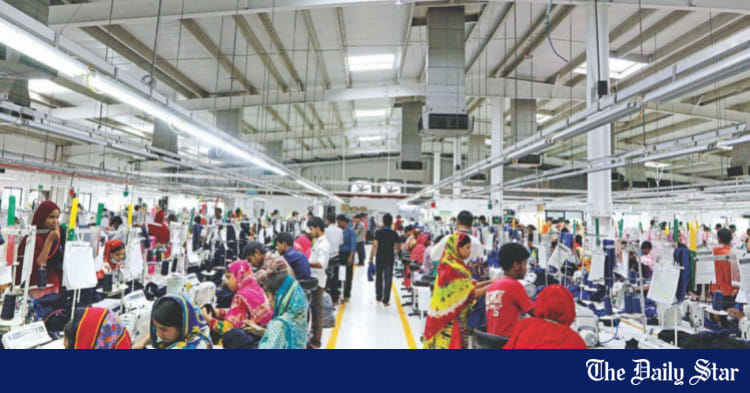
A file photo shows workers sewing clothes at a readymade garment factory at Savar, on the outskirts of Dhaka. Bangladesh has failed to capture a larger share of increased global demand for apparel in 2024 as China is outpacing Bangladesh in terms of receiving export orders, according to a Quality Inspection MAnagement report. | — New Age photo

Bangladesh has failed to capture a larger share of increased global demand for apparel in 2024 as China is outpacing Bangladesh in terms of receiving export orders, according to a Quality Inspection MAnagement report.

QIMA, a leading provider of supply chain compliance solutions, in its second quarter, 2024 barometer titled 'Q1 Procurement Uptick: a Beacon of Hope for Western Retail?' said that after a year of sluggish demand, the first quarter of 2024 witnessed a rise in sourcing volumes across the board, both in overseas supplier regions and nearshoring markets.

It showed that global demand for textile and apparel inspections and audits from garment manufacturing countries, including Bangladesh, increased over 20 per cent in the Q1 of 2024 while China was experiencing resurgence in popularity among apparel brands, its competitors in Asia and beyond were keeping pace.

According to the report, both United States- and European Union-based brands stepped up their procurement in Bangladesh, instilling optimism that the country's export sector would perform better this year compared with 2023, when a political crisis halted a significant portion of Bangladesh's manufacturing.

Citing a recent initiative of the government, QIMA expressed its doubt whether the optimism would pan out remains to be seen, as the industry has some concerns about the Bangladeshi government's policy move to reduce cash incentives for garment exports.

The recent data also reflected that Bangladesh's apparel exports have been witnessing deepest drop among its competitors, including China and Vietnam, in the US and the EU markets.

In 2023, QIMA data showed that much of China's growth was driven by emerging regions' demand, Q1 '24 saw the appetite for madein-China bouncing back in the West.

Demand for China inspections and audits among US-based buyers grew by 12 per cent year on year, while among European brands, the growth was even faster.

Especially from buyers based in Germany the growth was 35 per cent, France 30 per cent, and the Netherlands 33 per cent, the QIMA data showed.

'Meanwhile, interest in China's manufacturing capacities remained robust among buyers in other parts of Asia, as well as in Latin and South America, with double-digit growth in inspection and audit demand across the board,' the report said.

This barometer report, informed by QIMA's data on product inspections and factory audits, as well as its recent survey of more than 800 businesses, offers an early glimpse into the state of the sourcing landscape in 2024 and expectations for the upcoming months.

According to the survey, two-thirds of respondents globally reported plans to maintain or increase business volumes with Chinese suppliers in 2024.

It showed that 59 per cent of buyers in the US and 68 per cent of those based in the EU expressed similar intentions.

Former Bangladesh Knitwear Manufacturers and Exporters Association president Fazlul Hoque agreed with the findings of QIMA and said that Bangladesh was getting little benefits from the recent surge in global demand for the apparel due to the increasing production cost.

He said that China had desperately decreased the prices of products to gain the lion share of the increased demand for apparel on the global market.

'It is fact: Bangladesh is losing its competitiveness on the global market due to the increased production cost and our competitors, including China and Vietnam, grabbing more export orders,' BKMEA executive president Mohammad Hatem said.

He said that the excessive hike in prices of gas and electricity and recent increase of workers' wages affected the competitiveness of the sector.

Recent data from the US Department of Commerce's Office of Textiles and Apparel reveals that Bangladesh significantly lagged behind its competitors in apparel exports to the US market during the January-February period of 2024.

According to OTEXA data, Bangladesh's apparel exports to the US in January-February 2024 declined by 19.24 per cent, contrasting with China's export growth of 0.48 per cent and Vietnam's increase of 0.14 per cent in the same period.

Similarly, Eurostat, the statistical office of the European Union, showed that Bangladesh's apparel exports in January-February 2024 saw a decline of 26.74 per cent, in the 27-nation economic bloc, while the exports of China decreased by 13.12 per cent and Vietnam declined by 10.77 per cent in the period.​
 
Analyze

Analyze Post

Add your ideas here:
Highlight Cite Fact Check Respond

Bangladesh lags behind RMG competitors
SYED MANSUR HASHIM
Published :
Apr 26, 2024 21:59
Updated :
Apr 26, 2024 21:59

1714175323663.webp


What should have been a time for rejoicing over the primary export sector of Bangladesh, is turning out to be a bitter pill. The readymade garments (RMG) sector has seen its share of its products in the two main markets- the United States (US) and the European Union (EU) fall in both value and volume over the two-month period (January - February, 2024). While China and Vietnam have both registered single-digit growth in terms of value and volume of exports to the US, Bangladesh has registered double-digit negative growth rate in this market. The situation is all negative for these three nations in the EU market (over the same period), but Bangladesh's loss is markedly more than its two closest competitors.

QIMA, a quality-control company, in its latest report revealed that "following a slow 2023, demand for textile and apparel inspections and audits were up by more than 20 per cent YoY in Q1 2024 globally." The report further stated that, "interest in China's manufacturing capacities remained robust among buyers in other parts of Asia, as well as in Latin and South America, with double-digit growth in inspection and audit demand across the board". Bangladeshi RMG companies have been struggling with cost escalations that have hampered its ability to take advantage of the recent rebound in the global apparel demand. These cost hikes include a new wage board structure for workers in the industry and increase in energy costs. Not equally but still quite important is the nagging issue of logistics whereby shipment delays have been costing the sector heavily in meeting deadlines.

Then there is the question of incentives. A recent decision to withdraw incentives on this industry has not helped matters. But incentives were bound to go anyway sometime. Some experts believe that the explosive growth in industrial production capacity in this sector had happened without proper demand forecasting. Many companies have grown to conglomerate size employing tens of thousands of workers. The expansion of some companies defied the economics but they grew nonetheless, due to availability of easy credit and perceived notions of demand for their products (in some cases). The belief that the government would forever go on providing subsidies in one form or another or perhaps, delay the inevitable introduction of a living wage that would potentially hamper the business model was perhaps was misplaced.

There are multifarious problems that the RMG industry is suddenly confronting. Upward revision of energy prices (both electricity and primary), a less-than-efficient system of outbound cargo (both by sea and air), etc. did not help matters. While a miniscule number of companies strove hard to make their factories energy-compliant, this was not the case for the majority of the industry. While it is seen that hundreds of companies are now joining the US LEED certification standard, thousands more are not in a position to do so. These are basic realities of life. While systemic problems are a national priority and require reform at policy level, there are things that should have been done at the sector level, but were not. When business was rosy, few entrepreneurs saw it fit to streamline their operations by introducing technologies that would bring down drastically their factories' consumption of water, electricity and energy. Only a handful of them saw it fit to allocate a significant portion of their profits to retrofit their plants in order to meet the stringent requirements demanded in emerging markets such as Japan because it was felt that the good days would last forever.

Sadly, nothing lasts forever in the cutthroat business of fashionwear. Vietnam, a late entrant into the apparel market, had invested heavily in power and ports long before Bangladesh had joined that phase. It also invested heavily in human capital development vis-à-vis infrastructure development and made the regulatory regime as simple as possible. Bangladesh is still grappling with these basic issues. The good news here is that buyers of EU and the US have stepped up their procurement from Bangladesh, but it remains to be seen whether this is temporary or it will last. The full spectre of subsidy-withdrawal coupled with other cost escalation factors will become apparent in the months to come. According to OTEXA data, the country's RMG exports to the US totaled US$1.18 billion in the two-month period mentioned which is a 19.24 per cent decrease compared to the corresponding period in 2023. Unless the RMG sector wakes up and addresses the problems it has at factory level, it will become increasingly difficult to do business. Policymakers too should weigh the pros and cons of getting the house in order in terms of logistics bottlenecks if they don't want the dominant export sector to suffer and experience a dip in its exports.​
 
Analyze

Analyze Post

Add your ideas here:
Highlight Cite Fact Check Respond

Members Online

No members online now.

Latest Posts

Back
PKDefense
G
O
 
H
O
M
E