[🇺🇸] USA News/Views

Quick Reply ✓ Posted!
[🇺🇸] USA News/Views
94
5K
More threads by Saif

G   American Defense

US dollar to bear Trump’s signature
Agence France – Presse . Washington, United States 27 March, 2026, 20:00

1774659858516.webp

U S president Donald Trump reacts during a Cabinet meeting in the Cabinet Room of the White House on March 26, 2026 in Washington, DC. | AFP photo

US paper currency will soon bear Donald Trump’s signature, the Treasury Department announced on Thursday, in a move that would be a first for a sitting American president and coincide with the country’s 250th anniversary.

Historically, the signatures on dollar bills belong to those of the Treasurer of the United States and the secretary of the Treasury. But the upcoming new bills will feature those of Trump and current Treasury Secretary Scott Bessent.

‘Under President Trump’s leadership, we are on a path toward unprecedented economic growth, lasting dollar dominance, and fiscal strength and stability,’ Bessent said in a statement announcing the decision.

‘There is no more powerful way to recognise the historic achievements of our great country and President Donald J Trump than US dollar bills bearing his name, and it is only appropriate that this historic currency be issued at the Semiquincentennial,’ he added.

The move would be the latest effort by Trump to circumvent longstanding practice and put his mark on American currency.

Last week, an advisory commission hand-picked by Trump approved the design of a commemorative gold coin featuring his image -- also intended to mark the 250th anniversary of the July 4, 1776 founding of the United States.

One side of it shows a glaring Trump standing with his fists bunched on a desk, and the other features an eagle perched with wings spread on what appears to be a bell.

The coin does not have a monetary value and its sale price has not been disclosed, but similar commemorative coins sold by the US Mint can cost more than $1,000.

The move to put Trump’s countenance on a coin -- which runs counter to federal law that says no living president may appear on US currency -- has been criticized by his Democratic opponents.

But Trump has pressed ahead with other deeply controversial designs as well, including one bearing Trump’s face on a $1 coin that would be temporarily added to circulating currency, and which would also celebrate the nation’s 250th birthday.​
 

Massive protests against Trump across US

AFP
Minneapolis, United States
Published: 29 Mar 2026, 19: 31

1774832311581.webp

This panoramic image shows a large crowd gathered outside the Minnesota State Capitol during the "No Kings" national day of protest in Saint Paul, Minnesota, on March 28, 2026. Huge crowds of protesters rallied across the United States on March 28 against President Donald Trump, venting their fury over what they see as his authoritarian style of governing, his hardline immigration policies and the war with Iran AFP.

Huge crowds of protesters rallied across the United States on Saturday against President Donald Trump, venting their fury over what they see as his authoritarian style of governing, his hardline immigration policies and the war with Iran.

Organisers said "at least 8 million people gathered today at more than 3,300 events across all 50 states," from big cities and small towns. US authorities provided no national crowd estimate.

It was the third time in less than a year that Americans have taken to the streets as part of a grassroots movement called "No Kings," the most vocal and visual conduit for opposition to Trump since he began his second term in January 2025.

In New York, America''s most populous city, tens of thousands of demonstrators rallied, including Oscar-winning actor Robert De Niro, a frequent Trump critic, who called the president "an existential threat to our freedoms and security."

Protests unfolded from Atlanta to San Diego, with Alaskans joining the mix later in the day.

"No country can govern without the consent of the people," 36-year-old military veteran Marc McCaughey told AFP in Atlanta, where thousands turned out.

"We''re out here because we feel that the Constitution is under threat in a multitude of different ways. Things aren''t normal. They aren''t okay."


In the Michigan town of West Bloomfield, near Detroit, people braved below-freezing temperatures to protest.

And in the US capital Washington, thousands of marchers -- some carrying banners that blared "Trump Must Go Now!" and "Fight Fascism" -- flocked to the National Mall.

"He keeps lying and lying and lying and lying, and no one says anything. So it''s a terrible situation we''re in," 67-year-old retiree Robert Pavosevich told AFP.

Trump himself was in Florida for the weekend.

1774832349846.webp

A vandalized Trump Pinata is seen on the street in front of City Hall during a protest against immigration enforcement and Federal overreach during a national 'No Kings' protest on March 28, 2026 in Los Angeles, California AFP.

The anti-Trump mood has spilled beyond US borders, with rallies Saturday in European cities including Amsterdam, Madrid and Rome, where 20,000 people marched under a heavy police presence.

''Dragged us deeper into war''

The first "No Kings" nationwide protest day came last June on Trump''s 79th birthday and coincided with a military parade he organized in Washington. Several million people turned out, from New York to San Francisco.

The second such protest, in October, drew an estimated seven million protesters, according to organizers, who said Saturday''s events saw one million more participants and 600 additional demonstrations.

Just as Trump is worshipped by many in his "Make America Great Again" movement, he is disliked with equal passion on the other side of America''s wide political chasm.

Trump''s approval rating has sunk below 40 percent and midterm elections loom in November, with his Republican Party at risk of losing control of both chambers of Congress.

Foes bemoan his penchant for ruling by executive decree, his use of the Justice Department to prosecute opponents, his apparent obsession with fossil fuels and climate change denial -- and his taste for flexing US military power after campaigning as a man of peace.

"Since the last time we marched, this administration has dragged us deeper into war," said Naveed Shah of Common Defense, a veterans'' association connected to the "No Kings" movement.

"At home, we''ve watched citizens killed in the streets by militarized forces. We''ve seen families torn apart and immigrant communities targeted. All of it done in the name of one man trying to rule like a king."

Springsteen in Minnesota

While organizers said rallies were staged across the country, from major cities to suburbs and rural areas -- and even in the Alaskan town of Kotzebue, above the Arctic circle -- a key focus point was the northern state of Minnesota.

This winter, the twin cities of Minneapolis and St. Paul became ground zero for the national debate over Trump''s violent immigration crackdown.

Leftist US politician Bernie Sanders addressed the Minnesota rally, telling the crowd: "We will never accept a president who is a pathological liar, a kleptocrat and a narcissist who is undermining the Constitution of the United States and the rule of law every day."

Legendary rocker Bruce Springsteen, a fierce critic of the president, performed his song "Streets of Minneapolis" in St. Paul, the capital of the state, where tens of thousands gathered.

Springsteen wrote and recorded the protest ballad in just 24 hours in memory of Renee Good and Alex Pretti, two US citizens shot dead by federal agents during January protests against Trump''s immigration crackdown.

"Their bravery, their sacrifice and their names will not be forgotten," Springsteen said before breaking into song.​
 

Is America Virtually Friendless?

Mir Abdul Alim

Published :
Apr 03, 2026 13:23
Updated :
Apr 03, 2026 13:23

1775262961338.webp


The contemporary world stands at a strange crossroads of history. There was a time when the map of global politics was drawn at Washington’s beck and call; today, cracks are appearing on the very walls of the White House. Specifically, Donald Trump’s radicalism in Iran and Middle East policies, coupled with a blind allegiance to Israel, has increasingly isolated America. Not just adversary states, but even longtime allies now smirk at America’s "anti-terror" rhetoric. The question arises: when the protector turns predator, who will steer the global order?

Trump’s policies have not only alienated the international community but have also engineered an unprecedented polarisation within America itself. Anti-Trump protests are no longer merely opposition agendas; they are outbursts of public grievance. From Democrats to a segment of Republicans, many believe Trump’s reckless decisions are dismantling America’s internal stability. The cries of ordinary citizens on the streets make it clear: Americans are no longer prepared to see their tax dollars squandered on unnecessary wars on foreign soil. This internal volatility has hollowed out the nation’s capacity for global leadership from within.

The aggressive and unilateral nature of US policy has sparked a tidal wave of protest across the globe. These demonstrations are no longer confined to Middle Eastern cities. From London, Paris, and Tokyo to Sydney, major global metropolises are reeling against Trump’s bellicose stance. To the average global citizen, America is no longer perceived as the "vanguard of democracy," but rather as the architect of a volatile world order. From social media platforms to street banners, a profound disdain for Trump’s erraticism is palpable. This public outcry is eroding America’s painstakingly built "soft power" its cultural and moral legitimacy, which may take decades to recover.

One could argue that America’s global prestige met its demise in the Iran conflict. By engaging in direct confrontation with Iran, Washington has lost even its minimal moral standing. The unilateral withdrawal from the Obama-era nuclear deal, and provocative actions defying international norms have proven that America seeks chaos over global peace. The imposition of one inhumane sanction after another, making life miserable for ordinary Iranians, has not been viewed kindly by international human rights organisations. This stubbornness has called into question America’s diplomatic competence, dragging its international stature to an all-time low.

The ultimate irony is that those who seek to judge global terrorism now find themselves in the dock. Carrying out unprovoked drone strikes in Iraq and Iran to assassinate military officials is, in essence, a form of state-sponsored terrorism. When America violates the sovereignty of other nations to launch attacks, its "War on Terror" slogan turns into a mere farce. A state that does not respect international law loses its credibility when preaching the rule of law. This hypocrisy suggests that America itself has become one of the greatest threats to global peace.

Every American move in the Middle East appears dedicated to the interests of Israel. From the erosion of Palestinian rights to the pressure cooker tactics against Iran, US foreign policy acts as a handmaiden to Tel Aviv. By recognising Jerusalem as Israel’s capital and making controversial decisions regarding the Golan Heights, the Trump administration has completely obliterated its neutrality in the eyes of Muslim nations. This blind loyalty has cost America its credibility in the Arab world, a move that will prove suicidal for its long-term geopolitical interests.

Even the European Union and NATO, long considered Washington’s most steadfast allies, are now distancing themselves. Frustrated by Trump’s "America First" policy and his idiosyncratic whims, nations like Germany, France, and Canada no longer blindly nod to every White House directive. On issues ranging from trade with Iran to environmental accords, the rift is glaring. Washington can no longer dictate terms to its allies; instead, European leaders are increasingly contemplating strategic autonomy, independent of American influence.

The throne of unilateral hegemony is cracking. The "Pax Americana" that controlled the post-WWII world order is nearing its end. Trump’s ultra-nationalism and his tendency to snub international organisations have caused significant structural damage to American dominance. The world no longer looks solely toward Washington. Taking advantage of this American retreat, emerging powers like China and Russia have become significantly more confident and assertive. The world is gravitating toward a multi-polar reality where America’s role as the sole global "boss" is becoming a relic of history.

The military bases established across various Muslim countries, often disregarding religious sentiment and public will, are now under intense scrutiny. Built with the cooperation of self-serving local elites, these bases are viewed as tools for interfering in internal politics and plundering resources. The ordinary Muslim populace now realises these bases are not for their security, but for maintaining Western control. The demand for the withdrawal of US troops from Iraq and Syria is no longer just a slogan; it is a popular mandate that will challenge the US presence in the near future.

Driven by geopolitical interests and an obsession with energy resources, America reduced Iraq to rubble fifteen years ago. The world has not forgotten the dark history of destroying a structured nation under the false pretext of "weapons of mass destruction." Now, the same playbook is being attempted against Iran. This naked selfishness and addiction to war have left deep scars and resentment globally. No matter how much America tries to reclaim its lost glory, the blood-stained history of Iraq and Libya will continue to haunt it.

Furthermore, the wars imposed by America and the subsequent barrage of trade and economic sanctions have triggered extreme instability in the global economy. Developing nations, including Bangladesh, are directly suffering due to oil market volatility and disruptions in international supply chains. Trump’s "trade wars" have unsettled global markets. The Trump administration cannot evade the responsibility of pushing ordinary people into economic crises for narrow political gains. The tendency to hold the world hostage via dollar hegemony is now beginning to backfire.

By launching drone strikes or military operations without the mandate of international law or the UN Security Council, America fosters a culture of impunity. They preach international law while shattering it whenever it suits their convenience. This duplicity and arrogance have branded America as a "rogue state" in the court of global conscience. America’s lectures on the rule of law are no longer heeded, as they have become the primary violators of those very laws.

An analysis of the current situation and international equations suggests that America is now virtually friendless. While its military and nuclear prowess remains vast, it lacks reliable partners who offer moral and diplomatic support. The Trump administration has failed to grasp the eternal truth that the world cannot be ruled by brute force alone. This isolation proves that the days of American hubris are waning. The world no longer desires a "Big Brother"; it seeks a balanced world order based on sovereignty and mutual respect.

Ultimately, America’s current crisis is not just a failure of geopolitical manoeuvring, but a result of the moral decay of its long-standing hegemony. In its quest to dominate others and pose as the self-appointed "guardian" of global democracy, Washington has become entangled in its own web. The Trump administration’s rash decisions have proven that military might or the power of the dollar cannot hold a modern world order hostage indefinitely. The flames of protest beneath the American flag are a manifestation of the world’s accumulated grievances. If America does not abandon its ultra-nationalism, its appeasement of Israel, and its interference in the sovereignty of others, it will find itself utterly isolated. A nation once seen as a role model for development is now identified as an instigator of war.

The inexorable law of history is that no empire is permanent if it loses its foundation of justice. Unless Washington returns to the path of international values, mutual respect, and peace, it will not only lose its allies but will eventually find itself with no destination other than the dustbin of history. The world no longer seeks a single "master"; it yearns for a safe planet based on equal rights, where the blood of innocent people is not shed for the whims of a superpower.

The writer is a journalist and columnist.​
 

How the AI boom derailed clean‑air efforts in one of America's most polluted cities

REUTERS

Published :
Apr 10, 2026 19:26
Updated :
Apr 10, 2026 19:26

1775869190379.webp


Barbara Johnson has been fighting coal pollution for decades in her mostly Black neighbourhood of North St Louis as an organiser with Metropolitan Congregations United – one of many activist groups campaigning for cleaner air in a city that has some of the country’s dirtiest.

Until recently, Johnson had reason to believe things would improve: tougher federal soot standards adopted in 2024 under the Biden administration were scheduled to go into effect in 2027, requiring plants to slash emissions or shut down. That would have forced one of the area’s biggest polluters - Ameren’s Labadie Energy Center power plant - to cut its soot emissions in half to stay in business.

Johnson’s hopes vanished in February, however, when President Donald Trump’s administration scrapped the standards before they took effect as part of broader efforts to ensure the nation’s grid can meet surging demand from data centres. Now she wonders if she’ll ever get to see the changes she’s been fighting for since her youth.

“You take two steps forward and four steps back,” said Johnson, 75. “I am used to that backwards trend but how many generations will it take to make those positive changes stick?”

Trump’s rollbacks in support of AI mark a reversal in US environmental policy and a painful truth for America’s clean air activists: After years pushing coal toward the exits, the rise of power-hungry data centres has nudged the country’s most polluting power source back to the stage.

Trump last year issued an executive order entitled “Reinvigorating America’s Beautiful Clean Coal Industry” that said coal-fired power was crucial to meeting the rise in US electricity demand driven by the construction of artificial intelligence data processing centres. He has since provided funding to keep old plants running, issued orders to delay plant retirements, and rolled back environmental regulations on mercury and other toxins to free plants from costly upgrades.

“Ensuring affordable baseload power, including coal, is essential for keeping the lights on and heating American homes,” the US Environmental Protection Agency said in an emailed statement about the regulatory rollbacks. “EPA is committed to ensuring clean air for all Americans regardless of race, gender, creed, or background.”

The US Department of Energy estimates artificial intelligence and data‑centre growth will create 50 gigawatts of new electricity demand by 2030 – a nearly 4 percent increase over the 1,300 gigawatts produced by all US power plants in 2025.

Reuters interviewed 20 air quality activists and health advocates for this story and found all had identified the AI boom - and the policies supporting it - as the biggest potential threat to US air quality due to its need for power, including from dirty sources like coal.

Over the past decade, the number of US coal plants providing energy to the grid and other industrial operations dropped to about 200 from nearly 400 in 2015, according to EPA data examined by Reuters. But that pace has slowed fast.

In 2025 only four plants producing 2.6 gigawatts were retired, compared with 94 producing 15 gigawatts in 2015, as the DOE issued emergency orders keeping them online, according to the US Energy Information Administration.

A coalition of farmers, environmentalists and homeowners have united to resist data-centre expansion out of concern for its impacts, ranging from higher power bills to reduced water supplies - a potential liability for Republicans in the November midterm elections.

Trump has since secured voluntary agreements from big tech companies to pay up for their power needs and shield American consumers from higher bills, but his administration has not announced steps to address the health effects of higher pollution from expanded power generation.

St Louis will be among the US cities most impacted by the regulatory rollbacks, mainly because of its already poor air quality and the close proximity of the huge Labadie plant, according to the interviews, and government data reviewed by Reuters.

Last year, metro St Louis residents had “good” air to breathe during only one-third of the days of the year, according to the standards used by the EPA’s Air Quality Index. That ranked St Louis 475th in air quality out of 501 small and large US metro areas.

The Labadie Energy Center is a significant contributor, according to EPA data and recent scientific studies.

The plant, a sprawling facility that sits around 40 miles to the city’s west, produces the highest combined total of sulphur dioxide and nitrogen oxides among US coal plants, and also emits soot at a rate that is two to three times that of nearly every other US coal plant, according to EPA data.

That pollution drives an estimated economic burden of up to $5.5 billion each year, with about $820 million of those costs borne by St Louis area residents, according to a Reuters analysis of the EPA’s Co-Benefits Risk Assessment (COBRA) tool.

COBRA estimates health costs such as emergency room visits and measures how much people, collectively, are willing to pay for cleaner air because it lowers the risk of premature death.

Reuters showed the analysis to two outside experts - Bryan Hubbel, a senior fellow at non-profit research group Resources for the Future and John Graham, a senior scientist at the environmental research group Clean Air Task Force - who both agreed with the figures.

Labadie’s owner, St Louis-based utility Ameren Corp, did not contest the Reuters analysis of the EPA data.

Ameren said the plant operates within the existing federal pollution limits. Labadie will keep running for at least another decade as demand from artificial intelligence-driven data centres outpaces the rollout of cleaner power, Ameren said.

“Our employees live here, raise families here and rely on the same energy as our neighbours,” Craig Giesman, Ameren’s director of environmental services, said in a statement. “That is just one of many reasons we remain focused on operating responsibly, protecting public health and providing reliable energy, especially when it’s needed most.”

The EPA declined to comment on Reuters’ analysis of the COBRA data, but pointed out the agency is seeking to update its cost-benefit modelling tools.

A scientific study led by researchers at the University of Washington and published in the Journal of the International Society for Environmental Epidemiology last year said St Louis would be the city most impacted by delaying tougher soot standards on US coal plants.

Biden’s regulation would have forced Labadie to slash its soot emissions by more than half to continue to operate. Those soot limits would have yielded net public health benefits of up to $3 billion nationwide by 2037, according to the EPA’s 2023 cost-benefit analysis.

The EPA under Trump has since reversed course. The agency told Reuters the Biden administration’s estimates were overblown and that existing standards provide “an ample margin of safety to protect public health.”

St Louis clean air activists see it differently.

“Our region continues to be a sacrifice zone,” said Darnell Tingle, director of United Congregations of Metro-East, another activist network. “We are trying to prepare for these data centres, and negate their harm to our communities.”

Cheap Power

The predominantly Black neighbourhoods of North St Louis already have some of the city’s worst air quality. Tiny particles of soot pollution small enough to penetrate the brain and lungs exceed federal safety limits there regularly, according to a Reuters analysis of data tracked by the EPA, thanks to industrial sources along with pollution from nearby highways and rail operations.

Some 78 percent of African Americans live within 30 miles of a coal-fired power plant, according to the NAACP, compared to 56 percent of non-Hispanic whites. Soot pollution from power plants, meanwhile, kills African Americans at a rate that is 25 percent higher than the national average, according to a 2019 study in the Environmental Science & Technology journal.

“The logic is that we need cheap electricity in the US But if you look at the rise in healthcare costs for residents in the St Louis area, this isn’t cheap,” said Patricia Schuba, who runs a local environmental group that monitors Labadie and three other coal plants.

Tougher pollution limits had forced Ameren to upgrade Labadie. About a decade ago, Ameren installed state-of-the-art soot pollution controls for two of Labadie’s four coal-fired boilers in order to comply with Obama-era soot limits.

At a minimum, older controls on the remaining boilers would have needed retrofitting to meet Biden‑era limits, Ameren told the EPA in a March 2025 letter seeking an exemption. Ameren declined to answer questions about how much upgrading the plant would have cost.

Meanwhile, data‑centre developers are breaking ground on major projects around St Louis, pushing up regional electricity demand.

Ameren has said it has signed service contracts for an additional 2.3 gigawatts of potential peak demand from data centres – roughly the output of the Labadie plant – and that more requests are coming. One of the biggest upcoming data centre projects is a 1,000-acre development by Amazon Web Services proposed for rural Montgomery County, about 55 miles from Labadie. The power would be supplied by Ameren.

Amazon declined to comment.

The data centre industry’s trade group - the Data Center Coalition - said its member companies were among the top purchasers of clean energy but that utilities, regulators and grid operators are ultimately responsible for the kinds of power generation being used by consumers.

“While the data centre industry is leaning in to support the development of the 21st-century electrical grid, it’s important to recognise that resource planning and generation procurement decisions are made by utilities, grid operators, and policymakers, not large load customers like data centres,” said Lucas Fykes, Senior Director of Energy Policy and Regulatory Counsel at the coalition.​
 

CNN Founder Ted Turner Dies at 87

AP

Published :
May 06, 2026 21:34
Updated :
May 06, 2026 21:34

1778110462766.webp


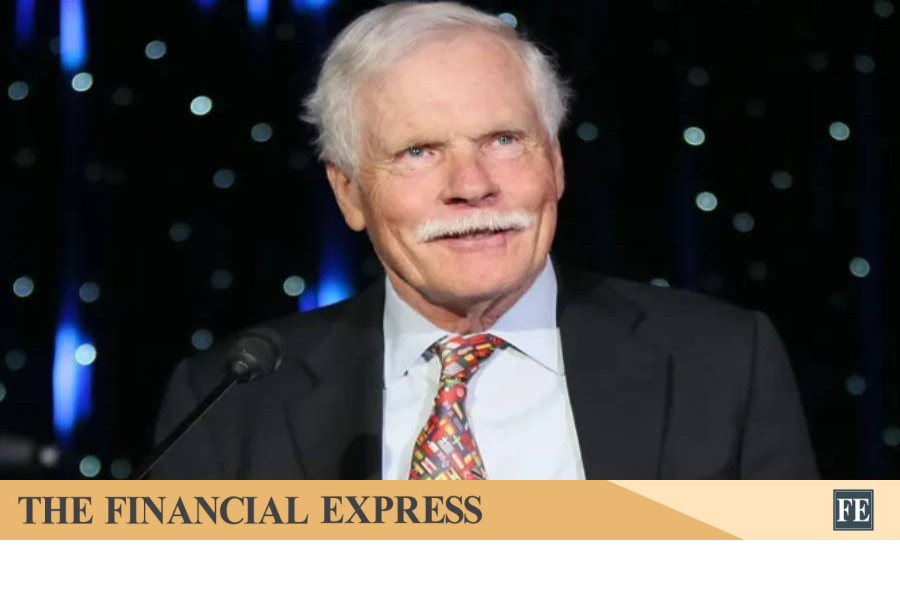
Ted Turner, the outspoken media pioneer who transformed television news by launching CNN, has died at the age of 87.

CNN reported that Turner passed away on Wednesday, citing a statement from Turner Enterprises.

Turner, known for his bold personality and risk-taking approach, revolutionised broadcasting with the launch of CNN in 1980 — the world’s first 24-hour news channel. His innovation reshaped how audiences consumed news, allowing them to access updates at any time.

Beyond media, Turner had diverse interests. He owned professional sports teams in Atlanta, successfully defended the America’s Cup in 1977, and donated $1 billion to United Nations-related causes. He was also widely known for his marriage to actress Jane Fonda and earned nicknames such as “Captain Outrageous” and “The Mouth of the South.”

In later years, Turner battled Lewy body dementia and shifted his focus to philanthropy and managing his vast land holdings, which included more than two million acres and the largest bison herd in the United States.

Turner built his media empire from his father’s billboard business into a global conglomerate, Turner Broadcasting System, which he sold to Time Warner in 1996 for $7.3 billion. The company then included multiple cable networks, sports teams and film studios.

CNN’s defining moment came during the 1991 Gulf War, when it became the first network to broadcast live coverage from Baghdad as the conflict unfolded, setting a new standard for real-time war reporting.

Although Turner was expected to retain influence after the sale, he was gradually sidelined — a development he later described as a major mistake.

The same year also saw the launch of Fox News under media mogul Rupert Murdoch, ushering in a new era of opinion-driven cable news that challenged CNN’s traditional reporting style.

Turner’s legacy remains deeply tied to the creation of modern 24-hour news and the global expansion of television journalism.​
 

PKDefense Forums: Country-by-Country Military Discussions

Log In Register Forums
Back