 American Defense
Saif
Senior Member
- Messages
- 21,794
- Likes
- 9,805
- Nation

- Residence
- Axis Group

Is America Virtually Friendless?
The contemporary world stands at a strange crossroads of history. There was a time when the map of global politics was drawn at Washington’s beck and call; today, cracks are appearing on the very walls of the White House. Specifically, Donald Trump’s radicalism in Iran and Middle East p
Is America Virtually Friendless?
Mir Abdul Alim
Published :
Apr 03, 2026 13:23
Updated :
Apr 03, 2026 13:23

The contemporary world stands at a strange crossroads of history. There was a time when the map of global politics was drawn at Washington’s beck and call; today, cracks are appearing on the very walls of the White House. Specifically, Donald Trump’s radicalism in Iran and Middle East policies, coupled with a blind allegiance to Israel, has increasingly isolated America. Not just adversary states, but even longtime allies now smirk at America’s "anti-terror" rhetoric. The question arises: when the protector turns predator, who will steer the global order?
Trump’s policies have not only alienated the international community but have also engineered an unprecedented polarisation within America itself. Anti-Trump protests are no longer merely opposition agendas; they are outbursts of public grievance. From Democrats to a segment of Republicans, many believe Trump’s reckless decisions are dismantling America’s internal stability. The cries of ordinary citizens on the streets make it clear: Americans are no longer prepared to see their tax dollars squandered on unnecessary wars on foreign soil. This internal volatility has hollowed out the nation’s capacity for global leadership from within.
The aggressive and unilateral nature of US policy has sparked a tidal wave of protest across the globe. These demonstrations are no longer confined to Middle Eastern cities. From London, Paris, and Tokyo to Sydney, major global metropolises are reeling against Trump’s bellicose stance. To the average global citizen, America is no longer perceived as the "vanguard of democracy," but rather as the architect of a volatile world order. From social media platforms to street banners, a profound disdain for Trump’s erraticism is palpable. This public outcry is eroding America’s painstakingly built "soft power" its cultural and moral legitimacy, which may take decades to recover.
One could argue that America’s global prestige met its demise in the Iran conflict. By engaging in direct confrontation with Iran, Washington has lost even its minimal moral standing. The unilateral withdrawal from the Obama-era nuclear deal, and provocative actions defying international norms have proven that America seeks chaos over global peace. The imposition of one inhumane sanction after another, making life miserable for ordinary Iranians, has not been viewed kindly by international human rights organisations. This stubbornness has called into question America’s diplomatic competence, dragging its international stature to an all-time low.
The ultimate irony is that those who seek to judge global terrorism now find themselves in the dock. Carrying out unprovoked drone strikes in Iraq and Iran to assassinate military officials is, in essence, a form of state-sponsored terrorism. When America violates the sovereignty of other nations to launch attacks, its "War on Terror" slogan turns into a mere farce. A state that does not respect international law loses its credibility when preaching the rule of law. This hypocrisy suggests that America itself has become one of the greatest threats to global peace.
Every American move in the Middle East appears dedicated to the interests of Israel. From the erosion of Palestinian rights to the pressure cooker tactics against Iran, US foreign policy acts as a handmaiden to Tel Aviv. By recognising Jerusalem as Israel’s capital and making controversial decisions regarding the Golan Heights, the Trump administration has completely obliterated its neutrality in the eyes of Muslim nations. This blind loyalty has cost America its credibility in the Arab world, a move that will prove suicidal for its long-term geopolitical interests.
Even the European Union and NATO, long considered Washington’s most steadfast allies, are now distancing themselves. Frustrated by Trump’s "America First" policy and his idiosyncratic whims, nations like Germany, France, and Canada no longer blindly nod to every White House directive. On issues ranging from trade with Iran to environmental accords, the rift is glaring. Washington can no longer dictate terms to its allies; instead, European leaders are increasingly contemplating strategic autonomy, independent of American influence.
The throne of unilateral hegemony is cracking. The "Pax Americana" that controlled the post-WWII world order is nearing its end. Trump’s ultra-nationalism and his tendency to snub international organisations have caused significant structural damage to American dominance. The world no longer looks solely toward Washington. Taking advantage of this American retreat, emerging powers like China and Russia have become significantly more confident and assertive. The world is gravitating toward a multi-polar reality where America’s role as the sole global "boss" is becoming a relic of history.
The military bases established across various Muslim countries, often disregarding religious sentiment and public will, are now under intense scrutiny. Built with the cooperation of self-serving local elites, these bases are viewed as tools for interfering in internal politics and plundering resources. The ordinary Muslim populace now realises these bases are not for their security, but for maintaining Western control. The demand for the withdrawal of US troops from Iraq and Syria is no longer just a slogan; it is a popular mandate that will challenge the US presence in the near future.
Driven by geopolitical interests and an obsession with energy resources, America reduced Iraq to rubble fifteen years ago. The world has not forgotten the dark history of destroying a structured nation under the false pretext of "weapons of mass destruction." Now, the same playbook is being attempted against Iran. This naked selfishness and addiction to war have left deep scars and resentment globally. No matter how much America tries to reclaim its lost glory, the blood-stained history of Iraq and Libya will continue to haunt it.
Furthermore, the wars imposed by America and the subsequent barrage of trade and economic sanctions have triggered extreme instability in the global economy. Developing nations, including Bangladesh, are directly suffering due to oil market volatility and disruptions in international supply chains. Trump’s "trade wars" have unsettled global markets. The Trump administration cannot evade the responsibility of pushing ordinary people into economic crises for narrow political gains. The tendency to hold the world hostage via dollar hegemony is now beginning to backfire.
By launching drone strikes or military operations without the mandate of international law or the UN Security Council, America fosters a culture of impunity. They preach international law while shattering it whenever it suits their convenience. This duplicity and arrogance have branded America as a "rogue state" in the court of global conscience. America’s lectures on the rule of law are no longer heeded, as they have become the primary violators of those very laws.
An analysis of the current situation and international equations suggests that America is now virtually friendless. While its military and nuclear prowess remains vast, it lacks reliable partners who offer moral and diplomatic support. The Trump administration has failed to grasp the eternal truth that the world cannot be ruled by brute force alone. This isolation proves that the days of American hubris are waning. The world no longer desires a "Big Brother"; it seeks a balanced world order based on sovereignty and mutual respect.
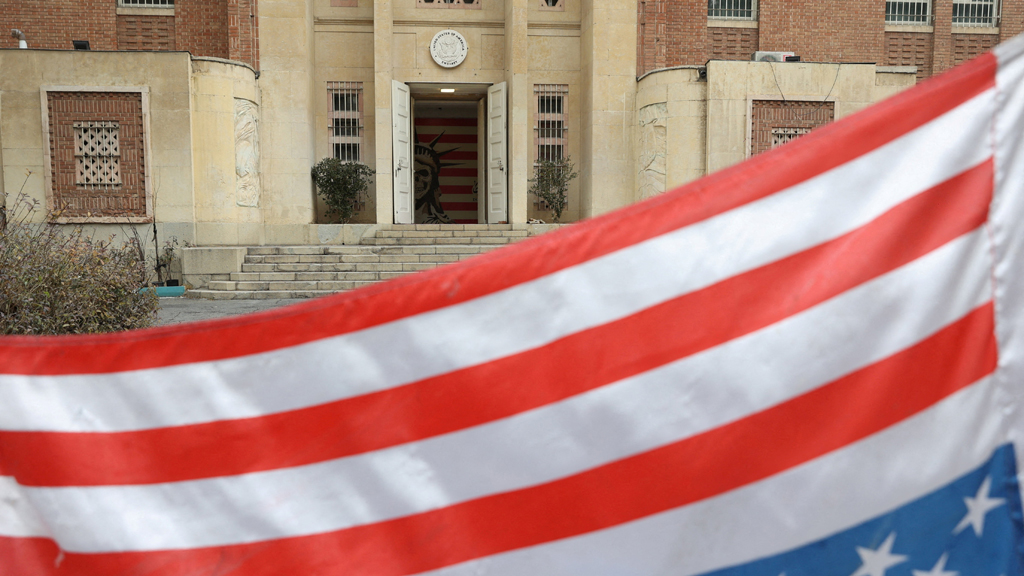
Ultimately, America’s current crisis is not just a failure of geopolitical manoeuvring, but a result of the moral decay of its long-standing hegemony. In its quest to dominate others and pose as the self-appointed "guardian" of global democracy, Washington has become entangled in its own web. The Trump administration’s rash decisions have proven that military might or the power of the dollar cannot hold a modern world order hostage indefinitely. The flames of protest beneath the American flag are a manifestation of the world’s accumulated grievances. If America does not abandon its ultra-nationalism, its appeasement of Israel, and its interference in the sovereignty of others, it will find itself utterly isolated. A nation once seen as a role model for development is now identified as an instigator of war.
The inexorable law of history is that no empire is permanent if it loses its foundation of justice. Unless Washington returns to the path of international values, mutual respect, and peace, it will not only lose its allies but will eventually find itself with no destination other than the dustbin of history. The world no longer seeks a single "master"; it yearns for a safe planet based on equal rights, where the blood of innocent people is not shed for the whims of a superpower.
The writer is a journalist and columnist.
Mir Abdul Alim
Published :
Apr 03, 2026 13:23
Updated :
Apr 03, 2026 13:23
The contemporary world stands at a strange crossroads of history. There was a time when the map of global politics was drawn at Washington’s beck and call; today, cracks are appearing on the very walls of the White House. Specifically, Donald Trump’s radicalism in Iran and Middle East policies, coupled with a blind allegiance to Israel, has increasingly isolated America. Not just adversary states, but even longtime allies now smirk at America’s "anti-terror" rhetoric. The question arises: when the protector turns predator, who will steer the global order?
Trump’s policies have not only alienated the international community but have also engineered an unprecedented polarisation within America itself. Anti-Trump protests are no longer merely opposition agendas; they are outbursts of public grievance. From Democrats to a segment of Republicans, many believe Trump’s reckless decisions are dismantling America’s internal stability. The cries of ordinary citizens on the streets make it clear: Americans are no longer prepared to see their tax dollars squandered on unnecessary wars on foreign soil. This internal volatility has hollowed out the nation’s capacity for global leadership from within.
The aggressive and unilateral nature of US policy has sparked a tidal wave of protest across the globe. These demonstrations are no longer confined to Middle Eastern cities. From London, Paris, and Tokyo to Sydney, major global metropolises are reeling against Trump’s bellicose stance. To the average global citizen, America is no longer perceived as the "vanguard of democracy," but rather as the architect of a volatile world order. From social media platforms to street banners, a profound disdain for Trump’s erraticism is palpable. This public outcry is eroding America’s painstakingly built "soft power" its cultural and moral legitimacy, which may take decades to recover.
One could argue that America’s global prestige met its demise in the Iran conflict. By engaging in direct confrontation with Iran, Washington has lost even its minimal moral standing. The unilateral withdrawal from the Obama-era nuclear deal, and provocative actions defying international norms have proven that America seeks chaos over global peace. The imposition of one inhumane sanction after another, making life miserable for ordinary Iranians, has not been viewed kindly by international human rights organisations. This stubbornness has called into question America’s diplomatic competence, dragging its international stature to an all-time low.
The ultimate irony is that those who seek to judge global terrorism now find themselves in the dock. Carrying out unprovoked drone strikes in Iraq and Iran to assassinate military officials is, in essence, a form of state-sponsored terrorism. When America violates the sovereignty of other nations to launch attacks, its "War on Terror" slogan turns into a mere farce. A state that does not respect international law loses its credibility when preaching the rule of law. This hypocrisy suggests that America itself has become one of the greatest threats to global peace.
Every American move in the Middle East appears dedicated to the interests of Israel. From the erosion of Palestinian rights to the pressure cooker tactics against Iran, US foreign policy acts as a handmaiden to Tel Aviv. By recognising Jerusalem as Israel’s capital and making controversial decisions regarding the Golan Heights, the Trump administration has completely obliterated its neutrality in the eyes of Muslim nations. This blind loyalty has cost America its credibility in the Arab world, a move that will prove suicidal for its long-term geopolitical interests.
Even the European Union and NATO, long considered Washington’s most steadfast allies, are now distancing themselves. Frustrated by Trump’s "America First" policy and his idiosyncratic whims, nations like Germany, France, and Canada no longer blindly nod to every White House directive. On issues ranging from trade with Iran to environmental accords, the rift is glaring. Washington can no longer dictate terms to its allies; instead, European leaders are increasingly contemplating strategic autonomy, independent of American influence.
The throne of unilateral hegemony is cracking. The "Pax Americana" that controlled the post-WWII world order is nearing its end. Trump’s ultra-nationalism and his tendency to snub international organisations have caused significant structural damage to American dominance. The world no longer looks solely toward Washington. Taking advantage of this American retreat, emerging powers like China and Russia have become significantly more confident and assertive. The world is gravitating toward a multi-polar reality where America’s role as the sole global "boss" is becoming a relic of history.
The military bases established across various Muslim countries, often disregarding religious sentiment and public will, are now under intense scrutiny. Built with the cooperation of self-serving local elites, these bases are viewed as tools for interfering in internal politics and plundering resources. The ordinary Muslim populace now realises these bases are not for their security, but for maintaining Western control. The demand for the withdrawal of US troops from Iraq and Syria is no longer just a slogan; it is a popular mandate that will challenge the US presence in the near future.
Driven by geopolitical interests and an obsession with energy resources, America reduced Iraq to rubble fifteen years ago. The world has not forgotten the dark history of destroying a structured nation under the false pretext of "weapons of mass destruction." Now, the same playbook is being attempted against Iran. This naked selfishness and addiction to war have left deep scars and resentment globally. No matter how much America tries to reclaim its lost glory, the blood-stained history of Iraq and Libya will continue to haunt it.
Furthermore, the wars imposed by America and the subsequent barrage of trade and economic sanctions have triggered extreme instability in the global economy. Developing nations, including Bangladesh, are directly suffering due to oil market volatility and disruptions in international supply chains. Trump’s "trade wars" have unsettled global markets. The Trump administration cannot evade the responsibility of pushing ordinary people into economic crises for narrow political gains. The tendency to hold the world hostage via dollar hegemony is now beginning to backfire.
By launching drone strikes or military operations without the mandate of international law or the UN Security Council, America fosters a culture of impunity. They preach international law while shattering it whenever it suits their convenience. This duplicity and arrogance have branded America as a "rogue state" in the court of global conscience. America’s lectures on the rule of law are no longer heeded, as they have become the primary violators of those very laws.
An analysis of the current situation and international equations suggests that America is now virtually friendless. While its military and nuclear prowess remains vast, it lacks reliable partners who offer moral and diplomatic support. The Trump administration has failed to grasp the eternal truth that the world cannot be ruled by brute force alone. This isolation proves that the days of American hubris are waning. The world no longer desires a "Big Brother"; it seeks a balanced world order based on sovereignty and mutual respect.
Ultimately, America’s current crisis is not just a failure of geopolitical manoeuvring, but a result of the moral decay of its long-standing hegemony. In its quest to dominate others and pose as the self-appointed "guardian" of global democracy, Washington has become entangled in its own web. The Trump administration’s rash decisions have proven that military might or the power of the dollar cannot hold a modern world order hostage indefinitely. The flames of protest beneath the American flag are a manifestation of the world’s accumulated grievances. If America does not abandon its ultra-nationalism, its appeasement of Israel, and its interference in the sovereignty of others, it will find itself utterly isolated. A nation once seen as a role model for development is now identified as an instigator of war.
The inexorable law of history is that no empire is permanent if it loses its foundation of justice. Unless Washington returns to the path of international values, mutual respect, and peace, it will not only lose its allies but will eventually find itself with no destination other than the dustbin of history. The world no longer seeks a single "master"; it yearns for a safe planet based on equal rights, where the blood of innocent people is not shed for the whims of a superpower.
The writer is a journalist and columnist.