[🇺🇸] USA News/Views

Post a Reply — Share your thoughts or reply to this thread...
Reply
Quick Reply ✓ Posted!
[🇺🇸] USA News/Views
94
5K
More threads by Saif

G   American Defense

US intelligence chief Tulsi Gabbard resigns

AFP

1779495278914.webp

US Director of National Intelligence Tulsi Gabbard speaks during the Raisina Dialogue, a multilateral conference in New Delhi on March 18, 2025. AFP file photo

US intelligence chief Tulsi Gabbard announced her resignation on Friday, ending the tenure of a long-term contrarian who appeared to be at odds with President Donald Trump over the Iran war.

Gabbard said in a letter to Trump posted on X that she was quitting as Director of National Intelligence to care for her husband after he was diagnosed with a rare form of cancer.

"Unfortunately, I must submit my resignation, effective June 30," Gabbard, whose job involved coordinating the global security information brought to Trump, wrote in the letter.

"My husband, Abraham, has recently been diagnosed with an extremely rare form of bone cancer. He faces major challenges in the coming weeks and months," added the 45-year-old.

"At this time, I must step away from public service to be by his side and fully support him through this battle."

Trump hailed Gabbard -- one of the few women left in the Republican's cabinet -- following the announcement.

"Tulsi has done an incredible job, and we will miss her," Trump said on his Truth Social network, adding that she "rightfully" wanted to help her husband with his cancer battle.

Her deputy Aaron Lukas would serve as acting Director of National Intelligence, the president added.

A former Democrat, Gabbard was a surprising choice to lead the giant US spy apparatus given her previous history of questioning intelligence and opposition to America's foreign military interventions.

As a congresswoman, Gabbard had in particular expressed opposition to going to war against Iran.

She faced questions over her 2017 meeting with now-deposed Syrian leader Bashar al-Assad and her peddling of Kremlin propaganda, particularly false conspiracy theories about the Ukraine war.

Iraq veteran

She was also regarded with suspicion by some over her views on US government surveillance and her backing for National Security Agency (NSA) leaker Edward Snowden, seen on both sides of Congress as having imperiled Americans' safety.

Trump pressed on with the appointment, but she appeared to be increasingly frozen out of decision making in recent months as he headed towards the war with Iran.

She was reportedly not in the room when Trump huddled with his top advisors in the immediate-run up to the launch of the joint US-Israeli strikes on Iran on February 28.

After the war began, she repeatedly contradicted or failed to fully back the justifications that the Trump administration gave for launching the war.

She repeatedly declined to endorse Trump's claim that Iran posed an imminent threat -- an assessment that the administration used to justify the strikes.

Testifying to Congress, she stressed that the decision was "the responsibility of the president."

Gabbard also said US intelligence had concluded that Iran was not rebuilding nuclear enrichment capacities destroyed last year by the United States and Israel -- also used as a major justification for the war.

The Hawaii native served in Iraq with the Army National Guard. The experience informed her opposition to America's long foreign wars, as it did for Vice President JD Vance and Pentagon chief Pete Hegseth.

Gabbard got married in a Hindu ceremony to her Hawaii-based cinematographer husband.

They met while shooting her campaign advertisements and he proposed to her while surfing in the sunset.

Gabbard's mother, born on the US mainland, embraced Hinduism and raised her children in the tradition. Her first name Tulsi is a sacred plant in Hinduism, and she is a lifelong vegetarian.​
 

Trump administration orders Green Card applicants to return home to apply

bdnews24.com

Published :
May 23, 2026 23:25
Updated :
May 23, 2026 23:25

1779590119199.webp


The US administration has introduced a major change in its immigration policy under which most people seeking permanent residency, or a Green Card, will now have to apply from outside the United States.

The change was announced by the US Citizenship and Immigration Services (USCIS) on Friday, according to the BBC.

Under the previous system, people on temporary stays in the US were allowed to apply for Green Cards while remaining in the country.

The new rule allows this only in “extraordinary circumstances”, with most applicants now required to return to their home countries and apply through US embassies or consulates.

Non-immigrant visa holders, including students, tourists and temporary workers, will no longer be able to use their stay in the US as the starting point for Green Card applications, except in special cases.

“This policy allows our immigration system to function as the law intended instead of incentivising loopholes,” the USCIS said in a statement.

It added that processing applications from abroad would reduce the likelihood of rejected applicants remaining in the US illegally.

“Following the law allows the majority of these cases to be handled by the US Department of State at US consular offices abroad, as was designed to be the intended process,” the statement said.

It also said the move would help free up resources for other priorities, including visas for victims of violent crime and human trafficking, naturalisation applications and other cases.

“These changes will help make our system fairer and more efficient,” the agency said.

Previously, many applicants were able to remain in the US with family members, often US citizens or Green Card holders, while their applications were being processed, which could take several years.

Under the new policy, that arrangement will no longer apply in most cases.

The Department of Homeland Security said in a post on X, “Our country’s immigration process is over for those who try to game the system.”

However, critics say the new rules will make it harder to obtain Green Cards and could reduce legal immigration.

More than one million people are currently waiting for Green Card decisions in the US, the British broadcaster says.

It is not immediately clear whether their applications will also fall under the new rules or require additional steps.

USCIS officials said applicants deemed beneficial to the US economy or national interest may still be allowed to apply from within the country, while others must follow the new overseas application process.​
 

Trump claims 2020 election 'rigged' at least 107 times in six months as midterms loom

REUTERS

Published :
May 26, 2026 20:18
Updated :
May 26, 2026 20:18

1779839267371.webp

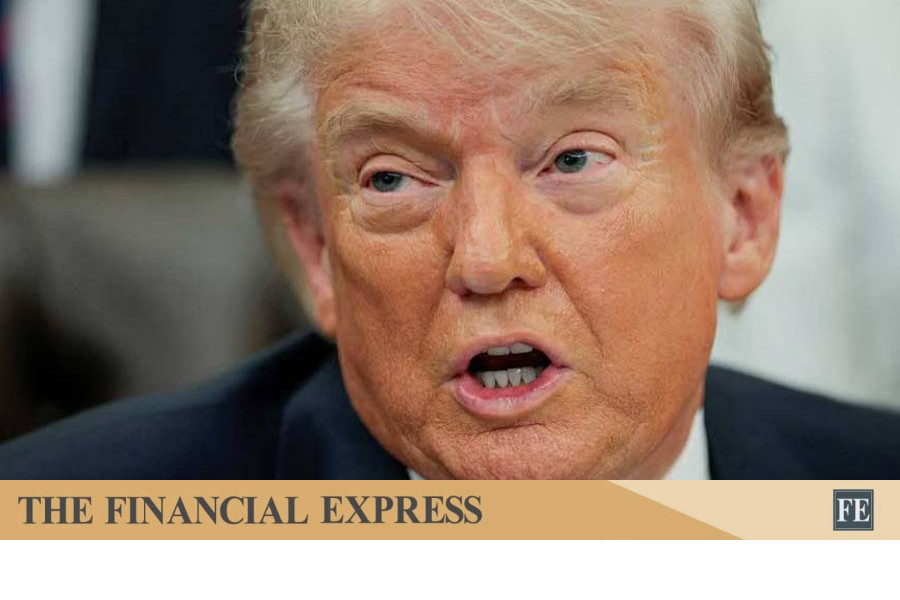
US President Donald Trump speaks during an event to sign a memorandum in the Oval Office at the White House in Washington, DC, US, May 5, 2026. Photo : REUTERS

President Donald Trump has repeated his false claim that the 2020 election was stolen from him at least 107 times in the last six months, keeping the grievance front and centre even as he faces new political risks from the war with Iran and looming midterm elections.

Trump devotes near-daily attention to the issue, a Reuters review of his public events, interviews and online posts found, and his comments often come in waves. One Saturday in April, amid a fragile ceasefire with Iran, Trump posted allegations about the 2020 election - when he lost to his predecessor Joe Biden - seven times on his Truth Social account.

He has rehashed his claims during at least six meetings with world leaders, two celebrations of professional sports teams and the White House observances of Hanukkah and Christmas. In unscripted remarks at the World Economic Forum in Davos, Switzerland, in January, he said "people will soon be prosecuted for what they did."

He reiterated his claims of a rigged election at a White House picnic for lawmakers last week and again while speaking to reporters before boarding Air Force One.

"If we had Jesus Christ come down and count the votes, I would have won California," Trump said of the reliably Democratic state he lost by 29 percentage points in 2020 and more than 20 percentage points in 2024. "But it's a rigged vote."

Aides and interviewers often shrug off his comments, and critics dismiss them as the musings of a sore loser.

But Trump's relentless focus on 2020 points to a forward-looking strategy aimed at justifying new voting restrictions, reinforcing party loyalty and energising supporters ahead of November elections that will determine control of Congress, according to two White House officials and two people familiar with the matter who were granted anonymity to speak candidly.

By casting the 2020 election as illegitimate, he is also laying the groundwork to challenge Republican losses and undermine Democrats if they win back power, multiple election experts said.

"He’s not looking back; this is about the midterms," said Alexandra Chandler, an election expert at the nonpartisan advocacy organisation, Protect Democracy. "He’s trying to create a fog of disinformation with this. So then if he dials it up further with federal interference, the public will not react as surprised."

In April, despite having kicked off a national redistricting war months earlier, Trump denounced the results of Virginia's election to redraw US congressional district maps as "rigged," without providing evidence of fraud.

“President Trump is committed to ensuring that Americans have full confidence in the administration of elections, and that includes totally accurate and up-to-date voter rolls free of errors and unlawfully registered non-citizen voters," White House spokeswoman Abigail Jackson said in a statement.

Republican Voters Sympathetic To False Claims

Trump's rhetoric has gained traction among Republican voters. A Reuters/Ipsos poll in April found that 63 percent of Republican voters believe Trump's false claim that the 2020 election was stolen, a share that has ⁠remained largely unchanged in recent years.

An even bigger share of Republicans - 82 percent - said they agreed large numbers of fraudulent ballots are cast by non-citizens in US elections.

By comparison, only 9 percent of Democrats and 21 percent of independents said they believed Trump lost in 2020 due to wrongdoing, and 18 percent of Democrats and 38 percent of independents shared concerns about non-citizens casting fraudulent ballots.

Multiple courts, state officials and prior reviews found no evidence of widespread fraud in the 2020 election.

Even so, Trump last year tapped an election-security czar to re-investigate his 2020 loss. Those fresh probes have turned up no new evidence, Reuters reported in April. Administration officials also sought last year to ban voting machines used in more than half of US states as they brainstormed about how the federal government could take control over state-run elections, Reuters reported last week.

Trump's 2020 rhetoric intensified in December after he sought to pardon Tina Peters, a Colorado county clerk who was convicted by the state of tampering with voting machines after that election. He repeated the allegations as he pressed congressional Republicans to pass his Save America Act, which would require proof of citizenship for voting, and again while stepping up attacks on mail-in voting.

Though the US Senate has failed to advance Trump's nationwide voting changes, numerous states have implemented similar proof-of-citizenship requirements and stricter identification requirements. Trump has also signed executive orders trying to limit mail-in voting, but those actions are currently being challenged in court by Democrats.

Some Republicans Push Back

In the meantime, Trump has used his 2020 claims to deflect blame for intractable global conflicts and domestic policy disputes.

In December, as the war in Ukraine dragged on despite Trump's 2024 campaign pledge to resolve it in a day, the US president told Ukrainian President Volodymyr Zelensky that the "rigged" US election allowed for Russia's 2022 invasion. In February, he told families who had lost loved ones in immigration-related crimes that they would be “home with your son, daughter” if the election had not been “rigged.”

The 2020 election has also become a loyalty test for many of Trump's nominees for key federal roles, including judicial picks, who have refused under oath to tell Democratic senators that Biden won. Instead, they say only that Congress certified the election in his favor.

Nevertheless, some Republicans are pushing back.

RightCount, a group of Republicans in battleground states, recently relaunched a campaign to defend the integrity of state-administered elections and counter Trump's efforts to nationalise them.

"All the accusations that have been made have all been refuted, but he doesn't want to listen," said former Arizona Governor Jan Brewer, a supporter of Trump and a member of the group.

After losing his Republican primary in Louisiana last week after Trump refused to back him, US Senator Bill Cassidy took aim at the president's election rigging claims in his concession speech. Cassidy drew the president's wrath by supporting his impeachment after the Jan 6, 2021, Capitol attack by Trump supporters trying to stop the 2020 election certification.

“When you participate in democracy, sometimes it doesn’t turn out the way you want it to,” Cassidy said. “But you don’t pout. You don’t whine. You don’t claim the election was stolen.”​
 

US judge temporarily blocks Trump's $1.8 billion 'weaponization' fund

REUTERS

Published :
May 29, 2026 20:04
Updated :
May 29, 2026 20:05

1780107987299.webp

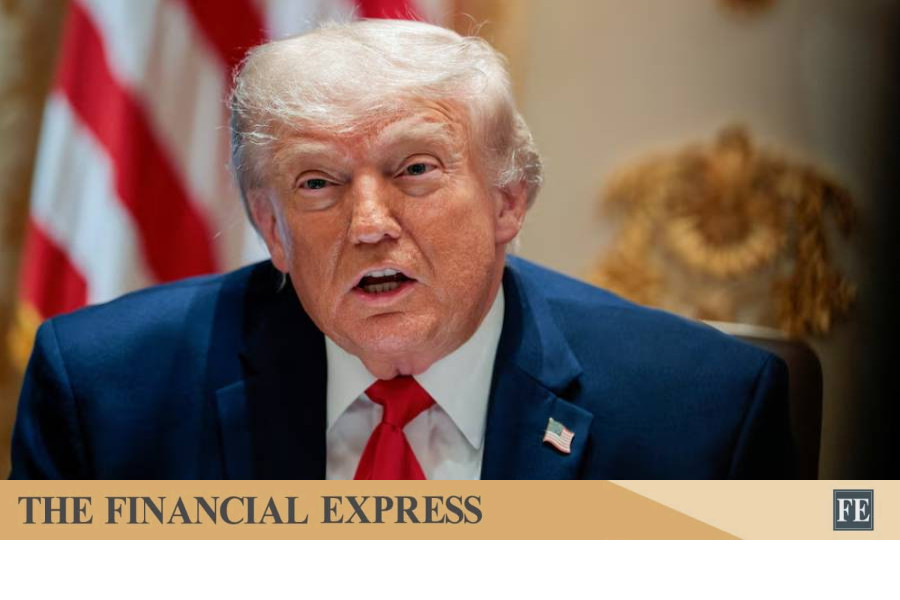
U.S. President Donald Trump speaks during a cabinet meeting in the Cabinet Room at the White House, in Washington, D.C., U.S., May 27, 2026. Photo : REUTERS/Evan Vucci

A U.S. judge on Friday temporarily ‌blocked President Donald Trump's administration from setting up a nearly $1.8 billion fund to compensate victims of what ⁠Trump has called government “weaponization."

The order by U.S. District Judge Leonie Brinkema of the Eastern District of Virginia blocks the Trump administration from "taking any further action" to set up ‌or ⁠operate the fund while the judge hears additional legal arguments.

The Justice Department announced the creation ⁠of an "Anti-Weaponization Fund" last week as part of an agreement to ⁠settle Trump's lawsuit against the Internal Revenue Service ⁠over the leak of his tax records.​
 

Semiconductor roadshow in US begins today
Staff Correspondent 05 June, 2026, 00:24

1780631014328.webp


The Bangladesh Semiconductor Industry Association is set to kick off ‘USA Roadshow 2026’ today, as part of the Silicon River and BRAINGAIN initiatives, aiming to enhance Bangladesh’s connection with the global semiconductor ecosystem.

Running until June 13, the 9-day roadshow will bring together semiconductor companies, universities, accelerators, entrepreneurs, researchers, investors, policymakers, and members of the Bangladeshi diaspora across the United States.

The initiative is being led by BSIA president MA Jabbar and chief architect of Silicon River Bangladesh Initiative and Purdue University professor Muhammad Mustafa Hussain, with participation from BSIA leadership, industry representatives, academic partners, members of the BRAINGAIN network, and representatives from the Embassy of Bangladesh in Washington, DC.

The roadshow will visit key semiconductor and innovation hubs in the US.

On Friday, that is today, in Austin, Texas, the delegation will meet with AMD, Tokyo Electron and NXP Semiconductors.

A BRAINGAIN Reception Lunch is scheduled for June 6.

On June 7 in Phoenix, Arizona, there will be a BRAINGAIN Reception Dinner.

On June 8, the group will tour Arizona State University and Cactus Materials.

Meetings in Silicon Valley are planned for June 9 with SanDisk and GlobalFoundries and on June 10, visits to Synopsys and Credo Technology Group in Folsom, California.

On June 11, engagements are set with Intel, Arm and other industry leaders.

The roadshow wraps up on June 13 in Portland, Oregon, with a final BRAINGAIN Reception Dinner for Bangladeshi-origin tech professionals from the Pacific Northwest.

Jabbar said, ‘Through Silicon River and BRAINGAIN, we are building bridges between global expertise and national aspirations. Our goal is to create opportunities for future generations, strengthen our innovation ecosystem, and position Bangladesh as a meaningful participant in the technologies that will shape the future.’

Mustafa Hussain said, ‘This roadshow is designed to strengthen relationships with global industry leaders, universities, entrepreneurs, investors and the Bangladeshi diaspora while creating pathways for knowledge exchange, workforce development, innovation and long-term ecosystem growth.’​
 

Alarming rise of NTMs

Asjadul Kibria

Published :
Jun 06, 2026 23:43
Updated :
Jun 06, 2026 23:43

1780792297210.webp


Following US President Donald Trump's tariff blitz last year, countries worldwide have been shaken by the rise in tariff barriers. Trump's move provoked many countries to impose higher tariffs on imports, increasing trade costs for their partners. Besides the surge in tariffs, the rise in non-tariff barriers (NTBs) has become a serious problem for developing nations. Though non-tariff measures (NTMs) are not new in global trade, and countries have continuously struggled to address them, recently, a new wave of NTMs has evolved into NTBs.

UN Trade and Development (UNCTAD), in its latest global trade update, highlighted the issue. Released last month, the report showed tariffs increased sharply in 2025, rising by 10 per cent for developed countries, 16 per cent for developing countries, and 18 per cent for least developed countries (LDCs). Even so, tariffs are not the main cost for most countries because NTMs impose higher export costs than tariffs for 88 per cent of nations. "They include technical regulations, health and safety requirements, and administrative procedures," said the UNCTAD report. "They often involve compliance, information and procedural costs." NTMs such as regulations, mandatory standards, or product requirements now drive most trade costs, shaping who trades, what is traded, and to which markets. "For developing countries, this creates a double burden. They face higher tariffs while also trying to meet increasingly complex rules," it added.

NTMs are broadly defined as policy measures other than tariffs that affect international trade in goods. Most NTMs are technical measures aimed at protecting public health and the environment and are essential public policy instruments. Nevertheless, they may have substantial trade effects by generating information, compliance, and procedural costs. Some NTMs are NTBs, such as import licensing requirements, quotas, import prohibitions, and export bans. These tools generally limit or restrict the export or import of various products.

The international classification of NTMs includes: Sanitary and Phytosanitary (SPS) measures; Technical Barriers to Trade (TBT); Pre-shipment Inspection and other formalities; Contingent trade-protective measures; Non-automatic licensing, quotas, prohibitions, and quantity control; Price-control measures; and Export-related Measures. The first three NTMs are technical measures, and all the rest are non-technical measures. There are other NTMs like finance measures; measures affecting competition, trade-related investment measures; distribution restrictions; restrictions on post-sales services; subsidies and other forms of support; government procurement restrictions; intellectual property (IP) and rules of origin.

The scope of NTMs is very wide, with overlaps among various measures. Different countries use different measures in different ways for different purposes. NTMs are mostly linked to domestic public policies, and no single focal point administers them. Except for a few quantitative measures (e.g., quotas), most NTMs are qualitative.

There are three relevant World Trade Organization (WTO) agreements : General Agreement on Tariffs and Trade 1994 (GATT), Agreement on Technical Barriers to Trade (TBT Agreement), and Agreement on the Application of Sanitary and Phytosanitary Measures (SPS Agreement). GATT provisions seek to ensure that WTO members abide by trade liberalisation commitments and do not re-impose protective or restrictive measures through domestic policies or NTMs that discriminate against imports. The TBT agreement aims to standardise technical regulations and their application. The SPS agreement asks WTO members to base measures for the protection of human, animal, or plant life or health on international standards. Both the TBT and SPS agreements restrain members from setting and applying standards that are more trade-restrictive than necessary to achieve a legitimate objective.

Due to the diversity and complexity of NTMs, it is difficult for developing countries like Bangladesh to understand the measures and take adequate steps to address them. Resource constraints and a lack of skilled manpower make NTMs more challenging for these countries. While developed and some advanced developing nations deploy significant resources to deal with NTMs effectively, others struggle to develop the necessary human resources, technical knowledge, and logistics. That is why NTMs become more burdensome for these countries.

Over the decades, Bangladesh's exports have faced various NTMs in different potential markets. Despite market access thanks to lower tariffs, NTMs often act as NTBs, blocking the potential penetration of Bangladesh-made goods. The country's exports to India have faced various NTBs over the decades despite tariff-free access to most products. Nevertheless, Bangladesh has succeeded to some extent in dealing with Indian NTMs by improving product standards and adjusting other requirements for the Indian market. Exports to India increased modestly over the decades, though still below potential. After the fall of the autocratic Hasina regime, bilateral relations with India were strained during the Yunus-led interim regime. New Delhi, unwilling to accept the changed reality in Bangladesh, imposed several NTBs, making exports more expensive. The Hasina regime was subservient to India, persistently compromising Bangladesh's greater interests. The fall of the regime through the July revolution in 2024, at the cost of at least 1,400 lives, fuelled anti-Indian sentiment in the country.

India's use of NTBs also revealed its hostility toward Bangladesh, showing how trade tools are used to enhance geopolitical pressure. For example, India restricted land ports for exporting goods from Bangladesh and imposed conditions on the use of sea ports, thereby increasing export costs. Though Dhaka requested a discussion on NTBs, New Delhi has given no positive response, indicating its unwillingness to remove the barriers soon.

Like India, other countries also use NTMs and NTBs, mainly for geopolitical reasons. That's why the UNCTAD report mentioned: "Governments are increasingly using NTMs to advance objectives linked to economic nationalism and economic security, as both developed and developing economies seek not only to protect domestic industries but also to shape and secure control over key global value chains, underscoring a broader trend toward the strategic use of interdependence."

The report also noted that recent US trade deals focus heavily on easing regulatory and administrative requirements for US exporters. Most of these include sector-specific provisions on the recognition of US standards and conformity assessment for vehicles, pharmaceuticals and agricultural food products in bilateral trade. For instance, as noted in the UNCTAD report, under the Bangladesh-US Agreement on Reciprocal Trade, Bangladesh recognises the US vehicle standards (TBT) and the US Food and Drug Administration certificates for the automotive, medical devices, and pharmaceutical sectors. The agreement compels Bangladesh not to impose a number of NTBs on US goods.

The UNCTAD report further noted that in some countries, negotiations covered the removal of local content requirements, as well as the elimination or simplification of import licenses. "With Indonesia and Malaysia, agreements also covered strategically important critical minerals, with countries agreeing to refrain from imposing any type of export restrictions," it added.

To address the challenge of rising NTBs, the UN agency urged greater transparency to reduce the costs associated with NTMs. "Improving transparency can reduce trade costs associated with non-tariff barriers by about 19 per cent. When countries fail to notify measures, the costs are comparable to imposing a 28 per cent tariff," it pointed out. "Small companies with limited resources, these hidden costs can be enough to completely exclude them from entering or participating in the global market."

For Bangladesh, dealing with NTMs in the coming days will be more challenging, as NTMs worldwide are rising amid increased focus on national security and geopolitical concerns. Extensive effort is needed to strengthen the capacity in this regard.​
 

Myanmar detains US businessman who wrote about military coup, sources say

REUTERS

Published :
Jun 12, 2026 16:18
Updated :
Jun 12, 2026 16:18

1781319316349.webp


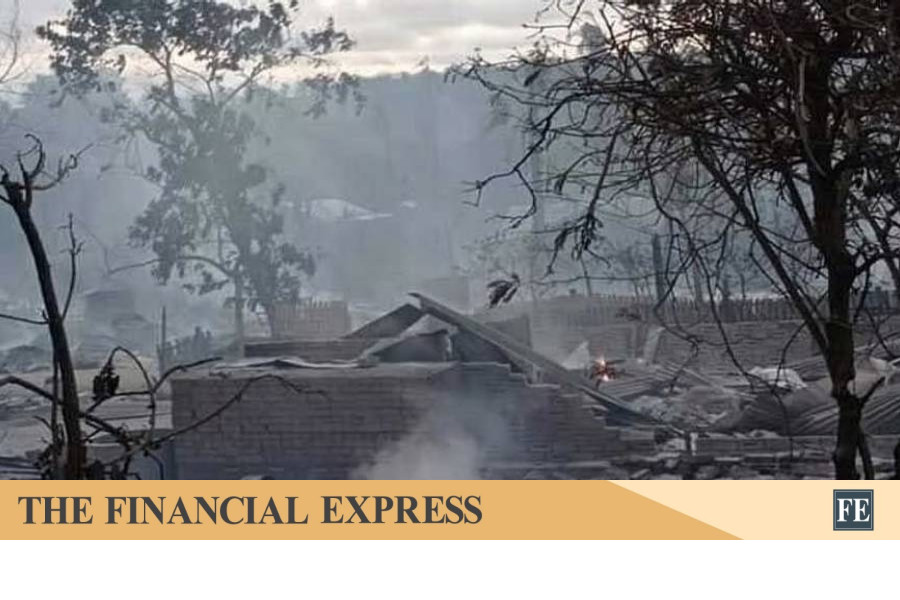
Representational photo: A view shows burnt houses in Kin Ma Village, Pauk Township, Magway Region, Myanmar Jun 16, 2021, in this picture obtained by Reuters from social media.

An American businessman who wrote a book about living through a military coup in Myanmar was detained on his return to the Southeast Asian nation on Thursday, according to two people briefed on the matter.

Adam Castillo, a former head of the American Chamber of Commerce in Myanmar who is based in Yangon where he runs a security firm, was stopped at an airport after travelling to the country, one of the people said.

A US State Department spokesperson said it was aware of reports of the detention of an American in Myanmar but had no further comment “due to privacy concerns”.

A spokesperson for the military-backed government did not immediately respond to requests for comment.

Castillo had been abroad promoting his book, Finding Our Voice, about staying in Myanmar following the 2021 coup that threw the country into turmoil, according to social media posts.

The military’s power grab ended a brief experiment in democratic rule under Nobel laureate Aung San Suu Kyi, and sparked a civil war between the army and a coalition of pro-democracy armed resistance forces allied to long-established ethnic minority groups.

In early April, former junta chief Min Aung Hlaing ⁠was sworn in as the country’s president, following a widely criticised, military-engineered election that excluded the main opposition groups, including Suu Kyi’s political party, and was conducted in the throes of conflict.

Castillo, a former US Marine, last year visited the White House and suggested to officials that the United States play a peace-broker role with a view to accessing rare earth minerals, Reuters reported.

His book chronicles the military’s bloody crackdown on pro-democracy protesters but also criticises Washington’s policy, including sanctions, as ineffective and advocates for more business engagement.​
 

Why Does the US stock market exceed GDP?

Abdullah A Dewan

Published :
Jun 21, 2026 00:09
Updated :
Jun 21, 2026 00:09

1782086370051.webp


One of the more intriguing facts in modern economics is that the value of the United States (US) stock market substantially exceeds the country's annual Gross Domestic Product (GDP), while in many other nations' stock market capitalisations and GDPs are roughly equal. At first glance, this appears paradoxical. How can the value of listed companies exceed the value of everything produced in a year?

The answer lies in the fundamental difference between what GDP measures and what stock markets value. GDP is an annual flow of goods and services produced within a country's borders during a single year. Stock market capitalisation, by contrast, is a stock measure representing the discounted present value of expected future profits. One measures current production; the other measures future earning power. Because stock markets look forward while GDP looks backward, a substantial gap between the two is not only possible but often expected.

A second distinction is that GDP measures economic activity occurring within national borders, whereas stock market capitalization reflects the value of companies wherever they earn their profits. American corporations generate substantial revenues and profits throughout the world. Apple, Microsoft, Nvidia, Alphabet, Amazon, and Meta derive a significant share of their earnings from international markets. GDP captures only the portion of their activities occurring within the US, while market capitalization reflects investors' expectations regarding future profits generated across the globe. In effect, US stock valuations incorporate worldwide income streams that never appear in US GDP statistics.

Using year-end 2025 estimates, the US stock market was worth about $69 trillion, while GDP was roughly $31 trillion, producing a market-cap-to-GDP ratio near 221 per cent.

The phenomenon can also be understood through the smile curve of value creation. The greatest profits are often captured at the two ends of the production process: research and development on one side, and branding, marketing, finance, logistics, and distribution on the other. The middle-the physical manufacturing and assembly stage-typically earns the smallest share of value added. Many American firms dominate these highly profitable ends of the smile curve. Their market valuations therefore reflect control over ideas, technology, intellectual property, software ecosystems, global brands, and financial networks rather than merely the value of physical goods produced. Countries that primarily occupy the manufacturing middle of the smile curve may generate substantial output yet capture only a modest share of the profits.

This distinction highlights the growing importance of intangible capital. Traditional economies were built upon factories, machinery, land, and physical infrastructure. Today's leading corporations increasingly derive their value from patents, algorithms, software, data, trademarks, and intellectual property. Unlike physical assets, these intangible assets can be scaled globally at very low marginal cost. A steel mill can produce only so much steel, but a software platform can add millions of users without constructing another factory. Financial markets place high valuations on such scalable future earnings, causing market capitalization to rise far faster than GDP.

The depth and sophistication of financial markets further magnify this effect. The U.S. possesses the world's largest, most liquid, and most trusted capital markets. Pension funds, mutual funds, insurance companies, sovereign wealth funds, and individual investors from around the world continuously channel savings into American equities. This enormous pool of capital increases demand for shares and supports higher valuations than would be expected from domestic GDP alone.

Institutional quality also matters. Investors place a premium on countries with reliable property rights, transparent accounting standards, independent courts, strong corporate governance, and predictable regulatory environments. Future profits are worth more when investors have confidence that those profits will be protected and enforceable. The rule of law, therefore, acts as a valuation multiplier. Countries with weaker institutions often experience lower stock valuations even when their economies are productive.

Another frequently overlooked factor is the way corporations are financed. The US relies heavily on public equity markets to fund business expansion. Much of corporate wealth therefore becomes visible through stock exchanges. By contrast, countries such as Germany traditionally rely more on bank-centered financing. Many highly successful firms remain privately held, family-owned, or financed through commercial banks rather than public stock markets. These firms contribute significantly to GDP but do not appear in market-capitalization statistics. Consequently, stock market value remains closer to GDP even though economic performance may be strong.

Pension systems also influence market size. In the US, retirement savings flow heavily into 401(k) plans, IRAs, mutual funds, and pension portfolios invested in equities. This creates a continuous institutional demand for stocks. In countries with large state-funded pay-as-you-go pension systems, household savings often bypass equity markets altogether. The result is a smaller stock market relative to GDP.

Interest rates provide another important explanation. Stock prices reflect the present value of future earnings. Lower interest rates reduce the discount rate applied to those earnings and thereby increase stock valuations. Over the past several decades, the U.S. has benefited from relatively low borrowing costs and deep capital markets. Investors have consequently been willing to pay higher multiples for future growth. Higher interest-rate environments generally produce lower market valuations relative to GDP.

The dollar's status as the world's principal reserve currency amplifies all these forces. Governments, central banks, corporations, and investors around the world hold dollar-denominated assets as stores of value. As global savings flow into American financial markets, US equities enjoy a structural valuation premium unavailable to most other countries. The world's confidence in the dollar effectively raises the value of American financial assets beyond what domestic economic activity alone might justify.

The distribution of income between labour and capital also matters. Countries with identical GDP levels can exhibit very different stock market valuations depending on how national income is divided. Where a larger share of economic output accrues to corporate profits, stock market capitalization naturally rises. Where more output flows to wages, social programs, or public-sector expenditures, stock market valuations tend to be lower. The Anglo-American economic model generally channels a larger share of income toward corporate earnings than many continental European systems, contributing to higher equity valuations.

International comparisons illustrate these differences clearly. Switzerland frequently records stock market capitalisation well above GDP because of globally dominant pharmaceutical and financial firms. Germany, despite its formidable industrial strength, often exhibits a lower ratio because many successful enterprises remain privately owned. Australia's ratio tends to hover closer to GDP because its market is concentrated in banking and natural-resource companies. China, despite possessing one of the world's largest economies, typically maintains a lower ratio than the U.S. because of state ownership, regulatory constraints, and differences in capital-market development.

Taken together, these factors reveal that the ratio of stock market capitalisation to GDP is far more than a financial statistic. It serves as a window into how nations create, capture, and retain economic value. Countries concentrated in manufacturing, commodities, agriculture, and domestic services may produce large volumes of output yet capture a smaller share of global profits. Countries that dominate innovation, intellectual property, software, finance, branding, and global distribution occupy the profitable ends of the smile curve and retain a disproportionate share of value added.

A further insight emerges from these international comparisons. Wealth alone does not create an extraordinarily large stock market. Many countries are wealthy because of natural resources, yet their market capitalisation remains relatively close to GDP. The distinguishing factor is often innovation. For example, a barrel of oil produces income once; a patented technology can produce income repeatedly for decades. A factory expands output incrementally; a software platform can serve millions of additional users at minimal cost.

Viewed through this lens, the gap between stock market capitalisation and GDP is not merely a measure of financial wealth, but a measure of where economic power resides. In a well-functioning economy, GDP growth and stock market value often reinforce one another, yet the decisive factor is not the volume of current output but the ability to transform knowledge, technology, and intellectual property into scalable future earnings.

In the twenty-first century, value increasingly belongs not to those who merely manufacture products, but to those who create ideas, control technology, own brands, and command the global channels through which value flows. The stock market therefore reflects not simply what an economy produces today, but what investors believe will continue to earn tomorrow. That is why America's market capitalization towers over its GDP, while many other nations remain much closer to parity.

Dr Abdullah A. Dewan is Professor Emeritus of Economics at Eastern Michigan University (USA); former physicist and nuclear engineer at the Bangladesh Atomic Energy Commission (BAEC).​
 

Top US court rejects Trump bid to restrict birthright citizenship
Agence France – Presse . Washington, United States 30 June, 2026, 21:31

1782865111270.webp

Donald Trump | AFP photo

The US Supreme Court on Tuesday rejected Donald Trump’s historic bid to restrict birthright citizenship.

The court, in an eagerly awaited decision on the final day of its term, ruled 6-3 to maintain the right to American citizenship for nearly everyone born on US soil.

Trump signed an executive order last year on the first day of his second term in the White House decreeing that children born to parents in the United States illegally or on temporary visas would not automatically become US citizens.

Lower courts blocked the move, ruling that under the Citizenship Clause of the 14th Amendment nearly everyone born on US soil is an American citizen.

The Supreme Court agreed in a majority opinion penned by Chief Justice John Roberts.

‘Children born in the United States to parents unlawfully or temporarily present are ‘subject to the jurisdiction’ of the United States and are citizens at birth under the Fourteenth Amendment’s Citizenship Clause,’ Roberts wrote.

In an unprecedented move for a sitting US president, Trump personally attended oral arguments on birthright citizenship at the Supreme Court in April.

Trump stayed for the presentation by his solicitor general, John Sauer, but did not remain for the arguments of American Civil Liberties Union (ACLU) attorney Cecillia Wang, who defended birthright citizenship.

Trump’s bid to end birthright citizenship was part of his wider campaign to restrict immigration, which includes the expulsion of millions of undocumented migrants.

During oral arguments before the Supreme Court, Sauer argued that unrestricted birthright citizenship encourages illegal immigration and ‘birth tourism,’ in which foreigners come to the United States solely to give birth.

The 14th Amendment states that ‘All persons born or naturalised in the United States, and subject to the jurisdiction thereof, are citizens of the United States.’

It does not apply to those not subject to US jurisdiction -- the children of foreign diplomats, for example.

The Trump administration argued that the 14th Amendment, passed in the wake of the 1861-1865 Civil War, addresses citizenship rights of former slaves and not the children of undocumented migrants or visitors.

Trump’s executive order banning birthright citizenship was premised on the notion that anyone in the United States illegally, or on a visa, is not ‘subject to the jurisdiction’ of the country and therefore excluded from automatic citizenship.

The Supreme Court rejected such a narrow definition in a landmark 1898 case involving a man named Wong Kim Ark, who was born in San Francisco in 1873 to parents who had come to the United States from China.

After a visit to China, Wong Kim Ark was denied reentry into the United States in 1895 under the Chinese Exclusion Acts.

The Supreme Court ruled, however, that he was a US citizen by virtue of being born in the United States.

The Supreme Court’s rejection of Trump’s bid to end birthright citizenship is the third major loss for Trump this term. The justices struck down most of his global tariffs in February and on Monday they blocked his bid to fire Federal Reserve governor Lisa Cook.​
 

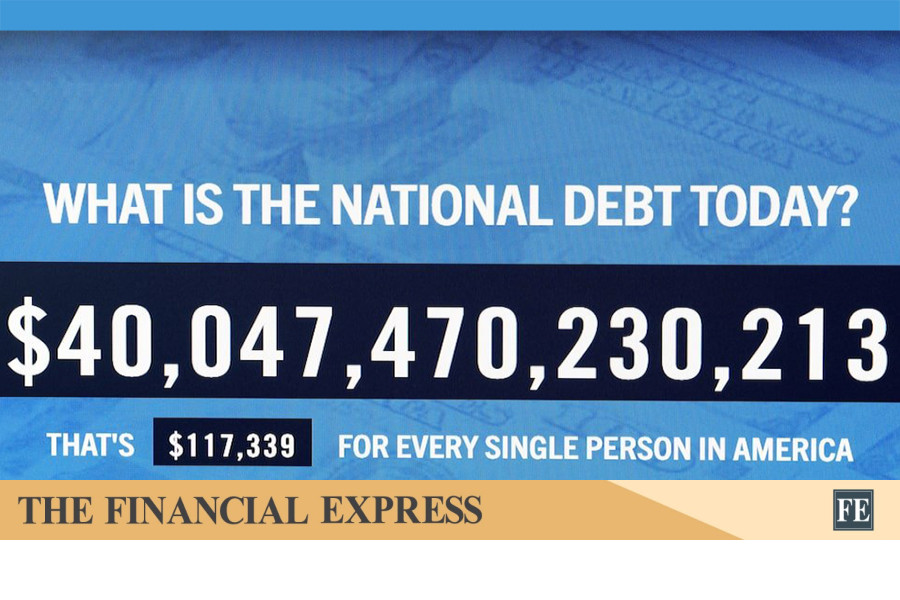
US debt crosses $40 trillion threshold after doubling under Trump and Biden

1787354814454.webp
 

25 years after 9/11, how did the ‘war on terror’ change the US?

Ali Riaz

1789110768518.webp

A firefighter fixes a photo of a first responder lost at the 9/11 attacks during the Fire Department of the City of New York’s memorial service, ahead of the 25th anniversary of the September 11, 2001 attacks on the World Trade Center. PHOTO: REUTERS

Today marks the 25th year of the attacks on the United States by the transnational terrorist organisation Al-Qaeda. In the past quarter of a century, the attacks and subsequent events have brought profound changes in the global arena and transformed the state and society in the United States.

We witnessed the so-called Global War on Terror by the US and its allies leading to the invasion of Afghanistan, occupation of Iraq, decimation of the base of the Al-Qaeda in Afghanistan, consequent proliferation of its offshoots throughout the world, the rise and demise of the Islamic State in Iraq and Syria (ISIS). Many autocratic regimes joined the bandwagon to use the pretext to persecute its legitimate opponents. Thousands have died, been maimed and displaced in various wars, in attacks by violent extremist organisations, as well as during “domestic security operations.”

We experienced blatant violations of international norms and laws in establishing secret detention centres known as “black sites” and normalising torture. Islamophobia spread and was justified in the name of national security; Muslims were painted as enemies. Countries considered consolidated democracies, especially in Europe, enacted laws limiting fundamental rights and privacy; violations of human rights of minorities were ignored. Countries where Muslims are minorities have seen their marginalisation, as “majoritarianism” became the key principle of governance. These developments provided an opportunity to some countries, such as China, to engage in en-masse detention of Muslims.

The global repercussion has continued for decades and its long-lasting impacts continue. Not only was the behaviour of states changed as to how they use force, but also engendered debates in international relations on the use of force without UN authorisation. Within the Muslim community, ideological divides and disputes became more visible. Sectarian rifts, such as the Shia-Sunni divide, and the differences between various madhhabs and maslaks, became issues of discussion, at times leading to a rise in conflict and violence. The question of acceptability of violence from an Islamic perspective created fissures while the participation of ulema, Islamic thinkers, academics, and political activists brought different perspectives to the fore. The rhetoric against Muslims, especially portraying them as outsiders and threats to security, by governments in Europe contributed to the growth of xenophobia. Although white supremacist ideas were not new, these developments contributed to the mainstreaming of white supremacist ideas and organisations in the long run.

Along with these changes in the state structures, laws, and governance around the globe, the United States has also witnessed changes in society and government. Some were dubbed as “temporary” and ensued immediately after the September 11, 2001 attacks. Many of the changes that occurred within the state and society of the US have been crystallised into permanent measures and institutions. For example, although the Patriot Act in 2001, which temporarily granted the government unrestricted wiretapping powers formally expired in 2020, many of its core provisions had been codified into permanent law. The violation of citizens’ privacy under a law has been normalised in the name of “security.”

The creation of the Department of Homeland Security in 2002, followed by Immigration and Customs Enforcement (ICE) in 2003, are other examples. Over the past few years, ICE has morphed into a terrifying entity not only for immigrants, but even for natural-born US citizens.

While the US has maintained military bases globally since the 1960s, after 2001, the nation seems to have institutionalised the concept of “forever war.” The legal framework for the war was granted to the president by Congress in 2001 and was known as the 2001 Authorization for Use of Military Force (AUMF). Similar powers granted before and after this AUMF have since expired, but the 2001 authorisation remains active. Consequently, the US has been engaged in military actions in many countries, at any time, under the pretext of fighting terrorism. Since 2001, the number has grown exponentially.

Between 2021 and 2023, the US conducted various operations in 78 countries under the banner of counter-terrorism cooperation; it was in 85 countries between 2018 and 2020. It is because of this framework that a forever war feels acceptable to a large portion of US citizens.

To sustain such endless wars, enemies must be manufactured—both at home and abroad. How deeply this concept of the “enemy” is ingrained in the US psyche, how deeply it has permeated the society, not only regarding enemies outside but the “enemy within,” is reflected in the majority’s opinion of Islam and Muslims. Recent Pew Research Center surveys show that in 2001, 25 percent of citizens believed that Islam encouraged violence more than other religions; in a survey conducted in May this year, that number stood at 51 percent. Furthermore, 43 percent of respondents expressed doubts about the patriotism of Muslims in the US.

These developments related to perceived security have increasingly given unrestricted power to executives. Much of the power ceded to the executive branch under the pretext of emergency after 2001—from the Patriot Act to various administrative measures—still resides with the executive branch, thus undermining the power of the legislative branch.

One of the most profound shifts bearing on the daily lives of citizens has been the militarisation of the police. As the US engaged in more wars, surplus military weaponry was brought back home and repurposed. The federal government facilitates this through two initiatives: the 1033 and 1122 programmes. The 1033 programme allows the US Department of Defense to transfer military equipment to police departments free of charge. As of 2020, approximately 65 percent of the 18,000 law enforcement agencies in the country received equipment through this programme. The 1122 programme allows law enforcement to purchase military gear using their “own funds” (taxpayer money) at heavily discounted military rates. Equipment includes ammunition, assault weapons, and tactical armoured vehicles. As many police forces now patrol with this gear, their behaviour on the streets often appears inherently lethal.

As the US commemorates the 25th anniversary of the most devastating attacks on its soil, it will remember those who died on that day and those who lost their loved ones. There will be discussions as to what has been learned, not learned or forgotten. But it should also be an opportunity to examine what lasting changes have taken place, and how these changes have limited the scope of liberty, curtailed the rights of the people, weakened their privacy, and hindered the principle of “justice for all.”

Ali Riaz is distinguished professor of political science at Illinois State University in the US. He previously served as a special assistant to the chief adviser of the Interim Government of Bangladesh and in the Constitution Reform Commission and National Consensus Commission.​
 

'Never, ever forget' - America marks 25th anniversary of 9/11 attacks


1789192060277.webp

The Wall of Names at Flight 93 National Memorial in Pennsylvania

Twenty-five years after 9/11, US presidents past and present have commemorated the lives lost when hijacked planes slammed into the World Trade Center, the Pentagon and a Pennsylvania field.

President Donald Trump led a Pentagon ceremony, while US Vice-President JD Vance attended a memorial at the site of the World Trade Center in New York, along with all four living former US presidents and first ladies.

Moments of silence were held to mark the timings of the attacks and the names of nearly 3,000 people who died were read out.

Two beams of light illuminated the Manhattan sky for a Tribute in Light on Friday evening, as other landmarks in the state lit up in blue in commemoration.

George W Bush, who was president at the time of the attacks, was joined by former Presidents Joe Biden, Barack Obama and Bill Clinton at Friday's ceremony at the World Trade Center site.

At the Pentagon, President Trump attended a commemoration alongside cabinet secretaries and Condoleezza Rice, who was national security adviser on 9/11.

"Today we renew the sacred oath that we first swore in their names a quarter of a century ago," Trump said. "We will never, ever forget. That's why we fight today."

He sought to link the "war on terror" that followed 9/11, which sparked years of US involvement in Middle East wars, with his current conflict in Iran.

Trump told the crowd that the Islamic Republic "will never, ever have a nuclear weapon".

Commemorations were also held in Shanksville, Pennsylvania, where Flight 93 crashed after passengers fought back against the hijackers.

Janice Brooks had only moved to New York a couple of weeks before 9/11 to begin what she calls "the biggest adventure", working for a company on the 84th floor of the South Tower of the World Trade Center.

She told the BBC she was in the office when the first plane hit the North Tower. While she was evacuating, the second plane hit with an "almighty thud".

Brooks said she heard "one of those horror film screams" as a woman was hit by debris. She looked up and saw a "big gaping hole" where her office should have been.

Every year on 11 September, bells ring to commemorate the exact time that each of the four planes crashed, and the exact time the Twin Towers fell.

Each of the six bells is followed by a moment of silence.

This year, a seventh bell was rung to commemorate the thousands who died from diseases including cancer after the attacks.

Illnesses related to dust and smoke from the towers' collapse have since claimed more than threefold the nearly 3,000 lives lost in the attacks, US health officials say.

As the names of the dead were read out for nearly four hours at the ceremony in Manhattan, a 9/11 widow criticised Saudi Arabia and what she characterised as failures by US officials to hold the kingdom accountable.

"You are missed more with each year that passes," Terry Strada said of her husband Tom Strada in remarks broadcast live worldwide.

"But how can it be 25 years and still we have no justice for the role that Saudi Arabia played in your murder?"

The comments by Strada, national chairperson of 9/11 Families United, drew applause from the audience.

The majority of those who carried out the 9/11 attacks were from Saudi Arabia and planning was led by al-Qaeda founder Osama Bin-Laden, scion of a prominent Saudi family.

But Saudi officials have repeatedly denied any involvement in the attacks, and in 2004 the 9/11 Commission Report "found no evidence that the Saudi government as an institution or senior Saudi officials individually funded" al-Qaeda.

Events were also held elsewhere to honour the victims. In London, there was a ceremonial event at Buckingham Palace attended by Foreign Secretary Ed Miliband and the US ambassador Warren Stephens.

The Toronto Stock Exchange also held an event to remember colleagues who died in the attacks.

In Gander, Newfoundland, the US ambassador to Canada praised the small town that took in thousands of passengers from 38 diverted planes in the hours after the attack.

"When people in America hear the word Gander, our hearts soften," Pete Hoekstra said.

"As a representative of the United States government, thank you for your friendship... to the nation of Canada, thank you for being a partner and for the shared sacrifices that you made with us."

His remarks come amid fraught relations between the US and Canada, with the two countries engaged in a trade war. Ahead of the 9/11 commemorations, some Gander residents had called for Hoekstra's invite to be rescinded.

Still, Hoekstra's speech was met with applause. But in separate remarks afterwards, former Canadian Prime Minister Jean Chrétien said: "I have message for American friends... never mistake our generosity for weakness." He received a standing ovation.

In Milan, a group of Italian and US firefighters participated in a ceremonial stair climb to honour the emergency responders who died in the line of duty.

Dressed in their uniforms and carrying equipment, they climbed 110 floors up and down the Galfa Tower, in remembrance of the number of storeys on each of the Twin Towers.​
 

Trump says he will create 'AI Force', appoint a new AI adviser

Reuters
Updated: 20 Sep 2026, 13: 12

1789964304905.webp

US President Donald J. Trump. REUTERS

US President Donald Trump plans to appoint a new artificial intelligence adviser, known as an "AI czar," and create an "AI force," said trump in a social media post on Saturday.

Though he did not provide details about either initiative or how they would be implemented.

Fears are growing in Washington among lawmakers about the risks posed by AI technology on humans and property. Earlier this month, former Anthropic researcher Jacob Coxon said that "people building AI earnestly believe that it could kill us all by the end of the decade." Trump has repeatedly downplayed concerns about AI and argued that additional regulation is unnecessary.

"We will not in any way hinder or stifle the Growth of this incredible Industry," Trump wrote on Truth Social, his social media platform. "Rather, we will cherish it, help it, and watch over it, as it grows! However, we will also be looking for BAD, and we can do that, very easily, with our already existing Criminal and Civil Justice System."

If Trump follows through on the pledge, it would be his second AI czar. Venture capitalist David Sacks previously served in the role before stepping down in the spring and moving into an external advisory position.

Sacks has echoed Trump's skepticism of new AI regulation. Speaking at a Politico event on Wednesday, he said AI developers should be responsible for ensuring the safety of their products and could be held liable if problems arise, adding that new federal rules are unnecessary.

The White House did not immediately respond to a request for comment on Trump's post.

Trump's post comes ahead of his scheduled meeting with Chinese President Xi Jinping on Thursday. Washington and Beijing are competing for leadership in artificial intelligence, which both governments view as vital to their economic and military strength. Trump and technology executives have argued that excessive regulation would slow US AI development and undermine American companies' ability to compete with Chinese rivals, a claim that safety advocates often refute.

US Treasury Secretary Scott Bessent will meet with Chinese Vice Premier He Lifeng on Sunday at JPMorgan Chase JPM.N headquarters in New York to discuss AI security, trade and other economic issues, a person familiar with the planning said on Saturday.​
 

Trump faces midterm test as Democrats close in on Congress
Agence France-Presse . Washington 06 October, 2026, 00:00


1791245598935.webp

US president Donald Trump speaks on stage at the Butler-Vandalia Student Activity Center during a campaign rally on October 03, 2026 in Vandalia, Ohio. | AFP photo.


A month before the US midterms, Democrats are eyeing control of Congress — and the power to put president Donald Trump on the defensive for the rest of his term by investigating his administration and stalling his agenda.

The November 3 vote is shaping up as a verdict on one of the most turbulent presidencies in US history — and, by several measures, Trump goes into it less popular than any predecessor facing midterms in modern polling.

Americans will elect all 435 members of the House of Representatives and 35 of the 100 senators, alongside governors in 36 states. The election decides who controls the legislature — which passes laws, sets the budget and polices the White House.

Forecaster Decision Desk HQ gives Democrats a 75 per cent chance of winning the House, projecting a 234-201 majority. It rates the Senate a near coin flip, with Democrats narrowly favoured to take it 51-49.

Control of the House alone would hand Democrats powerful committees and subpoena authority.

House Democratic leader Hakeem Jeffries has vowed to ‘hold the crooks accountable’ and says that, in the majority, his party would move to reverse Trump’s tariffs, end US involvement in the Iran war and restore health insurance subsidies.

He has left the door open to a third Trump impeachment.

A Senate win would go further, letting Democrats block Trump’s judicial and cabinet nominees.

Trump has chosen to make the election about his record — a risky bet given polling showing his approval rating in the mid-to-low 30s, the lowest of his political career, with just 17 per cent backing his handling of the cost of living.

A Wall Street Journal survey found no president heading into the midterms had polled worse in its surveys dating to 1990.

Trump returned to power promising to tame inflation, which now stands at 3.4 per cent — higher than when he took office.

The conflict in the Middle East, now in its eighth month, has pushed gasoline above $4 a gallon. Only around a third of Americans approve of the strikes on Iran.

Republican Senate candidates in Iowa, Michigan and Ohio have publicly urged Trump to end the war.

And a sitting Republican senator called for investigations after the president’s eldest son received a lavish wedding gift from a Kremlin-linked Russian businessman — one of a string of Trump ethics controversies Democrats have folded into their pitch on affordability.

‘The midterms could go down as one of the greatest self-inflicted political wounds in history,’ said political analyst and former Senate aide Andrew Koneschusky.

‘From the impact of tariffs to the Iran war, so much of the economic pain the American people are feeling, and the political pain Donald Trump’s party will likely feel in November, was entirely avoidable.’

Yet the formidable cash advantage held by Republicans means a Democratic sweep is not certain.

Trump’s MAGA Inc. super PAC entered September with $416 million in the bank, and Republican groups are outspending Democrats on the airwaves in several key Senate races.

House speaker Mike Johnson is touring more than 40 districts in the final stretch, offering voters what he calls ‘a clear choice between common sense and Democrats’ crazy.’

Congressional maps redrawn to protect incumbents have sharply cut the number of competitive seats, capping how far a historic wave of discontent can translate into seats.

A gain of around 19 House seats would fall short of the 27-seat average midterm loss for a president’s party over the past 90 years. It would be less than half the 40 seats Republicans lost in 2018, during Trump’s first term.

Still, the battlefield has widened since the summer. Democrats are now competitive in Senate races in Texas, Ohio, Iowa and Alaska — states Trump won by double digits in 2024.

For Trump, barred from seeking a third term, the midterms come just as the fight over his legacy, and over who inherits his movement in 2028, begins in earnest.

‘A strong Republican showing would reinforce the argument that Trump permanently reshaped American politics,’ political analyst Michael Fahey told AFP.

‘Significant Republican losses would raise a very different historical question: Was Trump building a lasting political movement, or was Trump himself the movement?’​
 

US lethal injection survivor returns to prison

Agence France-Presse, Washington


1791765393529.webp


Convicted murderer Christa Pike, who survived a botched execution attempt in the US state of Tennessee last week, has been discharged from hospital and returned to prison, her lawyers said Saturday.

Pike, 50, was given two doses of the drug pentobarbital on September 30 — a usually fatal dose that nevertheless failed to kill her.

She was transported to hospital in critical condition but later regained consciousness, with her lawyers saying this week that she was walking around but in a ‘foggy’ mental state.

Pike is the only inmate to ever survive after being injected with lethal doses of execution drugs, according to the Death Penalty Information Centre.

‘Christa Pike was discharged from a local hospital and is now at Deborah K Johnson Rehabilitation Centre where she has been housed for more than 30 years,’ her lawyers said in a statement Saturday.

‘She is grateful to the first responders and her medical team for their care in these extraordinary circumstances,’ the statement went on.

Pike ‘is continuing to receive medical care at the prison, and we will continue to track her recovery,’ the lawyers said. Pike was sentenced to death in Tennessee after she and her boyfriend beat and killed 19-year-old Colleen Slemmer at a job training camp. Pike was 18 at the time of the murder.

The attempted execution came after days of legal wrangling that ultimately reached the Supreme Court.

Pike’s legal team had previously objected to the execution IV protocol, saying it would have caused needless suffering due to her small veins and a blood condition.

Since the botched execution, her lawyers have repeatedly called on Tennessee Governor Bill Lee to commute her sentence to life in prison.

Lee, who is a Republican, has suspended executions in Tennessee pending an independent investigation.

Pike’s stunning survival renewed focus on the ethical debate surrounding capital punishment in the United States.

That debate has intensified following the Pentagon’s announcement that it intends to livestream a military execution by firing squad later this year.

Nidal Hasan, a onetime US Army psychiatrist, is scheduled to be put to death on December 3 at Fort Hood, Texas, where he gunned down 13 people in 2009.

The decision to livestream the execution has prompted outrage from a broad array of public figures in the United States, including many Republicans who support the death penalty.

US president Donald Trump indicated Saturday he could still decide against the livestreaming.

‘There are two thoughts: don’t show it and show it,’ Trump told reporters at the White House.

‘Because you know by showing it, maybe other people won’t be doing what he did. So I’ll make a decision ultimately.’

Pope Leo, the first American pontiff, posted Saturday on X that ‘the death penalty is inadmissible because it is an attack on the inviolability and dignity of the person.’

‘The common good can be safeguarded and the requirements of justice can be met without recourse to capital punishment,’ he said.

The death penalty has been abolished in 23 of the 50 US states, while three others — California, Oregon and Pennsylvania — have moratoriums in place.

The federal government instituted a moratorium under president Joe Biden, but Trump’s administration lifted it when he returned to office in 2025.​
 

US holds more secret talks with Myanmar's military-backed rulers in Tokyo, sources say

Reuters
Washington/Tokyo

1792281113652.webp

Soldiers of the Shan State Army (SSA) stand guard during the celebrations for the 79th Shan State National Day at Loi Tai Leng, the Restoration Council of Shan State's (RCSS) headquarters, in Shan State, Myanmar, 7 February 2026. Reuters

The US and Myanmar's military-backed government held talks in Tokyo last week, people familiar with the matter said, their second meeting in a month as Washington steps up re-engagement with the generals it shunned after their 2021 coup.

Earlier talks in Myanmar's capital Naypyitaw in mid-September focused on securing the release of an American businessman and shutting down scam centers that target Americans, but could pave the way for broader discussions, including on Myanmar’s rare-earth mineral deposits, Reuters previously reported.

It was not immediately clear exactly what the two sides discussed at last week's talks, disclosed to Reuters by three people with knowledge of the engagement. The people, including one US official, all requested anonymity because of the sensitivity of the meeting.

US Assistant Secretary of State for Intelligence and Research Michael Vance again led the Tokyo talks, which involved more than a dozen US officials, one of the people said. Reuters could not establish who represented Myanmar.

A US official disputed that Vance is leading US policy toward Myanmar. "In coordination with other agencies, the State Department has a wide range of officials that lead on Burma policy," the US official said, using the country's former name.

The Trump administration says it engages with all ⁠groups in Myanmar on issues affecting US interests. A spokesperson for Myanmar's military-backed government did not respond to a request for comment.

Asked about its role in hosting the talks, Japan's Foreign Ministry said in an emailed statement it had been "communicating as necessary" with both sides but declined to comment on specific diplomatic exchanges.

Last month's meeting in Naypyitaw between Vance and Myanmar's coup leader-turned-president, Min Aung Hlaing, provided an opening for broader discussions, people familiar with those talks previously told Reuters. The quick return to the negotiating table in Tokyo suggests both sides are keen to keep the dialogue going.

A major focus of the US push is securing Myanmar's help in shutting down scam hubs that run romance and other frauds and have swindled Americans out of billions of dollars, the people said.

Researchers say many scam operations are based in areas controlled by army-backed militia, with some proceeds flowing to the military, raising doubts about whether Myanmar's leaders are serious about enforcement. Myanmar's military-backed government has said it is participating in a multinational effort to curb scam centres.

US officials have also discussed access to Myanmar's large deposits of heavy rare earths, which are used in products ranging from electric vehicles to wind turbines. US officials acknowledge significant obstacles: the deposits are largely located in territory controlled by ethnic armed groups fighting the military, while China, the main buyer of Myanmar rare earths, could balk at any US role.

The US last week lifted sanctions on the daughter of a Myanmar businessman accused of supporting the country's military, saying the move was part of a new approach to the country.

"This approach highlights the importance of pursuing dialogue with all groups involved in Burma’s civil war and commits to re-examining the range of tools the United States has historically leveraged to promote core interests in the country," the State Department said of the sanctions move.

Min Aung Hlaing remains under US sanctions for human rights abuses, including for his role in the coup and crushing a subsequent popular uprising, and the 2016-2017 mass killings and expulsions of Rohingya Muslims that Washington declared a genocide. The armed forces have killed thousands of people in airstrikes since the putsch, which sparked widespread civil war, the United Nations says.

The latest engagements in Japan show the Trump administration views Myanmar through a "purely transactionalist lens," said Hunter Marston, Southeast Asia director at the Lowy Institute, an Australian think tank.

"The critical minerals and rare earths that Myanmar holds are viewed as probably the chief strategic asset that Washington is interested in within Myanmar," Marston said.

Japan's role unclear

It is unclear whether Japan has any stake in the US-Myanmar talks beyond playing host, including for earlier talks in the Japanese capital in June, but there are signs that Tokyo is also moving to re-engage with Myanmar.

Japan's acting envoy to Myanmar met with the foreign minister of Myanmar's military-backed government earlier this month in their first known public engagement. Tokyo does not formally recognise the administration.

That meeting followed a September visit by Japanese ruling party lawmaker Hiromichi Watanabe to Naypyitaw, which he said was aimed at restarting bilateral cooperation and resuming development aid to Myanmar, according to the state-run Global New Light of Myanmar newspaper.

Japan's Foreign Ministry said the acting envoy raised issues such as protection for Japanese nationals and support for Japanese companies, while Watanabe's trip was in his capacity as an individual member of parliament and "does not in any way prejudge" the position of the government.

Watanabe told Reuters his trip was aimed at preparing the environment to normalise relations, though he acknowledged that barriers remained.

Japan condemned the military's 2021 overthrow of Aung San Suu Kyi's elected government but stopped short of joining the US and other Western governments in imposing sanctions on junta leaders and military-linked entities.

Tokyo was one of Myanmar's largest foreign investors, seeking to counter China's influence in one of Asia's last frontier markets. Unlike numerous Western firms, many Japanese companies remained despite the turmoil that followed the 2021 coup.

Around 300 Japanese companies still operate in Myanmar, down from more than 400 in 2020, according to Japan's trade promotion agency, JETRO.​
 

Obama attacks Trump during campaign for Democrats

Agence France-Presse . Washington


1792975366729.webp


Former US president Barack Obama delivered scathing criticisms of current leader Donald Trump at rallies Saturday in Ohio and Michigan to support Democratic candidates ahead of the November 3 midterm elections. Democrats are attempting to wrest back control of one or both chambers of the US Congress, which are currently controlled by Trump’s Republican party. Obama retains considerable popularity among the Democratic base, which he is keen to leverage to support his party’s candidates. In both states, the 65-year-old former president blamed the Trump administration for the rising cost of living, a top voter concern. ‘The current president chose to make a series of bad decisions,’ Obama said in Cleveland, Ohio, where he rallied in support of former Democratic senator Sherrod Brown. ‘Most importantly, he decided to start an unnecessary war that nobody asked for.’ The war on Iran has sent oil prices soaring as Tehran effectively blocked the Strait of Hormuz after being attacked.

‘After two years of chaos and cruelty and corruption and incompetence, the likes of which we have not seen in the modern era, you get a chance to say, ‘Enough is enough,’’ Obama declared. ‘We are voting for change right here in Ohio.’

Later, in Michigan, Obama campaigned for Abdul El-Sayed, from the party’s left wing, who is in a close race with Republican Mike Rogers for the US Senate.

‘Imagine the power duo of Abdul and Elissa,’ Obama said, referring to the incumbent Democratic Senator Elissa Slotkin, who is not up for election this year.

‘You got a Muslim man, you got a Jewish woman fighting for you in the United States Senate. That’s something, Michigan, you can be proud of.’

Trump slammed Obama’s campaign in Michigan in a post on Truth Social on Sunday, urging voters to choose Rogers.

‘Obama was a grossly incompetent President! He paid off Iran with $Billions, and gave them a road to a Nuclear Weapon,’ Trump said, referring to a 2015 deal negotiated under Obama that offered Iran sanctions relief in return for drastically scaling back its nuclear work.

Trump withdrew from that deal during his first term and imposed sweeping sanctions, including on countries that bought Iranian oil.

Western countries accuse Iran of seeking to acquire nuclear weapons, something Tehran denies, defending its right to what it insists is a civilian nuclear programme.

Obama also urged voters to cast their ballots as soon as possible since early voting is already open in both states.

‘Don’t procrastinate, don’t equivocate,’ Obama said.

In Ohio, Brown will attempt a comeback against incumbent Republican Senator Jon Husted, while the race for governor will be contested between Democrat Amy Acton and Republican Vivek Ramaswamy, a former presidential candidate in 2024.

Polls for Ohio give Democrats a slight lead in both those races, but the results are expected to be close.

Obama also took digs at Trump’s renovation projects across the US capital, including his botched renovation of the National Mall’s Reflecting Pool, his construction of a massive White House Ballroom and the gilded decorations he has adorned the Oval Office with during his second tenure.

‘He’s got the White House looking like Saddam Hussein opened a Cheesecake Factory,’ Obama said, referring to the popular but indulgent American restaurant chain.

Nationally, polls also suggest that Democrats could regain control of the House of Representatives but face a much more competitive contest for the Senate.​
 

US MID-TERM POLLS OUTCOME

Trump's presidency is challenged


1794005217096.webp


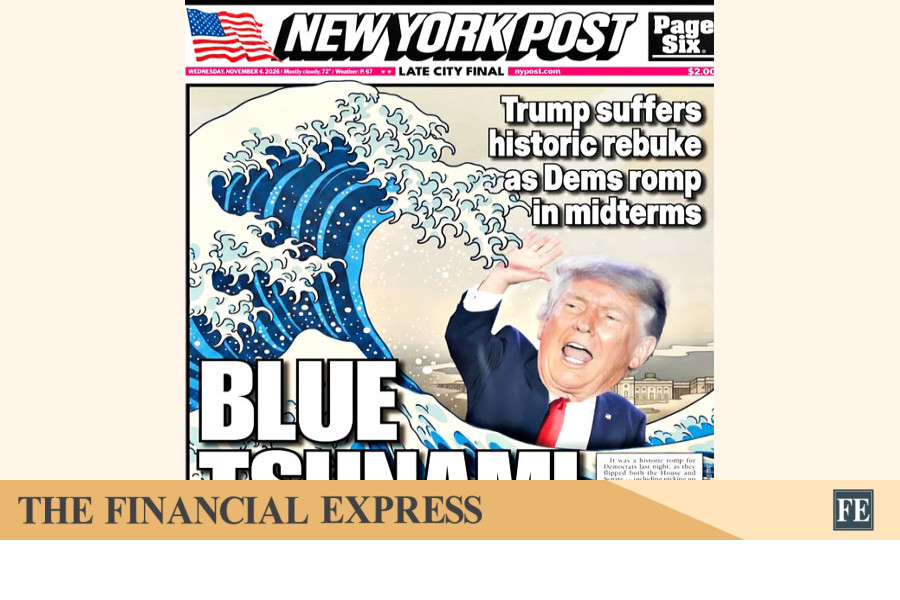
A late edition of the New York Post captured the scale of Trump's defeat on Wednesday –Collected Photo


The United States (US) voters have made a political judgment that extends far beyond the boundaries of Washington, DC. The midterm elections on November 3, 2026, have created a new Congress, challenged the GOP's entrenched position in its conservative bastions, and cracked the political coalition that returned Donald Trump to the presidency two years ago.This political comeback by the Democrats goes far beyond a classic midterm election reaction. It shows the electorate is becoming increasingly preoccupied with economic security, political accountability, military commitments abroad, and the gulf between politics and reality. Notably, Democrats are renewing their appeal to younger voters, African Americans, Hispanics, and Asian Americans, and seeing shifts in allegiance in Republican-dominated states. The key issue now is whether this political upheaval is only a temporary protest against presidential leadership or the start of a realignment of American democracy.

A DEMOCRATIC WAVE: Following the Democratic Party's huge mid-term victory on November 3, 2026, the country's political environment has changed dramatically, shifting the balance of power in Washington and creating many difficulties for the Trump administration. Based on Associated Press figures released on November 5, 2026, Democrats hold 253 of 435 seats in the House of Representatives. These results represent a substantial redistribution of legislative power and a formidable challenge to Trump's governing agenda. These Democratic victories not only changed the numbers but also reflected a shift in voter attitudes, with economic difficulties, dissatisfaction with the Iran war, and demands for government accountability as major factors, according to post-election analysis. The results will give Democrats considerable power in legislation, federal budgets, and investigations, while forcing the Trump administration to deal with a divided government for the next two years.

Perhaps more remarkable was the geographical breadth of Democratic victories. Senate contests in Texas, Kansas, South Carolina, Iowa, North Carolina, and Ohio produced Democratic breakthroughs in states traditionally associated with Republican conservatism.

Texas thus gained special significance. The election of Democrat James Talarico to the Senate, along with Gina Hinojosa to the governorship, challenged decades of Republican dominance in Texas. This was because the Democrats' victories signaled the growing electoral clout of Hispanics, young people, a growing metro-area population, and suburbs worried about economic affordability and government accountability.

Another historic event happened in Georgia, where Keisha Lance Bottoms became the first-ever Black woman elected governor of an American state. This showed the growing importance of black Americans in politics, suburban reorientation, and multiracial voting coalitions.

But this does not necessarily mean these Republican states have switched their allegiance from Republicanism to permanent support for the Democrats. Voter loyalty is fickle, and mid-term elections are always a verdict on the president's work. The defining feature of the 2026 elections is the size of Republicans' defeats.

ECONOMIC INSECURITY: Economic concern was the strongest influence on how voters chose. While political leaders discuss economic growth, jobs, and financial market performance, ordinary people judge their well-being by how much they pay for food, housing, healthcare, transport, and currency. For families struggling to maintain their standard of living, economic statistics offer little reassurance when wages fail to keep pace with essential expenses. Post-election research by NORC and The Washington Post found that more than half of voters identified the economy and employment as two of the country's three most pressing problems. Democrats gained a substantial advantage among voters prioritising these concerns, while healthcare affordability reinforced their appeal.

And it has changed the equation behind the Republican Party's success in their presidential race in 2024. The Republicans won the hearts of Americans frustrated by rising inflation. In two years, it seemed the government failed to keep its economic promises. The political message is clear: when economic hopes are not met, people become increasingly disillusioned with ideological commitments.

THE IRAN WAR: Foreign policy became another source of electoral discontent, especially the military standoff between the United States and Iran and its effects on the economy. Military spending, geopolitical insecurity, energy markets, and concerns about long-term involvement in foreign affairs came into question. For Americans facing rising living costs, expensive foreign engagements appeared increasingly disconnected from immediate domestic needs. Post-election research suggested that more than one-third of respondents considered the Iran war a major national concern, with a substantial majority of those voters supporting Democratic House candidates. Therefore, Trump was caught in a political contradiction: part of his political success lay in protecting America's interests without engaging in unnecessary foreign adventures. The election shows that foreign policy can no longer be separated from Americans' domestic economic realities. Americans are now judging foreign involvements not only by their objectives but also by their economic costs.

YOUNG AMERICANS: One of the most telling aspects of the election is the shift among young voters toward supporting Democrats. Based on data from the Associated Press Voter Poll, about seven out of ten voters under 30 voted for Democratic House candidates, while only three out of ten chose Republicans as their representatives. This differed from the 2024 presidential race, where the youth vote was much more evenly split. Tufts University Center for Information and Research on Civic Learning and Engagement conducted a similar study that showed young men and women of different races strongly support Democrats. The reasons go beyond traditional politics. American youth deal with student debt, unaffordable living costs, insecurity regarding employment, the impact of artificial intelligence, and a lack of concern over their financial independence in the future. This generation's credibility depends on the state's ability to deliver accessible education, meaningful jobs, economic mobility, and sustainability.

Digital communication has also changed the way young people engage in politics. The internet, social media, and other digital communication tools have become important channels of political discourse. But younger voters comprised one-tenth of the country's total voters. This was not because of their numerical strength, but because these voters strongly favoured the Democrats. They were not endorsing the Democrats but rather asking for good future leaders.

AFRICAN AMERICAN VOTERS: African Americans were another crucial factor in the Democrats' renaissance. Nearly nine out of ten African American voters voted for Democratic congressional candidates in the Associated Press Voter Poll. Especially noteworthy is the shift by African American men, whose allegiance to Republicans has dropped significantly compared to Trump's 2024 numbers. Access to economic opportunities, job security, affordable housing, healthcare, education, voting rights, and racial equality continue to be major issues in most African American communities. Doubts about institutional accountability, civil liberties, and political representation have shaped voter attitudes.

The election of Keisha Lance Bottoms in Georgia showed how effective African American turnout, together with wider support from suburbs and multiracial coalitions, can lead to groundbreaking political results. However, African American voters are not a monolithic group. Generation, education, income, religion, and ideology determine their votes. Thus, the Democrats' accomplishment has not been just maintaining a traditional base but winning back the confidence of voters with increasingly competitive political preferences in 2024.

HISPANIC VOTERS: The Hispanic electorate produced one of the election's most consequential political reversals. Trump's improved performance among Hispanic voters in 2024 led Republican strategists to expect a lasting political realignment. The 2026 results challenged that expectation. As per the AP Voter Poll, about 60 percent of Hispanic voters backed Democratic House candidates across the nation. In Texas, about six out of every ten Hispanic voters voted for Democratic Senator James Talarico.

Economic issues seem to be driving this trend. Hispanic households face several economic pressures similar to those faced by other Americans. Immigration enforcement and border policies may also influence political attitudes, although Hispanic communities hold diverse views on immigration, national security, and government regulation. It must be stressed that Hispanic Americans cannot be described strictly by their immigration policy. The political choices of Hispanics are also influenced by economic class, religion, location, education, job, and social mobility aspirations. For example, in Texas, changing preferences among Hispanics, together with dissatisfied suburbanites and younger voters of the Democratic Party, eroded the Republican Party's dominance. The general conclusion is that a voter's demographic identity does not permanently secure political loyalty.

ASIAN AMERICANS: The voting bloc is becoming increasingly influential, especially in urban and suburban districts where minor differences in voting behaviour can change congressional election results. According to early analysis from Tufts University, 81 per cent of Asian American and Pacific Islanders younger than 30 voted for Democratic candidates in the US House of Representatives. Access to education, professional success, affordable healthcare, immigration policy, civil liberties, and political stability may underlie these attitudes. But Asian Americans do not constitute a homogeneous political community. Different ethnic communities such as Indians, Chinese, Filipinos, Vietnamese, Koreans, Bangladeshis, Pakistanis, among others, have diverse histories, economic positions, and political outlooks. This growing civic activism matters especially to South Asian observers because these communities may play an increasingly influential role in shaping American discussions about immigration, international education, technology, trade, and relations with Asia.

WHY REPUBLICAN STRONGHOLDS TURNED DEMOCRATIC: The transformation of traditionally Republican states cannot be explained by demographic change alone. Three interconnected developments appear particularly important. First, dissatisfaction with the Trump administration weakened Republican candidates even in states where the president had previously enjoyed considerable support. Second, economic insecurity created common ground among voters divided by race, education, geography, and ideology. Household affordability became a unifying political concern. Third, Democrats attracted moderate and even independent voters, including those who voted for Trump in the previous year's election. It is believed that about one in ten Trump supporters voted for Democratic senators in several states that switched allegiance from the Republicans to the Democrats. These examples show how small differences in voter preferences and participation can lead to completely different results. Democrats' success in winning governorships and state legislature elections also has certain implications for the future of policies and elections. Reuters reports that Democrats took over at least five governorships from Republicans, gaining more power within state governments. The main idea here is not only that red states become blue states, but that people's loyalty becomes more sensitive to economics and governance.

WHAT THE RESULTS MEAN FOR TRUMP'S WHITE HOUSE: Democratic control of Congress presents President Trump with substantial political and institutional constraints during the remaining two years of his presidency. Major legislative initiatives involving taxation, federal spending, healthcare, immigration, and economic policy will require negotiations with Democratic congressional leaders. Democratic-led congressional committees can intensify investigations, demand documents, hold oversight hearings, and scrutinise executive decisions.

Budget negotiations may become increasingly contentious, potentially producing legislative gridlock or government shutdowns. Foreign policy will also face closer examination. Although the president retains considerable executive authority, Congress can influence military funding, sanctions, oversight, and certain international commitments. The Iran war could consequently become a major subject of congressional scrutiny. The results will also affect the political environment ahead of the next presidential election in 2028, as Vice President JD Vance, along with other Republican contenders, will have to justify the sustainability of the Trump coalition.

However, even with Congress' concerns, the president remains the president with the power to veto bills, exercise executive privilege, and pursue bipartisan politics. Overriding a presidential veto requires a two-thirds majority vote in both houses of Congress. Therefore, the next few years may see clashes or conciliations.

IMPLICATIONS FOR BANGLADESH & WORLD: The election has ramifications for Bangladesh that go beyond America's domestic politics. A divided government in Washington would affect trade, tariffs, aid, immigration, and American involvement in South Asia.

Congressional oversight may also affect debates involving human rights, labour standards, democratic governance, and international development. Bangladesh's economic interests, including ready-made garment exports, investment, technology cooperation, and access to American markets, require careful attention to emerging congressional priorities.

However, Democratic control of Congress would not necessarily produce a fundamental shift in US foreign policy. The President's influence, strategic convergence, and geopolitics would determine the US approach. Bangladesh will thus have to engage with both parties constructively at the same time.

A POLITICAL VERDICT BEYOND PARTY LINES: The 2026 mid-term elections offer a clear example of how American democracy has evolved. Young Americans required opportunities. Black voters reinforced their political clout. Hispanic voters disputed the notion of the perpetual Republican political advantage. Asian Americans made their voice heard and proved their political influence. Middle-class and economically vulnerable voters doubted whether their leaders kept their promises. In sum, these factors turned political dissatisfaction into a redistribution of power.

However, the Democrats' victory doesn't mean this will be a permanent political realignment. Democrats must prove they have viable policy choices, and Republicans must restore voters' confidence. The only message for the incumbent president from these mid-term elections is crystal clear: living in the White House no longer indicates sustained popular trust. In the end, the political earthquake in America in 2026 proves that voters might elect politicians based on their promises but judge their government based on its performance. Political power may be gained through persuasion, but political legitimacy comes only through competence and success. In a democratic state, no political bastion is impenetrable, no electoral alliance is eternal, and no politician can escape their citizens' verdict.

Dr Serajul I Bhuiyan is Professor and Former Chair Department of Journalism and Mass Communications, Savannah State University, USA.​
 

Investors wipe $2.5 trillion off Nasdaq as blue tsunami prompts AI fears

Tech-led Nasdaq notched its deepest one-day drop since ‘Liberation Day’ in April 2025, wiping out trillions in market value on fears of more AI scrutiny, particularly on data center construction, after Democrats won big in US midterm elections.

The Nasdaq Composite fell 5.5 per cent on ‌investor fears that the Democratic Party's sweeping midterm victory could stall AI infrastructure expansion and force a reckoning for smaller firms whose capacity to raise funds has already been limited by higher interest rates and tighter financial conditions.

It was the second straight day of selling in AI stocks and the fifth decline of more than 500 points in the Nasdaq Composite since mid-October, as the previously buoyant AI trade has come under increasing scrutiny in the last several weeks.

"The big election outcome was, especially with the Democrats winning a lot of the governorships, that the slowdown of the data center buildout is the real key theme that's going to stick," said Michael O'Rourke, chief market strategist at JonesTrading in Stamford, Connecticut.

The Nasdaq Composite is now in correction territory, having lost nearly 12 per cent from its record close on October 6. A correction ⁠is defined as a 10 per cent drop from a recent peak.

Many analysts said the scale of the declines suggests further selling is at hand, likely starting with Friday's market sessions in Asia. Japan's Nikkei and South Korea's Kospi have risen more than 20 per cent this year, but they fell significantly following Wednesday's rout in data center shares.

Some analysts wondered if the scale of the wipeout could affect the timing of Anthropic's blockbuster IPO expected this fall, as any delay could amplify market sentiment.

Analysts and portfolio managers said declines in once-hot areas such as semiconductors and AI infrastructure weren't entirely surprising, given the scale of earlier gains in many stocks and the financing concerns that have shadowed neocloud firms such as Nebius and CoreWeave since US interest rates climbed late in the summer.

Chip and neocloud shares posted the most significant declines on Thursday, reflecting worries that data center buildouts worth billions of dollars could face delays. The Philadelphia SE Semiconductor index fell 12 per cent to touch its lowest level in more than six months. Nvidia dropped 9 per cent and Advanced Micro slumped 17 per cent.

Wall Street's fear gauge, the VIX index of expected price swings, posted its largest increase since December 2024.

LOSING BIG IN A ONCE-HOT SECTOR

Hyperscalers, which defied Wednesday's AI selloff, also dropped. Amazon.com and Alphabet each slid 2.2 per cent. The Nasdaq 100 index, composed of the biggest names in the broader index, ‌fell 6.4 per cent, ⁠erasing $2.5 trillion in market value.

The selling suggests investors are starting to factor in increased local opposition to the data center buildout, with some analysts saying markets have yet to fully consider the costs it has imposed on US communities.

"There's going to be a lot of pushback about those data centers being geographically located in someone's backyard, straining the power grid, straining the water systems," said Bruce Zaro, managing director at Granite Wealth Management in Plymouth, Massachusetts. "Although there are a number of data centers already approved, there are still a lot to be permitted. There's going to be a difficult road to get those permitted forthcoming."

Around 30% of expected US data center capacity additions in 2028 could be at risk from potential construction pauses, UBS analysts ⁠estimated, threatening an industry whose growth depends on a rapid buildout of new facilities.

The political jitters are hitting an AI trade already on shaky footing due to worries about the return on investment for the enormous sums being poured into the technology.

AI WINNERS WILT

Neocloud company CoreWeave, which has become a barometer of investor anxiety over heavy AI spending and borrowing, slumped 10 per cent. Its 5-year credit default swap spreads , which measure market expectations of a potential default, widened to a record 1,267.9 basis points, ⁠according to S&P Global Market Intelligence data.

Spreads on Intel's 5-year credit default swaps also hit a record 149.7 bps.

Nebius, another neocloud company, dropped 15 per cent. Shares of both firms have dropped by half or more since the Nasdaq Composite hit a record on October 6.

"The market's moving from the promise of AI to the price of AI," said Ted Parkhill, founder and CEO of Incline Investment Management.

"There's no question that AI is going to be transformative for ⁠the world in the long run. But that doesn't mean every AI-related stock is currently priced appropriately. There's going to be a lot of turmoil."

Data center operators Applied Digital, Cipher Digital and IREN tumbled more than 14 per cent each.

The weakness extended to utilities and equipment suppliers exposed to the buildout. GE Vernova fell 7.4 per cent, while Constellation Energy slipped 2.5 per cent.

Microsoft declined 3.6 per cent. The company is tightening oversight of some data center projects from Nebius, IREN and Nscale, Bloomberg News reported.​
 

US Army member arrested in UK for suspected ‘espionage’ for Russia

Reuters
London

1794440048206.webp

A USAF KC-135 tanker of the 100th Air Refuelling Wing (100 ARW) takes off from RAF Mildenhall airbase, amid reports that US military aircraft are being moved from bases in Britain following a reported threat from Iran, near Mildenhall, Britain, 10 November, 2026. REUTERS

A senior US Army soldier was arrested in Britain on suspicion of assisting Russian intelligence, British police said on Tuesday, after the US removed aircraft from British military bases over a separate apparent threat from Iran.

FBI Director Kash Patel said the arrest of the 41-year-old man related to "allegations of espionage, which is of the utmost concern to the United States and our allies."

Brigadier General Sean Stinchon, the commanding general of US Army Counterintelligence Command, added: "The alleged conduct of a senior soldier, entrusted with sensitive information, is a sobering reminder that insider threats are real and persistent."

The arrest, which took place near the city of Gloucester, west England, on Tuesday "is not linked to any other ongoing Counter Terrorism Policing investigations", British police said.

But it occurred the day after the US removed refuelling aircraft from a British airbase in the second such apparent evacuation in three months.

Planes left the Royal Air Force base in Mildenhall, eastern England on Monday which, according to the Wall Street Journal, was prompted by a threat from Iran.

The US in September withdrew bombers that had been used to strike Iran from RAF Fairford on security grounds over an incident police have linked to Iran, which has denied any links to attacks or incidents in Britain.

The US Army soldier arrested on Tuesday was detained on suspicion of offences under sections 1 and 3 of the National Security Act, which relate to obtaining or disclosing protected information and assisting a foreign intelligence service. Police said the country to which the allegations relate is Russia.​
 
Back
Top