[🇧🇩] War Between Houthis and Saudi Arabia---------What It Means For Bangladesh.

[🇧🇩] War Between Houthis and Saudi Arabia---------What It Means For Bangladesh.
5
33
More threads by Saif

G Bangladesh Defense

Saif

Senior Member
Joined
Jan 24, 2024
Messages
21,840
Likes
9,805
Nation

Residence

Axis Group

The Houthis won't back down, but what does it mean for Bangladesh?

Nasir Uddin Ahmed

The Houthis’ escalating attacks have exposed the limits of Saudi Arabia’s military strength and raised troubling questions about security across the Middle East. The repercussions extend far beyond the region. Airports, energy facilities, commercial shipping and other critical infrastructure face growing risks, while airlines and businesses struggle with disruptions, cancellations and rising operating costs. For Bangladesh, the consequences are not merely geopolitical: they are already reflected in higher shipping expenses and growing uncertainty over energy supplies and international trade.

The central question is difficult to ignore: if a regional military power backed by advanced weapons and international partners cannot neutralise the Houthi threat, how realistic are broader promises of lasting security in the Middle East?

The history of regional conflicts demonstrates that resistance by a comparatively weaker force against a militarily superior adversary is hardly new. Yet the Houthi movement in Yemen has demonstrated how asymmetric warfare can challenge conventional military calculations. Despite Saudi Arabia’s substantial defence expenditure, sophisticated aircraft and air-defence systems, the Houthis have remained a formidable adversary. Their continued ability to threaten strategic infrastructure and maritime routes has complicated the calculations of regional powers.

From a local movement to a regional security challenge

The Houthis, formally known as Ansar Allah, emerged from a Zaydi Shia religious and social movement in northern Yemen. Over time, they evolved into a powerful political and military organisation. Their seizure of Sanaa, Yemen’s capital, in 2014 fundamentally altered the country’s balance of power. In 2015, Saudi Arabia led a military intervention in support of Yemen’s internationally recognised government, seeking to reverse the Houthi advance.

Years of airstrikes, ground fighting and economic disruption failed to eliminate the movement. Instead, the conflict became entrenched, creating conditions in which the Houthis could consolidate control over substantial territory and develop capabilities that threaten targets far beyond their original strongholds.
1792454061927.webp

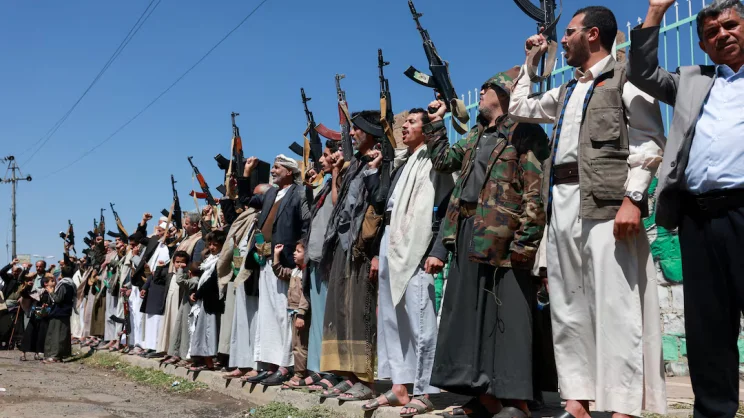
Armed Houthi supporters gather in Sanaa, Yemen, on October 7, 2026. The movement's resilience against superior military forces highlights the limits of conventional military power and the growing security and economic risks posed by the prolonged conflict. Photo: Reuters

Bab el-Mandeb: A local conflict with global consequences

The Bab el-Mandeb Strait is central to this wider picture. Connecting the Red Sea with the Gulf of Aden, it forms part of the maritime corridor linking Asian markets with Europe through the Suez Canal. Threats to shipping can force vessels to take the longer route around the Cape of Good Hope, increasing voyage times, fuel consumption, insurance premiums and freight charges.

The economic effects are well documented. In its analysis of the Red Sea crisis, the United Nations Conference on Trade and Development (UNCTAD) reported that rerouting vessels around Africa added approximately 12 days to an Asia–Europe voyage. The disruption also reduced effective container-shipping capacity and drove up freight rates on major trade routes.

The International Monetary Fund’s analysis of Red Sea shipping disruptions similarly warned that longer delivery times and diversions could strain supply chains and put upward pressure on prices. The consequences are particularly serious for economies that depend heavily on imported fuel, food, fertiliser, chemicals, machinery and industrial inputs.

Disruption to energy shipments can increase delivery costs and market uncertainty. Attacks on airports can cause casualties, flight cancellations, temporary closures, flight diversions and higher insurance costs. Sustained disruption at a major hub such as Riyadh can also affect international passenger connections, tourism and business travel. If retaliatory strikes spread beyond Yemen and Saudi Arabia, the resulting military expenditure and security risks could increase further.

Bangladesh is already paying the price

For Bangladesh, these are not abstract risks. A report published by The Daily Star on 14 September 2026 described how Bangladesh Shipping Corporation’s crude-oil tanker, MT Ninemia, carrying approximately 100,000 tonnes of oil from Saudi Arabia, took a longer route around the Cape of Good Hope to avoid the Bab el-Mandeb Strait.

The voyage took about 50 days, compared with an estimated 13–15 days on the usual route, and incurred an additional cost of Tk 66.63 crore. This single voyage illustrates how insecurity in a distant maritime corridor can translate into substantial costs for Bangladesh.

1792454127356.webp

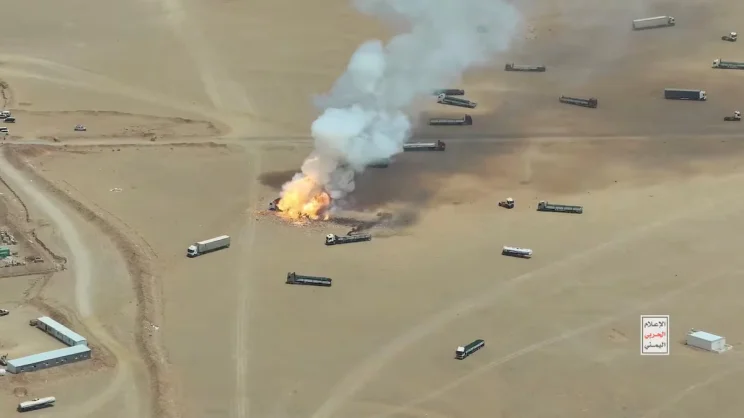
Smoke rises from a burning truck following an attack near the Al-Wadiah border crossing on September 7, 2026, highlighting the persistent threats posed by the Houthis to cross-border logistics and trade routes. Photo: Houthi Media Centre

If similar diversions become routine, the landed cost of imported crude oil could rise significantly. Higher energy costs could, in turn, affect electricity generation, transport, industrial production and consumer prices. Delays in the arrival of fuel cargoes could also complicate inventory management and supply planning.

Bangladesh’s export sector faces related pressures. The country’s garment industry and other exporters depend on reliable shipping schedules to meet delivery deadlines in Europe and elsewhere. Longer voyages can tie up working capital, complicate production planning and increase uncertainty for buyers and suppliers.

In a report published on 2 August 2026, The Daily Star documented rising freight costs amid the Middle East conflict, noting that container shipping rates to Europe had more than doubled. The report also highlighted an important qualification: many garment exporters operate under free-on-board (FOB) contract terms, meaning that the direct burden of ocean freight increases may fall on buyers rather than Bangladeshi exporters. Nevertheless, the wider effects of delays, uncertainty and higher costs throughout supply chains can still affect the sector.

Bangladesh must therefore consider several risks together: energy-import costs, shipping delays, the availability of industrial raw materials, export delivery schedules and the safety of its citizens working in the Middle East. These pressures could compound existing economic difficulties and intensify inflationary pressures.

A cautious response is essential

Bangladesh should strengthen its energy-security planning by diversifying crude-oil sources where technically and commercially feasible, reviewing emergency stocks and developing contingency arrangements for prolonged shipping disruptions. The government should also maintain close contact with shipping companies, energy suppliers and exporters to anticipate delays and reduce avoidable costs.

Diplomacy is equally important. Bangladesh should support efforts to protect civilian lives, safeguard commercial shipping and prevent the conflict from expanding into a wider regional war. The safety of Bangladeshi workers and travellers in affected countries must remain a priority.
1792454179663.webp

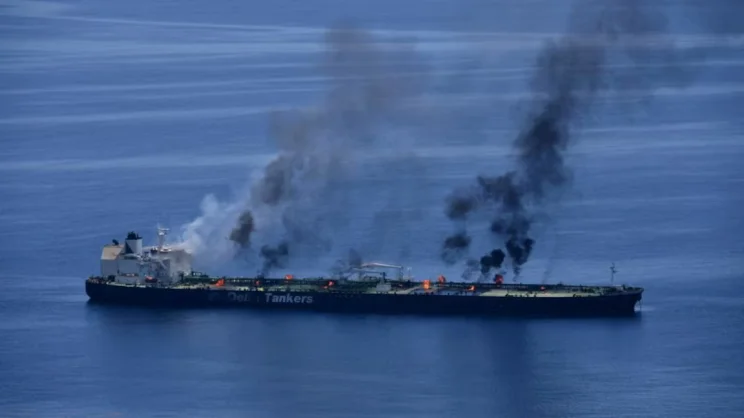
Flames and smoke engulf the Greek-flagged oil tanker Sounion following an attack in the Red Sea in August 2024, illustrating the vulnerability of international shipping routes and the potential consequences for energy costs and global supply chains. Photo: Reuters

Any proposal for Bangladesh to participate in a military coalition or maritime deployment should be assessed carefully against national interests, international law, operational risks and the potential consequences of becoming involved in a wider confrontation. Participation in a security arrangement should not be treated as a substitute for diplomatic engagement or a comprehensive assessment of the costs and risks.

The Houthi story is not simply one of an armed movement refusing to surrender. It is a lesson in the limits of military power, the strategic consequences of asymmetric warfare and the costs of a conflict without a durable political settlement.

The ultimate question is not merely who will defeat whom. It is whether a political settlement can be found that protects Saudi Arabia’s security, respects Yemen’s sovereignty, preserves freedom of international navigation and safeguards civilian lives.

For Bangladesh, the lesson is equally clear. The country may have little influence over the course of this conflict, but it can prepare to limit its economic consequences. The crisis around Bab el-Mandeb must be understood not only as a regional security problem but also as a direct challenge to Bangladesh’s energy security and economic stability. The longer the conflict continues, the greater the risk that the costs of a distant war will be borne by people and businesses far beyond the battlefield.

Dr Nasir Uddin Ahmed is a retired army major, researcher and analyst.​
 

Saudi intercepts Houthi missile, blasts heard in Riyadh

Agence France-Presse . Riyadh, Saudi Arabia

Saudi forces on Tuesday said they had intercepted a Houthi ballistic missile aimed at the kingdom’s capital, after authorities issued a danger warning and AFP journalists reported hearing blasts.

The kingdom ‘intercepted and destroyed a ballistic missile launched by the terrorist Houthi militia towards Riyadh’, said Turki Al-Malki, a spokesman for the Saudi-led military coalition backing Yemen’s government in its war against the Houthis.

Riyadh was shaken by two blasts, according to AFP journalists in the capital.

‘A warning has been issued by the National Early Warning Platform in Riyadh City to alert for a potential danger,’ the Saudi civil defence said in a statement on X.

But the alert was lifted a few minutes later, with the civil defence saying ‘the danger has passed’.

Later in the evening, Al-Malki reported a drone interception in the Riyadh area.

Houthi attacks on Saudi Arabia have reached an unprecedented scale, forcing the postponement of a major investment conference in a blow to Riyadh’s hopes of attracting greater foreign capital and diversifying its economy.

The deadly attacks by the Iran-backed Houthis have forced Riyadh airport to shut.

The Saudi air force has been regularly targeting the group in retaliation amid fighting inside Yemen between the Houthis and the country’s Riyadh-backed government.

In July, a fragile 2022 truce fell apart after the Houthis allowed an Iranian plane to land in Yemen’s capital Sanaa in defiance of Riyadh’s control over Yemeni airspace, setting off a spate of attacks.

Later, the Houthis declared a maritime blockade of Saudi Arabia and began hitting its ships, territory and oil facilities, before seizing government-held territory along the Red Sea coastline in a lightning campaign in September.

With airports closed and the capital brought to an effective standstill, attacks by Yemen’s Houthis on Saudi Arabia have thrown a wrench in the kingdom’s ambitious plans to overhaul the economy and draw foreign investment.

A decade ago, de facto ruler Crown Prince Mohammed bin Salman launched his bold Vision 2030, aiming to diversify the economy away from oil and turn the powerful monarchy into a hub for tourism, international events and multinational enterprises.

Already dealt a blow by Iran’s attacks on US allies in the Gulf during the wider Middle East war, the plan now faces an existential hurdle with unprecedented Houthi attacks, in particular targeting oil infrastructure and airports.

‘I can’t think of another time when the challenge facing MBS was more,’ said HA Hellyer, an analyst at the Royal United Services Institute.

‘He’s dealing with the Iranians on one side of the country which is very difficult and problematic and then he’s dealing with the Houthis who aligned with the Iranians on the other.’​
 

How prepared is the state to protect Bangladeshi expats amid crisis in Saudi Arabia?

Selim Reza

1792627475249.webp


Migrant workers from various parts of the country have arrived at Hazrat Shahjalal International Airport in Dhaka to go to Saudi Arabia. However, due to flight cancellations and suspensions, they are unable to depart. Photo: Prothom Alo

The crisis in the Saudi Arabian labour market, airport attacks or security threats, flight cancellations, visa uncertainties, or the stranding of workers—each of these incidents raises a cruel question for Bangladesh: How prepared is the state to stand by the workers whose sweat enriches the country's foreign exchange reserves in times of trouble? Are we as diligent in ensuring the safety and future of migrant workers as we are in tracking the remittances they send?

This is not merely a question of administrative weakness; it is a question of state priorities, economic foresight, and the dignity of the citizen. We often call migrant workers the warriors of the economy and remittances the lifeblood of development.

Yet, when a crisis unfolds without an effective protection plan for them, a deep inconsistency manifests in this very philosophy of development. Can a state that considers the earnings of its citizens as national wealth ignore their personal misfortunes or sudden disasters?

Saudi Arabia is one of Bangladesh's most important labour markets. A large number of Bangladeshis work in various sectors such as construction, transportation, sanitation, and domestic work in Saudi Arabia. If employment there becomes restricted, recruitment policies change, or regional security situations deteriorate, thousands of families and the Bangladesh economy simultaneously come under pressure. However, over-reliance on a few labour markets, limited skills, and inadequate preparation for alternative employment have made our migration system vulnerable.

Have we ever accurately assessed at the national level how many workers would be affected if recruitment in Saudi Arabia decreased for a few months, how many families would lose income, and how many people would be unable to pay off loans? What alternative employment and financial security arrangements will be made if the crisis is prolonged? Without answers to these questions prepared in advance, one cannot escape responsibility citing unforeseen circumstances. Disasters may be sudden, but preparations to mitigate their damage are not made suddenly.

1792627535991.webp

Smoke rises from a Saudi Aramco facility south of Riyadh, the capital of Saudi Arabia. The company’s facilities have been targeted by Houthi attacks in recent weeks. AFP

Finding an opportunity in a country's labour market and making one's future dependent on it are not the same thing. Bangladesh should consider the foreign labour market not just as a chance to send workers, but as part of national economic security. We become eager to send workers when demand increases in one or two Middle Eastern markets, but when the market contracts, there is a lack of long-term preparedness for alternative employment, rehabilitation, and financial security. As a result, labour migration has become largely an opportunistic system rather than a planned economic strategy. The goal of a farsighted state policy should be that a crisis in one market does not plunge thousands of people's futures into uncertainty.

When air travel is disrupted due to war or security threats, it is the workers who are most affected. These include those who have returned home on leave, workers going to join new jobs, and people stranded abroad. If flights are canceled, the cost of tickets is wasted, deadlines for joining jobs are missed, jobs are lost, visas expire, and the costs of accommodation and food increase, creating a risk of losing income. These situations are beyond the control of workers. Therefore, the government's responsibility is not only to inform about the situation but also to ensure effective solutions.

Ensuring reliable information is essential from the outset. Information on which airports are operational, which routes have flights, who are stranded where, and what assistance they need should be regularly updated. Without an integrated information system among embassies, consulates, airlines, the Ministry of Expatriates' Welfare, and relevant authorities, people will rely on rumours, fall into broker-traps, or move from one office to another seeking solutions.

The government should create separate lists for workers stranded in Saudi Arabia, those unable to return to work after coming home, and those waiting to travel with new employment. A coordinated digital database should be established by registering their location, visa duration, job contracts, employer's identity, outstanding salary, and financial liabilities.

Support priorities should be determined based on the type of problem through the exchange of information among embassies, the Ministry of Expatriates' Welfare, the Bureau of Manpower, Employment, and Training (BMET), airlines, and recruiting agencies. It is important not only to know the number of affected individuals but also to regularly communicate how many problems have been resolved.

From the beginning of a crisis, multilingual hotlines, online registration, and emergency assistance desks need to be activated. Stranded workers should be provided with food, safe accommodation, medical, and legal assistance according to their needs. For those needing repatriation, coordination with the Saudi authorities and airlines is essential. Additionally, regular updates on flight status, alternative travel routes, and government guidelines must be provided to prevent them from falling prey to rumours or deception.

The most urgent requirement is negotiating with the Saudi authorities for visa extensions, job retention, or legitimate re-employment for those at risk of losing their visas or jobs. Direct communication with employers is necessary to ensure the return of workers stranded at home to their workplaces. For those waiting to embark on new jobs, arrangements should be made for ticket rescheduling, refunds, and alternative flights without additional costs. Initiatives to ensure alternative employment should be legitimate, verified, and consensual for the worker.

In addition, an urgent special fund for financial aid, food, accommodation, medical, and legal advice should be activated. Provisions for temporary loan payments, installment rescheduling, and financial aid according to the situation could be initiated for those who have taken loans to go abroad but are unable to join their jobs. The government needs to coordinate with financial institutions and relevant recruiting agencies. Flight cancellation news might be a headline for a day in the media, but for a worker's family, its financial implications could turn into a prolonged crisis.

A permanent emergency protection fund and risk-based work plan for expatriates is essential. Precisely what aid will be provided during war, pandemics, flight suspensions, or a sudden contraction in the labour market, who will perform what responsibility, and where the funds will come from should be predetermined.

During a crisis, an embassy's role should be a reliable sanctuary for citizens. Expatriates must not be left to find their path alone due to a lack of effective hotlines, updated instructions, grievance resolution, and emergency legal aid. Thus, adequate personnel and effective communication systems must be ensured in the labour welfare wing of embassies. Migrant workers should be under state protection not just during the period of foreign travel, but throughout their entire employment.

Most importantly, these initiatives must be integrated within a time-specific national work plan instead of remaining isolated administrative activities. For each grievance of an affected worker, a tracking identification number should be implemented, notifying the worker and their family about which officer is responsible, when the resolution will occur, and what progress has been made.

It is more important how many workers' jobs have been saved, how many visas have been extended, how many have received back wages, and how many families have received emergency aid than how many meetings the government has held. The real measure of administrative action is not the number of meetings, statements, or assurances but the tangible solutions to the affected workers' problems. Transparency in crisis management is not an additional courtesy; it is a fundamental responsibility of a state operating on public funds.

The ongoing crisis in Saudi Arabia warns us: Will we revert to old dependencies with temporary initiatives each time, or will we establish alternative markets, skills, social security, and accountability systems? Crises will eventually pass. But if there is a lack of preparation and over-dependence on a single market, the same situation will recur in subsequent crises.

It must be remembered that a migrant worker is not a remittance machine; he or she is a citizen, the last hope for a family. If the state merely observes the situation during a time of danger, the claims of development remain incomplete. Crises will come, but leaving the citizen alone is not inevitable. It is a test of preparation, policy priority, and state accountability. The expatriate's money is the country's wealth; their life is the state's responsibility.

#Dr. Selim Reza, Associate Professor & Coordinator, Centre for Migration Studies (CMS), North South University.​
 

From Saudi Arabia to Bangladesh: The far-reaching costs of Middle Eastern instability

Fazlul Halim

The growing attacks by the Houthis on Saudi Arabia expose a major flaw in the Middle East’s security architecture: military dominance does not always guarantee long-term security. The strikes on King Khalid International Airport in Riyadh in October 2026 have brought home a painful reality: two Bangladeshi nationals were among those killed. Beyond the immediate casualties and disruption to air travel, the attacks raise profound questions about regional deterrence, Iran’s influence, Yemen’s future, and the vulnerability of international trade routes.

These developments demand more than a traditional account of military confrontation. Saudi Arabia has a legitimate interest in defending its own territory. However, there is no guarantee that military retaliation alone will produce lasting regional security. A durable solution requires credible deterrence, diplomatic engagement, accountability for attacks on civilians, and a political settlement to Yemen’s long-running conflict.

Immediate threat to Saudi security

Saudi Arabia is a major energy producer, an important economic partner for Asia, a major destination for international investment, and a significant destination for migrant labour. Its stability matters far beyond its immediate neighbours. Attacks on airports can affect business travel, tourism, religious pilgrimages, and international trade. Even if defensive systems succeed in shooting down incoming projectiles, security alerts and flight cancellations can erode public confidence and impose substantial economic costs.

Saudi Arabia has made substantial investments in its military capabilities and maintains important security relationships with its international partners. However, recent events demonstrate how difficult it is to defend vast areas of critical infrastructure against repeated missile and drone threats. The lesson is not that defence is hopeless. Rather, it is that military preparedness alone cannot change the political conditions that sustain a conflict. Riyadh cannot afford to sacrifice its people in a prolonged confrontation that would undermine its ambitions for economic growth and regional stature.

The Houthi movement: Its historical roots and contemporary ambitions

The Houthi movement, or Ansar Allah, emerged from Yemen’s domestic political and religious environment. To understand how it has withstood years of military pressure, we must first examine its origins.

The movement has religious roots in Zaydism, a branch of Shia Islam with a history spanning more than a millennium. Zaydi imams ruled parts of northern Yemen at various points in history, and the tradition developed its own religious scholarship, jurisprudence, and approaches to political authority. However, the modern Houthi movement is not a thousand-year-old organisation. It emerged in the 1990s from a modern religious revival within Zaydi communities, particularly in Saada province. The movement arose partly from concerns about declining Zaydi influence, political marginalisation, and the spread of competing religious currents.

The Houthis are a Zaydi Shia movement from northern Yemen whose military and political rise gained momentum amid the country’s political breakdown. From 2004 to 2010, the movement fought a series of wars against the Yemeni government. The 2011 Arab Spring protests destabilised the existing political order, while the subsequent transition, following the departure of President Ali Abdullah Saleh, failed to resolve disagreements over political representation, regional autonomy, and the distribution of power.

The Houthis captured the capital, Sanaa, in 2014 with the help of forces loyal to Saleh, who had previously been their enemy. Their subsequent expansion transformed them from a regional movement into a major national political and military force. This history complicates the argument that the Houthis are merely an Iranian creation. They have deep local roots, although their subsequent relationship with Tehran became increasingly important. Recognising those roots does not mean excusing their behaviour. Movements can emerge from legitimate grievances and subsequently become authoritarian, suppressing dissent and seeking to consolidate power through coercion.

A key distinction in understanding Yemen’s conflict is the difference between resistance and domination.


1792629568506.webp

A large plume of black smoke rises from the fuel storage area at King Khalid International Airport in Riyadh, Saudi Arabia, on 19 September 2026. Photo: REUTERS

Did Saudi Arabia do the right thing by intervening?

To understand the Saudi military intervention in March 2015, it is essential to place it in its historical context. The Houthis had captured Sanaa, the internationally recognised government had lost effective control over much of the country, and President Abdrabbuh Mansur Hadi had called for outside assistance.

The Saudi-led coalition intervened to support the government it recognised and reverse the Houthi takeover. Riyadh also feared that an armed movement with increasingly strong links to Iran would establish a hostile presence along its southern border. Nor were these fears unfounded. Saudi Arabia had legitimate reasons to be concerned about cross-border attacks, regional instability, and the Houthis’ growing military capabilities. However, a strategic rationale does not, in itself, establish that every aspect of an intervention is lawful, proportionate, or effective.

Despite years of military operations, the campaign failed to produce a lasting political settlement. The war has inflicted immense suffering on Yemen’s civilian population, damaged critical infrastructure, and deepened an already dire humanitarian crisis. Human Rights Watch’s documentation of the Yemen conflict includes accounts of civilian casualties and unlawful airstrikes carried out by the Saudi-led coalition. The organisation has also documented abuses committed by Houthi forces and other actors.

The intervention must therefore be assessed against a range of criteria: whether particular military operations complied with international humanitarian law, whether their foreseeable consequences for civilians were adequately considered and justified, and whether the campaign as a whole advanced a realistic political objective.

Saudi Arabia’s security concerns deserve serious consideration. However, these concerns do not exempt its military operations from international law, nor do they render the humanitarian consequences irrelevant. Prolonged instability should not be dismissed as a minor strategic inconvenience. A military campaign that fails to deliver lasting security may ultimately undermine the very objective it was intended to achieve.

Iranian influence and the limits of the proxy war narrative

One of the most important aspects of the crisis is the relationship between Iran and the Houthis. Tehran has supported the movement, and their partnership is a significant element of the strategic rivalry between Iran and Saudi Arabia. The presence of an Iran-aligned armed group capable of threatening Saudi territory poses a serious security challenge to the kingdom. The latest attacks come amid broader tensions between Iran and the United States. However, analytical precision is essential. Iranian support does not necessarily mean that Tehran commands every Houthi operation. The movement has its own leadership, domestic political objectives, and calculations concerning its political and military standing.

The relationship must be understood within the context of the wider regional conflict. Portraying the Houthis merely as Iranian proxies risks overlooking Yemen’s internal political dynamics. Conversely, dismissing Iran’s role would underestimate the international dimensions of the threat.

The challenge is to address both the local and regional causes of the conflict. Iran can exert strategic leverage through its relationships with armed groups without exercising complete control over their decisions. Saudi Arabia can face a genuine threat to its security while simultaneously making decisions that risk exacerbating the conflict.

Sustainable de-escalation will require verifiable commitments to suspend cross-border attacks, effective channels of communication, and negotiations addressing Yemen’s underlying political divisions.

The Red Sea: A global battleground with regional ramifications

Beyond their immediate implications for Saudi Arabia, the Houthi attacks have wider strategic significance, particularly because Yemen is situated near the Bab el-Mandeb Strait, a critical maritime passage connecting the Red Sea and the Gulf of Aden.

Together with the Suez Canal, this passage forms a vital maritime link between the major markets of Europe and Asia. Disruptions can affect shipping schedules, freight costs, insurance premiums, and the movement of energy supplies and manufactured goods. The Strait of Hormuz is another vital artery of global energy trade. Economic uncertainty may be compounded by instability affecting multiple maritime routes. The risks extend beyond the complete closure of a waterway. Even when vessels continue to transit, repeated attacks and uncertain security conditions can substantially increase the costs of commercial operations.

1792629628542.webp

Satellite imagery shows the Bab el-Mandeb Strait, a strategic maritime passage linking the Red Sea and the Gulf of Aden. Handout image dated 12 July 2026. Photo: REUTERS

Maritime security is also closely linked to Saudi Arabia’s economic ambitions. Persistent insecurity undermines investor confidence and threatens the kingdom’s efforts to strengthen its position in international trade and global commerce.

Higher freight costs and volatility in energy markets could intensify economic pressures on Asian economies, including Bangladesh. The extent of these effects will depend on the duration of the conflict, prevailing market conditions, and the availability and costs of alternative shipping routes. The security of the Red Sea is therefore an international concern rather than merely a regional issue.

Why military retaliation will not suffice

Saudi Arabia faces a difficult strategic choice. An inadequate response may encourage further attacks, while a large-scale military campaign could escalate the conflict, intensify civilian suffering in Yemen, and draw additional actors into the confrontation.

The answer is not to deny Saudi Arabia the right to defend its own territory. States have legitimate security interests, and attacks on civilian infrastructure demand serious responses. However, any use of force must be governed by applicable international law, including the relevant requirements of necessity and proportionality, as well as obligations concerning the protection of civilians.

The more pertinent question is what military action can realistically achieve.

Military operations may weaken an adversary’s capabilities in the short term while leaving its underlying motivations for fighting largely intact. Retaliation can also perpetuate a cycle in which each side justifies its latest operation as a response to an earlier attack, making political compromise increasingly difficult to achieve.

Saudi Arabia and its partners should therefore pursue a combination of defensive preparedness and sustained diplomatic engagement. Their priorities should include verifiable commitments to end cross-border attacks, credible investigations into alleged violations of international law, the protection of humanitarian access, and inclusive negotiations involving Yemen’s principal political stakeholders.

Such measures would not amount to rewarding attacks on civilians. Rather, they would seek to reduce the likelihood of further violence while preserving Saudi Arabia’s ability to defend its territory and protect its population.

The United States and the danger of a broader war

The United States also has an important role to play in regional security through its relationships with Saudi Arabia and other Gulf partners, its military capabilities, and its diplomatic influence. Stronger security cooperation could help protect critical infrastructure against missile and drone threats. However, a broader military strike campaign could increase the risk of direct confrontation with Iran and produce consequences extending far beyond Yemen.

Any escalation of military involvement should therefore be assessed against clearly defined objectives. Would it reduce the threat to civilian infrastructure? Would it create conditions conducive to de-escalation? What political arrangements could provide a sustainable outcome if military operations failed to deliver lasting security?

The ability to strike targets is not the same as the ability to establish a stable regional order. Washington and other influential actors should recognise Saudi Arabia’s legitimate security needs while pursuing diplomatic efforts to prevent the conflict from spreading further.

1792629694672.webp

Migrant workers wait at Hazrat Shahjalal International Airport in Dhaka on 14 October 2026, hoping to catch flights to Saudi Arabia. Following the Houthi attacks, Riyadh’s King Khalid International Airport remained closed until 17 October, resulting in widespread flight cancellations and leaving thousands of migrants facing approaching visa expiry dates and deadlines for returning to work. Photo: Firoz Ahmed

Why Bangladesh cannot look the other way

For Bangladesh, the crisis is not merely a distant geopolitical development. The Bangladeshi community in Saudi Arabia has already experienced its human consequences. Two Bangladeshis were killed and 24 others injured in the Riyadh airport attack, The Daily Star reported. The incident also left passengers stranded and disrupted flights between Bangladesh and Saudi Arabia.

Bangladeshi migrant workers in Saudi Arabia send substantial amounts of remittances back home. Prolonged disruptions could affect workers travelling to take up employment, families awaiting the return of relatives, and passengers travelling to Saudi Arabia for pilgrimages.

Bangladesh’s immediate priority should be to ensure the safety of its citizens through consular assistance, reliable information, and close coordination with the Saudi authorities. The government must ensure that affected families receive appropriate support and that the expatriate community is provided with timely advice on travel arrangements and personal safety.

The economic implications are equally important. Remittances from Bangladeshi workers in Saudi Arabia make a significant contribution to household incomes and Bangladesh’s foreign exchange earnings. Regional instability has already affected energy prices and transport costs, placing additional pressure on the economy.

Dhaka should avoid uncritically endorsing the policies of any regional power. Instead, it should condemn attacks that threaten civilians, uphold international law, and encourage negotiations aimed at resolving the conflict. Such a position would serve Bangladesh’s national interests while maintaining its important relationship with Saudi Arabia and acknowledging the complex political realities of Yemen.

The need for a broader regional security framework

The central problem with Middle Eastern security is that states have invested heavily in military capabilities, yet persistent conflicts continue to endanger civilian infrastructure, economic activity, and international trade. Defence capabilities remain essential, but military preparedness cannot substitute for a political framework capable of preventing recurring crises. Sustainable security requires better communication, stronger coordination on civilian protection, and pragmatic mechanisms to address security incidents before they escalate into wider confrontations. It also demands serious engagement with Yemen’s political future. Settlements that exclude important domestic constituencies or merely freeze existing divisions could leave the underlying causes of conflict unresolved.

A credible agreement must include commitments to end cross-border attacks, protect commercial shipping, facilitate humanitarian assistance, and establish an inclusive political framework through which Yemenis can meaningfully participate in determining their country’s future.

Achieving such an agreement will be a difficult and potentially prolonged process. The parties have competing interests, limited mutual trust, and strong incentives to preserve their strategic advantages. However, the alternative is a continuing spiral of military escalation, with consequences extending far beyond the battlefield.

1792629748196.webp

Houthi supporters rally in Sanaa, Yemen, on 9 October 2026, demonstrating solidarity with the movement amid intensifying military clashes across multiple fronts. Photo: REUTERS

Conclusion: Security is more than the capacity to retaliate

The Houthi attacks inside Saudi Arabia pose a serious threat to regional stability. They have caused civilian deaths, threatened critical infrastructure, and exposed the limitations of relying on military deterrence alone.

Saudi Arabia has a responsibility to defend its people and protect its territory. Yemen, meanwhile, urgently needs a way out of a prolonged conflict that has inflicted immense human suffering and economic devastation. Iran, the United States, and other regional actors should use their influence to contain the crisis rather than allow it to escalate into a wider confrontation.

For Bangladesh, the deaths of its citizens serve as a stark reminder that instability in the Middle East can have devastating consequences for people living and working far beyond the immediate conflict zone.

The response must be guided by clear principles: attacks threatening civilians must stop; Saudi Arabia’s legitimate security concerns must be taken seriously; civilians in both Yemen and Saudi Arabia must receive equal protection under international humanitarian law; and military measures must be accompanied by credible diplomatic efforts.

The most sustainable path to peace requires recognising the historical origins and domestic political roots of the Houthi movement without romanticising or excusing its conduct. Equally, it requires acknowledging Saudi Arabia’s legitimate security concerns without automatically assuming that every military intervention is justified, proportionate, or capable of producing lasting stability.

Ultimately, real power in the Middle East cannot be measured solely by the capacity to retaliate. The more important question is whether military strength can be translated into lasting security, and whether ordinary people can finally be spared the devastating consequences of an endless cycle of geopolitical confrontation.

Fazlul Halim is a faculty member in the Department of International Relations at Jahangirnagar University, Bangladesh.​
 

Egypt to ‘defend Saudi territory’: Sisi
Agence France-Presse . Cairo, Egypt

1792631454370.webp

Egyptian president Abdel Fattah al-Sisi | AFP file photo

Egyptian president Abdel Fattah al-Sisi said on Wednesday that Cairo’s proposed military support for Riyadh was to ‘defend Saudi territory, and does not include an attack on Yemen,’ according to a statement from his office.

At a government event titled Egypt Forum 2026, Sisi said the ‘objective is to defend the kingdom’s lands and borders, as well as those of any other Arab state, should it be requested of Egypt,’ his spokesman said in a statement.

‘Egyptian military operations do not extend beyond the borders of Egypt or those of any sisterly nation,’ he added.

Sisi on Saturday asked parliament to authorise support for Saudi Arabia in its war with the Houthis, ‘if requested’.

He said it was ‘inconceivable’ for Cairo to stand by as Riyadh’s security and stability were threatened.

Egypt’s parliament, which is stacked with supporters of the president, has since held two rare secret sessions, and postponed deliberations until next week.

The Houthis seized Yemen’s Red Sea coastline in September and have since launched attacks on Saudi Arabia, including state oil giant Aramco and Riyadh’s international airport.

Potential military involvement would constitute a break from Egypt’s conservative foreign policy of recent decades, which has prioritised protecting its own national security.

For years Cairo has positioned itself as a regional mediator with channels open across conflict lines, including with Hamas, Israel and Iran.

This week again Egypt’s foreign minister Badr Abdelatty has been in contact with Iran’s top diplomat Abbas Araghchi, who has said that Egypt’s potential involvement would make the situation ‘more difficult’.

‘Egypt has sufficient experience to avoid entangling itself in such a highly complex conflict,’ Araghchi said in an interview with Iraqi state broadcaster Al-Iraqiya aired on Tuesday.

He added that Egypt has said it ‘will not enter Yemen or engage in a war against Yemen’.​
 

Egypt’s entry into Yemen war makes situation ‘more difficult’: Iran

Agence France-Presse . Baghdad, Iraq

Iranian Foreign Minister Abbas Araghchi said on Wednesday that any interference in the Yemen war by Egypt or any other country would make the situation ‘more difficult’.

‘Egypt has sufficient experience to avoid entangling itself in such a highly complex conflict,’ said Iran’s top diplomat in an interview with Iraqi state broadcaster Al-Iraqiya aired on Tuesday.

‘We believe that any foreign presence or interference will only make resolving this issue more difficult,’ Araghchi noted.

He added that Egypt has said it ‘will not enter Yemen or engage in a war against Yemen’.

The decade-plus war between the Iran-backed Houthis and a Saudi-led coalition backing Yemen’s internationally recognised government reignited in July.

The Houthis seized much of Yemen’s Red Sea coastline in September and have since launched attacks on Saudi Arabia, including strikes on state oil giant Aramco and Riyadh’s international airport, where 13 people were killed on October 10.

Egypt’s parliament on Monday delayed a debate on President Abdel Fattah al-Sisi’s request to authorise military support for Saudi Arabia until next week.

Sisi had asked lawmakers to approve military support for Saudi Arabia if requested by the kingdom, which has come under near-daily attacks from Yemen’s Iran-backed Houthis.

Sisi said Egypt was not seeking to ‘confront or attack anyone’, adding: ‘We are speaking only about defence.’

Meanwhile, a ship was struck on Wednesday by an ‘unknown projectile’ off the coast of Oman, near the Strait of Hormuz, sparking a fire, a British maritime security agency said.

The tanker, 11 nautical miles off the town of Bukha, is ‘now at anchor’, the UKMTO reported.

‘All crew are reported as safe. There is no reported environmental impact at this time,’ it said.

The agency later reported another incident, which occurred on Tuesday off the coast of Iraq. A projectile hit a tanker 30 nautical miles from the town of Al Faw, causing no casualties or damage, the UKMTO said.

The Strait of Hormuz carried 20 per cent of the world’s oil and gas prior to the Middle East war, which erupted with US-Israeli strikes on Iran in late February.

Since then, Tehran has placed a chokehold on the shipping route and regularly targets ships that pass without its authorisation.

Washington has responded by maintaining a blockade on Iranian ports, and negotiations between the two countries are deadlocked.

Attacks on vessels attempting to cross the waterway have increased in recent days, as Washington escorts more ships through the strait and Tehran seeks to maintain control over their passage.​
 
Back
Top