Donate ☕
201 Military Defense Forums
[🇧🇩] - Ziaur Rahman in the eyes of the masses | PKDefense
Home Login Nation Wars Watch Videos
Serious discussion on defense, geopolitics, and global security.

[🇧🇩] Ziaur Rahman in the eyes of the masses

Reply (Scroll)
Press space to scroll through posts
G Bangladesh Defense
[🇧🇩] Ziaur Rahman in the eyes of the masses
3
180
More threads by Saif

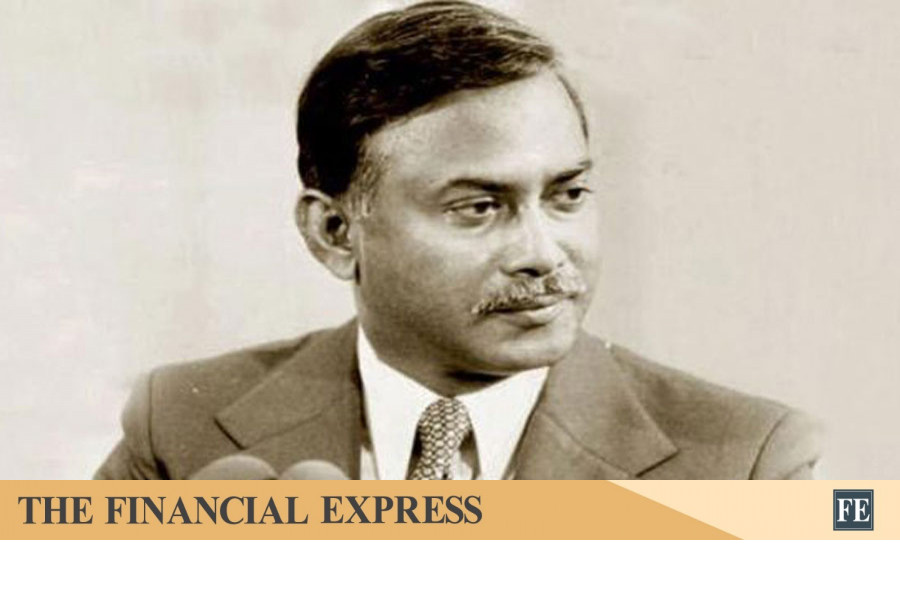
Ziaur Rahman in the eyes of the masses

Helal Uddin Ahmed
Published :
May 30, 2025 00:01
Updated :
May 30, 2025 00:01

1748561523688.webp


It is not the handful of vocal or partisan intellectuals, or bands of political activists ready to do or undo anything only to promote their own interests that ultimately determine the political course of a nation. Rather, in a democratic set-up, it is the common man whose perceptions and outlook serve as the decisive factor in the unfolding of a nation's political milieu. How does an ordinary citizen of Bangladesh, semi-literate and mostly from sub-urban or rural areas, evaluate Shaheed Zia? Below is given a personal assessment.

To the common man, Shaheed President Ziaur Rahman stands as a symbol of the country's liberation war, a saviour of the nation in times of crises, a flagbearer of multi-party democracy, and a leader who single-handedly steered the nation back to the path of progress, pluralism, and development.

The first episode in the legend that surrounds Zia took place in the month of March 1971. The brutal Pakistani army launched a savage and cruel attack on the unarmed people of Bangladesh on March 25 in order to perpetrate genocide. The political leadership were caught unaware; they either escaped to safe areas outside Dhaka, or voluntarily gave themselves up so that they could be escorted to the relative safety of Pakistani jail. In this difficult and confusing situation, the voice of soldier Zia boomed through the ether, "I am Zia speaking..... I proclaim the independence of Bangladesh". It came as a great relief to the millions of Bangladeshis who drew inspiration from it and readied themselves to wage a relentless war against the enemy.

The second episode in the legend of Zia was staged in the battlefields of occupied Bangladesh, when as a sector commander and commander of the Z-Force in the liberation army, Zia distinguished himself through his valour and courage. After independence, he was awarded the prestigious title 'Bir Uttam' for his bravery - the highest honour for a living soldier. Zia was made the first deputy chief of staff of Bangladesh Army and played a pioneering role in its reconstruction.

The most significant episode in Zia's life started on November 7, 1975. In the backdrop of dissolution of democracy by the then one-party BAKSAL government, there was a military coup on August 15, 1975, which ousted the Mujib regime. On November 3, there was another coup that led to the dissolution of parliament and ouster of the Awami League regime headed by Khandakar Mostaque Ahmed. The Chief of Army Staff General Zia was taken prisoner. It was now the turn of the sepoy-people to act in concert and solidarity. They freed their war-hero and saviour, crushed the rebellion of the reactionary forces, and installed Zia as the Deputy Chief Martial Law Administrator under President Sayem.

Heeding to popular sentiment, Zia could not refuse this new assignment to serve the cause of the motherland. He took up the reins and was soon elected to the presidency of the country through a free and fair election held in 1978.

Between 1975 and 1978, Zia did great things for the nation. He reintroduced multi-party democracy in the country that was abolished by the BAKSAL regime, gave back fundamental rights of the people taken away by the Baksalites that included freedom of speech and association, reinvigorated the economy by encouraging private sector initiatives and reducing public sector losses, and initiated a socio-economic revolution in the country through momentous programs like mass literacy, rural electrification, reforms in the industrial, agricultural, and service sectors, afforestation and irrigation, family-welfare measures, infrastructural development, and so on.

The distinctive feature of Zia's socio-economic programs was grassroot development based on participation of the rural populace. He extended the administrative tiers up to the village level, introduced Gram Sarkar or village governments, raised VDP or village defence party, and popularised such programs as canal-digging, tree-plantation, pisciculture, kitchen-gardening, rural maintenance, small and household industries, and so on. A distinct social mobilisation was visible throughout the country based on such virtues as honesty, truthfulness, efficiency, and hard-work. Corruption and nepotism were discouraged at all levels of the state and were sternly dealt with whenever discovered.

The biggest achievement of Shaheed Zia was that he laid the edifice of Bangladeshi nationalism-encapsulating the pride of the Bangladeshis in history, providing the citizens with a national identity, recognising the contributions of their forefathers, the glory of their language, culture, and religious ideals. He also played a creative and forward-looking role in the shaping of Bangladesh's non-aligned foreign policy, which was acclaimed the world over.

But just when everything appeared to be moving in the right direction and the nation seemed poised to embark on an economic take-off, the dark shadow of the conspirators suddenly filled the landscape. Zia was tragically assassinated in the early hours of May 30, 1981. The very next year, Hussain Muhammad Ershad stepped into the scene, removed a democratically elected government, grabbed state power by force, and started his decade-long tyrannical autocracy-- relying on intrigues, corruption, and foul-play.

But the legacy of Shaheed Zia lives on. The over two million mourners who thronged the Manik Mia Avenue at Shere-Bangla Nagar to participate in the largest ever funeral procession in Bangladesh's history was a true reflection of the love, affection, and esteem the people harboured for a man who sacrificed his entire life for the cause of his countrymen. The spontaneity of their participation indicated the level of affiliation and respect the general masses had for Shaheed Zia's dedication and patriotism. As the news of Zia's death spread, there were emotional outbursts all over the country. From the mass media to the playing fields, from the newscasters to renowned sportsmen, people wept and cried in public. The whole nation seemed to be drenched in a white veil of sorrow. Seldom in our history have we seen such mass outpouring of grief and distress!

And following the same path as trod by Shaheed Zia, and upholding his immortal ideals of patriotism, honesty, religious virtues, and political pluralism, Zia's creation Bangladesh Nationalist Party (BNP) was once again returned to power by the people through the 1991 parliamentary election. It happened despite the fact that HM Ershad waged a sustained campaign for long nine years to divide and destroy BNP through any means. In this heinous plot, Ershad was ably assisted by those dubious quarters led by the Awami League who collaborated with him in the rigged elections of 1986 by betraying the nation and who attempted to write off Zia as a mere soldier.

But the common man of Bangladesh had different ideas. They could differentiate between right and wrong, truth and falsehood. They are forever ready to give a fitting reply to those who try to distort history only to serve their own selfish ends. This proved to be repeatedly true when the people of the country firmly rejected the fascist elements in the country's polity and propelled the BNP led by Begum Khaleda Zia to majestic triumphs in the parliamentary elections held under neutral, non-party, caretaker governmentsboth in 1991 and2001.

Dr Helal Uddin Ahmed is a former Editor of 'Bangladesh Quarterly.​
 
Analyze

Analyze Post

Add your ideas here:
Highlight Cite Fact Check Respond

COMPREHENSIVE NATIONALISM

Zia’s blueprint for inclusive Bangladesh

by Mostofa Nazmul Mansur 30 May, 2025, 00:00

1748564547574.webp

Ziaur Rahman.

ZIAUR Rahman is a remarkable personality in the study of Bangladeshi politics, in one respect, at least: how a former army officer whose political career spanned only about three years and a half could surpass established and professional politicians and still remain, even after almost half a century, such a relevant and popular figure in politics. Political analysts may emphasise three points to explain this phenomenon: (1) Ziaur Rahman’s astonishing personal honesty, (2) a political programme initiated and offered by him that was in harmony with the people’s sense of life, beliefs, hopes and aspirations, which, in the context of that time, can be considered political reform, and (3) the proposal for an inclusive identity for the people through Bangladeshi nationalism. In the search for reasons Ziaur Rahman has remained relevant and popular in politics even half a century after his death, the three points are all important. I will, however, focus only on the third point.

Nationalism is a political, cultural and ideological concept that unites a group of people on the basis of language, culture, history, ethnicity and territory. In general, in the nationalist idea, the people united by these components either form a state or hold aspirations to form one. On the basis of nationalism, Bangladeshis were able to establish an independent state while the Palestinians have not yet been able to form such a state. Nevertheless, in the context of their desire and struggle to form an independent state, the Palestinians are recognised as a nation, at least, to many. For a group of people to become a nation, it is, therefore, a necessary condition either to form a state of their own or to hold aspirations to form such a state.

None of language, culture, history, religion and ethnicity can turn a group of people into a nation if they do not form a state of their own or do not desire to form one. The territorial basis of nationalism as a necessary condition for nationhood was a concept first properly realised, among the politicians of Bangladesh, by Ziaur Rahman. And from that realisation, he wanted to inspire everyone towards a Bangladesh-based nationalism founded on state territory. He understood that the sense that has united, and can continue to unite, all the people is the feeling of a territorial integrity of the 148,000 square kilometers. This feeling concerning the territory — the land that constitutes our state, Bangladesh — has created our sense of nationalism and tied us all together with a common thread.

There is overwhelming factual evidence that the core and necessary element of nationalism and national consciousness is territory — the state, in other words. As for America and Britain as examples, although the people of America and Britain are identical in terms of language and culture, they have not become the same nation. They are divided into two nations — Americans and the British. Why? Because, they did not form a single state nor do they have any intention of forming such a unified state. Although language and culture may contribute to shaping national consciousness, they cannot, therefore, serve as the foundation of nationalism. Linguistic and cultural similarity does not make a nation. The Americans, having many languages and many cultures, have become a great nation on the basis of territorial unity. Ziaur Rahman recognised this reality and that is why he clearly rejected the language-based nationalism.

Did Ziaur Rahman, then, try to establish a religion-based nationalism? Is his Bangladeshi nationalism, therefore, an Islamic nationalism? There is, indeed, such a narrative that Ziaur Rahman had sought to establish a religion-based nationalism or that his idea of Bangladeshi nationalism was a form of Islamic nationalism. Those who advance this narrative often point to his inclusion of ‘Bismillahir Rahmanir Rahim’ in the beginning of the Bangladesh constitution and the adoption of ‘absolute trust and faith in the Almighty Allah’ as one of the fundamental principles of the state policy. The proponents of this view are mostly associated with political opposition to Ziaur Rahman. However, the attempt to portray Bangladeshi nationalism as religious or Islamic arises from a mistaken observation. Ziaur Rahman never sought to establish a religion-based or Islamic nationalism.

On the contrary, he highlighted the failure of such nationalism. He pointed out that the failure of religion-based nationalism could be understood through the collapse of Jamaluddin Afghani’s pan-Islamism. In his view, a clear example of the failure of religion-based nationalism was Pakistan’s inability to maintain its territorial integrity as a state. He stated plainly: ‘Then again, the Muslim League, IDL, and the Jamaatis speak of religion-based nationalism. At the beginning of this century, Jamaluddin Afghani raised the slogan of pan-Islamism. The idea of religion-based nationalism originates from there. To speak the truth, after the establishment of Pakistan, in the name of religion-based nationalism, Bangladesh was subjected to exploitation and rule. But this “politics of exploitation” in the name of religion-based nationalism could not keep Pakistan united. As a result, an independent and sovereign Bangladesh was established.’ Therefore, from Ziaur Rahman’s perspective, the emergence of Bangladesh disproves the viability of religion-based nationalism. And one must admit that his observation was accurate. If religion-based nationalism were viable, we could see the formation of a single Muslim nation in the Middle East. In Europe, perhaps, a single Christian nation would have emerged. But none of this has occurred, which demonstrates the impracticality of religion-based nationalism.

Ziaur Rahman explicitly rejected the notion of ethnic or racial nationalism. In his discourse, he acknowledged the concept and cited Hitler’s German nationalism as a negative example. Within the context of Bangladesh, he emphasised the unsuitability and inapplicability of ethnic or racial nationalism. There is, indeed, ample empirical evidence demonstrating that ethnicity or race is not a necessary condition to the formation of a nation. For instance, although the peoples of Saudi Arabia and Yemen share a common ethnicity, they remain distinct nations — Saudis and Yemenis. Conversely, a diverse array of ethnic groups has collectively constituted the Canadian nation, unified solely on the basis of territorial integrity. Numerous additional examples illustrate that shared ethnicity does not invariably translate into a single nation. The Somali ethnic group, for example, is divided across state boundaries, with some identifying as Somalis and others as Ethiopians. Similarly, individuals of German ethnic origin may belong to different nations, such as Germany or Austria. Thus, from Ziaur Rahman’s perspective, ethnic or racial nationalism is inadequate as a unifying principle for nationhood. His observations underscore the primacy of territorial-based nationalism as the foundational basis for national identity, especially within the context of Bangladesh.

Does Ziaur Rahman’s conception of Bangladeshi nationalism, then, completely exclude language, culture or religion? Not at all. Rather, the Bangladeshi nationalism that he promoted fully acknowledges the important role these factors play in strengthening national consciousness. In his words: ‘We have our ethnic pride, a rich language, and a religious tradition. Geographically, we inhabit a strategically important region… and we are all immersed in the spirit of a bloody struggle for independence. Never before have so many components come together in a single nationalist consciousness anywhere.’

From this, it is evident that Ziaur Rahman emphasised two aspects of nationalism: (1) the foundational basis of nationalism and (2) the key contributors to national consciousness. According to him, the territorial basis constitutes the foundation of Bangladeshi nationalism while our language, culture, religious tradition and the spirit of the liberation war serve as significant contributors to the development and sustenance of that national consciousness. It is, therefore, clear that Bangladeshi nationalism does not reject the Bengali identity of the vast majority of the people. It, rather, incorporates this identity as a cultural and linguistic contributor to Bangladeshi nationalism. Consequently, invoking Bengali identity as a counterpoint to criticise Bangladeshi nationalism does not constitute a particularly strong argument.

In this context, the roles of religion and the spirit of the liberation war as contributors to national consciousness deserve a special emphasis. As mentioned earlier, Ziaur Rahman’s conception of Bangladeshi nationalism is not religion-based despite the existence of a deliberately propagated narrative suggesting otherwise. While he stated that his nationalism is not grounded in religion, he also indicated that the beliefs, traditions, rights and the recognition of every religion are integral to the nationalism that he promoted. His version of Bangladeshi nationalism in no way neglects religion or its traditions although it is not religion-based nationalism. As he put it: ‘Attachment to religion is a great and eternal characteristic of the Bangladeshi nation. At the same time, the Holy Qur’an says, ‘La ikraha fid-din’ — there is no compulsion in religion. Therefore, “Bangladeshi nationalis” is neither religion-based nor religion-averse.’ Thus, his version of nationalism may be described as occupying a middle ground between theocracy and secularism, an approach that had remained unexplored in this region.

Some critics claim that Ziaur Rahman’s conception of Bangladeshi nationalism is incompatible with the spirit of the liberation war. This claim is, without doubt, wrong. As we have already seen, Ziaur Rahman described the foundation and contributors to national identity as being ‘immersed in the spirit of a bloody struggle for independence.’ As a decorated war hero and a key proclaimer of independence who received the gallantry award of Bir Uttam, it is implausible that he would promote a form of nationalism that contradicts the spirit of the liberation war. Such claims appear to be driven more by political motivations than by historical or theoretical accuracy.

On the contrary, we see that Ziaur Rahman made it clear: ‘Nationalism reaches its highest point through war. When the inspiration of nationalism peaks, a nation engages in war to achieve independence. It is through such a war and nationalism that Bangladesh was created.’ He also stated, ‘The bloodied revolution took place in 1971 through the war of independence. At the root of that war was nationalism.’ One might expect his critics to object that the liberation war was fought under the banner of Bengali nationalism and that by introducing Bangladeshi nationalism in place of Bengali nationalism, Ziaur Rahman rejected that legacy.

However, those who make this claim focus solely on the emergence of the term ‘Bangladeshi nationalism’ without examining the underlying consciousness that it represents. There is no doubt that the term ‘Bangladeshi nationalism’ arose after 1971, particularly in the post-1975 period. Yet, this is merely a linguistic fact. While the term was not in use before 1975, the consciousness that it articulates predated not only 1975 but even 1971. This very consciousness gradually led the inhabitants of this 148,000-square kilometer territory towards the liberation war. Our language and culture, indeed, played important roles in shaping and strengthening this national consciousness. However, if the liberation war had truly been the result of Bengali nationalism, rooted solely in shared language and culture, then we would have been motivated to create a nation that included not only the then East Pakistan but also West Bengal — forming a state (Bangladesh) spanning 240,000 square kilometres. Yet, neither we nor the people of West Bengal harboured such an ambition. This demonstrates that the nationalist sentiment which fuelled our liberation war was primarily based on territorial identity, with language and culture serving as important but contributory, rather than foundational, elements.

Of course, the term ‘Bangladeshi nationalism’ had not yet been coined at the time, creating a semantic gap. Critics of Bangladeshi nationalism have exploited this gap by conflating Bengali culture with Bengali nationalism — an interpretive error that persists today. However, Ziaur Rahman clearly understood the distinction and stated emphatically: ‘The country became independent in 1971 through war. But the current of Bangladeshi nationalism predates that by a long time. The history of Bangladeshi nationalism is long; the history of Bangladesh is short. Bangladeshi nationalism gradually matured and, through various contexts both domestic and international, pushed us toward the goal of independence. That inspiration was so strong that the people were prepared to fight for freedom. We fought the war of liberation in 1971.’

Even Ziaur Rahman’s most severe critics cannot easily deny this foundational truth. One of them, Anthony Mascarenhas, wrote: ‘Zia’s real contribution to Bangladesh was that he gave the people a distinctive identity and gave them pride in being Bangladeshis…. The Proclamations (Amendment) Order 1977 had stipulated that the people should be known as “Bangladeshis” instead of “Bengalees”. At first glance this seemed to be merely window-dressing. In fact it was a fundamental appreciation of the raison d’être for the state. To his credit General Zia, more than any of the other FFs (freedom fighters), realized that the people had moved forward from the tremendous emotional upsurge of the Bangladesh movement and the liberation war.’ Indeed, Ziaur Rahman’s observations on the existence, role, and significance of Bangladeshi nationalism in the context of the liberation war — observations which, in my view, are correct — deserve further academic and theoretical investigation.

Thus, we see that Ziaur Rahman’s concept of Bangladeshi nationalism as a territorially based nationalism acknowledges and values the roles of contributors such as language, culture, history and religious heritage. For this reason, it is more liberal and widely acceptable than nationalism based solely on language and culture or on religion. Ziaur Rahman, therefore, called it comprehensive nationalism. This comprehensive nationalism, or Bangladeshi nationalism, is more inclusive and acceptable than nationalism based on language and culture or Bengali nationalism because while Bengali nationalism excludes the core national consciousness of non-Bengali residents, Bangladeshi nationalism includes both Bengali and non-Bengali people equally and with equal dignity.

That is why communities such as the Chakmas, the Santals and the Garos are included in this nationalism just as much as the Bengali-speaking communities and they can be equally inspired by the same national consciousness. Similarly, Bangladeshi nationalism is more liberal and acceptable than religion-based nationalism because whereas religion-based nationalism fails to include religious minorities with equal dignity, Bangladeshi nationalism successfully includes people of all religious communities within the same national framework and inspires them with a shared sense of nationhood. In simple terms, where language-, culture- or religion-based nationalism tends to be exclusive, Bangladeshi comprehensive nationalism is inclusive. This inclusivity is what has made it widely acceptable. At the heart of this inclusivity lies the foundational national consciousness rooted in the territory of 148,000 square kilometres called Bangladesh that we achieved through a bloody war in 1971.

When we hear discussions today about inclusive politics or about politics centred on Bangladesh (often referred to as Bangladeshism or Bangladeshpanthi politics), we, therefore, find Ziaur Rahman’s conception of Bangladeshi nationalism at their core. As the proponent of this vision, Ziaur Rahman will certainly be remembered with respect for many years to come, perhaps, even beyond this century.

Dr Mostofa Nazmul Mansur is a professor of philosophy in Jahangirnagar University.​
 
Analyze

Analyze Post

Add your ideas here:
Highlight Cite Fact Check Respond

The crucial task of nation-building that Zia carried out

Zia was not a flamboyant or grand personality like Sukarno, Nasser, Ben Bella, and Nkrumah, yet he left behind a party and an ideology that continue to shape the course of Bangladesh’s history to this day.

Mahbub Ullah
Updated: 30 May 2025, 18: 09

1748650775571.webp


Today, 30 May, is the 44th death anniversary of the former president Ziaur Rahman. It was on this day that he was assassinated by scheming army officers at the Circuit House in Chattogram.

Every year this day arrives with a new message, a new significance for the people. The people of Bangladesh, amid all disaster, learn new lessons from the life and work of Ziaur Rahman. I feel that the greatest achievement of Ziaur Rahman, during his less than six-year rule, was the creation of Bangladeshi nationalism. This was a monumental task, though he managed to carry it out in a very short span of time.

We know of many nationalist leaders in the political arenas of post-colonial Asia and Africa. Sukarno, Nasser, Ben Bella, and Nkrumah were towering figures in the anti-colonial struggles of their respective countries. Many of them remained in power for long periods and enjoyed international acclaim. They made significant contributions to the task of nation-building.

Yet, after their deaths, the people did not adhere to their ideologies. The state ideals they had established did not endure once they left power.

However, in the case of Zia, it was quite different. Zia was not a flamboyant or grand personality like them, yet he left behind a party and an ideology that continue to shape the course of Bangladesh’s history to this day.
His Bangladeshi nationalism has taken deep root in the hearts of the people and has transformed into a powerful tangible force. How so?

Soon after Bangladesh’s emergence, India revealed the tiger claws it had kept hidden. India's ulterior designs included the withdrawal of water from common rivers, the unequal agreements regarding enclaves, the proposal to send Indian bureaucrats to help run Bangladesh’s administration and more.

While acknowledging the limitations of historical categorisation, the history of decolonisation can be divided into four stages. These stages are: the emergence and consolidation of nationalist movements; the victory of these movements; the subsequent state formation following the success of the movements; and the stage of defining the state’s relationship with other states and with the unequal social structure within, and ensuring the stability of these relationships.

In most cases, our focus has remained confined to the second and third stages. However, in reality, the most significant turning points in social transformation have occurred in the first and fourth stages.

In the context of Bangladesh’s decolonisation, Zia was involved in the third and fourth stages. The generally belief is “seek ye first the political kingdom,” and that “the nationalists could make the state, and the state could make the nation.” But in Bangladesh's case, there was little room for nurturing such illusions, even though the vast majority of the population shared a common language and a thousand-year history.

With the exit of the Pakistan army, we did indeed gain a national flag, a national anthem, and a government. But we mortgaged our national sovereignty to India as the price for their support and assistance during our war of independence. We were compelled to keep our armed forces small in size and weak in every respect to repay our “debt of gratitude” to India. The development of a strong military could have been construed as a sign of hostility toward India.

Zia understood how to reconcile what Edward Shils called the “will to be modern” and what Mazzini referred to as the “need to exist and to have a name.” What could be a greater virtue for a statesman and nationalist leader?
Soon after Bangladesh’s emergence, India revealed the tiger claws it had kept hidden. India's ulterior designs included the withdrawal of water from common rivers, the unequal agreements regarding enclaves, the proposal to send Indian bureaucrats to help run Bangladesh’s administration and more.

Countries that have depended on foreign military forces for their national liberation or deliverance have typically attained only limited sovereignty. The nations of East Europe in the post–World War II era stand as strong evidence of this.

It was through a symbolic act that Ziaur Rahman upheld the flame of our full national sovereignty. In October 1975, as army chief, Zia handed over a pistol seized from an Indian army commander during the 1965 Pakistan-India war, to a unit of the Bengal Regiment. This was a significant symbolic message from Zia to both the soldiers and the people.

Thus, on 7 November 1975, at a moment of grave national crisis, soldiers and civilians came together to free Zia from the conspirators’ captivity and entrusted him with the responsibility of leading the state. This victory gave the people a sense of security and reassurance.

As head of state, Zia redefined the nature of Bangladesh’s relations with other countries. He fostered friendly cooperation with China. Deep ties were established with Muslim countries of the OIC. Bangladesh became a respected member of the Al-Quds Committee and took on a mediating role between the warring nations of Iran and Iraq. In the Western world, Zia clarified Bangladesh’s true position as a non-aligned country and resolved prevailing misunderstandings.

Zia understood how to reconcile what Edward Shils called the “will to be modern” and what Mazzini referred to as the “need to exist and to have a name.” What could be a greater virtue for a statesman and nationalist leader?
Even our hostile neighbour India signed a five-year water-sharing treaty with a guarantee clause, which reduced tensions. This was because Zia had succeeded in mobilising public opinion regarding Bangladesh’s rightful claims. Bangladesh earned the dignity of being an independent and sovereign nation.

From the experience of the last 44 years we now know that creating Bangladesh and creating Bangladeshis is not the same thing. A political revolution may result in the formation of a state, and perhaps even partially stabilise its foundations, but the fundamental question remains: who are we and what have we achieved in the intervening years?

Independence only marks one stage in nationalist ideals. Simply condemning subjugation or celebrating its end is not enough to ensure advancement to the next phase. What must be done is to foster a sense of solidarity within the collective consciousness of the people within the state, and through that, transform the fragmented segments of the nation into a unified identity. The actions of the national government must then be determined in accordance with the demands of this unified identity.

This is precisely what Ziaur Rahman did through his concept of Bangladeshi nationalism. Through this, Zia determined the relationship, significance, and inherent elements of two key sensibilities: the “local way of life” and the “spirit of the times.” Bangladeshis want to follow their own way of life while also keeping pace with the era. Zia was the embodiment of these dual sensibilities and in therein lies his greatness.

There are numerous examples in his policies and actions as head of state that demonstrate how he harmonised indigenous lifestyles with the demands of the modern age. This means initiating the process of social transformation through the interaction between contemporary imperatives and social realities.

Zia understood how to reconcile what Edward Shils called the “will to be modern” and what Mazzini referred to as the “need to exist and to have a name.” What could be a greater virtue for a statesman and nationalist leader?

* Mahbub Ullah is an economist and political analyst​
 
Analyze

Analyze Post

Add your ideas here:
Highlight Cite Fact Check Respond

The politics of Ziaur Rahman

Emajuddin Ahamed
Published :
Jan 19, 2026 00:35
Updated :
Jan 19, 2026 00:39

1768783576421.webp


Born in Bogura's Bagbari on January 19, 1936, Ziaur Rahman founded the Bangladesh Nationalist Party in 1978 and became the country's seventh president. He was assassinated by a group of army officers at Chattogram Circuit House on May 30, 1981.

An abyss of uncertainty was prevailing in the political arena of Bangladesh towards the end of March 1971. When the failure of the political leadership to provide direction became acute, when the people were dazed and dumbfounded by the barbarous brutality of the Pakistani military forces, the young military officer Major Ziaur Rahman provided direction to the struggling nation by declaring the independence of Bangladesh. His name would have been written in golden letters in the history of the nation even if he had not played any other role throughout his life. Even then the nation would have recalled him with great respect. The masses would have assembled at the place where he was laid to eternal sleep with bouquets of gratitude.

But a man who had so dearly loved the people and the soil of Bangladesh, to whom Bangladesh was always the first priority in life and death, how could he stop there? If the political outline of the subsequent period is analysed after he assumed power to fill the vacuum created in the backdrop of the sepoy-people revolution of 7 November 1975, it can be said without any hesitation that the political culture of Bangladesh was transformed. New melodies were added to that politics and new rhythms were incorporated. That politics became both creative and productive. The appeal of that new politics of Ziaur Rahman was universal. It was modern; it was welfare-oriented; it was people’s politics; it was nation-based politics.

In the underdeveloped third world, the resolve for people’s rights never materialises out of its own volition. A people’s leader is needed everywhere – a revolutionary soldier, a person representing the spirit of the age, or somebody who pioneers an era. This visionary in the political arena of Bangladesh has been the greatest son of this nation Ziaur Rahman. Touched by the touchstone of his successful leadership, waves of change were created in the hearts of millions of people in rural Bangladesh. This made the people think anew about their role in the politics of the country. This made them conscious about their rights and responsibilities. Ziaur Rahman had identified rural Bangladesh as the focal point of his endeavour. He pinpointed the uplift of the rural populace – neglected for centuries – as his political priority. He also identified the rural people as the hero and superhero of his creative politics, who would bring about changes for their own benefit. By arousing sky-high confidence in them, by opening up a thousand doors of contentment through solving their problems, Ziaur Rahman wanted to write a new chapter of progress based on proper utilisation of available resources in the country. In this way, he initiated the programs of grassroot development.

It was he who established the ‘Gram Sarkar’ for the first time in this country, so that the people could solve their own problems through discussions among themselves. Village Defence Party was also constituted in this country through his initiative for ensuring security at the village level. Establishment of youth co-operative complexes was done under his direction for proper utilisation of the youth force in the villages. It was he who took the initiative to identify and solve the problems of the rural areas by means of ‘Rural Development Board’. Rural Electrification System was similarly developed under his guidance. In this manner, he was the first to develop rural irrigation system for flourishing the agricultural sector of Bangladesh. Avenues were also opened up for developing the fisheries sector in the villages. Arrangements for healthcare and adult education of the rural people were also made under his direction. The aims of all these efforts were on the one hand to integrate the rural masses with the administration; and on the other hand, to make the country self-reliant and self-sufficient in food. His success was notable on both fronts.

For observing the weal and woe of the common people of the country through his own eyes, he did not glance from a higher level as was the practice with the feudal lords or kings and emperors of the past, who sat at their glittering royal courts in beautiful palaces of the capital. He went to the masses, made them sit beside him, enquired about their wellbeing, and talked to them. He talked to the peasants, the fishermen, the porters, and the labourers. He talked to the mothers and sisters. He used to arouse a kind of unremitting resolve in them, a new craze for changing one’s lot. Professor of Political Science Lawrence Ziring has given a detailed account of the mass-oriented activities of President Zia: “Zia integrated himself with the peasant masses. They received his primary attention, and whenever his schedule permitted, he helicoptered around the country, dropping out of the sky often unannounced to view peasant conditions first hand, and to discuss the methods and resources available to raise them from their poverty”.

Describing one such incident, AKM Shamsul Bari Mohan Mia wrote: “While returning from a meeting, President Zia suddenly entered a peasant’s dwelling house. He said to the housewife: ‘Please allow me to sit’. Sitting on a wicker stool, he asked: ‘Mother, what will you give me to eat’? The lady did not know who he was. So, she said, ‘What would you eat’? He replied, ‘Papaya’. The lady said, ‘We do not have papaya’. He said, ‘Then what have you got? Banana, lemon, coconut’? The lady replied, ‘None of these’. ‘Then you must have milk. Please give me that’. The lady said, ‘We are poor people, we don’t have cow’. Zia said, ‘You can at least rear a goat. And it is quite easy to plant lemon, banana, papaya trees. Not much space is needed for that. Please plant those, I shall again visit you as a guest, okay’. In the meantime, the owner of the house arrived home. In parting, the lady said, ‘I shall wait for you, son, after planting lemon, papaya, and banana trees, and after purchasing a goat”. President Zia did not get the opportunity to go back to that house. The cruel hand of the merciless assassin took him away from his dear ones; it was at a time when his presence was most needed in this society.

But Ziaur Rahman could generate a wave of new awakening in rural Bangladesh within a very short time. He could involve millions of people in rural Bangladesh in the overall development process through the canal-digging revolution. He generated hopes for a new future among the rural populace through the mass literacy program. He added a new chapter in the traditional lifestyle of rural Bangladesh through the auspicious introduction of family planning. In the economic front, he provided direction by properly equipping the economy, rectifying the wasteful and corrupt practices of socialism, invigorating private initiative, raising production in the industrial sector, and by increasing exports; he restored national pride by erasing the ill-reputation of a ‘bottomless basket’. Consequently, Zia’s politics has been acclaimed as distinctive and ideal for this country.

But how could that become a reality? How could a professional soldier get transformed into a great fighter of national development? Without looking for the causes of such transformation, we can find many such examples when we look at the pages of history. Criticised, condemned and subjugated as the ‘Sick man of Europe’, Turkey needed one Kamal Ataturk to change her destiny. One Kamal Naser was needed to raise Egypt from the ashes. De Gaulle was needed by the FourthRepublic to bring France to the path of illumination. The French nation still acknowledges his contributions unhesitatingly. Similar was the contribution of General Zia in Bangladesh.

Those leaders not only resembled Zia in profession, their spirit was also similar. All of them were first-class patriots. They were all nationalists. They all carried the same light in their eyes: ‘My country, my nation shall never bow down to anyone, shall never extend hand to anybody for begging’. They all wanted politics that never became power-politics. Rather, they sought politics that could unite the nation through welfare of the people. This is why they are still alive in their national consciousness as the greatest sons of the soil. Who could forget them? Who can afford to forget Zia?

They all wanted to build a self-reliant nation so that one’s freedom was not passed on to another entity. These leaders can never pass into oblivion because they are forever alive in the spiritual ethos of the nation. Whenever we visualise an ideal form of Bangladeshi politics, whenever we look for an appropriate outline for our political milieu, we shall discover that the politics of Ziaur Rahman is making a comeback through the front-door; Bangladesh is getting back her cherished possession.

The writer was a leading academic of the country, former Professor of Political Science and Vice-Chancellor of Dhaka University. The piece is translated from Bangla to English by Dr Helal Uddin Ahmed (retired Additional Secretary and ex-Editor of Bangladesh Quarterly.​
 
Analyze

Analyze Post

Add your ideas here:
Highlight Cite Fact Check Respond

Members Online

⤵︎

Latest Posts

Latest Posts