New Tweets

[πŸ‡§πŸ‡©] Energy Security of Bangladesh

G Bangladesh Defense
[πŸ‡§πŸ‡©] Energy Security of Bangladesh
574
20K
More threads by Saif


Cyclone damage disrupts four June spot LNG deliveries
M AZIZUR RAHMAN
Published :
Jun 16, 2024 09:36
Updated :
Jun 16, 2024 09:36
1718581086019.png


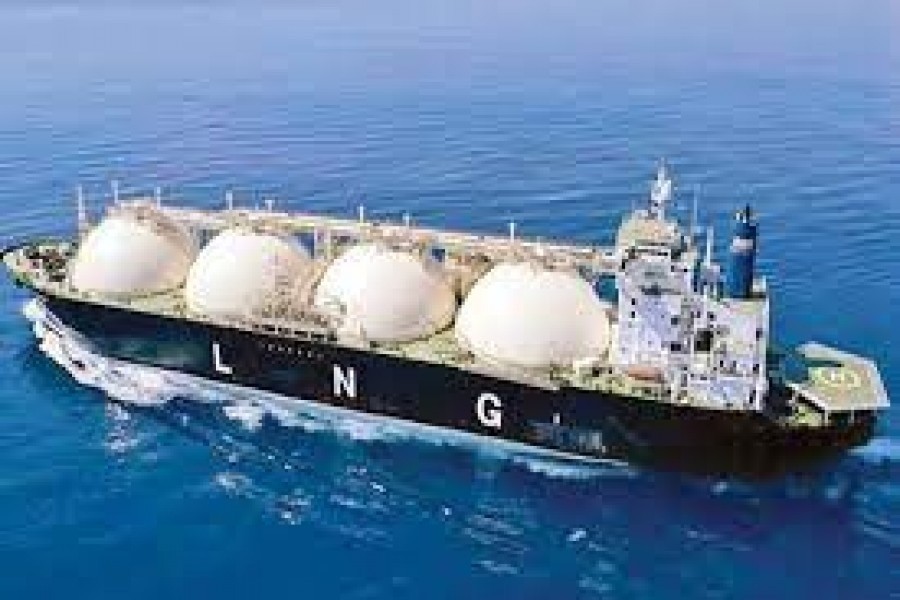
Bangladesh has cancelled and deferred four spot liquefied natural gas (LNG) cargoes scheduled for delivery in June as one of its LNG terminals remains out of operation following damage caused by Cyclone Remal in late May.

State-run Rupantarita Prakritik Gas Company Ltd (RPGCL) has cancelled one cargo and deferred two from Gunvor Singapore Pte Ltd; and has also cancelled one cargo from QatarEnergy Trading LLC, according to market sources.

The operation suspension at the Summit terminal has led to a 500 million cubic feet per day (mmcfd) shortfall in gas supply to the national grid. The supply crunch affects power generation amid high power demand due to hot weather requiring increased use of air conditioning and irrigation for paddy fields.

However, a senior Petrobangla official has downplayed the impact.

He said that gas-guzzling industries, power plants and households are unlikely to be affected too much, as the Eid-ul-Azha holiday begins on Sunday and the capital would take time to shake off the festive mood -- letting the gas demand remain lower.

The official added that regular maintenance work is also scheduled for Chevron's Bibiyana and Jalalabad gas fields during the Eid vacation, coinciding with the period of lower demand.

However, due to the unavailability of the Summit terminal, there could be an uptick in load-shedding after the Eid holiday when people return to work.

The Petrobangla official, citing a letter from Summit, said the terminal's floating storage and regasification unit (FSRU) will not be in operation until July 13.

"But we hope that Summit will be back earlier as it in the letter intended to resume operation as soon as possible," the official added.

The official said the FSRU has already left its mooring facility at Moheshkhali Island in the Bay of Bengal for repairs, which will be carried out either in Singapore or the Middle East.

Before departing, the FSRU regasified around 40,000-50,000 cubic metres of LNG that were on board at the time of the cyclone damage, he added.

More delivery rescheduling likely

The senior Petrobangla official shared the details of cancelled and deferred LNG cargoes.

He said Gunvor Singapore Pte Ltd was awarded three tenders by Bangladesh's highest public procurement body the Cabinet Committee on Government Purchase to deliver spot LNG cargoes for June 7-9, June 9-11 and June 28-29.

Bangladesh was supposed to purchase the June 7-9 and June 9-11 cargoes from Gunvor at $10.4622 per million British thermal units (MMBtu), while the June 28-29 cargo was priced at $12.9697 per MMBtu, the official added.

Separately, Bangladesh also cancelled a spot LNG cargo from QatarEnergy Trading LLC, which was scheduled for delivery between June 19-21. The price of this cargo was set at $10.30 per MMBtu.

Each of the four cancelled or deferred LNG cargoes contained a volume of around 3.36 million MMBtu, the official said.

The RPGCL, a wholly owned subsidiary of Petrobangla, looks after LNG trading in Bangladesh.

The official said Petrobangla has also approached its long-term LNG suppliers, Qatargas and OQ Trading International, requesting them to reschedule several LNG delivery cargoes in order to manage the situation caused by the terminal outage.

He also feared that additional LNG cargo cancellations might be required due to the ongoing situation.

Five LNG cargoes rescheduled in previous cyclone

During the previous Cyclone Mocha in 2023, Petrobangla was forced to reschedule at least five LNG cargoes when the country's floating LNG terminals were shut down, according to market insiders.

At that time, Bangladesh deferred deliveries from both long-term suppliers and spot supplier TotalEnergies.

To read the rest of the news, please click on the link above.
 
Analyze

Analyze Post

Add your ideas here:
Highlight Cite Respond
  • Like (+1)
Reactions: Bilal9

Flames seen over Sylhet skies no cause for alarm, says Chevron
BDNEWS24.COM
Published :
Jun 17, 2024 19:16
Updated :
Jun 17, 2024 20:25
1718669203302.webp


Chevron Bangladesh has announced the start of gas well maintenance at the Jalalabad gas field in Sylhet's Lakkatura.
Flames will be visible in the sky for the next 60 hours from early Tuesday.

The US oil and gas company has assured local people that there is no cause for alarm.

Chevron Public Relations Officer Sheikh Zahidur Rahman said in a press release on Sunday that the flaring was part of routine maintenance and that all necessary measures had been taken to ensure the safety of the local community and the environment.

Residents are advised to avoid the vicinity of the gas well during this period.​
 
Analyze

Analyze Post

Add your ideas here:
Highlight Cite Respond
  • Like (+1)
Reactions: Bilal9

Petrobangla cancels LNG spot cargo deliveries
1718751237494.webp


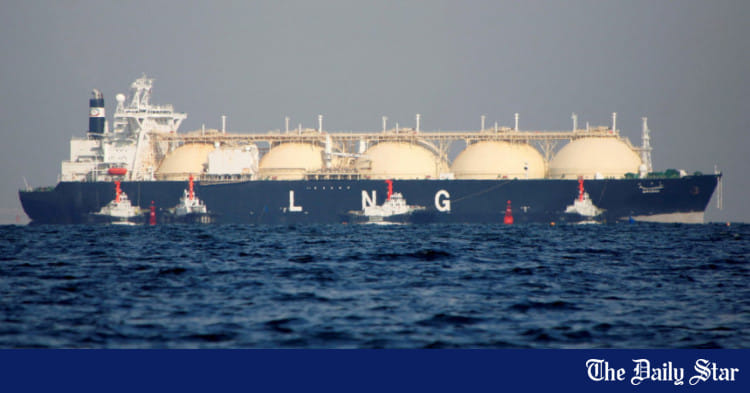
Bangladesh's Petrobangla has cancelled some spot liquefied natural gas imports after one of the country's two import terminals was damaged during a cyclone, leaving it unable to receive shipments, two industry sources said on Tuesday.

The state-owned group is tasked with importing LNG for Bangladesh, which relies on the fuel to meet power demand for its population of more than 170 million people.

Summit LNG, the operator of the damaged terminal, told Petrobangla that it had declared force majeure on LNG deliveries after its terminal was damaged, one of the sources added.

In late May, Summit LNG paused operations at its floating storage and regasification unit (FSRU) in Moheshkhali after it was significantly damaged during a cyclone.

The company later said the FSRU, which acts as a floating terminal, would proceed to Singapore or the Middle East for repairs, and that it hoped it could return to Bangladesh within three weeks of those being completed.

Due to Summit's terminal outage, Petrobangla cancelled four spot cargoes scheduled for delivery from late May to around mid-June, a senior Petrobangla official said on Tuesday.

Three of the spot cargoes were set to be delivered by Gunvor in late May and between June 7-11, and the fourth by QatarEnergy between June 19-21, added the official.

Summit LNG and QatarEnergy did not immediately respond to a request for comment on a public holiday in Bangladesh and Qatar. Gunvor declined to comment.

Summit's FSRU is one of Bangladesh's two floating LNG import terminals, with a regasification capacity of 500 million cubic feet per day, that supplies gas to the national grid. It began commercial operations in April 2019.

Bangladesh has seen annual LNG imports increase and last year shipped in 5.2 million metric tons of the fuel, according to data from analytics firm Kpler.

It has imported 2.6 million metric tons of LNG so far this year, with May shipment volumes reaching an all-time monthly record of 600,000 metric tons.​
 
Analyze

Analyze Post

Add your ideas here:
Highlight Cite Respond
  • Like (+1)
Reactions: Bilal9
New solar park going live at Saidabad in Sirajganj, behind the new station being built, immediately before the new Jamuna Rail bridge.

The park boasts capacity of 68 MW and is situated in an area of 214 acres.

 
Analyze

Analyze Post

Add your ideas here:
Highlight Cite Respond
  • Like (+1)
Reactions: Saif
New solar park going live at Saidabad in Sirajganj, behind the new station being built, immediately before the new Jamuna Rail bridge.

The park boasts capacity of 68 MW and is situated in an area of 214 acres.


As far as I know, BEXIMCO is making another solar power plant with a capacity of 200 MW.
 
Analyze

Analyze Post

Add your ideas here:
Highlight Cite Respond
  • Like (+1)
Reactions: Bilal9

Structure energy budget, keeping sustainability in mind: CPD
The think-tank said in a paper presented at an event on power and energy sector in the national budget for FY25
1719188248431.webp


The budget for the next fiscal year is trying to promote some anti-transition and anti-sustainability measures by backing coal-based electricity generation and setting unnecessarily ambitious power demand targets, the Centre for Policy Dialogue (CPD) alleged today.

It said the proposed budget for the power and energy sector for 2024-25 has failed to comply with required allocation for energy sustainability and energy transition.

"The budget for the power and energy sector needs to be structured from energy sustainability and energy transition point of view. Without proper planning, allocation, implementation and monitoring both energy sustainability and energy transition will not be achieved."

The observations were made in a paper presented at an event styled "Power and Energy Sector in the National Budget FY2025: Can the Proposed Measures Address the Challenges?" at the BRAC Centre Inn in the capital. Khondaker Golam Moazzem, research director of the CPD, presented the paper

The paper said some of the electoral commitments are reflected in the budget, but a number of the commitments are not reflected there. These include the retirement of rental and inefficient power plants, import of hydropower and smart grid.

Some important issues that required very distinctive fiscal measures are not being addressed. These include fossil fuel phase-out, the retirement of rental quick rental power plants, ending capacity payments, and incentivising renewable energy through fiscal measures.

The CPD said there is a tendency to not provide enough attention towards the expansion of renewable energy-based power generation.

"More budgetary allocation needs to be ensured for speedy expansion of the renewable energy. Renewable energy-friendly fiscal and budgetary incentives should be proposed and recommended."

According to the paper, the integration of renewable energy into the grid has a lot to do with the upgradation of transmission and distribution system.

A special allocation of Tk 100 crore has been proposed by the finance minister to encourage the development and use of renewable energy. Though the amount is small, the initiative is appreciated since it will accelerate the breaking of carbon lock-in in the country, the CPD said.

"Prioritising the distribution and transmission network of the drilled gas is appreciated."

It, however, warned that relying heavily on imported LNG could make Bangladesh more vulnerable to changes in global prices and political issues between countries.

A subsidy allocation of Tk 7,000 crore in LNG import has been proposed in FY25. In FY24, it was Tk 6,000 crore.

"Rather than enhancing LNG import, the fund should be allocated in the domestic gas exploration," the paper said.

In Bangladesh, the power and energy sector is passing a challenging period which needs proper fiscal, budgetary and policy planning with regard to generation, transmission and distribution of electricity and generation, transmission of domestic gas.

The CPD called for stopping funding for any new fossil fuel-based power generation. "The budget should reiterate the government's commitment to phase out old, dated, and expensive fuel-based and plants by ending contractual periods."

It recommended reducing load-shedding and enhancing allocation for drilling more gas wells.​
 
Analyze

Analyze Post

Add your ideas here:
Highlight Cite Respond
  • Like (+1)
Reactions: Bilal9

Endeavours for transition to green electric energy
MUSHFIQUR RAHMAN
Published :
Jun 24, 2024 21:34
Updated :
Jun 24, 2024 21:34
1719275209989.webp

This photo taken on February 17, 2024 shows a 50 MW Chinese-built photovoltaic power plant in Mymensingh District, Bangladesh Photo : Xinhua

Bangladesh has been working to increase the use of renewable energy in its energy mix. State Minister for the Ministry of Power, Energy and Mineral Resources Nasrul Hamid, MP considers that Bangladesh needs coordinated initiatives and major investment to make green energy transition. He confirms that 'efforts to provide clean electricity to businesses are continuing through net metering systems, rooftop solar, import of hydropower and increased use of energy efficient appliances'. The minister informed further that solar power projects constituting 12,000 MW is currently at different stages of government approval.

Sustainable and Renewable Energy Development Authority (SREDA) of Bangladesh has finalised a 'National solar energy roadmap 2021-2041' in 2020. In the roadmap different scenarios of implementation were recommended. Emphasis was given to high deployment scenario to achieve 40 per cent share of renewable energy in the country's commercial energy mix within 2041. Under the roadmap, within 2030 the country should achieve its target of 9,000 MW and 30,000 MW electricity by 2041. In the said roadmap low cost, renewable energy import was recommended from neighbouring countries for securing more renewable energy in the country's commercial energy mix.

The Cabinet Committee on Bangladesh Government Purchase recently (June 11, 2024) approved the proposal to buy 40 MW of electricity (under a 5-year Agreement including transmission cost) from Nepal at Taka 8.17 ($ 0.697) per unit. As per the Agreement, Bangladesh will spend Tk 6.5 billion over 5 years for bringing in the electricity from Nepal using Bangladesh-India existing grid lines. Therefore, the electricity authorities of Nepal, India and Bangladesh will sign a tripartite Agreement for wheeling the electricity into Bangladesh national grid. Bangladesh government officials consider that the approval of the hydropower purchase agreement with Nepal demonstrated the country's commitment to increase the share of green and renewable energy in its energy mix. Prime Minister Sheikh Hasina reiterated her country's eagerness to import hydroelectricity from Bhutan while meeting the Bhutanese Prime Minister Dasho Tshering in New Delhi ( June 9, 2024).

Experts believe that Bangladesh realistically can generate solar energy at a cost below US cents 7.0 (present generation cost for solar electricity from commercial plants in the country is close to US 15 cents) if it adopts appropriate strategies. Bangladesh' neighbours have been advancing fast in green energy transition using their natural advantages for generating hydroelectric power, solar and wind power. In addition, appropriate policy supports from the respective governments have helped them attracting investment in the sectors. Land scarcity remains one of the major challenges for Bangladesh for generating electric energy from the commercial size solar power plants. The private sector investment initiatives for developing large-scale solar energy firms could not meet their project implementation schedules, as they need to acquire and develop lands and infrastructure on their own prior to installing the solar PV cells with other accessories. If the government authorities provide land for developing solar power plants, project implementation lead-time and costs will be reduced significantly.

The government agencies have been actively considering investments in developing hydropower generation projects in Nepal and Bhutan to enable green electricity import from the region. Necessary infrastructure including regional high voltage electricity grid development remains in active consideration of the government. Such initiatives are positive. However, for securing a balanced and stable commercially sustainable energy system, domestic energy development options should receive priority. For securing green energy transition of the country and for consistent development towards net zero targets, solar energy potentials of the country should be developed at a faster pace.

International Energy Agency (IEA) predicts that the global investment will reach nearly two trillion US dollars in 2024 for increasing the share of clean energy-based electricity (renewable and nuclear energy) generation, power grids, energy storage facilities, energy efficiency improvements and for development of low emission fuels. The Guardian ( June 6, 2024) reports that the IEA's executive Director Fatih Birol informed that that investment in the clean energy sector had been doubled compared to investment in fossil fuel (oil, gas and coal) sector development in 2024. Investment in oil and gas and coal sector still remains high. Climate analysts have been raising alarm that continued investments in fossil fuel development worldwide will result in missing the world's climate friendly development targets. The world community had agreed in the 28th UN Climate Conference in Dubai to triple the share of power generated from renewable energy sources by 2023. Experts believe that the renewable energy generation capacity enhancement will be nearly doubled in a few countries only within the timeline. Other countries have a lot more to do for converting their promises into action plans for reducing their fossil fuel dominated economy. As per the Paris Climate Conference (2015) commitments, governments of the participating countries should develop their nationally determined contributions (NDCs) with specific targets and policies on renewable energy development. Under these policies, governments will focus mainly on developing solar and wind energy-based electricity generation facilities in their countries within their NDC targets.

With advancements of technology, solar and wind provide three quarters of global renewable energy growth. Both solar and wind energy producing companies have been making good businesses as well. 'Seven Sisters' (Exxon Mobil Corporation, Chevron Corporation, Shell Plc, British Petroleum Plc, Total Energies Se, Conoco Phillips and ENI SpA) have been dominating petroleum products production and marketing in the world. There share in the world energy (liquid and gaseous hydrocarbon) market dominated during the last century. Electricity generation had been largely dependent on the hydrocarbon supply and its use as primary fuel. Now the seven Chinese companies (Tongwei Co., GCL Technology Holdings Ltd., Xinte Energy Co., Longi Green Energy Technology Co., Trina Solar Co., JA Solar Technology Co., and Jinko Solar Co.) have emerged as dominating energy companies primarily because of their production and supply of PV (photovoltaic) cells (the device that converts light energy into electric energy) in the world market. Bloomberg (June 14, 2024) report suggests that 'Right now, seven Chinese companies have a bigger stake in the power source of the 21st century than the Seven Sisters of oil that dominated the 20th century'.

Mushfiqur Rahman is a mining engineer. He writes on energy and environment issues.​
 
Analyze

Analyze Post

Add your ideas here:
Highlight Cite Respond
  • Like (+1)
Reactions: Bilal9

Finance is key to Bangladesh's energy transition

1719359020621.webp

Visual: Star

Bangladesh is facing a double whammy. On one hand, climate-change induced events continue to ravage the country, compelling it to spend 6-7 percent of its annual budget on adaptation each year. On the other hand, transitioning to capital-intensive clean energy is also a necessity for the country given its reliance on fossil fuels, which increases costs and drives up inflation. These competing priorities mean that Bangladesh will need to consistently invest in critical climate-resilient infrastructure and clean energy technologies in the next several decades.

To achieve these goals, it is important that Bangladesh streamline its funding schemes and identify viable sources of financing.

Drivers of a clean energy transition

Cyclone Remal, which hit Bangladesh in May 2024, affected as many as 3.8 million people, damaging 150,000 houses. This was not a one-off event. Although Bangladesh is prone to cyclones of similar magnitude or more, such extreme events are likely to become frequent in future. As a result, the country will need more funding to adapt to climate change.

There are several reasons why Bangladesh should invest in clean energy. Dependence on imported fossil fuel has proven costly for Bangladesh. Apart from the high price volatility of fossil fuels in the international market during 2022-23, the recent devaluation of the Bangladeshi taka by Tk 7 per US dollar in May 2024 has made fossil fuel imports more costly. As a result, the Bangladesh Petroleum Corporation (BPC) incurred an additional cost of roughly Tk 5 billion ($42.3 million) to import fuel oil in May 2024. BPC's annual cost may increase by Tk 60 billion ($511 million), which is enough to install a combined rooftop solar capacity of more than half a gigawatt (GW).

Since importing fossil fuels such as liquefied natural gas and coal is also expensive now, the government will feel the pressure of increasing tariffs for electricity and gas.

However, raising tariffs cannot eliminate the subsidy burden. The subsidy for the power sector soared to Tk 395.35 billion ($3.34 billion) in fiscal year (FY) 2022-23 from Tk 296.58 billion ($2.51 billion) in FY2021-22 despite the 15 percent tariff hike on electricity between January and March 2023.

Bangladesh must invest more in renewable energy and energy efficiency to reduce fossil fuel imports to reverse the increasing trajectory of the subsidy burden.

Energy transition will necessitate billions in financing

According to the Integrated Energy and Power Master Plan (IEPMP 2023), Bangladesh plans to install a total of 37.8GW new renewable energy (primarily solar and wind) capacity until 2050 under the advanced technology scenario (ATS) (taking the in-between growth scenario which considered the average of the growth rates projected in the country's perspective plan and the International Monetary Fund's estimates). The IEPMP estimates that the combined capacity of 37.8GW renewable energy without energy storage systems will cost Bangladesh $37.4 billion.

However, renewable energy capacity may reach 26.2GW in 2050 under the in-between growth case, excluding ATS. The changed IEPMP scenario indicates that the country may have 17 percent renewable energy by 2050, implying that the installed renewable energy capacity will be less than 20GW.

According to IEEFA's estimate, even the installation of 20GW renewable energy capacity with battery storage for 30 percent of the capacity for four-hour back-up may require around $1 billion investment a year through 2050.

Financing the energy transition

Bangladesh should set a mission that is fit-for-purpose to lead an effective energy transition, with finance at its core. This is not only due to insufficient financing schemes, but also the challenges posed by the current banking and finance framework in the country.

For instance, Bangladesh Bank's refinancing scheme of Tk 4 billion ($33.84 million) for environment-friendly projects has recently been increased to Tk 10 billion ($84.6 million) but the cap for a loan to a solar park is only Tk 0.3 billion ($2.54 million). The loan amount is inadequate in relation to the required finance volume even for a 10 megawatt (MW) solar project.

To accelerate its energy transition, Bangladesh should explore available financing avenues, such as multilateral development banks (MDBs), green bonds, private equity funds, investment promotion and financing facilities.

The Infrastructure Development Company Limited, a non-banking financial institution (NBFI), finances utility-scale clean energy projects in Bangladesh with funding from multilateral and bilateral agencies. Likewise, another NBFI, the Bangladesh Infrastructure Finance Fund Limited, can extend debt finance to clean energy projects. However, other local financial institutions should also develop the capacity to access the low-cost finance offered by MDBs. As the country mostly imports clean energy technologies, funding in US dollars is of utmost importance to ensure a smooth opening of letters of credit (LCs) for projects.

Bangladesh Bank published a policy for the issuance of green bonds by banks and financial institutions in 2022. Green bonds can help expedite the clean energy transition in Bangladesh by raising funds for capital-intensive clean energy projects. Institutional investors have a major role to play as a large-scale renewable energy project may require funding worth several hundred million US dollars. It is imperative to incentivise individual investors with green bonds when the government's saving instruments provide lucrative returns.

A lack of equity among sponsors often delays renewable energy projects. Private equity firms with a focus on environmental, social and governance (ESG) may invest in renewable energy projects. These firms are still at a nascent stage in Bangladesh.

Bangladesh Bank's Investment Promotion and Financing Facility, supported by the World Bank, helped develop infrastructure projects in the country. While the funding phase has ended, a new phase, if launched, may speed up the energy transition. The scheme will be fit for purpose as the fund is disbursed in dollars with a tenor of 20 years.

Early preparation to identify and access finance while developing the capacity of local financial institutions is key to driving an effective and sustainable energy transition. The situation demands a bold responseβ€”defining a path that will not compromise the needs of the country, both on the climate adaptation and energy transition fronts.

Shafiqul Alam is lead energy analyst for Bangladesh at the Institute for Energy Economics and Financial Analysis (IEEFA).​
 
Analyze

Analyze Post

Add your ideas here:
Highlight Cite Respond
  • Like (+1)
Reactions: Bilal9

Latest Posts

Back
PKDefense - Recommended Toggle