[🇧🇩] Inland Riverine Shipping

[🇧🇩] Inland Riverine Shipping
20
2K
More threads by Bilal9

G Bangladesh Defense

Daudkandi to Tripura inland waterway route gets terminal, jetty​


1708645459487.webp


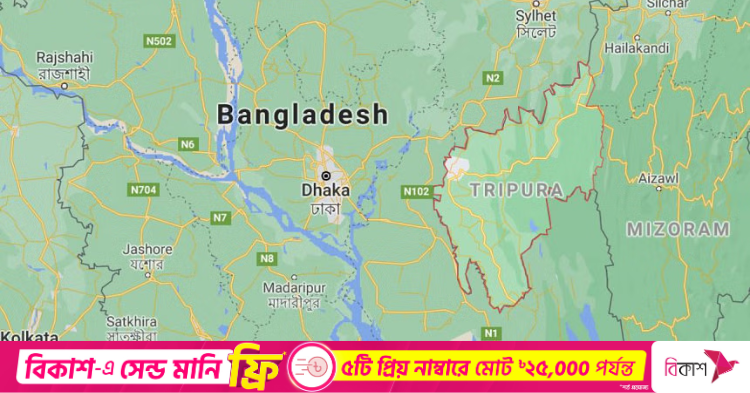
A new inland waterway terminal and a permanent jetty were inaugurated in Tripura's Srimantapuron Tuesday, which is expected to strengthen trade and economic relations between India and Bangladesh.

The development came nearly four years after the Indo-Bangla inland waterway protocol route between Sonamura of Tripura and Daudkandi of Bangladesh was first started, reported The Indian Express yesterday.

In July 2020, Tripura readied a floating jetty on the Gomati river in Sonamura, located 60km from Agartala, as part of the Indo-Bangla inland waterways connectivity project.

The jetty was included in the list of routes as part of an Indo-Bangladesh protocol signed between the India's high commissioner to Bangladesh, Riva Ganguly Das, and Bangladesh's shipping secretary, Md Mezbah Uddin Chowdhury, in Dhaka in May 2020.

Tripura Chief Minister Manik Saha, who virtually inaugurated the new infrastructure, said: "Import and export of commodities between both countries through waterways will be easier. Besides, the tourist footfall will also increase and also enhance scope of employment."

Small boats and ferries capable of carrying 50 tonnes of goods were scheduled to start moving through this route to Bangladesh soon.

The authorities are trying to further boost the navigability of the rain-fed river, including through plans to dredge the Gomati riverbed to make way for small ships and boats from Sonamura to Bangladesh's Ashuganj river port, which is only 60km away, during the winters.

India's Tourism Minister Sushanta Chowdhury said that Prime Minister Narendra Modi had emphasised connecting the northeast of India with different states and neighbouring countries through roadways, waterways, railways and airways.

"Currently, we have six highways and a few more will come up. We have been connected with different places of the country through railways. We had never thought that the Rajdhani Express would run here. We had never dreamt of waterways connectivity to Bangladesh," he said.

Sarbananda Sonowal, union minister for ports, shipping and waterways, who joined the inauguration virtually, unveiled different projects worth Rs 308 crore, including upgraded terminals at Karimganj and Badarpur, a passenger-cargo terminal at Bogibeel near Dibrugarh in Assam and the inland water transport terminal at Sonamura.​
 

Water transport workers to go on indefinite strike from Tuesday​

1709686175424.webp

Photo: Star/File

Water transport workers across the country is set to go on an indefinite work abstention from early Tuesday to press home their 11-point demand.

Bangladesh Water Transport Workers Federation announced the strike for an indefinite period at a press conference at Jatiya Press Club today, its General Secretary Chowdhury Ashiqul Alam told The Daily Star.

The 11-point demand includes forming a contributory provident fund through the Directorate of Seamen and Emigration Welfare and Trustee Board, implementation of decision to provide appointment letters, identity cards and service book, and providing Tk 10 lakh compensation if a worker dies at the workplace or accident.

Their demand also includes the withdrawal of the decision to cancel the licence of four masters and drivers of the Ovijan-10 launch.​
 

Water transport workers to go on indefinite strike from Tuesday​

View attachment 3770
Photo: Star/File

Water transport workers across the country is set to go on an indefinite work abstention from early Tuesday to press home their 11-point demand.

Bangladesh Water Transport Workers Federation announced the strike for an indefinite period at a press conference at Jatiya Press Club today, its General Secretary Chowdhury Ashiqul Alam told The Daily Star.

The 11-point demand includes forming a contributory provident fund through the Directorate of Seamen and Emigration Welfare and Trustee Board, implementation of decision to provide appointment letters, identity cards and service book, and providing Tk 10 lakh compensation if a worker dies at the workplace or accident.

Their demand also includes the withdrawal of the decision to cancel the licence of four masters and drivers of the Ovijan-10 launch.​

These guys are hypocrites. Their behavior in the launches with customers is well known. That was the time before Padma bridge. when they flouted loading rules and safety rules with abandon and took no responsibility for accidents.

Now that the tables are turned and no one wants to take a launch trip, they are whining again.
 
These guys are hypocrites. Their behavior in the launches with customers is well known. That was the time before Padma bridge. when they flouted loading rules and safety rules with abandon and took no responsibility for accidents.

Now that the tables are turned and no one wants to take a launch trip, they are whining again.
I think we should put inland shipping under Bangladesh navy. They will fix these buggers.
 

Int’l Day of Action for Rivers: Shitalakkhya a deathbed for fish now​

Factories releasing untreated waste into the river

1710367800425.webp

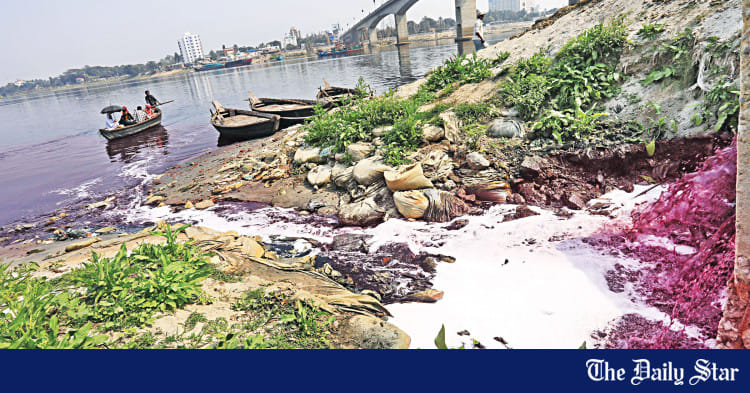
Effluents from garment and dyeing factories are being released into the Shitalakkhya at Demra Ghat near the Sultana Kamal Bridge in Dhaka. The pollution is affecting people and worsening biodiversity of the river. The photo was taken recently. Photo: Amran Hossain

Sanjit Babu, from Baghia village in Gazipur's Kapasia upazila, has been running a tea stall at Narayanpur market on the bank of the Shitalakshya river for the last four years.

Until five years ago, he used to fish in the river for a living. Both his father and grandfather were also fishermen. But the depletion of the fish stock in the river due to industrial pollution forced them all to turn to other professions.

His father now works as a farm labourer.

"There is hardly any fish in the river now, so I cannot catch any. Now, I buy dry fish from different places and sell them for livelihood," said Akhil Babu, Sanjit's grandfather.

Like these three generations of the Babus, many fishermen along the bank of the Shitalakshya in Gazipur have left fishing and taken up other occupations, as untreated industrial waste continues to flow into the river unabated, turning the water into a toxic, pitch-black substance.

Visiting different areas in Gazipur recently, The Daily Star found that the waste from numerous factories flowing into the Shitalakshya from Bhaluka through the Matikata river and Sutia river in Bormi area of Sreepur, Gazipur.

The 110km long Shitalakshya, which flows along different parts of Gazipur, Narsingdi, Narayanganj and Dhaka, was once the mainstay for fishermen.

Even some years ago, different species of fish, such as Rui, Katla, Kalbaush, Gutum, Boal, Puti, Shrimp, Shail, Chapila and Baira, were plentiful in the river, locals say.

Rafiqul Islam, a hotelier in Bormi Bazar, said, various species of dead fish are now seen floating in the river.

"Many fishermen from whom I used to buy fish have abandoned fishing and turned to various other occupations," he said.

According to the Department of Environment (DoE), there are 350 dyeing and washing factories and hundreds of readymade garment factories in Gazipur. Of them, 617 factories have effluent treatment plants (ETPs).

The Upazila Fisheries Department say waste released by different factories is the main reason behind the decline in the fish stock in the river.

Md Ashrafullah, senior upazila fisheries officer at Kapasia, said aquatic life, including fish, is near-extinct due to the pollution.

Nayan Mia, deputy director of the DoE in Gazipur, said there are very few factories without ETPs in Gazipur.

"But even those that have the ETPs are polluting the environment and rivers. Factories are not using ETPs properly. They keep the ETPs operational only when we visit factories and stop those after we leave. As a result, billions of litres of liquid waste end up in the river," he told The Daily Star.

Due to the closure of ETPs in the factories at night, liquid waste from Bhaluka and Mawna areas flows into the Shitalakshya through the Sutia river and Matikata river, he added.

"When dyeing factories run along a river, it is very difficult to protect the river from pollution."

Sharif Jamil, an environmentalist, blamed unplanned industrialisation along the river banks for destruction and pollution of rivers.

He also lamented the fact that the government did not adequately empower the River Commission to take action against river polluters.

"The government needs to think about how to save rivers. Without taking tough actions, including shutting down of the polluting factories, our rivers cannot be saved," said Nayan Mia of the DoE, Gazipur.​
 

ENCROACHMENT AND POLLUTION
Rivers and environment stand threatened
Zillur Rahaman | Published: 00:00, Mar 16,2024

1710630499528.webp


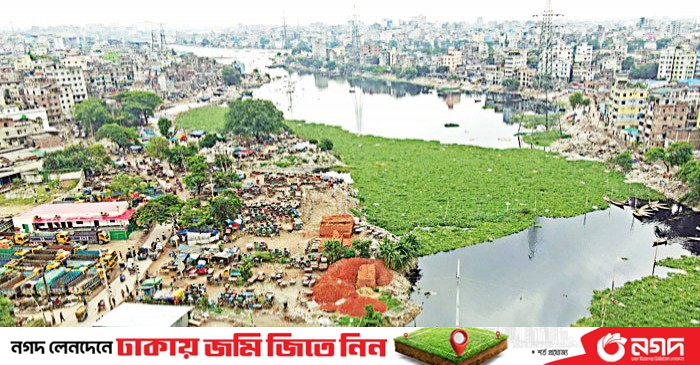
A New Age file photograph shows the grabbing of the banks inside the boundary demarcation of the River Buriganga at Lalbagh in Dhaka. — Sony Ramany

THE first blow to the river system resulted from a wrong river management during the British period. Afterwards, dams were constructed in the name of green revolution in the 1960s which harmed the system. Flood control embankments set up at the advice of the World Bank in the 80s did more harm the rivers. In two decades, rivers have been encroached on and polluted because of the expansion of industries and business.


Twenty-seven ministries and departments are involved in keeping the flow of water in the rivers, keeping them free of pollution and preventing encroachment on them. There is the National River Protection Commission to prevent encroachment on and pollution of the rivers. The encroachment and pollution of rivers, however, could not be averted. From villages to cities, we are throwing garbage into rivers everywhere. Industrial waste flows into them. The silt coming down from the upstream harms the water flow. Aquatic life also stands threatened because of the garbage.


There are about 700 rivers in Bangladesh with branches and tributaries. At least 28 rivers flowing through cities are dying because of encroachment and pollution. More than 10,000 individuals and organisations have grabbed various parts of rivers and canals in 53 districts. According to the River Conservation Commission, the number of river encroachers is higher. In fact, large factories have been built along the river, in breach of all regulations. The influential quarters, with the impunity they supposedly enjoy, keep taking over the rivers by filling them in.

In some cases, a section of locally influential quarters are directly or indirectly involved with the grabbers. Three years ago, in compliance with a High Court order, a report was prepared that identified the grabbers of the rivers. But neither the report has so far been made public nor have there been any noticeable changes in the situation. Although the encroachment on and pollution of rivers and canals in and around the capital Dhaka have for long been in discussion, the encroachment and pollution have continued apace. What is worrying is that everything is back to square one after almost every drive against encroachment on and pollution of rivers, tanks and other water bodies. What the government is left with is to ensure that the process of encroachment does not restart after eviction drives.


Many people have erected various structures, including houses and business establishments, on river banks and the canals in may areas, especially in urban areas. Even markets have been set up illegally on the banks of rivers. It is alleged that there is a collusion between a section of government officials and politicians in the encroachment on rivers and canals. Appropriate measures should be taken against such collusion.

The environment department should take all measures to stop the dumping of garbage in the river and the land ministry should stop the lease of wetlands. The fisheries department should also shoulder the responsibility for protecting wetlands and increasing the flow of water in rivers. Effective measures should be taken to demarcate rivers, identify encroachers and evict them and save the rivers. Nothing can be done without the political will.

River protection should first be considered a priority and work should be done accordingly and everyone should come forward. The government needs to draw up a long-term plan to save the rivers. People involved in river encroachment and pollution should be deterrently punished. The rivers should be dredged immediately. The government should take strict action in this regard. Social movements should also be set in motion to increase public awareness to stop river pollution.

The government should take early initiatives to make relevant laws more stringent to prevent encroachment on and pollution of rivers and wetlands, by dredging the rivers to keep waterways operational, by setting up industrial waste treatment plants in all factories to prevent pollution of rivers and wetlands. However, there are complaints that although there are purification devices, waste in some factories is not purified and is directly dumped into the rivers, canals and sewers. This creates an opportunity for various harmful chemicals to enter the food cycle. Effective measures should, therefore, be taken to prevent river pollution.

The course of river flow is changing because of the encroachment on rivers and canals. In addition to disruption in the natural flow of rivers in the monsoon season, rainwater collects in many places and submerges crops and houses. Some locally influential people continue to try to claim ownership to river land and canals by forging deeds and documents. The River Conservation Act should be stringently applied to reclaim the lost river land.


An initiative was taken in 2020 to enhance the powers and scope of the National River Protection Commission. But it does not appear to have progressed much in four years. The draft proposed a maximum penalty of 10 years’ imprisonment or Tk 50 million in fine or both for river encroachment and pollution. The 2013 law has not prescribed any punishment for such offences. The commission’s decisions in terms of river protection, conservation, development and beautification should be made binding.

The commission has no function but to make recommendations to prevent river pollution and encroachment. The new draft lays out that the commission would issue directives to agencies concerned to prevent encroachment on and pollution of rivers and development of rivers. If any organisation fails to fulfil its responsibilities, the commission can take action against by considering such failures as criminal offences. The draft also proposes the institution of river protection courts to try river-related offences.

The law, as of now, does not provide for specific penaly for river encroachment and pollution. The Penal Code, however, provides for punishment for obstructing the river flow. The environment act also has provision for punishment in case of encroachment on and the pollution of rivers. The water act also provides for penalty for river-related offences. But the legal provisions are not enforced in case of river encroachment and pollution.

The law should stipulate that any relevant organisation would be held to account in cases of failures to to implement the law.

Rivers are inextricably linked with life, livelihood, culture, art and literature. For thousands of years, the rivers have enriched agriculture, nature and economy. Bangladesh’s future will be saved if the rivers are protected. Everyone should try to save rivers and the environment.

Md. Zillur Rahaman, a banker, is a columnist.​
 

Riverine trade in BD's economic growth
Matiur Rahman
Published :
Dec 05, 2024 22:15
Updated :
Dec 05, 2024 22:15

1733449745909.webp

Labourers unload bricks from a trawler on the bank of the Buriganga river in Dhaka, Bangladesh, March 6, 2023 Photo : REUTERS

Bangladesh, a country marked by its complex network of rivers, has long relied on these waterways as a critical component of its economic infrastructure. The country's geographical features, defined by the vast Ganges-Brahmaputra delta, create an extensive river system as a lifeline for trade, agriculture, and transportation. Riverine trade in Bangladesh is not just a remnant of history but an essential driver of the nation's economic growth.

Bangladesh's rivers have historically been central to its civilisation and economy. The Indus Valley civilisation flourished thousands of years ago and was primarily based around river systems. The same holds for Bengal's later empires, such as the Mauryas and Guptas, who understood the strategic importance of rivers for trade and transportation. The rivers acted as natural highways, allowing goods to be transported efficiently across vast distances. This early reliance on waterways set the foundation for modern riverine trade.

Today, rivers like the Padma, Meghna, Jamuna, and many others play a pivotal role in Bangladesh's economic activities. Despite the rapid expansion of road and rail networks, river transport remains vital, especially for moving goods to remote rural areas. Most trade within the country and a significant portion of external trade is conducted via waterways. The low-cost nature of river transport, compared to road and rail, has made it particularly attractive for bulk goods like agricultural products, sand, timber, and coal, which are integral to the country's development.

One of the main advantages of riverine trade is its cost-effectiveness. A dense river network can relatively cheaply transport goods over long distances. This is particularly crucial for Bangladesh, where economic growth is often linked to the agricultural sector. Bangladesh's key agricultural regions, such as Khulna, Barisal, and Sylhet, are along the riverbanks. These regions rely heavily on river transport to get their goods to markets within the country and for export purposes. Furthermore, river transport reduces the strain on road networks, which are often congested and underdeveloped in rural areas.

For Bangladesh's economy, riverine trade is also crucial for the country's export sector. Bangladesh's major exports-such as ready-made garments, textiles, and food products-often use river transport to reach the country's seaports, such as Chittagong, one of the busiest ports in South Asia. The riverways connect inland production centres and the international market, enabling goods to be shipped to global destinations. Moreover, Bangladesh's strategic location, with its access to the Bay of Bengal and neighbouring countries like India, Myanmar, and China, provides it with opportunities to strengthen regional trade through river routes.

While riverine trade has been central to the economic life of Bangladesh for centuries, it is not without its challenges. Environmental factors, such as flooding and erosion, often disrupt river routes, making them less reliable. The seasonality of river water levels can cause significant fluctuations in transport capacity, leading to delays and higher costs during the dry season when rivers are shallow. Moreover, the increasing siltation of riverbeds and the encroachment of waterways by human settlements have led to the narrowing and changing of river routes, further complicating trade.

Another primary concern is river pollution, exacerbated by industrialisation and urbanisation. Polluted rivers hinder navigation and have broader implications for public health and the environment. This urgently requires infrastructure investments in river management and environmental conservation. Developing navigational aids, such as dredging and improving ports and terminals along the rivers, can mitigate some of these issues. However, these challenges must be addressed systematically to unlock the full potential of riverine trade.

In recent years, the Bangladeshi government has recognised the importance of riverine trade in its economic development strategy. The government has undertaken several initiatives to improve river navigability, including dredging programmes and developing modern river ports. The Inland Water Transport Authority (IWTA) has been working on expanding and upgrading the country's river transport infrastructure, including constructing new terminals and introducing more modern, efficient vessels.

In addition to government efforts, private sector involvement in river transport has also increased. Companies involved in shipping, logistics, and river transport have been innovating with new technology, improving the efficiency of operations and reducing environmental impacts. The rise of digital platforms and logistics apps has also made it easier to manage riverine trade, enabling businesses to track shipments in real time and optimise supply chains.

As Bangladesh continues to grow, riverine trade holds the potential to play an even more significant role in its economic future. The regional connectivity rivers offer is substantial for facilitating trade with neighbouring countries. Bangladesh's inland waterways provide a relatively low-cost, efficient option for cross-border trade, particularly with India, where river systems also play a central role. Moreover, Bangladesh's rivers can promote more significant trade with Myanmar and China through improved access to the Bay of Bengal.

In the future, Bangladesh could further capitalise on its riverine trade by developing a "Blue Economy," which involves the sustainable use of water-based resources for economic growth. Expanding the use of waterways for tourism, fisheries, and renewable energy, alongside trade, could open up new avenues for growth. Developing water-based transport hubs and creating green infrastructure could provide sustainable solutions to urbanisation and climate change challenges.

Bangladesh's focus on sustainable development also offers an opportunity to integrate riverine trade with environmental goals. By adopting eco-friendly practices, such as using cleaner vessels and reducing the environmental impact of industrial activities along riverbanks, the country can ensure that river trade remains a viable and green option for future generations.

Moreover, adopting international standards and agreements on waterway management will ensure that riverine trade continues to thrive while minimising adverse environmental effects. Thus by wisely leveraging its river systems, Bangladesh can position itself as a critical player in the regional and global economy while ensuring that its rivers remain a vital part of its socio-economic fabric.

Dr. Matiur Rahman is a researcher and development worker.​
 

Foreigners showing more interest to invest in shipping sector, says Sakhawat
FE ONLINE DESK
Published :
Dec 15, 2024 22:38
Updated :
Dec 15, 2024 22:38

1734309734927.webp


Shipping, and Labour and Employment Adviser Brig Gen (retd) Dr M Sakhawat Hussain on Sunday said foreigners have been showing more interest to invest in the country’s shipping, maritime and port infrastructure development sectors.

“The government has already taken various steps for maritime sector development, including reducing the port congestion to ease imports-exports,” he said while speaking at a view-exchange with a delegation of the Shipping Reporters’ Forum at his ministry in Dhaka.

Sakhawat Hussain said the ministry has planned to build an international stander dockyard in Matarbari Deep Sea Port with support of the World Bank, reports BSS.

He said the ministry also took steps to increase facilities of carrying passengers and goods via waterway.

Besides, the shipping ministry has taken steps to turn Mongla Sea Port into an environmental friendly green port.

The present interim government is working relentlessly for the country and its people, he added.

The adviser urged the journalists to publish objective news for the development of the country.​
 

Latest Posts

Back