[🇮🇳] India---News & Views

[🇮🇳] India---News & Views
75
3K
More threads by Saif

G   Indian Defense

Modi urges limits on fuel use, travel and imports to save forex

REUTERS

Published :
May 11, 2026 22:42
Updated :
May 11, 2026 22:42
1778542834029.webp


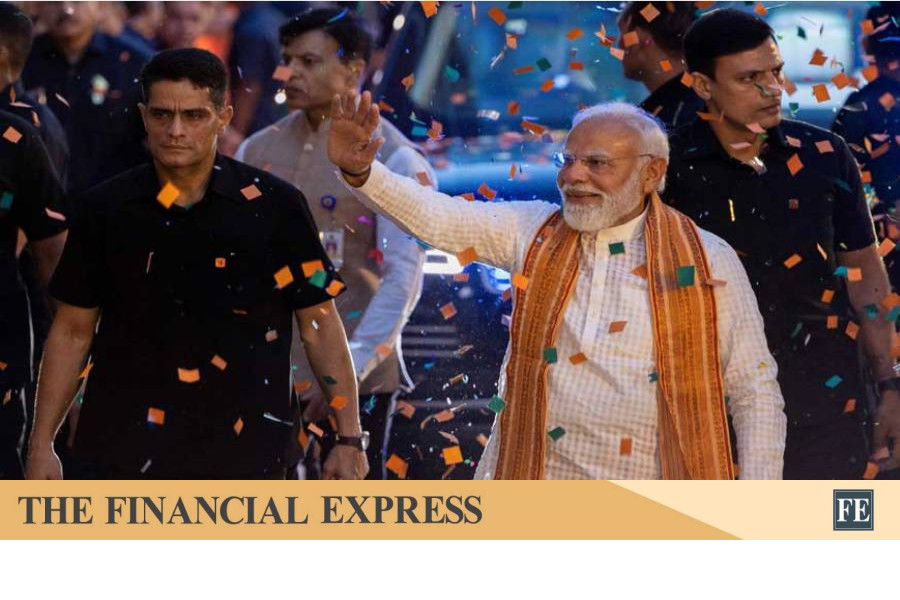
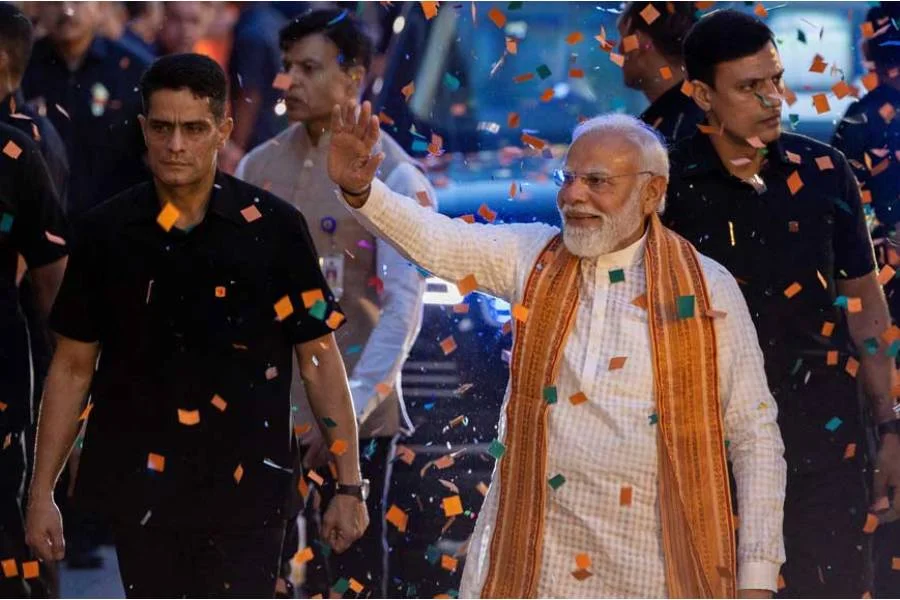
India's Prime Minister Narendra Modi greets his supporters as he arrives at the Bharatiya Janata Party (BJP) headquarters as BJP celebrates its win in the West Bengal and Assam states' assembly elections, in New Delhi, India, May 4, 2026. Photo : REUTERS

Indian Prime Minister Narendra Modi on Sunday urged a spate of measures including fuel conservation, work-from-home practices and limits on travel and imports, as a surge in global energy prices puts pressure on the country's foreign exchange reserves.

People should prioritise a return to work-from-home and online meetings, widely adopted during the COVID-19 pandemic, saying it would help India use less fuel, Modi said.

"In the current situation, we must place great emphasis on saving foreign exchange," he said.

Modi also asked people to use public transport such as the metro and to carpool where possible to conserve fuel.

India, the world's third-biggest oil importer and consumer, late last month said there was no proposal to raise pump prices for diesel and gasoline, leaving it among the countries yet to raise prices despite the global surge.

Modi urged people to avoid buying gold -- which India spends on heavily during weddings -- and to cut non-essential overseas travel for at least a year to save foreign exchange.

He called on families to reduce cooking oil consumption, describing that move as both healthy and patriotic.

Modi also asked farmers to cut fertiliser use by as much as half.​
 

India scrambles to steady rupee as oil shock bites

AFP, Mumbai

1779064145496.webp

A trader counts Indian currency notes at a market in Kochi. India’s central bank has already poured billions of dollars to stabilise the currency. Photo: REUTERS/FILE

India is scrambling to salvage a sinking rupee as surging oil prices linked to the Middle East conflict threaten to disrupt the world’s fastest-growing major economy.

The currency has dropped more than five percent since the crisis erupted in February, extending losses from 2025 and making it Asia’s worst-performing major currency in 2026 so far.

It hit a record low of over 96 to the dollar on Friday, prompting officials to signal that halting further depreciation is a key macroeconomic priority.

India’s central bank has already poured billions of dollars to stabilise the currency, curbed speculative trading and offered a special credit line to oil importers to ease dollar demand.

Prime Minister Narendra Modi has also urged voluntary austerity measures to rein in dollar-guzzling imports, including cutting down on gold buying and foreign travel for a year.

But the pressure persists.

“The whole system has been disturbed,” said Dilip Parmar of stockbroker HDFC Securities, citing heavy foreign investor outflows, weaker growth prospects and elevated crude prices.

“That is the basic problem which you’re seeing replicated in the fall of the rupee,” he said, noting that it was ultimately “a function of demand and supply” with dollar demand being higher.

The rupee’s slide comes as India faces a widening current account deficit driven by costly energy imports.


The gap is likely to be over two percent of GDP this fiscal year, more than double last year’s level and potentially the widest since 2012–13, according to Bank of America Securities estimates.

WIDENING DEFICIT

At the same time, foreign investors have dumped more than $20 billion in Indian stocks since the start of the Mideast conflict, the fastest pace on record, while dollar inflows have slowed, opening the possibility of a balance-of-payments gap as large as $67–88 billion.

The 2027 fiscal year “will be our third year of a balance-of-payment deficit, which is certainly unusual,” economist Dhiraj Nim of ANZ Research told AFP.

This strain has weighed on the rupee, prompting the central bank to defend it by burning through foreign exchange reserves -- now at around $697 billion, down from over $720 billion before the Middle East war.

While still covering about 11 months of imports, the decline underscores the strain.

A weaker rupee is rippling through the domestic economy.

Manufacturers and food processors, many dependent on imported raw materials priced in dollars, are seeing costs surge.

Smaller firms often lack the ability to hedge currency risks.

In Kerala’s cashew industry, which mostly imports raw nuts from Africa, the impact has been acute.

“Imports have become far more expensive for the local market,” said Rajmohan Pillai, who runs a cashew firm, adding buyers can now afford only about 90 percent of last year’s volumes.

He estimates more than 80 percent of processing units have shut in recent years, with rupee volatility a contributing factor.

‘LAST STRAW’

India’s currency decline has also hit students looking to study abroad.

Education consultants say studying in the United States now costs more than one million rupees ($10,450) extra compared with a year ago.

“This is the last straw,” said Meghna Sen, a 17-year-old aspiring psychology student.

“Now we have to track (the rupee) movement to check how much we need for our grocery budgets.”

The depreciation has punctured India’s ambition to become the world’s third-largest economy.

Modi, who once criticised his predecessors over currency weakness, has seen India’s global economic ranking dented because GDP comparisons are measured in dollars.

The country has slipped behind the United Kingdom to the sixth place according to IMF data, largely due to the rupee’s fall.

Nomura analysts warn more drastic measures may be on the anvil.

These include possible fuel price hikes, tighter controls on overseas remittances and steps to attract dollar deposits from non-resident Indians -- a playbook used in past crises.

Still, economists caution that intervention can only smooth volatility, not reverse underlying pressures.

“Fundamental factors” remain to be resolved, Nim said, adding “I would not even rule out an interest rate hike which squarely targets future inflation”.

The Reserve Bank of India knows what its options are, he said.

“All that remains is to see what it decides to choose.”​
 

The rise of CJP and its implications for mainstream politics

Neil Ray

Published :
May 24, 2026 23:29
Updated :
May 24, 2026 23:29

1779681363648.webp


The exponential proliferation of followers of the satirical "Cockroach Janata Party (CJP)" on social media sites is a clear sign that people, particularly the young generations, are not happy with the existing system of governance in India. This parodic imitation of the Bharatiya Janata Party (BJP) has caught the imagination of Indian youths like wildfire. By Saturday, it amassed 21 million followers on Instagram and hundreds of thousands of members. No mainstream political party in India is even remotely compared to this number in terms of followers. But it is not a formal political party. An online movement of political satire, it pronounces an indictment on the traditional arrangement of political system called 'democracy'.

A political communications strategist and student at the Boston University, Abhijeet Dipke is the creator of this humorous nomenclature CJP. The origin of this cockroach coinage goes to the credit of that country's Chief Justice Surya Kant who allegedly compared unemployed young people drifting towards journalism and activism with cockroaches and parasites. Although he later clarified that he referred to those with fake and bogus degrees.

But by this time the damage was done. No one was ready to listen to such explanations. Both young and elderly people joined the chorus against this apparently derisive comment on unemployed youths. Clearly, such a controversial comment on young people was not to the liking of any segment of Indian society. It was uncalled for. Unemployment or a lack of opportunities is a problem facing the world at large. It is the governments' responsibility to provide them with jobs and this cannot draw flak from people in high position.

Ironically, cockroach is an insect that dates back to over 300 million years, predating dinosaurs. This is one of the most resilient pests the world has ever known. It has survived multiple mass extinctions, including the raining down of asteroids that wiped out dinosaurs from the face of this planet. This creature's ability to adapt to every terrestrial environment is phenomenal. So the satirical name of this informal party has a truth ingrained in it. Although, the intention of its founder may not have considered this aspect of resilience but it has however happened coincidentally.

The government of India should not feel comfortable with this CJP that has gone viral on social sites and it now seeks to stamp it out. Already it has been removed from X handles but it is going from strength to strength on the Instagram. On the face of it, it may look like one of the sweeping fads that take social sites by storm but the ugly truth inherent in today's perverse politics cannot be missed. The angry young members of society observe that politics bypass them if they are not diehard supporters of the ruling party.

Generation Z or Gen Z in short, gives through this huge following a message most stark and disturbing. The old guards fail to appreciate the young people's attributes and often undermine their potential. But the members of Gen Z are a force to reckon with. What happened in Bangladesh and Sri Lanka can more than vouchsafe for their unlimited energy and fighting power. There is a need for governments everywhere to stay cautioned particularly when the two sides confront each other.

The way this generation sees the world through their digital telescope is clear enough and political manoeuvres political governments resort to may fall short of meeting the challenge. The president of the most powerful nation is behaving like a crazy guy and the inconsistency in his policies and actions should have by now prompted the generation to reject him. Even if it does not happen now, most likely the Gen Z will dump him in the dungeon of history. The Cockroach Janata Party may prove a point if it influences political parties in opposition to adopt the strategy it successfully applied. The established political order may go into pieces before the 'cockroaches' breathe fresh air into politics of the largest democracy in the world.​
 

Could India's Gen-Z rebellion begin with cockroaches?

1779763709328.webp


What if, one fine morning, a call is extended — "Cockroaches of the world unite!" And suddenly millions of pointless, lazy little creatures swarm out from their ugly dens — from behind boxes, from under beds, from the dark corners of old cupboards?

Lazy, yet resilient, cockroaches refused to evolve for the last 150 million years. All they have done is survive and breed. You chase them away with a broom, smash them with sandals, spray them with "Hit," and still they return. When filth piles up, cockroaches are bound to appear.

"What if all cockroaches come together?" — this was the exact question asked by 30-year-old Abhijit Dipke after Justice Surya Kant, the Honourable Chief Justice of India, compared India's unemployed youth to "cockroaches" during a hearing on May 15.

Within 24 hours, Dipke launched a website and social media handles on X and Instagram under the name Cockroach Janata Party (CJP).

The name itself mocks the ruling party at the Centre. Then there is the logo: a cockroach sitting on a smartphone with full internet connectivity — reflecting the Chief Justice's further accusation that professionally worthless youngsters turn into media or social media activists and attack everyone.

But does a cockroach really attack anyone? Its clumsy wing-flutters may create a nuisance, and its flat existence may carry messages for future propagation. It troubles, certainly, but rarely harms.

Cockroaches are the outcome of a systematic betrayal

The Cockroach Janata Party expects its members to meet certain standards. Gender, caste, or religion do not matter. Interested individuals are encouraged to conduct an eligibility self-check to ensure that they are effectively unemployed, physically lazy, chronically online, and capable of ranting professionally.

1779763751580.webp

Abhijeet Dipke, founder of Cockroach Janata Party. Photo: X

These criteria perfectly echo how Indian society increasingly views Gen-Z. Justice Surya Kant's remark, his later clarification notwithstanding, was not merely a personal slip of tongue. It reflected the broader mindset of India's comfortable middle class, which does not endure the chronic financial and professional stress that the country's youth face.

Gen Z, or those born between 1997 and 2012, now constitutes more than a quarter of India's population. Yet nearly 40% of young graduates remain unemployed, according to the State of Working India 2026 report by Azim Premji University—only around 7% secure permanent salaried employment within a year of graduation.

In rural India, post-COVID dependence on agriculture has increased. In urban India, the rapid expansion of the gig economy continues to suppress wages and compromise job security. The Modi Government endlessly glorifies India's "demographic dividend," while offering little assurance regarding the educational, professional, or economic aspirations of the youth.

At the same time, inflation, rising fuel prices due to the Middle East crisis, and the growing fear that artificial intelligence will consume skilled jobs deepen existing anxieties. Affordable education, healthcare, and housing remain increasingly inaccessible. Meanwhile, the gradual transfer of national wealth toward crony capitalists like Adani and Ambani becomes harder to ignore. Public trust in the judiciary is eroding rapidly.

The political trend of apoliticism

The CJP's manifesto contains five demands: no Chief Justice should receive a Rajya Sabha seat after retirement; the Chief Election Commissioner should face UAPA charges if legitimate votes are deleted; 50% of cabinet positions should be reserved for women; media houses owned by Adani and Ambani should lose their licenses; and any MLA or MP defecting from one party to another should be barred from contesting elections or holding public office for twenty years.

Rallies, slogans, and street-corner speeches no longer engage educated youth the way they once did. Instead, youngsters express their political consciousness through satire, memes, parody, and comedy reels.

The party also demanded the resignation of the Union Education Minister following the recent cancellation of the 2026 NEET examination due to a question paper leak.

The demands primarily target corruption and institutional decay, which easily makes one recall the 2011 anti-corruption movement — popularly known as the Anna Andolan — which sought to address political corruption through the Jan Lokpal Bill.

That non-partisan civil movement eventually gave birth to Arvind Kejriwal's Aam Aadmi Party while simultaneously strengthening the BJP's anti-Congress narrative before the 2014 general election.

Could the CJP similarly evolve into a larger anti-establishment movement?

The speculation becomes stronger considering that Dipke himself was associated with the AAP between 2020 and 2023.

For now, however, the CJP primarily serves as a platform to raise issues and demand accountability. "The rest is satire," they say.

Their website carries a smart aesthetic. There are leaderboards ranking top citizens, top states, and top revolutionaries by the number of issues they raise. Their headquarters? "Wherever the WiFi works."

Within days of launching, the CJP's Instagram following far surpassed that of the BJP. In an interview with Al Jazeera, Dipke remarked, "Those in power think citizens are cockroaches and parasites… They should know that cockroaches breed in rotten places. That's what India is today."

The emergence of the CJP as a voice of Gen Z inevitably invites comparisons with recent youth-led mobilisations in Sri Lanka, Bangladesh, and Nepal, all of which successfully toppled their respective governments.

Yet Dipke himself told the Dawn, "Whatever we do, we will do within the rights of the Constitution. We will do it democratically and peacefully. It won't be something like Nepal or Bangladesh."

Even so, the CJP has already announced its first mobilisation campaign — BharatX: Phase One — asking supporters to walk silently at 6 a.m., carrying Indian flags, use black profile pictures, and spread the movement across youth spaces.

Their website declares, "This phase is not about politics. It is about awakening people, building discipline, and creating a national youth movement focused on change, action, and the future of India."

In contemporary India, spontaneous issue-based civil movements often inspire deeper trust among educated urban and semi-urban youth than organised political parties do.

The Rat Dakhal movement in Kolkata, following the rape and murder of an on-duty trainee doctor in 2024, witnessed an unprecedented level of public outrage. Likewise, spontaneous worker protests across the NCR last April forced the Uttar Pradesh Government to revise minimum wages despite police crackdowns.

The CJP, too, emerges from accumulated resentment — not resentment over a single incident, but years of failed promises suddenly crystallised by one careless remark from the country's top judicial office. This resentment is directed against a right-wing political order, but its roots also lie in the unfulfilled promises offered by the right-wing itself.

When the "lingo" replaces the language

Large sections of India's youth have become deeply disillusioned with conventional political parties. But what language can an alternative movement speak?

In an era of collapsing attention spans and endless streaming of digital content, all political parties compete within a brutal marketplace of attention. Yet traditional political vocabulary increasingly fails to keep pace with Gen-Z's anxieties, humour, and communication style.

The cockroaches no longer wish to be crushed silently. They want to return humiliation with humiliation. And they prefer the open, horizontal space of digital media over the rigid hierarchies of traditional political parties.

Rallies, slogans, and street-corner speeches no longer engage educated youth the way they once did. Instead, youngsters express their political consciousness through satire, memes, parody, and comedy reels. The popularity of comedians like Kunal Kamra, Varun Grover, Samdish Bhatia, or Vir Das reflects precisely this shift.

This phenomenon is not unique to India. Across the world, Gen-Z movements are discovering new forms of political communication and organisation.

Rather than conventional party politics, politically charged identities forged through collective humiliation are becoming more effective at mobilising support.

In India, direct criticism of the government is also becoming increasingly risky amidst rising threats from reactionary Hindutva, hyper-nationalism, and restrictive laws like the UAPA.

India's ranking in the World Press Freedom Index has continued to decline sharply.

Under such conditions, mockery becomes a political language. A recent example emerged in West Bengal, where sections of the Muslim community — responding to BJP-led restrictions on cow slaughter before Bakra Eid — protested by demanding that the cow be declared India's national animal.

Yet it would be mistaken to view the Cockroach Janata Party as a movement directed solely against the BJP. The party explicitly argues that no political force in India genuinely represents the younger generation. The mockery, therefore, is broader than electoral opposition. It is aimed at the political system itself.

The fate of the cockroaches

Political commentators remain understandably sceptical about the future of the CJP. Is this merely another viral digital moment, or does it signal something larger?

After all, there is nothing inherently revolutionary about allowing frustrated internet users to obtain symbolic party membership through a Google Form.

Yet the speed of the movement's popularity indicates something important: the cockroaches no longer wish to be crushed silently. They want to return humiliation with humiliation. And they prefer the open, horizontal space of digital media over the rigid hierarchies of traditional political parties.

Still, the larger question remains whether the ground for a mass movement truly exists in a country as vast, fragmented, and institutionally powerful as India.

Movements of that scale require a profound collapse of public faith in the existing system. That reality has not yet fully arrived in India. The BJP continues to dominate large parts of the country through so-called "double-engine" governments. Faith in Narendra Modi's "Vishwaguru" image, in slogans like Sabka Saath, Sabka Vikas, and in the broader Hindutva project, remains widespread — including among many young people visible on social media.

1779763808693.webp

The Cockroach Janata Party (CJP) uses sharp satire and striking imagery to channel Gen-Z's frustration over unemployment and systemic political decay. Photo: CJP Website

Why then was the BJP government so quick to block the CJP's Instagram account?

Because the BJP sensed a challenge.

The BJP seeks to occupy the political imagination of Gen-Z itself, and the sudden popularity of the CJP suggested the possibility of losing a section of that psychological ground.

This insecurity also explains the increasingly coercive character of the Indian state. Through processes such as the Special Intensive Revision (SIR), many people have reportedly lost their voting rights. Simultaneously, journalists, activists, and dissenting voices face growing legal and administrative pressure.

As political space continues to shrink and the BJP's dominance grows more assertive, the conditions for public anger also become ripe.

For now, it is reasonable to see the rise of the Cockroach Janata Party as one stage within that larger preparatory process.

Arka Bhaduri is an independent journalist, executive editor at The International and The Hammer magazine, and a columnist for the Morning Star. He writes extensively on the political dynamics of South Asia and Europe.​
 

Latest Posts

Back