Iran's Foreign Minister Seyed Abbas Araghchi has strongly condemned the US attack on a water desalination plant on Iran's southern Qeshm Island. He made the remarks in a post on social media platform X on Saturday after the United States reportedly destroyed the facility with missiles launched fro
thefinancialexpress.com.bd
Iran condemns US attack on Iranian desalination plant
FE ONLINE DESK
Published :
Mar 08, 2026 13:29
Updated :
Mar 08, 2026 13:29
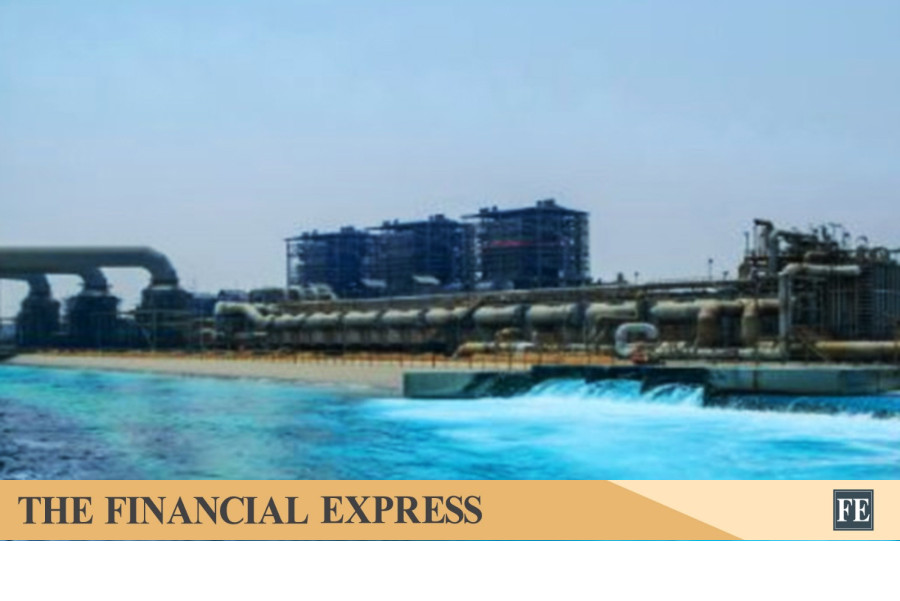
Iran's Foreign Minister Seyed Abbas Araghchi has strongly condemned the US attack on a water desalination plant on Iran's southern Qeshm Island.
He made the remarks in a post on social media platform X on Saturday after the United States reportedly destroyed the facility with missiles launched from its Jufair base in Bahrain on Friday.
"The US committed a blatant and desperate crime by attacking a freshwater desalination plant on Qeshm Island. Water supply in 30 villages has been impacted," Araghchi said.
He added that attacking Iran's infrastructure is a "dangerous move with grave consequences."
Mohammad Bagher Ghalibaf, Iran's parliament speaker, said on his X account that the attack on the Qeshm desalination plant was carried out with support from one of the air bases in the southern neighbouring countries, reports Xinhua.
Iran's Islamic Revolution Guards Corps said on Saturday that it retaliated for the US attack by striking the US base in Bahrain with solid- and liquid-fuel precision-guided missiles.
The United States will spare Iran's energy infrastructure as it wages war with Israel against the Islamic republic, Energy Secretary Chris Wright said Sunday
en.prothomalo.com
US says it will not hit Iran energy sector
AFP
New York, USA
Published: 08 Mar 2026, 23: 04
TOPSHOT - This video grab taken from UGC images posted on social media on March 7 and 8, 2026 shows fire erupting at an oil depot in Iran's capital Tehran. The United States and Israel launched strikes against Iran on 28 February, sparking swift retaliation by the Islamic republic which responded with missile attacks across the region. The war has dragged in global powers, upended the world's energy and transport sectors, and brought chaos to even usually peaceful areas of the volatile region. (Photo by UGC / AFP) / RESTRICTED TO EDITORIAL USE - MANDATORY CREDIT AFP - SOURCE: UGC / UNKNOWN - DISTRIBUTED AS A SERVICE TO CLIENTS - NO RESALE -AFP
The United States will spare Iran's energy infrastructure as it wages war with Israel against the Islamic republic, Energy Secretary Chris Wright said Sunday.
With oil prices rising dramatically, he told CNN that disruptions to the petroleum and gas industry will be short lived -- "worst case, that's a few weeks. That's not months."
Israel attacked oil storage facilities Saturday in and around Tehran, sparking huge fires in the first such attacks reported since the war started last weekend. Wright seemed to downplay them.
"These are Israeli strikes, these are local fuel depots to fill up the gas tank," Wright said.
He added: "The US is targeting zero energy infrastructure. There are no plans to target Iran's oil industry, their natural gas industry, or anything about their energy industry."
The war has all but shut down the Strait of Hormuz, through which nearly 20 per cent of the world's crude oil and about 20 per cent of liquefied natural gas usually transit.
Energy markets have been riled by this disruption and oil prices shot up. West Texas Intermediate, the US benchmark for oil, rose 12 per cent just on Friday and is up 36 per cent in a week.
"They shouldn't go much higher than they are here because the world is very well supplied with oil," Wright told CBS. "There's no energy shortage in all of the Western hemisphere."
US insurer AAA said US gasoline prices at the pump have gone up 16 per cent in a week and diesel by 22 per cent.
The website GasBuddy says diesel fuel, used extensively in trucking, had not been this expensive since February 2023.
Gasoline prices are closely watched in this country where cars are king and they could become a factor as America heads toward mid-term elections in November. Trump's approval rating was low even before the war.
"What you're seeing is emotional reactions and fear that this is a long term war," Wright said on CBS. "This is not a long-term war."
He said the United States is now talking with shipping companies eager to get their vessels out of the Gulf.
"Early tankers probably will involve some direct protection by the US military" to get through the Strait of Hormuz, he said, adding that he thinks traffic will return to normal "relatively soon."
Iran accounts for about four per cent of world oil production, according to the US Energy Information Administration.
Its oil industry is subject to international sanctions but some is still exported, mainly to China, oil industry data shows.
US Treasury Secretary Scott Bessent said Friday the government was considering lifting sanctions on more Russian oil, a day after it temporarily authorized India to buy from Moscow as global oil prices surged.
The US International Development Finance Corporation also said Friday it is creating a reinsurance mechanism of up to $20 billion to cover risk associated with travel through the Strait of Hormuz.
Iran can fight an intense war against the United States and Israel for at least six months, the Revolutionary Guards said in a statement carried by the Fars news agency on Sunday.
en.prothomalo.com
Iran Guards say can fight 'intense war' for six months
AFP
Tehran
Published: 08 Mar 2026, 10: 21
Iranian ballistic missiles are displayed during the ceremony of joining the Armed Forces, in Tehran, Iran, 22 August, 2023. Reuters
Iran can fight an intense war against the United States and Israel for at least six months, the Revolutionary Guards said in a statement carried by the Fars news agency on Sunday.
"The Armed Forces of the Islamic Republic of Iran are capable of continuing at least a 6-month intense war at the current pace of operations," said Guards spokesperson Ali Mohammad Naini, according to Fars.
The Guards, Iran's elite force, also said they had targeted "more than 200" locations related to American and Israeli bases and facilities across the region.
The most unfortunate thing which happened with Iran is that the Iran was in firm grip of a radical mullah he ran this nation like a spoiled rich guy who does whatever he like as the wealth belonged to him. This Khamenei Mullah had his likes and dislike. He was brain washed by holy book and false superiority complex. This made him extremist. To satisfy his ego and ideology, he kept doing wrong things throughout his life. He supported terrorism, he imposed dirty sharia law on the nation and made marrying with a girl child bellow 10 with a 60-year-old man legal. He killed hundreds of girls just for opposing to wear Burka. He supported and armed all radical groups across the world. Just a month ago, he killed 12000 to 30000 people just for opposing radicalism and price rise. Iranians did not want him but they are paying the price of whims of this Mullah. Iran is ruined in war. It will have long lasting consequences on the economy of Iran as well as on the well being of Iranian people. Iranians paid the price of bad doing of one lunatic radical to whom they had not elected him as their leader. He ruined a country which had a great potential to be a happy, progressive, modern and prosperous nation. Iran will need Indian spiritualism for fast recovery and regaining of its lost glory.
The aftermath of the US and Israeli attacks in Iran has spread throughout the Middle East. The brutality of the war has already reached the shores of neighboring country Sri Lanka. This sequence of events began on 28 February with the long-range missile attacks by the US and Israel on Iran. The...
en.prothomalo.com
Iran war and Israel’s 'promised land' project
M Sakhawat Hossain
Published: 09 Mar 2026, 08: 37
The aftermath of the US and Israeli attacks in Iran has spread throughout the Middle East. The brutality of the war has already reached the shores of neighboring country Sri Lanka. This sequence of events began on 28 February with the long-range missile attacks by the US and Israel on Iran. The justification of the attack is that Iran, disregarding international law, is on the brink of developing nuclear weapons. Iran has been developing medium and long-range missiles with its own technology for a long time. Despite various international sanctions over 47 years, they have maintained their military capability. Many believe that under these circumstances, Iran might consider advancing its nuclear programme with self-defence reasoning.
On the other hand, many consider Israel a nuclear-armed state, although not officially recognised. Therefore, the balance of regional power and security concerns become important here. The inception of nuclear technology in Iran started with the help of the US during the reign of former Shah Mohammad Reza Pahlavi. During the Cold War, as part of Washington's ''Atoms for Peace'' programme, cooperation with Tehran was established and continued until the Islamic revolution in 1979. During that time, Iran was one of the closest allies of the United States in the Middle East.
After the establishment of the State of Israel, there were strategic communications between Tehran and Tel Aviv. As the second Muslim country after Turkey, Iran recognised Israel in 1950. However, the Islamic Revolution fundamentally changed this equation. The new regime took an anti-Israel stance, and relations with the United States rapidly deteriorated.
A new chapter of regional conflict began from here. The post-revolution fear of a Shia rise further intensified the Shia and Sunni divide in the Middle East. Over the past four decades, there has been massive bloodshed in regional conflicts, proxy wars, and political rivalries.
Relations between oil-rich Sunni Arab states and Iran have long been strained. Geopolitical competition, security concerns, and questions of regional leadership have increased this distance. After the First and Second World Wars, the influence of superpowers in the Middle East, the 1948 Arab-Israeli conflict, and subsequent clashes have laid the foundation for the current reality.
A significant portion of Iran's military capability is a result of self-initiated efforts. Even amid long-standing sanctions, they have attempted to make progress in missile and nuclear technology. According to Tehran, the primary rationale for this programme is self-defense and maintaining military balance with adversary states like Israel.
In contrast, there has long been a debate in Israeli politics about the idea of a larger territory. Some hardline Zionist groups believe in the concept of ''Eretz Israel HaShlema.'' In their explanation, this territory is not limited to just the West Bank and Gaza. According to many analysts, the idea of a Greater Israel is embodied in the symbol of Israel's flag. According to them, the two parallel blue lines above and below the star of David on the flag are interpreted as symbols of the Nile and Euphrates rivers. In religious descriptions, the land between these two rivers is sometimes referred to as Israel's historical or promised land.
Many associate Israel's current Prime Minister, Benjamin Netanyahu, with this hardline nationalist ideology. Although there is no official declaration of such an expansive territorial claim in state policy, the debate around this notion impacts Middle Eastern politics. Some groups interpret the land described in Hebrew Bible, Ezekiel chapter 47, verses 13 to 20, and various scriptures as the so-called ''Promised Land.'' The blend of religious narrative and modern state policy has made the politics of the region sensitive.
Although the ongoing conflict is currently limited to aerial and missile attacks, the way the situation is advancing, the possibility of a ground invasion cannot be ruled out.
Iranian Foreign Minister Abbas Aragchi has informed Gulf countries, including Saudi Arabia, that the target of Iran's missile attacks is US military bases on their territory, not the countries themselves. But in reality, most Gulf countries fall under the US security umbrella, and many have recognised Israel. In the past, Iran's relations with these countries were not very warm, and economic transactions were limited due to US sanctions.
Iran has the third-largest oil reserves in the world, estimated at about 208 to 209 billion barrels. Currently, the country produces approximately 3 to 3.3 million barrels of oil daily. A large portion of the produced oil and gas, about 80 per cent, is exported to China. With the Straits of Hormuz practically paralysed due to the conflict, energy exports from the Gulf region are severely hindered. This impact is profound for countries like Bangladesh. Roughly 90 per cent of the country's energy oil is imported from the Middle East. With the paralysing of the Straits of Hormuz, increases in oil prices, transportation costs, and pressure on foreign currency could destabilise the economy.
Geopolitically, Iran is virtually encircled by the US and Israel. Through combined pressure, the strategy to weaken Iran's military capability and change leadership is in play. So far, no Muslim state has openly taken a strong position in favour of Iran. Pakistan is to the southeast of Iran, and the Pakistan-Afghanistan border tensions have made regional equations more complex. Strategically, Iran and China's potential land communication route passes through Pakistan.
If Iran is defeated in this war, significant unrest could arise within the country. Iran's society comprises various ethnic and linguistic groups. Political and cultural demands of Kurdish, Azeri, Baluch, and Turkish populations might resurface. If central authority weakens, civil conflict or separatist activities could increase. This would expose regional integrity to risks and fundamentally alter the power balance in the Middle East.
In the regional equation, the United States will play a crucial role. Washington's support in strengthening Israel's security and strategic position has been historically influential. Simultaneously, the positions of other regional and global powers may also become crucial in determining future scenarios.
Before the 1979 Islamic Revolution, a significant number of Jewish citizens lived in Iran. According to various sources, their number was about ten thousand at that time. Currently, approximately eight to ten thousand Jews reside in Iran, and according to the constitution, they are given the opportunity for representation as a recognised minority community.
During Shah Mohammad Reza Pahlavi's era, close strategic relations were established between Iran and Israel. Security and intelligence cooperation have also been mentioned in various studies. In 1968, a joint venture constructed the Eilat Ashkelon Pipeline for transporting Iranian oil, stretching approximately 254 kilometers from the Red Sea to the Mediterranean. Through it, oil was supplied to Europe.
Following the 1979 Islamic Revolution, this relationship completely changed. Under the leadership of Ayatollah Ruhollah Khomeini, the new regime severed diplomatic relations with Israel and took an anti-US stance.
Iran's new leadership views Israel as an illegal occupier of Palestinian territory, whereas the US considers Iran's policies post-Islamic Revolution as a challenge to regional stability. This mutual mistrust has formed the foundation for four decades of tension.
*M Sakhawat Hossain is a former advisor to the interim government, former election commissioner, and retired military officer.
The United States and Israel pounded Iran on Tuesday with what both the Pentagon and Iranians on the ground described as the most intense airstrikes of the conflict, despite global markets betting that President Donald Trump will call off his war soon. Raising the stakes for the global economy, Ir
thefinancialexpress.com.bd
Heaviest day of strikes yet on Iran despite market bets Trump will end war soon
REUTERS
Published :
Mar 10, 2026 20:29
Updated :
Mar 10, 2026 20:29
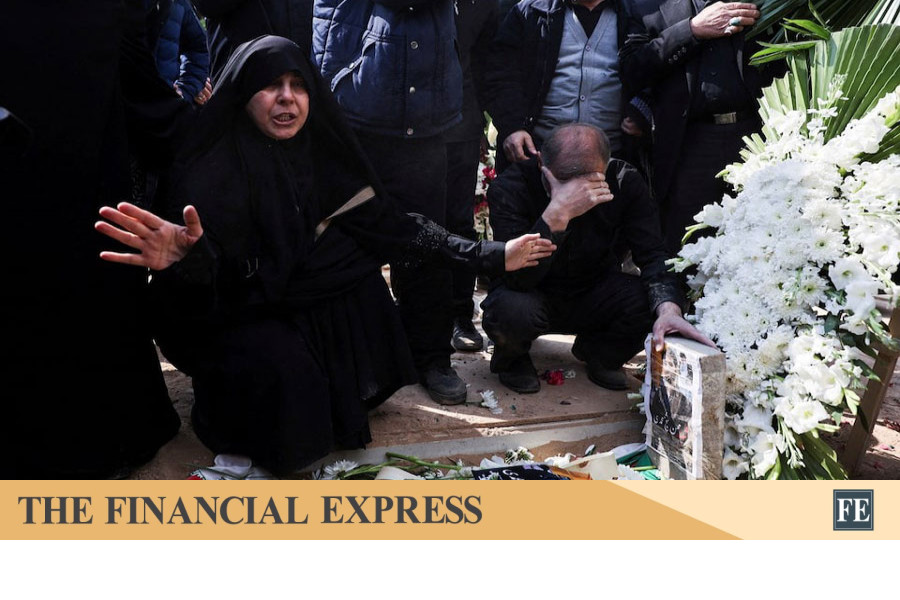
Mourners react as they attend a funeral ceremony for victims of Israeli and US strikes, amid the US-Israeli conflict with Iran, in Tehran, Iran, March 9, 2026. Photo : Majid Asgaripour/WANA (West Asia News Agency) via REUTERS
The United States and Israel pounded Iran on Tuesday with what both the Pentagon and Iranians on the ground described as the most intense airstrikes of the conflict, despite global markets betting that President Donald Trump will call off his war soon.
Raising the stakes for the global economy, Iran's Revolutionary Guards said they would block oil shipments from the Gulf unless US and Israeli attacks cease, while Trump responded by threatening to hit Iran harder unless it flows.
"Today will be yet again, our most intense day of strikes inside Iran: the most fighters, the most bombers, the most strikes, intelligence more refined and better than ever," US Defense Secretary Pete Hegseth told a Pentagon briefing.
"Ultimately, the aftermath is going to be in America's interests."
Tehran residents reached by Reuters also described the war's most intense night of bombardment.
"It was like hell. They were bombing everywhere, every part of Tehran," a resident said by phone, speaking on condition of anonymity for security reasons. "My children are afraid to sleep now. We have nowhere to go."
Yet with Trump having described the war on Monday as "very complete, pretty much", investors appeared convinced he would end it soon, before the unprecedented disruption to global energy supplies caused a worldwide economic meltdown.
An historic surge in crude oil prices from Monday was mostly reversed within a day and Asian and European share prices staged a recovery from earlier precipitous falls.
A source familiar with Israel's war plans told Reuters the Israeli military was trying to inflict as much damage as possible before the window for further strikes closes, under the assumption Trump could end the war at any time.
TRUMP PRESS CONFERENCE APPEARS TO REASSURE MARKETS
Iran has refused to bow to Trump's demand that it let the United States choose its new leadership, naming hardliner Mojtaba Khamenei as supreme leader to replace his father, who was killed on the war's first day.
But occasionally contradictory remarks from Trump at a press conference on Monday appeared to reassure markets he would stop his war before provoking an economic crisis like those that followed the Middle East oil shocks of the 1970s.
He said the US had already inflicted serious damage and predicted the conflict would end before the four weeks he initially set out.
Trump has not defined what victory would look like, but on Monday stopped short of repeating declarations that Iran must let him choose its leader.
UNPRECEDENTED DISRUPTION
Several senior Iranian officials voiced defiance on Tuesday.
Iran's parliament speaker Mohammad Baqer Qalibaf posted on X: “Certainly, we are not seeking a ceasefire; we believe the aggressor must be struck in the mouth so that they learn a lesson and never again think of attacking dear Iran.”
The war has effectively halted shipments through the Strait of Hormuz, where a fifth of global oil and liquefied natural gas normally passes along Iran's coast, and producers have run out of storage and stopped pumping.
In the latest of near-daily reported attacks on shipping that have stopped tankers braving the strait, the UK Maritime Trade Operations Centre reported that crew aboard a bulk carrier in the Gulf had witnessed a splash and a loud bang.
After Iran chose its hardline new leader, oil prices briefly surged to nearly $120 a barrel on Monday. But by 1320 GMT on Tuesday, Brent crude had settled back down to around $92, suggesting traders now expected the disruption to end soon.
Trump said on Monday that US military might was sufficient to keep oil flowing. If Iran blocks oil through the strait, "We will hit them so hard that it will not be possible for them or anybody else helping them to ever recover that section of the world," he said.
But a spokesperson for the Revolutionary Guards said Tehran would not allow "one litre" of Middle Eastern oil to reach the US or its allies while US and Israeli attacks continue.
"We are the ones who will determine the end of the war," the spokesperson said.
In a later Truth Social post, Trump said: "If Iran does anything that stops the flow of Oil within the Strait of Hormuz, they will be hit by the United States of America TWENTY TIMES HARDER than they have been hit thus far."
QUICK END TO WAR COULD LEAVE IRAN'S LEADERS IN PLACE
Ending the war quickly to let oil flows resume would appear to preclude toppling Iran's leadership, which held large-scale rallies on Monday in support of the new supreme leader.
Some Iranians openly celebrated the death of the elder Khamenei, weeks after his security forces killed thousands of people to put down anti-government protests in Iran's worst domestic unrest since the era of its 1979 revolution.
There has been little sign of protests since then, amid concerns it would be unsafe while Iran is under attack.
Despite Trump's maximalist demands for Iran's "unconditional surrender", US administration officials have mostly said the war's aim is to destroy Iran's missiles and nuclear programme. Israel has been more direct in openly saying it wants Iran's clerical rulers toppled.
At least 1,332 Iranian civilians have been killed and thousands wounded, according to Iran's UN ambassador, since the US and Israeli airstrikes began on February 28.
Scores have also been killed in Israeli attacks on Lebanon to root out the Iran-backed group Hezbollah, which has fired into Israel in solidarity with Iran.
Iranian strikes on Israel have killed 11 people. Iran has struck US military bases and diplomatic missions in Arab Gulf states but also hit hotels, closed airports and damaged oil infrastructure.
Iranian Foreign Minister Abbas Araqchi told PBS that Tehran was unlikely to resume negotiations with the US "because we have very bitter experience of talking with Americans" after Washington twice broke off talks to launch attacks.
Iran vowed on Tuesday that not one litre of oil would be exported from the Gulf while the United States and Israel continue their bombardment, as the United Arab Emirates closed its biggest oil refinery after a drone attack. Oil prices have surged since Iranian attacks on shipping closed the...
en.prothomalo.com
Defiant Iran vows to block Gulf oil until US-Israel bombing stops
AFP
Tehran
Published: 10 Mar 2026, 19: 46
TOPSHOT - This video grab taken from UGC images posted on social media on 7 and 8 March 2026 shows fire erupting at an oil depot in Iran's capital Tehran. The United States and Israel launched strikes against Iran on 28 February, sparking swift retaliation by the Islamic republic which responded with missile attacks across the region. The war has dragged in global powers, upended the world's energy and transport sectors, and brought chaos to even usually peaceful areas of the volatile region. AFP
Iran vowed on Tuesday that not one litre of oil would be exported from the Gulf while the United States and Israel continue their bombardment, as the United Arab Emirates closed its biggest oil refinery after a drone attack.
Oil prices have surged since Iranian attacks on shipping closed the Strait of Hormuz in the wake of a US-Israeli strikes that killed Tehran's supreme leader but fell back somewhat on Monday when US President Donald Trump suggested the war would soon end.
The price began to rise again Tuesday amid more threats and violence, following a week of attacks on oil infrastructure in Saudi Arabia, Bahrain, the UAE and around the Gulf.
The region's biggest single-site oil refinery, at Ruwais in the UAE, was closed on Tuesday as a precaution after a drone attack on the industrial complex which houses it caused a fire, a source familiar with the situation told AFP.
"The Strait of Hormuz will either be a strait of peace and prosperity for all or will be a strait of defeat and suffering for warmongers," Iran''s security chief Ali Larijani declared.
The price increase also followed strikes on oil depots in Iran and after attacks on oil infrastructure in Saudi Arabia, Bahrain and around the Gulf, which continued on Tuesday, with explosions heard in Doha.
Qatar, where a suspension of LNG exports has sent European energy prices sky-high, said Iranian attacks on its civilian infrastructure were continuing.
The Israeli military announced meanwhile a new wave of attacks on Tehran, while the US also stepped up its air and missile assault.
"Today will be yet again our most intense day of strikes inside Iran," Defense Secretary Pete Hegseth told a news conference at the Pentagon.
Catastrophic consequences
The exchanges of fire will increase fears of economic instability, with traders and energy policy makers nervously following events in the Gulf, source of around a fifth of world oil and gas supplies.
"There would be catastrophic consequences for the world''s oil markets the longer the disruption goes on, and the more drastic the consequences for the global economy," Saudi oil giant Aramco''s president and CEO Amin H. Nasser told journalists.
"It''s absolutely critical that shipping resumes in the Strait of Hormuz."
Egypt increased the cost of fuels by up to 30 per cent and Pakistan said it would provide naval escorts to commercial shipping. France has dispatched warships to the region.
Iran's Revolutionary Guards Corps (IRGC) mocked Trump''s bid to lessen the economic impact of the war, warning: "The Iranian armed forces... will not allow the export of a single litre of oil from the region to the hostile side and its partners until further notice."
"It is we who will determine the end of the war," the IRGC, seen as close to Iran''s new supreme leader Ayatollah Mojtaba Khamenei, said in a statement carried by Iranian media.
Larijani issued a thinly veiled threat to Trump himself, warning him to be careful "not to be eliminated".
"Iran is not afraid of your empty threats. Even those greater than you could not eliminate the Iranian nation," Larijani wrote, in a social media post.
''Death, fire and fury''
Iran''s warnings came as a response to Trump, who gave a news conference in a Florida ballroom to declare of the war: "It''s going to be ended soon, and if it starts up again they''ll be hit even harder."
"We''ve already won in many ways, but we haven''t won enough," Trump said Monday.
But, in a later post on his social media platform, Trump warned that if Tehran interferes with oil exports, the US military will bomb the country in such a way to "make it virtually impossible for Iran to ever be built back, as a nation, again."
"Death, fire, and fury will reign upon them - But I hope, and pray, that it does not happen!" he wrote.
Israel''s Prime Minister Benjamin Netanyahu also predicted that the conflict would continue, expressing hope that the Iranian people would seize the opportunity to "cast off the yoke of tyranny".
"Ultimately, it depends on them. But there is no doubt that, with the actions taken so far, we are breaking their bones, and we are not done yet," he said.
Rare volatility
On Monday, world oil prices swept past the symbolic level of $100 a barrel and were briefly up 30 percent on the day, before falling back after Trump''s intervention. But they rose again more slowly on Tuesday, and experts warned that the economic outlook remains extremely volatile.
"Rare are days in the markets when you get this much volatility," said Ipek Ozkardeskaya, an analyst for Swissquote Bank, warning that investors are overreacting to every bit of news even when officials'' statements contradict each other.
"Part of yesterday''s optimism came after Trump said the war would end ''soon'' and that the US was ahead of schedule," she said.
"Concretely, however, the conflict in the Middle East continues at full speed, political developments are not pointing to a near-term resolution, and there is little clarity about the US plans."

 War Archive