New Tweets

[🇧🇩] New Government (BNP) in Bangladesh After the Polls

G Bangladesh Defense
[🇧🇩] New Government (BNP) in Bangladesh After the Polls
29
288
More threads by Saif


Challenges facing the new government

Hasnat Abdul Hye
Published :
Mar 01, 2026 00:18
Updated :
Mar 01, 2026 00:18

1772325737344.webp


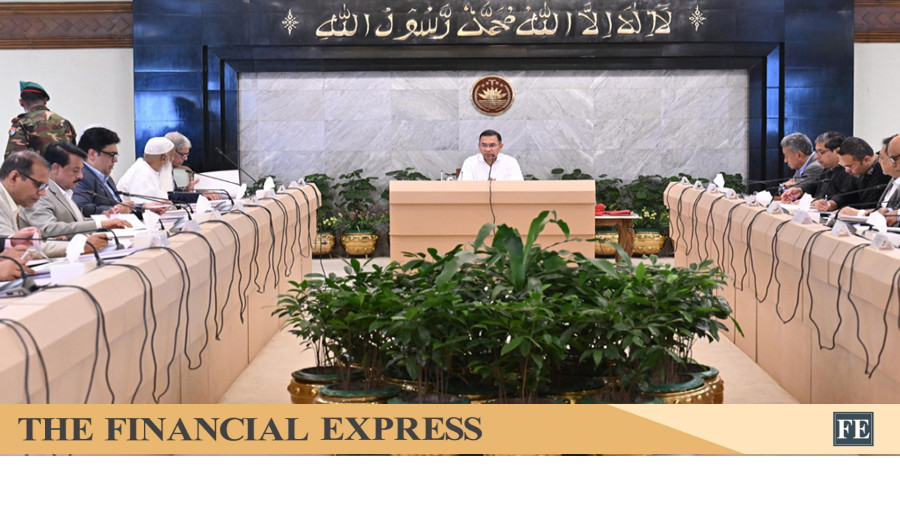
Unarguably, the BNP-led government now in charge of the helm of state power is in the birth throes of new governance. Though no stranger in running a government in Bangladesh, BNP finds itself facing a new set of challenges- political, economic and geo-political. Much water has flown under the bridge between now and the last time they were in power. The experiences it had when last in power in 2001 are not very relevant at present and as such cannot be a guideline for decisions to be taken now.

Not only has the external context, politically and economically, changed, internally also the party finds itself in new circumstances. During the past twenty five years when BNP was out of power and marginalised and oppressed by an autocratic regime, it had to fight for its survival which saw its leaders and supporters active inside Bangladesh and abroad, particularly United Kingdom (UK). The chairman of the party being in confinement, the vice chairman of the party in self-exile in London had to lead the party through London-based supporters and the leaders and workers in Bangladesh. While this double entity helped to cohere the party together, the division created pressure points at two places claiming the attention of the leader. This was not a problem when BNP was in opposition. But now being in power, its leader must be under pressure from both centres for priority attention. Making both groups happy will not be a cake walk, not even with the appointments of a good number of advisors from both centres. Already some party stalwarts, kept out of the cabinet, have started grumbling. Keeping unity in the party will be a great challenge for the new chairman. If party cohesion is not ensured political instability may start from within. It will be naive to think that outsiders will not be willing to fish in troubled waters, stoking dissension and unrest. One way of keeping solidarity in the party may be giving ministerial portfolios to senior and junior members of the party by rotation with three years term for seniors and two years for juniors. This will have the additional advantage of allowing junior leaders to acquire ministerial experience which will stand in good stead for them as well for the party.

The BNP government committed to inclusive politics can be said to be in a dilemma as to what to do with Awami League. In the just concluded general election the party was not allowed to participate though it has not been banned. There was some justification for this as public sentiment across a broad swathe of electorate was still negative about the party that entrenched autocracy in the country. In the next election, public mood may be different and willing to see inclusive democracy. BNP government should allow Awami League to take part in the next general election making the leaders who have been punished and against whom criminal cases have been pending, both disqualified.

In domestic politics, the second challenge for the new government and BNP as the party in power will be to work out a modus operandi with Jamat-e-Islami and the National Citizen's Party (NCP). The immediate issue placing them at loggerheads is the implementation of July Charter. BNP is not against the implementation of the unanimously agreed provisions of the charter but differs on the mechanism. They believe that the reforms envisioned in the Charter can be brought about by the Jatyo Sangshad itself and there is no need for a second Chamber of parliament to do the same. Prominent constitutional experts in the country have opined in the same vein. BNP should sit together with Jamat and NCP and try to convince them of this method of implementing the agreed provisions of July Charter. Making unilateral declarations about the July Charter can only antagonise the opposition parties and widen the chasm between them and the BNP-led government. For the sake of political stability, this must not be allowed to happen. The nation has paid a heavy price in the past for allowing adversarial relation to metastasize between party in power and opposition.

On the economic front the great challenge for the government is to bring down inflation from the prevailing 8.6 per cent to the targeted 5 per cent. The Awami League could do not tackle inflation during their long tenure. Neither could the interim government that had a free hand in taking necessary measures to reverse the upward trend of inflation. Now inflation is staring at the BNP government as the most intractable problem. The party will be in power for the next five years and perhaps thereafter. It cannot afford to take a 'business as usual' attitude towards this deleterious malaise of the economy that has made millions helpless in meeting cost of living. First of all, the factors causing inflation has to be analysed. There are two main causes behind rise of inflation: (a) demand pull inflation and (b) cost-push inflation. There is no evidence that there has been a spurt in demand for goods and services, particularly for essential items. So, increase in demand has not been a contributory factor to extant inflation. That leaves cost-push factors as the prime forces causing and sustaining inflation. Among these are increase in prices of inputs, supply chain disruptions in international trade and rent- seeking by intermediaries in domestic supply chain. It is obvious that for the first two there is very little that the BNP government can do. But the BNP government has the power to break-down the network of domestic rent- seekers who add to the cost of goods at multiple points. This has been the most important factor in creating and sustaining cost-push inflation. It is unfortunate that a minister in the present government should be blatant enough to say that if chanda (subscription) is paid through mutual consent it should not be considered as extortion. The minister should have been reprimanded by the prime minister immediately. This sort of casual and indulgent attitude can only exacerbate the problem. If the present government is serious about addressing the problem of inflation it has to come down hard on the rent-seekers and their syndicates.

The present government has introduced family card on a limited basis in ten upazilas that will give Tk 2,500 to poor families. It is a good step but there should not be any hurry about introducing this. The programme has to be dovetailed with existing social safety network, pruning the irregularities that exist in the prevailing system. Secondly, since monetary payment add to inflationary pressure payment in kind may be considered as more desirable. This in turn will require a universal rationing system replacing the ad hoc distribution of food items by TCB and should cover both urban and rural areas.

The second problem in the economic sector that will engage the attention of the present government is restoring health to the ailing banking sector. The decision to restructure overdue loan by payment of one per cent instead of two, as announced recently, appears a continuation of the old policy of appeasing the defaulters. It does not augur well for the future. Neither is the appointment of a governor of Bangladesh Bank with no banking background appears encouraging. There was no need to replace the former governor post haste before adequate scouting for his successor was completed.

The nation, disillusioned with politics and governance in the past, is optimistic that this time around, something better will happen. That optimism must not be proved as pie in the sky.​
 
Analyze

Analyze Post

Add your ideas here:
Highlight Cite Respond

Stability, welfare, and confidence
Priorities for the new government

Manmohan Parkash
Published :
Mar 05, 2026 00:23
Updated :
Mar 05, 2026 00:23

1772670826846.webp


As a new government assumes office, Bangladesh begins another important chapter in its development journey. Elections renew political leadership; they also renew public expectations. Citizens will judge this new term not by the scale of promises made, but by the stability maintained, the welfare delivered, and the confidence restored in institutions and markets alike.

Over the past decades, Bangladesh has demonstrated remarkable resilience. Growth accelerated, poverty declined, and the country advanced steadily toward middle-income status. Yet recent global shocks - the pandemic, supply chain disruptions, commodity price volatility, and tighter international financial conditions - have exposed structural vulnerabilities. Inflation has remained elevated, hovering close to double digits at its peak, placing sustained pressure on household purchasing power. For lower-income families, food inflation has often been even higher, eroding real wages and savings.

The challenge before the new government is therefore to safeguard macroeconomic stability in the short term while advancing reforms that strengthen long-term resilience and inclusion.

First and foremost, macroeconomic stability must anchor the early agenda. Without stability, social welfare cannot be protected and private investment cannot flourish.

Foreign exchange reserves, which once exceeded US$ 45 billion, have declined significantly in recent years, reflecting import pressures, global shocks, and exchange rate adjustments. Rebuilding external buffers will require disciplined policy coordination, export momentum, and a realistic exchange rate framework that protects competitiveness.

Public debt remains moderate at roughly 40 per cent of gross domestic product (GDP) by international comparison. However, the composition of borrowing is gradually shifting toward less concessional sources in a higher global interest rate environment. Transparent debt management, prioritisation of high-return investments, and careful sequencing of infrastructure projects will ensure that today's borrowing does not become tomorrow's constraint.

Containing inflation is equally critical. Rising prices disproportionately affect lower- and middle-income households. Prudent fiscal management, monetary coordination, and disciplined public expenditure will be essential. Stability should not be mistaken for austerity. It is about restoring balance, strengthening credibility, and ensuring that policy signals are consistent and predictable.

Second, growth must translate into welfare. Economic growth, though necessary, is not sufficient. Citizens experience development through jobs, services, and security in their daily lives.

Nearly two million young people enter the labour market each year. Creating productive employment opportunities at this scale demands not only sustained growth but growth that is diversified, technology-enabled, and innovation-driven. Expanding opportunities in manufacturing beyond ready-made garments, in modern services, in agro-processing, and in the digital economy can help absorb this growing workforce.

At the same time, social protection systems must continue to evolve. The COVID-19 pandemic demonstrated both the importance of safety nets and the value of digital delivery mechanisms. Strengthening targeted cash transfers, improving beneficiary databases, and ensuring transparency can protect vulnerable households during periods of adjustment. Protecting the vulnerable is essential for social stability.

Human capital investments also warrant renewed focus. Improvements in healthcare quality, education outcomes, and nutrition will determine productivity and competitiveness in the coming decades. As Bangladesh aspires to higher-income status, the returns to investing in people become even more significant.

Third, beyond macro indicators and welfare programmes lies a more fundamental issue: institutional confidence.

Markets function on trust - trust in regulations, contracts, financial institutions, and policy continuity. Citizens likewise place trust in public institutions when services are delivered efficiently and fairly.

Strengthening governance in the financial sector and improving regulatory transparency will reinforce credibility. A sound banking system that allocates credit efficiently to productive sectors is indispensable for private sector-led growth.

Revenue mobilisation is another structural priority. With a tax-to-GDP ratio in the single digits - among the lowest in comparable emerging economies - Bangladesh's ability to finance social services and infrastructure sustainably remains constrained. Expanding the tax base, modernising administration, and improving compliance are difficult but necessary reforms.

Urbanisation adds another layer of urgency. Effective local governance, improved urban service delivery, and stronger municipal institutions are central to managing congestion, pollution, and infrastructure demands in rapidly growing cities.

Fourth, Bangladesh's next phase of growth must increasingly be driven by a dynamic private sector. Public investment has played a catalytic role in infrastructure expansion. The task ahead is to crowd in private capital - domestic and foreign - by ensuring policy clarity and predictability.

More than 80 percent of merchandise export earnings continue to come from ready-made garments. Diversification is therefore an economic necessity. Improvements in logistics, trade facilitation, regulatory certainty, and energy sector governance will be closely watched by investors.

Confidence builds gradually but can erode quickly. Early, consistent policy actions will therefore shape perceptions of continuity and reform intent.

Fifth, Bangladesh remains highly vulnerable to climate change. Estimates suggest that climate-related events already cost the economy around 1-2 percent of GDP annually. Embedding resilience into infrastructure planning, agriculture, coastal protection, and urban development is no longer optional.

Mobilising climate finance, leveraging concessional resources, and strengthening institutional coordination will support this agenda. Climate resilience is integral to sustaining development gains already achieved.

This moment calls for measured leadership. Transitions in government provide opportunities for recalibration. The coming months offer a window to reinforce credibility, address structural bottlenecks, and renew a social compact centred on stability, welfare, and opportunity.

Bangladesh's development story has long been built on pragmatism and resilience. By anchoring macroeconomic stability, safeguarding vulnerable households, strengthening institutions, and enabling private sector confidence, the new government can lay the groundwork for the next phase of inclusive and sustainable growth.

Elections conclude a political contest. Governance begins the work of building confidence - in the economy, in public institutions, and in the future.

Manmohan Parkash is a former Senior Advisor to the President and former Deputy Director General for South Asia at the Asian Development Bank.​
 
Analyze

Analyze Post

Add your ideas here:
Highlight Cite Respond

PM reaffirms commitment to democracy, human rights, accountability
Staff Correspondent 07 March, 2026, 00:51

1772845525955.webp


Prime minister Tarique Rahman along with others offers prayers as he hosts an iftar event for the diplomats at the state guest house Jamuna, marking his first formal Ramadan gathering since assuming office, in Dhaka Friday evening. | PID photo

Prime minister Tarique Rahman on Friday reaffirmed his government’s commitment to strengthening democratic institutions, upholding the rule of law and protecting fundamental freedoms while ensuring accountability at all levels.

‘We are equally committed to safeguarding human rights, protecting freedom of expression and fostering a culture of tolerance,’ he said.

The prime minister made the remarks at an iftar hosted in honour of diplomats stationed in Dhaka.

The event was held at the state guest house Jamuna.

Ambassadors and diplomats from a wide range of countries attended the gathering, including representatives from the United States, the United Kingdom, China, Australia, Canada, Germany, France, Saudi Arabia, the United Arab Emirates, India, Nepal, Bhutan, Pakistan, Sri Lanka, Brazil, Palestine, Russia, Thailand, Qatar and Oman.

Speaking at the event, the prime minister said that Bangladesh stood at a crucial juncture of opportunity.Bangladesh country politics

He outlined his government’s economic vision.

‘Our aspiration is to build a diversified and sustainable economy that creates jobs for our youth, empowers women, encourages entrepreneurship and promotes shared prosperity,’ he said.

On foreign policy, the prime minister said that Bangladesh would pursue a pragmatic and sustainable approach guided by the principle of friendship to all.

‘We value bilateral and multilateral partnerships and remain open to candid dialogue and stronger collaboration in the years ahead,’ he said.

Tarique said that the government would prioritise maintaining law and order and ensuring macroeconomic stability while strengthening human resource development.

The prime minister also stressed the importance of stronger international engagement through expanded partnerships.

He said that Bangladesh sought deeper engagement with the global community through expanded trade and investment, technology transfer, cultural and educational exchanges and stronger people-to-people ties.

‘We believe that prosperity today is built through cooperation and connectivity, not isolation,’ he said.

As a climate-vulnerable nation, Bangladesh would continue to work constructively with global partners to advance climate resilience and sustainable development, Tarique said.

He said that the government planned to strengthen technical and vocational education, introduce a third language in the national curriculum and expand preventive healthcare services in rural areas to ensure that the benefits of economic growth reached all parts of the country.

The prime minister said that the government remained committed to liberal economic policies and would continue encouraging entrepreneurship as a cornerstone of economic growth.

‘We will pursue prudent deregulation, improve the ease of doing business, and foster a competitive environment that attracts responsible investment. Our goal is to unlock the full potential of our people and the private sector,’ he said.

During his remarks, Tarique Rahman introduced foreign minister Khalilur Rahman as Bangladesh’s candidate for the presidency of the 81st session of the United Nations General Assembly.

He called on diplomats stationed in Dhaka to support Bangladesh’s candidature for the post.

The prime minister also referred to the recent parliamentary polls, saying that the people of Bangladesh had delivered a decisive victory to the Bangladesh Nationalist Party.

‘This victory is not for our party alone. It is a victory for democratic principles, constitutional governance and the collective aspirations of our citizens,’ he said.

Saying that public trust depends on transparency and integrity, he pledged to take firm measures to combat corruption at all levels of governance.

‘Democracy for us is not confined to the ballot box. It is an ongoing commitment to inclusion, transparency and dialogue,’ he added.​
 
Analyze

Analyze Post

Add your ideas here:
Highlight Cite Respond

PM Tarique vows equal rights for men and women in Bangladesh

UNB
Published :
Mar 07, 2026 22:36
Updated :
Mar 07, 2026 22:36

1772928956452.webp


Prime Minister Tarique Rahman on Saturday said the government wants to build a Bangladesh where men and women will enjoy equal rights and women will work in the family, state and society with respect, dignity and security.

“In our society, let equality be a promise, dignity a reality, and empowerment the foundation of development,” he said in a message marking International Women’s Day to be observed on Sunday (March 8).

The day will be observed this year with the theme: “Today’s steps, tomorrow’s justice: Protect the rights of women and girls.”

The Prime Minister said sustainable development of a country is possible only when women’s rights, education, health, security and participation are ensured.

“In this context, I believe this year’s theme of International Women’s Day is very significant,” he said.

He mentioned that nearly half of the world’s population are women and development is not possible if they remain outside the mainstream of the state, government and politics.

“In particular, if women’s economic empowerment is not ensured, the benefits of overall development cannot be fully achieved,” he said.

Tarique Rahman said more than half of Bangladesh’s population are women and highlighted the role of former president Ziaur Rahman and former prime minister Begum Khaleda Zia in women’s political and economic empowerment.

He said the Women’s Affairs Department was established in the Secretariat in 1976 during the tenure of Ziaur Rahman.

The Ministry of Women’s Affairs was formed in 1978 and was later transformed into the Ministry of Women and Children’s Affairs in 1994 during the rule of Khaleda Zia.

He said various initiatives were taken by Khaleda Zia for the socio-economic empowerment of women including free education for girls up to Class 12, which he described as a landmark decision in advancing women’s empowerment in Bangladesh.

The Prime Minister also said the government has introduced the “Family Card” programme to support women’s economic empowerment and remains committed to ensuring women’s effective participation in all sectors, including education, the economy, health and politics.

“Our goal is to implement our election pledges by introducing free education up to the postgraduate level, increasing women’s participation in higher education, providing free school uniforms for girls and expanding digital learning facilities and modern education systems,” he said.

The Prime Minister said the government is also giving top priority to ensuring women’s safety and has taken a strong stance against cyberbullying and online harassment targeting women.​
 
Analyze

Analyze Post

Add your ideas here:
Highlight Cite Respond

Govt to place 133 ordinances before JS on March 12

Experts divided over validity of referendum ordinance, July National Charter (Constitution Reform) Implementation Order


M Moneruzzaman 09 March, 2026, 23:55

1773104475375.webp

Jatiya Sangsad. | File photo

Law justice and parliamentary affairs minister Md Asaduzzaman is set to place all the 133 ordinances before the Jatiya Sangsad on March 12 that were promulgated by the president under Article 93 of the constitution during the interim government led by Muhammad Yunus when parliament was not in session.

Of the ordinances, 17 were promulgated in 2024, 80 in 2025, and 36 until February 2026, according to officials of the ministry.

Besides the ordinances, one presidential order — the July National Charter (Constitution Reform) Implementation Order, 2025 — was issued.

Legal experts say that the order does not require placement before parliament because the constitution requires only ordinances, not presidential orders, to be placed before the legislature.

A senior official of the Legislative and Parliamentary Affairs Division of the ministry told New Age that the presidential order would not be placed before the JS as the constitution contains no provision requiring such orders to be tabled.

The official said that the ministry on February 19 asked 34 ministries to take steps to convert the ordinances into laws.

A second notice, along with copies of the respective ordinances, was sent on February 22.

In another letter on March 1, the Law and Justice Division asked the relevant ministries and divisions to submit summaries and draft bills by March 4 to facilitate their approval by the Cabinet Division.

After the ordinances are placed in parliament, the respective ministries will initiate steps to turn them into laws.

The JS will decide whether to ratify them, according to the parliamentary practices.

Before giving the decision, the ordinances may also be sent to the parliamentary standing committee for scrutiny.

If any of the ordinances are not ratified by the JS, the ordinance(s) concerned will be lost validity because of the lapse of approval within 30 days, according to the constitution.

The ordinances cover a wide range of ministries and divisions.

One ordinance — the Anti-Corruption Commission (Amendment) Ordinance — is linked to the Cabinet Division. Four ordinances were issued under the Prime Minister’s Office and four others under the public administration ministry.

One ordinance each is related to the land ministry and the women and children affairs ministry, including the Women and Children Repression (Prevention) Ordinance. Another ordinance is linked to the expatriate welfare and foreign employment ministry.

Seven ordinances, including the Representation of the People (Amendment) Ordinance, are linked to the Election Commission Secretariat.

Seven ordinances under the home ministry include the July Mass Uprising (Protection and Liability Determination) Ordinance, 2026, the Enforced Disappearance Prevention (Amendment) Ordinance, 2024, the Police Commission Ordinance, 2025, and the Anti-Terrorism (Amendment) Ordinance, 2025.

Ten ordinances are linked to the Internal Resources Division. Seven ordinances — including the Bangladesh Bank (Amendment) Ordinance, the Grameen Bank (Amendment) Ordinance, and the Negotiable Instruments Ordinance — fall under the Financial Institutions Division.

Three ordinances are linked to the Power and Energy Division and three to the environment, forest and climate change ministry.

Ten ordinances are related to the Local Government Division, while 12 are linked to the housing and public works ministry.

Five ordinances are connected to the Information and Communication Technology Division, while one — the Right to Information (Amendment) Ordinance — is linked to the information and broadcasting ministry.

Jurist Shahdeen Malik on Monday told New Age that the ordinances were promulgated by the president under Article 93, but the constitutional basis for issuing the July National Charter Implementation Order was unclear.

He said that it would be difficult to determine the validity of the presidential order.

He noted that several presidential orders were issued in 1972 following the proclamation of independence, when the president exercised both executive and legislative powers.

Lawyer Moyeen Alam Firozee said that the president issued the order on the advice of the interim government but added that he did not support actions beyond the constitution.

Pro-BNP lawyer Ruhul Quddus Kazal said that the issue might be left to the judiciary as the High Court has issued a rule questioning the legality of the referendum ordinance and the July National Charter Implementation Order.

Lawyer Mohammad Shishir Manir, however, said that the JS does not need to ratify the presidential order because it had already been partially implemented through a referendum held alongside the national election on February 12 under the Referendum Ordinance, 2025.

He added that parliament could still settle the issue as the High Court has not issued any stay order.

The president promulgated the highest number of ordinances — 17 — related to the Law and Justice Division. The key ordinances include the Supreme Court Judges Appointment Ordinance, Supreme Court Secretariat Ordinances, 2025, International Crimes Tribunal ordinances, amendments to the Code of Criminal Procedure, and the Civil Courts Amendment Ordinance.

Under Article 93(4) of the constitution, every ordinance promulgated while parliament is dissolved must be laid before it as soon as possible after it is reconstituted.

On March 3, the High Court asked the government to explain within four weeks why Section 3 and the Schedule of the Referendum Ordinance, 2025 and the July National Charter (Constitution Reform) Implementation Order, 2025 should not be declared constitutionally invalid.

Section 3 of the ordinance sets out the questions placed on the ballot for the referendum held along with the February 12 general election.

Voters were asked whether they supported the July National Charter and the constitutional reform measures included in it.

The proposal was approved, as the ‘Yes’ vote received a majority support.

The first question seeks public approval for forming a caretaker government, reconstituting the Election Commission and other constitutional bodies during the election period under the framework outlined in the July National Charter.

The second proposal concerns restructuring the existing Jatiya Sangsad into a bicameral legislature.

It proposes a 100-member upper house to be formed through proportional representation based on votes received by political parties in the 13th Jatiya Sangsad elections.

Any constitutional amendment would require approval by a majority in the upper house.

The third question asks whether the winning political parties should be legally bound to implement the 30 agreed reform proposals included in the July Charter.

These proposals include increasing women’s representation in the Jatiya Sangsad, electing the deputy speaker and four parliamentary standing committee chairpersons from the opposition, limiting the prime minister’s tenure, strengthening the president’s powers, expanding fundamental rights, ensuring judicial independence and reinforcing local government institutions.

The fourth question seeks public support for implementing other reform measures outlined in the July Charter in line with commitments made by political parties.

The bench of Justice Razik-Al-Jalil and Justice Md Anowarul Islam questioned the constitutionality of the Referendum Ordinance and the July National Charter (constitution reform) Order after hearing a public interest litigation filed by Bangladesh Nationalist Party supporter and lawyer Chowdhury Md Redwan-E-Khuda on February 23, 2026.

After hearing another writ petition filed by lawyer Gazi Md Mahbub Alam, a member of the BNP-backed Jatiyatabadi Ainjibi Forum, the High Court asked the authorities to explain within four weeks why the July National Charter (Constitution Reform) Implementation Order should not be declared unconstitutional.

The court also questioned the legality of a letter issued on February 16, 2026 by the Parliament Secretariat secretary under the implementation order, asking members of the 13th JS to take oath administered by the chief election commissioner as members of the Constitution Reform Council.

In addition, the bench sought an explanation as to why the oath administered by the CEC to certain MPs belonging to the Bangladesh Jamaat-e-Islami and the National Citizen Party should not be declared unconstitutional and beyond the constitutional authority.

The Cabinet Division secretary, law, justice and parliamentary affairs secretary, Parliament Secretariat secretary and Prime Minister Office principal secretary were asked to respond to the rule within four weeks​
 
Analyze

Analyze Post

Add your ideas here:
Highlight Cite Respond

Why Bangladesh’s new government should reassess interim govt’s ordinances

Mitul Bhowmik
Published :
Mar 10, 2026 10:14
Updated :
Mar 10, 2026 10:14

1773189176315.webp


As Bangladesh’s newly elected government faces a daunting task: reviewing 133 ordinances issued by the immediate past interim administration amid concerns over constitutional legitimacy, fiscal stability, and regulatory credibility.

President Mohammed Shahabuddin has alleged that during the 18-month interim government, 133 ordinances were issued without proper coordination with his office. He claims he was excluded from major decisions and even faced attempts to be unconstitutionally removed. Under Article 93 of the Constitution, any ordinance issued while Parliament is not in session must be placed before the new Parliament within 30 days of its first sitting or else it lapses.

With the 13th Parliament’s first session set for March 12, all 133 ordinances from the interim period will be tabled. Lawmakers must decide whether to approve, amend, or reject each measure. Legal experts warn that many decrees issued in haste may not meet the “urgent necessity” test. After the 2007–08 caretaker government, for example, only 54 of 122 ordinances were ratified. How Parliament handles this backlog will test its commitment to constitutional oversight.

Among the most consequential ordinances is the Smoking and Tobacco Products Usage (Control) (Amendment) Ordinance, 2025. It introduced sweeping reforms: banning e-cigarettes, vapes, and heated tobacco products; expanding the definition of tobacco; outlawing smoking in all public places and transport; eliminating designated smoking areas; banning point-of-sale displays; and mandating larger health warnings on packaging.

While public health advocates welcomed the measures, the process drew criticism. The ordinance was enacted without stakeholder consultation or economic impact assessment. Similar proposals in 2021–22 were returned by the elected cabinet after objections from businesses and ministries. The interim government’s unilateral move to enact the law via ordinance, bypassing consultation, raised concerns about transparency, enforceability, and economic impact - especially given the tobacco sector’s contribution to government revenue.

On March 1, 2026, the High Court issued a stay order against the confiscation of legally imported e-cigarettes and questioned the constitutionality of Section 6(Ga) of the ordinance. The court asked the government to explain why the provision which bans all ENDS and heated tobacco products, should not be struck down. Petitioners argued that the law unfairly targets vaping products, widely seen as harm-reduction tools, while allowing traditional cigarettes to remain legal. They claim this violates Article 27 of the Constitution, which guarantees equality before the law.

This legal challenge has effectively frozen enforcement of a key provision of the ordinance and highlights the risks of pushing major regulations without legal and political consensus.

The ordinance also arrived at a time of fiscal fragility. Despite raising cigarette taxes to as high as 83% of retail price, government’s expected revenue did not materialize. Instead, collections fell due to a surge in illicit cigarette sales.

A study by Insight Metrics found that illicit cigarettes now make up 13.1% of the market -- over 830 million untaxed sticks sold monthly -- costing the government at least Tk 4,000 crore annually. Law enforcement seized over 600 million illegal cigarettes in 2024 - 25, but officials admit much of the trade goes undetected. Economists warn that abrupt bans, such as on single-stick sales or vape products, could push more consumers into the black market, further eroding tax revenues.

On the other hand, Bangladesh’s tax-to-GDP ratio fell to just 6.6% in FY2024-25 -- one of the lowest in Asia. Raising this ratio is a key condition of the country’s $4.7 billion IMF loan programme.

Meanwhile, the FY2025–26 budget deficit stands at 3.6% of GDP, and projections for FY2026–27 suggest the largest deficit in the country’s history, potentially exceeding 4-5% of GDP.

In this context, any policy that risks shrinking a major revenue stream -- like tobacco -- must be carefully weighed. The BNP-led government has pledged to raise the tax-to-GDP ratio to 15% and crack down on smuggling and tax evasion. Achieving these goals while maintaining public health commitments will require calibrated reforms, not blanket bans that could destabilize revenue flows.

The new government must ensure that no interim decree is ratified without due diligence. A structured review of all interim-era decisions, conducted transparently and consultatively, will reinforce the rule of law and set a precedent that major reforms must be achieved through Parliament. Each ordinance should undergo legal vetting, parliamentary debate, and economic impact analysis.

(The author is a lawyer.)​
 
Analyze

Analyze Post

Add your ideas here:
Highlight Cite Respond

Members Online

Latest Posts

Back
PKDefense - Recommended Toggle