War Archive
Saif
Senior Member
- Jan 24, 2024
- 18,819
- 8,732
- Nation

- Residence
- Axis Group

Rewiring the power of Hormuz: geopoliticonomic innovation
There are moments in global affairs when a quiet infrastructural decision carries more strategic weight than a loud military maneuver. Saudi Arabia's effort to expand and operationalise alternative oil routes-bypassing the Strait of Hormuz-is one such moment. What appears to be a technical adjustme
Rewiring the power of Hormuz: geopoliticonomic innovation
Muhammad Zamir and Abdullah A Dewan
Published :
May 05, 2026 00:32
Updated :
May 05, 2026 00:32
There are moments in global affairs when a quiet infrastructural decision carries more strategic weight than a loud military maneuver. Saudi Arabia's effort to expand and operationalise alternative oil routes-bypassing the Strait of Hormuz-is one such moment. What appears to be a technical adjustment is, in fact, a deeper act of geopolitical engineering. More precisely, it is an exercise in geopoliticonomy, where shifts in infrastructure generate sympathetic resonance across geopolitics, geoeconomics, and strategic power-amplifying their effects far beyond the immediate domain.
Saudi Arabia's strategic rewiring of energy routes underscores a deeper lesson often missed in geopolitical thinking. Military power, even at its peak, can destroy economies-but it rarely constructs durable political or economic order. From Vietnam to Libya, and so on, history shows that external force may topple regimes, yet it fails to impose lasting legitimacy or achieve sustained geopoliticonomic transformation. In contrast, infrastructure-led strategies-pipelines, ports, and corridors-quietly reshape power by altering the very channels through which economic life flows.
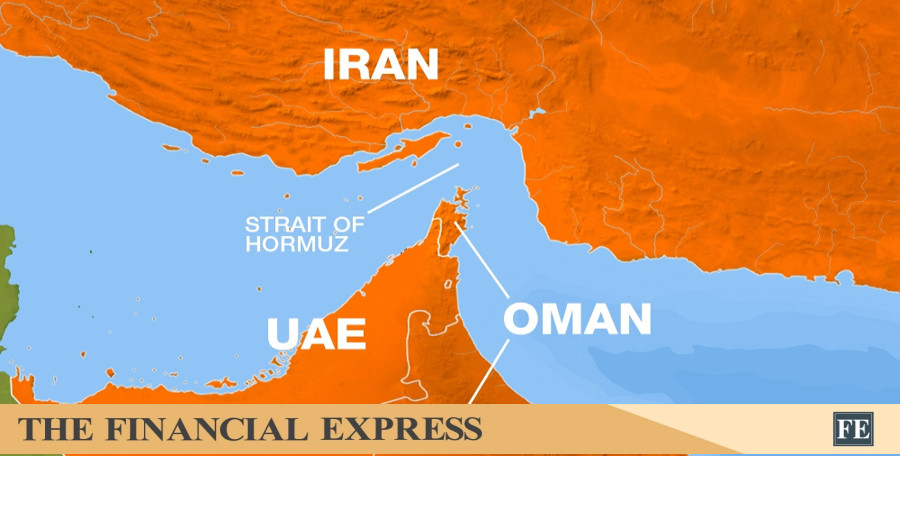
The Strait of Hormuz has long been the world's most consequential maritime chokepoint. A narrow corridor between Iran and Oman, it channels roughly one-fifth of the global oil supply. For decades, its vulnerability has haunted global markets. A single flare-up in U.S-Iran tensions, a miscalculated naval encounter, or even a credible threat of closure can send oil prices surging and financial markets trembling. In such a world, geography becomes destiny-unless it is deliberately reengineered.
Saudi Arabia's response has been to challenge that destiny. By strengthening its East-West pipeline-often referred to as Petroline-the Kingdom has created a viable alternative route that carries crude oil from its eastern oil fields to ports on the Red Sea. This allows a portion of its exports to reach global markets without passing through Hormuz. On the surface, this appears to be a technical adjustment in logistics. In reality, it is a strategic recalibration of vulnerability.
The logic is straightforward. If a country can reduce its exposure to a chokepoint, it diminishes the leverage of any actor capable of threatening that chokepoint. For years, Iran's geopolitical influence has been amplified by its proximity to Hormuz. The implicit threat-never far from the surface-has been that, in a moment of extreme confrontation, Iran could disrupt or close the passage. Whether or not such a move is feasible or sustainable is secondary. What matters is that the threat has economic consequences.
Saudi Arabia's pipeline strategy does not eliminate this threat, but it dilutes it. By creating redundancy in its export infrastructure, the Kingdom is effectively saying: the Strait of Hormuz may remain important, but it is no longer an absolute constraint on Saudi oil flows. In the language of economics, this is a shift from single-point dependency to a diversified network-reducing systemic risk.
What appears as strategic redundancy, however, is not without economic cost. Transporting oil through the East-West pipeline to the Red Sea involves substantial pumping expenditures, maintenance costs, and port handling fees-costs largely absent in direct tanker transit through the Strait of Hormuz. This introduces a fundamental trade-off: the Kingdom is effectively paying a "security premium" to insure against disruption, while global markets simultaneously reduce the "risk premium" embedded in oil prices. In geopoliticonomic terms, this is a redistribution of cost-from volatile, externally imposed risk toward controlled, internally managed resilience. The question is not whether the alternative route is cheaper; it is whether it is safer in a world where uncertainty itself carries a price.
This is geopoliticonomic entanglement in action. Saudi Arabia's pipeline is not just a pipe; it is a signal. It tells markets that supply risk is being mitigated. It tells adversaries that coercive leverage is weakening. And it tells allies that the Kingdom is investing in long-term resilience.
Yet, to interpret this move as the "end" of the Strait of Hormuz would be a serious analytical error. The global oil system is not Saudi Arabia alone. Iraq, Kuwait, Qatar, and the United Arab Emirates still rely heavily on Hormuz for their exports. Even Saudi Arabia's bypass capacity is limited relative to total global flows. The chokepoint remains critical-not because it is irreplaceable, but because it remains central to the broader network.
Moreover, bypassing one chokepoint does not eliminate vulnerability; it relocates it. The Red Sea, often framed as a safer corridor, is itself constrained by the Bab al-Mandab Strait at its southern entrance. Recent disruptions in that region underscore its fragility. In effect, the Petroline does not remove geopolitical risk; it redistributes across a different segment of the global energy network. As in all interconnected systems, risk is rarely destroyed-it is transferred, diffused, or transformed.
This distinction matters. In economics, we often warn against confusing identities with mechanisms. The identity here is that Hormuz continues to carry a large share of global oil. The mechanism, however, is changing. The more alternative routes are developed-pipelines, storage hubs, and diversified ports-the less any single chokepoint can dictate global outcomes. Saudi Arabia's move is one step in that gradual transformation.
There is also a deeper lesson for policymakers and journalists alike. Too often, global events are reported as isolated developments-an oil pipeline here, a naval deployment there-without recognising the underlying systemic shifts. Analytical economic journalism requires us to look beyond the event and examine the transmission mechanism. In this case, the transmission is clear: reduced reliance on Hormuz lowers the risk premium embedded in oil prices, stabilising markets and reducing the economic cost of geopolitical tensions. Infrastructure thus becomes a tool of de-escalation-not by resolving conflicts, but by insulating the global economy from their most disruptive consequences.
At the same time, the move reflects a broader global trend: the strategic rewiring of supply chains and resource flows. From Europe's efforts to diversify away from Russian gas to Asia's investments in overland trade corridors, nations are increasingly aware that dependence is vulnerability. The age of seamless globalisation is giving way to an era of guarded interdependence-where resilience, not efficiency alone, defines success.
This strategic rewiring extends beyond Saudi Arabia, reshaping the economic geography of power itself. As alternative corridors gain importance, the territories and maritime zones they traverse acquire heightened strategic value. This can produce two opposing dynamics. On the one hand, the need to protect these energy arteries may encourage regional stability and cooperation, discouraging predatory behavior. On the other, it may generate new incentives for opportunistic control and rent extraction, as actors seek to capture value from infrastructure that has suddenly become indispensable. In this sense, pipelines are not merely conduits of oil-they are conduits of power, redistributing leverage across space.
Saudi Arabia's pipeline is a textbook example of this shift. It does not seek to dominate the system; it seeks to navigate it more safely. In doing so, it subtly alters the balance of power-not through confrontation, but through design.
For scholars of geopoliticonomy, this is a reminder that power is no longer exercised solely through armies or alliances. It is embedded in networks-of energy, finance, trade, and technology. To change the network is to change the game. And that is precisely what Saudi Arabia has begun to do.
The Strait of Hormuz will remain a focal point of global anxiety for years to come. But its grip is loosening-not through dramatic confrontation, but through quiet innovation. In the end, the most profound shifts in global power are often the least visible-until their consequences become impossible to ignore.
Muhammad Zamir, a former Ambassador is an analyst specialised in foreign affairs, right to information and good governance.
Abdullah A Dewan is Professor Emeritus of Economics, Eastern Michigan University (USA); and former physicist and nuclear engineer, BAEC.
Muhammad Zamir and Abdullah A Dewan
Published :
May 05, 2026 00:32
Updated :
May 05, 2026 00:32
There are moments in global affairs when a quiet infrastructural decision carries more strategic weight than a loud military maneuver. Saudi Arabia's effort to expand and operationalise alternative oil routes-bypassing the Strait of Hormuz-is one such moment. What appears to be a technical adjustment is, in fact, a deeper act of geopolitical engineering. More precisely, it is an exercise in geopoliticonomy, where shifts in infrastructure generate sympathetic resonance across geopolitics, geoeconomics, and strategic power-amplifying their effects far beyond the immediate domain.
Saudi Arabia's strategic rewiring of energy routes underscores a deeper lesson often missed in geopolitical thinking. Military power, even at its peak, can destroy economies-but it rarely constructs durable political or economic order. From Vietnam to Libya, and so on, history shows that external force may topple regimes, yet it fails to impose lasting legitimacy or achieve sustained geopoliticonomic transformation. In contrast, infrastructure-led strategies-pipelines, ports, and corridors-quietly reshape power by altering the very channels through which economic life flows.
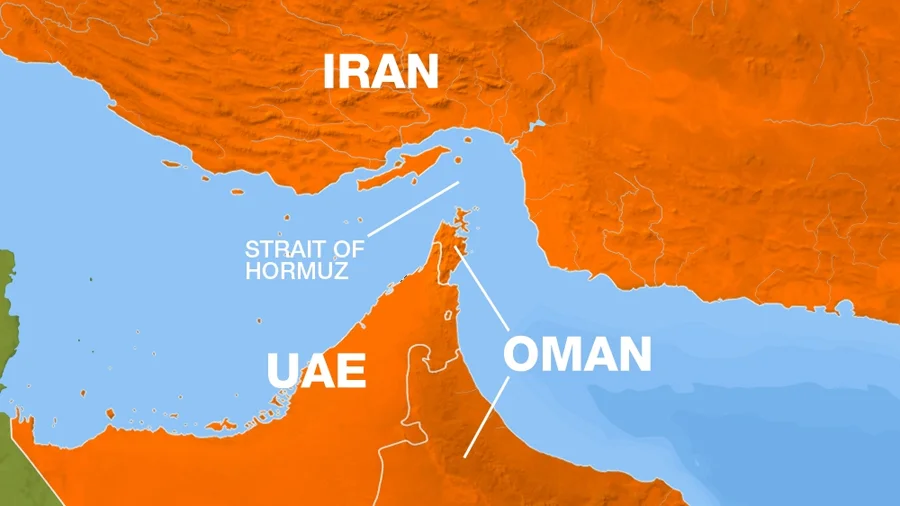
The Strait of Hormuz has long been the world's most consequential maritime chokepoint. A narrow corridor between Iran and Oman, it channels roughly one-fifth of the global oil supply. For decades, its vulnerability has haunted global markets. A single flare-up in U.S-Iran tensions, a miscalculated naval encounter, or even a credible threat of closure can send oil prices surging and financial markets trembling. In such a world, geography becomes destiny-unless it is deliberately reengineered.
Saudi Arabia's response has been to challenge that destiny. By strengthening its East-West pipeline-often referred to as Petroline-the Kingdom has created a viable alternative route that carries crude oil from its eastern oil fields to ports on the Red Sea. This allows a portion of its exports to reach global markets without passing through Hormuz. On the surface, this appears to be a technical adjustment in logistics. In reality, it is a strategic recalibration of vulnerability.
The logic is straightforward. If a country can reduce its exposure to a chokepoint, it diminishes the leverage of any actor capable of threatening that chokepoint. For years, Iran's geopolitical influence has been amplified by its proximity to Hormuz. The implicit threat-never far from the surface-has been that, in a moment of extreme confrontation, Iran could disrupt or close the passage. Whether or not such a move is feasible or sustainable is secondary. What matters is that the threat has economic consequences.
Saudi Arabia's pipeline strategy does not eliminate this threat, but it dilutes it. By creating redundancy in its export infrastructure, the Kingdom is effectively saying: the Strait of Hormuz may remain important, but it is no longer an absolute constraint on Saudi oil flows. In the language of economics, this is a shift from single-point dependency to a diversified network-reducing systemic risk.
What appears as strategic redundancy, however, is not without economic cost. Transporting oil through the East-West pipeline to the Red Sea involves substantial pumping expenditures, maintenance costs, and port handling fees-costs largely absent in direct tanker transit through the Strait of Hormuz. This introduces a fundamental trade-off: the Kingdom is effectively paying a "security premium" to insure against disruption, while global markets simultaneously reduce the "risk premium" embedded in oil prices. In geopoliticonomic terms, this is a redistribution of cost-from volatile, externally imposed risk toward controlled, internally managed resilience. The question is not whether the alternative route is cheaper; it is whether it is safer in a world where uncertainty itself carries a price.
This is geopoliticonomic entanglement in action. Saudi Arabia's pipeline is not just a pipe; it is a signal. It tells markets that supply risk is being mitigated. It tells adversaries that coercive leverage is weakening. And it tells allies that the Kingdom is investing in long-term resilience.
Yet, to interpret this move as the "end" of the Strait of Hormuz would be a serious analytical error. The global oil system is not Saudi Arabia alone. Iraq, Kuwait, Qatar, and the United Arab Emirates still rely heavily on Hormuz for their exports. Even Saudi Arabia's bypass capacity is limited relative to total global flows. The chokepoint remains critical-not because it is irreplaceable, but because it remains central to the broader network.
Moreover, bypassing one chokepoint does not eliminate vulnerability; it relocates it. The Red Sea, often framed as a safer corridor, is itself constrained by the Bab al-Mandab Strait at its southern entrance. Recent disruptions in that region underscore its fragility. In effect, the Petroline does not remove geopolitical risk; it redistributes across a different segment of the global energy network. As in all interconnected systems, risk is rarely destroyed-it is transferred, diffused, or transformed.
This distinction matters. In economics, we often warn against confusing identities with mechanisms. The identity here is that Hormuz continues to carry a large share of global oil. The mechanism, however, is changing. The more alternative routes are developed-pipelines, storage hubs, and diversified ports-the less any single chokepoint can dictate global outcomes. Saudi Arabia's move is one step in that gradual transformation.
There is also a deeper lesson for policymakers and journalists alike. Too often, global events are reported as isolated developments-an oil pipeline here, a naval deployment there-without recognising the underlying systemic shifts. Analytical economic journalism requires us to look beyond the event and examine the transmission mechanism. In this case, the transmission is clear: reduced reliance on Hormuz lowers the risk premium embedded in oil prices, stabilising markets and reducing the economic cost of geopolitical tensions. Infrastructure thus becomes a tool of de-escalation-not by resolving conflicts, but by insulating the global economy from their most disruptive consequences.
At the same time, the move reflects a broader global trend: the strategic rewiring of supply chains and resource flows. From Europe's efforts to diversify away from Russian gas to Asia's investments in overland trade corridors, nations are increasingly aware that dependence is vulnerability. The age of seamless globalisation is giving way to an era of guarded interdependence-where resilience, not efficiency alone, defines success.
This strategic rewiring extends beyond Saudi Arabia, reshaping the economic geography of power itself. As alternative corridors gain importance, the territories and maritime zones they traverse acquire heightened strategic value. This can produce two opposing dynamics. On the one hand, the need to protect these energy arteries may encourage regional stability and cooperation, discouraging predatory behavior. On the other, it may generate new incentives for opportunistic control and rent extraction, as actors seek to capture value from infrastructure that has suddenly become indispensable. In this sense, pipelines are not merely conduits of oil-they are conduits of power, redistributing leverage across space.
Saudi Arabia's pipeline is a textbook example of this shift. It does not seek to dominate the system; it seeks to navigate it more safely. In doing so, it subtly alters the balance of power-not through confrontation, but through design.
For scholars of geopoliticonomy, this is a reminder that power is no longer exercised solely through armies or alliances. It is embedded in networks-of energy, finance, trade, and technology. To change the network is to change the game. And that is precisely what Saudi Arabia has begun to do.
The Strait of Hormuz will remain a focal point of global anxiety for years to come. But its grip is loosening-not through dramatic confrontation, but through quiet innovation. In the end, the most profound shifts in global power are often the least visible-until their consequences become impossible to ignore.
Muhammad Zamir, a former Ambassador is an analyst specialised in foreign affairs, right to information and good governance.
Abdullah A Dewan is Professor Emeritus of Economics, Eastern Michigan University (USA); and former physicist and nuclear engineer, BAEC.