Wars 2026 02/28 Israel-Iran War 3.0

Wars 2026 02/28 Israel-Iran War 3.0
179
2K
More threads by RayKalm

G War Archive

Trump warns Iran 'will be laughing no longer' amid negotiations

He also accused Tehran of "laughing at our now GREAT AGAIN Country"

AFP
1778467629460.webp

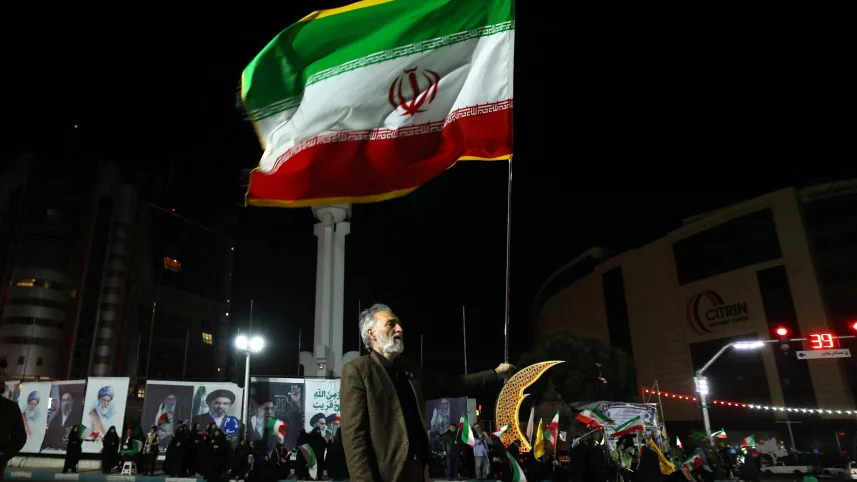
A man holds an Iranian flag during a rally in support of Iran's supreme leader Ayatollah Mojtaba Khamenei at Sadeghyeh Square in Tehran on April 27, 2026. Photo: AFP

US President Donald Trump on Sunday accused Iran of "playing games" and laughing at America for decades, but said it soon would be made to stop -- without commenting directly on reports of Tehran's response to Washington's latest peace proposal.

"Iran has been playing games with the United States, and the rest of the World, for 47 years (DELAY, DELAY, DELAY!)," Trump said on his Truth Social platform.

He also accused Tehran of "laughing at our now GREAT AGAIN Country" but added: "They will be laughing no longer!"​
 

Trump rejects Iran peace terms, Tehran warns of new attacks

AFP
Washington, United States
Published: 11 May 2026, 09: 33

1778546424563.webp

US President Donald Trump Reuters file photo

US President Donald Trump on Sunday branded Iran's terms for ending the Middle East war "totally unacceptable," raising the likelihood of renewed conflict after weeks of negotiations.

Iran had responded to Washington's latest peace proposal earlier in the day, while warning it would not hold back from retaliating against any new US strikes or permit more foreign warships in the Strait of Hormuz.

Trump himself provided no details on Tehran's counterproposal, but in a brief post on his Truth Social platform made clear he was rejecting it.

"I have just read the response from Iran's so-called 'Representatives.' I don't like it -- TOTALLY UNACCEPTABLE!" Trump said.

The back and forth came as Israeli Prime Minister Benjamin Netanyahu -- whose forces launched the war on Iran along with the US military on 28 February -- insisted the conflict was not over until Iran's enriched uranium was removed and its nuclear facilities dismantled.

Tehran publicly maintained its defiant line, despite behind-the-scenes diplomacy.

"We will never bow down to the enemy, and if there is talk of dialogue or negotiation, it does not mean surrender or retreat," Iranian President Masoud Pezeshkian said Sunday on X.

According to state broadcaster IRIB, Tehran's response to the US plan, passed to Pakistani mediators, focuses on ending the war "on all fronts, especially Lebanon" -- where Israel has kept up its fight with Iran-backed Hezbollah -- as well as on "ensuring shipping security."

It offered little detail, though the US proposal had reportedly focused on extending the truce in the Gulf to allow for talks on a final settlement of the conflict and on Iran's contested nuclear programme.

Netanyahu said in an interview to be aired in full later Sunday that Iran's stockpile of enriched uranium must be removed before the war can end.

"It's not over, because there's still nuclear material -- enriched uranium -- that has to be taken out of Iran. There's still enrichment sites that have to be dismantled," Netanyahu told CBS's "60 Minutes."

He added that Trump was on the same page regarding the need to take away the uranium, though the president said in a recent interview that the US could remove it "whenever we want," and that it was "very well surveilled" where it is now.

Trump is expected to press President Xi Jinping of China -- a major buyer of Iranian oil -- on Iran when he visits Beijing this coming week, a senior US administration official said.

No Hormuz 'interference'

Meanwhile The Wall Street Journal, citing people familiar with the matter, said Iran laid out its own demands to Washington and proposed to have some of its highly enriched uranium diluted, and the rest transferred to a third country.

In its response, delivered through mediator Pakistan, Iran sought guarantees that the transferred uranium will be returned if negotiations fail or Washington quits the agreement later, sources told the Journal.

Trump made no mention of such details in rejecting Iran's response.

Iran imposed a blockade on the vital Strait of Hormuz early in the war, sending global oil prices soaring and rattling financial markets.

It has since set up a payment mechanism to extract tolls from ships crossing the strait, but US officials have stressed it would be "unacceptable" for Tehran to control an international waterway and the route for a fifth of the world's oil and other vital materials.

The US Navy, meanwhile, is blockading Iran's ports, at times disabling or diverting ships heading to and from them.

Britain and France are leading efforts to create an international coalition to secure the strait after a peace deal is reached, with both countries sending vessels to the region in advance.

But Iran warned Sunday that the two nations would meet "a decisive and immediate response" should they deploy their ships to the strait.

"Only the Islamic Republic of Iran can establish security in this strait and it will not allow any country to interfere in such matters," Deputy Foreign Minister Kazem Gharibabadi posted on X.

French President Emmanuel Macron later insisted his country had "never envisaged" a naval deployment in Hormuz, but rather a security mission "coordinated with Iran."

'Restraint over'

Fresh drone attacks Sunday in the Gulf were the latest to rattle the ceasefire after multiple recent flare-ups.

The United Arab Emirates said its "air defence systems successfully engaged two UAVs launched from Iran."

Kuwait reported an attempted attack as well, saying its armed forces dealt with "a number of hostile drones in Kuwaiti airspace."

And Qatar's defense ministry said a freighter arriving in its waters from Abu Dhabi was hit by a drone.

There was no immediate claim of responsibility, but Iran's Fars news agency reported that "the bulk carrier that was struck near the coast of Qatar was sailing under a US flag."

In a social media post on Sunday, the spokesman for the Iranian parliament's national security commission warned Washington: "Our restraint is over as of today."

"Any attack on our vessels will trigger a strong and decisive Iranian response against American ships and bases," Ebrahim Rezaei said.

According to Iranian state television, Tehran's military chief Ali Abdollahi met the country's supreme leader Mojtaba Khamenei and received "new directives and guidance for the continuation of operations to confront the enemy."​
 

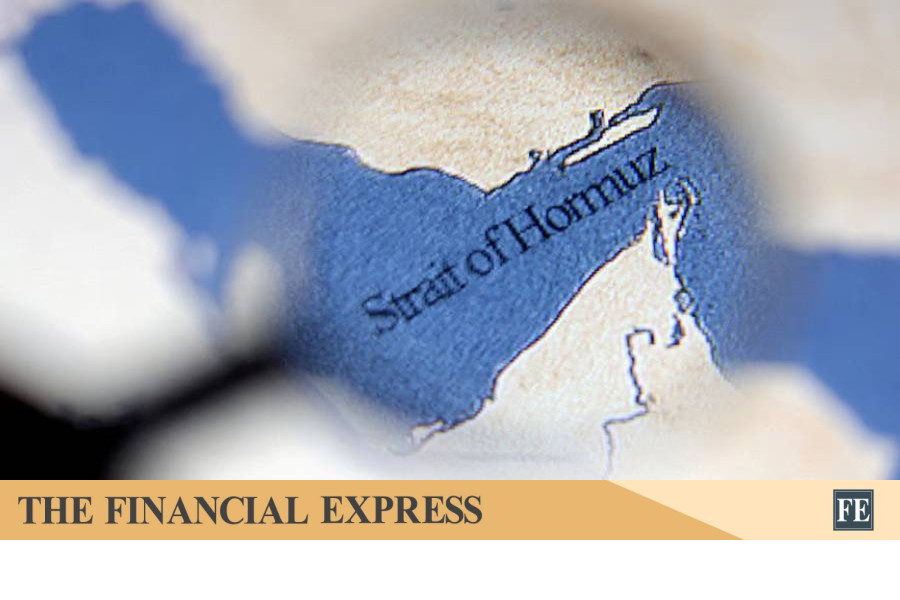
Iran now defines Strait of Hormuz as far larger zone, IRGC officer says

REUTERS

Published :
May 12, 2026 16:44
Updated :
May 12, 2026 16:44

1778630418975.webp


Iran has expanded its definition of the Strait of Hormuz into a “vast operational area” far wider than before the Iran war, according to a senior officer in the Islamic Revolutionary Guard Corps (IRGC) Navy.

The strait is no longer viewed as a narrow stretch around a handful of islands but instead has been greatly enlarged in scope and military significance, said Mohammad Akbarzadeh, deputy political director of the IRGC Navy, the state-affiliated Fars News Agency reported on Tuesday.

“In the past, the Strait of Hormuz was defined as a limited area around islands such as Hormuz and Hengam, but today this view has changed,” Akbarzadeh said.

Iranian authorities did not reply to a Reuters request for immediate comment.

About a fifth of the world’s oil and liquefied natural gas supply normally passes through the strait, which is the gateway to the Gulf and main export route for countries such as Saudi Arabia, Iraq and Qatar.

Akbarzadeh said the strait is now defined as a strategic zone stretching from the city of Jask in the east to Siri Island in the west, describing it as “a vast operational area”.

The reported expansion is the second announced by Iran since the start of its conflict with the US and Israel.

On May 4, the IRGC Navy published a map showing a new zone of control extending along significant a stretch of the UAE’s Gulf of Oman coastline.

That stretched from Iran’s Mount Mobarak and the UAE’s emirate of Fujairah in the east to Iran’s Qeshm Island and the UAE emirate of Umm ⁠al Quwain in the west.

Tuesday’s announcement appears to represent a widening of that area.

Fars and Tasnim, another Iranian news agency, reported on Tuesday that the strait’s width, which they said was previously estimated at 20 to 30 miles, had now increased to between 200 and 300 miles.

The expanded zone forms a “complete crescent”, Tasnim said.​
 

US must accept peace plan: Iran
Agence France-Presse . Tehran, Iran 13 May, 2026, 00:27

1778633330118.webp


Iran’s chief negotiator said Tuesday that Washington must accept Tehran’s latest peace plan or face failure, after US president Donald Trump warned the truce in the Middle East war was on the brink of collapse.

The war, which erupted more than two months ago with US-Israeli strikes on Iran, has spread throughout the Middle East and roiled the global economy despite the ceasefire, impacting hundreds of millions worldwide.

Both sides have refused to make concessions and repeatedly threatened to resume fighting, but neither appears willing to return to all-out war.

‘There is no alternative but to accept the rights of the Iranian people as laid out in the 14-point proposal. Any other approach will be completely inconclusive; nothing but one failure after another,’ Mohammad Bagher Ghalibaf said in a post on X.

‘The longer they drag their feet, the more American taxpayers will pay for it.’

Iran sent its proposal in response to an earlier US plan, details of which remain limited. Media reports have said the American plan involved a one-page memorandum of understanding aimed at ending the fighting and establishing a framework for negotiations on Iran’s nuclear programme.

Iran’s foreign ministry said its response called for ending the war on all fronts, including Lebanon, halting the US naval blockade on Iranian ports and securing the release of Iranian assets frozen abroad under longstanding sanctions.

But Trump slammed Tehran’s reply as ‘TOTALLY UNACCEPTABLE’, saying the US would enjoy a ‘complete victory’ over Iran and that the truce that has halted fighting for over a month was on its last legs.

In a show of defiance, Iran’s Revolutionary Guards said they carried out drills in Tehran aimed at ‘enhancing combat capability to confront any movement of the American-Zionist enemy’, state media reported Tuesday.

The drills involved the Islamic Revolutionary Guard Corps or IRGC, the ideological arm of Iran’s military, as well as the Basij, a paramilitary force affiliated with the Guards, according to state TV.

‘Enhancing combat capability to confront any movement of the American-Zionist enemy was one of the goals and scenarios implemented in this drill, which was successfully carried out,’ Brigadier General Hassan Hassanzadeh, commander of the Tehran Revolutionary Guards, was quoted as saying by state TV.

The war of words has unnerved people in Iran who do not know what the coming months will bring.

‘We are just trying to dig our nails into anything that could help us survive. The future is so uncertain and we are just living day to day,’ Maryam, a 43-year-old painter from the capital Tehran, told Paris-based journalists.

‘We are trying to find a way to continue. Keeping hope is very difficult right now.’

Trump’s angry reaction to Iran’s counteroffer sparked a spike in oil prices and dashed hopes that a deal could be quickly negotiated to reopen the Strait of Hormuz to commercial shipping.

Iran is restricting maritime traffic in the waterway and has been setting up a payment mechanism to charge tolls for crossing ships, sparking a global energy crisis.

‘The energy supply shock that began in the first quarter is the largest the world has ever experienced,’ the CEO and president of Saudi oil giant Aramco, Amin Nasser, told investors.

US officials have stressed it would be ‘unacceptable’ for Tehran to control the strait, which usually carries about a fifth of the world’s oil and natural gas.

‘Iran should not use this strait as a weapon to pressure or to blackmail the Gulf countries,’ Qatari foreign minister Sheikh Mohammed bin Abdulrahman Al Thani told reporters in Doha on Tuesday.

Trump told Fox News that he was considering reviving a short-lived US operation to guide oil tankers and commercial ships through Hormuz, but that he had not yet taken a final decision.

The maritime standoff has also left the world facing a shortage of fertiliser — much of which comes from Gulf ports — and risks food supplies for tens of millions of people.

Jorge Moreira da Silva, executive director of the United Nations Office for Project Services, said there were just a few weeks left to avert a potentially ‘massive humanitarian crisis’ that could force 45 million more people into hunger.

Meanwhile, the US ambassador to Israel Mike Huckabee told a conference Tuesday that Israel sent Iron Dome air defence batteries and personnel to operate them in the United Arab Emirates during the war, after it was targeted more than any country by Iran.

And elsewhere in the Gulf, Kuwait said that four people arrested earlier this month as they attempted to enter the country by sea had confessed to belonging to Iran’s Revolutionary Guards.

On the war’s Lebanon front, Israeli strikes on a town in the south killed six people and wounded seven others, state media said Tuesday, as fighting continued despite a ceasefire agreement.

Israel has intensified its attacks in south Lebanon as it trades fire with Iran-backed Hezbollah even after the April 17 truce took effect.

More than 2,800 people have been killed in Lebanon since the country was dragged into the wider war on March 2, according to health authorities.

Hezbollah chief Naim Qassem said Tuesday his group’s weapons were not part of a third round of upcoming negotiations between Lebanon and Israel this week, vowing not to surrender ‘however great the sacrifices’.

‘We will not abandon the battlefield and we will turn it into hell for Israel,’ he said in a statement.​
 

Latest Posts

Back