[🇧🇩] Insurgencies in Myanmar. Implications for Bangladesh

[🇧🇩] Insurgencies in Myanmar. Implications for Bangladesh
405
16K
More threads by Saif

G Bangladesh Defense

FM calls for ‘coordinated global initiative’ to solve Rohingya crisis

bdnews24.com
Published :
Apr 18, 2026 20:55
Updated :
Apr 18, 2026 20:55
1776559358804.webp


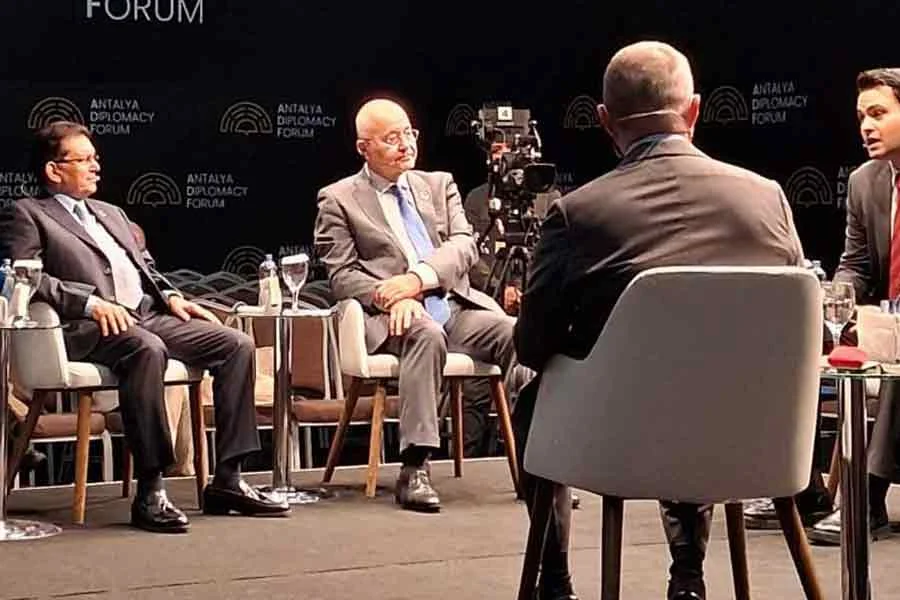
Foreign Minister Khalilur Rahman has called upon the international community to move beyond mere humanitarian aid and take proactive steps to ensure the safe, dignified, and voluntary repatriation of Rohingya refugees to Myanmar.

Speaking at a discussion at the Antalya Diplomacy Forum in Turkey on Friday, he emphasised that a sustainable solution to the crisis lies squarely within Myanmar's Rakhine State.

The minister stressed that the global community must play a more effective role in creating an environment conducive to repatriation.

He expressed deep concern over the dwindling international funding for the refugees and urged donors to increase financial support while taking urgent measures to ensure stability, security, and human rights in Rakhine.

Khalilur said both the Myanmar military government and the Arakan Army had welcomed him following his appointment, suggesting a potential diplomatic opening.

"The Rohingya crisis is a solvable problem, but it requires a coordinated global initiative and consistent international cooperation," he said.

The call for action comes as the number of Rohingya refugees in Cox’s Bazar continues to climb.

According to UNHCR data released in early March, the refugee population rose from approximately 1,006,107 in February 2025 to 1,184,864 by February 2026 -- an increase of nearly 179,000 in just one year.

While repatriation efforts began with a bilateral agreement in 2017 and saw failed attempts in 2019 due to a lack of trust of the refugees in the Myanmar government, the process faced further setbacks from the COVID-19 pandemic and the 2021 military coup.

The ongoing civil war in Myanmar has currently stalled formal talks, even as new waves of displacement enter Bangladesh.

On the sidelines of the forum, Khalilur held a bilateral meeting with Pakistan’s Deputy Prime Minister and Foreign Minister Ishaq Dar.​
 

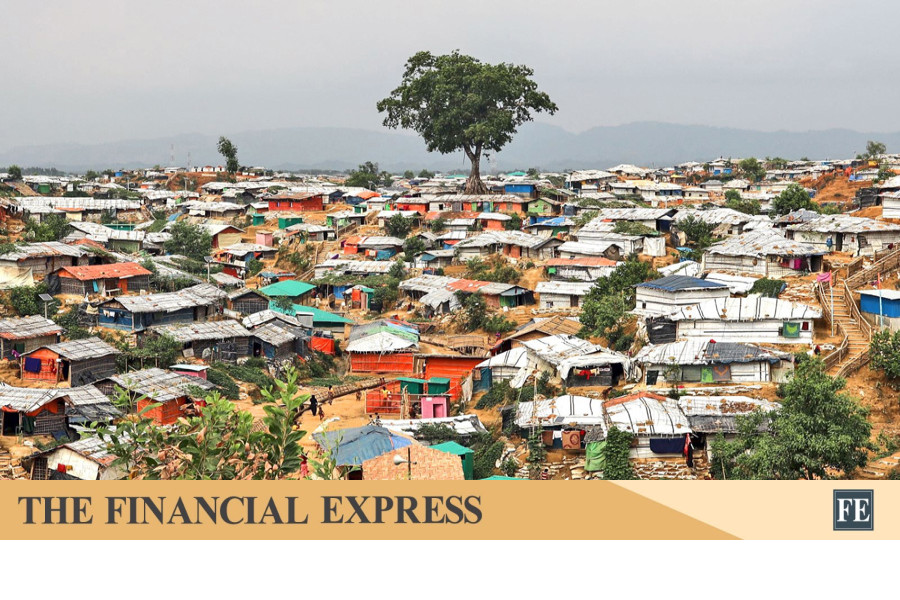
Rohingyas' plight is getting harder to address with shrinking funds

18 April 2026, 18:45 PM
UPDATED 18 April 2026, 18:45 PM

1776563093671.webp

VISUAL: STAR

At least 900 Rohingya refugees were reported dead or missing in the Bay of Bengal and Andaman Sea in 2025. The number, revealed by the United Nations refugee agency, UNHCR, accentuates the increasingly wretched circumstances the Rohingyas find themselves in as they continue to live in camps in Bangladesh with no hope of repatriation in sight. While Bangladesh, with the help of international and local donors and organisations, is hosting more than one million Rohingyas, the recent drastic cuts in international funding and the influx of more than 150,000 Rohingyas since last year, fleeing the latest civil war in Myanmar, have worsened the crisis.

The birth of thousands of babies in the camps every year since 2017 has also increased the Rohingya population significantly. The World Food Programme (WFP) is now struggling with critical shortfalls in funding, forcing a reduction in food assistance from $12 per person per month to a three-tiered system where $12, $10, and $7 are given based on their perceived levels of vulnerability. This has exacerbated hunger and malnutrition. In 2025, 6,400 learning centres were closed down, leaving more than 400,000 children with no access to education. More than 4,000 Rohingya teachers lost their jobs along with their Bangladeshi colleagues.

The funding shortfall is attributed to the drastic reduction in humanitarian aid by the US, which provided over half of the total funding for Rohingyas in the last few years. This year, more than 2,800 Rohingyas have attempted hazardous sea journeys in the hope of reaching Malaysia or Indonesia. Over half of those who make these journeys are women and children who run the risk of being trafficked.

At this time, Bangladesh and all donor agencies must put pressure on the international community to increase funding and find long-lasting solutions. The US-Israel war on Iran has made it even more challenging to raise funds. But the global community must realise that the burden of the Rohingya crisis is not Bangladesh’s to bear alone, but rather a collective responsibility. Until the crisis is solved, the Rohingyas will continue to make these dangerous journeys, with many of them dying and thousands ending up on the shores of other countries, which will then have their own refugee crisis to handle.

These countries as well as other influential global players must get together and join Bangladesh to stop these deadly journeys. Funds must be increased for food, education, and medical care in the camps. Learning centres and skills training centres must be reopened. The Rohingyas must be given opportunities to earn within the camps. The government must also enhance security, especially for women and children. Human trafficking agents must be identified and given appropriate punishment. As challenging as it is, until the civil war in Myanmar ends, Bangladesh may continue to host the refugees who are already here, but resettlement of some Rohingyas to other countries, and their eventual repatriation to Myanmar, must be on the cards.​
 

Will the Rohingya be able to return home?

Syed Fatttahul Alim

Published :
Apr 20, 2026 00:29
Updated :
Apr 20, 2026 00:29

1776642424188.webp


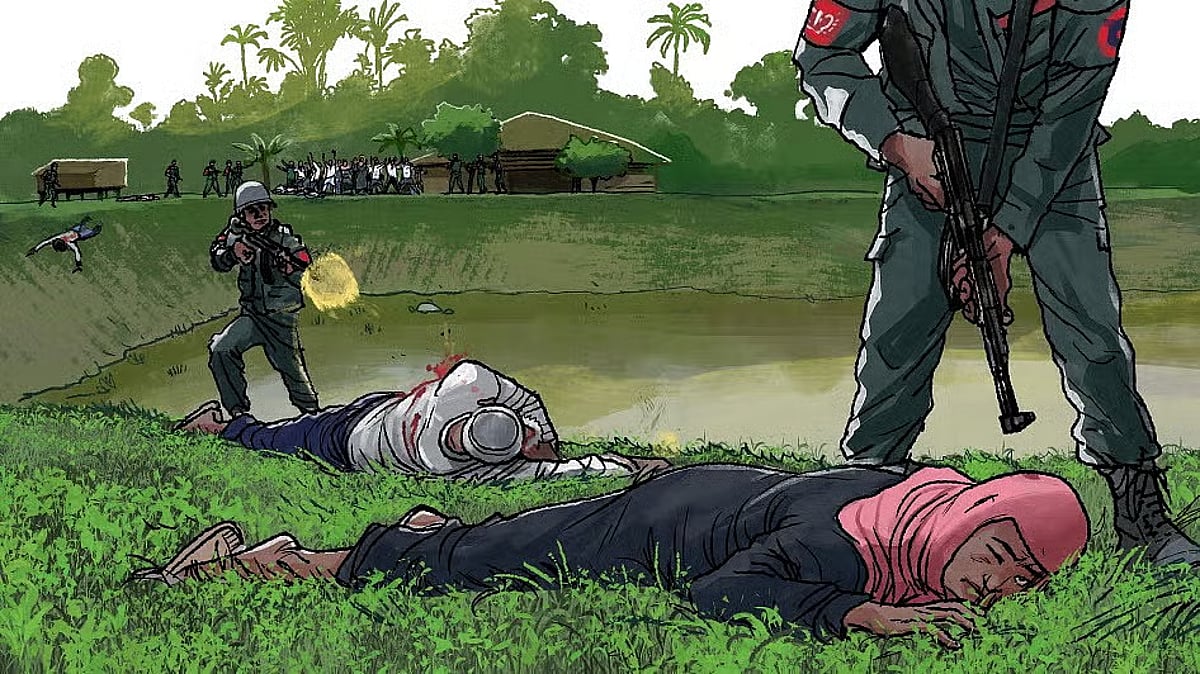
In the wake of a violent crackdown by the Myanmar military against the Rohingya population in the Rakhine State of Myanmar starting on August 25, 2017, more than seven hundred thousand Rohingya people fled to Bangladesh for safety. Before the massive influx from Myanmar army's August 2017's genocidal campaign against the Rohingya, between 300,000 and 500,000 Rohingya refugees had already been living in Cox's Bazar. Those arrivals were also triggered by Myanmar regime's previous instances of ethno-religious persecution of the Rohingya in 1978, 1991and in October 2016.

Such widespread atrocities, including killings, sexual violence and arson perpetrated on a massive scale, brought the total number of Rohingya in Bangladesh to over a million, most of whom were sheltered in camps in the Cox's Bazar district. Despite its being one of the Least Developed Countries (LDCs) with a very large population of about 170 million to feed and the attendant socio-economic problems it has been grappling with, Bangladesh still showed the goodwill and generosity to give shelter to these victims of persecution in the neighbouring country. International community including the UN praised Bangladesh's role and promised that efforts would be there to put pressure on the Myanmar authorities to take back their nationals. Meanwhile, promise of adequate relief and aid was made by the donor community so Bangladesh could accommodate more than a million refugees for the time being. But now about nine years after the last genocidal campaign against these people by their own government in Myanmar, there is still no sign that Rohingya crisis is going to be resolved anytime soon.

The Rohingya repatriation talks between the Bangladesh government and Myanmar regime has remained effectively stalled due to the ongoing conflict in the Rakhine State of the country. Believing that the Myanmar authorities would make good on their word that Rohingya refugees would be repatriated, Bangladesh previously submitted the data of over 829,000 refugees to them. Through verifying a list of close to 355,000 individuals, they also recognized some 180,000 as eligible for repatriation in early 2025. But worsening security situation in that country seems to have dimmed that prospect, too. Now with drastic cuts in aid for the Rohingya refugees by the donor community, there is reason for concern in Bangladesh. Is then Bangladesh going to bear the burden of hosting the Rohingya regugess forever? Worse yet, the ongoing civil war in Myanmar has forced another wave of over 150,000 Rohingya to enter Bangladesh to add to more than a million Rohingya already residing here as refugees. The refugees who have been living here for about a decade are also increasingly getting frustrated about their own as well as their children's future. So, many of them are trying to settle elsewhere across the sea.

Meanwhile, the United Nations High Commissioner for Refugees (UNHCR), the global agency for refugees, has recently revealed that nearly 900 Rohingya were reported dead or missing in the Bay of Bengal and Andaman Sea last year (2025). The UN agency added that it was the deadliest year on record for maritime movements in South and South East Asia. As if that was not enough, thousands of fresh members of this community continue to make dangerous journeys. More than 2,800 Rohingya have reportedly attempted such dangerous crossings this year. Going by the trends in recent years, more than half of these Rohingya trying to cross the sea are women and children. In this connection, a spokesman for UNHCR further noted at the UN agency's headquarters in Geneva recently that in this manner some 5,000 Rohingya refugees are thought to have drowned at sea over the last decade. Clearly, Rohingya people from both the refugee camps at Cox's Bazar in Bangladesh and from the Rakhine State in Myanmar where civil strife is continuing, are risking their lives in overcrowded trawlers in their desperation to go overseas in search of a better life.

It is against this backdrop that the Bangladesh Foreign Minister Khalilur Rahman has called upon the global community to scale up funding, ensure stability and security in the Rakhine State and take urgent measures to safeguard human rights. The foreign minister made this well-meaning statement during a discussion event at the Antalya Diplomacy Forum 2026 in Turkey. But will the global community hear his appeal when the Trump administration has paused nearly all foreign aid in January, 2025? This has practically halted contributions from the world's biggest contributor, the USA, to all the humanitarian aid at the UN or other refuge-related international fora. So, to ensure that it is not a lone voice in the wilderness, it is time we also looked for alternative sources of financial support for the Rohingya as well as the required political backing to resolve the issue of repatriating the Rohingya in their own homeland. However, that effort should also involve prevailing upon the Myanmar authorities and the insurgents in the Rakhine State to end hostilities so the Rohingya might return to their homeland safe, voluntarily and with dignity. Recalling his previous efforts as adviser to the interim government towards resolving the complicated Rohingya issue, it is indeed reassuring to learn that he has described the Rohingya crisis as something 'resolvable'. Hopefully, he would be able to mobilize necessary international support to this end so Bangladesh might get rid of the burden of Rohingya refugee in the foreseeable future. Notably, earlier, the UN refugee agency, UNHCR and the International Organiztion for Migration (IOM) made urgent appeals to the international community to step up solidarity and sustain funding to support lifesaving assistance for the Rohingya refuges in Bangladesh.

The government should draw on the genuine international efforts to help the country get around the apparently intractable issue of Rohingya refugees. And this should also be to the best interests of the Rohingya people who are our fellow human beings in distress. There is no reason to think that they are a disposable lot. Unfortunately though, falling under the toxic spell of identity politics, the world is now seeing the return of tribal hatred that has shattered the veneer of Western democracy and all the lofty values they claimed they stood for. The fate of Rohingya is linked to the rise of such hate politics in Myanmar. One would like to believe that through sustained and concerted efforts of the international community, the darkness would soon be over and the Rohingya refugees would be able to return home with dignity.​
 

ICJ ruling on Rohingya genocide expected soon, says foreign minister

bdnews24.com

Published :
Apr 28, 2026 19:41
Updated :
Apr 28, 2026 19:41

1777419840263.webp


Foreign Minister Khalilur Rahman has expressed hope that a verdict from the International Court of Justice (ICJ) in the ongoing Rohingya genocide case will be delivered soon.

Responding to a question in parliament on Tuesday, he said the legal proceedings aimed at establishing Myanmar's accountability for atrocities against the Rohingya are currently in a decisive phase.

"The case seeks to determine Myanmar's liability, halt ongoing persecution, ensure justice and compensation for victims, and take steps to prevent such crimes in the future," the minister said.

Khalilur noted that the case has already advanced to a “significant stage”, including completion of written and oral hearings with participation from multiple states.

"The court’s verdict is expected soon," he added.

The information was placed in parliament during the question-and-answer session, in response to a query from Sylhet-5 constituency BNP MP Imran Ahmed Chowdhury.

In 2017, Myanmar’s armed forces launched a brutal crackdown on the Rohingya population, forcing at least 730,000 people to flee into neighbouring Bangladesh.

The displaced Rohingya reported killings, widespread rape and arson during the military operations.

A UN fact-finding mission later concluded that the 2017 military campaign included acts amounting to genocide.

In 2019, The Gambia, a West African Muslim-majority country, filed a case at the ICJ accusing Myanmar of committing genocide against the Rohingya.The landmark case began hearings at the ICJ in January this year.​
 

Practitioners emphasise Financial Inclusion for Rohingya community at Cox’s Bazar workshop

FE Online Desk

Published :
May 12, 2026 23:16
Updated :
May 12, 2026 23:16

1778629771918.webp


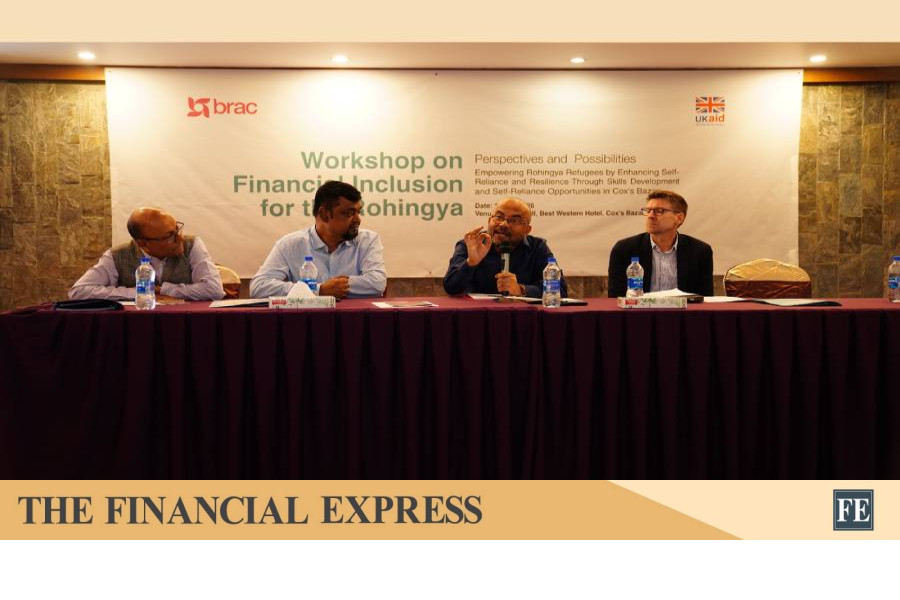
Practitioners and humanitarian leaders at a workshop in Cox’s Bazar have stressed the importance of financial inclusion for the Rohingya community alongside skills development initiatives to improve livelihoods and strengthen resilience.

The workshop, titled “Financial Inclusion for the Rohingya: Perspectives and Possibilities,” was organised by BRAC’s Humanitarian Crisis Management Programme (HCMP) with support from UK Aid on Tuesday at a local hotel in Cox’s Bazar, according to a press release.

Speakers highlighted several potential initiatives to enhance financial inclusion among Forcibly Displaced Myanmar Nationals (FDMNs), including pilot programmes on digital cash and Mobile Financial Services (MFS), partnerships with banks and MFS providers, literacy and women-focused inclusion programmes, youth engagement in digital income-generation activities, and integrating financial services with livelihoods and skills development interventions.

Refugee Relief and Repatriation Commissioner (RRRC) Mohammed Mizanur Rahman attended the event as Chief Guest.

In his remarks, he said BRAC’s initiative reflects the practical realities on the ground and deserves appreciation.

He noted that nearly 52 per cent of the Rohingya population are under 18 years of age. “Without productive engagement, many young people may become vulnerable to human trafficking and other criminal activities. The priority now is to involve them in constructive and meaningful work,” he said.

The event began with a welcome address by Rezaul Karim, Associate Director and Office-in-Charge (OIC) of BRAC HCMP. Ashik Kabir, Sector Coordinator of the Livelihoods and Skills and Development Sector (LSDS), delivered a presentation on the “Resilience and Adaptation Fund”.

Subrata Kumar Chakrabarty, Adviser to BRAC HCMP, presented on Financial Inclusion: BRAC’s Learning from the pilot project. The session was moderated by Kaniz Zinath, Programme Manager of the BRAC HCMP’s Food Security, Skills and Livelihoods (FSSL) Sector.

KAM Morshed, Senior Director (Advocacy, Communications and Engagement) at BRAC, said the organisation continues to prioritise innovative pilots. Successful implementation and scaling will require collaboration and commitment.

Other speakers included David Budgen, Head of the Refugee Coordination Platform (RCP); Camp-in-Charge Md. Shariful Islam (Camp 1 East and 1 West); Suraya Akter Swety (Camp 4 and 4 Extension); and Md. Arafatul Alam (Camp 9 and Camp 10). Mohammad Abdur Rouf. (Camp 3 & 5).

According to information shared at the workshop, the FCDO-funded pilot project was launched in October 2025 and will continue through May 2026. The programme is currently being implemented across Camps 2 West, 3, 4 Extension, 9, 14, 15 and 16 in Cox’s Bazar.

Since the pilot project began, 160 Rohingya refugees have received formal skills development training, while 400 individuals have been trained for informal-sector employment opportunities. In addition, 398 women have received cash assistance and 123 participants have been supported through entrepreneurship development initiatives. With support from the Refugee Relief and Repatriation Commissioner (RRRC), mobile SIM cards have also been distributed to 297 participants.

More than 80 representatives from international development agencies, humanitarian organisations and NGOs attended the workshop.​
 

PM seeks OIC support to resolve Rohingya crisis

BSS
Published: 12 May 2026, 19: 46

1778630750102.webp


Ambassadors and high commissioners of OIC member states stationed in Dhaka paid a courtesy call on Prime Minister Tarique Rahman at his office in the Cabinet Division of the Bangladesh Secretariat. PMO

Prime Minister Tarique Rahman today sought support of the Organization of Islamic Cooperation (OIC) member states to resolve the Rohingya crisis.

The premier sought the help when ambassadors and high commissioners of OIC member states stationed in Dhaka paid a courtesy call on him at his Cabinet Division office in the Bangladesh Secretariat here this afternoon, said Prime Minister’s Deputy Press Secretary Jahidul Islam Rony.

During the meeting, he said, envoys of the OIC member states congratulated Tarique Rahman on assuming office as Prime Minister.

The OIC member countries also expressed their strong commitment to standing beside Bangladesh and strengthening bilateral cooperation in various areas, including investment, trade, education, healthcare, textiles and the pharmaceutical industries.

Rony said the Prime Minister welcomed their remarks and, on behalf of the government and the people of Bangladesh, thanked OIC member states for their support.

Tarique Rahman recalled the brotherly relations that Bangladesh maintained with OIC member countries during the tenure of Shaheed President Ziaur Rahman and expressed hope for further strengthening those ties in the future.

The envoys of Saudi Arabia, Türkiye, Palestine, Algeria, Brunei, Egypt, Indonesia, Kuwait, Malaysia, Maldives, Morocco, Oman, Pakistan, Qatar, and the United Arab Emirates, as well as the heads of mission of Iran, Iraq and Libya were present at the meeting.

Prime Minister’s Adviser on Foreign Affairs Humaiun Kobir, Secretary at the Foreign Affairs Ministry M Forhadul Islam and Prime Minister’s Additional Press Secretary Atikur Rahman Ruman were present at the meeting.​
 

Latest Posts

Back
Top Bottom