Home Watch Videos Wars Movies Login

Wars 2026 02/28 Israel-Iran War 3.0

Wars 2026 02/28 Israel-Iran War 3.0
334
6K
More threads by RayKalm

G War Archive

US military families ride 'roller coaster of emotions' over six months of Iran war


1788045682083.webp

Family members are presented with a flag during the burial service for US soldier Sgt. Angel S. Rampersad, who was killed in an attack on Muwaffaq Salti Air Base in Jordan, at the Long Island National Cemetery, in New York, US, July 31, 2026. Source: REUTERS/Shannon Stapleton/Files

Since the United States went to war with Iran six months ago, Courtney Sanders has been helping soldiers’ families fill the gaps left by their loved ones.

There are school pickups to coordinate, lost incomes to supplement — and the ever-present separation anxiety.

“It's like being on pins and needles all of the time,” Sanders said.

She leads the Chicagoland chapter of Blue Star Families, the nation's largest nonprofit serving military families, and her own daughters are in the US Navy. They have served in various overseas locations over the past six months, including the Middle East.

The US has more than 50,000 troops stationed across the region and has deployed thousands of additional Marines and sailors to support the war effort. Eighteen US service members have been killed in the conflict and more than 750 wounded.

During the war's on-and-off fighting, shuttle diplomacy and failed peace talks, military families have experienced a “roller coaster of emotions,” Sanders said. “The moment that you feel you're able to take a breath, you get gut-punched again.”

These are familiar pressures for the partners and children, mothers and fathers, of American ⁠troops. But the suddenness of the Iranian conflict, and its fitful pace, have had a compounding effect, relatives told Reuters.

In a Blue Star Families poll of some 200 active-duty military families in early March, 81% reported elevated stress from the Iran conflict.

The group has responded by stepping up its programming, creating online resource hubs, hosting webinars and in-person meet-ups, and matching military spouses going through a deployment for the first time with those who have been through it before.

Many service members' deployments have been extended unexpectedly.

The USS Abraham Lincoln aircraft carrier went more than 200 days without a port call — a modern-day record, according to Democratic lawmakers — and military outlets reported, opens new tab suicide attempts and declining morale among its 5,000 sailors and Marines. US Defense Secretary Pete Hegseth said the reports “completely misrepresented” the conditions on board.

Some military families find themselves in financial straits.

National Guard members, for example, often work regular jobs when they are not deployed. The sudden loss of their main paycheck can make it hard for those left behind to keep food on the table, Sanders said.

"There is a huge misconception in the civilian world that if you are in the military, all of your bills are taken care of,” ⁠she said. “And that is just frankly not true.”

In a statement, the Pentagon said: "We see these families (and) we hear their concerns. We will do whatever is necessary to provide the resources, assistance, and stability they need and deserve during these challenging times."

'A LOT OF EMOTIONS'

Shannon, an Army spouse and mother of three in North Carolina who requested Reuters use only her first name for security reasons, tries to tune out the news and the political debate surrounding the war.

In February, her husband deployed to the region with five days' notice and could only contact her sporadically for the first several months.

Although they have maintained near-daily communication since June, "there are a lot ⁠of emotions,” Shannon said, “especially when people are dying over there.”

Her children started therapy over the summer. She tries to be strong in front of them, but cries sometimes when they’re not around.

Soon after her husband's deployment, Shannon joined an Army-sponsored soldier-and-family "readiness group" within her husband's unit, helping organize meal trains and other support for family members in need.

"Every day is not going to be a great day, but you've gotta just keep going ⁠and keep yourself busy," she said.

In Virginia, Pat, a Navy spouse who also asked to be identified by her first name for security reasons, has tried to keep life as normal as possible for her children, who are in middle and high school.

Since her husband deployed about five months ago, Pat said, her neighbors have been "amazing" about helping with kid pickups and other chores.

Her family wears ⁠red on Fridays — a show of support for deployed service members — and so do many of her children's classmates, even those without military connections.

Pat's husband has deployed before. She was pleasantly surprised this time to discover his ship had Wi-Fi, making communication easier.

Still, her family is grappling with the uncertainty of when he will return.

"Having older kids and knowing that dad wasn't there to see those sporting events, some of that's been a little emotional," she said. "But my kids are very resilient."​
 

Attachments

  • 1788045682083.webp
    1788045682083.webp
    54.4 KB · Views: 8
Analyze

Analyze Post

Add your ideas here:
Highlight Cite Respond

Iran’s president says Tehran will reciprocate if US honours interim deal commitments


1788306153920.webp


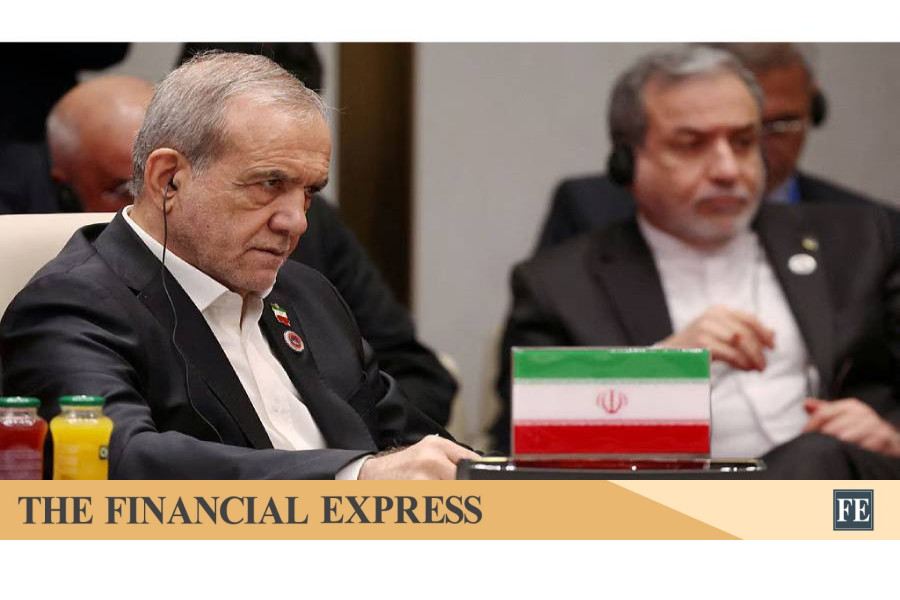
Iranian President Masoud Pezeshkian attends a session of the Shanghai Cooperation Organisation (SCO) summit in Bishkek, Kyrgyzstan Sept 1, 2026. Sputnik/Vyacheslav Prokofyev/Pool via REUTERS

Iran will immediately reciprocate if the United States returns to its commitments under an interim deal signed in June, President Masoud Pezeshkian said on Tuesday.

He made his comments at the Shanghai Cooperation Organisation Summit in Bishkek after the first exchange of direct attacks in the US-Iran conflict since late July, with the US striking Larak Island and Iran then launching attacks on two US air bases in Jordan.

“I am stating clearly that if the US returns to its commitments under the Memorandum of Understanding, the Islamic Republic of Iran will immediately reciprocate,” Pezeshkian was quoted as saying by state media.

He was referring to an interim deal signed in June between Tehran and Washington in efforts to end the war, which started with US and Israeli strikes on Iran on Feb 28.

The deal quickly unravelled amid disagreements over its implementation.

Tehran has repeatedly said it will allow free navigation through the Strait of Hormuz, a vital waterway for global oil supplies, only if Washington implements the terms of the agreement.

Pezeshkian said in Bishkek on Monday that war was in no one’s interest and that Tehran was still open to a negotiated solution in its conflict with Washington.

US President Donald Trump told Fox News “there will be a response” following the Iranian attacks but told reporters in the Oval Office that the renewed strikes did not signal a return to full-scale war.​
 
Analyze

Analyze Post

Add your ideas here:
Highlight Cite Respond

US pressure on Iran starting to tell, as sanctions and blockade bite


1788477757018.webp


A woman walks on a street in Tehran, Iran, September 2, 2026. Majid Asgaripour/WANA (West Asia News Agency) via REUTERS

A U.S. campaign to throttle Iran’s economy by blockading its oil exports and stopping sanctions evasion is growing increasingly difficult to withstand, three senior Iranian sources said.

Washington has in recent weeks sought to ratchet up the economic pressure on Tehran, in an effort to extract concessions in any future negotiation that six months of conflict have so far failed to secure.

Although Iran’s clerical rulers managed to ‌bypass sanctions for decades, the latest U.S. moves have left them in a far more sensitive position, with few remaining channels to secure foreign currency or buy goods, the sources said.

In particular, the effort to stop Iran accessing international financing networks in other countries it has long used to keep its economy functioning poses a real and urgent threat, the sources said.

Any sign the economic campaign may break a months-long deadlock in the conflict will likely cheer U.S. planners, though Iran has also warned it could respond to the pressure with military escalation, raising the stakes at a key moment.

PETROL STOCKS LOW AS CURRENCY COLLAPSES

The war has erupted back into open fighting this week, with U.S. attacks along Iran’s Gulf coast prompting retaliatory Iranian strikes at U.S. bases in Arab states.

Neither side has signalled yet it is ready to make the concessions demanded by the other, leaving the war in a costly ⁠stalemate - though one that may be shifting.

While more energy is flowing to international markets through the Strait of Hormuz despite Iranian efforts to continue disrupting the seaway, the U.S. blockade of Iranian oil exports has entirely cut off Tehran’s main source of revenue.

Adding to Iran’s problems, the economy was already deep in crisis before the conflict, with a cratering currency and spiralling inflation, while months of bombing have run up a massive bill to rebuild damaged industry and infrastructure.

Meanwhile, the country’s financial squeeze is itself biting into Tehran’s efforts to get around the sanctions regime, leaving less cash to pay the high premiums required to skirt sanctions illicitly, the sources said.

The rial has fallen to record lows over recent days and one senior source said Iran only has another two months’ supply of gasoline, which has to be imported despite domestic oil production because of limited refining capacity.

Iran’s rulers are keenly aware of the potential risks of an economic meltdown and the possibility of it reigniting the nationwide mass protests it put down in January by killing thousands of demonstrators.

“They are under very, very severe economic pressure. They’re losing control of the Straits. It’s really a question of if they choose to negotiate and I think they’ll have to,” said Ali Ansari, modern history professor at St Andrews University in Scotland.

The war is also entering a new phase, with each side trying to influence each other’s politics.

Iran hopes the threat of ‌inflation will deter ⁠the U.S. administration before midterm elections in November, while Washington aims to push Iranians to revolt, a senior Iranian official said.

BLOCKADE AND SECONDARY SANCTIONS SQUEEZING TEHRAN

The latest U.S. measures expanded secondary sanctions that target countries doing business with Iran in a bid to stop it clearing dollar transactions needed for both oil sales and to finance crucial imports of goods and raw materials.

That effort is making Iran’s existing sanctions evasion networks - front companies, unregistered tankers and smuggling - too expensive to use, the three senior sources said.

Iranian crude loadings have fallen this month to about 260,000 barrels a day, from about 1.7 million a year earlier, according to data from commodity analytics firm Kpler, with only a trickle still moving off terminals for distribution by truck, train or smaller boats over the Caspian Sea.

Tehran ⁠says it still has tens of millions of barrels stored in tankers outside the blockade zone that it can sell, but the new sanctions mean intermediaries are stepping back or demanding more money, one of the officials said.

Total trade has fallen between 25% and 35%, with imports hit harder than exports, President Masoud Pezeshkian has said, one of several top officials warning in recent weeks about Iran’s rapidly deteriorating situation.

U.S. pressure and Iran’s own attacks have meanwhile disrupted one of the main conduits for Iranian trade - the United Arab ⁠Emirates, which said on August 19 that all commercial exchange and financial dealings with Tehran were halted until further notice.

“If those channels stay closed, a supplier wants cash, a deal is routed through another country and a shipment arrives later and dearer,” said an Iranian trader in Tehran who deals in imported goods.

The currency has collapsed in value from around 1 million rials to the dollar a year ago to over 2.2 million rials now.

The internal impact is very painful. Official ⁠figures put 12-month average inflation at 69.9% with food, beverages and tobacco prices rising at nearly twice that rate.

Official unemployment rose to 9.1% in the spring, while the number of those in work fell by about 450,000 from a year earlier amid a wider fall in labour force participation.

Even for those still in work, the average monthly salary of around $125 a month comes nowhere near meeting basic household spending requirements that come to around $450 a month according to official data.

“We are getting poorer every day,” said Mahnaz, a 34-year-old private-sector employee in Tehran who asked that her family name not be used.​
 
Analyze

Analyze Post

Add your ideas here:
Highlight Cite Respond

Iran and Gulf states to meet in push for Hormuz deal, FT reports


1789106707671.webp

Vessels near the Strait of Hormuz, as seen from Musandam, Oman, Aug 31, 2026. REUTERS/Stringer/File Photo

Gulf foreign ministers plan to meet their Iranian counterpart in a push by Oman and Iran to secure buy-in for a temporary deal to manage shipping through the Strait of Hormuz, the Financial Times reported on Friday.

The gathering is scheduled to be held on Monday in the Omani coastal city of Salalah, the report said, citing two people briefed on the matter.

Reuters could not immediately verify the report.​
 
Analyze

Analyze Post

Add your ideas here:
Highlight Cite Respond

No signed Hormuz deal expected yet from Oman meeting on Monday, Iranian official says


1789253893785.webp


A meeting between Iran and Gulf states planned for Monday in Oman will be a chance to discuss issues including the Strait of Hormuz, but is not expected to ‌yield a signed agreement over the blockaded waterway, a senior Iranian official said on Saturday.

Iran has been negotiating for months with Oman, which controls the opposite bank of the strait, over a deal that would govern transport through it. Oman has long said ⁠its negotiations are supported by other Arab countries in the Gulf.

Tehran announced on Friday that it was planning to attend a meeting with Gulf countries in Oman on Monday. Oman has not officially announced the meeting and other regional states have so far remained silent. Bahrain said on Saturday it would not attend meetings with Iran.

The Iranian official, who discussed the plans on condition of anonymity, said Monday’s meeting was ‌called ⁠at Oman’s initiative, and would provide a forum to discuss other regional issues as well as Hormuz.

According to the Iranian official, Iran still wants an agreement that would allow it to collect fees from ships that use the ⁠strait, which Oman rejects.

Around a fifth of global oil supplies transited the strait before the United States and Israel attacked Iran in February, launching the war.

Global oil ⁠prices have surged over the past week after the United States and Iran both fired on tankers in the strait, and Iran’s Houthi ⁠allies in Yemen advanced near another crucial Middle East conduit for oil, the Bab el-Mandeb Strait on the opposite side of the Arabian Peninsula.​
 
Analyze

Analyze Post

Add your ideas here:
Highlight Cite Respond

Iran war cost hits $38 billion, forecast to rise $3 billion a month, CBO says


1789533364603.webp

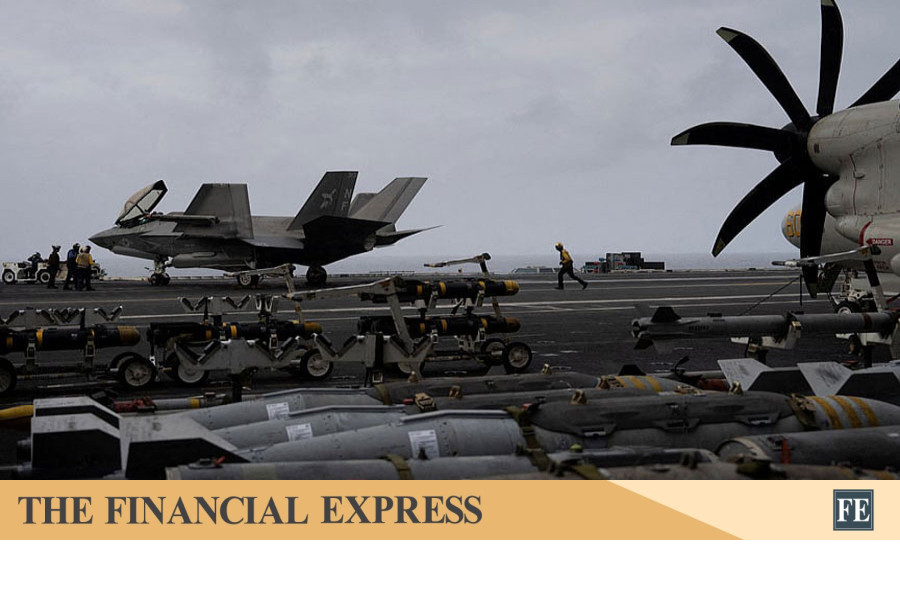
A US Navy sailor runs across the flight deck of the USS George Washington in the Arabian Sea, Sept 11, 2026. The aircraft carrier, capable of carrying more than 5,000 personnel, is enforcing a US naval blockade against Iran and providing cover for commercial vessels transiting the Strait of Hormuz. Source: REUTERS

The six-month-old US war against Iran has cost $38 billion so far and that amount is projected to rise by $3 billion a month, Congress' nonpartisan bookkeeper reported on Tuesday, as the Trump administration searches for ways to end the conflict and reopen the vital Strait of Hormuz.

The war is expected to increase inflation by 0.5 percent in the first three months of 2027, according to the Congressional Budget Office accounting, which totalled expenses through Aug 1.

The mounting costs have strained US munitions stockpiles and driven up energy prices, raising concerns about the country's ability to respond to other potential conflicts and adding pressure on an already stretched federal budget.

The cost was close to the $37.5 billion that Defense Secretary Pete Hegseth reported at a Senate hearing on Jul 21.

The budget office said the majority of the costs stem from the rapid drawdown of munitions, estimating that it could take five years to replenish US stockpiles. Reuters reported in August that the US had used "virtually all" of its long-range precision missiles during the war.

The Department of Defense did not cooperate with congressional financial auditors, CBO reported.

White House spokeswoman Anna Kelly described President Donald Trump's attacks on Iran as "decisive action" to prevent Tehran from harming US personnel or interests. She said in a statement that the US military has "more than enough munitions, ammo, and stockpiles to serve all of the Commander-in-Chief’s strategic goals and beyond.”

Chief Pentagon spokesperson Sean Parnell disputed the report's findings of munitions shortages and said, "We have everything required to strike at the time and place of the president’s choosing."

The cost inquiry was conducted at the request of the top Democrat on the US House of Representatives Budget Committee, Brendan Boyle of Pennsylvania.

“Donald Trump’s disastrous war in Iran has already taken the lives of brave American servicemembers and left others wounded," Boyle said in a statement.

"Beyond that human toll, this nonpartisan CBO report makes clear that the war has also cost American taxpayers tens of billions of dollars and counting, while continuing to drive up costs."

Eighteen US military service members have died in the Iran war.

The report did not include costs of recent strikes on commercial vessels in the Strait of Hormuz and attacks on US military installations in the region. It also did not factor in the borrowing expenses associated with financing the war, which could add tens of billions of dollars to the total cost.

Impact On US Readiness

The CBO accounting found the war could have sprawling consequences for the US defence posture and the domestic economy.

The deficit in critical munitions, including missile interceptors, risks hampering the Pentagon's response in the event of another major conflict, such as potential hostilities involving China and Taiwan, CBO said.

At the July hearing in the Senate, Hegseth pleaded for nearly $90 billion in emergency funding to restock munitions supplies.

“Without these funds, we face critical shortfalls,” Hegseth said.

The Pentagon’s inspector general reported this week that Iran had damaged or destroyed hundreds of buildings on US bases in the West Asia as well as aircraft including fighter jets, refueling planes and drones.

It put the war cost through Jun 19 at $33.4 billion, saying the amount included about $184 million in damages to US diplomatic facilities from Iranian strikes.

Energy shocks caused by attacks in the Strait of Hormuz — the narrow waterway through which roughly 20% of the world's oil traveled before the war — and on energy facilities in neighboring Gulf countries have sharply increased prices for consumers and global producers.

The rising cost of the war also threatens to weigh on deteriorating US fiscal health. The nation's total public debt surpassed $40 trillion in August.

Trump regularly contrasts the Iran war with the US invasions of Iraq and Afghanistan that followed the Sept 11, 2001, attacks.

The eight-year US war in Iraq, which involved more than 100,000 ground troops at its peak, cost $2 trillion, Reuters reported. The two-decade-long US conflict in Afghanistan, which also involved more than 100,000 troops at its most intense,cost $2.3 trillion, according to Brown University's Costs of War project.​
 
Analyze

Analyze Post

Add your ideas here:
Highlight Cite Respond

Iran says struck oil tanker in Strait of Hormuz
Iran said the tanker was targeted and subsequently detained


1789775110326.webp

Iran continues restricting shipping through the strategic Strait of Hormuz. Photo: AFP

Iran’s Revolutionary Guards said Friday they struck an oil tanker in the Strait of Hormuz, according to state news agency Irna, as a British maritime agency also reported an attack.

Iran has maintained its stranglehold on the strategic strait as Washington continues pressing its counterblockade of Iranian ports during the Middle East war.


The Islamic Republic wants to charge ships for passage, attacking vessels it accuses of attempting to circumvent its preferred route.

“The Togo-flagged oil tanker ‘Trend’ had been targeted and detained after a fire broke out on board” late on Thursday, the statement said, calling it an attempted “illegal passage.”

Early on Friday, the United Kingdom Maritime Trade Operations (Ukmto) said a ship was hit by an “unknown projectile,” causing a fire that was extinguished.

The monitoring agency had also reported a “security incident” in Hormuz late on Thursday, without giving details.

It was unclear if the IRGC and Ukmto reports referred to the same incident.​
 
Analyze

Analyze Post

Add your ideas here:
Highlight Cite Respond

Latest Posts

Back
 
G
O
 
H
O
M
E