Home Watch Videos Wars Movies Login

[🇧🇩] Agriculture in Bangladesh

Latest Posts Countries Wars Q&A

[🇧🇩] Agriculture in Bangladesh
242
10K
More threads by Saif

G Bangladesh Defense

Farmers struggle to buy non-urea fertilisers at govt rates
DAE officials blame dishonest dealers for creating an artificial crisis

1766023511463.webp

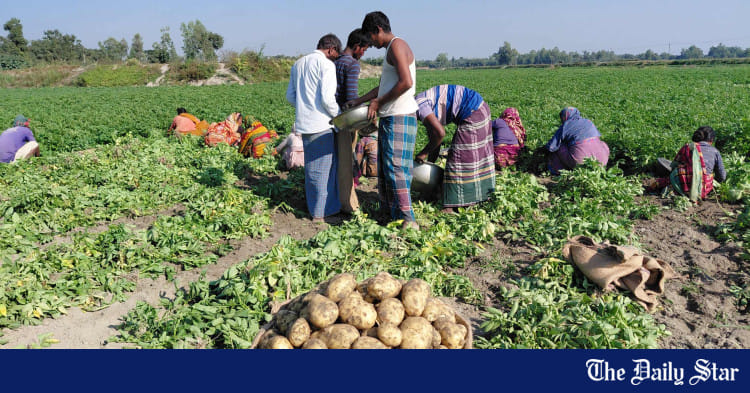
Farmers across the country face fertiliser shortages and inflated prices as dishonest dealers exploit government allocations, leaving winter crops, especially potatoes, undersupplied. The photo was taken in Gaibandha’s Gobindaganj upazila yesterday. Photo: Mostafa Shabuj

From the Aman paddy season to the current winter vegetable cultivation, farmers in many districts have been unable to purchase fertilisers at government-fixed prices.

Farmers and government officials allege that dishonest traders are exploiting an "artificial crisis," particularly for non-urea fertilisers, making extra profits while supplies remain insufficient for winter crops. Potato farmers in northern districts are among the worst affected.

In Bogura, Gaibandha, Joypurhat, Lalmonirhat, Kurigram, Jamalpur, Mymensingh, Thakurgaon, Panchagarh, Dinajpur, Rajshahi, Kushtia, and Patuakhali, farmers reported paying Tk 200-Tk 600 more per 50kg-sack than the government rates for non-urea fertilisers.

Shahidul Islam, a farmer from Baneshwar village in Gaibandha's Gobindaganj upazila, said, "I bought a sack of TSP (Triple Super Phosphate) for Tk 1,800, although the government-fixed price is Tk 1,350. I also paid Tk 1,500 for DAP (Di-ammonium Phosphate) instead of Tk 1,050. Fertiliser is only available if you pay the dealers extra, and even then, they refuse to give purchase receipts."

Helal Mridha from Rajahar village of the upazila added, "Fertilisers are sold at government rates only when officials raid dealerships. Mobile courts fine the dealers, but they recover the cost from us. In reality, the punishment falls on farmers. If dealers were jailed instead of just fined, they would not dare to do this again."

Over the past week, farmers in Patgram, Hatibandha, and Kaliganj upazilas of Lalmonirhat, and Nageshwari, Bhurungamari, and Ulipur upazilas of Kurigram blocked roads demanding fertiliser at government-fixed prices, vandalising four fertiliser shops.

In response, local administration seized around 12,000 sacks of illegally stockpiled fertiliser, and Department of Agricultural Extension (DAE) officials fined five dealers Tk 6 lakh for hoarding.

"We blocked roads demanding fertiliser, but we are still not getting it as needed. I am receiving 60 percent less fertiliser than required," said Sahidar Rahman, 65, from Kaliganj.

Subash Chandra Barman, 60, from Raiganj village, Nageshwari, added, "Dealers keep farmers running in circles for a single sack of fertiliser, secretly selling to retailers at higher prices and supplying only small quantities."

1766023632472.webp


DEALERS DENY OVERPRICING

Abdul Hakim, president of the Lalmonirhat District Fertiliser Dealers Association, said, "Shortages happen because allocations are lower than demand. No dealer sells fertiliser at higher prices, and fertiliser is not sold to anyone other than farmers."

DAE officials described the situation as "artificial," claiming some traders are deliberately creating scarcity to make extra profits.

"There is no real shortage based on government allocation. Mobile courts are already operating against such practices," said Md Saykhul Arifin, deputy director of Lalmonirhat DAE.

AKM Sadikul Islam, deputy director of Joypurhat DAE, said, "Mobile court drives have been conducted across different upazilas this season to stop overpricing and hoarding.

"We fined eight BCIC (Bangladesh Chemical Industries Corporation) and BADC (Bangladesh Agricultural Development Corporation) dealers a total of Tk 25,000 for selling fertiliser at inflated prices and keeping illegal stocks."

Bhabesh Sen, 43, from Thakurgaon Sadar, said, "I had to pay Tk 1,800 for each sack of TSP instead of Tk 1,350, and Tk 1,150 for MOP (Muriate of Potash) instead of Tk 1,000 for my one-acre potato crop."

Arshadul Haque, 35, from Sahapara village in Panchagarh, added, "I could not find TSP at Sakoya Bazar for my Boro seedbed and later had to buy DAP instead."

Sazzad Selim from Rosea village in Panchagarh said, "Each sack of TSP is being sold for Tk 1,900 to Tk 2,000, DAP for Tk 1,400, and MOP for Tk 1,150."

Enamul Haque, a BCIC dealer in Gareya union, Thakurgaon Sadar, denied a shortage, saying, "We are distributing fertilisers to farmers who have been given slips by the agriculture office."

Md Mazedul Islam, deputy director of DAE in Thakurgaon, added, "There is no fertiliser crisis in the markets. Supplies are available."

PATUAKHALI WATERMELON FARMERS FACE SHORTAGE

In Patuakhali, watermelon farmers are struggling at the start of the cultivation season. According to the local DAE office, 26,400 tonnes of fertiliser were needed in December, but only 4,242 tonnes have been supplied.

Masud Fakir, cultivating watermelon on 3.22 acres in Rangabali, said, "I need at least 40 sacks, but could only buy 10, and at higher prices. I paid Tk 1,500 per sack of urea and TSP instead of the government-fixed Tk 1,350."

Trader Kamal Pasha said, "We are not receiving fertiliser as per our demand. Last week, I requested 200 bags but received only 40."

Aminul Islam, deputy director of DAE in Patuakhali, claimed there is no official report of a fertiliser crisis but promised to take necessary steps.

According to the DAE in Kushtia, six upazilas required 5,927 tonnes of TSP, 6,802 tonnes of DAP, and 7,095 tonnes of MOP in December. Only 1,840 tonnes of TSP, 3,432 tonnes of DAP, and 2,331 tonnes of MOP were allocated.

Md Showkat Hossain Bhuiyan, deputy director of DAE, said, "The issue was discussed at a recent meeting with higher authorities. Upazila-level officials raised the matter, and discussions are ongoing on whether additional allocations are needed."

Our correspondents from Lalmonirhat, Jamalpur, Bogura, Rajshahi, Mymensingh, Thakurgaon, Kushtia, and Patuakhali contributed to this report.​
 
Analyze

Analyze Post

Add your ideas here:
Highlight Cite Respond

Farmers struggle to buy non-urea fertilisers at govt rates
DAE officials blame dishonest dealers for creating an artificial crisis

View attachment 23010
Farmers across the country face fertiliser shortages and inflated prices as dishonest dealers exploit government allocations, leaving winter crops, especially potatoes, undersupplied. The photo was taken in Gaibandha’s Gobindaganj upazila yesterday. Photo: Mostafa Shabuj

From the Aman paddy season to the current winter vegetable cultivation, farmers in many districts have been unable to purchase fertilisers at government-fixed prices.

Farmers and government officials allege that dishonest traders are exploiting an "artificial crisis," particularly for non-urea fertilisers, making extra profits while supplies remain insufficient for winter crops. Potato farmers in northern districts are among the worst affected.

In Bogura, Gaibandha, Joypurhat, Lalmonirhat, Kurigram, Jamalpur, Mymensingh, Thakurgaon, Panchagarh, Dinajpur, Rajshahi, Kushtia, and Patuakhali, farmers reported paying Tk 200-Tk 600 more per 50kg-sack than the government rates for non-urea fertilisers.

Shahidul Islam, a farmer from Baneshwar village in Gaibandha's Gobindaganj upazila, said, "I bought a sack of TSP (Triple Super Phosphate) for Tk 1,800, although the government-fixed price is Tk 1,350. I also paid Tk 1,500 for DAP (Di-ammonium Phosphate) instead of Tk 1,050. Fertiliser is only available if you pay the dealers extra, and even then, they refuse to give purchase receipts."

Helal Mridha from Rajahar village of the upazila added, "Fertilisers are sold at government rates only when officials raid dealerships. Mobile courts fine the dealers, but they recover the cost from us. In reality, the punishment falls on farmers. If dealers were jailed instead of just fined, they would not dare to do this again."

Over the past week, farmers in Patgram, Hatibandha, and Kaliganj upazilas of Lalmonirhat, and Nageshwari, Bhurungamari, and Ulipur upazilas of Kurigram blocked roads demanding fertiliser at government-fixed prices, vandalising four fertiliser shops.

In response, local administration seized around 12,000 sacks of illegally stockpiled fertiliser, and Department of Agricultural Extension (DAE) officials fined five dealers Tk 6 lakh for hoarding.

"We blocked roads demanding fertiliser, but we are still not getting it as needed. I am receiving 60 percent less fertiliser than required," said Sahidar Rahman, 65, from Kaliganj.

Subash Chandra Barman, 60, from Raiganj village, Nageshwari, added, "Dealers keep farmers running in circles for a single sack of fertiliser, secretly selling to retailers at higher prices and supplying only small quantities."

View attachment 23011

DEALERS DENY OVERPRICING

Abdul Hakim, president of the Lalmonirhat District Fertiliser Dealers Association, said, "Shortages happen because allocations are lower than demand. No dealer sells fertiliser at higher prices, and fertiliser is not sold to anyone other than farmers."

DAE officials described the situation as "artificial," claiming some traders are deliberately creating scarcity to make extra profits.

"There is no real shortage based on government allocation. Mobile courts are already operating against such practices," said Md Saykhul Arifin, deputy director of Lalmonirhat DAE.

AKM Sadikul Islam, deputy director of Joypurhat DAE, said, "Mobile court drives have been conducted across different upazilas this season to stop overpricing and hoarding.

"We fined eight BCIC (Bangladesh Chemical Industries Corporation) and BADC (Bangladesh Agricultural Development Corporation) dealers a total of Tk 25,000 for selling fertiliser at inflated prices and keeping illegal stocks."

Bhabesh Sen, 43, from Thakurgaon Sadar, said, "I had to pay Tk 1,800 for each sack of TSP instead of Tk 1,350, and Tk 1,150 for MOP (Muriate of Potash) instead of Tk 1,000 for my one-acre potato crop."

Arshadul Haque, 35, from Sahapara village in Panchagarh, added, "I could not find TSP at Sakoya Bazar for my Boro seedbed and later had to buy DAP instead."

Sazzad Selim from Rosea village in Panchagarh said, "Each sack of TSP is being sold for Tk 1,900 to Tk 2,000, DAP for Tk 1,400, and MOP for Tk 1,150."

Enamul Haque, a BCIC dealer in Gareya union, Thakurgaon Sadar, denied a shortage, saying, "We are distributing fertilisers to farmers who have been given slips by the agriculture office."

Md Mazedul Islam, deputy director of DAE in Thakurgaon, added, "There is no fertiliser crisis in the markets. Supplies are available."

PATUAKHALI WATERMELON FARMERS FACE SHORTAGE

In Patuakhali, watermelon farmers are struggling at the start of the cultivation season. According to the local DAE office, 26,400 tonnes of fertiliser were needed in December, but only 4,242 tonnes have been supplied.

Masud Fakir, cultivating watermelon on 3.22 acres in Rangabali, said, "I need at least 40 sacks, but could only buy 10, and at higher prices. I paid Tk 1,500 per sack of urea and TSP instead of the government-fixed Tk 1,350."

Trader Kamal Pasha said, "We are not receiving fertiliser as per our demand. Last week, I requested 200 bags but received only 40."

Aminul Islam, deputy director of DAE in Patuakhali, claimed there is no official report of a fertiliser crisis but promised to take necessary steps.

According to the DAE in Kushtia, six upazilas required 5,927 tonnes of TSP, 6,802 tonnes of DAP, and 7,095 tonnes of MOP in December. Only 1,840 tonnes of TSP, 3,432 tonnes of DAP, and 2,331 tonnes of MOP were allocated.

Md Showkat Hossain Bhuiyan, deputy director of DAE, said, "The issue was discussed at a recent meeting with higher authorities. Upazila-level officials raised the matter, and discussions are ongoing on whether additional allocations are needed."

Our correspondents from Lalmonirhat, Jamalpur, Bogura, Rajshahi, Mymensingh, Thakurgaon, Kushtia, and Patuakhali contributed to this report.​

@Saif,

Go for organic farming. BD farmers will save a lot of money, will get handsome income from dairy product and dependance of Organic farming will reduce. In India, there are models where one farmer does farming in 30 acre with organic fertilizer received from one cow only. Desi seeds, organic farming. It will require loss less water for farming, quality of food will improve like anything, health of people will improve, very low cost of producing organic products. However, BD will have to stop seeing pet animals as food to do that. Unless you do that, you can not do organic farming.
 
Analyze

Analyze Post

Add your ideas here:
Highlight Cite Respond
  • Like (+1)
Reactions: Saif
@Saif,

Go for organic farming. BD farmers will save a lot of money, will get handsome income from dairy product and dependance of Organic farming will reduce. In India, there are models where one farmer does farming in 30 acre with organic fertilizer received from one cow only. Desi seeds, organic farming. It will require loss less water for farming, quality of food will improve like anything, health of people will improve, very low cost of producing organic products. However, BD will have to stop seeing pet animals as food to do that. Unless you do that, you can not do organic farming.
We cannot increase our agricultural output due to paucity of land. We can gain some advantage by using modern technology but the agricultural output will remain less than the demand for 175 million people. We need to reclaim land from Bay of Bengal to augment agricultural output and to save the environment from pollution.
 
Analyze

Analyze Post

Add your ideas here:
Highlight Cite Respond
 
Analyze

Analyze Post

Add your ideas here:
Highlight Cite Respond
We cannot increase our agricultural output due to paucity of land. We can gain some advantage by using modern technology but the agricultural output will remain less than the demand for 175 million people. We need to reclaim land from Bay of Bengal to augment agricultural output and to save the environment from pollution.

That is true. In dry villages of Rajasthan, farmers earning millions by doing Green house, poly house, Hydroponics, vertical farming etc. Go for it. It will take some time to master the technology but once farmers gets a grip over the same, there will be the raining of money and lots of organic food to eat.
 
Analyze

Analyze Post

Add your ideas here:
Highlight Cite Respond
  • Like (+1)
Reactions: Saif

Farmers of early varieties of potato hit by old stock glut
This year, the price gap between new and old potatoes has narrowed significantly

1766280163604.webp


Farmers who cultivated early varieties of potatoes are once again incurring losses as prices of newly harvested tubers remain unusually low due to an oversupply of older stock in the market.

Fresh potatoes are traditionally sold at a premium for their aroma and taste, particularly when supplies of new harvests are limited.

This year, however, the price gap between new and old potatoes has narrowed significantly, undermining farmers' expectations.

Growers say they had a bumper harvest last winter and had to accept low rates, which pushed many close to bankruptcy. Now, rising production costs have made the prevailing prices of early varieties unsustainable.

According to potato farmers, production costs stand at around Tk 30 per kilogramme (kg) this season, while wholesale prices hover between Tk 28 and Tk 30.

In Dhaka's retail markets, new potatoes are selling for around Tk 35 per kg, with traders purchasing them from farmers at below Tk 30.

Smaller-sized new potatoes are fetching even lower prices, between Tk 25 and Tk 30 per kg, close to the Tk 20-25 per kg price of old potatoes.

"The market is still flooded with old potatoes, which is keeping prices of new ones down," said Arif Hossain, a retail trader in Mirpur. He said he bought fresh potatoes at Tk 28 per kg and is selling them at Tk 35.

According to data from the state-run Trading Corporation of Bangladesh, both new and old potatoes were selling at Tk 60-70 per kg in mid-December last year.

Early potato varieties are planted in early October and harvested within 60-65 days, reaching markets from early December. This season, however, farmers say adverse weather and high input costs have compounded their difficulties.

Nabin Chandra Sarkar, a farmer from Rangpur Sadar upazila, said continuous rainfall during planting made it difficult to protect crops. "Despite all the effort, the price is far below expectations. Even early potatoes are now being sold at a loss."

Dilbar Rahman, a farmer from the Teesta riverine area of Lalmonirhat, said he spent Tk 6.20 lakh cultivating early potatoes on 10 bighas of land but earned only Tk 5.70 lakh from sales. "Last year, I made a profit of around Tk 200,000 on the same land."

Farmers from Kurigram district reported similar losses.

Mostofa Azad Chowdhury Babu, president of the Bangladesh Cold Storage Association, said around 500,000 tonnes of potatoes remain in cold storage, although facilities are usually cleared by December 10. "The faster the stock is cleared, the lower the losses."

Bangladesh produced about 1.15 crore tonnes of potatoes last winter, far exceeding domestic demand. The association estimates annual demand at 80-90 lakh tonnes, including household consumption, industrial use, and seed.

With supply outpacing demand, farmers were forced to sell potatoes below production costs.

Sirajul Islam, additional director of the Department of Agricultural Extension in Rangpur, said farmers are frustrated despite good yields, as market prices are too low to cover costs.

Mohammad Jahangir Alam, professor of agribusiness and marketing at Bangladesh Agricultural University, said declining purchasing power amid rising poverty has also contributed to weaker demand.​
 
Analyze

Analyze Post

Add your ideas here:
Highlight Cite Respond

Wheat cultivation target set at 7,275 hectares in Dinajpur
Bangladesh Sangbad Sangstha . Dinajpur 23 December, 2025, 23:23

The Department of Agricultural Extension (DAE) has set a target to cultivate wheat on 7,275 hectares of land in the district during the current season, aiming to boost production and meet the country’s growing demand.

Deputy director of DAE Md. Afzal Hossain said the cultivation target covers all 13 upazilas of the district, with a production goal of 3.75 metric tons per hectare. If the target is achieved, total wheat production in the district is expected to reach around 25,650 metric tons.

Md. Afzal Hossain said that the weather conditions this season are favorable for wheat cultivation. He expressed optimism that, barring any natural disasters, production may exceed the set target.

Farmers began cultivating early wheat varieties such as BARI-25, BARI-26 and BARI-27 from November 15, and the crops have already sprouted. Wheat varieties including BARI-27, 28, 30, 31 and 32 will continue to be sown until December 31.

Following the harvest of Aman paddy, farmers have been busy preparing land using organic manure and cow dung to increase yields. High-yielding wheat seeds, particularly BARI-30, 31 and 32, have been supplied by the Department of Agriculture, with the expected yield set at 3.75 tons per hectare.

To support cultivation, irrigation facilities using electric-powered machines have been ensured. Drainage systems have also been installed in advance to protect crops from potential damage caused by storms or heavy rainfall.

The deputy director added that the initiative is part of a broader effort to reduce dependence on wheat imports. The Wheat Research Institute is supplying improved high-yielding seed varieties, while agricultural field workers are providing continuous guidance to farmers across the district.

In recent years, wheat cultivation has expanded beyond highlands to include medium lands and river-side char areas. According to agriculture department sources, wheat was cultivated on 6,210 hectares in Dinajpur last year, producing 23,287 metric tons at an average yield of 3.75 tons per hectare.​
 
Analyze

Analyze Post

Add your ideas here:
Highlight Cite Respond

Potato cultivation exceeds target in Rangpur agricultural region
Bangladesh Sangbad Sangstha . Rangpur 27 December, 2025, 01:22

1766799540133.webp

Potato farmers in the Rangpur agricultural region have already exceeded the potato cultivation target by one per cent as sowing continues this season with the expectation of an all-time record yield. | BSS Photo

Potato farmers in the Rangpur agricultural region have already exceeded the potato cultivation target by one per cent as sowing continues this season with the expectation of an all-time record yield.

Meanwhile, early varieties of potato have started to appear in local markets in Rangpur, Gaibandha, Kurigram, Lalmonirhat and Nilphamari districts of the region.

Officials of the Department of Agricultural Extension said that an all-time record target of producing 2,519,008 tonnes of potatoes from 1,01,700 hectares of land has been fixed for the region during the current Rabi season.

‘Farmers have already brought 105,600 hectares of land, higher by one per cent against the fixed farming target, under potato cultivation,’ additional director of the DAE’s Rangpur region, agriculturist Md Shirajul Islam, told BSS.

Sowing of potato seeds will continue till January next both in the mainland and char areas of all five districts in the region.

Meanwhile, farmers are continuing to harvest early varieties of potatoes cultivated after harvesting short-duration Aman rice on the same land since late October and early November last.

‘Farmers have already harvested early varieties of potatoes from 6,367 hectares of land and produced 89,318 tonnes of the tuber crop at an excellent average yield of 14.03 tonnes per hectare,’ he said.

Farmers are showing more interest in potato cultivation both in the mainland and char areas after receiving special incentives and assistance from the interim government and due to repeated bumper outputs every year.

The DAE, Bangladesh Agricultural Development Corporation, Bangladesh Agricultural Research Institute and related agri-organizations are providing quality potato seeds and assistance to farmers to make the potato farming programme a success.

‘Officials of the DAE and other related organizations are providing the latest technologies to farmers for proper nursing of potato fields to ensure better yields even in the face of the sweeping cold wave across the region this season,’ Shirajul added.

Deputy director of the DAE’s Burirhat Horticulture Centre in Rangpur, agriculturist Dr Md Abu Sayem, said that farmers were cultivating potatoes with greater enthusiasm after receiving government assistance.

‘Officials of the DAE and other agriculture-related organizations are providing the latest technologies to farmers for proper sowing of potato seeds, agronomic management and nursing of tender potato plants to achieve maximum yield,’ he said.

Farmers Nur Mohammad, Bulbul Hossain, Jahangir Alam and Anwar Hossain of different villages in Rangpur said that they were earning excellent profits from harvesting early varieties of potatoes cultivated after harvesting short-duration Aman rice.

‘After harvesting early varieties of potatoes, we are preparing for Boro rice cultivation on the same land,’ said farmer Isahaque Ali of village Kathihara in Rangpur Sadar.

Former president of Rangpur Chamber, Mustafa Sohrab Chowdhury Titu, emphasised the need to establish more agro-based industries for storage and export of potato products to ensure fair prices and encourage farmers to expand potato cultivation.​
 
Analyze

Analyze Post

Add your ideas here:
Highlight Cite Respond

Members Online

Latest Posts

Back
 
G
O
 
H
O
M
E