[🇧🇩] Agriculture in Bangladesh

Post a Reply — Share your thoughts or reply to this thread...
Reply
Quick Reply ✓ Posted!
[🇧🇩] Agriculture in Bangladesh
284
17K
More threads by Saif

G Bangladesh Defense

Farmers struggle to buy non-urea fertilisers at govt rates
DAE officials blame dishonest dealers for creating an artificial crisis

View attachment 23010
Farmers across the country face fertiliser shortages and inflated prices as dishonest dealers exploit government allocations, leaving winter crops, especially potatoes, undersupplied. The photo was taken in Gaibandha’s Gobindaganj upazila yesterday. Photo: Mostafa Shabuj

From the Aman paddy season to the current winter vegetable cultivation, farmers in many districts have been unable to purchase fertilisers at government-fixed prices.

Farmers and government officials allege that dishonest traders are exploiting an "artificial crisis," particularly for non-urea fertilisers, making extra profits while supplies remain insufficient for winter crops. Potato farmers in northern districts are among the worst affected.

In Bogura, Gaibandha, Joypurhat, Lalmonirhat, Kurigram, Jamalpur, Mymensingh, Thakurgaon, Panchagarh, Dinajpur, Rajshahi, Kushtia, and Patuakhali, farmers reported paying Tk 200-Tk 600 more per 50kg-sack than the government rates for non-urea fertilisers.

Shahidul Islam, a farmer from Baneshwar village in Gaibandha's Gobindaganj upazila, said, "I bought a sack of TSP (Triple Super Phosphate) for Tk 1,800, although the government-fixed price is Tk 1,350. I also paid Tk 1,500 for DAP (Di-ammonium Phosphate) instead of Tk 1,050. Fertiliser is only available if you pay the dealers extra, and even then, they refuse to give purchase receipts."

Helal Mridha from Rajahar village of the upazila added, "Fertilisers are sold at government rates only when officials raid dealerships. Mobile courts fine the dealers, but they recover the cost from us. In reality, the punishment falls on farmers. If dealers were jailed instead of just fined, they would not dare to do this again."

Over the past week, farmers in Patgram, Hatibandha, and Kaliganj upazilas of Lalmonirhat, and Nageshwari, Bhurungamari, and Ulipur upazilas of Kurigram blocked roads demanding fertiliser at government-fixed prices, vandalising four fertiliser shops.

In response, local administration seized around 12,000 sacks of illegally stockpiled fertiliser, and Department of Agricultural Extension (DAE) officials fined five dealers Tk 6 lakh for hoarding.

"We blocked roads demanding fertiliser, but we are still not getting it as needed. I am receiving 60 percent less fertiliser than required," said Sahidar Rahman, 65, from Kaliganj.

Subash Chandra Barman, 60, from Raiganj village, Nageshwari, added, "Dealers keep farmers running in circles for a single sack of fertiliser, secretly selling to retailers at higher prices and supplying only small quantities."

View attachment 23011

DEALERS DENY OVERPRICING

Abdul Hakim, president of the Lalmonirhat District Fertiliser Dealers Association, said, "Shortages happen because allocations are lower than demand. No dealer sells fertiliser at higher prices, and fertiliser is not sold to anyone other than farmers."

DAE officials described the situation as "artificial," claiming some traders are deliberately creating scarcity to make extra profits.

"There is no real shortage based on government allocation. Mobile courts are already operating against such practices," said Md Saykhul Arifin, deputy director of Lalmonirhat DAE.

AKM Sadikul Islam, deputy director of Joypurhat DAE, said, "Mobile court drives have been conducted across different upazilas this season to stop overpricing and hoarding.

"We fined eight BCIC (Bangladesh Chemical Industries Corporation) and BADC (Bangladesh Agricultural Development Corporation) dealers a total of Tk 25,000 for selling fertiliser at inflated prices and keeping illegal stocks."

Bhabesh Sen, 43, from Thakurgaon Sadar, said, "I had to pay Tk 1,800 for each sack of TSP instead of Tk 1,350, and Tk 1,150 for MOP (Muriate of Potash) instead of Tk 1,000 for my one-acre potato crop."

Arshadul Haque, 35, from Sahapara village in Panchagarh, added, "I could not find TSP at Sakoya Bazar for my Boro seedbed and later had to buy DAP instead."

Sazzad Selim from Rosea village in Panchagarh said, "Each sack of TSP is being sold for Tk 1,900 to Tk 2,000, DAP for Tk 1,400, and MOP for Tk 1,150."

Enamul Haque, a BCIC dealer in Gareya union, Thakurgaon Sadar, denied a shortage, saying, "We are distributing fertilisers to farmers who have been given slips by the agriculture office."

Md Mazedul Islam, deputy director of DAE in Thakurgaon, added, "There is no fertiliser crisis in the markets. Supplies are available."

PATUAKHALI WATERMELON FARMERS FACE SHORTAGE

In Patuakhali, watermelon farmers are struggling at the start of the cultivation season. According to the local DAE office, 26,400 tonnes of fertiliser were needed in December, but only 4,242 tonnes have been supplied.

Masud Fakir, cultivating watermelon on 3.22 acres in Rangabali, said, "I need at least 40 sacks, but could only buy 10, and at higher prices. I paid Tk 1,500 per sack of urea and TSP instead of the government-fixed Tk 1,350."

Trader Kamal Pasha said, "We are not receiving fertiliser as per our demand. Last week, I requested 200 bags but received only 40."

Aminul Islam, deputy director of DAE in Patuakhali, claimed there is no official report of a fertiliser crisis but promised to take necessary steps.

According to the DAE in Kushtia, six upazilas required 5,927 tonnes of TSP, 6,802 tonnes of DAP, and 7,095 tonnes of MOP in December. Only 1,840 tonnes of TSP, 3,432 tonnes of DAP, and 2,331 tonnes of MOP were allocated.

Md Showkat Hossain Bhuiyan, deputy director of DAE, said, "The issue was discussed at a recent meeting with higher authorities. Upazila-level officials raised the matter, and discussions are ongoing on whether additional allocations are needed."

Our correspondents from Lalmonirhat, Jamalpur, Bogura, Rajshahi, Mymensingh, Thakurgaon, Kushtia, and Patuakhali contributed to this report.​

@Saif,

Go for organic farming. BD farmers will save a lot of money, will get handsome income from dairy product and dependance of Organic farming will reduce. In India, there are models where one farmer does farming in 30 acre with organic fertilizer received from one cow only. Desi seeds, organic farming. It will require loss less water for farming, quality of food will improve like anything, health of people will improve, very low cost of producing organic products. However, BD will have to stop seeing pet animals as food to do that. Unless you do that, you can not do organic farming.
We cannot increase our agricultural output due to paucity of land. We can gain some advantage by using modern technology but the agricultural output will remain less than the demand for 175 million people. We need to reclaim land from Bay of Bengal to augment agricultural output and to save the environment from pollution.
 
We cannot increase our agricultural output due to paucity of land. We can gain some advantage by using modern technology but the agricultural output will remain less than the demand for 175 million people. We need to reclaim land from Bay of Bengal to augment agricultural output and to save the environment from pollution.

That is true. In dry villages of Rajasthan, farmers earning millions by doing Green house, poly house, Hydroponics, vertical farming etc. Go for it. It will take some time to master the technology but once farmers gets a grip over the same, there will be the raining of money and lots of organic food to eat.
 

Farmers of early varieties of potato hit by old stock glut
This year, the price gap between new and old potatoes has narrowed significantly

1766280163604.webp


Farmers who cultivated early varieties of potatoes are once again incurring losses as prices of newly harvested tubers remain unusually low due to an oversupply of older stock in the market.

Fresh potatoes are traditionally sold at a premium for their aroma and taste, particularly when supplies of new harvests are limited.

This year, however, the price gap between new and old potatoes has narrowed significantly, undermining farmers' expectations.

Growers say they had a bumper harvest last winter and had to accept low rates, which pushed many close to bankruptcy. Now, rising production costs have made the prevailing prices of early varieties unsustainable.

According to potato farmers, production costs stand at around Tk 30 per kilogramme (kg) this season, while wholesale prices hover between Tk 28 and Tk 30.

In Dhaka's retail markets, new potatoes are selling for around Tk 35 per kg, with traders purchasing them from farmers at below Tk 30.

Smaller-sized new potatoes are fetching even lower prices, between Tk 25 and Tk 30 per kg, close to the Tk 20-25 per kg price of old potatoes.

"The market is still flooded with old potatoes, which is keeping prices of new ones down," said Arif Hossain, a retail trader in Mirpur. He said he bought fresh potatoes at Tk 28 per kg and is selling them at Tk 35.

According to data from the state-run Trading Corporation of Bangladesh, both new and old potatoes were selling at Tk 60-70 per kg in mid-December last year.

Early potato varieties are planted in early October and harvested within 60-65 days, reaching markets from early December. This season, however, farmers say adverse weather and high input costs have compounded their difficulties.

Nabin Chandra Sarkar, a farmer from Rangpur Sadar upazila, said continuous rainfall during planting made it difficult to protect crops. "Despite all the effort, the price is far below expectations. Even early potatoes are now being sold at a loss."

Dilbar Rahman, a farmer from the Teesta riverine area of Lalmonirhat, said he spent Tk 6.20 lakh cultivating early potatoes on 10 bighas of land but earned only Tk 5.70 lakh from sales. "Last year, I made a profit of around Tk 200,000 on the same land."

Farmers from Kurigram district reported similar losses.

Mostofa Azad Chowdhury Babu, president of the Bangladesh Cold Storage Association, said around 500,000 tonnes of potatoes remain in cold storage, although facilities are usually cleared by December 10. "The faster the stock is cleared, the lower the losses."

Bangladesh produced about 1.15 crore tonnes of potatoes last winter, far exceeding domestic demand. The association estimates annual demand at 80-90 lakh tonnes, including household consumption, industrial use, and seed.

With supply outpacing demand, farmers were forced to sell potatoes below production costs.

Sirajul Islam, additional director of the Department of Agricultural Extension in Rangpur, said farmers are frustrated despite good yields, as market prices are too low to cover costs.

Mohammad Jahangir Alam, professor of agribusiness and marketing at Bangladesh Agricultural University, said declining purchasing power amid rising poverty has also contributed to weaker demand.​
 

Wheat cultivation target set at 7,275 hectares in Dinajpur
Bangladesh Sangbad Sangstha . Dinajpur 23 December, 2025, 23:23

The Department of Agricultural Extension (DAE) has set a target to cultivate wheat on 7,275 hectares of land in the district during the current season, aiming to boost production and meet the country’s growing demand.

Deputy director of DAE Md. Afzal Hossain said the cultivation target covers all 13 upazilas of the district, with a production goal of 3.75 metric tons per hectare. If the target is achieved, total wheat production in the district is expected to reach around 25,650 metric tons.

Md. Afzal Hossain said that the weather conditions this season are favorable for wheat cultivation. He expressed optimism that, barring any natural disasters, production may exceed the set target.

Farmers began cultivating early wheat varieties such as BARI-25, BARI-26 and BARI-27 from November 15, and the crops have already sprouted. Wheat varieties including BARI-27, 28, 30, 31 and 32 will continue to be sown until December 31.

Following the harvest of Aman paddy, farmers have been busy preparing land using organic manure and cow dung to increase yields. High-yielding wheat seeds, particularly BARI-30, 31 and 32, have been supplied by the Department of Agriculture, with the expected yield set at 3.75 tons per hectare.

To support cultivation, irrigation facilities using electric-powered machines have been ensured. Drainage systems have also been installed in advance to protect crops from potential damage caused by storms or heavy rainfall.

The deputy director added that the initiative is part of a broader effort to reduce dependence on wheat imports. The Wheat Research Institute is supplying improved high-yielding seed varieties, while agricultural field workers are providing continuous guidance to farmers across the district.

In recent years, wheat cultivation has expanded beyond highlands to include medium lands and river-side char areas. According to agriculture department sources, wheat was cultivated on 6,210 hectares in Dinajpur last year, producing 23,287 metric tons at an average yield of 3.75 tons per hectare.​
 

Potato cultivation exceeds target in Rangpur agricultural region
Bangladesh Sangbad Sangstha . Rangpur 27 December, 2025, 01:22

1766799540133.webp

Potato farmers in the Rangpur agricultural region have already exceeded the potato cultivation target by one per cent as sowing continues this season with the expectation of an all-time record yield. | BSS Photo

Potato farmers in the Rangpur agricultural region have already exceeded the potato cultivation target by one per cent as sowing continues this season with the expectation of an all-time record yield.

Meanwhile, early varieties of potato have started to appear in local markets in Rangpur, Gaibandha, Kurigram, Lalmonirhat and Nilphamari districts of the region.

Officials of the Department of Agricultural Extension said that an all-time record target of producing 2,519,008 tonnes of potatoes from 1,01,700 hectares of land has been fixed for the region during the current Rabi season.

‘Farmers have already brought 105,600 hectares of land, higher by one per cent against the fixed farming target, under potato cultivation,’ additional director of the DAE’s Rangpur region, agriculturist Md Shirajul Islam, told BSS.

Sowing of potato seeds will continue till January next both in the mainland and char areas of all five districts in the region.

Meanwhile, farmers are continuing to harvest early varieties of potatoes cultivated after harvesting short-duration Aman rice on the same land since late October and early November last.

‘Farmers have already harvested early varieties of potatoes from 6,367 hectares of land and produced 89,318 tonnes of the tuber crop at an excellent average yield of 14.03 tonnes per hectare,’ he said.

Farmers are showing more interest in potato cultivation both in the mainland and char areas after receiving special incentives and assistance from the interim government and due to repeated bumper outputs every year.

The DAE, Bangladesh Agricultural Development Corporation, Bangladesh Agricultural Research Institute and related agri-organizations are providing quality potato seeds and assistance to farmers to make the potato farming programme a success.

‘Officials of the DAE and other related organizations are providing the latest technologies to farmers for proper nursing of potato fields to ensure better yields even in the face of the sweeping cold wave across the region this season,’ Shirajul added.

Deputy director of the DAE’s Burirhat Horticulture Centre in Rangpur, agriculturist Dr Md Abu Sayem, said that farmers were cultivating potatoes with greater enthusiasm after receiving government assistance.

‘Officials of the DAE and other agriculture-related organizations are providing the latest technologies to farmers for proper sowing of potato seeds, agronomic management and nursing of tender potato plants to achieve maximum yield,’ he said.

Farmers Nur Mohammad, Bulbul Hossain, Jahangir Alam and Anwar Hossain of different villages in Rangpur said that they were earning excellent profits from harvesting early varieties of potatoes cultivated after harvesting short-duration Aman rice.

‘After harvesting early varieties of potatoes, we are preparing for Boro rice cultivation on the same land,’ said farmer Isahaque Ali of village Kathihara in Rangpur Sadar.

Former president of Rangpur Chamber, Mustafa Sohrab Chowdhury Titu, emphasised the need to establish more agro-based industries for storage and export of potato products to ensure fair prices and encourage farmers to expand potato cultivation.​
 
Potato Paradox: Just another curry on the rice plate? This will not solve the price problem

1766884166028.webp


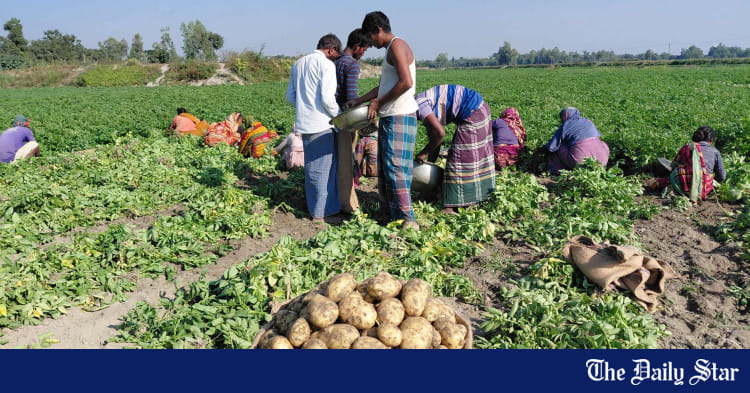
Punishing retail prices during low output and throwaway rates during bumper harvests have become a familiar cycle for potato farmers. The swings are recurring and costly, leaving as many as half a crore growers exposed to debt in good years and public anger in bad ones.

Yet agri experts and supply chain players say the problem has little to do with farmers, or even with production. Instead, it reflects how potatoes are treated in policy and planning.

Unlike many other countries, Bangladesh largely views the crop as just another vegetable eaten with rice, not as a basic industrial raw material.

That distinction matters. When production overshoots domestic demand, prices collapse. Farmers absorb the losses, while the economy misses out on value addition that could stabilise incomes and absorb surplus output.

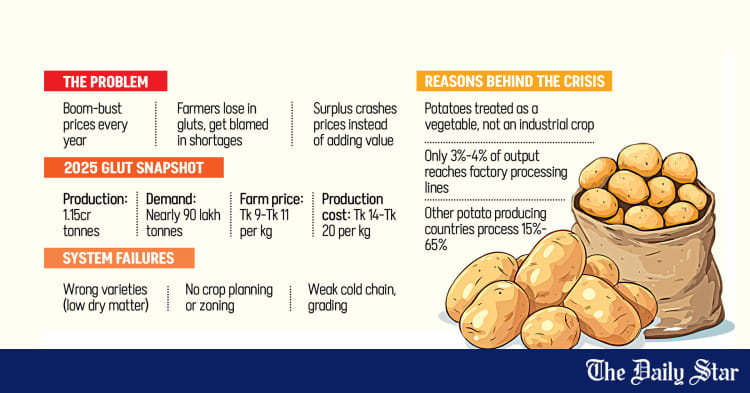
Bangladesh is the world's seventh-largest potato producer. Still, it remains far behind global peers in industrial use of the tuber.

In China, about 15 percent of potato output goes into industrial processing. In the Netherlands, Germany, France and the United States, the share ranges from 60 percent to 65 percent. Russia and Ukraine process 20 percent to 30 percent, while neighbouring India, with similar food habits, uses 5 percent to 7 percent.

Bangladesh, by contrast, processes only 3 percent to 4 percent of its total output, according to industry insiders.

The difference is decisive. In countries where potatoes feed factories, surplus strengthens supply chains. In Bangladesh, surplus simply crashes prices.

After rice, potatoes are the second most produced crop in Bangladesh and a pillar of food security. Yet more than a quarter of output is lost after harvest, according to the Food and Agriculture Organization, which points to weak storage, handling and processing capacity.

WRONG VARIETIES, WEAK PLANNING

Kamruzzaman Kamal, marketing director of Pran-RFL Group, the parent of the local agro processing giant Pran, said industrial processing is limited because most locally grown potatoes are table varieties, not processing-grade crops.

"These potatoes have high moisture and sugar content, which makes them unsuitable for products like French fries. They lose colour and become soft after frying," said Kamal.

Globally, potatoes used for fries, chips and flakes require dry matter of around 22.5 percent. But locally grown potatoes usually contain only 16 percent to 19 percent dry matter, according to scientists.

While potatoes are locally used at home to make chips, and in factories to produce crackers, biscuits and chanachur, the backward linkage industry for flakes and starch is still underdeveloped. Only one or two such factories are currently in production.

Kamal said farmers are not encouraged to grow processing varieties because crop planning is mostly individual-driven rather than coordinated. Many existing varieties are disease-prone, poorly adapted to climate stress and quick to spoil.

Inadequate storage, no grading and sorting at farm level, insufficient cold-chain infrastructure and limited warehousing have further constrained both industrial use and exports, added the Pran-RFL marketing director.

Khurshid Ahmad Farhad, general manager for international business and corporate affairs at Bombay Sweets and Company Limited, a popular food processing brand, said the absence of integrated crop planning and unpredictable weather has kept industrial processing from reaching scale.

Factories producing flakes, slices, chips and biscuits need potatoes of specific size and quality. Bangladesh does not produce enough of these at consistent volumes, he said. Even when quality potatoes are available, production costs are often far higher than international benchmarks, making local products uncompetitive.

"In recent times, costs have risen so sharply that a Dubai-based trader told me they could supply potato flakes at a lower price than we can," Farhad said.

Globally, the largest potato-based industrial products include mashed potatoes and French fries. In Bangladesh, suitable varieties have yet to be developed at a commercial scale, leaving much of the segment untapped.

Although government agencies hold relevant crop data, it is neither centrally coordinated nor used for forecasting, Farhad said. As a result, annual output swings widely between about 80 lakh tonnes and nearly 90 lakh tonnes, with no early warning for the industry.

"This uncertainty is the biggest obstacle. Planning depends on assured availability and consistent quality of raw materials," he said.

THE GLUT, THEN THE CRASH


Strong prices in the 2024 season encouraged farmers to expand potato acreage massively this year in the hope of better returns. Instead, excessive output triggered a severe glut and eventual price fall.

According to the Bangladesh Bureau of Statistics, potato production reached a record 1.15 crore tonnes last season, far above annual domestic demand of around 90 lakh tonnes.

Cultivated area rose 8 percent year-on-year to 4.92 lakh hectares in fiscal year 2024-25, while output increased 9 percent from 1.06 crore tonnes the previous year.

The oversupply sent field-level prices tumbling to Tk 9 to Tk 11 per kg, well below the estimated average production cost of Tk 14. In northern regions, costs were higher, at around Tk 20 per kg, according to the Department of Agricultural Extension (DAE).

For farmers, the result was debt rather than profit. For the economy, it was another missed chance to channel surplus into value-added uses.

'TYPICAL COLD STORAGE ONLY DELAYS LOSSES'

Bangladesh has expanded cold storage capacity to about 35-40 lakh tonnes. Processing capacity, however, is remarkably low.

Md Mohsin Ali, head of supply chain at Quasem Industries Limited, which produces Sun Chips, said processing capacity stands at just 70,000-80,000 tonnes.

The shortage of modern cold storage designed for processing-grade potatoes is one of the sector's biggest constraints, he said. "Therefore, typical cold storage facilities currently delay losses. It does not create value," he said. "Without factories that can absorb surplus, price crashes will continue."

In many countries, he said, potatoes are a staple food and a major industrial input. In Bangladesh, those consumption patterns and industrial linkages have yet to emerge.

According to Ali, weak policy support, lack of dedicated processing policies and limited investment in research and development are major barriers.

DEMAND EXISTS, QUALITY DOES NOT

Apart from the unavailability of commercial-grade potatoes, the shortage of premium-grade crops is visible even in high-end kitchens.

Md Ershad Ali, assistant sous chef at Pan Pacific Sonargaon Dhaka, a five-star hotel, said they serve potatoes to their guests at every meal, with each buffet offering at least one potato dish.

Some international recipes, however, cannot be prepared with local potatoes due to inconsistent size and grading. Overseas, potatoes arrive uniformly graded and ready for consistent cuts and presentation. Local supplies vary widely.

The hotel uses about 500 kg of potatoes each week. That could rise to 800 kg if uniformly graded, high-quality potatoes were available, he said.

A POLICY BLIND SPOT

FH Ansary, managing director of ACI Agribusiness, said potatoes need to be viewed through four lenses: food, industry, environment and health.

"We treat potatoes as just a vegetable. Elsewhere, they are protein sources, pharmaceutical inputs, packaging material and industrial feedstock," he said.

Ansary said farmers focus on table potatoes because the market is guaranteed. Seeds of processing varieties are scarce, quality-based cultivation is limited, and there is no price assurance or buy-back mechanism.

"The bridge between farmers and industry is broken," he said. "Without it, neither industrial use nor price stability will be achieved."

M Masrur Reaz, chairman of local think tank Policy Exchange Bangladesh, said processed potatoes generate far higher value than fresh ones. Globally, fresh potatoes account for about half of export volume but only 20 percent of value. Processed potatoes make up a third of the volume yet generate more than half of the trade value.

In Bangladesh, processing is limited to 3 percent to 4 percent of output, while exports stand at just 62,000 tonnes, said the economist. "Without value addition, price crashes during bumper harvests will keep hurting farmers."

Agriculture contributes about 12 percent to the gross domestic product of Bangladesh. The processed food sector accounts for only 1.7 percent.

Mohammad Khurshid Alam, chief scientific officer at the Bangladesh Agricultural Research Institute (Bari), said the short winter season limits dry matter accumulation in potatoes. Excessive use of urea further delays maturity and raises moisture content. He said contract farming and area-based zoning are important, with specific regions designated for processing and export varieties.

Other solutions, the scientist said, include developing high dry-matter varieties through public-private partnerships, expanding good agricultural practice certification, improving post-harvest management and rebuilding links between farmers and industry.​
 
Issues for govt to fix to deal with surplus agricultural output

A RECORD record potato harvest this season for farmers in the north has become a stark illustration of how abundance can paradoxically breed disaster. What should have been a period of relative prosperity has instead turned into a likely financial crisis as prices have plummeted to levels far below production costs. Early potatoes, expected to bring a premium before the main harvest, are now sold for Tk 10–12 a kilogram, barely a half of what it cost to produce them. The situation is compounded by the lingering stock of the past season’s crop in cold storage, creating an unprecedented ‘double blow’ for growers who hoped for stable returns. Government efforts to safeguard the sector, including a minimum price announcement and plans for procurement, have largely remained unimplemented, leaving farmers to navigate the collapse unaided. Rising input costs, from fertiliser and fuel to labour, have exacerbated the imbalance between cost and revenue while weak market forecasting and ineffective regulation have allowed surplus supply to overwhelm demand. Beyond the immediate losses, the crisis exposes structural vulnerabilities in agricultural markets.

The crisis at hand underscores the urgent need for a cold storage system that is both accessible and efficiently managed. While the government has established 384 commercial cold storage units with a combined capacity of around 3.27 million tonnes and more than 650 low-cost attic-style facilities in village, the measures fall far short of the nation’s annual potato output of 11.5 million tonnes. Even where space exists, high storage rents, sometimes exceeding the market value of the potatoes, leave many farmers reluctant to store their crops while poorly maintained units risk spoilage. Expanding storage capacity, reducing costs and ensuring proper upkeep are essential first steps, but they should also be paired with investment in agricultural processing industry and value addition. Limited processing facilities, weak export channels and the absence of a coordinated cold-chain logistics network prevent surplus potatoes from reaching alternative markets. Without reforms to market regulation, price stabilisation mechanisms and a strategic push into processing and export infrastructure, any expansion in storage will merely postpone the inevitable price collapse. A comprehensive approach is needed, one that combines storage improvements, market management and processing initiatives to protect farmers and stabilise the sector against both seasonal and structural vulnerabilities.

The authorities should act decisively to prevent repeated losses. Expanding and properly managing cold storage, investing in processing and export infrastructure and enforcing market regulation are essential. Without these measures, farmers will continue to bear the brunt of surplus and price collapse, rural livelihood will be jeopardised and seasonal gluts will remain a persistent threat to both food security and agricultural stability.​
 
Chilly spell raises disease risk for winter crops

1767316849374.webp

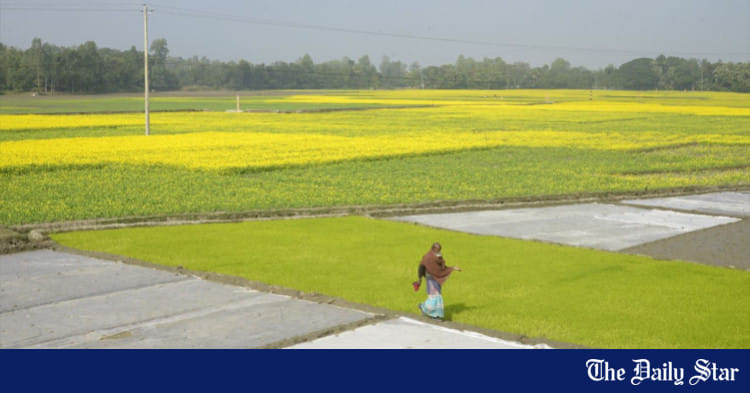
Farmers shield Boro seedlings with polythene as the cold wave threatens crops like potatoes, tomatoes, and onions, risking disease and stunted growth while some crops may thrive. The photo was taken in Manda upazila of Naogaon on December 31. Photo: Azahar Uddin

As a cold wave continues to grip the country, agricultural experts are warning that certain crops could face serious risks from the unusual weather, while others may benefit and thrive under these conditions.


According to a press release issued today by the Bangladesh Agro-Meteorological Information Service under the Department of Agricultural Extension, the cold weather is expected to affect multiple crops.


Potatoes are particularly vulnerable to late blight, while rice seedlings in seedbeds may be affected by scorch disease. Onions and garlic face tipburn, and onions can also develop purple blotch. Pulses are at risk of leaf spot, rust, and Stemphylium diseases. Mustard crops may develop white mould and leaf spot before flowering.

Limu Akter, senior scientific officer of the vegetable division at the Horticultural Research Center of the Bangladesh Agricultural Research Institute, said, "The current cold and damp weather is highly unfavourable for some winter vegetables, as it encourages the spread of serious diseases such as late blight and powdery mildew.


"Crops like potatoes, tomatoes, capsicum, and eggplant are particularly vulnerable, while cucurbit crops face an increased risk from powdery mildew. Prolonged adverse weather can stunt plant growth and greatly increase disease risks," she added.

Mahbuba Begum, principal scientific officer of the Tuber Crop Research Center in Gazipur, said, "The prevailing weather conditions are ideal for the initiation and rapid spread of late blight in potatoes.

"High humidity and cool conditions significantly increase the risk of infection, making potatoes the most vulnerable crop at this time. Other crops, such as sweet potatoes and mustard, are not facing major threats under the current conditions."


Begum advised, "To effectively control late blight, farmers should follow recommended management practices, including the regular application of fungicides at seven-day intervals.

"Timely preventive action is essential, as the disease can spread quickly once established, while most other crops remain largely unaffected by the current weather pattern."

Mohammad Khalequzzaman, director general of the Bangladesh Rice Research Institute, said that rice cultivation is extremely sensitive to temperature and sunlight, and growth can completely halt when temperatures fall below 10–13°C.

He added, "During the recent cold wave, a combination of low temperatures and lack of sunlight caused physiological growth stoppage, which can lead to cold injury, disease, and rotting if such conditions persist.

"However, the impact on rice at the seedling or seedbed stage was minimal, as growth is naturally paused during this period, allowing the plants to withstand short-term cold stress and recover once sunlight returns, and temperatures rise."

Khalequzzaman stressed, "Nighttime temperatures are the most critical factor for assessing potential damage. While prolonged cold spells can delay crop maturity and reduce yields, the recent seven-day cold wave was not severe enough to cause measurable losses.

"The situation would have been far more damaging if the rice had already been transplanted into open fields. At present, only Boro rice in seedbeds is being managed."

COLD WAVE CONTINUES

According to the Bangladesh Meteorological Department (BMD), a cold wave is currently affecting 17 districts, with moderate to dense fog possible in some areas.

Earlier on December 26, the Met Office reported that a mild cold wave had hit Jashore, Chuadanga, Gopalganj, Rajshahi, Pabna, Sirajganj, and Nilphamari.

Shahnaz Sultana, a meteorologist at BMD, said, "The unusually cold conditions in the country began on December 25. There was a brief period of sunlight on December 27, but persistent fog and overcast skies on December 28 and 29 prevented daytime warming.

"During this period, maximum daytime temperatures dropped significantly, while nighttime temperatures remained largely unchanged. The lack of sunlight made the days feel much colder, intensifying the impact of the cold spell."

The Bangladesh Agro-Meteorological Information Service also provided guidelines to help farmers prevent potential crop damage.

Experts warn that if the cold wave continues for several more days, crop production could be disrupted, yields may be lowered, and market prices could rise.​
 
BADC initiative transforms rice harvesting in Sunamganj
United News of Bangladesh . Sunamganj 03 January, 2026, 01:24

1767404613740.webp

The Bangladesh Agricultural Development Corporation launches a comprehensive initiative to construct causeways, threshing floors and sunning platforms aimed at easing the harvesting, processing and transport of boro rice, in Sunamganj. | UNB photo

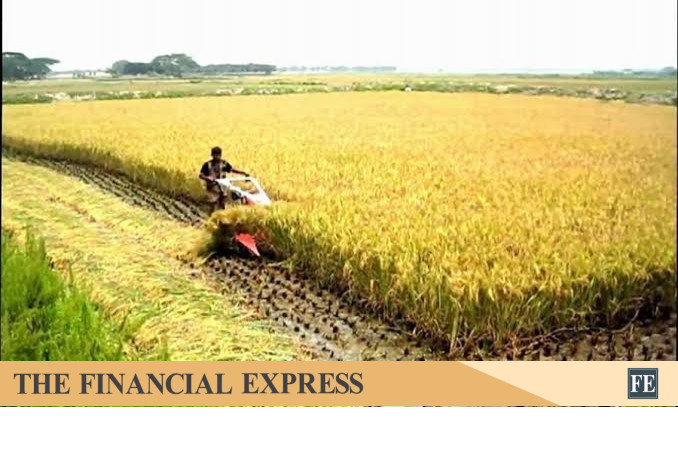
In a transformative move for agriculture in Bangladesh’s haor regions, the Bangladesh Agricultural Development Corporation has launched a comprehensive initiative to construct causeways, threshing floors, and sunning platforms, aimed at easing the harvesting, processing and transport of boro rice.

Causeways—earthen or paved routes connecting remote haor fields to main transport channels—are often the only lifelines for farmers during the crucial boro season. Yet, flooding and sudden hill torrents frequently stall transport, causing significant crop losses.


Responding to long-standing demands from farmers and local organisations, BADC’s initiative seeks to construct permanent causeways across approximately 10 kilometres of haor areas.

Complementing this, threshing and sunning floors will be built to reduce post-harvest losses, allowing rice to be quickly milled and dried even in the face of early floods or hill torrents.

Work on these facilities will commence in the current fiscal year in selected important haors, with plans to extend the project to other regions in phases.

The initiative falls under the Sylhet Division Project on Surface Water Management and Agricultural Productivity Enhancement, which has already begun in Sunamganj and surrounding districts, with a budget of nearly Tk 500 crore.

Scheduled for completion by 2029, the project encompasses causeway construction, fallow land rehabilitation, canal and hill stream excavation, farmer training, and other measures designed to boost agricultural productivity.

Once implemented, it is expected to provide irrigation benefits to 17,019 hectares of previously fallow land across Sunamganj, Sylhet, Moulvibazar and Habiganj districts, producing an additional 51,058 tonnes of food.

In remote haor areas, five threshing floors and five sunning floors will be constructed to enable farmers to swiftly process and dry harvested rice.

Officials say that this dual infrastructure will not only reduce post-harvest losses but also facilitate faster transport, saving farmers time and money.

During the first year, around four kilometres of causeways will be paved in Sunamganj, accompanied by two threshing floors and two sunning floors.

The causeways will be eight feet wide and constructed with reinforced cement concrete, with design work for these facilities near completion.

Welcoming the project, retired professor Chittaranjan Talukdar said, ‘For the first time, the government has taken up the development of causeways under a formal project. This initiative will allow both road and boat transport, reduce crop losses, and save farmers’ costs and time.’

He emphasised that causeways should eventually be constructed across all major haors in phased programmes.

Mizanur Rahman, president of the Haor, River and Environment Protection Movement, described the project as ‘timely and crucial’, stressing the importance of climate-resilient and sustainable implementation, with input from experienced local farmers.

Project director Pronojit Kumar Dev said, ‘This five-year BADC project is extremely important and will bring revolutionary changes to haor agriculture. Construction of causeways, threshing, and sunning floors will significantly benefit the transport, drying, and milling of harvested crops, particularly during emergencies.’

With these measures, the long-standing challenges of transporting and processing rice in haor regions may finally begin to ease, promising a more secure and productive future for farmers across Sunamganj and the greater Sylhet division.​
 
Meeting fertiliser needs of Boro farmers

Published :
Jan 10, 2026 00:59
Updated :
Jan 10, 2026 00:59

1768005612162.webp

Chronic shortage of natural gas has been hampering fertiliser production especially at the five urea fertiliser-producing plants operated by the state-owned Bangladesh Chemical Industries Corporation (BCIC). But Boro being the country's major dry season rice crop (January-February its peak planting season), its demand for fertilisers needs to be urgently met. Reports have it that the fertiliser factories remain out of production for most the time of the year (from April to November) for want of gas supply. So, to meet the Boro season's requirement, the BCIC in a recent letter reportedly requested the authorities concerned including the energy and the finance ministries as well as Petrobangla to ensure supply of at least 197 MMCFD (million cubic feet per day) of gas for keeping at least four of its fertiliser plants operational for 11 months in a row. The BCIC is learnt to have sent a proposal to the Ministry of Industry (MoI) recently, urging necessary steps in line with the recommendations made by a committee formed by the Energy and Mineral Resources Division. It has also requested the authorities concerned for amendment to the order issued by the Bangladesh Energy Regulatory Commission (BERC) for raising the supply of gas to197 MMCFD in order to maintain uninterrupted gas supply.

With the present level of gas supply, only two fertiliser plants could be run, producing between 0.9 and 1.1 million metric tonnes of fertiliser. But that is much less than the target of 1.8 million metric tonnes. It is worthwhile to note that urea constitutes about 80 per cent of BCIC's total fertiliser output. But the factories cannot run in full installed capacity of 3.1 million tonnes per year. In fact, all the fertiliser plants of the country together can produce only a fraction of the actual demand of different kinds of fertilisers used for the country's agriculture. According to a projection of Agricultural Ministry, the demand is for about 6.0 million metric tonnes for the fiscal year 2025-26. Notably, natural gas is the backbone of urea fertiliser production as it is the source of both the raw material and the fuel to run the plants. But it is not only the supply shortage of gas, its price is also an issue, which has seen a sharp rise.

As a result, the BCIC's current outstanding (unpaid) gas bills, as reported, stand at Tk20 billion. Also, the price the government has fixed for the locally produced fertiliser is far less than its production cost. In consequence, the BCIC plants have been constantly facing losses. But unlike in the case of imported fertilisers, the BCIC-produced fetiliser does not get any subsidy. To get around the gas scarcity and the related issues, the government had formed a high-powered panel, which reviewed the prospect of operating fertiliser plants with imported LNG (liquefied natural gas). However, the committee recommended that the four of the five urea plants be rather operated for 330 days at a stretch annually to produce at least 1.8 million metric tonnes of fertiliser. An average supply of 180.81MMCFD would be required for the purpose.

To make that possible, as the committee report further informed, domestic gas production has to be increased, which would save foreign currency as well as create jobs and so on. Undoubtedly, there cannot be a better idea than meeting natural gas requirement of the fertiliser plants from the domestic sources. Understandably, that would require devising a long-term strategy. But for the short-run, especially for the ongoing Boro planting season, the government must take urgent measures to ensure that the farmers get the required supply of fertilisers.​
 
Potato Paradox: Just another curry on the rice plate? This will not solve the price problem

27 December 2025, 18:00 PM
By Sukanta Halder

1768525633117.webp


Punishing retail prices during low output and throwaway rates during bumper harvests have become a familiar cycle for potato farmers. The swings are recurring and costly, leaving as many as half a crore growers exposed to debt in good years and public anger in bad ones.


Yet agri experts and supply chain players say the problem has little to do with farmers, or even with production. Instead, it reflects how potatoes are treated in policy and planning.

Unlike many other countries, Bangladesh largely views the crop as just another vegetable eaten with rice, not as a basic industrial raw material.

That distinction matters. When production overshoots domestic demand, prices collapse. Farmers absorb the losses, while the economy misses out on value addition that could stabilise incomes and absorb surplus output.


Bangladesh is the world's seventh-largest potato producer. Still, it remains far behind global peers in industrial use of the tuber.

In China, about 15 percent of potato output goes into industrial processing. In the Netherlands, Germany, France and the United States, the share ranges from 60 percent to 65 percent. Russia and Ukraine process 20 percent to 30 percent, while neighbouring India, with similar food habits, uses 5 percent to 7 percent.

Bangladesh, by contrast, processes only 3 percent to 4 percent of its total output, according to industry insiders.


The difference is decisive. In countries where potatoes feed factories, surplus strengthens supply chains. In Bangladesh, surplus simply crashes prices.

After rice, potatoes are the second most produced crop in Bangladesh and a pillar of food security. Yet more than a quarter of output is lost after harvest, according to the Food and Agriculture Organization, which points to weak storage, handling and processing capacity.


WRONG VARIETIES, WEAK PLANNING


Kamruzzaman Kamal, marketing director of Pran-RFL Group, the parent of the local agro processing giant Pran, said industrial processing is limited because most locally grown potatoes are table varieties, not processing-grade crops.

"These potatoes have high moisture and sugar content, which makes them unsuitable for products like French fries. They lose colour and become soft after frying," said Kamal.

Globally, potatoes used for fries, chips and flakes require dry matter of around 22.5 percent. But locally grown potatoes usually contain only 16 percent to 19 percent dry matter, according to scientists.

While potatoes are locally used at home to make chips, and in factories to produce crackers, biscuits and chanachur, the backward linkage industry for flakes and starch is still underdeveloped. Only one or two such factories are currently in production.

Kamal said farmers are not encouraged to grow processing varieties because crop planning is mostly individual-driven rather than coordinated. Many existing varieties are disease-prone, poorly adapted to climate stress and quick to spoil.

Inadequate storage, no grading and sorting at farm level, insufficient cold-chain infrastructure and limited warehousing have further constrained both industrial use and exports, added the Pran-RFL marketing director.

Khurshid Ahmad Farhad, general manager for international business and corporate affairs at Bombay Sweets and Company Limited, a popular food processing brand, said the absence of integrated crop planning and unpredictable weather has kept industrial processing from reaching scale.

Factories producing flakes, slices, chips and biscuits need potatoes of specific size and quality. Bangladesh does not produce enough of these at consistent volumes, he said. Even when quality potatoes are available, production costs are often far higher than international benchmarks, making local products uncompetitive.

"In recent times, costs have risen so sharply that a Dubai-based trader told me they could supply potato flakes at a lower price than we can," Farhad said.

Globally, the largest potato-based industrial products include mashed potatoes and French fries. In Bangladesh, suitable varieties have yet to be developed at a commercial scale, leaving much of the segment untapped.

Although government agencies hold relevant crop data, it is neither centrally coordinated nor used for forecasting, Farhad said. As a result, annual output swings widely between about 80 lakh tonnes and nearly 90 lakh tonnes, with no early warning for the industry.

"This uncertainty is the biggest obstacle. Planning depends on assured availability and consistent quality of raw materials," he said.

THE GLUT, THEN THE CRASH

Strong prices in the 2024 season encouraged farmers to expand potato acreage massively this year in the hope of better returns. Instead, excessive output triggered a severe glut and eventual price fall.

According to the Bangladesh Bureau of Statistics, potato production reached a record 1.15 crore tonnes last season, far above annual domestic demand of around 90 lakh tonnes.

Cultivated area rose 8 percent year-on-year to 4.92 lakh hectares in fiscal year 2024-25, while output increased 9 percent from 1.06 crore tonnes the previous year.

The oversupply sent field-level prices tumbling to Tk 9 to Tk 11 per kg, well below the estimated average production cost of Tk 14. In northern regions, costs were higher, at around Tk 20 per kg, according to the Department of Agricultural Extension (DAE).

For farmers, the result was debt rather than profit. For the economy, it was another missed chance to channel surplus into value-added uses.

'TYPICAL COLD STORAGE ONLY DELAYS LOSSES'

Bangladesh has expanded cold storage capacity to about 35-40 lakh tonnes. Processing capacity, however, is remarkably low.

Md Mohsin Ali, head of supply chain at Quasem Industries Limited, which produces Sun Chips, said processing capacity stands at just 70,000-80,000 tonnes.

The shortage of modern cold storage designed for processing-grade potatoes is one of the sector's biggest constraints, he said. "Therefore, typical cold storage facilities currently delay losses. It does not create value," he said. "Without factories that can absorb surplus, price crashes will continue."

In many countries, he said, potatoes are a staple food and a major industrial input. In Bangladesh, those consumption patterns and industrial linkages have yet to emerge.

According to Ali, weak policy support, lack of dedicated processing policies and limited investment in research and development are major barriers.

DEMAND EXISTS, QUALITY DOES NOT

Apart from the unavailability of commercial-grade potatoes, the shortage of premium-grade crops is visible even in high-end kitchens.

Md Ershad Ali, assistant sous chef at Pan Pacific Sonargaon Dhaka, a five-star hotel, said they serve potatoes to their guests at every meal, with each buffet offering at least one potato dish.

Some international recipes, however, cannot be prepared with local potatoes due to inconsistent size and grading. Overseas, potatoes arrive uniformly graded and ready for consistent cuts and presentation. Local supplies vary widely.

The hotel uses about 500 kg of potatoes each week. That could rise to 800 kg if uniformly graded, high-quality potatoes were available, he said.

A POLICY BLIND SPOT

FH Ansary, managing director of ACI Agribusiness, said potatoes need to be viewed through four lenses: food, industry, environment and health.

"We treat potatoes as just a vegetable. Elsewhere, they are protein sources, pharmaceutical inputs, packaging material and industrial feedstock," he said.

Ansary said farmers focus on table potatoes because the market is guaranteed. Seeds of processing varieties are scarce, quality-based cultivation is limited, and there is no price assurance or buy-back mechanism.

"The bridge between farmers and industry is broken," he said. "Without it, neither industrial use nor price stability will be achieved."

M Masrur Reaz, chairman of local think tank Policy Exchange Bangladesh, said processed potatoes generate far higher value than fresh ones. Globally, fresh potatoes account for about half of export volume but only 20 percent of value. Processed potatoes make up a third of the volume yet generate more than half of the trade value.

In Bangladesh, processing is limited to 3 percent to 4 percent of output, while exports stand at just 62,000 tonnes, said the economist. "Without value addition, price crashes during bumper harvests will keep hurting farmers."

Agriculture contributes about 12 percent to the gross domestic product of Bangladesh. The processed food sector accounts for only 1.7 percent.

Mohammad Khurshid Alam, chief scientific officer at the Bangladesh Agricultural Research Institute (Bari), said the short winter season limits dry matter accumulation in potatoes. Excessive use of urea further delays maturity and raises moisture content. He said contract farming and area-based zoning are important, with specific regions designated for processing and export varieties.

Other solutions, the scientist said, include developing high dry-matter varieties through public-private partnerships, expanding good agricultural practice certification, improving post-harvest management and rebuilding links between farmers and industry.​
 

Tomato cultivation emerges as economic force in Rajshahi
Bangladesh Sangbad Sangstha . Rajshahi 17 January, 2026, 00:13

1768613043681.webp


Tomato cultivation has emerged as a significant economic force in Rajshahi, contributing an estimated Tk 100 crore in yearly trade. | BSS Photo

Many of the farmers of Godagari, Tanore and Paba upazilas are spending a busy time harvesting tomatoes from their fields.


During the current winter season, tomatoes are being grown on around 3,500 hectares of land across the district.

Wholesale prices are presently hovering between Tk 1,800 and Tk 2,000 per maund, while early-harvest tomatoes have secured even higher prices.

At the beginning of the season, many traders purchase produce directly from farmers’ fields, providing growers with immediate and consistent cash returns.

Officials from the Department of Agricultural Extension said that tomatoes produced in Rajshahi were largely free from chemical ripening agents, which had strengthened consumer trust and increased demand in major urban markets.

After mango, tomatoes have now become the district’s second most important cash crop, directly engaging more than one lakh families in farming and trading.

In addition, thousands of others earn livelihoods through transportation, storage, and marketing linked to the tomato supply chain.

Farmers said tomato is more profitable than most other field crops, with production ranging from 60 to 70 maunds per bigha.

Ijarul Haque, a farmer of Premtali village in Godagari, said that he cultivated tomatoes on five bighas of land. He harvested 10 maunds in the first phase and sold them at Tk 2,300 per maund, adding that production will increase further in the coming days.

Another farmer, Amzad Hossain, said that good prices were available at the beginning of the season and traders often purchased tomatoes from entire fields in advance.

He said that traders from outside districts regularly visited the area to buy tomatoes while local traders also participate.

Tozammel Haque of Sultanganj village said that he cultivated two hybrid varieties on one and a half bighas of land, spending Tk 1.25 lakh. Over the last two weeks, he sold tomatoes worth Tk 30,000 at rates of Tk 70-75 per kilogram.

‘Platform-cultivated tomatoes have high demand as they ripen naturally on the plants without the need for chemicals,’ he added.

Saiful Islam, 47, of Pirijpur village said that he cultivated high-yielding varieties that were fetching good prices in the markets. He said that tomatoes were currently selling at Tk 1,800 to Tk 2,000 per maund on wholesale markets.

Ekramul Haque of Bijoynagar village said that many farmers in the region had already changed their fortunes through tomato cultivation, earning between Tk 25,000 and Tk 35,000 per bigha in a season.

‘Tomato farming is gaining popularity in the region, especially in the vast Barind tract, as it is highly profitable here,’ said Dr Azizur Rahman, additional director of Department of Agricultural Extension.

He said that tomatoes, now considered the second major cash crop of the region, played an important role in the local economy.

More than one lakh families are directly benefiting from tomato cultivation and trading, while a large number of employment opportunities are generated every year.

Retired chief scientific officer of the Fruit Research Station, Dr Alim Uddin, said that the soil and climatic conditions of Rajshahi, Natore, Naogaon and Chapainawabganj districts were highly suitable for tomato cultivation.

Although tomato is cultivated more or less in all upazilas of Rajshahi, Godagari upazila produces two third of all tomatoes produced in the country.

During early winter and winter season, Godagari upazila produces tomatoes worth several Tk 100 crore.​
 

It is time to ingrain farm-to-table concept

Published :
Jan 19, 2026 00:39
Updated :
Jan 19, 2026 00:39

1768783056091.webp


Dhaka's kitchen markets are now a visual feast, overflowing with vibrant greens and colourful produce of a winter harvest. To the casual observer, the sheer volume of supply would suggest a season of relief for the city's beleaguered consumers. However, the reality on the ground is starkly different. The seasonal abundance is proving to be of no benefit to the average buyers as the prices of winter vegetables have reportedly gone up compared to the past few weeks. For instance, a kilogram of good-quality brinjal that previously sold for Tk60-70 is now priced at Tk80-100, while beans have climbed to Tk70-80 per kg from Tk50-70. Similarly, prices of almost all winter vegetables are on the upward trajectory.

Even more distressing is the widening gap between what growers receive and what consumers are forced to pay in the markets. For example, while a kilo of brinjal sells for Tk80-100 in city markets, growers reportedly receive barely Tk20 per kg. A recent report by The Financial Express lays bare how a convoluted supply chain facilitates this blatant price gouging. As the report informs, a typical agricultural produce changes hands five to six times before reaching the consumer's table. It involves farias (small brokers), aratdars (hoarders), beparis (transporters), urban wholesellers and finally retailers. Intermediaries at each stage of the supply chain drive up prices, while farmers struggle to get a fair return and consumers are forced to pay exorbitant rates.

It is, therefore, evident that the main crisis in the country's agricultural economy is not production, but market management. It is worth mentioning that the intermediaries who dominate the supply chain add little or no value to agricultural produce. They merely hoard or transport them from one place to another and, in the process, make undue profits-often through manipulation and syndication. Reducing the number of unnecessary intermediaries has long been discussed, but the authorities have so far failed to implement a lasting solution to this chronic problem.

Against this backdrop, the "farm-to-table" or direct marketing model deserves consideration. Under such a system, farmers sell directly to consumers through farmers' markets, cooperatives, contract arrangements or digital platforms. Estimates suggest that by implementing direct marketing model farmers' incomes can be increased by 30-40 per cent, while it will also cut consumer costs by 15-20 per cent. To this end, dedicated farmers' markets can be introduced in divisional cities at fixed locations and on designated days, reserved exclusively for small and marginal farmers. A few farmers market already exist in parts of Dhaka such as Meradia, Purbachal and the Beribandh areas, where farmers from the city's outskirts sell produce directly. These initiatives, however, remain scattered and informal. They need to be expanded under clear policy frameworks. The role of the government is paramount here. Direct marketing cannot develop through market forces alone as farmers are at the weakest end of the supply chain. It demands policy support and infrastructure development. The authorities can popularise farmers' markets by earmarking specific urban spaces for growers, subsidising transport and storage facilities. It would go a long way towards curbing the dominance of middlemen and easing inflationary pressures.​
 

New mechanised irrigation promises less water, labour

Trials underway for country’s first centre-pivot irrigation

By Ahmed Humayun Kabir Topu

1768785811622.webp


Centre-pivot irrigation at Muladuli farm, Ishwardi, Pabna, where BADC is trialling this mechanised system that mimics rainfall to water non-paddy crops efficiently, saving water, cutting labour and costs, and boosting yields. The photo was taken recently. Photo: Ahmed Humayun Kabir Topu

Not all crops require flood irrigation, and using it on wheat, corn, onions, garlic, sugarcane, and other winter crops causes water wastage and may even harm the crop itself. To address this, the Bangladesh Agricultural Development Corporation (BADC) is testing a centre-pivot irrigation system to deliver water precisely to maintain optimal soil moisture.

Widely used in Europe and other developed regions, centre-pivot irrigation involves a long, wheeled pipe rotating around a central pivot to water fields in a circular pattern. Water flows from the central pivot through the lateral pipe, supported by towers on wheels, and sprinklers distribute it evenly over crops, similar to natural rainfall. The distance between two adjacent towers, called the span, is typically 45-60 metres, though it can be longer in larger systems.

The system reduces labour, ensures uniform water application, and can be automated, making it suitable for large-scale farming, with the irrigated area depending on the pivot arm length. However, it is unsuitable for paddy fields, which need flood irrigation.

“Paddy fields need flood irrigation, but crops like onions and wheat need light, regular watering, similar to rainfall,” said Faisal Ahmed, executive engineer of BADC in Pabna. “During winter, rainfall is scarce, so farmers often use flood irrigation, wasting water. With the centre-pivot system, we can supply only what the field needs. This is an automated irrigation technology.”

BADC installed the first system at Muladuli agriculture farm in Ishwardi, Pabna, covering over 400 bighas, and a second at Bhabanipur sugarcane farm in Natore. The government-funded trial uses Austrian technology and cost around Tk 4 crore.

BADC installed Bangladesh’s first centre-pivot system at Muladuli agriculture farm in Ishwardi, Pabna, with six spans irrigating over 400 bighas, and a second at Bhabanipur sugarcane farm in Natore.

The government-funded trial, using Austrian technology, cost about Tk 4 crore. Austrian engineers first trained BADC engineers, who then jointly trained local farmers. BADC continues to liaise with the Austrian engineers for maintenance support.

WATER AND LABOUR SAVINGS

The BADC anticipates that shifting to mechanised irrigation will reduce water loss, costs and labour while significantly increasing crop yields.

“The centre-pivot irrigation system uses 20-30 percent less water than traditional methods,” said Afnan Azam Rudrho, assistant engineer at BADC Pabna. “For wheat, which normally requires 100,000-200,000 litres per bigha, the system needs only 70,000-160,000 litres, depending on soil and climate.”

Anwarul Islam, in charge of the Muladuli sugarcane farm, said the system saves significant time and labour.

“The centre-pivot covers a 350-metre radius and can irrigate 150 acres at a time. With traditional flood irrigation, it would take 25 to 30 days and a large workforce to cover this area. Now we can do it in five to seven days with almost no extra labour.”

He added that water use can be controlled from the machine’s control board. “From the control panel, we can supply water only to specific parts of the field as needed, so there is no wastage from over-irrigation.”

Sumon Chandra Bormon, assistant engineer (irrigation) at BADC Ishwardi, said sugarcane output could rise from 15-17 tonnes per acre to 27-30 tonnes per acre using this system.

Local farmers welcomed the technology. Md Kamruzzaman, an onion farmer from Durgapur village, said, “Onion fields cannot tolerate standing water. We now need three to four labourers just to control water flow and drainage during irrigation. This technology is a blessing because it lets us water from above without harming saplings or hiring extra labour.”

Award-winning farmer Md Sajahan Ali Badsha added, “We use the same irrigation method for paddy, wheat and vegetables, even though their needs are different. If this technology reaches farmers at the grassroots level, it will transform production.”

The centre-pivot system under testing has six spans for large farms, but can be reduced to one for smaller farms. The official inauguration is expected by the end of the month, after the final power connections are completed.

If tests succeed, BADC plans wider installation to modernise Bangladesh’s agriculture. “We plan to expand this technology for both large- and small-scale farmers, depending on their needs,” said Faisal Ahmed, executive engineer of BADC in Pabna.​
 

ILLEGAL SOIL EXTRACTION IN CHANDPUR
Farmlands become useless for some crops, fertility declines for others


Our Correspondent
Published :
Feb 16, 2026 09:27
Updated :
Feb 16, 2026 09:27

1771288801049.webp


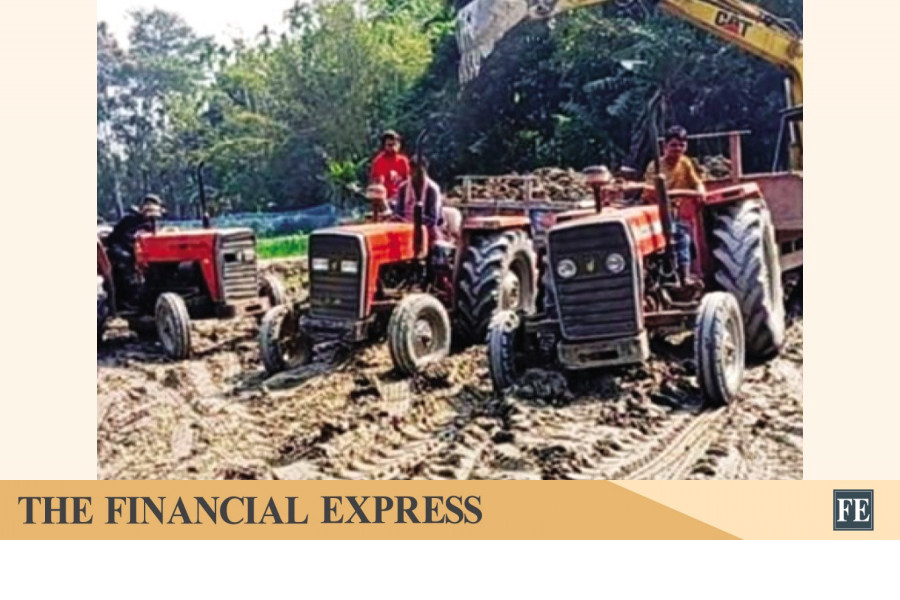
A view of extracting topsoil from farmland in Gupter Beel in Harani Durgapur village under Char Dukhia Union of Faridgonj Upazila in Chandpur — FE Photo

Soil traders have been indiscriminately extracting topsoil from Chandpur's remote farmlands for the past several months, which, experts say, has been leaving those lands uncultivable for some crops and less fertile for others.

Illegal soil extraction continued during the winter in the district's Faridgonj, Kachua, Hajiganj, Matlab Uttar and Dakshin upazilas, villagers said. In some cases, traders, along with middlemen, convinced farmers in need of cash to sell the soil of their farmlands.

After purchasing per truck of soil at Tk 400-500 from farmers, traders sell it to brick field owners at Tk 1,800-2,000, sources said. The unabated extraction has been ongoing in remote places of Chandpur defying law. According to the "Balumahal and Soil Management (Corrected) Act, 2023", sand and soil extraction is prohibited for farmland, which can sustain damage, or gives rise to apprehension that the land may be damaged due to the extraction.

Faridgonj Upazila Nirbahi Officer Setu Kumar Barua said they conduct drives and fine traders as soon as they are tipped off on soil extraction and warn farmers against selling topsoil from agricultural lands.

In Chandpur Sadar, unabated soil extraction has been ongoing in Raj Rajeshwar, a remote char area about 10 km west of the Meghna River. Soil extraction has also been ongoing in full swing from the farmlands in Matlab North and Dakshin upazilas.

Soil extraction starts at around 8 to 9 PM in the nights at Shaharbazar in No. 4 Paschim Subidpur Union of Faridgonj Upazila and continues till pre-dawn, alleged the people affected by the noise pollution that results from the lifting with excavators.

Using influence, Kana Hanif, Iqbal Hossain and Md Jahangir Hossain have been cutting earth from the cropfields of farmers Sekandar Mollah, Md Jahangir Patwary and others in the area. People who have crop fields nearby say waterlogging occurred on their land as a result of the extractions.

On February 8, a mobile court fined a farmer, Majibur Rahman (53), Tk 100,000 for selling the topsoil of his farmland in Faridgonj and jailed him for a year.

Meanwhile, another mobile court led by assistant commissioner (land) recently fined a trader Tk 50,000 for extracting soil from Harni Durgapur village in Gupter Beel in Faridgonj. The court also seized two excavators from the spot.

Mobarak Hossain, an agricultural expert at the Department of Agricultural Extension (DAE), Chandpur, said the cutting of topsoil compromises the fertility of farmlands for some crops while others can not be cultivated at all. Experts said, in a way, the quantity of farmlands has been shrinking in Chandpur district due to the extractions, which is likely to cause a shortfall of annual yields for crops like jute, bottle gourd, pumpkin, mustard, some paddy varieties, potato, sweet potato and other vegetables.

They also said that soil extraction damages the environment and affects ecological balance. According to the Chandpur DAE sources, there is as much as 94,675 hectares of farmland in the district.​
 

Bogura green chillies capitalise on India supply gap

Our Correspondent
Published :
Feb 16, 2026 09:23
Updated :
Feb 16, 2026 09:23

1771288952207.webp

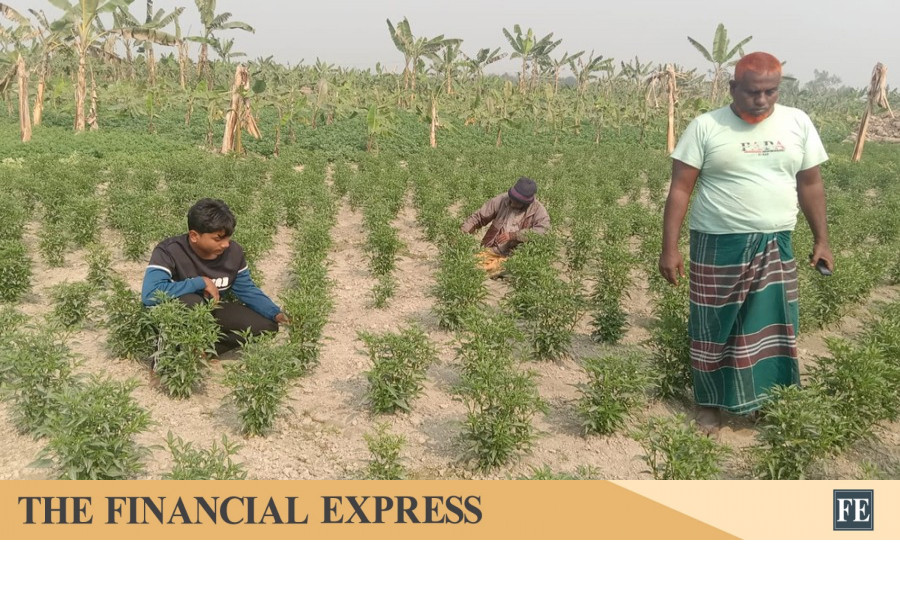
Farmers busy taking care of chilli field at a village in Gabtali Upazila in Bogura district — FE Photo

Bogura's famously pungent green chilies are carving out a growing presence in international markets, capitalising on a supply gap created by India's withdrawal from key Middle Eastern export destinations.

Over the past three months, about 1,500 tonnes of green and dried chilies from the northern district have been exported to 14 countries, including Saudi Arabia, the United Arab Emirates, Singapore and Malaysia, exporters and officials familiar with the development told the FE.

The shipments are valued at roughly Tk 8.0 billion ($66 million), highlighting the rising commercial potential of horticultural exports in a country still heavily reliant on garments.

"India used to control the Middle Eastern green chili market, but exports from there have stopped," said Md Belal Hossain, a member of the Bangladesh Vegetable, Fruit and Betel Leaf Exporters Association.

"That has opened a window for Bogura's chilies, which are now gaining strong acceptance in the Gulf."

Export cartons branded "Green Chilies of Bogura, Bangladesh" are increasingly visible in overseas wholesale markets, signalling a push by Bangladeshi traders to establish origin recognition.

Export volumes peak between November and March, when around 10 exporters ship an average of 5,000 tonnes of green chilies abroad each season, they mentioned.

Belal Trading, one of the exporting firms, has shipped 42 tonnes of green and ripe chilies-known locally as topa-in the past three months. "The chilies stand out for their intense heat and consistent quality," said M Belal Hossain, the company's proprietor.

"In Malaysia, demand for ripe chilies is effectively unlimited." The export surge is feeding directly into farm incomes.

According to the Department of Agricultural Extension (DAE), Bogura produced about 32,000 tonnes of chilies this year across 8,000 hectares.

Roughly 24,000 tonnes were sold fresh from fields, reflecting strong export demand.

Farmers say the new trade routes are improving both prices and logistics.

Exporters and spice processors are increasingly purchasing chilies directly from farms, often providing advance payments and reducing farmers' dependence on wholesale markets.

"I sold nearly 100 maunds of chilies from my field in a single day and earned Tk 100,000," said Thanda Mondol, a farmer in Gabtali Upazila.

"Prices have been favourable throughout the season."

At hubs such as Jalshuka and Subod, chilies are packed into five- to seven-kilogramme cartons and transported directly to Dhaka's airport.

Traders say exports from these markets have reached record daily volumes, supporting hundreds of jobs in sorting, packing and transport.

Md Motlubur Rahman, deputy director of the Bogura, DAE, said the export drive was encouraging farmers to focus on quality and compliance.

"To sustain access to global markets, we are discouraging excessive pesticide use and promoting better seeds and balanced fertilisers," he said.

As Bangladesh seeks to diversify exports ahead of its graduation from least-developed-country status, officials see Bogura's chili boom as a modest but telling example of how agriculture could play a larger role in the country's external trade.​
 

Cabinet decides to waive agricultural loans up to Tk 10,000 with interest

Special Correspondent
Dhaka
Published: 26 Feb 2026, 17: 33

1772153492968.webp

Prime Minister Tarique Rahman chairs a cabinet meeting at the Cabinet Division. PID

The new government has decided to waive agricultural loans of up to Tk 10,000, including interest, in the crop, fisheries and livestock sectors.

As a result of the decision, around Tk 15.5 billion will come under the waiver scheme, benefiting approximately 1.2 million farmers.

The decision was taken at the first formal meeting of the new cabinet, held at the secretariat today, Thursday morning and chaired by Prime Minister Tarique Rahman.

Cabinet Secretary Nasimul Gani later announced the decision at a press conference in the afternoon.

Responding to questions from journalists, the cabinet secretary said that regardless of the amount of interest accrued on loans of up to Tk 10,000, the entire amount, principal and interest, would be waived.

In a written statement, he said the government has taken the decision to waive agricultural loans of up to Tk 10,000, including interest in line with its election manifesto.

The primary objective is to ensure social protection for poor farmers and to strengthen the agricultural sector.

According to data from Bangladesh Bank, as of today (26 February), farmers owe approximately Tk 15.5 billion, including interest, to state-owned commercial and specialised banks as well as private commercial banks. This amount will be covered under the waiver scheme.

An estimated 1.2 million farmers will directly benefit from the move. The waiver will free small and marginal farmers from debt burdens, increasing their motivation and supporting higher agricultural production nationwide.

The cabinet secretary said that the money previously spent on loan instalments could now be invested in improved seeds or modern irrigation technologies. With the burden of debt lifted, farmers will be able to begin the next cultivation season with renewed energy.

He added that the waiver would also improve farmers’ credit records, enabling them to access low-interest agricultural loans from banks in the future and reducing their reliance on high-interest informal moneylenders.

The cabinet secretary further said that reducing debt burdens would encourage greater participation in crop production, fisheries and livestock farming, leading to increased national agricultural output and lower import dependency. As an immediate effect, rural-to-urban migration would decline and rural inflation would ease.

He also noted that during the 1991-1996 tenure of former Prime Minister Begum Khaleda Zia, agricultural loans of up to Tk 5,000, including interest, were waived — a measure that had helped ease farmers’ hardships and contributed to increased agricultural production.​
 

Farmers rejoice at bumper yield, good market prices

Bangladesh Sangbad Sangstha . Rangpur 08 March, 2026, 00:33

Due to the bountiful crop yield in the char areas and good market prices of the produce, an Eid atmosphere has been created in the riverside char areas of the Rangpur region, where local residents are now busy buying Eid items.Bangladesh country politics

People living along the banks of the rivers and sandy char areas in Rangpur, Gaibandha, Kurigram, Lalmonirhat and Nilphamari districts are eagerly preparing for the upcoming Eid-ul-Fitr celebrations, along with harvesting their cultivated crops.

Following the bumper crop yield in char areas this season, income-generating activities, and changes in their socio-economic status with the benefits of social safety-net programmes, the char people are now busy buying Eid items within their capacities.

Previously, the char people had to live in indescribable misery as extreme poverty consumed their fate, while child marriage, dowry, superstitions, malnutrition, and lack of clean drinking water and hygienic sanitation facilities made their lives miserable.

Currently, the situation in the vast char areas has changed where people are earning well from their income-generating activities, animal husbandry and crop cultivation, and preparing to celebrate the upcoming Eid-ul-Fitr in a festive atmosphere.

Talking to BSS, Syed Shamsuzzaman, chairman of Rangpur-based research organisation North Bengal Institute of Development Studies, said that despite living in adverse climatic conditions, the socio-economic condition and livelihood of char people were improving.

‘With the implementation of comprehensive social safety-net programmes, income-enhancing activities and crop cultivation on about 82,000 hectares of char land, the socio-economic conditions of char people in Rangpur region continue to see positive changes,’ he said.

As a result, the Eid atmosphere is prevailing in char areas where local people have started to gain economic base and improved livelihoods, while also removing social curses through continued GO-NGO support and expansion of crop cultivation.

‘The government’s intervention has stabilized the prices of essential commodities and helped the people of Char live a better life. Many of them are buying clothes and other Eid items to celebrate the upcoming Eid-ul-Fitr festival,’ said Samsuzzaman.

Char people are now harvesting their cultivated crops in full swing and getting excellent yield with rewarding market prices and taking preparations with enthusiasm to celebrate the upcoming Eid-ul-Fitr.

Farmer Aminul Islam of Char Taluk Shahbaz village in Kawnia upazila of Rangpur told BSS that he was getting a bumper output with lucrative prices of his cultivated crops in char lands on the dried-up Teesta riverbed this season.

‘I am getting excellent production of my cultivated groundnut, pumpkin, onion, garlic and various vegetables on char lands with better market prices. I am buying clothes and other Eid items for my children and family members,’ said a hippie Aminul Islam.

Shahinur Islam and Fancy Begum, a couple from Char Purbo Mohipur in Gangachara Upazila of Rangpur, said that they were now harvesting ‘Khira’, potatoes, green chillies and other crops on two and a half acres of char land on the dried-up Teesta riverbeds.

The couple has already sold harvested ‘Khira’, potatoes and other crops at Tk 1.20 lakh and is expecting to earn a net profit of Tk 2.5 lakh excluding all expenses after completing harvest by May next.

‘We have already purchased clothes and other Eid items for our children and family members with the money earned from selling our newly-harvested crops to celebrate the upcoming Eid-ul-Fitr festival,’ said Shahinur Islam.

Char people Abdul Jalil, Mohsin Ali, Nur Islam, Anwar Hossain, Mokbul Hossain and Kafil Uddin of village Paschim Mohipur in the upazila said that they were planning to buy Eid clothes and other items for their family members to celebrate the Eid-ul-Fitr festival.

Deputy director of the Burirhat Horticulture Centre of the Department of Agricultural Extension (DAE) in Rangpur Dr Md Abu Sayem said that char people were making good profits from crop farming on char lands every year in Rangpur region.

‘Eid fervour is prevailing in char areas where people are busy in harvesting their cultivated crops and purchasing Eid items to celebrate the Eid-ul-Fitr in a festive atmosphere,’ he added.​
 

New mechanised irrigation promises less water, labour

Trials underway for country’s first centre-pivot irrigation

By Ahmed Humayun Kabir Topu

View attachment 23888

Centre-pivot irrigation at Muladuli farm, Ishwardi, Pabna, where BADC is trialling this mechanised system that mimics rainfall to water non-paddy crops efficiently, saving water, cutting labour and costs, and boosting yields. The photo was taken recently. Photo: Ahmed Humayun Kabir Topu

Not all crops require flood irrigation, and using it on wheat, corn, onions, garlic, sugarcane, and other winter crops causes water wastage and may even harm the crop itself. To address this, the Bangladesh Agricultural Development Corporation (BADC) is testing a centre-pivot irrigation system to deliver water precisely to maintain optimal soil moisture.

Widely used in Europe and other developed regions, centre-pivot irrigation involves a long, wheeled pipe rotating around a central pivot to water fields in a circular pattern. Water flows from the central pivot through the lateral pipe, supported by towers on wheels, and sprinklers distribute it evenly over crops, similar to natural rainfall. The distance between two adjacent towers, called the span, is typically 45-60 metres, though it can be longer in larger systems.

The system reduces labour, ensures uniform water application, and can be automated, making it suitable for large-scale farming, with the irrigated area depending on the pivot arm length. However, it is unsuitable for paddy fields, which need flood irrigation.

“Paddy fields need flood irrigation, but crops like onions and wheat need light, regular watering, similar to rainfall,” said Faisal Ahmed, executive engineer of BADC in Pabna. “During winter, rainfall is scarce, so farmers often use flood irrigation, wasting water. With the centre-pivot system, we can supply only what the field needs. This is an automated irrigation technology.”

BADC installed the first system at Muladuli agriculture farm in Ishwardi, Pabna, covering over 400 bighas, and a second at Bhabanipur sugarcane farm in Natore. The government-funded trial uses Austrian technology and cost around Tk 4 crore.

BADC installed Bangladesh’s first centre-pivot system at Muladuli agriculture farm in Ishwardi, Pabna, with six spans irrigating over 400 bighas, and a second at Bhabanipur sugarcane farm in Natore.

The government-funded trial, using Austrian technology, cost about Tk 4 crore. Austrian engineers first trained BADC engineers, who then jointly trained local farmers. BADC continues to liaise with the Austrian engineers for maintenance support.

WATER AND LABOUR SAVINGS

The BADC anticipates that shifting to mechanised irrigation will reduce water loss, costs and labour while significantly increasing crop yields.

“The centre-pivot irrigation system uses 20-30 percent less water than traditional methods,” said Afnan Azam Rudrho, assistant engineer at BADC Pabna. “For wheat, which normally requires 100,000-200,000 litres per bigha, the system needs only 70,000-160,000 litres, depending on soil and climate.”

Anwarul Islam, in charge of the Muladuli sugarcane farm, said the system saves significant time and labour.

“The centre-pivot covers a 350-metre radius and can irrigate 150 acres at a time. With traditional flood irrigation, it would take 25 to 30 days and a large workforce to cover this area. Now we can do it in five to seven days with almost no extra labour.”

He added that water use can be controlled from the machine’s control board. “From the control panel, we can supply water only to specific parts of the field as needed, so there is no wastage from over-irrigation.”

Sumon Chandra Bormon, assistant engineer (irrigation) at BADC Ishwardi, said sugarcane output could rise from 15-17 tonnes per acre to 27-30 tonnes per acre using this system.

Local farmers welcomed the technology. Md Kamruzzaman, an onion farmer from Durgapur village, said, “Onion fields cannot tolerate standing water. We now need three to four labourers just to control water flow and drainage during irrigation. This technology is a blessing because it lets us water from above without harming saplings or hiring extra labour.”

Award-winning farmer Md Sajahan Ali Badsha added, “We use the same irrigation method for paddy, wheat and vegetables, even though their needs are different. If this technology reaches farmers at the grassroots level, it will transform production.”

The centre-pivot system under testing has six spans for large farms, but can be reduced to one for smaller farms. The official inauguration is expected by the end of the month, after the final power connections are completed.

If tests succeed, BADC plans wider installation to modernise Bangladesh’s agriculture. “We plan to expand this technology for both large- and small-scale farmers, depending on their needs,” said Faisal Ahmed, executive engineer of BADC in Pabna.​
Ah - US farm tech finally reaches Bangladesh. These are glorified sprinkler systems on a very large scale but need extensive (sometimes daily) maintenance. Used all over the Western US and Europe where rainfall is scarce. These systems can turn desert areas into vegetable farms very quickly.

This is an area in central California seen from about 5000 feet up. Each circle is about a 1/4 mile wide.

1772940643271.webp
 

Retail profiteering should not hurt boro farming

THE fuel crisis that has loomed large owing to the US-Israel war on Iran and subsequent disruption in the passage of oil shipments through the Strait of Hormuz appears to have caused concern for rice farming. Farmers in several districts keep, as New Age reported on March 12, struggling to get diesel for the irrigation of boro rice. The Department of Agricultural Extension brushes aside any chance of disruption in boro irrigation as long as the national reserve is not destabilised. A ranking Department of Agricultural Extension official says that field officials have not so far reported any problems in boro irrigation because of diesel shortage, noting that farmers have already planted boro seedlings on about 97 per cent of the targeted 5.05 million hectares in the 2026 financial year. Despite official assurances, farmers in several districts say that they are struggling to get diesel for irrigation. Reports from the south-west say that farmers have faced disruption for a few days as filling stations and retailers have restricted diesel sales, coming down to two litres a farmer a day against the earlier 10 litres that could be bought from a filling station. Reports from the north come up with a similar situation.

Farmers in the north say that they need to pay higher prices for diesel. Whilst a farmer can buy five litres of diesel a day, some retailers charge them an additional Tk 5–10 a litre against the government’s selling price of Tk 100 a litre. About 30–35 per cent of the boro farmland of the targeted half a million hectares in the Rangpur region is said to be dependent on shallow irrigation pumps. Retailers are reported to be charging farmers an additional Tk 5–10 a litre. The situation is further concerning in the Rajshahi region, where diesel is retailed to farmers for Tk 115–120 a litre. All this happens despite there being no major reasons to worry about diesel stock. Bangladesh Petroleum Corporation officials say that the current stock of 300,000 tonnes, which would roughly last for a month, is improving, with the release of about 180,000 tonnes having begun at the Chattogram port on March 10. The proposition suggests that the diesel shortage that is hampering irrigation at the local level is artificial. The minister for agriculture, however, says that the government is working to attend to the problem. Experts believe that the government should prioritise diesel supply to farmers.

The government should, in such a situation, strengthen oversight to stop retailers from cashing in on the situation to make windfall profits. The government should also act to stop any misuse or abuse of the rationing of fuel oil that it decided a few days ago to tackle the probable energy crisis.​
 

Bailing out farmers from costly fuel, fertilizer

FE
Published :
Mar 17, 2026 23:31
Updated :
Mar 17, 2026 23:31

1773793529490.webp


An importer of around 80 per cent of fertilizers, Bangladesh faces substantial shortfall of the items soon as the supply lines are now caught up in a war, jointly inflicted by the USA and Israel on Iran. The annual demand for various types of fertilizers in the country stands at between 6.2 and 6.5 million tones. The present stock of the same is estimated at 1.8 million tones, which, according to agricultural officials, will be able to meet the farming needs until May-June period. Thus, the stock does not offer any long time guarantee. Iran has closed the Strait of Hormuz, a critical chokepoint connecting the Persian Gulf and the Arabian Sea, a key maritime route for the passage of both oil and fertilizer. In that case, the government would be required to have contingency plans to ride out any future risks in this regard.

The risks may include prolonging of the war and its attendant fallouts including widening of the dangers to the movement of the fertilizer-laden ships in the sea. That would drive up freight charges. Any rise in fuel price is another factor that has reportedly gone through the roof in the international market in the meantime. As reported in this paper in its Monday last issue, fertilizer prices are already four-year high in the international market for war-related reasons. So, the government has little room for complacency as five of its own (state-run) fertilizer plants have shut down due to crisis in its main feedstock, natural gas.

Against this backdrop, the government is learnt to have planned to import 1.7 million metric tons of fertilizers from different countries for the upcoming Aman and winter crops, according to BADC and other sources. Evidently, the decision has been made because the prices of all the key components of the different chemical fertilizers used by the country's farmers such as Urea, Triple super phosphate (TSP), Diammonium phosphate (DAP) and Muriate of Potash (MOP) have gone up in the international market. Of the international sources of fertilizers, Saudi Arabia is a major one that supplies DAP, while TSP and urea are sourced from Morocco and China respectively. MOP, on the other hand, is sourced from Canada and Russia. Now, to meet the demand for the largest cropping season boro, which also requires the highest amount of fertilizers, the government would like to assure farmers with its reported sufficiency of stock which would ensure supply of the farming input till June.

So, the government reportedly has a plan to import 1.7 million metric tons of fertilizers to meet the demands for the next cropping seasons of Aus and Aman extending between April and December. Even satisfactory stocks will not do if farmers cannot afford pricier fertilizers. So, subsidized rates of fertilizers or easy credits are needed. Farmers will face a double whammy, as the rise in the price of fertilizers is taking place in tandem with those of fuels to operate their irrigation pumps. In fact, it is ultimately going to be a 'triple whammy' for farmers as the cost of growing the crops would multiply due to this dual price hike. In that case, alongside procurement of fertilizers, the government would be required to have a strategy to bail out farmers during the harvesting seasons so they (farmers) might not have to incur loss while selling their produce.​
 

Retail profiteering should not hurt boro farming

THE fuel crisis that has loomed large owing to the US-Israel war on Iran and subsequent disruption in the passage of oil shipments through the Strait of Hormuz appears to have caused concern for rice farming. Farmers in several districts keep, as New Age reported on March 12, struggling to get diesel for the irrigation of boro rice. The Department of Agricultural Extension brushes aside any chance of disruption in boro irrigation as long as the national reserve is not destabilised. A ranking Department of Agricultural Extension official says that field officials have not so far reported any problems in boro irrigation because of diesel shortage, noting that farmers have already planted boro seedlings on about 97 per cent of the targeted 5.05 million hectares in the 2026 financial year. Despite official assurances, farmers in several districts say that they are struggling to get diesel for irrigation. Reports from the south-west say that farmers have faced disruption for a few days as filling stations and retailers have restricted diesel sales, coming down to two litres a farmer a day against the earlier 10 litres that could be bought from a filling station. Reports from the north come up with a similar situation.Energy & Utilities

Farmers in the north say that they need to pay higher prices for diesel. Whilst a farmer can buy five litres of diesel a day, some retailers charge them an additional Tk 5–10 a litre against the government’s selling price of Tk 100 a litre. About 30–35 per cent of the boro farmland of the targeted half a million hectares in the Rangpur region is said to be dependent on shallow irrigation pumps. Retailers are reported to be charging farmers an additional Tk 5–10 a litre. The situation is further concerning in the Rajshahi region, where diesel is retailed to farmers for Tk 115–120 a litre. All this happens despite there being no major reasons to worry about diesel stock. Bangladesh Petroleum Corporation officials say that the current stock of 300,000 tonnes, which would roughly last for a month, is improving, with the release of about 180,000 tonnes having begun at the Chattogram port on March 10. The proposition suggests that the diesel shortage that is hampering irrigation at the local level is artificial. The minister for agriculture, however, says that the government is working to attend to the problem. Experts believe that the government should prioritise diesel supply to farmers.

The government should, in such a situation, strengthen oversight to stop retailers from cashing in on the situation to make windfall profits. The government should also act to stop any misuse or abuse of the rationing of fuel oil that it decided a few days ago to tackle the probable energy crisis.​
 

War in Iran a threat to agriculture

Atiqul Kabir Tuhin
Published :
Apr 02, 2026 00:09
Updated :
Apr 02, 2026 00:09

1775101630725.webp

Farmers fear a massive loss as their fields run dry due to lack of irrigation —Photo: Collected

Amid the unprecedented disruption in global oil and gas supplies due to lingering war in the Middle East, problems in the transport sector and concern over energy security are dominating the headlines. However, a parallel crisis is quietly unfolding in a vital sector of the national economy - agriculture.

The war came at a time when the farmers in Bangladesh started Boro cultivation, the country's largest and most productive rice season. Typically harvested from April to June, Boro rice requires intensive fertilisation as well as irrigation. However, farmers are now facing a double whammy: shortages and rising prices of fertiliser, along with disruptions to irrigation due to a lack of diesel.

A recent news report gives a shocking picture of farmers fearing heavy losses during the current Boro season - not because of the vagaries of nature, but due to the whimsical and reckless decisions of distant, war-mongering leaders. A farmer named Abdur Rahman Gazi in Dumuria upazila of Khulna fears a decline of up to 50 maunds in his paddy yield this year due to inadequate irrigation on his two bighas of land. His plight starkly illustrates the devastating impact of the war on Bangladesh's rice fields.

As the authorities have restricted the sale of fuel in canisters or bottles to curb hoarding, farmers are left in difficult situation over securing diesel for irrigation. Even when fuel oil is available in the open market, it comes at exorbitant prices, well beyond the reach of marginal farmers. Consequently, thousands of farmers like Rahman now stare at a massive loss as their fields run dry due to lack of irrigation.

It raises a troubling question: why are those who sustain the nation's food supply being sidelined when it comes to access to fuel oil? The economic hardship that farmers will face as a result of crop failures is undoubtedly a matter of grave concern, but the more ominous aspect of this development is its likely disastrous impact on the nation's food security. Unless an adequate supply of diesel is ensured for irrigation, the consequences will not only be borne by individual farmers but will also ripple through the market and, ultimately, affect every household.

Meanwhile, the war in Iran has disrupted global oil and gas supplies, particularly through the Strait of Hormuz, causing global energy prices to spike. This shock has cascaded into the fertiliser sector, where natural gas is used both as feedstock and as an energy source for producing nitrogen-based fertilisers. Bangladesh has already shut down four of its five fertiliser factories amid a severe gas shortage.

The Ministry of Agriculture reportedly has a stock of 1.8 million tonnes of fertiliser against an annual demand of 6.9 million tonnes. Around 80 per cent of the country's fertiliser needs are met through imports. However, imports are becoming more expensive as global production declines and prices surge, raising concerns about ensuring sufficient supply for the upcoming Rabi and Boro seasons.

Nearly half of the world's traded urea, along with large volumes of other fertilisers, is exported from Gulf countries via the Strait of Hormuz, leaving global agriculture highly vulnerable to any disruption. Al Jazeera reports that urea export prices from the Middle East have surged by around 40 per cent, rising from just under $500 to over $700 per metric tonne as of last Friday-nearly 60 per cent higher than this time last year.

The Chief Economist of the Food and Agriculture Organization of the United Nations (FAO), Máximo Torero, recently warned that the ongoing disruption to the Strait of Hormuz is triggering one of the most severe shocks to global commodity flows in recent years, with significant implications for food security, agricultural production, and global markets. He singled out Bangladesh as one of the South Asian countries facing the most immediate impact, alongside India, Pakistan, and Sri Lanka. He also warned that unlike the 2022 Russia-Ukraine crisis, when countries were able to find alternative sources from the Gulf, this time such alternatives may be far more limited, since the Gulf itself is at the heart of the problem.

Against this backdrop, proactive policy measures from the government are imperative. First, domestic gas allocation must prioritise fertiliser production over competing uses, such as CNG-run vehicles or cooking, to safeguard food security. Simultaneously, the government should closely monitor global markets and support the private sector in timely imports of fertiliser to prevent shortages.

Second, the Ministry of Agriculture must ensure strict market monitoring to prevent hoarding and black marketing. Experience shows that unscrupulous traders exploit such situations. Recent reports indicate that although the government has fixed the price of a sack of urea fertiliser at Tk 1,250, farmers are paying between Tk 1,450 and Tk 1,460. A similar situation exists for DAP fertiliser, with an extra Tk 200 charged per sack. Farmers allege that dealers are creating artificial shortages to hike up the prices. The problem is not limited to fertiliser alone. Rising costs of pesticides and other agricultural inputs are also forcing many farmers to reduce cultivation.

Over the years, the agriculture sector achieved brilliant successes in terms of research and development of new strains of crops and crop diversification, brining the country close to achieving self-sufficiency in food production. These achievements of the sector not only contributed to the relative economic stability of the country but also to an increased calorie intake of the people thereby helping poverty alleviation. Quality seeds, fertilizers and pesticides are some of the most fundamental inputs that the agricultural sector hinges upon. Slightest compromise on the question of these vital inputs is therefore suicidal for the country.​
 
Back
Top