[🇧🇩] Agriculture in Bangladesh

[🇧🇩] Agriculture in Bangladesh
250
11K
More threads by Saif

G Bangladesh Defense

Put yourself in farmers’ shoes
BB governor tells banks dealing with agri borrowers in difficulties

1724974956316.png

Bangladesh Bank has set a target to disburse Tk 38,000 crore in loans for agricultural and rural development in fiscal year 2024-25. Photo: Star/file

Bangladesh Bank Governor Ahsan H Mansur yesterday urged banks to be compassionate, humane and empathetic when dealing with farmers who fail to repay loans for genuine and understandable difficulties.

"…to understand the situation farmers are in, put yourself in their shoes," he said, quoting a former official of International Monetary Fund (IMF).

"If we look at the situation from the farmer's angle, we will automatically behave humanely," he added.

He was responding to a journalist citing instances of farmers being harassed by being handcuffed and tied with a rope around the waist when being taken to court for failing to repay loans of Tk 5,000 to Tk 1,000.

Meanwhile, people defaulting on substantial amounts of loans are going scot-free, said the journalist.

"Borrowers should be viewed through the humanitarian lens. Because anyone can fall in difficulties at any time irrespective of whether they are big or small (in terms of wealth and influence). So, the humanitarian aspect is very important," said Mansur.

There could be cases where a farmer's death or any other difficulty was causing suffering for his family due to his loans, he said.

"Will it be useful by harassing the family members by putting rope around their waist?" he asked.

Borrowers can default on loans for a variety of reasons and strict enforcement of the law may not always be reasonable, he said.

Loans which farmers are genuinely unable to repay should be written off instead of being kept in the records for years, said Mansur.

"I would say that the matter should be resolved humanely on getting to know about the genuine reason," he said.

Mansur further said farmers often end up requiring assistance when intending to avail loans and this is where they fall victim to harassment from "brokers".

So, banks should ensure that they reach the loans directly to the farmers, he said.

"We will conduct a study on whether the brokers are getting the loans or the farmers to understand the ground reality. Then, we will take steps accordingly. The brokers will be dealt with an iron fist if necessary," he said.

The interaction took place at the central bank, which announced the Agricultural and Rural Credit Policy for FY25, by setting a target for disbursing Tk 38,000 crore in loans for agricultural and rural development in fiscal year 2024-25.

The target is 8.57 percent higher than that of the previous year.

Banks disbursed Tk 37,154 crore in agricultural and rural loans against a target of Tk 35,000 crore last fiscal year, meaning they exceeded the target by 6.15 percent.

Of the loan target set for the ongoing fiscal year, the state-owned commercial and specialised banks have been tasked with disbursing Tk 12,615 crore while private and foreign commercial banks Tk 25,385 crore.

A bank must use its own networks, such as branches, sub-branches and agent banking, contract farming or any other relevant linkage to achieve at least 50 percent of its credit disbursement targets.

The rest can be disbursed through its partnerships with other lenders.

Moreover, 60 percent loans should go to the crop sector, 13 percent fisheries and 15 percent livestock.

Managing directors of various banks and officials of Bangladesh Bank were present on the occasion.​
 

Massive crop losses may hurt our food security
Farmers, who suffered heavily during the floods, need help

1725493510301.webp

VISUAL: STAR

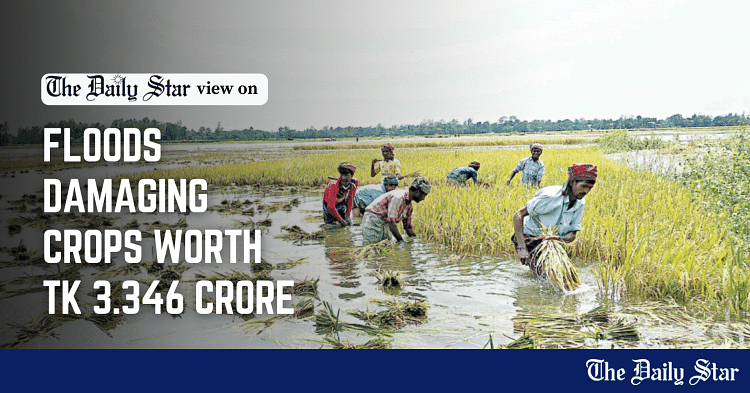
After the recent floods, which claimed at least 71 lives, it is evident that a long, painful rebuilding process awaits affected communities even if they are not out of the woods yet, with the Met office warning about potential short-term flooding again later this month. Saddled simultaneously with the challenges of rebuilding homes and regaining livelihoods, these people will need continued help to weather this crisis. One area of recovery that deserves particular attention is agricultural rehabilitation.

According to an estimate, the recent floods have damaged crops worth Tk 3,346 crore, with about 14.14 lakh farmers in as many as 23 districts affected. A total of 986,214 tonnes of crops—including Aush and Aman paddy, vegetables, ginger, turmeric, fruit orchards, chilies, betel leaf, watermelon, papaya, and tomatoes—have been destroyed. Among the crops, paddy production has suffered the most significant damage. The inundation of Aman paddy fields and seedbeds has resulted in 6,85,000 tonnes of Aman paddy being wiped out, while 1,06,000 tonnes of Aush paddy have suffered the same consequence. That means, Tk 2,519 crore worth of paddy alone has been destroyed. Overall, crops were grown on over 14.3 lakh hectares, about 14.58 percent of which has been damaged.

This is a huge loss for the farmers, and a blow to our food security, with its impacts already being felt in the markets. Fields that swayed with the promise of a bountiful harvest even a few weeks ago now lies barren, their crops rotting in the mud. Beyond crops, the devastation of seedbeds and fish enclosures has further deepened the crisis. In the fisheries sector, the losses in 12 most-affected districts have exceeded Tk 1,590.36 crore. Add to that the damage caused to livestock, poultry, animal feed, aquaculture infrastructure, etc. In the face of such overwhelming loss, the need for swift action to rehabilitate farmers, especially paddy farmers, cannot be overstated.

One of the immediate priorities is to make agricultural inputs—including seeds and fertilisers—readily available for replanting crops. So the authorities must reach out to all farmers in need of help. Reportedly, the government is placing the highest priority on setting up Aman seedbeds to ensure replanting in ravaged fields. Many have still complained of a crisis of seeds and lack of official help. This has to be addressed. One silver lining in this regard, as with the rescue and relief efforts throughout this flood, has been the support of volunteers, particularly students and teachers from various agricultural universities, who are collecting and preparing seeds to help farmers.

Their collaboration and coordination will be a big part of the agricultural rehabilitation process, and they must keep up these efforts. They should also ensure that fish and vegetable farmers and entrepreneurs are not left out. We must bear in mind that many of the farmers have also lost their homes and savings, and without proper financial assistance, they will be unable to purchase the necessary inputs or invest in the recovery of their land. Low-interest loans, grants, and subsidies can be made available to help them get back on their feet.​
 

Enough fertilizer in stock to last till December: Agriculture Secretary
UNB
Published :
Sep 08, 2024 22:17
Updated :
Sep 08, 2024 22:17

1725840639139.webp


There will be no crisis with the stock of fertilizers, whether urea or non-urea, in the country till December, according to the secretary to the Agriculture Ministry on Sunday.

There is at present a stock of 10.63 lakh metric tonnes of fertilizer, Secretary Emdad Ullah Mian said on Sunday.

“With the current stock of fertilizers, the demand can be met till December. However, there is still some crisis in opening the LC of fertilizer import but we are constantly working to resolve the issue,” he said, while speaking at a view-exchange meeting with Bangladesh Agriculture Reporters Forum (BARF) at the ministry.

However, the process to provide incentives to the affected farmers in the flood-hit areas is ongoing, he said.

So far, Tk 193 crore has been allocated for the farmers which will be used for agriculture rehabilitation in phases, he added.

More than 14 lakh farmers in 23 districts have been affected by the floods, but mainly 11 districts have suffered extensive damage and most of the incentives are being given to the farmers of these districts, said secretary Emdad.

Besides, seedbeds of Aman have been made in all the unused lands of the agriculture department in these affected districts and adjoining districts which will be distributed among Aman farmers.

Under the rehabilitation programme, 80,000 small and marginal farmers of nine districts will be given free seeds of Ufsi variety, 10 kg of fertilizer assistance and Tk 1000 cash through mobile banking services for cultivating one bigha of land, he said.

Meanwhile, around 1.5 lakh farmers in 22 districts will be given seeds of different varieties of vegetables and Tk 1,000 in cash for early winter vegetable cultivation at homesteads.

The floods were caused by the onrush of water from upstream and torrential rainfall from August 16 to August 30, he said.

Almost ten lakh metric tonnes of produce including paddy, fruits and vegetable were damaged in the flood, incurring a damage of Tk 3,346 crore.

Besides, a total of 3,72,733 hectares of land have been damaged in the flood.​
 

Women in agriculture: Breaking barriers, shaping futures
Published :
Sep 08, 2024 21:53
Updated :
Sep 08, 2024 21:53

1725841146247.webp


Women comprise half of the country's population, yet they still lack equal access to the formal workforce. In the informal sectors, such as household work and rural farm and non-farm activities, they play a vital role that often goes unrecognised. There is, however, hope that the situation will gradually improve as more and more women are joining the mainstream workforce. Over the past decade, Bangladesh has witnessed a quiet but powerful transformation in its agricultural sector. Women are now stepping forward from management of household chores to undertaking of commercially run small and medium farming enterprises across the country. This shift is not only altering the face of agriculture but also changing the dynamics of the labour force, where females are increasingly outpacing their male counterparts in participation and entrepreneurship. According to the Bangladesh Bureau of Statistics (BBS) Labour Force Survey (LFS) 2022, women aged 15 and above now account for 26.2 per cent of the agricultural workforce, compared with 19.2 per cent of men. This represents a significant 7-percentage-point gap, with women taking the lead in agriculture and its sub-sectors, including poultry, livestock, fisheries, and horticulture.

A recent report published in the Financial Express shed ample light on the success stories of female agro-entrepreneurs. The story of one woman entrepreneur highlights the scope of this transformation. Starting with a modest cattle farm, she has expanded into a thriving enterprise with croplands, fisheries, and livestock. Her journey, along with countless others, signals a broader trend of women turning household farming into commercial operations. Women, often viewed as supplementary contributors to family farming, are now the driving force behind many agricultural enterprises. This not only increases their economic independence but also empowers them to take control of their lives and play important roles in their communities. Women's growing participation in agriculture is also important to meet the shortage of farm labourers as most of the male farmers are migrating to urban areas or abroad with the hope of earning more money. Here, women can fill the vacuum left by their male counterparts.

Analysts believe that this gender shift in agriculture can further boost Bangladesh's agricultural productivity, provided women's capacity is continually upgraded. Various stakeholders-including local startups, banks, and international organisations-are already stepping in to support these efforts. Companies like iFarmer are facilitating access to finance, inputs, and markets, ensuring that women farmers have the resources they need to grow their businesses. These collaborations are dismantling long-standing barriers that have held women back.

In today's world, women are seen as active agents of change. The increase in the number of women in farming and entrepreneurship is just one example of how women are overturning long-standing gender norms that have confined many to household chores for generations. As women continue to cement their foothold in various sectors, it is essential to address the obstacles that may hinder their progress, such as the gender pay gap and sexual harassment. Moreover, to sustain this momentum, government agencies, commercial banks and development partners must intensify their efforts to provide the necessary support. Thus women's access to the same resources and opportunities as their male counterparts can be ensured. Training, access to technology, and financial inclusion are crucial to helping their transition from small-scale operations to larger, more impactful enterprises.​
 

Govt to train 32,000 Farmers

1727048359646.webp

Photo: Collected

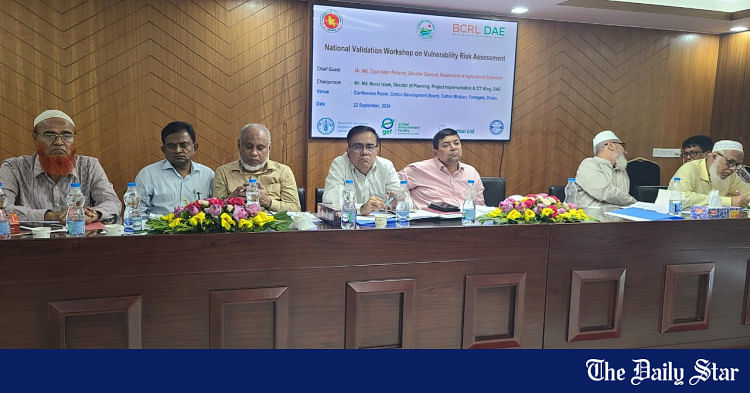
The government has launched an initiative to train 32,000 farmers on climate change adaptation strategies in an effort to build resilience against the growing impact of climate change.

As part of this project, 800 farmer groups from nine upazilas across five districts will be selected to participate in the training.

The plan was revealed at a National Validation Workshop on Vulnerability Risk Assessment held today.

The training aims to equip farmers with the knowledge and skills needed to adapt to changing environmental conditions, helping secure agricultural productivity in the face of climate challenges.

According to officials, the Global Environment Facility (GEF) is funding this project.

The project, with a budget of Tk 66 crore, began in July 2023 and is expected to be completed by June 2028.

Of the total budget, Tk 56 crore has been allocated to the Department of Agricultural Extension (DAE), while Tk 10 crore is set aside for the Department of Environment.​
 

Averting a potential threat to agriculture
Published :
Sep 29, 2024 21:34
Updated :
Sep 29, 2024 21:34

1727660893612.webp


Any possible threat to a vital sector of the national economy, agriculture to be precise, raises alarm and great concern. A back-page story of the Financial Express on Saturday shed light on a looming fertiliser crisis that could hit agricultural output hard during the upcoming Rabi season in January. The recent floods have already severely impacted crop production in 23 districts, affecting over 1.41 million farmers. A total of 986,214 tonnes of crops, including Aush and Aman paddy, vegetables, ginger, turmeric, fruit orchards, chilies and tomatoes, have been completely destroyed. Now a fertiliser shortage, as warned by different government agencies including the agriculture ministry and the Bangladesh Chemical Industries Corporation (BCIC), poses a double threat to the sector.

The economic hardship farmers have been facing due to the devastation of crops caused by the vagaries of nature is undoubtedly a matter of grave concern. The most alarming aspect of this situation, with potentially devastating consequences for the future of agriculture, is the failure of relevant government bodies to import sufficient fertiliser. Thanks to the unparalleled resilience of farmers against all odds, they will somehow recuperate from the losses caused by the floods. However, what will happen to them, to agriculture, and to the national economy if farmers are not supplied with an adequate amount of fertiliser in time? The gravity of this issue cannot be overemphasised. Experts have pointed out that a significant shortage of fertilisers could lead to severe disruptions in agricultural production, potentially spiralling into widespread unrest across the nation.

Despite the government's efforts to manage the situation, including approving the procurement of 140,000 tonnes of fertilisers and seeking to source supplies from various countries, including Russia, there remains an urgent need for coherent and coordinated action. The Bangladesh Agricultural Development Corporation (BADC) currently owes $80 million in bills to international suppliers, a situation that has prompted major suppliers to halt shipments of fertilisers to Bangladesh. Projections indicate that by January 2025, the country's fertiliser stocks will dwindle to critical levels, potentially standing at just 0.438 million tonnes, which is insufficient to meet the needs of farmers during the peak Rabi season. Stakeholders are, therefore, asking the government to increase fertiliser imports and ensure timely payments to suppliers. Moreover, a number of fertiliser factories at home have been closed for months due to gas shortages, exacerbating the situation. It is imperative to ensure that fertiliser production facilities receive adequate gas supplies to resume operations.

Against the backdrop of poor performance in different sectors, the country's agriculture achieved sterling successes over the years in terms of research and development of new strains of crops, crop diversification and a near self-sufficiency in food production. These achievements of the sector not only contributed to the relative economic stability of the country but also to an increased calorie intake of the people and poverty reduction. No laxity should be allowed to vitiate the prospect of this vital sector. Fertiliser and quality seeds are the most fundamental inputs on which the agricultural sector thrives. Even if it requires allocation of special fund for procuring adequate amount of fertiliser, the government must opt for the initiative in the interest of the economy and the nation.​
 

Ensure steady supply of fertilisers for farmers
Looming fertiliser crisis could disrupt food production

1728174369580.webp

VISUAL: STAR

It is quite concerning to learn that the country may soon face a severe fertiliser shortage unless the government takes immediate action to address the production and import shortfalls. According to a report by Samakal, three major fertiliser factories have been closed for an extended period due to the ongoing gas crisis. At the same time, the government has been unable to meet its fertiliser import targets due to the dollar shortage and resultant accumulation of outstanding bills. Complicating matters further are administrative issues stemming from the instability following the July uprising and regime change, which prevented timely decisions. If the government fails to address these challenges promptly, it could disrupt food production in the coming months.

Reportedly, due to gas supply issues, factories under the Bangladesh Chemical Industries Corporation (BCIC) fell short of the fertiliser production target for the fiscal year 2023-24. While the target was set at one million tonnes, only 646,000 tonnes were produced, leaving a deficit of more than 350,000 tonnes. The current fertiliser stocks stand at just 435,000 tonnes, while the demand through March next year is 1.8 million tonnes. The alarming gap between demand and supply (through domestic production and imports) highlights the severity of the problem, requiring swift government intervention.

The question is: how will the government meet this enormous demand with only two of its fertiliser factories operating at present and import efforts being halted? Apparently, the BCIC's attempts to increase fertiliser imports through government-to-government (G2G) agreements have been hampered by the dollar crisis. Furthermore, Bangladesh owes international suppliers $80 million in unpaid bills, leading many exporters from China, Canada, Saudi Arabia, and Morocco to halt shipments.

Given these circumstances, the government must take steps to resolve the crisis urgently. Immediate measures should include settling the outstanding payments to resume imports and avert a supply chain collapse. Additionally, to reduce reliance on foreign imports in the long term, the government should bolster local fertiliser production by resolving the gas crisis and reopening closed factories. This will ensure a more stable and self-sufficient supply chain. We must understand that the fertiliser shortage is directly linked to our food security. Ensuring a steady supply of fertiliser is vital for maintaining agricultural productivity, supporting farmers, and preventing any food crisis. So, the authorities cannot afford to delay action any longer.​
 

Bangladesh's rice output crosses 4cr tonnes for the first time

1728520329263.webp


For the first time, Bangladesh has bagged more than 4 crore tonnes of rice in a fiscal year (FY) thanks to increasing yields of the most grown crop, according to official data.

Local farmers have been gradually switching to high-yielding and hybrid varieties of the cereal grain, bringing the country's need for rice imports down to zero.

Estimates by the Bangladesh Bureau of Statistics (BBS) show that farmers bagged 4.10 crore tonnes of rice in FY 2023-24, up by 4.1 percent year-on-year in what was the highest growth in six years.

The largest growth in yields came from Aman paddy, which was harvested in the previous winter ahead of Boro paddy in the dry season. Boro is the principal rice crop in Bangladesh.

Farmers got about 2.10 crore tonnes of rice through the Boro harvest in the May-June period early this calendar year.

FY24 marked the fifth year of a consistent rise in rice production with Wais Kabir, a former executive chairman of the Bangladesh Agricultural Research Council, linking the spike to yield enhancement.

"One of the main factors is that farmers have shifted to cultivating modern varieties of rice. They are growing more high-yielding and hybrid varieties. The acreage has also risen over time," he said.

Jahangir Alam, an agricultural economist, said increased rice production cut import of the cereal grain.

"We did not have to import any rice [in FY24]. Besides, this did not have much of an impact on prices as it seems public and private stocks were adequate," Kabir added.

Data of the food ministry shows that Bangladesh imported 10.56 lakh tonnes of rice in FY23 compared to zero public and private imports as of October 7 this year.

Kabir also said one of the reasons behind the zero rice imports was a surge in wheat imports.

The use of wheat by bakery and food processing industriesas well as animal feed has increased. This contributed to the reduced requirement for rice, he added.

Imports of wheat, the second most consumed cereal grain after rice, soared 71 percent year-on-year to 66 lakh tonnes in FY24.

M Asaduzzman, a professorial fellow at the Bangladesh Institute of Development Studies expressed doubt over the rice production estimate.

He questioned why prices have gone up if supply was indeed adequate.

"Production has not risen as much as reported. Higher prices mean there is a supply shortage," he said, adding that rice accounts for a good portion of food inflation, which was high in the previous fiscal.

The BBS said food inflation rose to 10.65 percent in FY24 from 8.71 percent the year prior.

The price of rice coarse rice, the cheapest variety, was 7 percent higher year-on-year at Tk 50 to Tk 55 per kilogramme in Dhaka yesterday.

Asaduzzman informed that recurrent floods this year have raised concerns over the cultivation of Aman.

"We will have to import rice if Aman production suffers. And that will be clear at the beginning of November. So, the government should take a decision regarding imports next month," he said.

By the end of August, the US Department of Agriculture (USDA) said Aus and Aman rice acreage and production in Bangladesh might decline because of the floods, particularly the devastating deluge in the eastern part of the country.

Estimates by the Department of Agricultural Extension show that Aman acreage declined to 57.35 lakh hectares this season from 35.5 lakh hectares previously.

Agricultural economist Alam said the overall Aman rice output may be 1.55 crore tonnes to 1.60 crore tonnes this year.

"Farmers had to transplant the seedlings late because of floods. This may cause lower yields," he said while adding that imports might not be needed as stocks of the grains are favourable.

"But the next Boro rice crop is crucial," he said. "We will not need to worry about food security of the staple grain if we can ensure production inputs, mainly fertiliser, at the doorsteps of farmers."

Kabir said the ongoing flood in the Sherpur-Netrokona districts will damage the Aman crop in the fields and it cannot be recovered.

"So, whether we will need to import or not will depend on the next Aman harvest. And the output of the upcoming Boro would depend largely on the management of fertiliser by the government."

"The interim government has to ensure proper management of fertiliser to ensure a good harvest of Boro rice," he added.​
 

Latest Posts

Back