[🇧🇩] Agriculture in Bangladesh

Post a Reply — Share your thoughts or reply to this thread...
Reply
Quick Reply ✓ Posted!
[🇧🇩] Agriculture in Bangladesh
284
17K
More threads by Saif

G Bangladesh Defense

Even a switch to maize fails to save many farmers
Storm and rains in March damaged potato, maize, vegetables and Boro across the country

Sukanta Halder and S Dilip Roy

1775266778084.webp

Nurjahan Begum sits in her storm-damaged maize field at Char Gobardhan of Lalmonirhat, wiping away tears. She said storms and heavy rain in March destroyed 60 percent of her crop. The photo was taken on March 27 at Aditmari upazila. PHOTO: S DILIP ROY

Storms and heavy rain last month damaged a range of crops, including maize. For maize farmers, it was a cruel blow, as many had turned to the cereal after repeated losses from low potato prices.

In northern districts, maize acreage has expanded gradually in recent years.

Farmers were encouraged by demand from the poultry and livestock feed industry, where prices are usually stable. For many, maize seemed a safer option.

This season, the cereal has been cultivated on about 1.27 lakh hectares across five districts of Rangpur region: Lalmonirhat, Kurigram, Rangpur, Nilphamari and Gaibandha, according to the Department of Agricultural Extension (DAE).

The department says the rains in March damaged 520 hectares. The hit was particularly severe in the char areas.

For Nurjahan Begum, the damage was devastating. She cultivated maize on 1.5 bighas of land in Char Gobardhan on Teesta river. The 60-year-old from Aditmari upazila in Lalmonirhat said around 60 percent of her crop was destroyed by the storm.

1775266819767.webp


Having lost much of her investment, Begum fears she may have to take out loans to continue farming.

In its assessment covering 18 districts, the DAE ranks maize as the second-worst-affected crop after potato. Banana and vegetable growers, as well as a number of Boro farmers, have also reported losses.

Potato growers were already under pressure from throwaway prices before the storms hit.

Rafiqul Islam, 45, from Barunagaon at Thakurgaon Sadar upazila, cultivated potatoes on 12 bighas at a production cost of about Tk 11 per kilogramme. Since the harvest began, prices have hovered between Tk 8 and Tk 9 per kilogramme.

After the rains, the rates rose slightly to Tk 13 per kilogramme. But Islam could not benefit. Heavy rain and waterlogging in mid-March left about 40 percent of the crop on four bighas rotting in the soil. The fields became too muddy to harvest.

Md Jamal Uddin, additional director for monitoring and implementation at the DAE field service wing, said they are currently compiling a list of affected farmers. Once the listing is complete, the government will decide on the support measures.

The DAE estimates production costs for potato varieties such as Asterix, Diamond and Granola at Tk 16.64 per kilogramme this season. Over the past month, field prices were somewhat stuck at Tk 8 to Tk 9 per kilogramme, well below the production costs.

In a statement yesterday, Bangladesh Khetmajur and Krishok Songothon, a platform representing landless labourers and small farmers, urged the government to act swiftly.

“Every year, crops are damaged due to various natural disasters. But there is no permanent system for crop compensation. We have been demanding the introduction of crop insurance for a long time,” it said.

“We expect the government to take steps to introduce crop insurance for farmers affected by natural disasters. In addition, we strongly demand the immediate listing of farmers affected by the storm and their compensation.”

Earlier, the Bangladesh Cold Storage Association called on the government to include storm-hit potato farmers in an agricultural rehabilitation programme.

In a letter to the Ministry of Agriculture on March 25, the association said early storms and heavy rain in the first half of the month had severely affected major potato-growing districts.

Waterlogging during the harvest period caused extensive damage to potatoes left in the fields, as well as crops yet to be harvested, the letter said.

Even those who managed to harvest face losses. Poor quality has made much of the crop unsuitable for storage, forcing farmers to sell at Tk 5 to Tk 6 per kilogramme, well below prevailing market rates, according to the association.​
 

Fertiliser, irrigation woes may cut Boro output

USDA says on Bangladesh

Star Business Report

1775956057327.webp

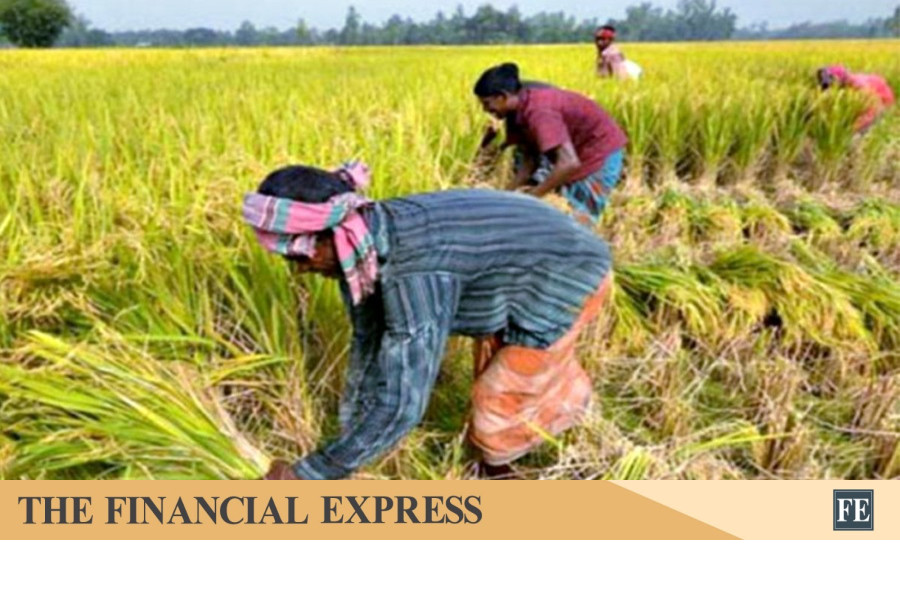
A farmer tries to lift flattened paddy in a field in Khulna after strong winds and heavy rain lashed the area, raising fears of significant crop losses from lodging. The photo was taken in Dumuria upazila on April 8, 2026. Photo: Habibur Rahman

Bangladesh may harvest a lower quantity of rice from the current Boro season as farmers have faced difficulties in ensuring adequate irrigation and fertiliser application, due to shortages of key production inputs, according to a projection by the US Department of Agriculture (USDA).

Growers may bag 2.02 crore tonnes of Boro rice this season in the marketing year (MY) 2026-27, down 1.4 percent year-on-year, even though overall acreage has not declined.

“This reduction in Boro rice yield is caused by disruptions in irrigation and fertiliser application resulting from fuel and fertiliser shortages,” said the US agency in its latest report on Bangladesh’s grain and feed, published at the end of last week.

Boro acreage stood at the same level at 49 lakh hectares this season, USDA said.

The forecast is issued at a time when farmers have begun to harvest Boro paddy in various parts of the country, particularly the northeastern region.

Boro rice is transplanted in the December-January period and harvested in the April-May period every year. The crop depends heavily on irrigation and chemical fertiliser application, and it accounts for around 55 percent of the country’s total yearly rice output.

The USDA said farmers in some areas purchased urea, potash, and phosphate fertilisers at prices above the government-set rates and applied them excessively to potatoes. This has led to a shortage of fertilisers for Boro rice cultivation.

As of the third week of March 2026, limited rainfall has provided some support to Boro crop growth. However, farmers expressed concern about diesel supply shortages for operating shallow and low-lift irrigation pumps, the report said.

As a result of the fall in Boro yield, overall rice production may drop to 3.74 crore tonnes in the marketing year 2026-27, which begins in May each year.

The projected amount is expected to decline by 0.7 percent from 3.76 crore tonnes in the outgoing marketing year 2024-25.

Rice consumption, including use in feed for poultry, cattle and aquaculture, is projected to be 3.91 crore tonnes in MY27, which is 1.3 percent higher than the USDA’s estimate of 3.86 crore tonnes in the outgoing marketing year.

As such, the USDA said rice imports are likely to grow to 15 lakh tonnes in the coming MY27, posting a 7.1 percent increase year-on-year.

The report said rice prices, despite a drop in recent months, are very high in the domestic market. These high prices are anticipated to continue throughout most of MY27 as the cost of rice production is expected to increase.

“In response, the new government is expected to take a cautious approach in order to maintain national food security. It is likely to continue facilitating rice imports through both public procurement via international tenders and government-to-government purchases, as well as private sector participation, to ensure adequate market supply and price stability,” said the USDA.

Between July 1, 2025, and April 8 this year, the public and private sectors have imported 11.19 lakh tonnes of rice, according to data from the food ministry.​
 

PM meets business leaders, seeks to revitalise agriculture sector in northern districts
The meetings were held in two phases over more than three hours, beginning at 11:00 am. The prime minister’s Adviser on Finance and Planning, Rashed Al Mahmud Titumir also attended the meetings.

Special Correspondent
Dhaka
Published: 15 Apr 2026, 13: 36

1776299518884.webp

Prime Minister Tarique Rahman File photo

Prime Minister Tarique Rahman has expressed a strong desire to see the agriculture and agro-processing sectors in northern Bangladesh revitalised.

He has called upon businesspersons and traders to increase investment in the region, assuring them of comprehensive policy support in line with current economic realities.

The prime minister held meetings with leading industrialists and business leaders at the Secretariat on Monday. Details of the discussions emerged following conversations with participants.

The meetings were held in two phases over more than three hours, beginning at 11:00 am. The prime minister’s Adviser on Finance and Planning, Rashed Al Mahmud Titumir also attended the meetings.

Participants in the meetings

In the first phase, attendees included Simeen Rahman, chief executive officer of Transcom Group; Parvez Saiful Islam, CEO of Square Food and Beverage; Kazi Zahedul Hasan, managing director of Kazi Farms Limited, along with Director Kazi Zahin Hasan; Tamara Hasan Abed, managing director of BRAC Enterprises; and Md Azizul Haque, associate director of Seed and Agro.

The second phase included Ahsan Khan Chowdhury, chairman and CEO of PRAN-RFL Group; Md Aminul Islam, managing director and CEO of Nabil Group of Industries; Mohammad Mostafa Haider and Tareq Ahmed of TK Group; SK Shamim Uddin, chairman of Akij Venture Group; Syed Zahurul Alam, CEO of Akij Food and Beverage; Tajwar Awal and Md Alamgir Hossain of Lal Teer Seeds; and Moshiur Rahman, managing director of Paragon Group.

The prime minister also advised greater investment in solar energy, highlighting existing tax incentives. The possibility of reduced tolls on the Jamuna Bridge for electric vehicles was also discussed.
Business leaders indicated that the prime minister has informed them of a follow-up meeting to be held within one to two months.

Focus on agro-industrial growth and policy support

Speaking to Prothom Alo, Kazi Zahedul Hasan said the prime minister sought opinions on how to accelerate industrialisation in northern Bangladesh, particularly in agriculture, agricultural commodities, agro-processed goods, and their export potential.

“He engaged in substantive discussions and asked what measures would be best for this sector. We highlighted both opportunities and challenges, and he assured us that these issues would be addressed,” Kazi Zahedul Hasan said.

As an example, Kazi Farms Limited MD noted that while the government provides subsidies for chemical fertilisers, organic fertilisers do not receive similar support.

“We produce organic fertiliser on a large scale, which is more beneficial for soil health. The prime minister acknowledged this and questioned why organic fertiliser should not receive subsidies, especially as it can serve as an import substitute,” he added.

Investment in agro-processing, energy, and infrastructure

After the meeting, Ahsan Khan Chowdhury told journalists that the prime minister listened attentively to discussions on agricultural development across the country, including northern regions, and provided guidance for appropriate policy action.

He noted that the prime minister encouraged investment in region-specific agriculture and in the sugar industry. Discussions also addressed the ongoing energy crisis, with business leaders emphasising increased reliance on solar power to alleviate current difficulties.

We aim to prioritise economic development and industrialisation in regions best suited to specific sectors. As part of this strategy, we intend to develop the northern region into a hub for specialised agricultural production, preservation, and exports-----Rashed Al Mahmud Titumir, Prime minister’s adviser.

The prime minister also advised greater investment in solar energy, highlighting existing tax incentives. The possibility of reduced tolls on the Jamuna Bridge for electric vehicles was also discussed.

Transcom Group CEO Simeen Rahman told Prothom Alo that discussions with the prime minister focused on developing agro-processing industries and increasing exports alongside meeting domestic demand. “The prime minister asked what we require. We emphasised policy support, and he assured us that such support would be provided,” she said.

Addressing structural challenges in agriculture

Moshiur Rahman of Paragon Group highlighted that food demand is rising despite limited land availability, underscoring the need to increase the production of quality food.

He pointed to maize production as a major challenge for the poultry, fisheries, and dairy sectors, stressing the need to expand maize cultivation on fallow land through both public and private initiatives.

He also raised concerns about inadequate waste management enforcement in industrial facilities, which is contributing to the spread of germs from one factory to another. Strengthening government laboratories to identify and prevent such diseases was also proposed.

The prime minister responded positively, indicating that relevant ministries would address these issues.

Developing northern Bangladesh as an economic hub

Speaking to Prothom Alo, Nabil Group MD and CEO Md Aminul Islam said that the prime minister aims to make northern Bangladesh self-reliant by increasing productivity, generating employment, and enhancing revenue collection from the region.

He emphasised the importance of producing import-substituting goods, expanding agro-processing, investing in solar power, generating energy from waste, improving mango preservation systems, and ensuring optimal land use. The prime minister assured maximum policy support for the region.

TK Group Director Mohammad Mostafa Haider noted that business leaders requested land for commercial farming in northern Bangladesh, along with uninterrupted power supply, low-interest financing, and tax benefits. A bond facility for exporting processed agricultural goods was also raised.

He added that the prime minister stressed achieving self-sufficiency in essential agricultural products while ensuring fair prices for farmers.

Private sector at the centre of economic recovery

Brac Enterprises MD Tamara Hasan Abed described the meeting as a positive step towards nation-building, noting that the prime minister had, for the first time, invited them for an extensive discussion focused largely on northern Bangladesh.

“He sought concrete, practical suggestions on how to enhance productivity in crops, dairy, honey, and other agricultural sectors, and how to attract greater investment. He also said that the government will assist as far as possible. But the government alone cannot accomplish everything,” she said.

Square Food and Beverage CEO Parvez Saiful Islam pointed out that Vietnam exports processed food worth US$6 billion, while Bangladesh is yet to significantly expand its own exports.

He highlighted a shortage of cold storage facilities in northern districts of Bangladesh, leading to 25–30 per cent post-harvest losses, and called for investment in cold storage and long-term solutions for exporting aromatic rice.

Government’s strategic vision

Speaking about the meeting, the prime minister’s adviser Rashed Al Mahmud Titumir told Prothom Alo that the meeting was part of the government’s commitment, outlined in its election manifesto, to ensure equitable and balanced development across all regions.

“We aim to prioritise economic development and industrialisation in regions best suited to specific sectors. As part of this strategy, we intend to develop the northern region into a hub for specialised agricultural production, preservation, and exports,” he stated.

He added that the government’s broader objective is to rebuild and recover the fragile economy through a model centred on investment, production, employment, and revenue generation.

“The private sector lies at the heart of this model. Increased investment will drive production, which in turn will generate employment and boost government revenue,” he said.​
 

Energy shortage to reduce Bangladesh’s cotton import
Saddam Hossain 15 April, 2026, 23:37

The United States Department of Agriculture has again lowered its projection for Bangladesh’s cotton imports to 7.7 million bales for the ongoing 2025–26 marketing year, citing persistent energy supply shortages.

The USDA also warned that additional factors, including logistical disruptions and broader economic instability, could further weigh on imports.

In March, the agency had projected Bangladesh’s cotton imports at 7.9 million bales, revising down from 8 million bales of January projection.

According to its latest report, Cotton and Products Annual: Bangladesh, imports are expected to decline due to disruptions in yarn production and weaker demand in the ready-made garment sector.

Bangladesh, the world’s largest cotton importer and second-largest RMG exporter, may face a prolonged recovery before returning to peak operations and optimal lint utilisation, the USDA said.

Data showed that in the 2024–25 marketing year, which begins in August, Bangladesh imported 8.05 million bales of cotton, up from 7.57 million bales in MY24 and 7 million bales in MY23.

Brazil emerged as the largest single supplier, surpassing India, although West Africa remained the primary source region.

The USDA had earlier cut its projection for Bangladesh’s cotton imports to 8 million bales in January, down from 8.1 million bales projected in August and November last year.

Showkat Aziz Russell, president of the Bangladesh Textile Mills Association, said yarn imports have surged by over 137 per cent in the past year, forcing a significant number of spinning mills to reduce production.

‘Textile millers are also not receiving adequate banking support, which is hampering the opening of letters of credit,’ he said.

He added that banks were increasingly acting as collection agents for the central bank rather than extending credit to clients.

‘Rising yarn imports, lack of banking support and persistent gas and energy shortages have forced many mills to shut down or operate at reduced capacity, leading to lower cotton imports,’ he said.

Meanwhile, the USDA raised India’s cotton import forecast by 200,000 bales to 4.2 million bales, up from 4 million projected in March.

It also projected that Vietnam could overtake Bangladesh as the largest cotton importer by the end of MY26, with imports estimated at 7.8 million bales, although this was revised down from 8 million bales earlier.

The downward revision reflects eight consecutive months of negative growth in Bangladesh’s RMG exports, weak global demand, and ongoing geopolitical tensions.

According to the Export Promotion Bureau, Bangladesh’s RMG exports stood at $28.58 billion during July–March of the current fiscal year, marking a 5.51 per cent decline from $30.25 billion in the same period of the previous year.

Mohammad Hatem, president of the Bangladesh Knitwear Manufacturers and Exporters Association, said exports have declined over the past eight months due to weak global demand, reduced buyer inquiries, shifting sourcing patterns, and the Middle East crisis.

‘Order flows have yet to recover. The disruption in the Strait of Hormuz has pushed up global fuel prices and affected supply chains,’ he said.

The USDA noted that Bangladesh’s textile sector, comprising 526 spinning mills, 990 fabric manufacturing units and 342 dyeing, printing and finishing facilities, meets about 85 per cent of yarn demand for knitwear and 40 per cent for woven garments.

However, the sector is currently navigating significant structural and economic challenges due to domestic gas shortages and global pressures on fuel, LNG, and LPG supplies.

Industry insiders said many mills are operating at only 40–50 per cent capacity because of inadequate gas supply.

BTMA president Russell urged the government to provide stronger policy and financial support to textile millers, including improved access to bank financing.

He also suggested introducing industry upgrade funds, similar to those in India, to boost productivity and employment, while ensuring that support reaches compliant businesses.

Globally, cotton production in MY26 is forecast to increase by more than 0.9 million bales to 121.9 million bales, driven by higher output in China, India, and Pakistan, offsetting lower production in Argentina.

Global consumption is projected to rise by 0.6 million bales to 119.1 million, as stronger demand in China and India offsets weaker demand in Bangladesh and Vietnam.

The USDA estimated Bangladesh’s domestic cotton production at around 153,000 bales from 45,000 hectares in MY26, accounting for less than 2 per cent of total consumption.

Cotton cultivation is concentrated in the western districts of Jashore, Jhenaidah, Kushtia, Chuadanga, Meherpur, and Magura.​
 

Wheat imports exceed FY25 total with 2.5 months to go

Sukanta Halder

1776387110028.webp


Bangladesh has imported a large volume of wheat within nine and a half months of this fiscal year, exceeding the total amount imported in the previous year.

This hike was driven by lower global prices, shifting food consumption patterns, and efforts to narrow the trade gap with the United States, importers said.

According to data from the Directorate General of Food, a total of 62.35 lakh tonnes of wheat were imported in the fiscal year 2024-25 (FY25), combining both government and private sectors.

On the other hand, a total of 67.68 lakh tonnes of wheat was imported during just the July-April period of the current fiscal year 2025-26 (FY26).

Wheat imports in FY26 may reach 72 lakh tonnes, a recent assessment of the Ministry of Food said, reflecting good domestic demand and market conditions.

LOWER PRICES, HIGHER DEMAND

Md Aminul Islam, managing director of Nabil Group, attributes this rise in imports to relatively lower prices in the international market a few months ago. As a result, imports arrived at significantly lower rates.

The fall in global wheat prices encouraged many importers to bring in shipments during the November-December period, said an official at a leading commodity importing and processing company.

Prior to November shipments, wheat was priced at around $275-$280 per tonne. However, during the November-December period, the price dropped to approximately $255 per tonne, the official added.

In Bangladesh, wheat is the second most significant cereal after rice. Local production accounts for approximately 13 percent of the national demand, according to a recent report by the US Department of Agriculture (USDA).

The report forecasts marketing year (MY) 2026-27 wheat harvested area and production at 290,000 hectares and 10.5 lakh tonnes, the same as MY 2025-26 estimates.

A lack of improved varieties has led to a gradual decline in both wheat acreage and production over time. Wheat blast disease, which reduces yields significantly, is one reason for stagnant production, the USDA said.

Meanwhile, food, seed and industrial consumption of wheat in MY 2026-27 is forecast to be 80 lakh tonnes, USDA reports.

Anup Kumar Saha, executive director of Akij Insaf Group, one of the country’s wheat importers, said population growth and improved living standards have contributed to higher food demand.

At the same time, he observed that rice consumption has remained largely stable or has slightly declined.

While current data shows imports have not reached unusually high levels, they may eventually settle around 73 lakhs to 74 lakh tonnes, he suggested.

IMPORT AND CONSUMPTION DIVERSIFICATION

Traditionally, Bangladesh has sourced the majority of its wheat from India due to geographical proximity, the USDA said in the report.

Since India banned wheat exports in May 2022, Bangladeshi importers have sought alternative sources. In the MY 2025-26, Argentina emerged as one of the major wheat suppliers to Bangladesh, as it offers lower prices.

The other major wheat suppliers to Bangladesh include Canada, Ukraine, Russia, the United States, and Brazil, it said.

Bangladesh imports soft wheat primarily from Russia, Ukraine, and other European Union countries, which is mainly used for making cakes, cookies, pastries, and other baked goods.

Abul Bashar Chowdhury, chairman of BSM Group, one of the leading importers of consumer goods, said that rice prices are currently comparatively high, so people are leaning towards wheat as an alternative.

In developing countries, consumption typically increases with economic growth, and demand for wheat rises as it is widely used in fast food and bakery products, unlike rice, which is mainly consumed as steamed rice or a limited range of traditional dishes, he said.

He pointed out that between this year and last, the price of low-grade wheat in the international market has fallen to around $245. After adding cost and freight (CNF) in Chittagong Port, the price stands at about $450.

In contrast, even the lowest-grade rice is not available below $500, he said. Such a price gap is unusual and may have contributed to increased wheat consumption, he surmised.

Chowdhury further added that the government’s efforts to address the trade imbalance with the United States may have led to an increase in government-level imports compared to last year.​
 

Cotton farming boom transforms agriculture in Chuadanga
Our Correspondent . Kushtia 17 April, 2026, 00:01

1776387698006.webp

Cotton plants bearing flowers and mature bolls are seen at a field in Chuadanga recently. Cotton cultivation is expanding rapidly in Chuadanga, marking a notable shift in the district’s agricultural landscape as farmers increasingly turn to the ‘white gold’ cash crop amid rising demand, favourable weather and attractive market prices. | New Age photo

Cotton cultivation is expanding rapidly in Chuadanga, marking a notable shift in the district’s agricultural landscape as farmers increasingly turn to the ‘white gold’ cash crop amid rising demand, favourable weather and attractive market prices.

This season, cotton has been cultivated on about 4,100 hectares across Damurhuda, Jibannagar, Chuadanga Sadar and Alamdanga upazilas, reflecting a significant increase from previous years, according to agricultural officials.

Officials of the Department of Agricultural Extension said that production costs remained relatively low while market prices were favourable, encouraging more farmers to adopt cotton farming.

Moreover, the district’s soil and climatic conditions are well-suited to the crop, resulting in satisfactory yields.

Fields across the region are now covered with cotton plants bearing flowers and mature bolls, as harvesting is underway.

Officials estimated that about 12,000 tonnes of cotton would be produced this season, with a projected market value of about Tk 10.5 billion.

The crop is currently selling at around Tk 3,840 a maund (40 kilograms).

Agricultural experts said that cottonseed processing also offered potential for edible oil production, adding further economic value.

Increased domestic production could help reduce import dependency and save foreign exchange, they added.

According to the Cotton Development Board, cotton cultivation in the region has expanded steadily since its introduction in 1994, when it was grown on a limited experimental basis.

Although initial adoption was slow due to the crop’s long growth cycle, sustained technical support and training have encouraged wider participation.

Farmers said that production costs average about Tk 22,000 per bigha, while profits can reach up to Tk 35,000 per bigha. Government incentives, including subsidies on seeds, fertilisers, pesticides and fungicides, have further supported expansion.

Farmer Harunur Rashid said that cotton farming had become profitable, but noted that a shorter harvesting cycle would attract more growers.

Farmer Hasmat Ali said manual harvesting remained costly, with collection expenses ranging from Tk 13 to Tk 15 per kilgoram, and suggested that mechanised harvesting could significantly reduce costs.

Farmer Nur Hakim said that government support had encouraged more farmers to take up cotton cultivation, adding that growers could earn Tk 35,000-40,000 per bigha after costs and benefit from relatively quick cash returns.

Chuadanga zonal chief cotton development officer Sen Debashish said that the sector was now in a strong position, with farmers showing increasing interest in cotton cultivation.

He said that the department was providing necessary support, including incentives and training programmes on improved farming practices.

However, he said that farmers were receiving slightly lower prices this year than last year, adding that further expansion of cotton cultivation could help reduce import dependence.

According to the United States Department of Agriculture, Bangladesh is the largest cotton importer in the world and the second largest readymade garment exporter.

The county imported 8.05 million bales of cotton in the last marketing year and is projected to import 7.7 million bales in the current marketing year.

However, Bangladesh’s domestic cotton production might be at around 1,53,000 bales from 45,000 hectares in the current year, accounting for less than 2 per cent of total consumption.

Cotton cultivation is concentrated in the western districts of Jashore, Jhenaidah, Kushtia, Chuadanga, Meherpur and Magura.​
 

Paddy prices slide ahead of Boro harvest

Early harvesting, policy uncertainty deepen fears of farmer losses

Yasir Wardad

Published :
Apr 17, 2026 08:40
Updated :
Apr 17, 2026 08:40

1776471734614.webp


A sharp fall in paddy prices ahead of the peak Boro harvest has triggered fresh concern among farmers, who fear mounting losses unless the government intervenes swiftly.

The decline, driven by early harvesting and rising supply, has already eroded returns from older stocks, according to market insiders.

With harvesting gathering pace in low-lying areas and no procurement announcement yet, market uncertainty is growing. Farmers and traders alike are now looking to the government for a stabilising signal before the main harvest begins next month (May).

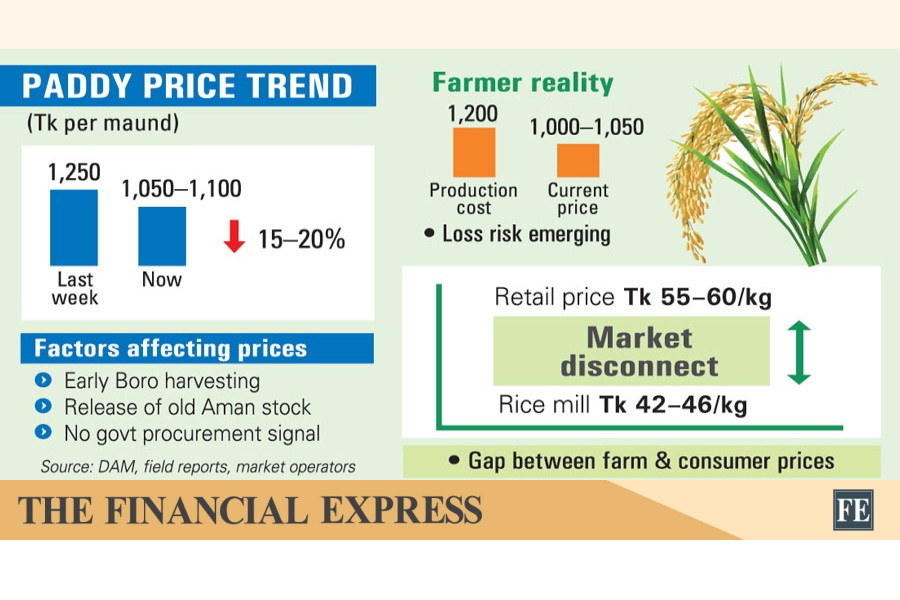
Paddy prices have dropped by 15-20 per cent within a week with the early start of Boro harvesting, raising fears of a deeper fall as peak harvest begins in May.

Paddy from the Aman season, which was selling above Tk 1,250 per maund just a week ago, is now being traded at Tk 1,050-1,100 in Rangpur, Dinajpur, Bogura, Joypurhat and other regions, according to the Department of Agricultural Marketing (DAM).

The sudden drop in older stock has come as a blow for farmers preparing to harvest Boro. As fields turn golden across the country, farmers are now anxiously watching the market and hoping for a timely government signal to avoid losses, insiders said.

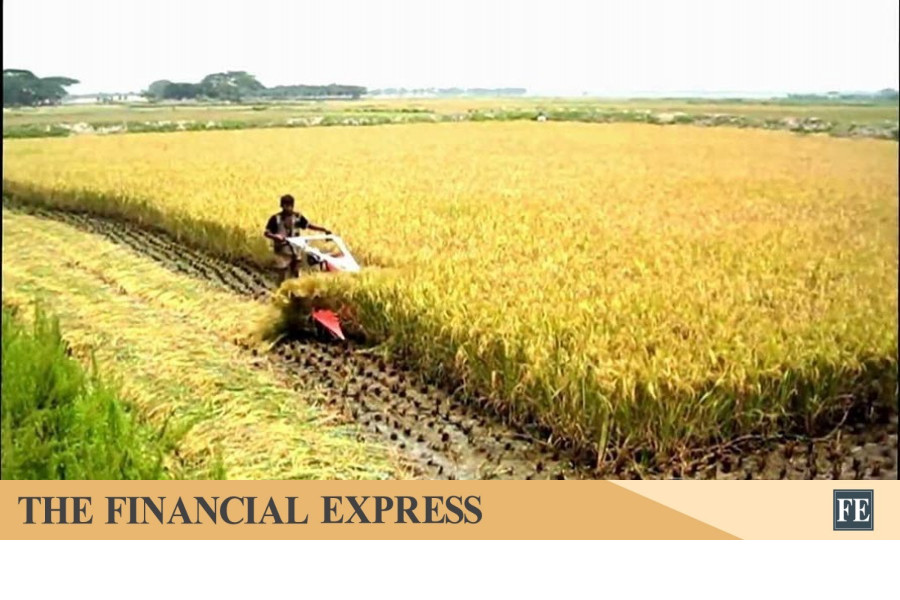
Harvesting has already started in haor, baor, beel and other low-lying areas, adding new supply to the market.

Prices have started falling even before full-scale Boro harvesting, indicating rising supply pressure and weak market confidence.

In contrast, the price of husked rice (coarse variety) has remained stable. It is selling at Tk 42-46 per kg in major milling areas, while retail prices stand at Tk 55-60 per kg in Dhaka, Narayanganj and Gazipur, showing a widening gap between producers and consumers.

"We are in panic," said Rahman Ali, a farmer from Mithamoin in the Kishoreganj haor belt.

"I have already harvested three bighas of land, and another 12 bighas are ready. But the price is only Tk 1,000-1,050 per maund, while production costs exceed Tk 1,200 in my area," he said.

A farmer in Mohanganj of Netrakona expressed similar concern, saying rising costs have worsened the situation.

"Fertiliser, diesel, irrigation and harvesting by combine harvesters - all costs have increased," he said, adding that farmers may face losses if prices fall further.

Omar Faruq, a trader in Nilphamari, said the decline is mainly due to early harvesting and the absence of a government procurement announcement, which usually helps stabilise prices.

Md Shahidul Islam, a rice trader in Dinajpur, said some traders had stocked paddy expecting higher profits but are now releasing it due to falling prices.

"The arrival of new Boro from haor areas and the release of old stock have pushed prices down," he said.

He said that a government procurement announcement usually brings stability. "When the government declares procurement prices, it gives confidence to both farmers and traders. Now everyone is waiting for that announcement," he added.

Agricultural economist Prof Golam Hafeez Kennedy warned that the current trend could have serious consequences if not addressed quickly.

He said farmers growing onion and potato have already suffered heavy losses this year due to sharp price drops, and Boro farmers now face a similar risk.

"If prices fall further during peak Boro harvest, farmers may not recover their costs. This could discourage cultivation in the next season," he said.

He urged the government to announce the procurement price immediately and increase procurement volume to support farmers, especially amid the ongoing global fuel crisis linked to tensions in the Middle East.

Bangladesh produced around 20 million tonnes of rice in the Boro season last year, which accounts for about 55 per cent of total annual production. The government has set a higher production target of 20.6 million tonnes for the current season.​
 

Govt working to make agri sector self-reliant, says minister
Bangladesh Sangbad Sangstha . Cumilla 17 April, 2026, 22:47

1776475687431.webp

Fisheries, livestock and agriculture minister Mohammed Aminur Rashid. | PID photo

Fisheries, livestock and agriculture minister Mohammed Aminur Rashid on Friday said that the government was working to make the country’s agriculture sector self-reliant.

He said that around 70 per cent of the population depended directly or indirectly on agriculture, adding that a strong agricultural sector was essential for a strong national economy.

The minister made the remarks while speaking as chief guest at a ‘Farmer Card’ distribution programme, at the Bibir Bazar High School and College ground in Cumilla Sadar Adarsha Upazila.

He said that the introduction of ‘Farmer Card’ would help eliminate the role of middlemen in agricultural marketing, ensuring fair prices for farmers.

Under the initiative, small, marginal and landless farmers will receive Tk 2,500 in incentives, which they can use to purchase fertiliser, seeds, pesticides and other agricultural inputs.

On agricultural modernisation, the minister said that the government was providing machinery to farmers at 50-70 per cent subsidy, which would also be facilitated through the farmer card system.

He added that agricultural loans and insurance facilities would also be made available through the card.

The minister further said that the government had a plan to expand solar-powered irrigation pumps across the country. Farmers with ‘Farmer Card’ will receive these facilities through cooperatives, he added, saying that the integrated initiatives would help make agriculture self-reliant.

After the programme, the minister inaugurated an agricultural fair set up adjacent to the venue and visited stalls of various departments and agencies under the Ministry of Agriculture.

Cumilla district commissioner Md Reza Hasan presided over the event.

Haji Jasim Uddin MP, Atikul Alam Shawon MP, Cumilla City Corporation administrator Yusuf Molla Tipu, District Council administrator Mostak Mia, agriculture secretary Rafiqul E Mohame and fisheries and livestock secretary Md Delwar Hossain, among others, attended the event.​
 

FROM REMITTANCES TO INVESTMENT

Exporting agri-entrepreneurship

1776819564156.webp

There is a huge potential for Bangladeshi agri-entrepreneurs in Africa, home to nearly 60 per cent of the world’s uncultivated arable land. | The Habari Network

BANGLADESH has successfully ‘exported’ agricultural labour for decades to Qatar and Malaysia, where our farmers have evolved from labourers into entrepreneurs. This article proposes a formal policy shift — from unorganised labour migration to state-backed agricultural investment in English-speaking African nations such as Nigeria, Ghana, Kenya and Zambia. By adopting a structured and strategic approach, Bangladesh can secure external food sources, diversify export earnings and elevate the status of its farmers — from wage earners to global farm managers and investors. Our farmers have already demonstrated remarkable adaptability across diverse climates and regulatory environments, making this transition not only feasible but strategically compelling.

The Qatar experience

IN RESPONSE to food security initiatives, Bangladeshi migrants in Qatar moved beyond manual labour to leasing land in Al Khor and Al Shamal. They now manage over 1,100 farms, contributing to approximately 46 per cent vegetable self-sufficiency. Their production includes eggplants, gourds and herbs — demonstrating both technical competence and entrepreneurial initiative. Many have since diversified into livestock, honey production and experimental fish farming, signalling a transition from subsistence labour to commercial agriculture.

The Malaysia experience

IN THE Cameron Highlands and across palm oil plantations, Bangladeshi workers are widely regarded as ‘indispensable.’ They constitute a significant share of the plantation workforce and often handle complex harvesting and field operations that local labour avoids. Their role has gradually expanded from manual execution to operational management within large-scale agro-industrial systems.

Labour export to agri-entrepreneurship

ACROSS both regions, a clear trajectory is visible: from labourer to entrepreneur. This accumulated experience — managing commercial agriculture under foreign regulatory systems — represents a pre-trained global asset. It is this transformation — from labour export to capability export — that now opens the door to capital-backed agricultural expansion abroad.

Market analysis: selected African countries

FOR an effective pilot phase, focus should be placed on English-speaking countries with abundant arable land, growing food demand and relatively stable policy environments.

Nigeria offers large-scale opportunities in rice and vegetable production, supported by strong domestic demand and linguistic compatibility.

Ghana presents a stable political environment suitable for long-term land leasing, particularly in roots, tubers and horticulture.

Kenya provides entry into high-value sectors such as floriculture and legumes, supported by an established commodity exchange infrastructure.

Zambia stands out for its vast uncultivated arable land and investor-friendly climate, particularly for cereal grains and livestock.

These countries are not merely destinations — they are platforms for outward agricultural expansion, where Bangladeshi farmers can transition from workers to investors within scalable production systems.

Product roadmap: short-term vs long-term strategy

INITIAL efforts should concentrate on crops where Bangladeshi farmers already possess immediate efficiency and short production cycles. Vegetables such as bitter gourd, pointed gourd (patol) and snake gourd offer high yields and strong demand in both diaspora and urban markets.

Horticultural expansion into quick-growing fruits like dragon fruit and malta builds on recent domestic success. Herbs such as mint, parsley and coriander provide high turnover with minimal land requirements. These are not experimental crops — they are proven competencies ready for export replication.


The long-term vision must move beyond cultivation into integrated value creation.

Agro-processing facilities — producing jams, pickles and fruit pulps — can reduce post-harvest losses and increase value retention. Commercial plantations can draw directly on Malaysian experience in palm oil and rubber, as well as East African models for tea and coffee.

Livestock and fisheries, including poultry and aquaculture, can replicate the entrepreneurial diversification already observed in Qatar. The objective is clear: transition from production to value-chain control, where Bangladesh captures not only output but also processing, branding and distribution margins.

Policy recommendations for adoption

GOVERNMENT-TO-GOVERNMENT (G2G) agreements should establish ‘Agri-Technical Visas’ for trained Bangladeshi farmers. The Export Promotion Bureau should create a dedicated agri-export desk to provide real-time intelligence on phytosanitary standards, trade barriers and market access conditions. A pilot program should deploy approximately 500 experienced farmers from Qatar and Malaysia as ‘farmer-contractors’ to initiate operations in Nigeria or Ghana.

For long-term policy, the Planning Commission should establish a migrant agri-investor fund, enabling farmers to access low-interest financing for overseas land leasing, using remittance flows as collateral.

Traceability systems and Good Agricultural Practices (GAP) certification must be implemented to ensure global export compliance.

Vocational accreditation should formalise the status of migrant farmers as technical managers, replacing the outdated classification of ‘unskilled labour.’

To operationalize this structural shift into a fully executable economic program, the policy framework must be anchored in financial, legal and institutional precision. The proposal must integrate a rigorous capital expenditure framework for the initial pilot program, underpinned by specific return on investment projections that quantify the expected impact on national foreign currency reserves through expanded export earnings, while simultaneously establishing bilateral legal protocols to safeguard land-tenure rights and formalise dispute-resolution mechanisms within the regulatory environments of host nations such as Nigeria or Zambia.

By incorporating a public-private partnership module — which links independent farmer-entrepreneurs with established agro-processing firms to produce value-added goods such as fruit pulps and jams — the policy creates a concrete pathway for capturing high-margin branding and global distribution channels. Taken together, these elements transform the proposal from a persuasive conceptual case into an actionable engine for economic sovereignty, ready for immediate adoption by the Planning Commission.

Institutional framework

TO MOVE beyond the limitations of unorganised labour migration, this strategy requires a dedicated institutional anchor. The state should, therefore, establish a foreign direct investment entity — the Bangladesh Global Agri-Investment Corporation — under a public-private partnership model. Rather than farmers seeking fragmented individual leases, this state-backed special purpose vehicle would negotiate sovereign-level land concessions in countries such as Zambia or Nigeria, providing a unified legal umbrella for land-tenure security and dispute resolution.

The corporation would operationalize the migrant agri-investor fund by financing centralised ‘agri-hubs’ equipped with cold-chain logistics, storage and processing facilities. In doing so, it would fundamentally alter the risk structure of overseas farming: Bangladeshi farmers would no longer operate as vulnerable independent migrants, but as equity-holding technical managers within a secure, state-insured value chain.

This institutional architecture makes the policy implementable in concrete terms. Legal risks are transferred from individual farmers to a sovereign-backed entity capable of negotiating and enforcing bilateral agreements. Infrastructure constraints — such as electricity, storage and processing — are resolved through shared agri-hubs that no individual farmer could finance alone. Financial viability improves dramatically, as banks are far more willing to lend to a state-backed corporation than to migrants relying on remittance-based collateral. Most importantly, scale is achieved: a pilot group of 500 farmers can function not as dispersed actors, but as a coordinated ‘mega-farm,’ enhancing bargaining power in global markets and enabling integration into high-value distribution networks.

Conclusion

THE Export Promotion Bureau must move beyond identifying products to identifying capabilities. Our farmers are not merely labour exports — they are mobile repositories of agricultural knowledge, adaptability and entrepreneurial potential. What has already occurred organically in Qatar and Malaysia now calls for deliberate policy design. Transforming them from migrant labourers into global farm owners and managers is not only feasible — it is a data-backed strategic pathway towards Bangladesh’s long-term economic resilience. It marks a decisive shift from exporting labour to exporting capability, and ultimately to embedding Bangladeshi capital and expertise within global agricultural systems.

Dr Abdullah A Dewan, formerly a physicist and nuclear engineer at BAEC, is an emeritus professor of economics at Eastern Michigan University, USA. Humayun Kabir is a former senior official of the United Nations in New York.​
 

Higher exports bring no relief to potato farmers

Retail price in Dhaka remains the same as last year, as per TCB

Mostafa Shabuj

1777509696508.webp

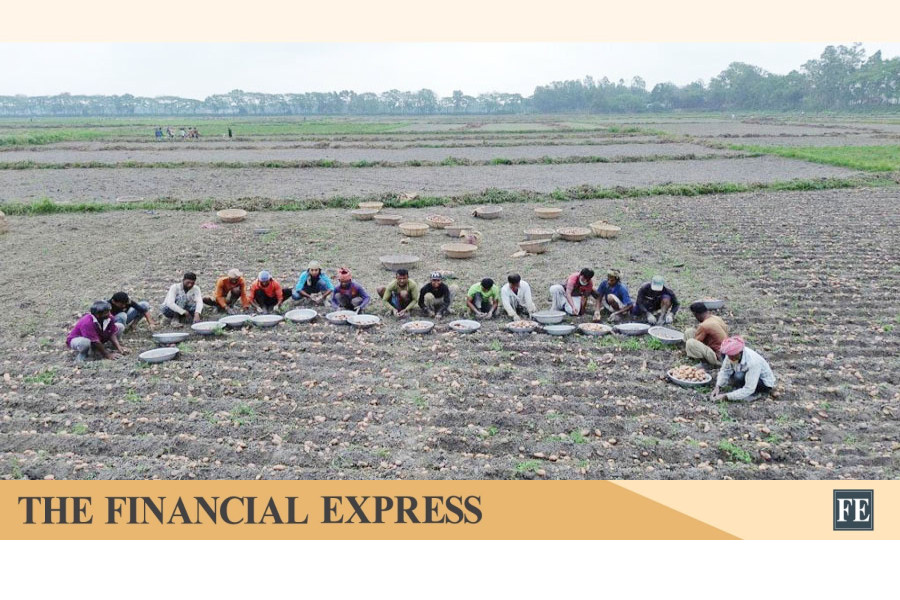
Farmers wash freshly harvested potatoes beside a pond in Gobindaganj upazila of Gaibandha, as growers struggle to sell amid a supply glut that has outpaced demand this year. Photo: Mostafa Shabuj

Potato exports this year so far surpass last year's figures by 10.7 percent, yet that is not enough to cover a surplus in production and bring relief to farmers.

As per provisional data from the Department of Agricultural Extension (DAE), so far, approximately 1.17 crore tonnes of potatoes have been produced this year, compared to about 1.15 crore tonnes last year. This indicates a possible increase of over 200,000 tonnes year-on-year.

The official Bangladesh Bureau of Statistics (BBS) data on potato production is yet to be published, however.

On the other hand, according to the DAE, the Bangladesh Cold Storage Association (BCSA), and the Bangladesh Potato Exporters Association, the annual demand for potatoes in Bangladesh is 85 to 90 lakh tonnes.

BCSA said 36 lakh tonnes of potatoes are currently stored in cold storage, which is 1 lakh tonnes more than last year.

Meanwhile, the Plant Quarantine Wing of the DAE shared that potato exports in FY26 so far (as of April 29) were 52,293 tonnes. Exports in FY25 as of April 30 stood at 47,225 tonnes. The increase stands at a little over 5,000 tonnes, not nearly enough to cover the excess production this year.

Experts in this sector have blamed several factors for the meagre exports, namely, low cultivation of export-quality potatoes and higher production costs than neighbouring nations.

Gap between production and export

AKM Mafidul Islam, deputy director (export) of the Plant Quarantine Wing, said the export momentum is better this year compared to previous years.

“Furthermore, the Vietnamese market has recently opened up for Bangladeshi potato exporters.”

He remained hopeful that potato exports would rise this year.

Ferdousi Begum, chairman of the Bangladesh Potato Exporters Association, said, “The demand for potatoes in Bangladesh is only 85 lakh tonnes, but we have had a surplus since 2007.”

“There is not much demand for Bangladeshi potatoes anywhere except Malaysia.”

Some go to Nepal, but the potatoes get damp from rain in July during the loading and unloading process, and it lowers the quality, she said.

Mostofa Azad Chowdhury Babu, president of the BCSA, said, “The main problem with exporting potatoes from Bangladesh is that the production cost is higher than in neighbouring countries.”

“This year, the cost of producing one kilogramme of potatoes in the Northern districts was Tk 15 and Tk 19 in Munshiganj. In contrast, the production cost in India is around Tk 10. Due to this, Nepal is buying from India instead of Bangladesh this year, Babu said.

“Furthermore, the cultivation of export-quality potatoes in Bangladesh is still significantly low.”

Growing frustration for potato growers

Farmers have complained of low prices despite a record harvest.

Rafiqul Islam, a farmer from Chhatianpara village in Bogura's Shibganj upazila, said his potato crop on 9 bighas of land was damaged by rain. Despite the government's assurances, he has yet to receive any assistance.

Abdul Motin, a farmer at Shibganj’s Kichak bazar, a major hub for potato wholesalers, said that the price of local variety ‘Pakri’ potatoes has dropped by half compared to the start of the season. The surplus supplies have kept prices low, he told this correspondent, while farmers are struggling to sell off the excess.

Discouraged by the lack of profit, Sakiul Islam, a farmer from Rajahar village in Gaibandha’s Gobindaganj upazila, said he plans to only grow enough potatoes for personal consumption in the future.

Nayeem Islam, a farmer from Biala village in Joypurhat’s Kalai upazila, said he plans to drop potato cultivation entirely from next year.

Meanwhile, retail prices for potatoes in Dhaka have remained between Tk 20 and Tk 25 per kg, as per the Trading Corporation of Bangladesh (TCB). The prices were the same this time last year.

Likely measures to contain the crisis

Farmers are currently producing more potatoes than needed, said Abdur Rahim, director general of the DAE.

"For this reason, the government is working to increase potato usage by processing them alongside exports."

He said the government plans to create a database in the future using farmer cards.

“We will then be able to determine exactly how much land should be used for potato cultivation based on national demand,” the DG added.

Talking to The Daily Star, prominent agricultural economist Jahangir Alam Khan listed several measures the government could take to mitigate this crisis.

"This year, the government could set a minimum procurement price for potatoes.”

He suggested the government buy and store at least 10 percent of the total production at this fixed price to stabilise the market, releasing the potatoes later when prices rise.​
 

Bailing out rain-hit haor area's Boro farmers

SYED FATTAHUL ALIM

Published :
May 04, 2026 00:23
Updated :
May 04, 2026 00:23

1777851982635.webp


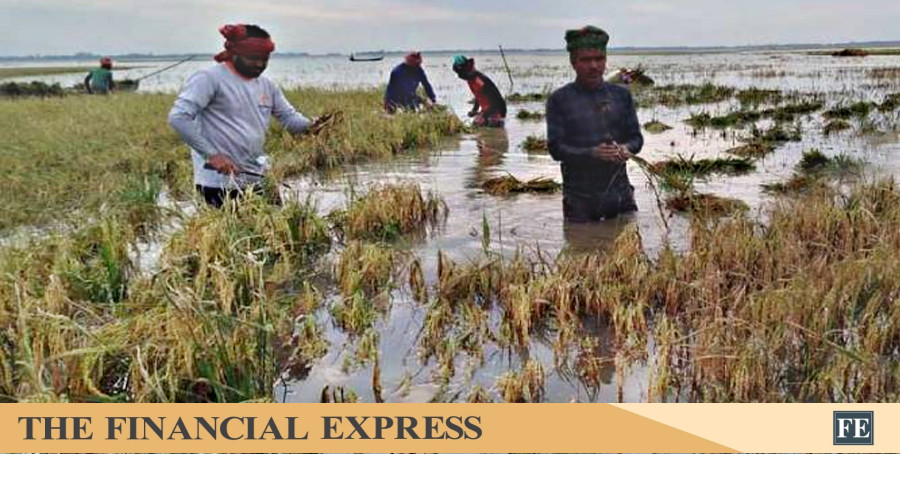
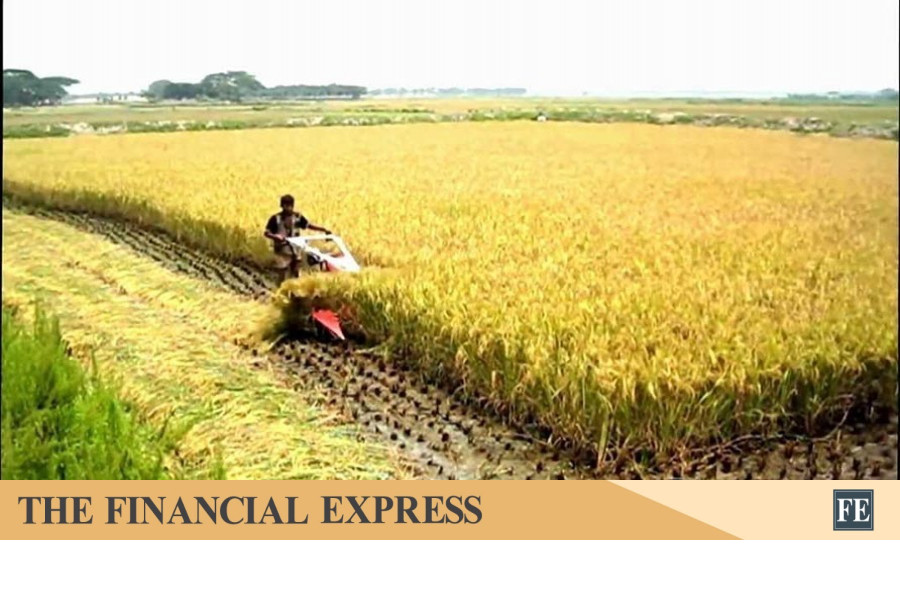
Boro, with its annual share of the country's total rice output ranging approximately from 55 per cent to 60 per cent, is actually the largest contributor to Bangladesh's total rice production. As an irrigated crop of dry season, it outperforms the monsoon-dependent Aman (roughly 35-39 per cent ) and Aus (roughly 7-10 per cent), making it critical for national food security. And of this total share, the seven haor districts, namely, Sylhet, Sunamganj, Moulvibazar, Habiganj, Netrokona, Kishoreganj and Brahmanbaria, together contribute approximately18 to 20 per cent to the total national Boro output. But the haor areas at present are facing serious climate-induced hazards originating from heavy pre-monsoon rain. As a result, the Boro crop of haor districts which is harvested between April and June have gone under water. Notably, in some districts such as Netrokona, most of the haor areas grow a single crop, which is usually Boro paddy. So, this crop is the only source of sustenance for the farmers of the haor areas of the districts all the year round. But due to the heavy rain and flash floods from the upstream region during the harvest time, farmers are facing an uncertain future. There is labour shortage and the harvesting machines, too, cannot work in deep water. Now with their rice under water, the predicament before farmers is not one of just counting losses, but also of their very survival. The indebted farmers, who loaned from banks, credit-giving NGOs or local money lenders, are in dire straits. Meanwhile, the production cost of rice has also increased due to rise in labour and other input costs. Especially, due to the rise in diesel price, the irrigation cost, too, has gone up. According to an estimate, last year a farmer would invest about Tk33 to produce a kg of rice.
FE

Considering the increased cost of labour and irrigation, thanks to diesel price hike, production cost of rice has increased by Tk 2.0 per kg. The rice which has already been harvested is rotting as drying is problematic without chatals (raised platforms for drying foodgrains) and enough sunshine. Obviously, the middlemen are taking advantage of the situation and buying the harvested rice at very low prices from farmers. In some rain-hit haor districts, to avoid their harvested wet rice getting further damaged, farmers are compelled to sell their rice at prices as low as Tk 500 to Tk600 per maund (1 maund is approximately 37.32 kg). District administrations of the haor areas are advising farmers to store rice and wait until the government procurement begins when they might get a fair price for their crop. But it all depends on the weather condition. If rain stops, the water recedes and sunshine returns, they will be able to dry and store their rice and expect better price for their rice from the government. In that case, the government officials in charge of procurement have to be instructed not to harass farmers as they usually do under various pretexts. But poor farmers cannot depend on just assurances of a future which is uncertain. They actually need government's financial support for survival. According to an estimate, this year, boro paddy was cultivated on 6.3 lakh hectares of land in the seven haor districts. It is feared that about 77,000 hectares of boro crop in the haor basin might have gone under floodwater. Going by the record of Boro yield of the previous year at four metric tons per hectare, around three hundred thousand metric tons of Boro crop in the haor basin are at risk of being damaged by floods. According to the Department of Agricultural Extension (DAE), that is a significant portion of the total Boro output at 21.30 million metric tons (last year's yield). However, it is not for the first time that haor basin farmers have been facing livelihood-destroying crop losses owing to vagaries of nature.

In fact, the pre-monsoon rainfalls, flash floods from the upstream regions from across the border, breach in the embankments and other kinds of unpredictability are not quite a new experience in the haor areas. In other words, this boro harvesting season's downpours or flashfloods are not something out of the ordinary. In fact, to haor farmers, such experience is common at least for a decade. So, one wonders, why were no appropriate measures taken in advance to protect haor farmers from the predictable natural calamities? In most cases, the makeshift embankments built by farmers cannot stand the pressure of flashfloods whether caused by untimely downpours or rush of water from the upstream. So, this season's damage to boro rice due to the inundation caused by rain could well be averted through early intervention by the government. The farmers of the inundated haor areas complain that there is no channel to drain out the accumulated rain or floodwater. If there was arrangement to empty the water from the flooded boro fields, they could harvest the crops to prevent those from rotting under water. So, purely blaming the untimely rain won't do. Some experts hold the view that as part of helping the rain-hit boro farmers, the government can buy the wet boro rice from farmers and get those dried from the chatals in other areas not affected by rain.

The chatal owners would help dry the wet paddy and even husk it into rice upon payment of the required charges. The cost of drying and husking the wet rice could well be adjusted from the higher price (Tk1400 per maund) at which the government is going to purchase unhusked rice from farmers this year. In fact, there are many ways to stand beside Boro farmers of the haor areas in need. The good news is that the government is learnt to have brought forward the date of purchasing the husked rice from farmers of six haor districts from 15th May to 3rd May when both husked rice and boro paddy would be bought from farmers. That would definitely be of help for farmers at a loss with rain-damaged Boro rice. While haor area Boro yield is part of ensuring the nation's food security, the upcoming Aman season would also play a significant role in that respect. So, procuring the required amount of fertilizers for the purpose will now be the main task before the government. There are 0.34 million tons of urea reportedly in government stock, where 0.4 million tons is considered safe level. The government has been trying to buy 0.2 million tons of urea from private sources through inviting tenders but with no success so far. So, ensuring an adequate stock of fertilizers for the next cropping seasons remains a challenge before the government.​
 

Making crop insurance a reality

Neil Ray

Published :
May 11, 2026 01:09
Updated :
May 11, 2026 01:09

1778465279226.webp


In the context of increasing natural calamities, crop insurance for farmers is not an option but an imperative. Farmers who feed the nation certainly deserve to be insured in time of devastation of or damage to their crops. The reversal suffered by farmers in haor (wetland or backswamp) areas despite a bumper crop they grew this year speaks volumes for such a state-initiated protection measure. Catastrophes such as this not only render them near paupers but also threaten the nation's food security or sovereignty. Reports have it that many share croppers in the haor areas are now on the run in order to avoid their money lenders. The loss of the fruits of their labour in the field leaves no option for them to payback the loans taken from money lenders.

So the gravity of the situation cannot be overemphasised. If the crops were insured, farmers did not have to face the crisis at its worst. When State Minister for Power, Energy and Mineral Resources Aninda Islam Amit announces that the government is working on the introduction of crop insurance, it pours honey not only into haor farmers' ears but also ears of the country's farmers in general. It is too early to comment on the progress of the government policy. The state minister made the statement at the time of inaugurating the Boro paddy procurement drive in Jashore. Introduction of crop insurance is a most important and serious matter. This is a preserve of the Ministry of Agriculture. Any off-hand or casual statement by a minister of another ministry would better be avoided. The involvement of Aninda Islam's ministry with that of agriculture is in the areas of input like power that helps irrigation of paddy field.

Agriculture may not hold the premier position in national economy but it still employs the largest size of workforce contributing 11-13 per cent to the gross domestic product (GDP). The agribusiness sector is growing at eight per cent annually. If the new government is serious about insuring farmers, it has to do so on the basis of reliable data on agriculture for at least a decade or more. In a natural calamity-prone country like Bangladesh, the task may prove to be a daunting challenge. When crop insurance is an objective, it would be wise to introduce the system phase by phase. The prime candidate for this will be the staples.

Right now the country's economy has been weakened by the energy crisis and unless the ability to finance such programmes improves it will remain a pipedream. Perennial budget deficit on account of gaps between revenue collection and set targets is a constraint that has to be overcome fast. To do so pragmatic measures need to be taken. The tax collection regime has to be improved and at the same time management of the agriculture sector recalibrated for avoidance of crop losses. It is clear from reports on harvest in the haor areas that shortage of labour has been one of the problems responsible for damage and destruction of paddy. Had there been a quick response such as employing crop reapers and combined harvesters following the early sign of flash floods, the crop loss could be minimised to a large extent.

This government has done a good job by introducing Farmers' Card which will help farmers purchase agricultural inputs at subsidised prices and access low-interest agricultural loans. Farmers' welfare may be further advanced by mechanising agriculture. Cooperatives of farmers can be formed for providing those with harvesters at easy-term payment. This way the insurance programme will be helped by the theory of 'prevention is better than cure'. In fact, the whole gamut of paddy cultivation starting from sowing seeds or planting paddy plants to harvesting has to be reviewed with an emphasis on further research on development of newer varieties of paddy for early harvest.

At the same time canal excavation has to be carried out meaningfully with direct connection to rivers and other water bodies. Dying rivers have also to be revived by dredging and driving out encroachers. If rivers die, canals linked to those will have no use. All such measures will contribute to successfully implementing an affordable crop insurance policy.​
 

Safeguarding agriculture without weakening farmers' resilience

MD. REFATUL HOSSAIN

Published :
May 14, 2026 23:42
Updated :
May 14, 2026 23:42

1778802377342.webp


The opinion article "Making Crop Insurance a Reality" of this esteemed daily on May 11, 2026 rightly highlighted the growing vulnerability of agriculture due to climate change and natural calamities. The concern is genuine and timely. Floods, droughts, cyclones, salinity intrusion, pest attacks and unpredictable weather are increasingly threatening food production and rural livelihoods. In a country like Bangladesh, where agriculture still supports millions of families, any discussion on farmers' protection deserves serious attention.

However, while appreciating the intention behind promoting crop insurance, there remains another side of the debate which deserves equal consideration. Crop insurance may not necessarily be the most effective or sustainable solution for our agricultural reality. Rather, overdependence on insurance could gradually weaken the spirit of resilience, innovation and responsibility among farmers.

Agriculture has always been an uncertain profession, but in the haor belt it becomes far more risky, challenging, and unpredictable, where a single flash flood can undo an entire season's effort within hours. Farmers battle not only natural disasters but also fluctuating market prices, rising production costs, shortage of quality inputs, dependency on imported hybrid seeds, lack of technical knowledge and inadequate storage and marketing facilities. Despite all these adversities, our farmers continue to produce food with extraordinary perseverance. The strength of our agriculture lies not merely in financial compensation but in the determination and adaptability of the farming community itself.

The haor ecosystem of Bangladesh is topographically distinct from other agricultural regions. These vast bowl-shaped wetlands remain submerged for a large part of the year and become cultivable only in the dry season. This unique landscape creates a single-crop dependency, mainly on Boro rice, making the entire system highly vulnerable. Historically, flash floods are a recurring and almost predictable phenomenon in haor areas. Sudden upstream rainfall in the hills can inundate fields just before harvest, often within hours, leaving farmers with little or no time to save their crops. As a result, agriculture in haor regions is not just difficult-it is inherently uncertain. Farming here seems like as a "chance crop system". Even after months of careful cultivation, there is no guarantee of harvest. A single untimely flood can erase an entire season's effort, investment, and hope. This constant risk has shaped the mindset and practices of haor farmers, who cultivate with resilience despite knowing the odds.

Introducing crop insurance on a large scale may create unintended consequences. Once compensation becomes assured, a section of farmers may become less attentive towards proper farm management, risk mitigation practices and crop diversification. The tendency to rely on insurance benefits rather than preventive measures could gradually reduce productivity and accountability in farming practices. In many countries, insurance schemes have also suffered from false claims, corruption, delayed settlement and administrative complexities.

Moreover, implementing crop insurance in a developing agricultural economy is not simple. Most farmers in Bangladesh are smallholders cultivating fragmented lands. Assessing actual crop damage accurately across millions of farms would require huge administrative capacity, transparent monitoring and strong institutional integrity. Without these, insurance programmes may become financially unsustainable and vulnerable to misuse.

Instead of prioritising insurance, greater emphasis should be placed on strengthening the agricultural foundation itself. Investment in climate-resilient agriculture, improved irrigation systems, research on stress-tolerant seed varieties, farmer training, digital weather forecasting and easy access to quality inputs can reduce risks more effectively than post-disaster compensation. Strengthening agricultural extension services and ensuring fair market prices would empower farmers to withstand shocks with dignity and self-reliance. The government may also consider expanding emergency rehabilitation funds and direct disaster recovery assistance for genuinely affected farmers rather than introducing a nationwide insurance dependency culture. Timely subsidies, low-interest agricultural loans and community-based support systems can often provide faster and more practical relief.

A more practical alternative to crop insurance is a rapid, government-led emergency support system that responds immediately after disasters and helps farmers restart production without delay. After any major calamity-flood, flash flood, cyclone or drought-the priority should be quick assessment of real crop loss through local agricultural offices, union-level committees and extension workers. Institutions like the Department of Agricultural Extension (DAE) already have field presence down to the grassroots, which makes them better suited for swift verification and targeted response than a complex insurance mechanism. Based on verified damage, the government can provide emergency incentive assistance in the form of quality seeds, fertilisers, irrigation support, and limited cash grants. This support should be timely and sufficient so that farmers can prepare for the next cropping season without falling into debt or distress sales. In vulnerable regions such as the haor areas-where a single flash flood can wipe out an entire Boro harvest, this kind of immediate input support is far more effective than delayed insurance payouts. Such an approach ensures three key advantages. First, it maintains farmers' motivation and accountability, as support is secured to recovery rather than compensation claims. Second, it reduces administrative complexity and the risk of misuse associated with insurance schemes. Third, it strengthens the existing agricultural support system by making it more responsive and field-oriented. In essence, timely rehabilitation support, not post-loss compensation dependency, can better protect both farmers and national food security-especially in high-risk ecosystems like the haor belt.

The future of agriculture should not solely depend on compensation after loss, but on building the capacity to prevent and withstand those losses. Farmers need empowerment more than entitlement. The remarkable progress of Bangladesh's agriculture over the decades was achieved not through insurance protection, but through the hard work, resilience and adaptation of its farmers under persistent uncertainty.

Therefore, while crop insurance may appear attractive in theory, its long-term implications and practical limitations must be carefully evaluated before considering it as a universal remedy for agricultural vulnerability. Sustainable agriculture will emerge not from dependency, but from resilience, innovation and collective responsibility.

Md. Refatul Hossain, former Additional Director, DAE and Senior Consultant, Agronochain Ltd.​
 

Tk 350 billion for agriculture sought as BAEA urges higher subsidies

FE ONLINE REPORT

Published :
May 19, 2026 19:41
Updated :
May 19, 2026 19:41

1779233747794.webp


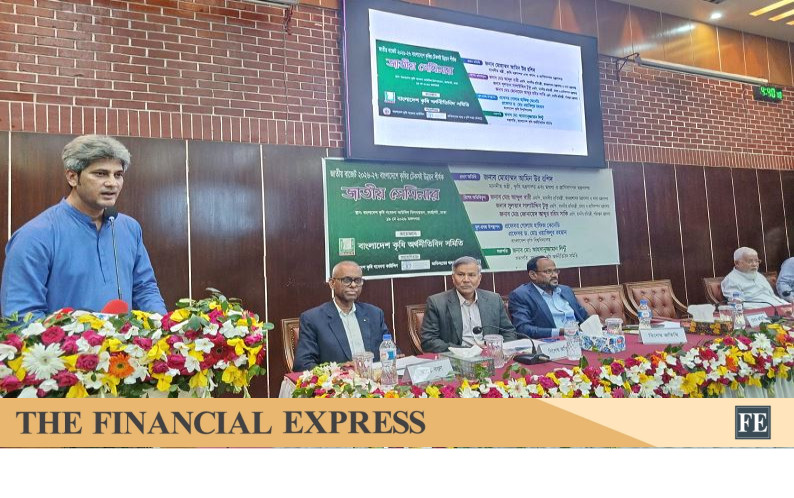
The Bangladesh Agricultural Economists Association (BAEA) on Tuesday demanded that the government raise agricultural subsidies to Tk 350 billion in the national budget for fiscal year 2026-27, more than double the current allocation of Tk 172.41 billion, citing rising production costs and growing climate vulnerabilities.

The demand came at a national seminar titled “National Budget 2026-27: Roadmap for Sustainable Agricultural Development in Bangladesh,” held at the auditorium of the Bangladesh Agricultural Research Council in Farmgate, Dhaka.

BAEA also proposed increasing the agriculture sector’s share in the national budget to 9.5 per cent from the existing 5.9 per cent. Based on a projected national budget of Tk 9.3 trillion, the organisation suggested allocating around Tk 883.5 billion to agriculture.

The keynote paper was presented by Professor Golam Hafeez Kennedy and Professor Dr Md Wakilur Rahman, both professors at Bangladesh Agricultural University.

The paper said global energy market instability, the war in Ukraine, tensions involving Iran and the Strait of Hormuz, and exchange rate volatility have sharply increased the costs of fertiliser, fuel, irrigation, seeds and agricultural machinery, putting additional pressure on farmers.

It noted that around 1.4 million farmers were affected by floods in 2024, causing agricultural losses estimated at Tk 33.46 billion.

Flash floods in the haor region this year also damaged boro paddy cultivation on nearly 53,000 hectares of land, affecting about 230,000 farmers.

The association proposed expanding the farmer card programme, excavating and re-excavating 20,000 kilometres of canals, introducing agricultural insurance, establishing specialised cold storage facilities, expanding solar-powered irrigation systems and offering incentives for local agricultural machinery manufacturing.

The paper further said Bangladesh’s educated unemployment rate stands at around 13.54 per cent and suggested that agro-based startups, agri-entrepreneurship and rural agro-processing industries could generate substantial employment opportunities for youth.

Agriculture Minister Mohammad Amin Ur Rashid attended the seminar as the chief guest, while Fisheries and Livestock State Minister Sultan Salauddin Tuku and Planning State Minister Md Jonayed Abdur Rahim Saki were present as special guests.

Saki said the government had approved an Annual Development Programme (ADP) worth Tk 3 trillion for FY2026-27, 30 per cent higher than the previous fiscal year.

According to him, the agriculture sector received Tk 108.43 billion under the ADP, accounting for 3.61 per cent of the total allocation. The programme also includes funding for 122 ongoing projects and a block allocation of around Tk 20.09 billion for agriculture.

He said the government was preparing a new strategic framework to replace the traditional five-year plan with short-, medium- and long-term targets covering 180 days, one year and five years.

Saki also identified agro-processing as a major growth area but warned that production growth alone would not be enough to achieve broader economic targets.

Referring to challenges in the farm sector, he mentioned shrinking farmland, declining soil fertility, capital shortages among marginal farmers, limited market access and an acute shortage of agricultural labour.

The seminar was chaired by BAEA President and agricultural entrepreneur Md Ahsanuzzaman Lintu.​
 

Govt expects no urea shortage for Aman season

BCIC chairman expects stock to exceed Aman demand of 6.5 lakh tonnes by June 30

Sukanta Halder and Mohammad Suman

1779592797394.webp


The government expects no shortage of urea fertiliser during the upcoming Aman season in July–August, with officials from relevant agencies saying existing stocks, domestic production and planned imports are sufficient to meet demand.

Bangladesh's urea requirement during the Aman season stands at 6.5 lakh tonnes, according to the Ministry of Agriculture. As of May 20, the country held 3.9 lakh tonnes in stock.

Md Fazlur Rahman, chairman of the Bangladesh Chemical Industries Corporation (BCIC), said three urea factories are currently operational at full capacity, producing a combined 6,000 tonnes per day.

Local production from May to June is expected to reach 3-3.5 lakh tonnes.

He added that a total of 1.2 lakh tonnes has been confirmed for import, including 40,000 tonnes from Saudi Arabia and 80,000 tonnes from the UAE, with an additional 40,000 tonnes under negotiation with Saudi Arabia.

The BCIC chairman expects the total stock to exceed 6 lakh tonnes by June 30.

Officials stressed, however, the importance of preventing any artificial shortage.

Rahman also said that international urea prices have increased significantly, rising from about $460-$470 per tonne previously to around $730 per tonne currently.

PARTIAL PRODUCTION RECOVERY

Gas shortages, triggered by fears of supply disruptions amid escalating Middle East tensions, had forced five of the six major urea fertiliser factories to shut from March 4, severely affecting domestic production for nearly two months.

Three of the factories resumed operations from May 1 after gas supply improved, according to BCIC officials.

The three factories now operating are Karnaphuli Fertilizer Company Ltd (Kafco), Ghorashal Polash Fertilizer PLC and Shahjalal Fertilizer Company Ltd.

“About 247 million cubic feet of gas per day are required to run all six factories, including Kafco, at full capacity,” said Moniruzzaman, director (commercial, production and research) of BCIC, told The Daily Star.

“Currently, we are operating three factories with around 170 million cubic feet of gas supply daily,” he added.

Bangladesh's six factories have a combined capacity of around 7,100 tonnes per day, requiring about 247 million cubic feet of gas daily to run at full capacity.

The remaining three BCIC-run factories -- Chittagong Urea Fertilizer Company Limited, Jamuna Fertilizer Company Ltd and Ashuganj Fertilizer and Chemical Company Ltd -- remain shut due to inadequate gas supply.

Kafco is a multinational joint-venture fertiliser plant in which BCIC holds a major stake alongside companies from Japan, Denmark and the Netherlands, while the other five factories are fully operated under the corporation's management.

During the peak of the crisis in March, only Shahjalal Fertilizer remained operational.

Moniruzzaman informed that the corporation had requested the government to restore gas supply to the remaining three factories by June 1 to resume full-scale production.

A BCIC official, requesting anonymity, said the corporation had set a production target of 10 lakh tonnes of fertiliser for fiscal year 2025-26, but only around 6 lakh tonnes were produced in the first ten months through April, making the target increasingly difficult to achieve.

The gas crisis also had knock-on effects on DAP fertiliser production.

Alongside urea, Kafco and Chittagong Urea Fertilizer Company also produce ammonia, a key raw material for DAP fertiliser production. When the two factories shut in March, the ammonia supply dried up. As a result, the DAP Fertilizer Company Limited, the country's only DAP-producing plant, was forced to suspend production for nearly two weeks from April 18.

After Kafco resumed operations on May 1, ammonia supply restarted, allowing the DAP plant to resume production from May 8, said Robiul Alam Khan, deputy general manager (commercial) of the company.

Established in 2006, the DAP plant has two production units with a combined capacity of 800 tonnes per day. Output has fallen sharply in recent years due to repeated supply disruptions, from around 92,600 tonnes in FY24 to about 49,500 tonnes in FY25.

The total fertiliser demand in the country is around 68-69 lakh tonnes, of which the demand for urea is 26 lakh tonnes, according to the Department of Agricultural Extension (DAE).

BCIC annually produces around 10-15 lakh tonnes of fertiliser through its six urea factories and one DAP fertiliser plant, while the rest of the demand is met through imports.​
 

Surge in agro-employment at the expense of manufacturing!

Wasi Ahmed

Published :
Jun 03, 2026 00:23
Updated :
Jun 03, 2026 00:23

1780444741885.webp


Bangladesh's renewed dependence on agriculture for employment presents a paradox that should concern policymakers as much as it comforts them. In a country where agriculture has historically been the backbone of livelihoods, the sector's ability to absorb workers during economic uncertainty is undeniably reassuring. Yet the latest evidence suggests that this trend is not the result of a thriving rural transformation, but rather a symptom of stagnation in the manufacturing and services sectors -- the very engines that once drove Bangladesh's remarkable poverty reduction and economic ascent.

A recent World Bank study presented at a discussion meeting in the capital paints a sobering picture of the labour market between 2016 and 2024. Nearly seven out of every 10 new jobs created during the period emerged from agriculture, while manufacturing steadily lost momentum and shed workers. Most troubling is the gender dimension of this reversal. Women, who had gradually entered factories and urban services over the past two decades, bore the brunt of the setback. Around 1.1 million female jobs disappeared from industry and another 0.8 million from services, pushing many women back into low-productivity agricultural work.

This reversal represents more than a statistical shift; it signals a retreat from the structural transformation that once defined Bangladesh's development story. For decades, export-led industrialisation -- especially through the ready-made garment sector -- enabled millions of rural women to join the formal workforce, gain financial independence and contribute to household mobility. The migration of labour from farms to factories was not merely economic progress; it was social progress. The current re-concentration of labour in agriculture, therefore, raises difficult questions about the sustainability of Bangladesh's growth model.

Agriculture undoubtedly remains essential to the nation's economy and food security. However, when workers move into agriculture because better opportunities are unavailable elsewhere, the outcome is fundamentally different from a productive agricultural renaissance. The World Bank rightly notes that this shift towards low-productivity employment weakens labour income growth and slows poverty reduction. Low wages, seasonal instability and limited technological advancement continue to characterise much of the rural economy. As more workers crowd into the same sector without corresponding productivity gains, underemployment inevitably deepens.

The consequences are becoming visible. High inflation has eroded purchasing power across the country, particularly among low-income households whose wages have failed to keep pace with rising living costs. According to the study, an additional 1.4 million people were expected to fall into poverty in 2025, while the national poverty rate may rise from 18.7 per cent in 2022 to 21.4 per cent this year. Such projections serve as a stark reminder that economic resilience cannot be measured solely through GDP figures.

The broader economic outlook also reinforces these concerns. Bangladesh's projected GDP growth slowdown to 3.9 per cent in fiscal year 2025-26 reflects not only global uncertainties but also deep domestic structural weaknesses. At the heart of these weaknesses lies the inability of the private sector to generate sufficient employment for a rapidly expanding working-age population. As World Bank economist Dr Dhruv Sharma observed, improving the business environment is central to reversing this trend. Regulatory uncertainty, inconsistent taxation policies and barriers to firm expansion continue to discourage investment and job creation.

Indeed, one recurring theme throughout the discussions has been the lack of coherence in Bangladesh's economic incentives. The country's export success has long been concentrated within a narrow industrial base, particularly ready-made garments, while other sectors remain constrained by unequal tax treatment and excessive protectionism. Protective tariffs may shield domestic industries temporarily, but they also keep prices artificially high and discourage innovation and export diversification. An economy overly dependent on one sector inevitably becomes vulnerable to shocks, whether external or domestic.

The challenge becomes even more urgent when viewed through the lens of youth unemployment. With nearly 40 per cent of young people estimated to be unemployed, Bangladesh faces the risk of a demographic burden rather than a demographic dividend. A generation entering adulthood without meaningful employment opportunities may lose confidence not only in the economy but also in the institutions governing it.

The reflections shared by economists and business leaders at the Policy Research Institute (PRI) event underscore the need for a strategic reset. The future of the country lies in productivity, skills, innovation and institutional credibility. Emerging industries may require temporary state support, but such protection must come with clear sunset clauses and accountability mechanisms.

At the same time, restoring investor confidence remains critical. Concerns raised by business representatives regarding abrupt fiscal measures and inconsistent taxation policies highlight a deeper issue of policy unpredictability. Investors, whether domestic or foreign, require stability and transparency to commit long-term capital. Without investment, sustainable job creation will remain elusive.

Bangladesh's development journey over the past three decades has been remarkable precisely because it demonstrated how growth, employment and poverty reduction can reinforce one another. That virtuous cycle now appears under strain. Agriculture's capacity to absorb workers may provide temporary relief, but it cannot be a substitute for a vibrant manufacturing sector and dynamic services economy. The country's next phase of development will depend not on preserving old advantages, but on building new ones - through institutional reform, diversified industrial growth and a labour market capable of offering dignity, security and opportunity to its people.​
 

Quality seeds and durable agri-food systems

Muhammad Zamir

Published :
Jun 03, 2026 23:19
Updated :
Jun 03, 2026 23:19

1780532636729.webp


Farmers harvest potatoes in Munshiganj on April 1, 2026. Seed quality contributes to better Potato production —Xinhua Photo

Bangladesh needs to take note of the different dimensions pertaining to the use of proper seeds for improving our agricultural output and also facilitating farmers. The present government has already taken significant measures to assist famers within the paradigm of agriculture in Bangladesh.

It is generally noted that the quality of seed determines the quality of the produce and this consequently affects the sustainability of the entire agricultural value chain and also influences everything from crop yield to nutritional value. The United Nations Food and Agricultural Organisation (FAO) has particularly emphasised that "we cannot have good crops if we do not have quality seeds", a principle that underlines global efforts to improve food and nutritional security.

In this context F. Phiri, Climate Change and Health Advocacy analyst has referred to two related parallel global events during May 18 to 23, 2026 in Lisbon : one on global health by the World Health Organisation (WHO) and the other on the importance of seeds to global agriculture and food security, organised by the International Seed Federation (ISF). With a record attendance of more than 1,700 delegates and guests representing over 900 companies and organizations, the discussion called for a collective commitment and action at a moment when the multilateral frameworks underpinning global food and nutritional security are under unprecedented strain.

The Congress took place amid mounting pressure on global agri-food systems, sparked by conflicts and worsened by climate change. It may be recalled that in 2025, two famines were declared in a single year for the first time. This year, in 2026, recent geopolitical tensions continue to threaten global trade and economic stability, while an estimated 700 million people worldwide, primarily in Africa, Western Asia, and South Asia still face hunger each year. Experts have also warned that climate change, including a predicted El Niño event in mid-2026, might push an additional 132 million people into vulnerable contexts pertaining to food and nutrition insecurity within five years due to rising temperatures' impacts on crop yields.

Michael Keller, Secretary General of ISF has interestingly observed that "we are here in Lisbon in record numbers in this critical year because we know that collaboration, innovation, and joint actions are practical and appropriate responses to the scale of the truly global challenges we face now and in the future. Unfortunately, in Africa, non-flexible legal and regulatory frameworks still hamper innovation by private seed companies".

About 2,000 km away in Geneva, WHO Director General Dr Tedros Adhanom Ghebreyesus delivered a similar message, focused on the theme "Reshaping global health: a shared responsibility", strongly reinforcing the interconnected nature of global health and climate change resilience with several important social determinants of health, including food systems and nutrition. Ghebreyesus also highlighted the importance of not treating health as a standalone sector but rather ensuring that all social determinants of health are well-functioning in support of resilience, sovereignty, and protection of communities from crises.

Some observers in this context have also pointed out that climate change threatens agricultural production, food systems, and access to nutritious food, leading to malnutrition. Analyst F. Phiri has also underlined that malnutrition in turn increases vulnerability to infectious diseases and public health emergencies.

It has also been noted by agricultural analysts from to S&P Global Commodity Insights that seed innovations alone have accounted for 74 per cent of the yield gains observed in crops in the European Union. However, it has also been noted that the global system of crop variety development depends heavily on cross-border trade, with the typical novel varieties of seed bred, tested, produced, and distributed across multiple countries before they reach a farmer's hands.

Arthur Santosh Attavar, ISF President and Managing Chair of the international seed company Indo-American Hybrid Seeds has in this context remarked that "seed companies invest up to 30 per cent of their turnover in research and development because we believe that innovation is key to solving problems at scale and for generations to come. ISF continues to work with national and regional seed associations, as well as governments, to create enabling policy environments that help ensure innovations reach farmers quickly and without unnecessary delays or restrictions."

It may also be noted here that increased climate-induced extreme weather events appears to have induced special efforts to breed 'climate-resilient seed' to withstand not only intensified droughts but also the increased prevalence of pests and diseases related to drought conditions.

In this context the World Bank has also underlined that breeding seed that could go beyond being drought tolerant could be a game changer. Anup Jangwani, Global Director of Farming and Agribusiness at the World Bank Group has also noted, "until now, we have been dealing with climate resilience largely from the drought and sometimes excess rainfall perspective, but can we also start looking at developing seed varieties by building in additional nutritional aspects such as high protein content? At the World Bank, we are looking at different ways of how to build food systems resilience in a holistic way-covering the entire value chain from seed, infrastructure, markets and all the in-between, with a clear focus on sustainability."

"Environmental sustainability", in recent years, appears to have become a catchphrase in the wake of increasing climate impacts. Unfortunately, there have also been some cases of green washing linked to environmental sustainability which has delayed concrete and credible action. Such a scenario appears to have led Sandra Alcobia, who serves as a biologist and is responsible for tourism and visitation, at Companhia das Lezírias the largest agricultural and forestry holding in Portugal, to point out that "environmental sustainability is a lived reality." Established in 1836, the farm boasts 20,000 hectares of land for crop farming, animal rearing and forestry - all premised on the principles of sustainability, emphasizing organic practices.

However, Antonio Farrim, Veterinarian and Director of Agriculture Production at Companhia das Lezírias, believes public awareness is key to the climate-resilient and sustainable agenda and that "governments must take full responsibility for sensitising the public on the health benefits of sustainably grown food."

Head of External Communication at Syngenta, one of the world's biggest agricultural innovation companies, Dimitri Houtart also agrees with the importance of the public awareness narrative. Houtart has pragmatically observed that the growing global population poses a challenge as the global community races to produce enough for everyone, sustainably, with limited land. This, he has pointed out, can only be achieved through innovation and sustained public awareness for uptake of innovative technologies that support high productivity. Such a significant observation needs to be carefully checked and followed in Bangladesh by agricultural journalists in our country especially in this era of social media.

Losses in agricultural crops are largely attributed to pests, diseases, poor storage and climate stress. Analysts have correctly indicated that while technological advancement is acknowledged as a critical means of enhancing agricultural productivity and improving food and nutrition security in many low and middle-income countries it is not implemented with required accountability. This unfortunate approach in implementing innovations in breeding crops is also affecting the possibility of reduction losses in agricultural production before that happens.

Professor Mohammed Ishiyaku of the Institute for Agricultural Research in Nigeria is one of the lead scientists behind Pod Borer Resistant cowpea - a variety developed by Nigerian scientists over three decades, now approved and growing commercially in Nigeria, with regulatory approvals advancing across the region. An international public-private partnership, managed and coordinated by the African Agricultural Technology Foundation (AATF), is developing Pod-Borer Resistant Cowpeas. Such action has been welcomed as a good initiative.

Sticking with innovation, Bruce Knight of Legume Technology, based in the United Kingdom, has also been conducting trials on how to support smallholder farmers in Africa with affordable means of accessing inoculants for legume seeds. "After 10 years of trials, we have finally got it right; we have developed an affordable inoculant solution for smallholder farmers in Africa. So far, our product has outperformed other inoculant producers on the continent, and we are geared to roll out and support smallholder farmers with this tailor-made solution." says Knight.

One needs to conclude by recalling a well-known health phrase- "You are what you eat". This observation implies that food is the foundation of good health. What you eat dictates your general well-being. Seed, from which most food is cultivated, is therefore the foundation of most favorable health.

Muhammad Zamir, a former Ambassador is an analyst specialised in foreign affairs, right to information and good governance.​
 

SOIL FERTILITY ENHANCEMENT

Opportunities for agriculture
1780717513720.webp

A stretch of farmland. United News of Bangladesh

RICE-BASED agriculture is the backbone of food security. Among the three major rice varieties, aman occupies a special importance because of its extensive coverage during the monsoon season and its contribution to national rice production. After harvesting boro in April and May, millions of hectares of agricultural land remain fallow for nearly two months before aman seedlings are transplanted. This short but valuable period offers an important opportunity to improve soil fertility naturally and sustainably before the next rice crop is established.

Continuous intensive rice cultivation has now created enormous pressure on agricultural soils. Many soils are gradually losing organic matter, biological activity and nutrient reserves because of repeated cropping and excessive dependence on chemical fertilisers. In many regions, soil organic matter has declined to critically low levels. Farmers often rely heavily on nitrogen fertilisers, particularly urea, while insufficient attention is given to restoring soil health through organic and biological approaches. Under the current global situation, where fertiliser prices remain volatile and supply uncertainties continue because of geopolitical tension and energy market instability, improving the natural fertility of rice soils has become increasingly important for agriculture.

Fortunately, the post-boro fallow period provides for a practical and low-cost opportunity to restore soil productivity. Medium land, medium-high land, low-medium land and many highland areas suitable for aman can be used for short-duration green manure and soil-improving crops before aman transplantation. Such practices can reduce fertiliser dependence, improve soil structure, increase organic matter and contribute to sustainable crop production.

Among the various options, green manuring is one of the most effective and environmentally friendly methods for improving soil fertility. Green manuring refers to the cultivation of specific crops which are later incorporated into the soil while still green and succulent. These crops decompose rapidly and enrich the soil with organic matter and plant nutrients.

Dhaincha or Sesbania aculeata is considered one of the best green manure crops for Bangladesh conditions. It grows rapidly during the warm and humid pre-monsoon season and can produce substantial biomass within 45 to 60 days. Being a leguminous crop, dhaincha forms symbiotic associations with nitrogen-fixing bacteria in its root nodules and can capture atmospheric nitrogen naturally. When incorporated into the soil before aman transplantation, dhaincha can contribute significant amounts of nitrogen and organic matter. It is estimated that green manuring with dhaincha may supply the equivalent of about 20–30 kilograms of nitrogen a hectare for the succeeding aman crop. In addition, the decomposition of dhaincha biomass improves soil microbial activity, soil aggregation and nutrient availability.

Sunhemp or Crotalaria juncea is another excellent green manure crop suitable for the fallow period. Like dhaincha, it grows quickly and produces abundant green biomass within a short duration. Sunhemp also helps suppress weeds, reduce soil erosion and improve soil aeration. The incorporation of green biomass before puddling and transplanting aman seedlings can significantly enhance soil fertility and long-term soil health.

Short-duration pulse crops such as mung bean may also play an important role in soil fertility improvement. Mung bean cultivation during the pre-aman period offers dual benefits. Farmers can harvest valuable pulse grains for household consumption and income generation while the crop residues and root systems enrich soil fertility. Leguminous pulse crops improve biological nitrogen fixation and enhance microbial diversity in soils. After pod harvest, the incorporation of crop residues into the soil contributes additional organic matter and residual nitrogen for the succeeding rice crop.

In many areas, rice straw and crop residues are often removed from the field or burnt after harvest. This practice leads to loss of valuable organic carbon and plant nutrients. Instead of burning, boro straw should be retained and incorporated into the soil whenever possible. Residue incorporation improves soil organic matter content, enhances water retention capacity and stimulates beneficial microbial activity. Over time, recycling of crop residues can substantially improve soil structure and reduce soil degradation.

Organic manures also deserve greater attention in aman-based systems. Well-decomposed cow dung, farmyard manure, poultry manure, compost and vermicompost can improve soil fertility significantly when applied during land preparation. Organic materials not only supply essential plant nutrients but also improve soil texture, water holding capacity and cation exchange capacity. The addition of organic matter encourages earthworms and beneficial soil microorganisms which play an important role in nutrient cycling and soil productivity.

Bangladesh possesses considerable potential for integrating livestock and crop farming systems. The proper use of livestock manure through composting and biogas slurry application can contribute substantially to sustainable soil management. Biogas slurry, produced after the anaerobic digestion of animal manure, is particularly valuable because it contains stabilised nutrients and organic matter that can enhance crop growth while reducing environmental pollution.

Another promising approach is the use of biofertilisers and biological soil improvement technologies. Azolla, a floating aquatic fern associated with nitrogen-fixing cyanobacteria, can contribute nitrogen in wetland rice systems. Blue-green algae and beneficial microbial inoculants may also improve soil fertility and nutrient availability. Although these technologies are not yet widely adopted in Bangladesh, they offer significant future potential for reducing dependence on chemical fertilizers.

Balanced fertiliser management remains essential for sustainable aman production. Organic and biological approaches should complement rather than completely replace chemical fertilisers. An excessive, imbalanced use of urea alone often reduces fertiliser efficiency and contributes to nutrient mining from soils. Therefore, integrated plant nutrient management combining organic manures, green manuring, crop residues and balanced chemical fertilisers should be promoted. Soil-test-based fertiliser recommendations should receive a greater emphasis to ensure efficient nutrient use and avoid unnecessary fertilizer application.

Improving soil fertility before aman transplantation also has important implications for climate resilience. Soils rich in organic matter can retain more moisture and nutrients, making crops more tolerant to drought, irregular rainfall and climatic stress. Improved soil structure enhances infiltration and reduces nutrient losses through runoff and leaching during heavy monsoon rains. Furthermore, increasing soil organic carbon contributes to climate change mitigation by storing carbon within agricultural soils.

The economic benefits of soil fertility improvement practices are equally important. Rising fertiliser prices impose a major financial burden on farmers, particularly smallholders. Green manuring and organic matter recycling can partially substitute costly nitrogen fertilisers and improve fertiliser use efficiency. Healthy soils also support a good root growth, improved nutrient uptake and more stable crop yields. Over the long term, sustainable soil management can reduce production risks and improve farm profitability.

To expand these practices nationwide, coordinated efforts from government agencies, research institutions and extension services are necessary. Farmers need practical demonstrations, quality seeds of green manure crops and appropriate technical guidance. Agricultural extension programmes should actively promote short-duration legumes and green manure crops during the post-boro fallow period. Research organisations should continue developing improved varieties and location-specific management practices suitable for different agroecological zones.

Policy support is also important. Incentives may be considered for green manure seed production, compost preparation and integrated soil fertility management practices. Investments in soil health restoration should become an integral part of the long-term agricultural development strategy.

The post-boro fallow period should no longer remain an idle season. By using this valuable period for green manuring, pulse cultivation, residue recycling and organic matter incorporation, the country can gradually restore declining soil fertility and reduce excessive dependence on imported fertilisers. Such measures will strengthen sustainable aman production, improve resilience to global fertiliser market uncertainties and contribute to long-term food security and environmental sustainability.

Dr M Shahidul Islam (dmsislam12@gmail.com) is an agricultural scientist with about 57 years of extensive experience in teaching and research, particularly in the fields of soils, water management, fertilisers, environment, renewable energy, biogas technology and bioslurry organic fertiliser.​
 

BB's agro-stimulus package — a timely initiative

Published :
Jun 11, 2026 23:13
Updated :
Jun 11, 2026 23:13

1781232453039.webp


The central bank's newly announced stimulus package carries several noteworthy features of which the allocation of Tk 100 billion to agriculture stands out prominently. At a time when the country is grappling with economic uncertainties, rising living costs, and employment challenges, the decision to channel substantial resources into the rural economy is both timely and encouraging. It is a recognition that a resilient agricultural sector remains indispensable for economic stability, employment generation and sustainable development in Bangladesh.

The primary objective of the initiative is to boost agricultural production, strengthen food security and generate employment opportunities across rural Bangladesh. More importantly, the package seeks to ensure that the benefits reach genuine farmers and rural entrepreneurs rather than being concentrated among a few large beneficiaries. Small and marginal farmers, sharecroppers and women farmers have rightly been given priority under the scheme, reflecting a commitment to inclusive growth. Under the five-year refinancing programme, eligible farmers will have access to low-interest loans at a maximum rate of 8.0 per cent. The central bank has also wisely stipulated that these loans cannot be used to settle previous debts, thereby ensuring that the funds are directed towards fresh productive activities. Individual beneficiaries will be allowed to avail themselves of the facility up to three times, creating opportunities for a broader segment of rural producers.

Particularly noteworthy are the provisions designed to remove long-standing barriers to institutional credit. Small and marginal farmers will be able to obtain collateral-free loans of up to Tk 500,000 based solely on the value of their crops and produce. Likewise, women and marginal farmers will be allowed to use personal or group social guarantees in place of immovable property as collateral. Such measures have the potential to bring thousands of previously excluded farmers into the formal financial system. The broader package also reflects a strategic approach to rural economic development. A separate Tk 30 billion fund has been earmarked to transform the northern region into an agriculture-based economic hub, while Tk 20 billion has been allocated to support frozen shrimp and fish exports. In addition, Tk 50 billion will be channelled through the Palli Karma-Sahayak Foundation (PKSF) to strengthen cottage, micro, and small enterprises. Complementing these initiatives is a Tk 5.0 billion startup fund aimed at attracting innovative entrepreneurs to the agricultural sector.

The expected outcomes are significant. According to the central bank, the package could generate employment for around 2.5 million people, with nearly 900,000 jobs emerging from agriculture and related rural activities, including crop production, agricultural labour, food processing and value-added enterprises. Agricultural economists view the package as a much-needed injection of capital into an economy that has endured several years of stress. If implemented effectively and transparently, the initiative could stimulate investment, encourage new entrepreneurs and enhance productivity in both agriculture and livestock. Yet, as with all such programmes, success will ultimately depend on efficient delivery, proper monitoring and ensuring that the intended beneficiaries receive the support.​
 

Bring back wheat: break the import trap
MD. REFATUL HOSSAIN

Published :
Jun 18, 2026 23:17
Updated :
Jun 18, 2026 23:17

1781826486532.webp


Once the second most important cereal crop in Bangladesh after rice, wheat is now steadily losing ground. Over the past decade, both acreage and production have declined significantly, even as domestic demand continues to rise. According to Bangladesh Bureau of Statistics (BBS), wheat cultivation area has shrunk from 4.44 lakh hectares in 2014-15 to around 2.8 lakh hectares in 2024-25. Production has also dropped from 13.48 lakh tonnes to nearly 10.41 lakh tonnes during the same period.

This decline presents a serious concern for national food security. Bangladesh is becoming increasingly dependent on imports to meet the growing consumption of wheat-based foods. Changing dietary patterns, rapid urbanisation, and the expansion of food industries have driven demand for wheat products such as bread, biscuits, noodles, and pasta. As a result, the import burden is rising, exposing the country to global market volatility.

Wheat in Bangladesh is not merely declining by chance; it is steadily being edged out by a combination of economic realities, environmental pressures, and institutional gaps. At the heart of this shift lies a widening profitability gap. For many farmers, wheat no longer competes with alternative crops. Maize, for instance, has emerged as a far more attractive option, driven by the rapid expansion of the poultry and livestock feed industry. Likewise, high-value vegetables offer quicker returns, multiple harvests, and stronger demand in urban markets. Faced with rising production costs and uncertain wheat prices, farmers are making rational decisions-moving towards crops that promise better and more reliable income.

Climate change has further compounded the challenge. Wheat is particularly vulnerable to rising temperatures, especially during its critical grain-filling stage. In Bangladesh's context, delayed sowing-often due to the late harvesting of preceding rice crops-pushes wheat into periods of terminal heat stress. Even a slight increase in temperature at this stage can significantly reduce grain size and overall yield, discouraging farmers who already operate on thin margins. Untimely rainfall has also emerged as a significant constraint on wheat cultivation, disrupting critical growth stages and often leading to yield and quality losses.

Beyond climate, input and management constraints remain a persistent bottleneck. Access to high-quality climate-smart seeds is still limited in many regions, many improved varieties-particularly those which are heat-tolerant and high-yielding-remain largely inaccessible to farmers, limiting their ability to sustain productivity under changing climatic conditions. Though extension services are guiding farmers on improved practices and climate-smart techniques, these often fail to reach every corner effectively. As a result, many farmers perceive wheat as a riskier and more management-intensive crop compared to its alternatives.

Equally important is the issue of market uncertainty. Unlike rice, wheat does not benefit from a strong, assured procurement system. Farmers frequently face price fluctuations and lack clear signals about future demand. Weak value chain linkages-from storage to processing-further reduce incentives. In contrast, maize and vegetables enjoy more organised market channels and consistent demand, making them safer economic bets.

Taken together, these factors create a cycle where wheat becomes progressively less attractive. Unless profitability improves, climate risks are mitigated, and market support systems strengthened, wheat will likely continue to lose ground in Bangladesh's agricultural landscape. Despite these challenges, wheat remains an essential crop for Bangladesh. It diversifies the food basket, reduces pressure on rice, and supports agro-processing industries. Reviving wheat cultivation is therefore not just an agricultural issue, but a strategic necessity.

Newspaper reports indicate that by March of the 2025-26 fiscal year, the country had already spent Tk 223,758 million on wheat imports, suggesting that total annual expenditure may once again surpass last year's figure of Tk 224,772 million. If this upward trend in import continues, policymakers should consider adopting regulatory measures to guide crop cultivation patterns and reduce excessive reliance on imports.

Reversing the steady decline of wheat cultivation in Bangladesh demands a coordinated and multi-dimensional strategy that addresses both agronomic and economic constraints.

Investment in the development and dissemination of climate-resilient wheat varieties remains critical, even though some heat-tolerant and high-yielding varieties already exist. With rising temperatures and increasing climate variability, farmers are often exposed to terminal heat stress that severely affects yield. Promoting heat-tolerant, short-duration, and disease-resistant varieties can help farmers harvest before the onset of extreme conditions. Early maturing varieties, in particular, offer the added advantage of fitting well within existing cropping patterns, although they may entail a compromise in yield potential. Climate-smart agronomic practices must also be promoted to sustain productivity under changing environmental conditions.

Equally important is the promotion of wheat within diversified cropping systems. In Bangladesh's dominant rice-based agriculture, wheat can effectively be integrated after the Aman harvest, considering short-duration variety and if timely sowing is ensured. The adoption of mechanised practices such as strip tillage and zero tillage can significantly reduce turnaround time between crops, enabling earlier planting and better yield outcomes.

However, technological solutions alone are not sufficient unless supported by enabling policies. Enhancing the profitability of wheat cultivation must be a priority. Introducing minimum support prices (MSP) and strengthening government procurement systems can provide farmers with price assurance and reduce market uncertainty. Additionally, targeted incentives-such as input subsidies can mitigate production risks and make wheat a more attractive option compared to competing crops.

Strengthening agricultural extension services and expanding access to mechanisation are also vital components of this revival strategy. Mechanised sowing and harvesting not only reduce labour dependency but also improve efficiency and cost-effectiveness.

Another critical area is the improvement of seed systems. The availability of high-quality, certified seeds at the right time remains a persistent challenge. Strengthening seed production, distribution networks, and private sector participation can ensure that farmers have access to superior varieties when needed.

Beyond production, attention must be given to value chain development. Establishing stronger linkages between farmers, millers, processors, and the food industry can create stable demand and ensure fair pricing. Exploring contract farming arrangements and fostering public-private partnerships can further enhance market integration. Strengthening domestic value chains-from production to processing-can create a more stable and rewarding ecosystem for wheat cultivation.

Finally, sustained investment in research and innovation is indispensable. Emerging challenges such as new pests and diseases, soil health degradation, and climate-induced stresses require continuous scientific attention. Strengthening collaboration between research institutions, universities, extension department and the private sector will be key to developing adaptive solutions for the future.

Bangladesh has already achieved remarkable success in rice production through consistent policy support, research investment, and farmer engagement. A similar and more targeted approach is now needed for wheat. In the past, wheat struggled with low productivity; today, it suffers from declining attention. The window for action is narrowing. If current trends continue, the gap between domestic production and consumption will widen further, deepening dependence on external markets. Reviving wheat is not merely about bringing back a crop-it is about safeguarding food security in an uncertain world. The decline of wheat cultivation in Bangladesh is not irreversible. With the right combination of policy support, technological innovation, and market development, wheat can regain its place in the country's agricultural landscape. Reducing import dependency while ensuring nutritional and economic security should be at the heart of this revival strategy. The time to act is now-before the gap between demand and domestic production widens further.

Md. Refatul Hossain, former Additional Director, DAE and Senior Consultant, Agronochain Ltd.​
 

Why should rice become costlier immediately after harvest?

Neil Ray

Published :
Jun 22, 2026 00:26
Updated :
Jun 22, 2026 00:26

1782084872500.webp


The rice syndicate has, once again, become hyperactive. Earlier, the millers and their cohorts took the opportunity of the lean season to raise prices of rice. But they targeted the peak harvesting period to manipulate market last year. This year sees a repeat of their intrigue. During the harvest of Amon paddy, they raised prices of rice by Tk 1.50-3.0 a kilogram. Now immediately after the harvest of Boro has been completed, they have triggered the unholy move aimed at making the staple market volatile. Reportedly the jittery rice market has registered a price rise of up to Tk5.0 a kilogram.

The majority of farmers had to dispose of their paddy soon after harvest because of a lack of adequate barn capacity. Paddy, unlike potato, does not require cold storages for its storage. But small to medium farmers are compelled to sell their crop in order to meet their pressing needs including repayment of their loans. It is exactly here millers and stockists take the opportunity of excessive supply to lower prices on various pretexts, one of which is that the newly harvested paddy is not dried enough. Purchased at low prices, the cereal is now released to the market at their own pace to raise the price.

This could be obviated if the government also launched an aggressive drive for procurement of paddy or rice during the harvesting season. Every government has faltered on this basic plan and thus surrendered the rein to the syndicate. The incumbent government is no exception to the rule. But it is not only on this count, but also in terms of market monitoring and intervention, it is the same old story. No government can dictate terms by just strong words; there is a need for active and pragmatic intervention in the market. If the government had built a very large stock of the staple, it could now release enough rice to stabilise prices.

The ploy resorted to by trade syndicates is quite known. They create an artificial crisis of essentials before raising prices to astronomical height. In rare cases, when crops are damaged for some reason, there may be a crisis but if the government uses AI-driven data, it is possible to take timely action geared to managing the crisis. Market monitoring is casual and unscientific. Authentic data give a clear picture of bumper production or loss of crops and thus help adopt a comprehensive policy well in advance to tide over any reversal. In case of the staple, this is even more relevant.

What usually happens here is that cursory actions follow when the market situation is out of control. But a sound administration is one that can pre-empt any move by market actors to manipulate the terms in their favour. It has happened in case of both locally produced crops such as rice, potato and onion and imported commodities like cooking oil and spices. Even when prices of certain commodities have fallen in international market, those have registered outrageous hikes in domestic market.

Now that the government employees are going to receive a pay hike, traders in general would try to make the most of it. With the increased money supply, inflation will also go up. The price hike of rice can be considered a preamble for pushing the inflation trajectory further up. If the government does not have a plan of action for the anticipated market volatility, the raise in pay package will be neutralised by rising inflation. This will particularly affect the lower and middle income segments of society employed in the private sector.

When the staple becomes particularly costly, it hurts the lower class of people the most because the major portion of their income is spent on cereals. Now that the harvesting season is over, the government should gather authentic data to know if there will be a shortfall in the lean season ahead and trigger its apparatus for import of rice. For a long-term measure, silos or warehouses for storing paddy and rice should be constructed across the rice-growing areas, where farmers can stock their crop during harvesting. This will serve as a deterrent to market manipulation by the syndicate of rice traders.​
 

Farmers reap rewards of olive boom in Rangamati​


Olive farming has added a new dimension to the rural economy
https://www.dhakatribune.com/371191

Photo: Dhaka Tribune
Bijoy Dhar

Publish : 19 Jan 2025, 09:30 AM

Update : 19 Jan 2025, 09:40 AM

The harvest of commercially cultivated olives in the hills have been strong this year, leading to widespread enthusiasm among farmers.

This tangy fruit was not previously commercially grown in Rangamati, but farmers are gradually starting to cultivate it.

In Rangamati, olives have been cultivated on 592 hectares of land, according to the Rangamati Agriculture Department.

This has resulted in the production of 6,200 metric tons of olives, with a market value of nearly Tk500 crore.

Each tree yields at least one and a half to two maunds of olives.

Olive (1)Photo: Dhaka Tribune

The good market prices have brought smiles to farmers' faces.

Olives are a popular and tasty fruit among the people of Bangladesh.

The fruit can be consumed both raw and ripe. However, it is mostly used to make pickles, chutneys, jams, jellies, and oil.

Due to the bumper harvest this season in Rangamati, olives are being exported to Dhaka and other districts of the country.

The farmers are happy with the good prices they are getting by selling olives.

Olive (2)Photo: Dhaka Tribune

Olive farming has added a new dimension to the rural economy, according to the Agriculture Department.

Agricultural experts say that the land and climate of the district are quite suitable for olive cultivation.

Olive trees can be seen in almost every house in Rangamati. If the cultivation expands, commercial growth could be achieved.

In the Langadu upazila of Rangamati, seasonal traders are busy collecting olives from the trees.

The wholesalers are going door to door to gather olives and then export them to different districts.

Langadu has seen a bumper harvest of olives this season.

In Gulshakhali union of Langadu upazila, farmer Mohammad Sajib said: "I have planted one olive tree in my yard. Additionally, I have created an olive orchard on two acres of sloping land in the mountains with around 50 olive trees. The trees started bearing fruit in the beginning of winter. The wholesale price is around Tk50 to Tk60 per kilogram. The cost of production is low, and the profit is high, so commercial cultivation is quite promising."

Farmer Mohammad Idris from Gulshakhali union said: "I planted 105 olive trees on three acres of land two years ago. The first harvest was bumper, and I sold olives worth 3 lakh taka from the orchard in the first year."

Regarding this, Md Moniruzzaman, Deputy Director of the Rangamati Agricultural Extension Department, said: "Olives are a tangy fruit that makes your mouth water. They contain vitamins, herbal compounds, fiber, iron, copper, vitamin E, phenolic compounds, oleic acid, and various antioxidants."

He added that although there are olive trees in all ten upazilas of Rangamati, there are no olive orchards yet.

He reports that this year, olive farming has spread over 592 hectares of land in Rangamati, producing 6,200 metric tons of olives with an estimated market value of nearly Tk500 crore.

The growing demand for olives is expected to further boost the district's economy, and the Agriculture Department is working to increase olive production.

Olives can grow easily in any part of Bangladesh, making them a nutritious fruit that can meet both domestic demand and be exported abroad.
 

Why Bangladesh imports mangoes despite being a top producer

Sukanta Halder and Ahmed Deepto

1783902487277.webp


Bangladesh ranks seventh among the world’s mango-producing nations, growing 24-26 lakh tonnes annually for a domestic market worth Tk 13,000 to Tk 14,000 crore.

Yet, the country regularly imports mangoes to meet growing year-round demand from the higher-income consumers.

The imported mangoes remain a fixture at fruit shops across kitchen markets and superstores in Gulshan, Banani, Baitul Mukarram, Dhanmondi, and Uttara -- catering mainly to high-income buyers willing to pay premium prices year-round.

However, traders say demand for imported varieties drops sharply during the local mango season as Bangladeshi mangoes remain unmatched in taste.

According to Bangladesh Bank data, mango imports stood at 38.3 tonnes in fiscal year 2020-21 (FY21), rising sharply to 1,343 tonnes in FY22, before falling to 141 tonnes in FY23, 15.29 tonnes in FY24, and just 4.87 tonnes in FY25. Imports rebounded to 37.05 tonnes during the July-May period of the recently concluded FY26.

Bangladesh has imported mangoes from Thailand, Egypt, India, Kenya, the Netherlands, Myanmar, the UK, and Australia, among other countries. However, in FY26, imports came only from Thailand, India, and a handful of other countries.

Md Abdul Manik, a mango importer, told The Daily Star that import volumes were higher in previous years because costs were lower. Duty then stood at around Tk 45 per kg and airfare at Tk 70 to Tk 80 per kg.

At present, he said duty has increased to around Tk 500 per kg, and airfare has risen to around Tk 300 per kg, which has reduced import volumes because customers cannot afford the higher prices.

By comparison, he said, countries including Thailand, the UAE, and other Middle Eastern nations impose food import taxes of only around 5 percent.

The importer argued that lower taxes in Bangladesh would make fruits like grapes, apples, and maltas more affordable.

As it stands, he said, only a small segment of higher-income consumers can afford imported mangoes, with demand driven mainly by sweetness. Thai Sweet Mango remains the most sought-after variety.

Mohammad Limon, sales representative of Unimart’s Gulshan-2 branch, said demand for foreign mangoes falls once the local season begins and imports are scaled back accordingly, picking up again once the season ends.

Varieties such as Australia’s R2E2, India’s Katimon, Thailand’s Banana Mango, along with a few others, are in higher demand, he said. Besides these, mangoes are also imported from the Netherlands.

R2E2 is sold at Tk 1,500 to Tk 1,600 per kg, while Katimon is sold at Tk 250 per kg. Although these mangoes are in demand throughout the year, demand is higher during the month of Ramadan, according to Limon.

Demand for all varieties peaks during Ramadan, he added.

Kabir Hossain, a fruit seller at Gulshan-2 kitchen market, said Thailand’s Jamboo, Cherry Mango, and Sweet Mango are in high demand. Jamboo is sold at Tk 1,400 per kg, Cherry at Tk 1,400 to Tk 1,500 per kg, and Sweet Mango at Tk 1,200 per kg.

The buyers of imported mangoes are mainly big businessmen and salaried professionals. About 200 to 300 kg of mangoes are sold per week, he told the reporter.

Md Sorof Uddin, chief scientific officer at the Regional Horticulture Research Centre in Chapainawabganj, said, “Imported mangoes help meet consumer demand during the domestic off-season, but they cannot match the taste and quality of Bangladeshi mangoes.”

He said consumers often purchase imported mangoes because local varieties are unavailable, prioritising availability over flavour.​
 

For the agriculture sector, the challenge is not just money but where it goes

AHM Saiful Islam

1784073805096.webp

‘Despite its declining share of GDP, agriculture remains the backbone of Bangladesh’s economy.’ FILE PHOTO: MOSTAFA SHABUJ

The FY2026-27 national budget identifies agriculture as one of its 10 strategic priorities. The budget outlines an ambitious vision to transform it into a key driver of national prosperity by developing a self-reliant, climate-resilient, and technology-driven modern agricultural system.

Accordingly, agriculture and its related sectors (ARS), including livestock, environment, land, and water resources, have been allocated Tk 46,821 crore (60 percent for operating and 40 percent development expenditure), a nominal 2.3 percent increase over the revised FY2025-26 budget. However, agriculture’s share of the total national budget has declined to 5 percent, reaching its lowest level in the past 14 years.

Despite its declining share of GDP, agriculture remains the backbone of Bangladesh’s economy; it is central to food and nutrition security, rural livelihoods, employment and poverty reduction. The sector has achieved self-sufficiency in rice and fish, made notable progress in livestock, fruits, and vegetables, and demonstrated resilience during the Covid pandemic and the Russia-Ukraine war. However, it continues to face rising input costs, post-harvest losses, price volatility, climate shocks, weak market access, slow mechanisation, poor agro-processing and market linkages, shrinking farmland, declining soil fertility, increasing pest and disease pressures, and climate change. These challenges are further compounded by sluggish productivity growth, limited crop diversification, slow technology adoption, and weak institutional coordination.

Agricultural diversification

Bangladesh’s agri-food system and consumer demand are shifting towards higher-value foods, yet rice still occupies about 72 percent of the country’s cultivated area. Because agricultural subsidies are largely universal, rice farmers receive most government support. A recent World Bank (WB) study estimates that rice farmers receive nearly 80 percent of subsidy benefits, reinforcing a structural bias against diversification despite growing demand for fruits, vegetables, fish, livestock products, and processed foods. Therefore, the issue is not only the size of the agriculture budget but also its composition and efficient use. The WB also found that the largest 20 percent of farmers capture about half of all fertiliser subsidies, while the bottom 40 percent receive only 15 percent. Moreover, excessive use of fertilisers, particularly nitrogen, and pesticides has reduced productivity and increased environmental costs. Although this year’s subsidy allocation remains unchanged, the agriculture ministry’s development budget has increased by 96.5 percent, providing an opportunity to reorient spending.

Rather than maintaining universal subsidies, greater emphasis should be placed on targeted, pro-poor support and investments that promote diversification, including mechanisation, efficient irrigation such as solar-powered systems, alternative wetting and drying (AWD), livestock and aquaculture innovations, non-crop agricultural insurance, soil testing, AI-based advisory services, and climate-smart agricultural practices. Household Income and Expenditure Survey (HIES) data and the WB report show that consumer demand is steadily shifting from cereals to higher-value products. Yet the FY2026-27 budget keeps unchanged allocations for the livestock and fisheries sector, which is inconsistent with a demand-driven diversification strategy, despite some positive tariff measures for feed inputs.The composition of the agriculture budget, therefore, deserves careful reconsideration.

Export promotion and import substitution

Despite significant gains in agricultural production over the past two decades, Bangladesh remains dependent on imports, while agricultural exports are still limited. To diversify its export basket and reduce import dependence, policies should be guided by evidence of comparative advantage and address key constraints, including food safety and quality standards, inadequate infrastructure, and tariff and non-tariff barriers. However, the agriculture budget gives limited attention beyond some tariff measures and investments in pack houses and quarantine laboratories. Imposition of import duties on cashew nuts and Pangas fish fillets is, nevertheless, a positive step that could encourage domestic production and import substitution.

Mechanisation

Bangladesh is no longer an agricultural labour-abundant country, with acute labour shortages during transplanting and harvesting seasons. Addressing these challenges requires greater investment in scale-appropriate mechanisation to improve labour productivity. While mechanisation has largely focused on rice cultivation, particularly tillage, pesticide application, and threshing, greater emphasis is needed on transplanting, weeding, harvesting, and mechanisation for non-rice crops, livestock, and fisheries. However, the budget gives limited attention to this priority beyond mentioning mechanisation under the Farmer Card programme. Although it includes loan waivers and low-interest agricultural credit, these facilities should be redesigned to better meet the needs of agro-entrepreneurs through demand-driven loan amounts, repayment terms, and supportive credit policies.

Research and development

Data from the Bangladesh Bureau of Statistics (BBS) and the WB show that agricultural growth, particularly rice productivity, has slowed, threatening progress in poverty reduction, and food and nutrition security. At the same time, agriculture faces increasing climate-related and other biotic and abiotic stresses, including floods, droughts, cyclones, and salinity intrusion. Addressing these challenges requires greater investment in agricultural education, research, extension, and technological, institutional and policy innovations, particularly in developing high-yielding, climate-resilient crop, livestock, and fish varieties. Reforming the National Agricultural Research System (NARS) through merit-based recruitment, promotion, and incentives is equally important.

Greater investment is also required to modernise extension services through ICT-enabled platforms and AI-driven climate advisory systems. Research evidence indicates that limited financial as well as non-financial incentives, like recognition by the district director, significantly improve the service delivery of government agricultural extension agents. Although Bangladesh has developed over 150 rice varieties, only a few older varieties dominate farmers’ fields, reflecting weak extension and dissemination. Integrating climate advisory into extension services, strengthening extension staff capacity, and investing in digital public infrastructure that provides real-time, location-specific recommendations on inputs, weather, and market prices are increasingly essential. Despite these pressing needs, the FY2026-27 budget provides limited emphasis on agricultural research, extension, and digital climate advisory systems.

Agricultural marketing

The FY2026-27 budget continues to emphasise agricultural production over marketing, despite farmers’ persistent inability to receive fair prices, particularly during harvest seasons. Although the budget speech highlights reducing the role of intermediaries and developing modern marketing and cold-chain infrastructure, apart from a cold storage facility for mango in the Barind region and upgrading quarantine laboratories, there is no clear allocation for modern markets and cold-chain facilities for perishable products.

The Department of Agricultural Marketing (DAM) should be strengthened with adequate manpower and development funding, while its warehouse receipt programme should be expanded nationwide to include non-cereal crops as well. More importantly, the government food grain procurement programme should function as an effective price support mechanism through direct procurement from farmers rather than intermediaries and millers. In this regard, the West Bengal government’s digital paddy procurement system, known as e-Paddy, is often referred to as one of the successful examples. The planned digital procurement of 41.29 lakh metric tonnes of food grains through the Krishoker App is a welcome initiative. However, its success will depend on effective implementation, improving farmers’ digital literacy, and addressing long-standing concerns over moisture-content requirements.

Coordination and policy coherence

Agriculture in Bangladesh is a multi-sectoral field involving numerous ministries and agencies. Therefore, the success of the FY2026-27 budget will depend on how effectively these institutions coordinate and utilise public resources. Building a resilient agri-food system requires stronger institutional collaboration, policy coherence, and better linkages among agricultural education, research, and extension (ERE) to accelerate technology generation, adoption, and diffusion. Bangladesh can draw lessons from successful models such as Wageningen University & Research (WUR) in the Netherlands, which integrates education, research, and extension.

Agricultural policies should also be reoriented to support fiscal sustainability, food and nutrition security, and climate resilience. We often see the gap between promises and delivery, which highlights the need for governance to shift from process to performance. Ultimately, the effectiveness of the budget will depend on implementation. If budget allocation, especially the development budget, is executed efficiently, resources are well targeted, and farmers receive timely and equitable support and information, the budget can promote innovation, improve productivity, strengthen food security, and enhance climate resilience. Otherwise, many of its intended objectives may remain unrealised.

Prof Dr AHM Saiful Islam is an agricultural economist and professor at Department of Agricultural Economics in Bangladesh Agricultural University (BAU), Mymensingh.​
 
Back
Top