☕ Support Us
[🇧🇩] - Agriculture in Bangladesh | Page 14 | PKDefense

[🇧🇩] Agriculture in Bangladesh

Reply (Scroll)
Press space to scroll through posts
G Bangladesh Defense
[🇧🇩] Agriculture in Bangladesh
223
9K
More threads by Saif


Don’t transplant Boro seedlings during cold spell: DAE

1736381401989.png

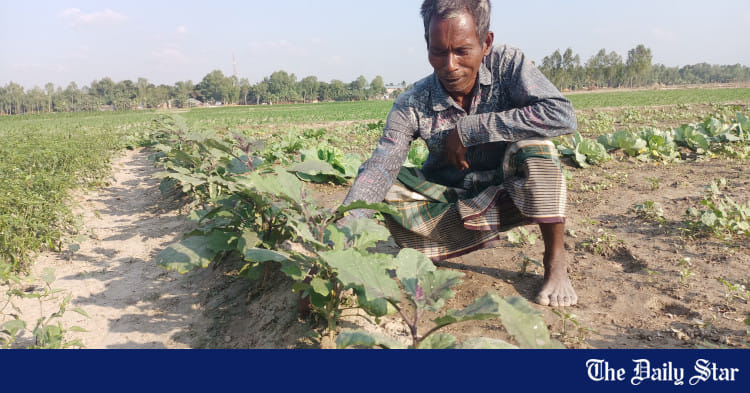
The ongoing cold wave may affect the cultivation of dry-season Boro rice and increase the risk of pest attacks on potato and mustard fields. The photo was taken from Aditmari upazila in Lalmonirhat yesterday. Photo: S DILIP ROY

The Department of Agricultural Extension (DAE) has advised farmers not to transplant seedlings of Boro paddy during the cold spell.

The advisory comes as the country is likely to see a cold wave from today, affecting the cultivation of the dry-season rice Boro and increasing the risk of pest attacks on potatoes and mustard in the fields.

The weather office earlier this month forecast a cold spell for a couple of days.

The DAE targets to ensure the cultivation of the dry-season variety of the food staple on 50.69 lakh hectares so that 2.26 crore tonnes of rice can be produced in the current fiscal year, said Sarker Shafi Uddin Ahmed, director-in-charge of the Field Service Wing of the DAE.

Boro production rose by 1.45 percent year-on-year to 2.10 crore tonnes in fiscal year 2023-24.

The dry-season Boro, which accounts for roughly 55 percent of total annual rice production, is cultivated between December and January and harvested mainly in May.

In its advisory, the Bangladesh Agro-Meteorological Information Service (BAMIS), a project under the DAE, suggested that farmers use transparent polythene to cover the seedlings for protection from fog if sunlight is visible during the day.

Besides, water should be removed from the fields every morning during the cold spell. BAMIS advises using tube-well water in a way that keeps the seedlings above the water level.

The DAE said that seedlings may suffer from blight diseases -- a bacterial disease that can severely damage crops.

It suggests using fungicide and spraying to control the disease.

The agency said that unfavourable weather may also cause pest attacks on potatoes, one of the most widely consumed vegetables, and mustard, the main oilseed crop in Bangladesh.

In its weather forecast yesterday, the Bangladesh Meteorological Department (BMD) said that weather across the country is likely to remain mainly dry with temporary partly cloudy skies.

It said that moderate to dense fog may occur across the country from midnight to morning and may continue until tomorrow.​
 

Farm exports this FY promise billion-dollar earnings again
FHM HUAMAYN KABIR
Published :
Jan 11, 2025 00:18
Updated :
Jan 11, 2025 00:18

1736554798825.png


Bangladesh's agricultural-product export in the first half of this fiscal rebounded and showed hope of crossing a billion-dollar turnover in the terminal months of the year, insiders said Friday.

After a falling trend over the last couple of years, the shipment of the country's homegrown agricultural produce showed a stunning performance during July-December period of the current FY2025, an FE analysis has found.

During the H1 this fiscal, the export of the agricultural produce like vegetables, fruits, tea, spices and tobacco recorded a 9.31-percent growth over the corresponding period of last FY2024, Export Promotion Bureau (EPB) data showed.

Bangladeshi entrepreneurs had made shipments worth US$595.51 million during H1. In the same period (July-Dec) last FY2024, the shipment volume was worth $544.77 million, the data showed.

Fruits, tea, spices, tobacco, and animal and vegetable fats dominated the earnings from agricultural exports, according to the export analysis.

Farmers, entrepreneurs, exporters, analysts and policymakers find a bright future for the country's agro-products to grab a substantial share in $1.90-trillion global market.

In 2022, the global value of agricultural exports (excluding fish) was $1,903 billion. This was a 2.9-fold increase from 2005, United Nation's FAO report showed.

The United States is the largest exporters of farm and food products to the world, totaled nearly $175 billion, although its growth was down to 11 per cent from the 2022 record, USFDA report says.

After entering into the billion-dollar-export-earners club for the first time in Bangladesh's history during the FY2021 and FY2022, the agricultural produce shipments found a fall in the FY2023 and FY2024.

During FY2021 and FY2022, the export earnings from the agricultural goods and relevant processed foods were $1.028 billion and $1.162 billion respectively, EPB statistics showed.

In the subsequent FY2023 and FY2024, the earnings had fallen below the billion-dollar mark with earnings of $ 834.03 million and $964.34 million respectively, the official statistics showed.

The export earnings in the H1 of this FY2025 showed a bright light again as it had already fetched a $595.51 million worth of income.

Market-insiders say the earnings from Bangladesh's agricultural produce and processed foods, the highest value-added items, are likely to get back in the billion-dollar trajectory again in the current fiscal.

They say the reentry of agricultural produce exports into the billion-dollar-earner club "has lit up a new hope for the country's much-needed export-basket diversification", away from overdependence on readymade garments.

The apparel sector has been single-largest export earner for Bangladesh for more than three decades, contributing around 80 per cent to the aggregate export earnings.

It's good news for the country that its businessmen are trying to diversify their exportable products in overseas markets, cutting dependence on the single-largest export item-RMG-the analysts say.

According to the EPB, although the export of vegetables and some other key items dropped in H1 this fiscal, the ago-produce like dry food ($110.93 million), tobacco ($178.47 million), spices ($29.82 million), animal or vegetable fats and oils ($96.17 million), and beverages, spirits and vinegar ($15.43 million) performed well on the export market last year.

Khurshid Ahmad Farhad, General Manager of Bombay Sweets & Company Ltd, says agro-product exports will be growing in the future days as Bangladesh's many medium to big companies are now trying to expand their market overseas, with agro-processing industries flourishing and holding high prospects.

Mr Farhad has outlined two main reasons for expanding the Bangladesh export market in the global chain-firstly, the big conglomerate has aggressively trying to attract their products in the overseas markets and, secondly, there are increasing numbers of Bangladeshi Diaspora in different countries across the globe.

The big companies are trying to improve the quality of production and grab the overseas markets which helping to expand the merchandise shipment, he added.

"Our company is also expanding its capacity and diversifying the products eying foreign alongside its local markets. We are hopeful of getting a big boost in the export volume within next couple of years," Mr Farhad says.

Bangladesh's Pran-RFL Group, Square Group, Olympic, Bombay Sweets, Acme, and Akij Group are in the race of agricultural-product export.

The largest ago-processing-product exporter --PRAN-RFL Group--has already announced that it would double its export earnings to $1.0 billion within this calendar year 2025.

It also plans to reach $2.0-billion-export-earning benchmark by 2030 - based on its diversified range of products and markets.

The conglomerate's export that started in 1997 by sending pineapples to France stood at $532 million in last FY2021-22, the company claims.

Chairman of RAPID Dr Mohammad Abdur Razzaque says Bangladesh has huge potential in agro-and agro-product export market in the global arena.

"If the manufacturers improve their quality with international certification and target the overseas people globally instead of the Bangladeshi diasporas only, the export will automatically rise," he told the FE.

"Even Bangladeshis entrepreneurs can go for contract farming in foreign countries which would facilitate expanding the agro-base product shipments and earnings," Dr Razzaque said.

Research Director for the Centre for Policy Dialogue (CPD) Dr KG Moazzem hails the rebound as good news that Bangladesh has found billion-dollar-export-earning products in its foreign-trade basket.

"We were not getting billion-dollar export products for long years. Now the agro-products had touched the point and it's maintaining a steady growth. It's really stunning news for Bangladesh," the economist says.

Dr Moazzem cites another piece of good news that some Bangladeshi-made products are getting promotion as good brand on the overseas market. "It will facilitate the country to export in the future days, too."

The local companies should now enhance their capacities to expand their export market in the US and EU nations through ensuring their standards and certification, the CPD research director suggests.

Higher volume of the Bangladeshi agro-products goes to the middle-eastern markets alongside some Asian, African and South-Asian countries.​
 

Sugarcane farmers gets timely payment through bKash
BSS 12 January, 2025, 00:44

1736640104390.png


Sugarcane farmers associated with the Bangladesh Sugar and Food Industries Corporation (BSFIC) are now receiving payments for sugarcane sales on time, directly into their bKash accounts.

This digital payment mechanism ensures hassle-free and accurate transfers, thereby fostering increased farmer engagement in sugarcane cultivation.

In the current fiscal year 2024-25, a significant surge in farmers’ participation has been observed, with an additional 15,000 farmers joining the programme, bringing the total number of beneficiaries to over 50,000, said a press release.

The integration of bKash payments has accelerated the overall sugarcane procurement process and increased the targets of sugar mills.

Previously, farmers were losing interest in sugarcane cultivation due to various issues, including irregular payments for sugarcane sales.

To overcome this situation, in the fiscal year 2023-24, bKash signed an agreement with BSFIC to disburse payments for farmers’ sugarcane sales directly to their bKash accounts.

This has enabled farmers to receive the fair price of sugarcane on time. The service also saves time, enabling farmers to focus on producing other crops alongside sugarcane.

According to sugar mill authorities, farmers’ interest in sugarcane cultivation has increased due to quick payment through bKash and technological support.

As a result, sugar mill authorities target 26 per cent more payment through bKash in the current fiscal year compared to the previous year.

Significantly, sugarcane farmers associated with BSFIC experienced expedited and direct payment disbursement to their bKash accounts during the previous fiscal year.

This facilitated the swift delivery of fair prices for their sugarcane sales.

Moreover, farmers can conveniently cash out their payments from nearby agent points without any charges.

Complementing this, bKash has actively organised numerous training sessions and seminars to raise farmers’ awareness on digital payments and financial transactions.

This concerted effort has fostered greater speed, transparency, and security within the entire sugarcane procurement and payment process.

Furthermore, it has significantly strengthened the bond between sugarcane farmers and the corporation.​
 

Bumper harvest, but farmers face loss
Atiqul Kabir Tuhin

Published :
Jan 12, 2025 00:16
Updated :
Jan 12, 2025 00:16

1736641536628.png


A video clip of aggrieved farmers destroying their cauliflower in the field as they fail to recover even the basic costs of production is doing the rounds on social media. Mainstream media is also abuzz with stories of farmers not harvesting some of their winter crops due to a lack of fair prices, with some even resorting to feeding their produce to livestock. Last week, farmers also staged rallies in different parts of the country including Pabna and Meherpur, demanding fair prices for their crops. Moreover, they are reportedly planning to organise a protest in Dhaka to draw the government's attention to their massive losses despite a bumper production of winter vegetables.

Added to the farmers' woe is the exploitation by middlemen and ransom seekers. While consumers in Dhaka are paying Tk 15-20 for a single cauliflower, farmers are receiving a fraction of this price. In major agricultural production hubs in northern districts, each kilogram of cauliflower is reportedly being sold wholesale for a mere Tk 1-2, far below the production cost of Tk 5-6 per kilogram. Is this the reward for their hard work and investment?

This situation underscores the urgent need for a comprehensive farmer protection programme to safeguard farmers' interests. A significant portion of farmers' woes stems from the lack of storage facilities and efficient distribution systems. Notably, Bangladesh's current storage facilities are built with a focus on rice and potatoes, leaving limited space for perishable goods such as vegetables, fish, and milk. Farmers face substantial losses, particularly during peak seasons. According to an estimate, about 30 per cent of Bangladesh's fresh produce is lost annually due to inadequate storage facilities. Fruits, vegetables, onions, milk, fish, etc. often perish at various stages of the post-harvest supply chain, resulting in millions of tonnes of food loss each year.

Several policy interventions could alleviate these challenges. First of all, the government can think of introducing a Minimum Support Price (MSP) for main verities of crops each season. MSP is the minimum price paid by the government when it procures any crop from the farmers to protect them from price fluctuations. MSP is set considering production costs, market demand, and other economic factors. Successful implementation of an MSP can ensure financial security for farmers and shield them from losses during market downturns.

To effectively implement the MSP mechanism, agricultural collection centres, along with specialised cold storage facilities, should be established at the upazila level or near major production hubs. These centres will collect surplus crops from farmers based on the MSP or prevailing market rates. Collected produce can then be supplied to other areas, stored in cold storage facilities, or exported. Establishment of such centres will help reduce the influence of middlemen.

The authorities should also incentivise private-sector investment in food processing. Processing centres can further address price drops due to oversupply by converting excess produce into value-added products. For instance, surplus tomatoes can be processed into sauces or purées for domestic and export markets. Supporting young entrepreneurs in agro-processing through training and incentives can make this initiative more dynamic.

Bangladesh's agricultural sector holds immense potential, but systemic challenges, including price exploitation and post-harvest losses, continue to burden farmers. Addressing these issues through well-designed policies, and efficient storage and transport facilities can transform agriculture into a sustainable and profitable venture.​
 

Unlocking farm export potential
FE
Published :
Jan 12, 2025 21:06
Updated :
Jan 12, 2025 21:06

1736727881101.png


It is good news that earnings from the export of agro-products -- primary and processed --increased to $595.51 million in the first half of FY2025 from $544.77 million in the corresponding period of FY2024. If the current momentum is sustained in the second half of FY2025, export receipt from this sector will once again surpass the billion-dollar threshold. This promising development underscores the sector's potential to diversify Bangladesh's export portfolio, which is a must as the country prepares for graduation from the United Nations' Least Developed Country (LDC) category in 2026. The global agricultural export market is valued at $1.90 trillion. It presents vast opportunities for Bangladesh, predominantly an agrarian economy with 45.4 per cent of its workforce engaged in agriculture, to tap into the opportunities of the global agro-market.

The agricultural sector achieved outstanding successes over the years in terms of research and development of new strains of crops, crop diversification and a near self-sufficiency in food production. These achievements of the sector not only contributed to the relative economic stability of the country but also to an increased calorie intake of the people and poverty reduction. It has also led to the growth of a vibrant agro-processing industry. Therefore, credit for increased earnings from agro-export goes to farmers, agro-scientists, and entrepreneurs in processed food industries. Now, with proper planning and policy support, greater adoption of mechanised farming and capacity building for cold storage to reduce post-harvest losses, Bangladesh can make further inroads into the global agricultural market.

One of the key barriers to boosting Bangladesh's agricultural exports is the challenge of meeting stringent international quality standards. While the country exports primarily to the Middle East, Gulf countries, and the UK, significant opportunities remain untapped in markets such as the EU, Japan, and the United States. These markets demand high levels of quality and safety, placing a premium on compliance with stringent international standards. Past instances have shown that the presence of harmful chemicals and pesticides in Bangladeshi agricultural products can lead to trade restrictions and market access barriers. To overcome these challenges, a concerted effort is required to enhance good agricultural practices and strengthen quality control mechanisms. The Bangladesh Accreditation Board must play a pivotal role to ensure that agricultural products meet international standards. Regrettably, Bangladesh lacks the necessary laboratories to issue certificates after thorough quality testing, forcing many exporters to rely on expensive and time-consuming foreign certifications. Investments in advanced testing laboratories are, therefore, crucial to obtaining necessary certifications for entry into highly coveted markets like the EU and the US. Furthermore, promoting Good Agricultural Practices (GAP) among farmers is essential to improve product quality and enhance food safety.

Finally, the establishment of modern packaging and processing facilities, along with strengthening the cold chain and improving post-harvest handling practices, are equally important to minimise product loss and maintain quality. Delays at airports caused by inadequate scanners and inefficient transportation processes for agricultural products, coupled with insufficient storage facilities, pose significant challenges to exporters. To address these issues, dedicated gates and scanner machines should be established at airports specifically for agricultural exporters. This will ensure timely and efficient delivery of high-quality products to international markets. An increase in agricultural exports will not only benefit farmers in terms of better returns but also significantly boost the national economy.​
 

Foreign fruits turn costlier for duty hike

1736808906993.png

Customers complain that retailers are now charging Tk 20 to Tk 30 more for each kilogramme of apples, oranges, grapes, sweet oranges and watermelons, forcing them to reduce purchases amid persistently high inflation for nearly two years. Photo: Anisur Rahman

Recent supplementary duty (SD) hikes on the import of fruits have dealt a fresh blow to people who were already cutting back on these delicacies since the imposition of regulatory duties in mid-2022.

On January 9, the National Board of Revenue (NBR) increased the supplementary duty on the import of certain dry and fresh fruits, such as nuts and betel nuts, to 45 percent from the previous 30 percent.

The duty on some fresh fruits, such as grapes, apples, and watermelons, as well as on juices, was raised to 30 percent from 20 percent.

This mid-fiscal year move by the government is widely interpreted as an attempt to increase revenue collection and meet conditions set by the International Monetary Fund (IMF) for its ongoing $4.7 billion loan programme for Bangladesh.

Economists and businesses have criticised the timing of the NBR's decision, as people have been struggling with inflation above 9 percent for nearly two years.

Customers report that retailers are now charging Tk 20 to Tk 30 more for each kilogramme (kg) of apples, oranges, grapes, sweet oranges, and watermelons, forcing them to reduce purchases amid persistently high inflation for nearly two years.

Naznin Akhter, a shopper at Karwan Bazar, one of Dhaka's largest kitchen markets, expressed her concern, stating that she could no longer afford foreign fruits in the volumes she used to purchase a year ago.

"Ten days ago, I bought medium-sized oranges at Tk 260 per kg, but the price has now risen to Tk 290. Similarly, apples that were Tk 290 per kg are now Tk 320," she said.

"I had planned to buy 2 kg of oranges and 2 kg of apples. However, due to the price hike, I ended up purchasing only 1.5 kg of each," she added.

Naznin urged the government to reconsider the duty hikes to ease the burden on consumers.

Fruit traders say the previous duty hikes reduced imports by roughly 30 percent, whereas the latest SD hikes have slashed wholesale sales by 20 to 25 percent.

Mohammad Sagar Mia, a shop owner at Karwan Bazar, said prices have risen by Tk 15 to Tk 20 per kg at the retail level.

"In some cases, the price of certain fruits has increased by Tk 25 per kg," he said.

Prior to January 9, he used to buy black grapes for Tk 500 per kg at wholesale, and now it costs Tk 530. Similarly, the price of small-sized pomegranates has risen from Tk 450 to Tk 480.

The price of oranges was Tk 200 to Tk 230 but has now increased to Tk 240 to Tk 260. Apples, which were Tk 280 earlier, are now Tk 300, he added.

Sagar also noted that pears, previously priced at Tk 270 to Tk 280, are now Tk 288.

Serazul Islam, president of the Bangladesh Fresh Fruits Importers Association, told The Daily Star that they sent a letter to the relevant government office a month ago requesting an exemption from regulatory duties and a reduction in advance income tax.

This request was particularly important with Ramadan, the month of fasting, due to begin in March, when believers typically incorporate different fruits into their daily diet, he said.

Islam also claimed that March was a time when the variety of local fruits available in markets was limited, although this could not be independently verified.

However, the opposite occurred, he said.

"With high inflation persisting, people have already been buying less fruit over the past two years," he added.

"The recent tax increases will further force many middle-income and lower-middle-income consumers to cut back on their fruit consumption," he said.

As a result of rising prices, wholesale fruit sales have already dropped by 20 to 25 percent over the past two to three days, Islam said.

Bangladesh's fruit imports, as reflected in the opening of letters of credit (LCs), fell by 8.5 percent year-on-year to $107 million in the July-November period of fiscal year 2024-25.

The settlement of the LCs also declined during the period, according to Bangladesh Bank data.

The Consumers Association of Bangladesh last Sunday urged the government to refrain from implementing the SD hikes until the end of Ramadan, warning that otherwise, it would worsen the financial struggles of low- and middle-income families.​
 

Rural women must be recognised for their contribution

1737068292616.png

Rural women are nation builders; they’re the backbone of our rural economy. File photo: SK Enamul Haq

Gender discrimination in rural areas across Bangladesh continues to be a formidable barrier to both social and economic development, particularly in the agricultural sector. Despite their critical roles in farming, processing, and post-harvest activities, rural women face entrenched inequalities in wages, opportunities, and recognition. As Shahnaz Begum, a farmer from Khulna, poignantly states, "We work just as hard as men, but the pay is never the same. While men often earn up to Tk 200 per day, women receive Tk 70 for similar work."

This wage disparity reflects a broader trend in which rural women are disproportionately affected by social, cultural, and economic inequalities. According to a 2023 report by the Bangladesh Bureau of Statistics (BBS), gender pay gap remains a significant issue in rural areas, with women in agriculture earning an average of 30-40 percent less than their male counterparts for the same work. The report further emphasises that women in rural Bangladesh perform up to about 60 percent of the labour in agriculture, but remain largely invisible in leadership and decision-making roles.

Despite their significant contributions to the agricultural economy, rural women are often marginalised. They are excluded from access to land, credit, and technology—resources that are essential for improving productivity and achieving economic independence. According to a 2022 Oxfam study, only 13 percent of rural women in the country own land. This lack of access to land and resources limits women's ability to invest in farming and start their own businesses. "I've never been able to buy land or take a loan without my husband's signature," shares Laila, a rural entrepreneur from southwestern Bangladesh. "Without access to resources, how can we grow our businesses or improve our lives?"

Sexual harassment in rural workplaces is another pervasive issue that compounds these challenges. A 2021 study by ActionAid found that 45 percent of rural women in South Asia, including Bangladesh, experience harassment in the workplace. However, many women remain silent due to fear of retaliation and lack of support. One such case is Ayesha, a farm worker from Satkhira, who was forced to quit her job after facing harassment from her supervisor. "I couldn't keep quiet anymore, but no one supported me," she recalls. "I had no choice but to leave." This type of harassment not only undermines women's well-being, but also has long-term economic consequences, as they are forced to withdraw from the workforce.

The implications of such gender-based discrimination are far-reaching, not just for individual women but for the economy at large. According to McKinsey, closing gender gaps in labour markets could add $12 trillion to the global economy. In Bangladesh, where agriculture employs over 40 percent of the workforce, advancing gender equality in rural areas could significantly boost national productivity and reduce poverty. As Hasina, a leader of a rural women's cooperative in Satkhira, says, "If we had equal opportunities, we could improve not only our families but also our communities." Women's economic empowerment can lead to the development of rural economies, better health outcomes, and improved quality of life for all.

Addressing these inequities requires robust policy interventions. The government must prioritise wage transparency and enforce equal pay for equal work in rural sectors. Furthermore, rural women must have equal access to land, credit, technology, and training to improve their productivity and economic independence. "We need financial independence," says Rina, a small-scale farmer from Jashore. "Only then can we break the cycle of poverty." Providing women with access to microfinance and ensuring that they can take out loans without the need for male co-signers would empower them to invest in their farms or start small businesses, ultimately improving their families' living standards.

Encouraging women to take leadership roles in rural cooperatives and agricultural enterprises is another vital step in addressing gender inequality. As Salma, a rural cooperative leader, aptly puts it, "Gender equality is the foundation of a prosperous Bangladesh. We cannot afford to leave women behind." By addressing gender discrimination in rural workplaces, Bangladesh can harness the power of its women to drive sustainable economic growth, reduce poverty, and improve the quality of life for all its citizens.

Furthermore, addressing the issue of sexual harassment in rural workplaces is crucial for creating safe and supportive environments for women. The government must establish and enforce clear legal frameworks to prevent harassment, ensure women's safety, and encourage reporting of such incidents without fear of retaliation. Local authorities and rural development programmes must work closely with women's organisations to create awareness and provide support for victims of harassment.

By addressing gender discrimination, we can unlock the potential of millions of women, enabling them to contribute to a more equitable, prosperous future. Gender equality in rural Bangladesh is not merely a goal—it is a necessity for the nation's development.

Md. Al-Mamun is social scientist at BRAC Institute of Governance and Development (BIGD).​
 

Potato imports facilitated despite massive price fall

1737501144970.png

Potato growers will suffer severely if the government continues to allow imports as the country saw massive production this year, farmers said. Photo: Md Quamrul Islam Rubaiyat.

The National Board of Revenue (NBR) has allowed the use of nine more customs stations for the import of potatoes, specifically from Nepal and Bhutan, aiming to diversify supply sources and reduce dependency on India.

The nine stations include Rohonpur in Chapainawabganj, Sonahat in Kurigram, Dhanua Kamalpur in Jamalpur, Nakugaon in Sherpur, Gobrakura and Karaitoli in Mymensingh, and Tamabil, Zakiganj, and Sheola in Sylhet.

Earlier, potato imports were allowed through four customs stations, including Benapole and Bhomra.

This facility will remain in effect till March, according to a gazette issued on Monday.

Traders had sought the initiative last December, when prices of the tuber reached a record high of Tk 80 per kilogramme amidst a usual drop in stocks ahead of the harvest season between February and April.

Now the facility will have little effect as prices have fallen by a massive margin across the country, and farmers fear massive losses amid bumper harvests.

Azizul Islam, who heads a farmers' association in Dinajpur, expressed his frustration at the NBR's move.

"Why is the government still allowing imports now, when potatoes are available at cheap rates in Bangladesh?" he asked.

Islam, who hails from Gopalganj village in Dinajpur sadar upazila, highlighted the plight of local farmers.

"There has been massive production this year, and there aren't enough buyers… If the government continues to allow imports, farmers will suffer severely," he warned.

Potatoes in Dinajpur are currently being sold at Tk 13 per kilogramme (kg) at the fields and around Tk 15 per kg at retail markets.

"If farmers are forced to accept such low rates, they won't recover even the money spent on potato seeds, let alone make a profit amidst rising labour and land costs," he said.

Islam urged the government to immediately halt potato imports and support farmers through state purchases.

"The government must prioritise farmers and take the necessary steps to safeguard their livelihoods," he stressed.

Regarding the time taken for the facility to come about, Kazi Mostafizur Rahman, an NBR member of international trade (currently in charge), said, "The NBR took the move based on businesses' demand when the prices were high."

"But we received the official request to extend new routes from businesses at the end of December. We needed 20-22 more days for processing as we had to conduct vetting on this issue," he said.

This year, acreage increased to a record high of 5.21 lakh hectares of land.

Annual demand stands at 85 lakh tonnes to 90 lakh tonnes, whereas harvests amount to around 106 lakh tonnes.

In fiscal year 2023-24, 1.5 lakh tonnes were imported from India.​
 

Govt exploring multiple sources for rice import
Staff Correspondent . Chattogram 21 January, 2025, 23:00

1737505703699.png


Interim government’s food adviser Ali Imam Majumder said that the government was prioritising trade over politics, welcoming imports from neighbouring countries like India, Myanmar, and Pakistan due to their proximity and lower costs.

He made the remarks on Tuesday while inspecting the unloading operations of imported food grains at Chattogram Port.

Earlier on the day, he visited the under-construction silo in the city’s Patenga area.

He said, ‘We have signed a contract to import 100,000 tonnes of rice from Myanmar, and they are ready to sell more. We will evaluate their internal supply situation before proceeding further. Additionally, we have arranged to import 50,000 tonnes of rice from Pakistan and are exploring other sources, including Vietnam.’

On the total amount of rice being imported, Ali Imam Majumder said, ‘We aim to bring in 800,000 to 900,000 tonnes of rice. Of this, around 800,000 tons will be imported through government channels from India, Myanmar, Pakistan, and possibly Vietnam.’

When asked about the persistent high rice prices despite continuous imports, Ali Imam Majumder said, ‘The good news is that price hikes have stopped. The price of coarse rice has dropped by Tk 3-5 per kilogram. We will continue to import more, ensuring no further price increases and creating scope for price reductions.’

With Ramadan approaching and concerns over potential price hikes of food items, Ali Imam Majumder said, ‘During Ramadan, the Ministry of Food primarily oversees the supply of rice and wheat. Other items are managed by the Trading Corporation of Bangladesh, under the Ministry of Commerce, which has taken extensive preparations.’

‘To support low-income groups, food-friendly programmes for 5 million people have been launched. These individuals can buy 30 kilograms of rice per month at Tk 15 per kilogram. Additionally, from this month, two metric tonnes of rice are being sold daily at the upazila level, a practice that will continue during Ramadan. We hope these measures will keep commodity prices stable.’

During the visit, Chattogram divisional commissioner Md Ziauddin, director general of food Abdul Khaleque, and Chittagong Port Authority chairman SM Moniruzzaman were also present.​
 

Relay cropping answer to coastal farming
Atiqul Kabir Tuhin
Published :
Jan 22, 2025 22:03
Updated :
Jan 22, 2025 22:03

1737615984399.png

A farmer is seen sowing wheat seeds in an Aman field as part of relay wheat cropping in Patuakhali's Kalapara upazila Photo : Collected

The coastal region of Bangladesh makes up about one-third of the country's total land area, of which approximately 439,000 hectares (almost 1.1 million acres) remains fallow during the dry season due to increased salinity and inadequate irrigation facilities. Aman rice is the only crop cultivated there during the monsoon season. After the Aman rice harvest in December, these vast tracts of land, particularly coastal regions remain fallow for 6-7 months. To bring this extensive barren land area under cultivation, Independence Award-winning agricultural researcher Dr. M. G. Neogi, in collaboration with the Australian Center for International Agricultural Research (ACIAR), has developed a unique relay wheat cropping model that deserves policymakers' attention for wider adoption.

In conversation with this scribe, Dr. Neogi said, "It is possible to turn the single-crop land in coastal areas into double-crop or even possibly triple-crop land by using relay wheat cropping method." Dr. Neogi and his team have been working on the relay wheat cropping model in Bangladesh's coastal regions since 2017.

Relay cropping involves planting a second new crop in same land while the first crop is still in the field with its mature stage. As wheat and pulses can be grown with minimal irrigation and wheat exhibits some degree of salinity tolerance, the researchers figured out that wheat could be the ideal for relay cropping in these vast areas of fallow land. But here lies a problem.

Typically, cooler temperature, below 15°C, is ideal for wheat cultivation. Such an ideal cool weather condition for wheat crop production is available in coastal Bangladesh only during the later half of December and January. Therefore, the optimal sowing time for wheat in coastal Bangladesh is mid-November. But coastal lands remain covered by Aman paddy in November, which farmers harvest in December. To overcome this challenge, Dr. Neogi suggests sowing wheat seeds directly into the Aman paddy fields during mid-November, when paddy plants are in their matured stage. This is called relay wheat cropping model.

This method enables wheat cultivation without disturbing the standing rice crop. Moreover, this allows the wheat crop to grow during the favourable cool weather conditions of January.

Regarding potential damage to wheat seedlings during rice harvesting, Dr. Neogi said, "Farmers can harvest rice using traditional sickles without harming the wheat seedlings growing within the rice field. Typically, coastal farmers harvest rice by cutting the stalks approximately six to seven inches above the ground level, which would ensure the safety of the emerging wheat seedlings." Moreover, as he said, "Research has shown that even mechanical harvesters can be used without causing significant damage to the wheat seedlings. Observations have shown that wheat seedlings can recover quickly within two to three days after the rice harvest is completed."

Numerous farmers in Barguna and Patuakhali have successfully implemented this method, and they are pleased to have an additional profitable cash crop with minimal production costs. Relay technology significantly reduces expenses by eliminating the need for ploughing. Furthermore, wheat cultivation requires considerably less water for irrigation. With the relay cropping method, farmers can minimise water usage to just three to four light irrigations. Additionally, unseasonal rainfall between November and February, driven by climate change, further decreases irrigation needs.

Dr. Neogi's research has shown that in relay wheat planting, the cost per bigha is approximately Tk. 5,000, (Tk. 37,500/ha) yielding about 400 kg (3 t/ha) of wheat. At a market price of Tk. 40 per kg, the total income is Tk. 16,000/bigha (Tk. 120,000/ha). If relay wheat cultivation is expanded to the 439,000 hectares of fallow land of the coastal region in dry season, it could potentially yield 1.3 million tonnes of wheat, which could go a long way in fulfilling the country's growing demand for wheat.

Currently, Bangladesh requires 7.5 million tonnes of wheat annually but produces only 1.1 to 1.2 million tonnes domestically. This shortfall of 6 to 6.5 million tonnes is met through imports, resulting in a significant outflow of foreign currency. Against this backdrop, Dr. Neogi's research and practical field studies have shown that wider adaptation of relay wheat cropping can open up a vast horizon to explore the potential for cultivating wheat in coastal saline lands.

Moreover, relay wheat cropping can help mitigate rising soil salinity. The extended periods of unused coastal land contribute to increased soil salinity due to capillary action, where salt moves from deeper soil layers to the surface. Since relay cropping minimises soil exposure and reduces capillary action, it could mitigating salinity buildup. On March 6, 2024, a field study conducted by the Soil Science Department of Agricultural University, Gazipur demonstrated this effect. Soil salinity levels in a relay wheat plot were found to be significantly lower (5.48 decisiemens per metre) compared to adjacent fallow land (9.63 dS/m), indicating that relay cropping not only enhances crop yields but also improves soil quality by reducing salinity.

The reduced salinity levels resulting from relay wheat cultivation can open up the possibility of cultivating a third crop - Boro rice - after the wheat harvest. Farmers are currently exploring the cultivation of short-duration late Boro rice varieties, such as Binadhan-14, following the relay wheat harvest. Thus the successful implementation of relay wheat cropping can transform vast stretches of coastal single-crop land into a triple-crop one. This will not only benefit coastal farmers but also contribute significantly to the country's food security.

Regarding irrigation management, Dr. Neogi said, "Salinity is a significant challenge for crop cultivation during the dry season in the coastal fallow lands, along with insufficient irrigation water. Studies have shown that the water table just below the surface of these saline lands is also saline and unsuitable for irrigation. However, deeper groundwater sources, typically found at depths exceeding 1,000 feet, are generally salinity-free and suitable for both irrigation and consumption."

Submersible pumps can be used to lift water from these deeper depths. The cost of acquiring and installing a complete pump system, including the borehole and necessary fittings, is approximately 1.5 lakh taka. However, a single pump can effectively irrigate 50 bighas of land, enabling the cultivation of wheat and other Rabi crops using relay cropping techniques. Moreover, the wells will also provide access to safe drinking water for the local community throughout the year.

It is, therefore, hoped that policymakers would consider the issue and actively support the wider adoption of this cropping method by providing necessary resources, training, and incentives to farmers.​
 

Members Online

Latest Posts

Latest Posts