Bangladesh Defense
Saif
Senior Member
- Jan 24, 2024
- 21,479
- 9,743
- Nation

- Residence
- Axis Group


Govt expects no urea shortage for Aman season
BCIC chairman expects stock to exceed Aman demand of 6.5 lakh tonnes by June 30
Govt expects no urea shortage for Aman season
BCIC chairman expects stock to exceed Aman demand of 6.5 lakh tonnes by June 30
Sukanta Halder and Mohammad Suman
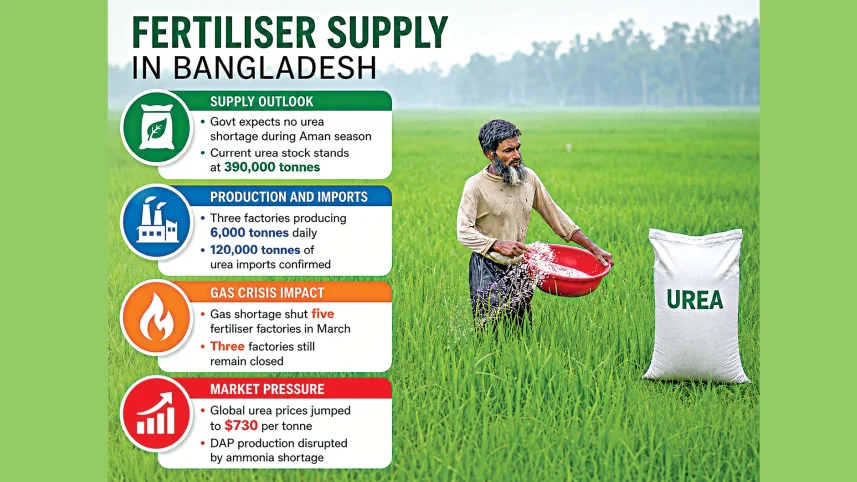
The government expects no shortage of urea fertiliser during the upcoming Aman season in July–August, with officials from relevant agencies saying existing stocks, domestic production and planned imports are sufficient to meet demand.
Bangladesh's urea requirement during the Aman season stands at 6.5 lakh tonnes, according to the Ministry of Agriculture. As of May 20, the country held 3.9 lakh tonnes in stock.
Md Fazlur Rahman, chairman of the Bangladesh Chemical Industries Corporation (BCIC), said three urea factories are currently operational at full capacity, producing a combined 6,000 tonnes per day.
Local production from May to June is expected to reach 3-3.5 lakh tonnes.
He added that a total of 1.2 lakh tonnes has been confirmed for import, including 40,000 tonnes from Saudi Arabia and 80,000 tonnes from the UAE, with an additional 40,000 tonnes under negotiation with Saudi Arabia.
The BCIC chairman expects the total stock to exceed 6 lakh tonnes by June 30.
Officials stressed, however, the importance of preventing any artificial shortage.
Rahman also said that international urea prices have increased significantly, rising from about $460-$470 per tonne previously to around $730 per tonne currently.
PARTIAL PRODUCTION RECOVERY
Gas shortages, triggered by fears of supply disruptions amid escalating Middle East tensions, had forced five of the six major urea fertiliser factories to shut from March 4, severely affecting domestic production for nearly two months.
Three of the factories resumed operations from May 1 after gas supply improved, according to BCIC officials.
The three factories now operating are Karnaphuli Fertilizer Company Ltd (Kafco), Ghorashal Polash Fertilizer PLC and Shahjalal Fertilizer Company Ltd.
“About 247 million cubic feet of gas per day are required to run all six factories, including Kafco, at full capacity,” said Moniruzzaman, director (commercial, production and research) of BCIC, told The Daily Star.
“Currently, we are operating three factories with around 170 million cubic feet of gas supply daily,” he added.
Bangladesh's six factories have a combined capacity of around 7,100 tonnes per day, requiring about 247 million cubic feet of gas daily to run at full capacity.
The remaining three BCIC-run factories -- Chittagong Urea Fertilizer Company Limited, Jamuna Fertilizer Company Ltd and Ashuganj Fertilizer and Chemical Company Ltd -- remain shut due to inadequate gas supply.
Kafco is a multinational joint-venture fertiliser plant in which BCIC holds a major stake alongside companies from Japan, Denmark and the Netherlands, while the other five factories are fully operated under the corporation's management.
During the peak of the crisis in March, only Shahjalal Fertilizer remained operational.
Moniruzzaman informed that the corporation had requested the government to restore gas supply to the remaining three factories by June 1 to resume full-scale production.
A BCIC official, requesting anonymity, said the corporation had set a production target of 10 lakh tonnes of fertiliser for fiscal year 2025-26, but only around 6 lakh tonnes were produced in the first ten months through April, making the target increasingly difficult to achieve.
The gas crisis also had knock-on effects on DAP fertiliser production.
Alongside urea, Kafco and Chittagong Urea Fertilizer Company also produce ammonia, a key raw material for DAP fertiliser production. When the two factories shut in March, the ammonia supply dried up. As a result, the DAP Fertilizer Company Limited, the country's only DAP-producing plant, was forced to suspend production for nearly two weeks from April 18.
After Kafco resumed operations on May 1, ammonia supply restarted, allowing the DAP plant to resume production from May 8, said Robiul Alam Khan, deputy general manager (commercial) of the company.
Established in 2006, the DAP plant has two production units with a combined capacity of 800 tonnes per day. Output has fallen sharply in recent years due to repeated supply disruptions, from around 92,600 tonnes in FY24 to about 49,500 tonnes in FY25.
The total fertiliser demand in the country is around 68-69 lakh tonnes, of which the demand for urea is 26 lakh tonnes, according to the Department of Agricultural Extension (DAE).
BCIC annually produces around 10-15 lakh tonnes of fertiliser through its six urea factories and one DAP fertiliser plant, while the rest of the demand is met through imports.
BCIC chairman expects stock to exceed Aman demand of 6.5 lakh tonnes by June 30
Sukanta Halder and Mohammad Suman
The government expects no shortage of urea fertiliser during the upcoming Aman season in July–August, with officials from relevant agencies saying existing stocks, domestic production and planned imports are sufficient to meet demand.
Bangladesh's urea requirement during the Aman season stands at 6.5 lakh tonnes, according to the Ministry of Agriculture. As of May 20, the country held 3.9 lakh tonnes in stock.
Md Fazlur Rahman, chairman of the Bangladesh Chemical Industries Corporation (BCIC), said three urea factories are currently operational at full capacity, producing a combined 6,000 tonnes per day.
Local production from May to June is expected to reach 3-3.5 lakh tonnes.
He added that a total of 1.2 lakh tonnes has been confirmed for import, including 40,000 tonnes from Saudi Arabia and 80,000 tonnes from the UAE, with an additional 40,000 tonnes under negotiation with Saudi Arabia.
The BCIC chairman expects the total stock to exceed 6 lakh tonnes by June 30.
Officials stressed, however, the importance of preventing any artificial shortage.
Rahman also said that international urea prices have increased significantly, rising from about $460-$470 per tonne previously to around $730 per tonne currently.
PARTIAL PRODUCTION RECOVERY
Gas shortages, triggered by fears of supply disruptions amid escalating Middle East tensions, had forced five of the six major urea fertiliser factories to shut from March 4, severely affecting domestic production for nearly two months.
Three of the factories resumed operations from May 1 after gas supply improved, according to BCIC officials.
The three factories now operating are Karnaphuli Fertilizer Company Ltd (Kafco), Ghorashal Polash Fertilizer PLC and Shahjalal Fertilizer Company Ltd.
“About 247 million cubic feet of gas per day are required to run all six factories, including Kafco, at full capacity,” said Moniruzzaman, director (commercial, production and research) of BCIC, told The Daily Star.
“Currently, we are operating three factories with around 170 million cubic feet of gas supply daily,” he added.
Bangladesh's six factories have a combined capacity of around 7,100 tonnes per day, requiring about 247 million cubic feet of gas daily to run at full capacity.
The remaining three BCIC-run factories -- Chittagong Urea Fertilizer Company Limited, Jamuna Fertilizer Company Ltd and Ashuganj Fertilizer and Chemical Company Ltd -- remain shut due to inadequate gas supply.
Kafco is a multinational joint-venture fertiliser plant in which BCIC holds a major stake alongside companies from Japan, Denmark and the Netherlands, while the other five factories are fully operated under the corporation's management.
During the peak of the crisis in March, only Shahjalal Fertilizer remained operational.
Moniruzzaman informed that the corporation had requested the government to restore gas supply to the remaining three factories by June 1 to resume full-scale production.
A BCIC official, requesting anonymity, said the corporation had set a production target of 10 lakh tonnes of fertiliser for fiscal year 2025-26, but only around 6 lakh tonnes were produced in the first ten months through April, making the target increasingly difficult to achieve.
The gas crisis also had knock-on effects on DAP fertiliser production.
Alongside urea, Kafco and Chittagong Urea Fertilizer Company also produce ammonia, a key raw material for DAP fertiliser production. When the two factories shut in March, the ammonia supply dried up. As a result, the DAP Fertilizer Company Limited, the country's only DAP-producing plant, was forced to suspend production for nearly two weeks from April 18.
After Kafco resumed operations on May 1, ammonia supply restarted, allowing the DAP plant to resume production from May 8, said Robiul Alam Khan, deputy general manager (commercial) of the company.
Established in 2006, the DAP plant has two production units with a combined capacity of 800 tonnes per day. Output has fallen sharply in recent years due to repeated supply disruptions, from around 92,600 tonnes in FY24 to about 49,500 tonnes in FY25.
The total fertiliser demand in the country is around 68-69 lakh tonnes, of which the demand for urea is 26 lakh tonnes, according to the Department of Agricultural Extension (DAE).
BCIC annually produces around 10-15 lakh tonnes of fertiliser through its six urea factories and one DAP fertiliser plant, while the rest of the demand is met through imports.