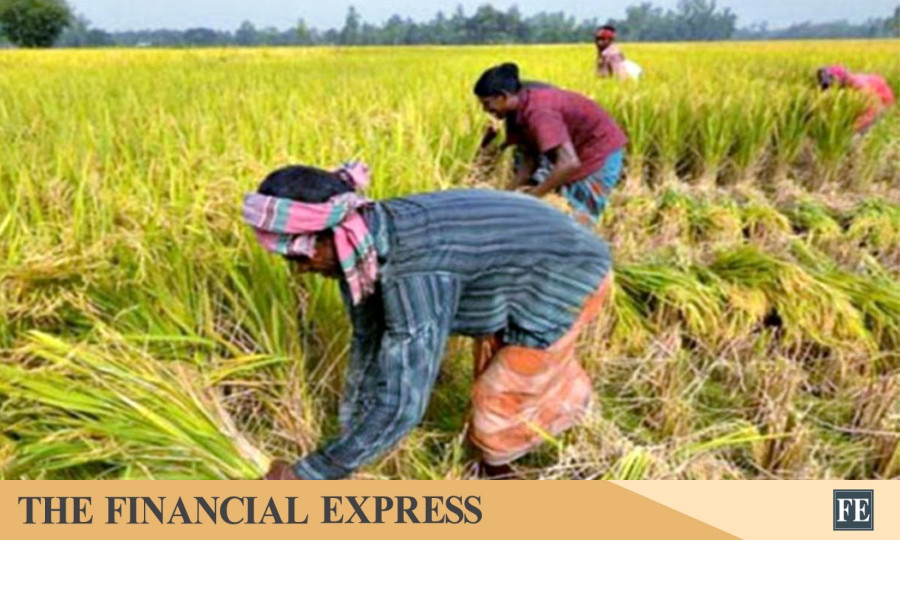
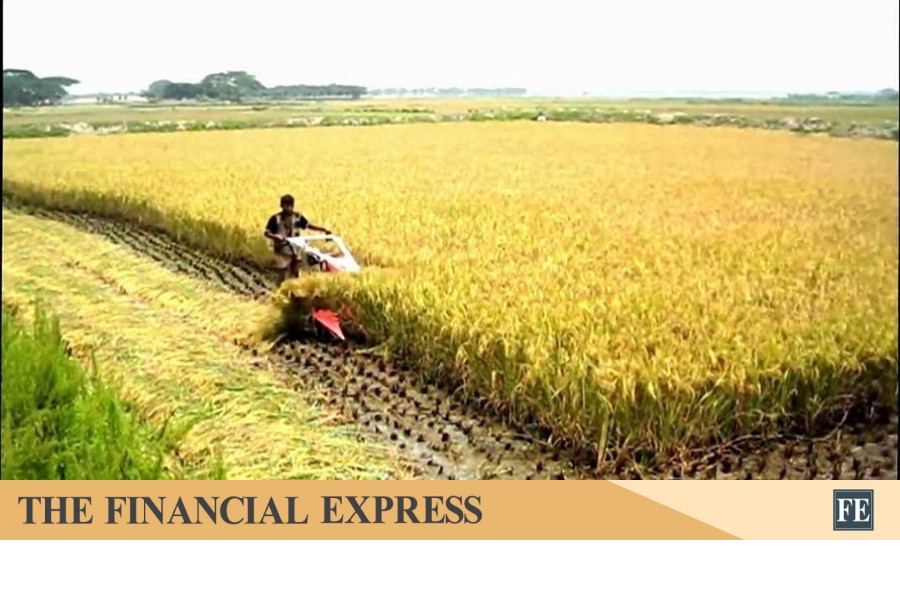
[🇧🇩] Agriculture in Bangladesh

[🇧🇩] Agriculture in Bangladesh
267
12K
More threads by Saif

G Bangladesh Defense

Govt expects no urea shortage for Aman season

BCIC chairman expects stock to exceed Aman demand of 6.5 lakh tonnes by June 30

Sukanta Halder and Mohammad Suman
1779592797394.webp


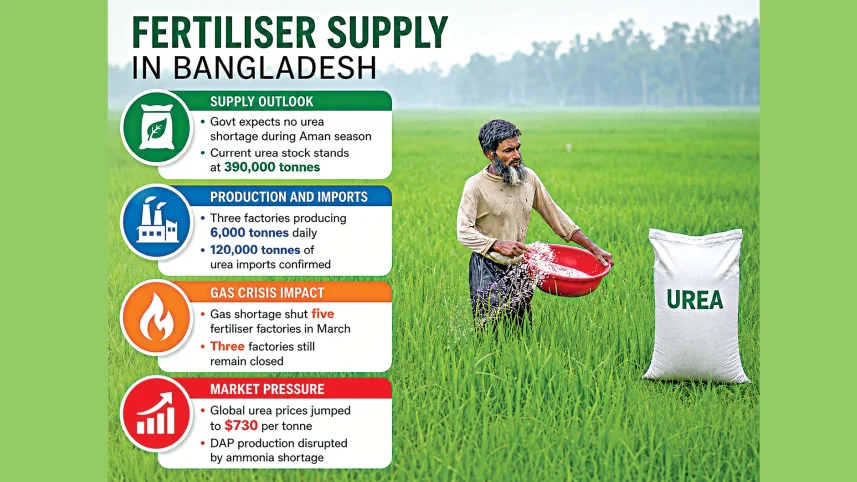
The government expects no shortage of urea fertiliser during the upcoming Aman season in July–August, with officials from relevant agencies saying existing stocks, domestic production and planned imports are sufficient to meet demand.

Bangladesh's urea requirement during the Aman season stands at 6.5 lakh tonnes, according to the Ministry of Agriculture. As of May 20, the country held 3.9 lakh tonnes in stock.

Md Fazlur Rahman, chairman of the Bangladesh Chemical Industries Corporation (BCIC), said three urea factories are currently operational at full capacity, producing a combined 6,000 tonnes per day.

Local production from May to June is expected to reach 3-3.5 lakh tonnes.

He added that a total of 1.2 lakh tonnes has been confirmed for import, including 40,000 tonnes from Saudi Arabia and 80,000 tonnes from the UAE, with an additional 40,000 tonnes under negotiation with Saudi Arabia.

The BCIC chairman expects the total stock to exceed 6 lakh tonnes by June 30.

Officials stressed, however, the importance of preventing any artificial shortage.

Rahman also said that international urea prices have increased significantly, rising from about $460-$470 per tonne previously to around $730 per tonne currently.

PARTIAL PRODUCTION RECOVERY

Gas shortages, triggered by fears of supply disruptions amid escalating Middle East tensions, had forced five of the six major urea fertiliser factories to shut from March 4, severely affecting domestic production for nearly two months.

Three of the factories resumed operations from May 1 after gas supply improved, according to BCIC officials.

The three factories now operating are Karnaphuli Fertilizer Company Ltd (Kafco), Ghorashal Polash Fertilizer PLC and Shahjalal Fertilizer Company Ltd.

“About 247 million cubic feet of gas per day are required to run all six factories, including Kafco, at full capacity,” said Moniruzzaman, director (commercial, production and research) of BCIC, told The Daily Star.

“Currently, we are operating three factories with around 170 million cubic feet of gas supply daily,” he added.

Bangladesh's six factories have a combined capacity of around 7,100 tonnes per day, requiring about 247 million cubic feet of gas daily to run at full capacity.

The remaining three BCIC-run factories -- Chittagong Urea Fertilizer Company Limited, Jamuna Fertilizer Company Ltd and Ashuganj Fertilizer and Chemical Company Ltd -- remain shut due to inadequate gas supply.

Kafco is a multinational joint-venture fertiliser plant in which BCIC holds a major stake alongside companies from Japan, Denmark and the Netherlands, while the other five factories are fully operated under the corporation's management.

During the peak of the crisis in March, only Shahjalal Fertilizer remained operational.

Moniruzzaman informed that the corporation had requested the government to restore gas supply to the remaining three factories by June 1 to resume full-scale production.

A BCIC official, requesting anonymity, said the corporation had set a production target of 10 lakh tonnes of fertiliser for fiscal year 2025-26, but only around 6 lakh tonnes were produced in the first ten months through April, making the target increasingly difficult to achieve.

The gas crisis also had knock-on effects on DAP fertiliser production.

Alongside urea, Kafco and Chittagong Urea Fertilizer Company also produce ammonia, a key raw material for DAP fertiliser production. When the two factories shut in March, the ammonia supply dried up. As a result, the DAP Fertilizer Company Limited, the country's only DAP-producing plant, was forced to suspend production for nearly two weeks from April 18.

After Kafco resumed operations on May 1, ammonia supply restarted, allowing the DAP plant to resume production from May 8, said Robiul Alam Khan, deputy general manager (commercial) of the company.

Established in 2006, the DAP plant has two production units with a combined capacity of 800 tonnes per day. Output has fallen sharply in recent years due to repeated supply disruptions, from around 92,600 tonnes in FY24 to about 49,500 tonnes in FY25.

The total fertiliser demand in the country is around 68-69 lakh tonnes, of which the demand for urea is 26 lakh tonnes, according to the Department of Agricultural Extension (DAE).

BCIC annually produces around 10-15 lakh tonnes of fertiliser through its six urea factories and one DAP fertiliser plant, while the rest of the demand is met through imports.​
 

Surge in agro-employment at the expense of manufacturing!

Wasi Ahmed

Published :
Jun 03, 2026 00:23
Updated :
Jun 03, 2026 00:23

1780444741885.webp


Bangladesh's renewed dependence on agriculture for employment presents a paradox that should concern policymakers as much as it comforts them. In a country where agriculture has historically been the backbone of livelihoods, the sector's ability to absorb workers during economic uncertainty is undeniably reassuring. Yet the latest evidence suggests that this trend is not the result of a thriving rural transformation, but rather a symptom of stagnation in the manufacturing and services sectors -- the very engines that once drove Bangladesh's remarkable poverty reduction and economic ascent.

A recent World Bank study presented at a discussion meeting in the capital paints a sobering picture of the labour market between 2016 and 2024. Nearly seven out of every 10 new jobs created during the period emerged from agriculture, while manufacturing steadily lost momentum and shed workers. Most troubling is the gender dimension of this reversal. Women, who had gradually entered factories and urban services over the past two decades, bore the brunt of the setback. Around 1.1 million female jobs disappeared from industry and another 0.8 million from services, pushing many women back into low-productivity agricultural work.

This reversal represents more than a statistical shift; it signals a retreat from the structural transformation that once defined Bangladesh's development story. For decades, export-led industrialisation -- especially through the ready-made garment sector -- enabled millions of rural women to join the formal workforce, gain financial independence and contribute to household mobility. The migration of labour from farms to factories was not merely economic progress; it was social progress. The current re-concentration of labour in agriculture, therefore, raises difficult questions about the sustainability of Bangladesh's growth model.

Agriculture undoubtedly remains essential to the nation's economy and food security. However, when workers move into agriculture because better opportunities are unavailable elsewhere, the outcome is fundamentally different from a productive agricultural renaissance. The World Bank rightly notes that this shift towards low-productivity employment weakens labour income growth and slows poverty reduction. Low wages, seasonal instability and limited technological advancement continue to characterise much of the rural economy. As more workers crowd into the same sector without corresponding productivity gains, underemployment inevitably deepens.

The consequences are becoming visible. High inflation has eroded purchasing power across the country, particularly among low-income households whose wages have failed to keep pace with rising living costs. According to the study, an additional 1.4 million people were expected to fall into poverty in 2025, while the national poverty rate may rise from 18.7 per cent in 2022 to 21.4 per cent this year. Such projections serve as a stark reminder that economic resilience cannot be measured solely through GDP figures.

The broader economic outlook also reinforces these concerns. Bangladesh's projected GDP growth slowdown to 3.9 per cent in fiscal year 2025-26 reflects not only global uncertainties but also deep domestic structural weaknesses. At the heart of these weaknesses lies the inability of the private sector to generate sufficient employment for a rapidly expanding working-age population. As World Bank economist Dr Dhruv Sharma observed, improving the business environment is central to reversing this trend. Regulatory uncertainty, inconsistent taxation policies and barriers to firm expansion continue to discourage investment and job creation.

Indeed, one recurring theme throughout the discussions has been the lack of coherence in Bangladesh's economic incentives. The country's export success has long been concentrated within a narrow industrial base, particularly ready-made garments, while other sectors remain constrained by unequal tax treatment and excessive protectionism. Protective tariffs may shield domestic industries temporarily, but they also keep prices artificially high and discourage innovation and export diversification. An economy overly dependent on one sector inevitably becomes vulnerable to shocks, whether external or domestic.

The challenge becomes even more urgent when viewed through the lens of youth unemployment. With nearly 40 per cent of young people estimated to be unemployed, Bangladesh faces the risk of a demographic burden rather than a demographic dividend. A generation entering adulthood without meaningful employment opportunities may lose confidence not only in the economy but also in the institutions governing it.

The reflections shared by economists and business leaders at the Policy Research Institute (PRI) event underscore the need for a strategic reset. The future of the country lies in productivity, skills, innovation and institutional credibility. Emerging industries may require temporary state support, but such protection must come with clear sunset clauses and accountability mechanisms.

At the same time, restoring investor confidence remains critical. Concerns raised by business representatives regarding abrupt fiscal measures and inconsistent taxation policies highlight a deeper issue of policy unpredictability. Investors, whether domestic or foreign, require stability and transparency to commit long-term capital. Without investment, sustainable job creation will remain elusive.

Bangladesh's development journey over the past three decades has been remarkable precisely because it demonstrated how growth, employment and poverty reduction can reinforce one another. That virtuous cycle now appears under strain. Agriculture's capacity to absorb workers may provide temporary relief, but it cannot be a substitute for a vibrant manufacturing sector and dynamic services economy. The country's next phase of development will depend not on preserving old advantages, but on building new ones - through institutional reform, diversified industrial growth and a labour market capable of offering dignity, security and opportunity to its people.​
 

Quality seeds and durable agri-food systems

Muhammad Zamir

Published :
Jun 03, 2026 23:19
Updated :
Jun 03, 2026 23:19

1780532636729.webp


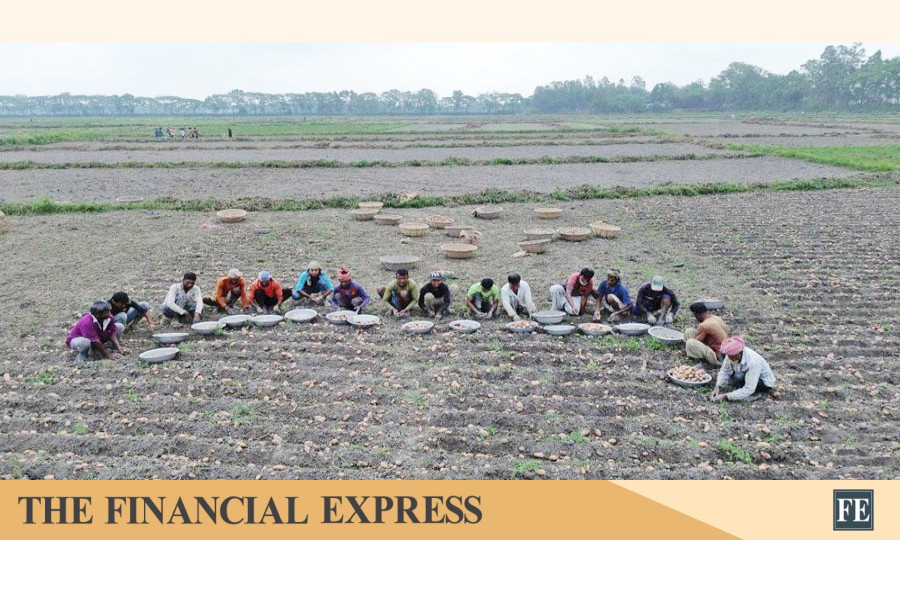
Farmers harvest potatoes in Munshiganj on April 1, 2026. Seed quality contributes to better Potato production —Xinhua Photo

Bangladesh needs to take note of the different dimensions pertaining to the use of proper seeds for improving our agricultural output and also facilitating farmers. The present government has already taken significant measures to assist famers within the paradigm of agriculture in Bangladesh.

It is generally noted that the quality of seed determines the quality of the produce and this consequently affects the sustainability of the entire agricultural value chain and also influences everything from crop yield to nutritional value. The United Nations Food and Agricultural Organisation (FAO) has particularly emphasised that "we cannot have good crops if we do not have quality seeds", a principle that underlines global efforts to improve food and nutritional security.

In this context F. Phiri, Climate Change and Health Advocacy analyst has referred to two related parallel global events during May 18 to 23, 2026 in Lisbon : one on global health by the World Health Organisation (WHO) and the other on the importance of seeds to global agriculture and food security, organised by the International Seed Federation (ISF). With a record attendance of more than 1,700 delegates and guests representing over 900 companies and organizations, the discussion called for a collective commitment and action at a moment when the multilateral frameworks underpinning global food and nutritional security are under unprecedented strain.

The Congress took place amid mounting pressure on global agri-food systems, sparked by conflicts and worsened by climate change. It may be recalled that in 2025, two famines were declared in a single year for the first time. This year, in 2026, recent geopolitical tensions continue to threaten global trade and economic stability, while an estimated 700 million people worldwide, primarily in Africa, Western Asia, and South Asia still face hunger each year. Experts have also warned that climate change, including a predicted El Niño event in mid-2026, might push an additional 132 million people into vulnerable contexts pertaining to food and nutrition insecurity within five years due to rising temperatures' impacts on crop yields.

Michael Keller, Secretary General of ISF has interestingly observed that "we are here in Lisbon in record numbers in this critical year because we know that collaboration, innovation, and joint actions are practical and appropriate responses to the scale of the truly global challenges we face now and in the future. Unfortunately, in Africa, non-flexible legal and regulatory frameworks still hamper innovation by private seed companies".

About 2,000 km away in Geneva, WHO Director General Dr Tedros Adhanom Ghebreyesus delivered a similar message, focused on the theme "Reshaping global health: a shared responsibility", strongly reinforcing the interconnected nature of global health and climate change resilience with several important social determinants of health, including food systems and nutrition. Ghebreyesus also highlighted the importance of not treating health as a standalone sector but rather ensuring that all social determinants of health are well-functioning in support of resilience, sovereignty, and protection of communities from crises.

Some observers in this context have also pointed out that climate change threatens agricultural production, food systems, and access to nutritious food, leading to malnutrition. Analyst F. Phiri has also underlined that malnutrition in turn increases vulnerability to infectious diseases and public health emergencies.

It has also been noted by agricultural analysts from to S&P Global Commodity Insights that seed innovations alone have accounted for 74 per cent of the yield gains observed in crops in the European Union. However, it has also been noted that the global system of crop variety development depends heavily on cross-border trade, with the typical novel varieties of seed bred, tested, produced, and distributed across multiple countries before they reach a farmer's hands.

Arthur Santosh Attavar, ISF President and Managing Chair of the international seed company Indo-American Hybrid Seeds has in this context remarked that "seed companies invest up to 30 per cent of their turnover in research and development because we believe that innovation is key to solving problems at scale and for generations to come. ISF continues to work with national and regional seed associations, as well as governments, to create enabling policy environments that help ensure innovations reach farmers quickly and without unnecessary delays or restrictions."

It may also be noted here that increased climate-induced extreme weather events appears to have induced special efforts to breed 'climate-resilient seed' to withstand not only intensified droughts but also the increased prevalence of pests and diseases related to drought conditions.

In this context the World Bank has also underlined that breeding seed that could go beyond being drought tolerant could be a game changer. Anup Jangwani, Global Director of Farming and Agribusiness at the World Bank Group has also noted, "until now, we have been dealing with climate resilience largely from the drought and sometimes excess rainfall perspective, but can we also start looking at developing seed varieties by building in additional nutritional aspects such as high protein content? At the World Bank, we are looking at different ways of how to build food systems resilience in a holistic way-covering the entire value chain from seed, infrastructure, markets and all the in-between, with a clear focus on sustainability."

"Environmental sustainability", in recent years, appears to have become a catchphrase in the wake of increasing climate impacts. Unfortunately, there have also been some cases of green washing linked to environmental sustainability which has delayed concrete and credible action. Such a scenario appears to have led Sandra Alcobia, who serves as a biologist and is responsible for tourism and visitation, at Companhia das Lezírias the largest agricultural and forestry holding in Portugal, to point out that "environmental sustainability is a lived reality." Established in 1836, the farm boasts 20,000 hectares of land for crop farming, animal rearing and forestry - all premised on the principles of sustainability, emphasizing organic practices.

However, Antonio Farrim, Veterinarian and Director of Agriculture Production at Companhia das Lezírias, believes public awareness is key to the climate-resilient and sustainable agenda and that "governments must take full responsibility for sensitising the public on the health benefits of sustainably grown food."

Head of External Communication at Syngenta, one of the world's biggest agricultural innovation companies, Dimitri Houtart also agrees with the importance of the public awareness narrative. Houtart has pragmatically observed that the growing global population poses a challenge as the global community races to produce enough for everyone, sustainably, with limited land. This, he has pointed out, can only be achieved through innovation and sustained public awareness for uptake of innovative technologies that support high productivity. Such a significant observation needs to be carefully checked and followed in Bangladesh by agricultural journalists in our country especially in this era of social media.

Losses in agricultural crops are largely attributed to pests, diseases, poor storage and climate stress. Analysts have correctly indicated that while technological advancement is acknowledged as a critical means of enhancing agricultural productivity and improving food and nutrition security in many low and middle-income countries it is not implemented with required accountability. This unfortunate approach in implementing innovations in breeding crops is also affecting the possibility of reduction losses in agricultural production before that happens.

Professor Mohammed Ishiyaku of the Institute for Agricultural Research in Nigeria is one of the lead scientists behind Pod Borer Resistant cowpea - a variety developed by Nigerian scientists over three decades, now approved and growing commercially in Nigeria, with regulatory approvals advancing across the region. An international public-private partnership, managed and coordinated by the African Agricultural Technology Foundation (AATF), is developing Pod-Borer Resistant Cowpeas. Such action has been welcomed as a good initiative.

Sticking with innovation, Bruce Knight of Legume Technology, based in the United Kingdom, has also been conducting trials on how to support smallholder farmers in Africa with affordable means of accessing inoculants for legume seeds. "After 10 years of trials, we have finally got it right; we have developed an affordable inoculant solution for smallholder farmers in Africa. So far, our product has outperformed other inoculant producers on the continent, and we are geared to roll out and support smallholder farmers with this tailor-made solution." says Knight.

One needs to conclude by recalling a well-known health phrase- "You are what you eat". This observation implies that food is the foundation of good health. What you eat dictates your general well-being. Seed, from which most food is cultivated, is therefore the foundation of most favorable health.

Muhammad Zamir, a former Ambassador is an analyst specialised in foreign affairs, right to information and good governance.​
 

SOIL FERTILITY ENHANCEMENT

Opportunities for agriculture
1780717513720.webp

A stretch of farmland. United News of Bangladesh

RICE-BASED agriculture is the backbone of food security. Among the three major rice varieties, aman occupies a special importance because of its extensive coverage during the monsoon season and its contribution to national rice production. After harvesting boro in April and May, millions of hectares of agricultural land remain fallow for nearly two months before aman seedlings are transplanted. This short but valuable period offers an important opportunity to improve soil fertility naturally and sustainably before the next rice crop is established.

Continuous intensive rice cultivation has now created enormous pressure on agricultural soils. Many soils are gradually losing organic matter, biological activity and nutrient reserves because of repeated cropping and excessive dependence on chemical fertilisers. In many regions, soil organic matter has declined to critically low levels. Farmers often rely heavily on nitrogen fertilisers, particularly urea, while insufficient attention is given to restoring soil health through organic and biological approaches. Under the current global situation, where fertiliser prices remain volatile and supply uncertainties continue because of geopolitical tension and energy market instability, improving the natural fertility of rice soils has become increasingly important for agriculture.

Fortunately, the post-boro fallow period provides for a practical and low-cost opportunity to restore soil productivity. Medium land, medium-high land, low-medium land and many highland areas suitable for aman can be used for short-duration green manure and soil-improving crops before aman transplantation. Such practices can reduce fertiliser dependence, improve soil structure, increase organic matter and contribute to sustainable crop production.

Among the various options, green manuring is one of the most effective and environmentally friendly methods for improving soil fertility. Green manuring refers to the cultivation of specific crops which are later incorporated into the soil while still green and succulent. These crops decompose rapidly and enrich the soil with organic matter and plant nutrients.

Dhaincha or Sesbania aculeata is considered one of the best green manure crops for Bangladesh conditions. It grows rapidly during the warm and humid pre-monsoon season and can produce substantial biomass within 45 to 60 days. Being a leguminous crop, dhaincha forms symbiotic associations with nitrogen-fixing bacteria in its root nodules and can capture atmospheric nitrogen naturally. When incorporated into the soil before aman transplantation, dhaincha can contribute significant amounts of nitrogen and organic matter. It is estimated that green manuring with dhaincha may supply the equivalent of about 20–30 kilograms of nitrogen a hectare for the succeeding aman crop. In addition, the decomposition of dhaincha biomass improves soil microbial activity, soil aggregation and nutrient availability.

Sunhemp or Crotalaria juncea is another excellent green manure crop suitable for the fallow period. Like dhaincha, it grows quickly and produces abundant green biomass within a short duration. Sunhemp also helps suppress weeds, reduce soil erosion and improve soil aeration. The incorporation of green biomass before puddling and transplanting aman seedlings can significantly enhance soil fertility and long-term soil health.

Short-duration pulse crops such as mung bean may also play an important role in soil fertility improvement. Mung bean cultivation during the pre-aman period offers dual benefits. Farmers can harvest valuable pulse grains for household consumption and income generation while the crop residues and root systems enrich soil fertility. Leguminous pulse crops improve biological nitrogen fixation and enhance microbial diversity in soils. After pod harvest, the incorporation of crop residues into the soil contributes additional organic matter and residual nitrogen for the succeeding rice crop.

In many areas, rice straw and crop residues are often removed from the field or burnt after harvest. This practice leads to loss of valuable organic carbon and plant nutrients. Instead of burning, boro straw should be retained and incorporated into the soil whenever possible. Residue incorporation improves soil organic matter content, enhances water retention capacity and stimulates beneficial microbial activity. Over time, recycling of crop residues can substantially improve soil structure and reduce soil degradation.

Organic manures also deserve greater attention in aman-based systems. Well-decomposed cow dung, farmyard manure, poultry manure, compost and vermicompost can improve soil fertility significantly when applied during land preparation. Organic materials not only supply essential plant nutrients but also improve soil texture, water holding capacity and cation exchange capacity. The addition of organic matter encourages earthworms and beneficial soil microorganisms which play an important role in nutrient cycling and soil productivity.

Bangladesh possesses considerable potential for integrating livestock and crop farming systems. The proper use of livestock manure through composting and biogas slurry application can contribute substantially to sustainable soil management. Biogas slurry, produced after the anaerobic digestion of animal manure, is particularly valuable because it contains stabilised nutrients and organic matter that can enhance crop growth while reducing environmental pollution.

Another promising approach is the use of biofertilisers and biological soil improvement technologies. Azolla, a floating aquatic fern associated with nitrogen-fixing cyanobacteria, can contribute nitrogen in wetland rice systems. Blue-green algae and beneficial microbial inoculants may also improve soil fertility and nutrient availability. Although these technologies are not yet widely adopted in Bangladesh, they offer significant future potential for reducing dependence on chemical fertilizers.

Balanced fertiliser management remains essential for sustainable aman production. Organic and biological approaches should complement rather than completely replace chemical fertilisers. An excessive, imbalanced use of urea alone often reduces fertiliser efficiency and contributes to nutrient mining from soils. Therefore, integrated plant nutrient management combining organic manures, green manuring, crop residues and balanced chemical fertilisers should be promoted. Soil-test-based fertiliser recommendations should receive a greater emphasis to ensure efficient nutrient use and avoid unnecessary fertilizer application.

Improving soil fertility before aman transplantation also has important implications for climate resilience. Soils rich in organic matter can retain more moisture and nutrients, making crops more tolerant to drought, irregular rainfall and climatic stress. Improved soil structure enhances infiltration and reduces nutrient losses through runoff and leaching during heavy monsoon rains. Furthermore, increasing soil organic carbon contributes to climate change mitigation by storing carbon within agricultural soils.

The economic benefits of soil fertility improvement practices are equally important. Rising fertiliser prices impose a major financial burden on farmers, particularly smallholders. Green manuring and organic matter recycling can partially substitute costly nitrogen fertilisers and improve fertiliser use efficiency. Healthy soils also support a good root growth, improved nutrient uptake and more stable crop yields. Over the long term, sustainable soil management can reduce production risks and improve farm profitability.

To expand these practices nationwide, coordinated efforts from government agencies, research institutions and extension services are necessary. Farmers need practical demonstrations, quality seeds of green manure crops and appropriate technical guidance. Agricultural extension programmes should actively promote short-duration legumes and green manure crops during the post-boro fallow period. Research organisations should continue developing improved varieties and location-specific management practices suitable for different agroecological zones.

Policy support is also important. Incentives may be considered for green manure seed production, compost preparation and integrated soil fertility management practices. Investments in soil health restoration should become an integral part of the long-term agricultural development strategy.

The post-boro fallow period should no longer remain an idle season. By using this valuable period for green manuring, pulse cultivation, residue recycling and organic matter incorporation, the country can gradually restore declining soil fertility and reduce excessive dependence on imported fertilisers. Such measures will strengthen sustainable aman production, improve resilience to global fertiliser market uncertainties and contribute to long-term food security and environmental sustainability.

Dr M Shahidul Islam (dmsislam12@gmail.com) is an agricultural scientist with about 57 years of extensive experience in teaching and research, particularly in the fields of soils, water management, fertilisers, environment, renewable energy, biogas technology and bioslurry organic fertiliser.​
 

Latest Posts

Back