[🇧🇩] Agriculture in Bangladesh

Afghanistan Albania Algeria Andorra Angola Antigua Austria Azerbaijan Bahamas Bahrain Bangladesh Barbados Canada China Egypt Finland Germany India Iran Israel Japan Lebanon North Macedonia Pakistan Palestine Qatar Russia Syria Turkey Ukraine United Kingdom United States Yemen
[🇧🇩] Agriculture in Bangladesh
274
13K
More threads by Saif

G Bangladesh Defense

Farmers reap rewards of olive boom in Rangamati​


Olive farming has added a new dimension to the rural economy
https://www.dhakatribune.com/371191
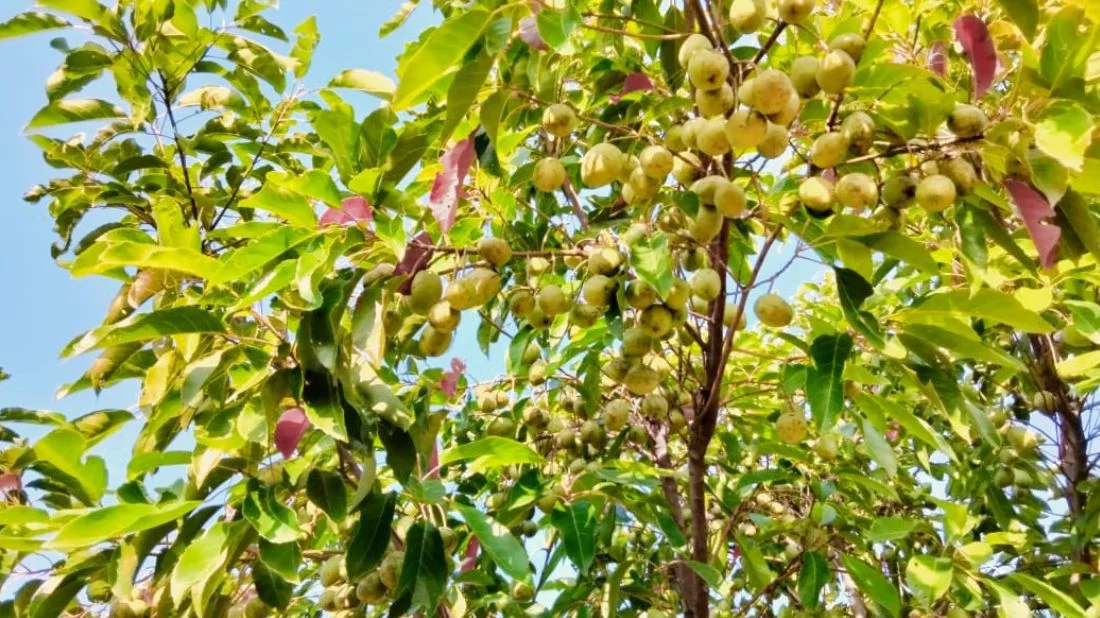
Photo: Dhaka Tribune
Bijoy Dhar

Publish : 19 Jan 2025, 09:30 AM

Update : 19 Jan 2025, 09:40 AM

The harvest of commercially cultivated olives in the hills have been strong this year, leading to widespread enthusiasm among farmers.

This tangy fruit was not previously commercially grown in Rangamati, but farmers are gradually starting to cultivate it.

In Rangamati, olives have been cultivated on 592 hectares of land, according to the Rangamati Agriculture Department.

This has resulted in the production of 6,200 metric tons of olives, with a market value of nearly Tk500 crore.

Each tree yields at least one and a half to two maunds of olives.
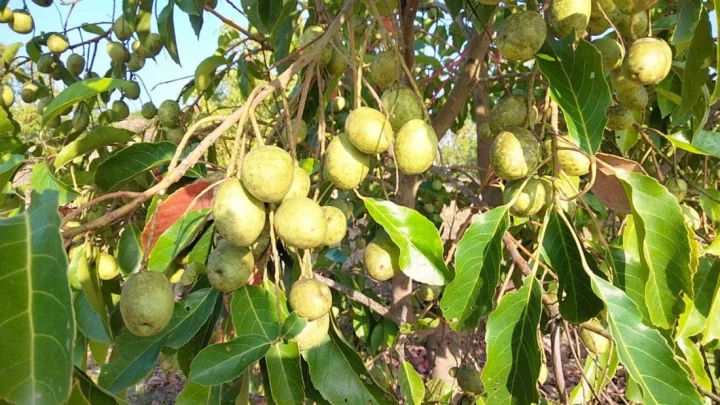
Olive (1)Photo: Dhaka Tribune

The good market prices have brought smiles to farmers' faces.

Olives are a popular and tasty fruit among the people of Bangladesh.

The fruit can be consumed both raw and ripe. However, it is mostly used to make pickles, chutneys, jams, jellies, and oil.

Due to the bumper harvest this season in Rangamati, olives are being exported to Dhaka and other districts of the country.

The farmers are happy with the good prices they are getting by selling olives.
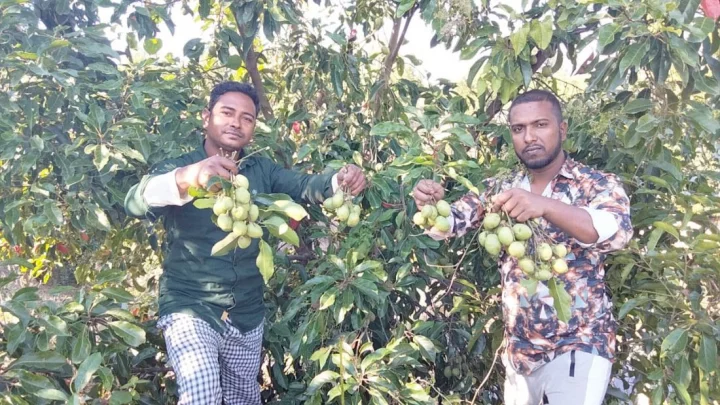
Olive (2)Photo: Dhaka Tribune

Olive farming has added a new dimension to the rural economy, according to the Agriculture Department.

Agricultural experts say that the land and climate of the district are quite suitable for olive cultivation.

Olive trees can be seen in almost every house in Rangamati. If the cultivation expands, commercial growth could be achieved.

In the Langadu upazila of Rangamati, seasonal traders are busy collecting olives from the trees.

The wholesalers are going door to door to gather olives and then export them to different districts.

Langadu has seen a bumper harvest of olives this season.

In Gulshakhali union of Langadu upazila, farmer Mohammad Sajib said: "I have planted one olive tree in my yard. Additionally, I have created an olive orchard on two acres of sloping land in the mountains with around 50 olive trees. The trees started bearing fruit in the beginning of winter. The wholesale price is around Tk50 to Tk60 per kilogram. The cost of production is low, and the profit is high, so commercial cultivation is quite promising."

Farmer Mohammad Idris from Gulshakhali union said: "I planted 105 olive trees on three acres of land two years ago. The first harvest was bumper, and I sold olives worth 3 lakh taka from the orchard in the first year."

Regarding this, Md Moniruzzaman, Deputy Director of the Rangamati Agricultural Extension Department, said: "Olives are a tangy fruit that makes your mouth water. They contain vitamins, herbal compounds, fiber, iron, copper, vitamin E, phenolic compounds, oleic acid, and various antioxidants."

He added that although there are olive trees in all ten upazilas of Rangamati, there are no olive orchards yet.

He reports that this year, olive farming has spread over 592 hectares of land in Rangamati, producing 6,200 metric tons of olives with an estimated market value of nearly Tk500 crore.

The growing demand for olives is expected to further boost the district's economy, and the Agriculture Department is working to increase olive production.

Olives can grow easily in any part of Bangladesh, making them a nutritious fruit that can meet both domestic demand and be exported abroad.
 

Why Bangladesh imports mangoes despite being a top producer

Sukanta Halder and Ahmed Deepto

1783902487277.webp


Bangladesh ranks seventh among the world’s mango-producing nations, growing 24-26 lakh tonnes annually for a domestic market worth Tk 13,000 to Tk 14,000 crore.

Yet, the country regularly imports mangoes to meet growing year-round demand from the higher-income consumers.

The imported mangoes remain a fixture at fruit shops across kitchen markets and superstores in Gulshan, Banani, Baitul Mukarram, Dhanmondi, and Uttara -- catering mainly to high-income buyers willing to pay premium prices year-round.

However, traders say demand for imported varieties drops sharply during the local mango season as Bangladeshi mangoes remain unmatched in taste.

According to Bangladesh Bank data, mango imports stood at 38.3 tonnes in fiscal year 2020-21 (FY21), rising sharply to 1,343 tonnes in FY22, before falling to 141 tonnes in FY23, 15.29 tonnes in FY24, and just 4.87 tonnes in FY25. Imports rebounded to 37.05 tonnes during the July-May period of the recently concluded FY26.

Bangladesh has imported mangoes from Thailand, Egypt, India, Kenya, the Netherlands, Myanmar, the UK, and Australia, among other countries. However, in FY26, imports came only from Thailand, India, and a handful of other countries.

Md Abdul Manik, a mango importer, told The Daily Star that import volumes were higher in previous years because costs were lower. Duty then stood at around Tk 45 per kg and airfare at Tk 70 to Tk 80 per kg.

At present, he said duty has increased to around Tk 500 per kg, and airfare has risen to around Tk 300 per kg, which has reduced import volumes because customers cannot afford the higher prices.

By comparison, he said, countries including Thailand, the UAE, and other Middle Eastern nations impose food import taxes of only around 5 percent.

The importer argued that lower taxes in Bangladesh would make fruits like grapes, apples, and maltas more affordable.

As it stands, he said, only a small segment of higher-income consumers can afford imported mangoes, with demand driven mainly by sweetness. Thai Sweet Mango remains the most sought-after variety.

Mohammad Limon, sales representative of Unimart’s Gulshan-2 branch, said demand for foreign mangoes falls once the local season begins and imports are scaled back accordingly, picking up again once the season ends.

Varieties such as Australia’s R2E2, India’s Katimon, Thailand’s Banana Mango, along with a few others, are in higher demand, he said. Besides these, mangoes are also imported from the Netherlands.

R2E2 is sold at Tk 1,500 to Tk 1,600 per kg, while Katimon is sold at Tk 250 per kg. Although these mangoes are in demand throughout the year, demand is higher during the month of Ramadan, according to Limon.

Demand for all varieties peaks during Ramadan, he added.

Kabir Hossain, a fruit seller at Gulshan-2 kitchen market, said Thailand’s Jamboo, Cherry Mango, and Sweet Mango are in high demand. Jamboo is sold at Tk 1,400 per kg, Cherry at Tk 1,400 to Tk 1,500 per kg, and Sweet Mango at Tk 1,200 per kg.

The buyers of imported mangoes are mainly big businessmen and salaried professionals. About 200 to 300 kg of mangoes are sold per week, he told the reporter.

Md Sorof Uddin, chief scientific officer at the Regional Horticulture Research Centre in Chapainawabganj, said, “Imported mangoes help meet consumer demand during the domestic off-season, but they cannot match the taste and quality of Bangladeshi mangoes.”

He said consumers often purchase imported mangoes because local varieties are unavailable, prioritising availability over flavour.​
 

For the agriculture sector, the challenge is not just money but where it goes

AHM Saiful Islam

1784073805096.webp

‘Despite its declining share of GDP, agriculture remains the backbone of Bangladesh’s economy.’ FILE PHOTO: MOSTAFA SHABUJ

The FY2026-27 national budget identifies agriculture as one of its 10 strategic priorities. The budget outlines an ambitious vision to transform it into a key driver of national prosperity by developing a self-reliant, climate-resilient, and technology-driven modern agricultural system.

Accordingly, agriculture and its related sectors (ARS), including livestock, environment, land, and water resources, have been allocated Tk 46,821 crore (60 percent for operating and 40 percent development expenditure), a nominal 2.3 percent increase over the revised FY2025-26 budget. However, agriculture’s share of the total national budget has declined to 5 percent, reaching its lowest level in the past 14 years.

Despite its declining share of GDP, agriculture remains the backbone of Bangladesh’s economy; it is central to food and nutrition security, rural livelihoods, employment and poverty reduction. The sector has achieved self-sufficiency in rice and fish, made notable progress in livestock, fruits, and vegetables, and demonstrated resilience during the Covid pandemic and the Russia-Ukraine war. However, it continues to face rising input costs, post-harvest losses, price volatility, climate shocks, weak market access, slow mechanisation, poor agro-processing and market linkages, shrinking farmland, declining soil fertility, increasing pest and disease pressures, and climate change. These challenges are further compounded by sluggish productivity growth, limited crop diversification, slow technology adoption, and weak institutional coordination.

Agricultural diversification

Bangladesh’s agri-food system and consumer demand are shifting towards higher-value foods, yet rice still occupies about 72 percent of the country’s cultivated area. Because agricultural subsidies are largely universal, rice farmers receive most government support. A recent World Bank (WB) study estimates that rice farmers receive nearly 80 percent of subsidy benefits, reinforcing a structural bias against diversification despite growing demand for fruits, vegetables, fish, livestock products, and processed foods. Therefore, the issue is not only the size of the agriculture budget but also its composition and efficient use. The WB also found that the largest 20 percent of farmers capture about half of all fertiliser subsidies, while the bottom 40 percent receive only 15 percent. Moreover, excessive use of fertilisers, particularly nitrogen, and pesticides has reduced productivity and increased environmental costs. Although this year’s subsidy allocation remains unchanged, the agriculture ministry’s development budget has increased by 96.5 percent, providing an opportunity to reorient spending.

Rather than maintaining universal subsidies, greater emphasis should be placed on targeted, pro-poor support and investments that promote diversification, including mechanisation, efficient irrigation such as solar-powered systems, alternative wetting and drying (AWD), livestock and aquaculture innovations, non-crop agricultural insurance, soil testing, AI-based advisory services, and climate-smart agricultural practices. Household Income and Expenditure Survey (HIES) data and the WB report show that consumer demand is steadily shifting from cereals to higher-value products. Yet the FY2026-27 budget keeps unchanged allocations for the livestock and fisheries sector, which is inconsistent with a demand-driven diversification strategy, despite some positive tariff measures for feed inputs.The composition of the agriculture budget, therefore, deserves careful reconsideration.

Export promotion and import substitution

Despite significant gains in agricultural production over the past two decades, Bangladesh remains dependent on imports, while agricultural exports are still limited. To diversify its export basket and reduce import dependence, policies should be guided by evidence of comparative advantage and address key constraints, including food safety and quality standards, inadequate infrastructure, and tariff and non-tariff barriers. However, the agriculture budget gives limited attention beyond some tariff measures and investments in pack houses and quarantine laboratories. Imposition of import duties on cashew nuts and Pangas fish fillets is, nevertheless, a positive step that could encourage domestic production and import substitution.

Mechanisation

Bangladesh is no longer an agricultural labour-abundant country, with acute labour shortages during transplanting and harvesting seasons. Addressing these challenges requires greater investment in scale-appropriate mechanisation to improve labour productivity. While mechanisation has largely focused on rice cultivation, particularly tillage, pesticide application, and threshing, greater emphasis is needed on transplanting, weeding, harvesting, and mechanisation for non-rice crops, livestock, and fisheries. However, the budget gives limited attention to this priority beyond mentioning mechanisation under the Farmer Card programme. Although it includes loan waivers and low-interest agricultural credit, these facilities should be redesigned to better meet the needs of agro-entrepreneurs through demand-driven loan amounts, repayment terms, and supportive credit policies.

Research and development

Data from the Bangladesh Bureau of Statistics (BBS) and the WB show that agricultural growth, particularly rice productivity, has slowed, threatening progress in poverty reduction, and food and nutrition security. At the same time, agriculture faces increasing climate-related and other biotic and abiotic stresses, including floods, droughts, cyclones, and salinity intrusion. Addressing these challenges requires greater investment in agricultural education, research, extension, and technological, institutional and policy innovations, particularly in developing high-yielding, climate-resilient crop, livestock, and fish varieties. Reforming the National Agricultural Research System (NARS) through merit-based recruitment, promotion, and incentives is equally important.

Greater investment is also required to modernise extension services through ICT-enabled platforms and AI-driven climate advisory systems. Research evidence indicates that limited financial as well as non-financial incentives, like recognition by the district director, significantly improve the service delivery of government agricultural extension agents. Although Bangladesh has developed over 150 rice varieties, only a few older varieties dominate farmers’ fields, reflecting weak extension and dissemination. Integrating climate advisory into extension services, strengthening extension staff capacity, and investing in digital public infrastructure that provides real-time, location-specific recommendations on inputs, weather, and market prices are increasingly essential. Despite these pressing needs, the FY2026-27 budget provides limited emphasis on agricultural research, extension, and digital climate advisory systems.

Agricultural marketing

The FY2026-27 budget continues to emphasise agricultural production over marketing, despite farmers’ persistent inability to receive fair prices, particularly during harvest seasons. Although the budget speech highlights reducing the role of intermediaries and developing modern marketing and cold-chain infrastructure, apart from a cold storage facility for mango in the Barind region and upgrading quarantine laboratories, there is no clear allocation for modern markets and cold-chain facilities for perishable products.

The Department of Agricultural Marketing (DAM) should be strengthened with adequate manpower and development funding, while its warehouse receipt programme should be expanded nationwide to include non-cereal crops as well. More importantly, the government food grain procurement programme should function as an effective price support mechanism through direct procurement from farmers rather than intermediaries and millers. In this regard, the West Bengal government’s digital paddy procurement system, known as e-Paddy, is often referred to as one of the successful examples. The planned digital procurement of 41.29 lakh metric tonnes of food grains through the Krishoker App is a welcome initiative. However, its success will depend on effective implementation, improving farmers’ digital literacy, and addressing long-standing concerns over moisture-content requirements.

Coordination and policy coherence

Agriculture in Bangladesh is a multi-sectoral field involving numerous ministries and agencies. Therefore, the success of the FY2026-27 budget will depend on how effectively these institutions coordinate and utilise public resources. Building a resilient agri-food system requires stronger institutional collaboration, policy coherence, and better linkages among agricultural education, research, and extension (ERE) to accelerate technology generation, adoption, and diffusion. Bangladesh can draw lessons from successful models such as Wageningen University & Research (WUR) in the Netherlands, which integrates education, research, and extension.

Agricultural policies should also be reoriented to support fiscal sustainability, food and nutrition security, and climate resilience. We often see the gap between promises and delivery, which highlights the need for governance to shift from process to performance. Ultimately, the effectiveness of the budget will depend on implementation. If budget allocation, especially the development budget, is executed efficiently, resources are well targeted, and farmers receive timely and equitable support and information, the budget can promote innovation, improve productivity, strengthen food security, and enhance climate resilience. Otherwise, many of its intended objectives may remain unrealised.

Prof Dr AHM Saiful Islam is an agricultural economist and professor at Department of Agricultural Economics in Bangladesh Agricultural University (BAU), Mymensingh.​
 

Latest Posts

Back