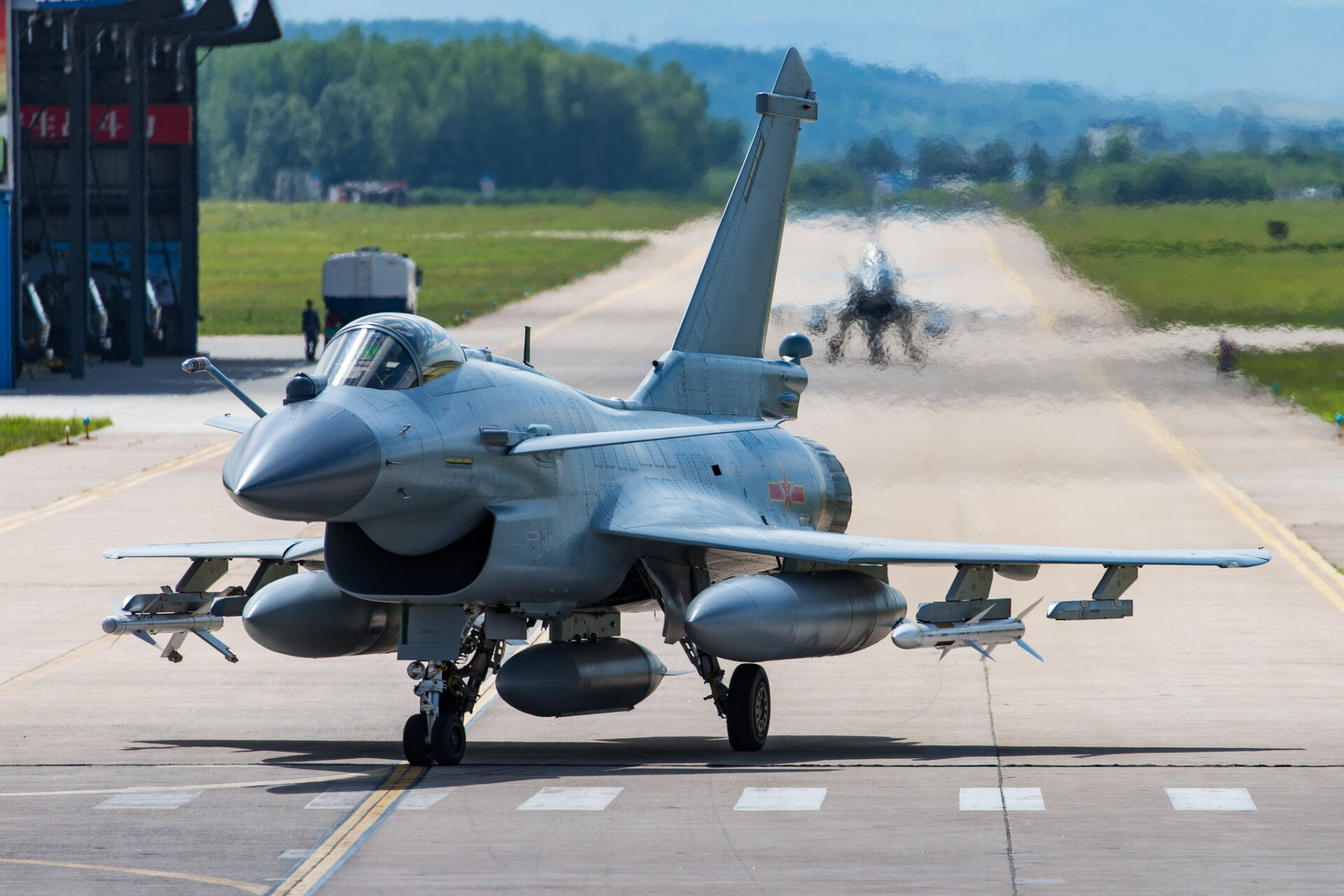
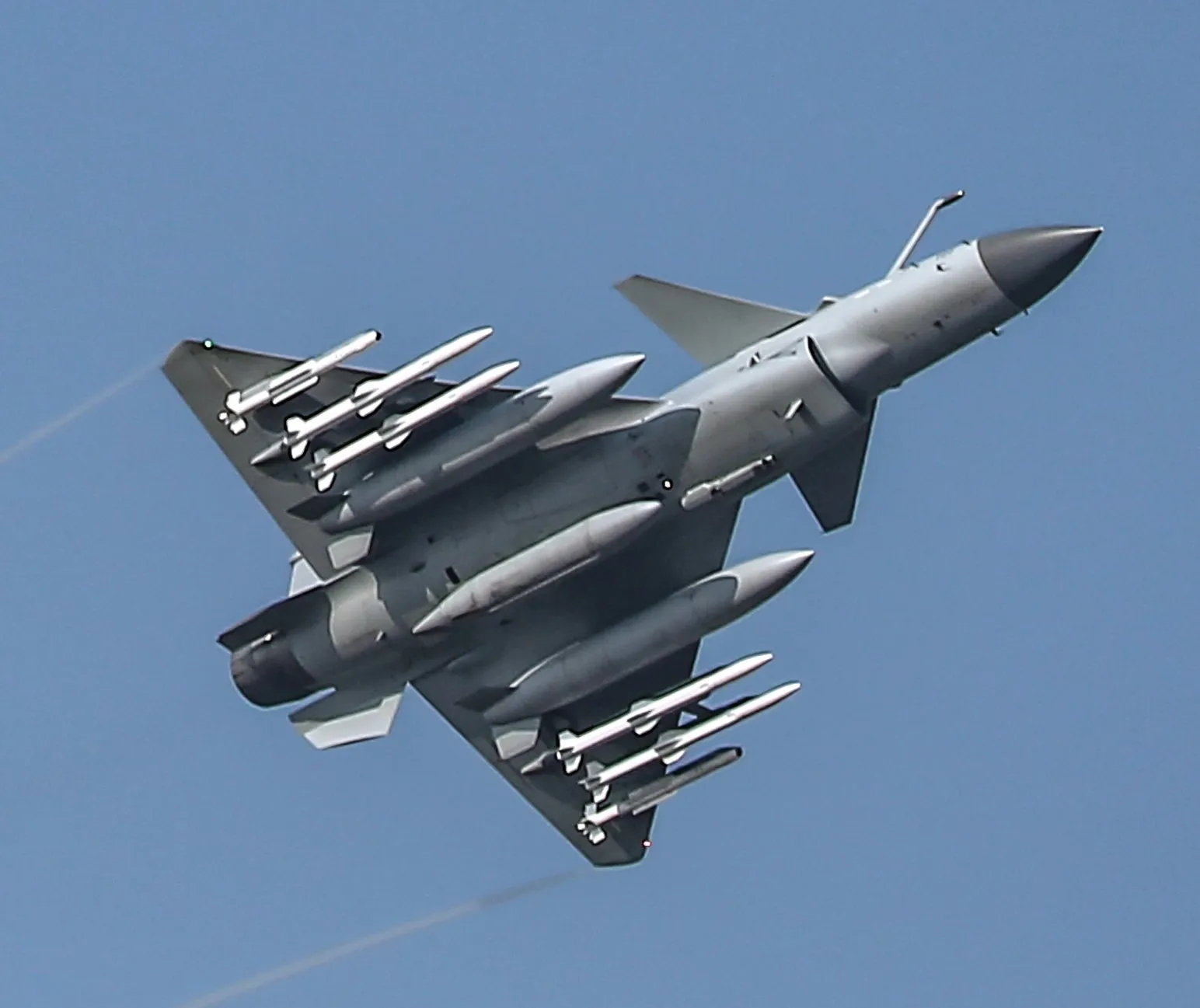
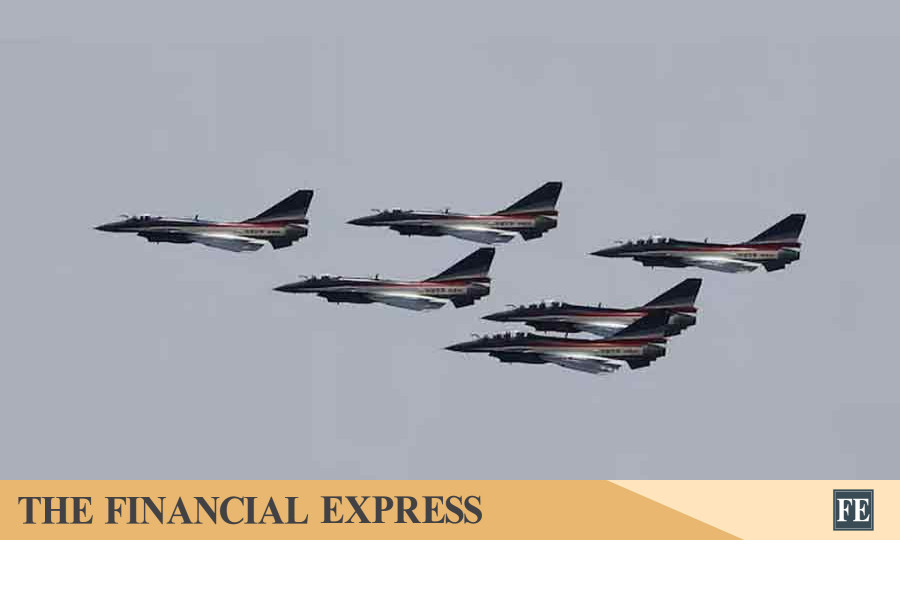
[🇧🇩-Airforce] Chinese J-10CE for Bangladesh Air Force

Afghanistan Albania Algeria Andorra Angola Antigua Austria Azerbaijan Bahamas Bahrain Bangladesh Barbados Canada China Egypt Finland Germany India Iran Israel Japan Lebanon North Macedonia Pakistan Palestine Qatar Russia Syria Turkey Ukraine United Kingdom United States Yemen
[🇧🇩-Airforce] Chinese J-10CE for Bangladesh Air Force
4
39
More threads by Saif

G   Bangladesh Defense

Saif

Senior Member
Joined
Jan 24, 2024
Messages
20,621
Likes
9,616
Nation

Residence

Axis Group

Bangladesh’s J-10CE Fighter Deal With China Triggers Strategic Alarm in India, Reshapes Bay of Bengal Airpower Balance

Bangladesh’s planned acquisition of up to 24 Chinese J-10CE multirole fighters could dramatically reshape the Bay of Bengal security architecture, intensify India-China strategic competition, and strengthen Beijing’s expanding military footprint across South Asia.

Bangladesh is accelerating negotiations to acquire between 20 and 24 Chinese-made J-10CE multirole fighter jets in a move that could fundamentally alter the military balance across the Bay of Bengal and India’s vulnerable eastern strategic corridor.Military aircraft models

(DEFENCE SECURITY ASIA) — Bangladesh is accelerating negotiations to acquire between 20 and 24 Chinese-made J-10CE multirole fighter jets in a move that could fundamentally alter the military balance across the Bay of Bengal and India’s vulnerable eastern strategic corridor.

The proposed acquisition, expected to advance during Prime Minister Tarique Rahman’s high-level visit to China this week, represents one of the most consequential airpower modernisation decisions undertaken by Dhaka since the launch of its “Forces Goal 2030” defence transformation programme.

Bangladeshi officials reportedly aim to finalise or sign the agreement by August 2026, while multiple reports indicate the package could be valued at approximately USD2.2 billion (RM8.36 billion), including aircraft, training, logistics infrastructure, spares, maintenance support, and long-term sustainment.
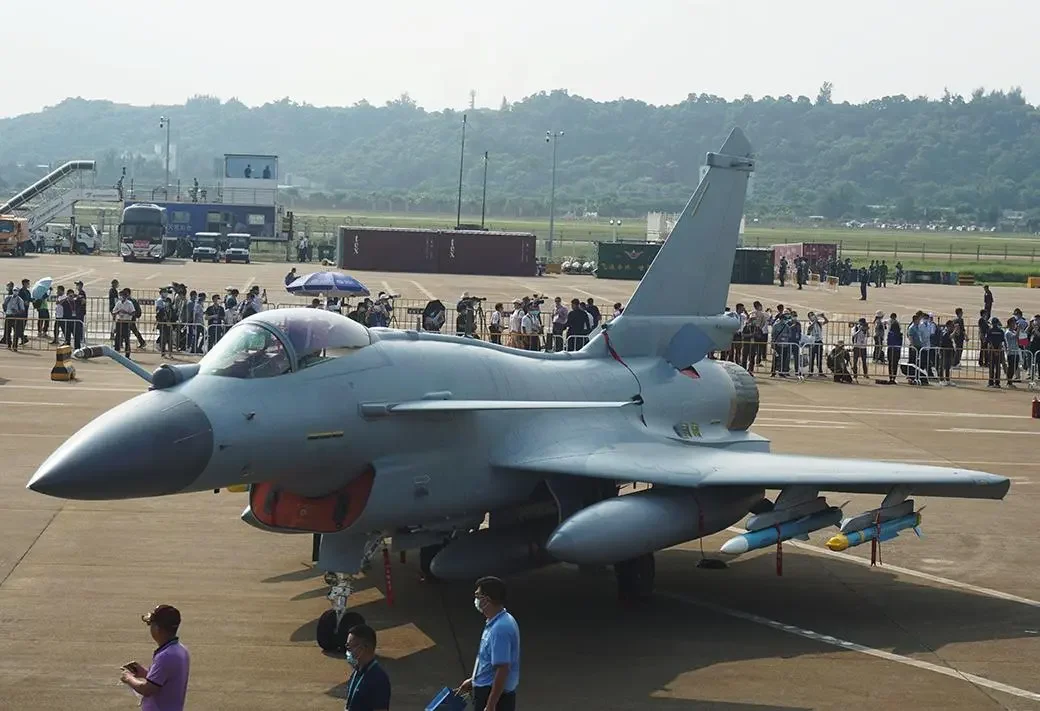
1782452910950.webp


A senior Bangladeshi official stated that each J-10CE airframe is estimated to cost roughly USD40 million (RM152 million), although broader package calculations place effective programme costs substantially higher once weapons, maintenance ecosystems, and pilot conversion pipelines are included.Chinese military equipment

Chinese defence and diplomatic delegations reportedly visited Dhaka recently to accelerate negotiations before Bangladeshi officials conduct parallel discussions with China’s foreign and defence ministries regarding final procurement mechanisms and financing structures.

The negotiations are unfolding amid rapidly evolving regional security dynamics following Bangladesh’s post-2024 political transition, which has created new strategic opportunities for Beijing to deepen military-industrial influence along the northern Bay of Bengal littoral.

For China, the J-10CE proposal extends beyond conventional arms exports because it strengthens Beijing’s long-term defence access architecture across South Asia while expanding operational interoperability between Chinese-origin combat systems already dominating Bangladesh’s armed forces inventory.Geopolitical strategy consulting

For India, the potential emergence of a second South Asian J-10CE operator after Pakistan introduces a more complex two-front airpower calculation that could stretch Indian Air Force force allocation models across both western and eastern operational theatres.

The development also increases strategic anxiety in New Delhi regarding the security of the Siliguri Corridor, a narrow territorial chokepoint linking mainland India with its northeastern states and traditionally considered among India’s most vulnerable strategic geographic pressure points.

Military planners across the Indo-Pacific are closely monitoring the negotiations because the J-10CE acquisition would provide Bangladesh with its first credible beyond-visual-range combat capability supported by modern AESA radar systems, network-centric warfare architecture, and advanced electronic warfare resilience.India defense analysis

The proposed acquisition reflects a broader regional trend in which middle-power states increasingly pursue cost-effective fourth-and-a-half-generation combat aircraft capable of delivering strategic deterrence without incurring the financial and political burdens associated with Western fighter procurement ecosystems.

Although the deal has not yet been formally confirmed through official government announcements, multiple mainstream regional reports indicate negotiations have entered advanced stages with substantial political backing from both Dhaka and Beijing.​
 
Bangladesh’s J-10CE Procurement Signals the Largest Transformation of BAF Combat Capability in Decades

The Bangladesh Air Force currently operates an aging fleet dominated by Chinese-origin Chengdu F-7 interceptors derived from the Soviet-era MiG-21 platform, alongside a limited number of upgraded MiG-29 fighters with constrained modern combat relevance.

These legacy aircraft lack the sensor fusion, long-range targeting capability, advanced radar architecture, and network-enabled battlespace integration required for contemporary Indo-Pacific aerial warfare environments increasingly dominated by BVR missile engagements and electronic warfare saturation.

The J-10CE would therefore represent not merely a platform replacement programme but a transition toward digitally integrated combat aviation capable of participating in modern system-of-systems warfare environments increasingly shaping Asian airpower competition.

Reports indicate the proposed acquisition may initially involve phased deliveries beginning with smaller operational batches before expanding toward the full 20-to-24-aircraft objective depending on financing structures and infrastructure readiness inside Bangladesh.Military equipment sales

The procurement reportedly falls under a Government-to-Government framework aligned with Bangladesh’s “Forces Goal 2030” programme, which prioritises affordable but technologically credible military modernisation capable of preserving regional deterrence without overextending national finances.

Payments are reportedly structured across approximately ten years extending toward 2035 or 2036, reducing immediate fiscal pressure while enabling Dhaka to absorb advanced aerospace capability without destabilising broader economic planning priorities.

An inter-ministerial committee reportedly led by Air Chief Marshal Hasan Mahmood Khan is managing the negotiations, highlighting the acquisition’s strategic significance within Bangladesh’s wider national security restructuring agenda.

The J-10CE package reportedly includes pilot training, logistics support, spare parts pipelines, maintenance infrastructure, and sustainment systems designed to ensure operational readiness throughout the aircraft’s projected service lifecycle.

Such arrangements are strategically critical because many developing air forces struggle less with aircraft procurement itself than with sustaining long-term readiness rates once sophisticated combat platforms enter operational service.Defence Security Asia subscription

By pursuing a Chinese ecosystem-based procurement pathway, Bangladesh also reduces integration complexity because Chinese-origin military equipment already constitutes more than 70 percent of the country’s imported defence hardware inventory.

The negotiations therefore demonstrate how defence-industrial dependency increasingly shapes geopolitical alignment patterns across Asia, particularly among states balancing fiscal constraints against escalating regional security pressures.

1782453092223.webp
 
J-10CE’s Combat Systems Could Give Bangladesh Its First Genuine Beyond-Visual-Range Air Dominance Capability

The J-10CE export fighter is widely considered among China’s most capable fourth-and-a-half-generation combat aircraft currently available on the international defence market outside fifth-generation stealth platforms.Military aircraft models

Powered by the WS-10B afterburning turbofan engine, the aircraft reportedly achieves speeds approaching Mach 1.8 while maintaining sufficient combat radius and endurance for both air defence and maritime strike missions across the Bay of Bengal.

The platform’s Active Electronically Scanned Array radar architecture significantly enhances multi-target tracking performance while improving resistance against electronic countermeasures increasingly central to modern air combat survivability.

Its sensor fusion ecosystem integrates radar, targeting systems, electronic warfare suites, and tactical datalinks into a unified pilot interface capable of accelerating threat detection and reducing decision-making latency during high-intensity combat operations.

The aircraft’s compatibility with the PL-15 beyond-visual-range missile potentially represents the most strategically important aspect of the acquisition because the missile dramatically expands engagement envelopes compared with Bangladesh’s current fighter inventory.

The PL-15 reportedly incorporates active radar homing guidance and extended-range capability capable of threatening adversary aircraft before reciprocal missile engagement opportunities emerge within contested battlespace conditions.

Combined with advanced electronic warfare architecture, the missile-radar pairing would provide Bangladesh with its first meaningful ability to contest regional airspace using contemporary long-range air combat doctrine rather than legacy close-range interception tactics.

The J-10CE’s delta-wing and canard aerodynamic configuration also provides strong manoeuvrability characteristics supported by digital fly-by-wire controls designed to enhance agility during both dogfight and missile-evasion scenarios.Sistem pertahanan udara

The fighter reportedly carries up to 5,600 kilograms of weapons across 11 hardpoints, enabling flexible mission profiles involving air superiority, maritime strike, ground attack, and precision-guided munitions deployment.

Such multirole flexibility is strategically significant because Bangladesh requires relatively small force structures capable of performing multiple operational tasks simultaneously across geographically diverse mission environments.

The platform is therefore increasingly compared with advanced F-16 variants regarding operational role, although Beijing’s financing flexibility and reduced political conditions offer China substantial competitive advantages across emerging defence markets.​
 

Acquiring Chinese fighter aircraft
A prudent investment or a strategic gamble?
Mudassir Hussain Khan

Published :
Jul 05, 2026 00:22
Updated :
Jul 05, 2026 00:24

1783302585937.webp


Bangladesh's reported decision to procure J-10CE Chinese multirole fighter aircraft marks another important step in the modernization of the Bangladesh Air Force under the Forces Goal 2030 programme. Given the rapidly evolving security environment in South Asia, strengthening the country's air defence capability is a legitimate national objective. However, the acquisition should be examined from both military and geopolitical perspectives.

From a military standpoint, modern multirole fighters would significantly enhance Bangladesh's capability to defend its airspace, conduct precision strikes and improve surveillance and deterrence. Nevertheless, even few squadrons of advanced aircraft would not fundamentally alter the regional balance of power. India's overwhelming numerical superiority in combat aircraft, airborne early warning systems, aerial refuelling capability and integrated air defence network would continue to provide New Delhi with a decisive strategic advantage. Thus, the procurement would serve primarily as a credible deterrent rather than a game-changing military equaliser.

The cost-benefit ratio appears reasonable only if the aircrafts are acquired at competitive prices with comprehensive technology transfer, pilot training, maintenance support and long-term logistics packages, in the absence of which the high life-cycle costs associated with modern combat aircraft could place considerable pressure on Bangladesh's development expenditure, the defence budget in particular.

Diplomatically, China would certainly welcome the deal as another milestone in expanding its defence cooperation with Bangladesh. India on the other side, is likely to monitor the development closely, refraining though from strong public criticism, given Bangladesh's sovereign right to procure defensive equipment. The United States (US) may express concern if the acquisition deepens Bangladesh's military dependence on China, particularly in the context of the Indo-Pacific strategic rivalry. Other neighbouring countries are unlikely to react strongly unless the procurement significantly alters the regional military balance.

Challenges tied with the procurement will emerge after completion of the delivery. Sustaining sophisticated fighter aircrafts requires uninterrupted supplies of spare parts, regular software upgrades, highly trained technicians and pilots, modern maintenance infrastructure and long-term financial commitments. Any deterioration in bilateral relations with the supplier or disruptions in the supply chain could adversely affect operational readiness of the aircrafts.

Whether there were better alternatives remains open to debate. Aircraft from the USA and other Western developed countries generally offer superior interoperability and advanced avionics but are considerably more expensive and often accompanied by harsh political conditions. Other options, such as the JF-17 Block III or Sweden's Gripen, could also have been considered depending on Bangladesh's financial resources and strategic priorities. Ultimately, no fighter aircraft is universally "best"; the optimal choice depends on operational requirements, affordability and long-term sustainability.

Generally speaking, if carried out with careful planning and supported by adequate training, logistics and maintenance infrastructure, the procurement would strengthen Bangladesh's defensive capability. Bangladesh must however continue pursuing a balanced foreign policy, diversify its defence partnerships and avoid excessive dependence on any single supplier, thereby preserving both its military readiness and strategic autonomy.

Lt Col Mudassir Hussain Khan (rtd) is a Bir Protik​
 

Bangladesh’ Reported J-10CE Fighter Deal Alarms India as China Reshapes South Asia’s Airpower Balance

The reported US$2.2 billion acquisition of 24 Chinese J-10CE multirole fighters could integrate Bangladesh into a long-term Chinese combat-aircraft ecosystem and intensify strategic pressure across India’s eastern and western operational theatres.​

EnglishGlobalInternational

By admin On Aug 2, 2026

J-10


Share
(DEFENCE SECURITY ASIA) — India’s security establishment is increasingly framing Bangladesh’s reported plan to acquire 24 Chinese J-10CE multirole fighters as a structural transformation of South Asia’s regional airpower architecture rather than a conventional fighter procurement programme.

The proposed US$2.2 billion (RM8.36 billion) government-to-government package would reportedly include training, logistics, maintenance, spare parts, sustainment infrastructure, and long-term technical support extending until approximately 2035 or 2036.

Indian military planners believe the significance of the reported acquisition lies less in Bangladesh’s immediate combat capability and more in the emergence of a standardized Chinese-origin combat ecosystem surrounding India’s eastern and western operational theatres simultaneously.


J-10C
J-10C

Security analysts in New Delhi increasingly argue that Bangladesh’s possible induction of the J-10CE would introduce the same Chinese-built fighter platform already fielded by Pakistan during the May 2025 India-Pakistan aerial clashes known as Operation Sindoor.

Pakistani and Chinese-linked claims surrounding Operation Sindoor alleged that J-10CE fighters equipped with PL-15 beyond-visual-range missiles successfully engaged Indian combat aircraft, including Rafales, dramatically elevating the combat credibility and export profile of the Chinese fighter program.

Although several operational details surrounding those claims remain disputed, Indian defence planners reportedly view the emergence of a combat-tested Chinese fighter ecosystem across multiple borders as a major doctrinal and operational concern.

The timing of the reported negotiations has further intensified Indian anxieties because discussions reportedly accelerated during Bangladeshi political engagements with Chinese leadership between June 24 and June 26, with officials targeting a possible August 2026 agreement signature.

Reports indicating that deliveries could commence by late 2026 or early 2027 have heightened concerns regarding how rapidly the regional airpower balance could evolve along India’s strategically sensitive eastern flank.

Indian analysts emphasize that the concern is not whether Bangladesh possesses the sovereign right to modernize its aging air force fleet under the Forces Goal 2030 modernization framework.

Instead, the strategic concern revolves around the specific combination of Chinese-origin advanced fighters, geographic proximity to critical Indian vulnerabilities, long-term Chinese sustainment dependency, and expanding Chinese influence within the Bay of Bengal security environment.

Military observers also note that Bangladesh would become only the second export operator of the J-10CE after Pakistan, potentially creating operational commonality among Chinese-equipped air forces positioned along multiple Indian approaches.

The resulting convergence of Chinese radar systems, missile inventories, electronic warfare doctrine, logistics frameworks, and pilot training standards is increasingly viewed in India as a significant long-term strategic development rather than an isolated procurement transaction.


A Chinese-Origin Air Combat Network Is Emerging Across India’s Strategic Periphery

Indian defence analysts increasingly describe the reported Bangladesh procurement as the emergence of a standardized Chinese-origin tactical aviation ecosystem spanning multiple regional fronts surrounding India’s security architecture.

Pakistan already operates more than 20 J-10CE fighters, with additional aircraft reportedly on order as Islamabad deepens its operational integration with Chinese aerospace technology and long-range missile doctrine.

If Bangladesh fields the same platform, India would potentially confront identical Chinese-origin avionics, weapons integration architecture, and electronic warfare systems on both eastern and western fronts simultaneously during future contingencies.

The J-10CE’s integration of the PL-15 beyond-visual-range air-to-air missile has become particularly concerning for Indian planners because the missile reportedly offers engagement ranges exceeding several legacy Indian missile inventories.

Indian operational planners reportedly fear that standardized PL-15 deployment across multiple neighbouring air forces could complicate tactical mission planning, airborne early warning coordination, and fighter survivability calculations across two major theatres simultaneously.

Military analysts additionally warn that common Chinese-origin datalink protocols, sensor fusion architecture, and pilot training methodologies could potentially enable increased interoperability between Chinese-equipped regional air forces during future regional crises.

Although Bangladesh and Pakistan maintain different geopolitical trajectories, Indian strategists increasingly focus on the operational consequences of similar Chinese combat systems operating around India’s strategic geography regardless of formal military alliances.

Indian planners are therefore evaluating how simultaneous exposure to common Chinese tactical aviation doctrines could affect air defence saturation risks, radar signature management, electronic warfare resilience, and long-range interception tactics.

The concern extends beyond pure numerical comparisons because India’s Eastern Air Command retains substantial advantages through Su-30MKI squadrons, Rafales, layered integrated air defence systems, and larger overall force structure.

Instead, Indian security discussions increasingly emphasize how repeated exposure to the same Chinese tactical ecosystem across multiple fronts could gradually erode India’s operational predictability advantages during future high-intensity conflicts.

Strategic observers note that China’s defence export strategy increasingly appears designed to normalize Chinese combat systems across South Asia while embedding neighbouring militaries within long-term Chinese maintenance and sustainment structures.

This evolving military-technical environment is why Indian defence commentators increasingly characterize the Bangladesh J-10CE discussion as part of a broader Indo-Pacific strategic competition rather than an isolated bilateral procurement programme.


J-10C
J-10C

Lalmonirhat Airbase Could Transform the Strategic Equation Around India’s Vulnerable “Chicken’s Neck”

The reported linkage between Bangladesh’s fighter modernization plans and the possible redevelopment of Lalmonirhat airbase has emerged as one of the most sensitive dimensions of India’s security calculations.

Lalmonirhat’s geography carries exceptional strategic significance because the former World War Two-era airfield lies only approximately 12 to 15 kilometres from the Indian border near the Siliguri Corridor.

The Siliguri Corridor, often described as India’s “Chicken’s Neck,” represents a narrow land bridge measuring roughly 20 to 40 kilometres wide connecting mainland India to its eight northeastern states.

Indian military doctrine has historically regarded the corridor as one of the country’s most vulnerable strategic chokepoints because disruption could complicate military reinforcement, logistics sustainment, and civilian connectivity across the entire northeastern region.

Indian analysts therefore fear that future deployment of advanced multirole fighters near Lalmonirhat could dramatically compress response timelines during regional contingencies involving the eastern theatre.

The J-10CE’s combination of AESA radar, long-range air-to-air missiles, precision-strike capability, and multirole flexibility could theoretically support rapid interception, surveillance, or interdiction operations near the corridor during heightened tensions.

Indian observers are also increasingly focused on potential intelligence, surveillance, and reconnaissance implications associated with advanced airborne sensors operating close to sensitive Indian troop movement corridors and logistics infrastructure.

Concerns have intensified further because some Indian media reports suggested potential Chinese involvement in future airbase upgrades, although Bangladesh publicly stated during May 2025 that no military use plans currently exist for Lalmonirhat.

India’s official position, including parliamentary responses delivered in August 2025, acknowledged awareness of reports regarding the airfield while emphasizing that necessary national security measures remain under active consideration.

Military analysts caution that even without permanent Chinese military presence, Chinese-built infrastructure combined with Chinese combat aircraft could still generate substantial strategic intelligence advantages around northeastern Indian operational patterns.

The geographic proximity between Lalmonirhat and the Siliguri Corridor means even limited forward fighter deployment scenarios could exert disproportionate psychological and operational pressure on Indian defence planning structures.

This explains why Indian monitoring of northern Bangladeshi infrastructure developments has intensified despite repeated acknowledgements that Bangladesh retains legitimate sovereign authority over its own defence modernization decisions.


China’s Expanding Defence Ecosystem in Bangladesh Is Reshaping Bay of Bengal Power Dynamics

Indian strategic analysts increasingly interpret the reported J-10CE package as part of Beijing’s broader long-term effort to expand defence influence across India’s immediate maritime and continental neighbourhood.

The proposed fighter package reportedly includes not only aircraft procurement but also decades-long Chinese involvement in pilot training, maintenance support, spare parts supply chains, software integration, and technical sustainment services.

Such arrangements effectively embed recipient air forces within Chinese defence-industrial ecosystems because future operational readiness becomes dependent upon Chinese technical assistance, upgrades, and logistical continuity.

Indian observers note that Pakistan’s long-standing integration with Chinese aerospace systems demonstrated how defence procurement relationships can gradually evolve into broader strategic and operational dependencies over time.

Bangladesh currently operates aging combat aircraft fleets including legacy F-7 and MiG-29 variants, creating strong institutional pressure for rapid modernization under the long-running Forces Goal 2030 modernization framework.

The J-10CE therefore represents an attractive option because it offers modern 4.5-generation multirole capability, AESA radar integration, advanced beyond-visual-range missile capacity, and comparatively affordable acquisition costs relative to Western alternatives.

Chinese financing structures and reportedly flexible payment schedules extending over roughly ten years further strengthen Beijing’s competitive position within Bangladesh’s defence procurement calculations.

Indian analysts nevertheless argue that long-term Chinese sustainment dependency could gradually reduce Dhaka’s strategic autonomy by increasing reliance upon Chinese software support, weapon integration permissions, and maintenance infrastructure.

This evolving relationship is also viewed within the context of China’s expanding strategic footprint across the Bay of Bengal through port investments, maritime infrastructure projects, and defence-industrial partnerships surrounding India’s maritime approaches.

Several Indian strategic commentators increasingly characterize the trend as part of a broader Chinese encirclement strategy designed to normalize Beijing’s military presence and influence throughout South Asia’s geopolitical environment.

Although Bangladesh continues balancing relationships with multiple external powers, Indian security circles increasingly perceive Chinese military-industrial penetration into neighbouring states as a long-term strategic challenge requiring sustained monitoring.

The resulting geopolitical competition is therefore extending beyond traditional territorial disputes toward a broader contest over logistics networks, sustainment influence, regional interoperability, and military-technical dependency structures across the Indo-Pacific theatre.


India May Be Forced to Rebalance Eastern Airpower and Defence Spending Priorities

Indian military planners generally acknowledge that 24 J-10CE fighters alone would not overturn India’s overall military superiority within the eastern operational theatre.

India’s Eastern Air Command continues fielding substantial combat capability through Su-30MKI squadrons, Rafale multirole fighters, airborne early warning assets, integrated air defence networks, and long-range missile systems.

However, Indian defence analysts increasingly argue that the cumulative operational implications of additional Chinese-origin fighters near India’s eastern frontier could still force significant resource redistribution decisions.

Military planners may need to allocate additional frontline combat aircraft, electronic warfare assets, and integrated air defence resources toward eastern sectors previously considered comparatively lower-threat operational environments.

Such adjustments could increase long-term operational strain because India simultaneously manages complex military competition with both Pakistan and China across western and northern sectors respectively.

Analysts therefore warn that even a relatively limited Bangladeshi acquisition could impose disproportionate readiness costs by forcing India to prepare for more distributed multi-front airpower contingencies.

Indian planners may additionally face pressure to expand deployment of S-400 air defence systems, additional Rafale squadrons, or advanced surveillance infrastructure toward eastern approaches surrounding the Siliguri Corridor.

This redistribution dynamic represents a core strategic objective frequently associated with Chinese regional military competition strategies designed to stretch adversary readiness across multiple operational theatres simultaneously.

The possibility of confronting common Chinese-origin fighter ecosystems on multiple fronts could also increase Indian requirements for additional pilot training, tactical adaptation programmes, and electronic warfare modernization investments.

Indian defence budgeting pressures may consequently intensify as planners attempt maintaining operational overmatch simultaneously against Pakistan, China, and emerging Chinese-equipped regional forces surrounding India’s strategic periphery.

Strategic observers note that the psychological effect of expanded Chinese-origin military presence around India may prove almost as significant as the direct combat capability associated with the aircraft themselves.

This explains why Indian security debates increasingly frame the Bangladesh J-10CE discussion as a broader force-posture challenge affecting long-term military planning rather than a narrow tactical procurement issue.


Bangladesh’s Fighter Modernization Reflects a Wider Indo-Pacific Strategic Realignment

Bangladesh’s reported interest in the J-10CE also reflects broader geopolitical shifts occurring throughout South Asia amid intensifying strategic competition between China and India across the Indo-Pacific region.

Relations between India and Bangladesh reportedly experienced increased strain following political developments in Dhaka after the departure of Sheikh Hasina, creating additional uncertainty within previously stable bilateral security dynamics.

Indian observers consequently interpret Dhaka’s deepening defence engagement with Beijing as both a military modernization decision and a geopolitical signal regarding Bangladesh’s evolving external strategic partnerships.

For China, successful completion of the J-10CE agreement would significantly strengthen Beijing’s credibility as a major defence supplier within South Asia’s increasingly competitive aerospace export market.

The J-10CE has already gained substantial international visibility because Pakistan’s operational deployment during Operation Sindoor elevated global attention surrounding Chinese fighter performance and PL-15 missile capabilities.

Additional export success with Bangladesh would further reinforce perceptions that Chinese aerospace systems are becoming credible alternatives to more expensive Western combat aircraft within emerging regional air forces.

The fighter itself combines several attractive characteristics including AESA radar integration, sensor fusion architecture, multirole strike flexibility, anti-ship capability, high agility, and reported speeds approaching Mach 1.8.

For Bangladesh, the acquisition would support modernization of aging fleets while expanding air defence, maritime strike, and territorial sovereignty capabilities within the increasingly contested Bay of Bengal strategic environment.

Indian security analysts nevertheless argue that the broader strategic consequence involves normalization of Chinese combat aviation influence throughout India’s immediate geopolitical neighbourhood over extended operational timelines.

The issue therefore extends beyond the aircraft alone toward the cumulative integration of Chinese logistics chains, training ecosystems, weapons inventories, software architecture, and long-term military-technical influence throughout South Asia.

Although no formal agreement has yet been publicly finalized, Indian defence institutions are already closely monitoring reported developments surrounding the potential August 2026 signing timeline and associated infrastructure activity.

The emerging debate surrounding Bangladesh’s possible J-10CE acquisition ultimately illustrates how modern fighter procurements increasingly function simultaneously as military capability decisions, geopolitical alignment indicators, and long-term strategic influence mechanisms across the Indo-Pacific battlespace.
 

Latest Posts

Back