[🇧🇩] Monitoring Bangladesh's Economy

Afghanistan Albania Algeria Andorra Angola Antigua Austria Azerbaijan Bahamas Bahrain Bangladesh Barbados Canada China Egypt Finland Germany India Iran Israel Japan Lebanon North Macedonia Pakistan Palestine Qatar Russia Syria Turkey Ukraine United Kingdom United States Yemen
[🇧🇩] Monitoring Bangladesh's Economy
1K
41K
More threads by Saif

G Bangladesh Defense

Remittance inflows jump 15.4 percent to $2.85bn in July

1785712493601.webp


Expatriate Bangladeshis sent home US$2.85 billion in remittances during July, the opening month of the fiscal year FY2026–27, registering a 15.4 percent year-on-year growth, according to the latest data from Bangladesh Bank.

During the corresponding period of July 2025, the country received $2.47 billion in workers' remittances.

The central bank figures reveal that in the final two days of the month (July 30–31) alone, overseas workers remitted $152 million through official banking channels.

The strong start to the new fiscal year underscores a sustained upward trajectory in remittance inflows, driven by continued policy incentives and expatriates’ growing preference for legal banking channels.

Economic analysts note that the steady inflow of foreign currency will further bolster Bangladesh's foreign exchange reserves, easing import payment pressures and supporting broader macroeconomic stability.

Remittance remains one of the primary drivers of Bangladesh’s economy alongside export earnings, serving as a critical lifeline for foreign currency reserves and domestic household consumption.​
 

Achieving macroeconomic sustainability


1785798210891.webp

Representational image

Against the backdrop of energy crunch and a hostile international tariff and trade regime, the country's macroeconomic challenges have become more daunting than before. So, the need for addressing the problems facing manufacturing and business sectors is compelling. The series of meetings between Prime Minister Tarique Rahman and the country's top business leaders that have already started can be considered a positive development. On many of the suggestions, the prime minister has taken instant decisions. Organised by the Bangladesh Investment Development Authority (BIDA), the Saturday's interactive meeting focused on export diversification, trade facilitation and the ongoing power crunch. Reportedly, decisions have already been taken on 21 of the 28 issues raised by the business community in an earlier such parley. The emphasis put on public-private partnership by the premier in developing key infrastructure can bring about positive changes in the import-export ecosystem.

This certainly refers to investment which has become scarce and the energy crisis makes injection of funds ---both local and foreign---a difficult proposition. Due to a lack of gas supply, a large number of factories and industries have been forced either to operate below capacity or suspend operation. In a situation like this, no investor is expected to outlay money in new ventures or in existing ones for their expansion or modernisation. But without investments, diversification of exports is out of question. Energy crisis has hit the industrial sector hard. So, this crisis has to be addressed on a priority basis. Overdependence on imported fossil fuels has led the country into a trade trap and it is so integrally linked to production and export of goods and commodities that maintaining the current export orders has proved impossible. Unless a solution to the energy crisis--- preferably on the renewable energy front--- is found, achieving the target of US$100 billion in exports will remain elusive.

Again, if efficiency of productive units is raised and lead times in export and import at the ports, particularly the Chattorgram Port, cannot be reduced, the country's international trade cannot become competitive. Responding to the business community's demand, the prime minister has ordered 24-hour operation at Chattogram port. However, a review by the Chattogram Customs House (CCH) has found that importers and their clearing and forwarding (C&F) agents are responsible for time lapses, taking 80 per cent of the total port clearance time. Customs automation is thus undermined and its benefits are compromised. Before blaming the port authorities, importers should also be more prompt to get their imports released. Even the most efficient automation arrangement cannot cut the lead time in handling export and import goods if traders themselves make inordinate delay in completing the due process.

Another important demand made by business leaders is establishment of internationally accredited testing laboratories at both seaports and airports. This is important for meeting global quality standards like ISO/IEC 17025 or ISO 15189. These calibration laboratories test export products and medical samples to ensure that they are safe and accurate. Such measures must not wait for implementation because the country's exports and economy are in a dire need to recover from the sluggish pace. In this context, the reported arrival of about 45 senior executives from 25 leading US companies by the end of next week to explore investment opportunities in Bangladesh is likely to be a positive development. It can open up avenues for foreign direct investment in the country.​
 

How Bangladesh's SEACO plan could strengthen trade across the Muslim world


1786059919842.webp
 

Tight monetary policy harming recovery

Says BB panel

Star Business Report

1786060566302.webp


A Bangladesh Bank policy panel has concluded that keeping monetary policy this tight is starting to do more harm to Bangladesh’s economic recovery than good for controlling prices, a shift in thinking that led the central bank to cut its policy rate for the first time in six years recently.

The Monetary Policy Committee (MPC), meeting on July 30, recommended lowering the policy rate by 50 basis points to 9.5 percent. The BB acted on the recommendation the same day, bringing the rate, at which it lends to commercial banks, down from the 10 percent level it had held since October 2024.

“Inflation is still higher than the medium-term target, and low domestic demand, weak private investment, and worsening growth prospects indicate that keeping a very strict policy could impact economic recovery more than it would help reduce prices,” the committee said, according to minutes of the meeting published by the central bank.

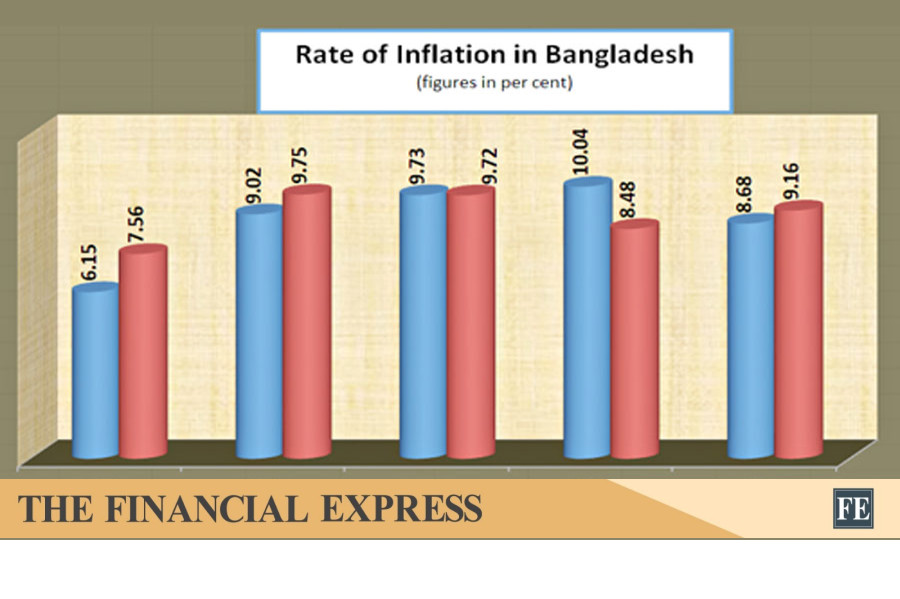
The reasoning marks a turn for a central bank that had held its rate at a record high for nearly two years to fight inflation, which has run above 8.5 percent on average since fiscal year 2022-23. Inflation eased to 9.16 percent in June, from 9.42 percent in May, but remains above the government’s target.

The MPC’s minutes credit the tight policy since mid-2024 with helping bring inflation down, strengthening the external sector, stabilising the exchange rate under a market-based system, and improving the overall effectiveness of monetary policy. But the committee said that phase has run its course.

Global inflation has largely normalised, the panel noted, international commodity prices have stayed broadly stable, and the taka-dollar exchange rate has held steady, sharply reducing the imported inflation Bangladesh faced earlier.

“Persistent domestic inflation is now driven primarily by structural and supply-side factors, including food supply disruptions, administered energy prices, market inefficiencies, and distribution bottlenecks, rather than excessive aggregate demand,” the minutes stated.

“Consequently, further monetary tightening would likely yield limited additional benefits for inflation while imposing increasing costs on growth and employment,” it added.

The committee also flagged exceptionally weak private sector credit growth, taking into account the combined effects of elevated borrowing costs and energy constraints, will continue to dampen investment and business confidence.

Weighing the trade-offs, the MPC judged that a modest cut from 10 percent to 9.5 percent would carry limited inflationary risk while supporting industrial production, employment, and broader economic activity.

“The committee therefore endorsed a more balanced monetary policy approach that supports both price stability and economic recovery,” the minutes said.

To improve the responsiveness, transparency, and effectiveness of monetary policy in a rapidly changing environment, the panel also recommended that the BB set monetary policy on a quarterly basis, rather than the current semiannual schedule.​
 

Latest Posts

Back