[🇧🇩] Artificial Intelligence-----It's challenges and Prospects in Bangladesh

Afghanistan Albania Algeria Andorra Angola Antigua Austria Azerbaijan Bahamas Bahrain Bangladesh Barbados Canada China Egypt Finland Germany India Iran Israel Japan Lebanon North Macedonia Pakistan Palestine Qatar Russia Syria Turkey Ukraine United Kingdom United States Yemen
[🇧🇩] Artificial Intelligence-----It's challenges and Prospects in Bangladesh
106
5K
More threads by Saif

G Bangladesh Defense

EWU hosts discussion on AI in industry, education
Staff Correspondent 28 June, 2026, 01:15

1782607122347.webp

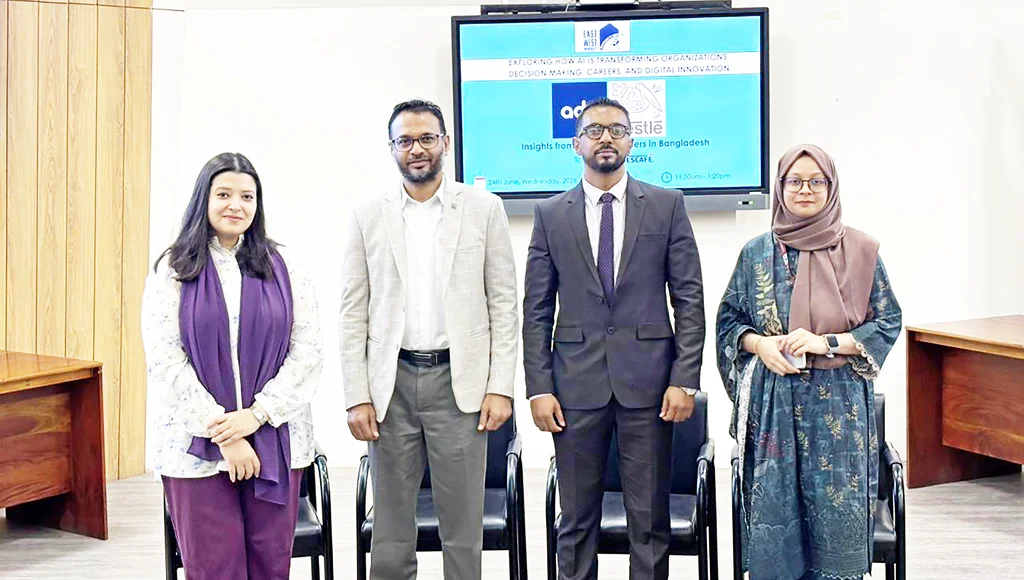
The management information systems department of East West University organises a discussion titled Artificial Intelligence in Industry: Transforming Education and the Future Workplace at the Nousher Ali Lecture Gallery of the university in Dhaka recently. | Press release photo

The management information systems department at East West University has organised a discussion titled Artificial Intelligence in Industry: Transforming Education and the Future Workplace at the Nousher Ali Lecture Gallery of the university in Dhaka recently.

The event aimed to enhance students’ understanding of the growing significance of artificial intelligence in modern industries, business operations and professional environments, said a press release on Saturday.

Through discussions led by industry experts, students gained valuable insights into how AI is reshaping organisations, creating new career opportunities and transforming workplace practices across Bangladesh and beyond.

Reaz Uddin Khan, head of Bangladesh, ADA Data AI Solutions Limited, and Md Tajdiqul Islam, manager, business excellence and project supply chain, Nestlé Professional Bangladesh, attended the discussion as guest speakers.

The speakers shared their experiences and perspectives on the practical applications of AI, emerging industry trends, data-driven decision-making, workforce transformation and the skills required for success in an AI-powered economy.

Speaking about the event, the organisers — EWU senior lecturer Bushra Humyra Esha and lecturer Munira Parvin — emphasised the importance of preparing students for a future in which artificial intelligence would play an increasingly central role in business, education, and society.​
 

Govt to introduce AI-based market monitoring system for agriculture, trade: Commerce Minister

UNB
Published :
Jul 03, 2026 22:24
Updated :
Jul 03, 2026 22:24

1783131393278.webp


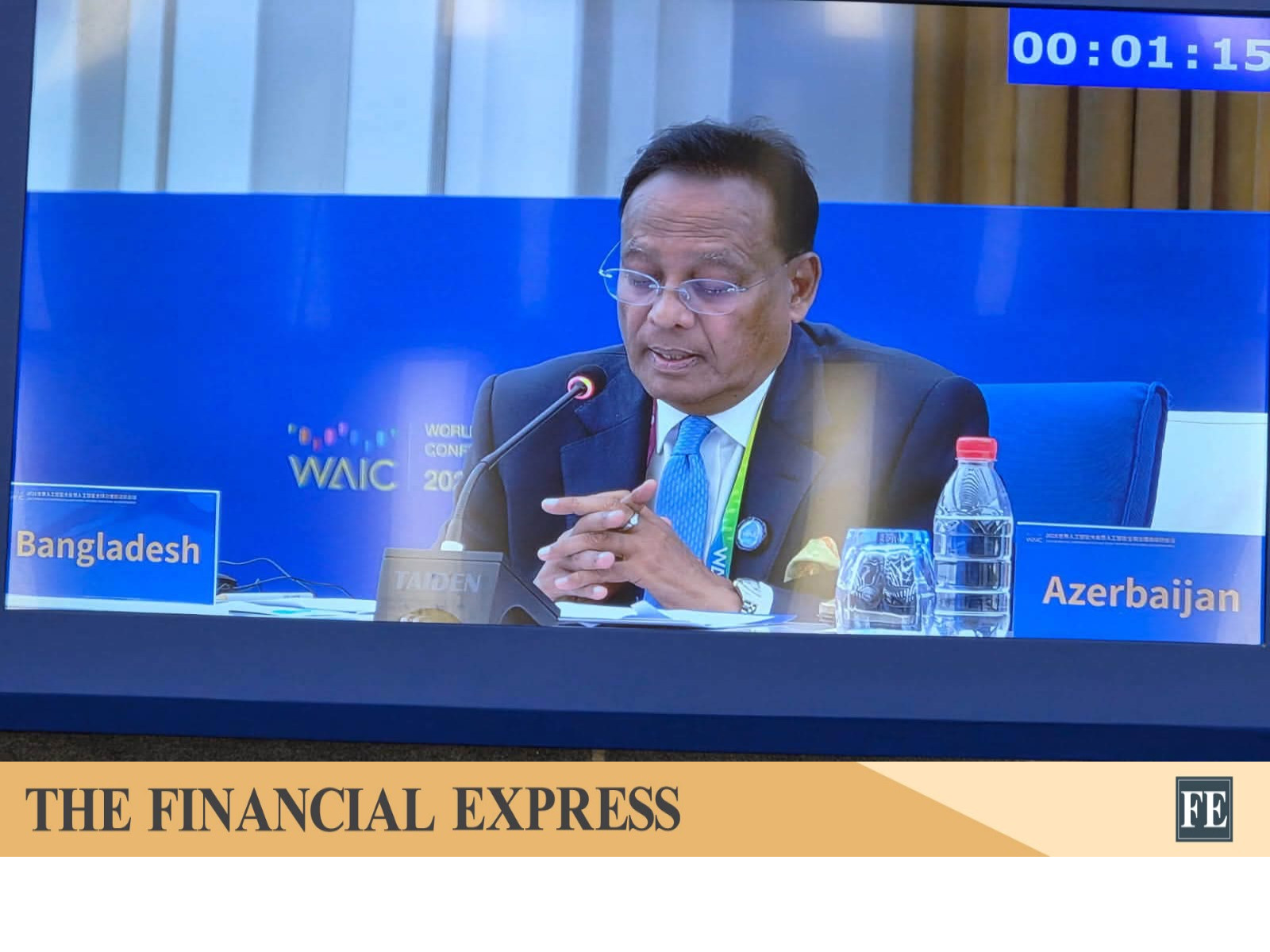
The government is set to introduce an artificial intelligence (AI)-based market monitoring system to make agricultural production and market management more data-driven and effective, Commerce, Industries, Textiles and Jute Minister Khandaker Abdul Muktadir said on Friday.

The proposed system will analyse production data, weather forecasts, international market trends, import requirements and supply conditions to facilitate timely policy decisions, he told reporters after a prize-giving ceremony marking National Education Week 2026 at Sylhet Sadar Upazila Auditorium.

The event was organized by the Sylhet Sadar Upazila administration and the Upazila Secondary Education Office.

Muktadir said the AI-based platform would be developed in coordination with the ministries concerned, including agriculture, fisheries and livestock.

"Once operational, the system will make market monitoring more institutionalised, data-driven and effective. It will enable the government to respond more quickly to artificial shortages, abnormal price hikes and market volatility," he said.

The minister also announced that the government is implementing an integrated plan to develop Sylhet into one of Bangladesh's leading vegetable export hubs.

As part of the initiative, a modern packaging centre will be established in Sylhet, while farmers will receive training on international production standards, and a traceability system will be introduced to meet export market requirements.

Although Sylhet produces large quantities of vegetables, export potential remains underutilised due to inadequate packaging and logistical facilities, he said.

"Removing these constraints will help transform Sylhet into one of the country's major vegetable exporting regions," he added.

Responding to a question on commodity prices, Muktadir said prices of most products in Bangladesh are determined by market forces. However, the government is working to formulate an effective pricing framework for essential commodities to maintain market stability.

The framework will be finalised following consultations with relevant stakeholders, he said.

Asked whether exports would increase this year, the minister said ongoing global conflicts and geopolitical instability have affected international trade and exports.

He expressed optimism that Bangladesh's exports would expand once the global situation stabilises, adding that the government is also taking steps to ensure uninterrupted energy supply to the industrial sector.

The programme was chaired by Sylhet Sadar Upazila Nirbahi Officer Khoshnur Rubaiyat.

Among others, Sylhet City Corporation Administrator Abdul Qayyum Chowdhury, Sylhet Development Authority Chairman Rezaul Hasan Qayes Lodhi, Sylhet Zila Parishad Administrator Abul Kaher Chowdhury Shamim, Sylhet Metropolitan BNP General Secretary Emdad Hossain Chowdhury, Deputy Director of the Department of Agricultural Extension in Sylhet Md Shamsuzzaman and Sylhet Sadar Upazila BNP President Abul Kashem attended the event.

Earlier in the day, Muktadir distributed financial assistance from his discretionary fund, handed over wheelchairs to persons with disabilities, distributed goat feed among members of disadvantaged small ethnic communities, participated in a tree plantation programme in Sylhet Sadar and attended a Partner Congress organised by the Sadar Agriculture Office as the chief guest.​
 

AI-based customs clearance set to begin next month
Container dwell time at Ctg port expected to drop nearly 50pc
Doulot Akter Mala

Published :
Jul 08, 2026 08:50
Updated :
Jul 08, 2026 08:50

1783490092845.webp


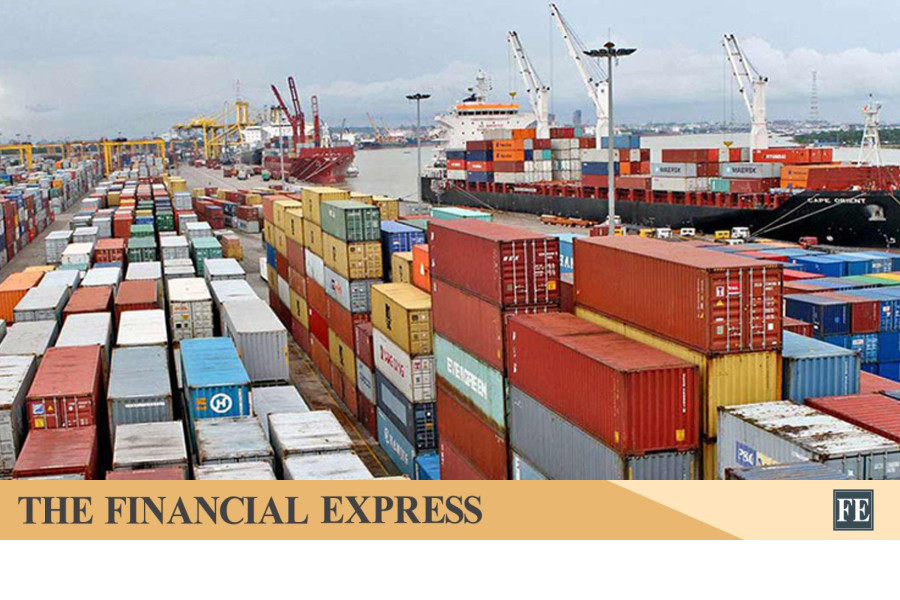
The customs authority is set to introduce an Automated Risk Management System (ARMS) next month in a bid to address the long-standing allegations of unnecessary harassment in the selection of import consignments for physical inspection at ports.

The AI-powered ARMS, scheduled to be launched under the National Single Window (NSW), is expected to be a game-changer for customs clearance at the Chattogram Port by reducing human intervention in cargo inspection.

The World Bank-supported NSW project, launched in 2017, is scheduled to end in December 2026 after an eight-year journey to automate customs procedures and streamline trade facilitation.

Jewel Ahmed, Project Director at the NSW, said the system has already proven successful by enabling businesses to obtain certificates, licences and permits (CLPs) in less than a day-a process that was previously lengthy and cumbersome.

With the introduction of ARMS, container dwell time is expected to be cut by nearly half, significantly improving the ease of doing business and facilitating international trade, he said.

According to the 2023 Container Port Performance Index, Chattogram Port ranked 348th position among 405 ports worldwide.

A 2022 Customs Time Release Study found that customs clearance in Bangladesh required an average of 11 days.

Although container dwell time has since declined to around six to eight days, it still lags behind regional competitors such as Colombo and Ho Chi Minh City, where cargo clearance generally takes only two to three days.

Abdur Razzaque, Chairman of the Research and Policy Integration for Development (RAPID), said in a recent paper on Bangladesh's export competitiveness that logistics delays are not merely an infrastructure issue but it is a major competitive disadvantage for exporters.

"Every extra day at the port raises uncertainty, weakens buyers' confidence and reduces Bangladesh's ability to respond quickly to export orders," he said.

Manual processes and fragmented data systems prolong customs clearance and increase transaction costs, he noted.

Despite the introduction of the Bangladesh Single Window and the Authorised Economic Operator (AEO) scheme, trade facilitation reforms have yet to deliver sufficient improvements, he added.

He also pointed out that longer container dwell time and slower customs clearance undermine the reliability of Bangladesh's time-sensitive exports.

At present, customs officials select import consignments for physical examination largely on a random basis. Under ARMS, however, an AI-driven machine learning system will determine which containers require inspection based on traders' compliance history, risk profiles and other parameters.

The machine learning system was originally scheduled to be launched on May 11. However, its implementation was delayed due to technical upgrades required by the World Bank and other stakeholders, Mr Ahmed said.

Once the ARMS is operational, customs officials will no longer manually select containers for inspection, which will reduce discretionary intervention and lessen unnecessary harassment of compliant traders, he added.

The government signed the financing agreement with the World Bank in 2017. Upon completion of the project later this year, the government will take over its operation and management.

As of Tuesday, around 1.3 million certificates, licences and permits (CLPs) had been issued through the NSW platform. Of them, about 85 per cent were issued within one hour, while 95 per cent were processed in less than one day.

Businesses no longer need to visit agencies such as Bangladesh Standards and Testing Institution (BSTI), Bangladesh Investment Development Authority (BIDA) or Directorate General of Drug Administration (DGDA) to obtain clearance documents for customs purposes, Mr Ahmed said.

"Businesses can now apply online, make payments electronically and obtain the required permits from anywhere in the world," he added.

Nusrat Nahid Babi, a Senior Transport Specialist at the World Bank (WB) said Bangladesh has set a target to facilitate 60 percent clearance through green channels. Automated Risk Management System (ARMS) is the key to achieving this target.

ARMS is a business intelligence tool, the more information it gets, the more accurate analysis it can produce to assess risky consignments, it was learnt.

For effective functioning of ARMS, it needs full integration with Asycuda and other related back-office digital solutions.

ARMS is the first step to coordinated border management. It will work hand-in-hand with Bangladesh Single Window and it would be important for all border clearance agencies to share data with ARMS to produce robust risk assessment reports and facilitate trade.​
 

Latest Posts

Back