☕ Support Us
Atrocities of BSF/How BGB responds | Page 35 | PKDefense

Atrocities of BSF/How BGB responds

Reply (Scroll)
Press space to scroll through posts
Atrocities of BSF/How BGB responds
244
9K
More threads by Saif


2 Bangladeshis shot dead by Indians in Sylhet border
Staff Correspondent . Sylhet 20 December, 2025, 00:21

1766193986872.webp

Representational image. | BSS file photo

Indian nationals shot two Bangladeshi youths to death at Companiganj border in Sylhet on Friday noon.

The deceased Moshahid Miah, 22, is son of Abdur Rab Miah of Purba Turang village at Uttar Ranikhai union under the Companiganj upazila, and Ashikur Rahman, 19, is son of Burhan Uddin of the Baram Siddhipur village at the same union, the police said.

Local union parishad member Delwar Hossain told New Age that a group of five youths entered the Indian territory through the Damdama border point to bring firewood from Parihati, a forest area along the border.Campus bites newsletter

He said that after the youths started collecting firewood from the Parihati area, Indian Khasia tribesmen opened fire on them without any provocation, leaving Moshahid and Ashikur dead on the spot.

‘Being informed, relatives of the victims rushed to the spot and brought the bodies back to the country in the afternoon,’ he said.

Border Guard Bangladesh’s 48 Battalion commander Lieutenant Colonel Md Nazmul Haque confirmed the killing incident of Moshahid and Ashikur.

He said that he had contacted to his Indian counterpart in the afternoon after receiving the news in this regard.

‘The Border Security Force officer concerned told me that they were not aware about the killing of the two Bangladeshi youths. The BSF officer said that they would try to identify the killers and reason behind the killings,’ the BGB officer said.

He also said in the evening that the process to send a formal protest letter in this regard to the BSF authorities was under way.

Companiganj police station officer-in-charge Shafiqur Rahman told New Age in the evening that spot examination reports of the bodies had already been completed.

‘Preparations are going on to hand over the bodies to Sylhet Osmani Medical College Hospital for post-mortem examinations,’ he said.

At least 28 Bangladeshis were killed in border violence by the India’s Border Security Force and Indian citizens between January and November this year, according to data by Ain o Salish Kendra, a rights organisation.​
 
Cite Fact Check Highlight Respond
  • Rahul (+2)
Reactions: Afhan
He said that after the youths started collecting firewood from the Parihati area, Indian Khasia tribesmen opened fire on them without any provocation, leaving Moshahid and Ashikur dead on the spot.

‘Being informed, relatives of the victims rushed to the spot and brought the bodies back to the country in the afternoon,’ he said.
Not enough firewood in BD ?


Cite Fact Check Highlight Respond
  • Rahul (+2)
  • Erdogan (+4)
Reactions: Egyptian and Afhan

BGB hands over detained BSF member in Lalmonirhat
Indian border guard crossed 200 yards into Bangladesh, says BGB

1766364495264.webp

Photo: Collected

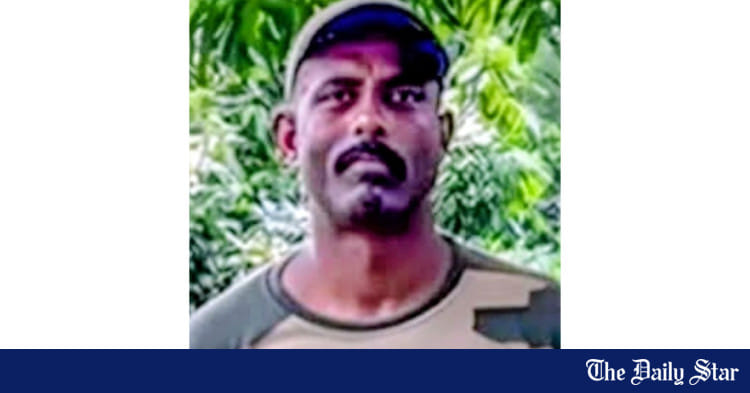
Border Guard Bangladesh (BGB) handed over a member of Indian Border Security Force (BSF) this evening, hours after he was detained along Angarpota border under Patgram upazila of Lalmonirhat for entering Bangladesh illegally.

The detained BSF member is Bed Prokash, a constable of the Arjun BSF Camp under the 174 BSF Battalion of Mekhliganj police station in Cooch Behar district of West Bengal, India.

According to the BGB, Prokash crossed the zero line of the Bangladesh-India border and entered about 200 yards inside Bangladesh while chasing Indian cattle smugglers.

At that time, members of the Angarpota Camp of Rangpur 51 BGB Battalion, who were on border patrol duty, detained him from the Angarpota border around 4:30am today.

At the time of detention, BGB members seized one shotgun, two rounds of ammunition, one wireless set, and an Android mobile phone from his possession.

He was handed over to BSF through a flag meeting held near the Border Pillar No. 812 at Tinbigha Corridor area this evening, added the BGB sources.

Confirming the matter, Lt Col Selim Aldin, commanding officer of BGB Battalion-51 in Rangpur, said the BSF authorities expressed regret and apologised for the incident of illegal intrusion by their member into Bangladesh territory.

"BGB members are always vigilant to prevent all kinds of crimes along the border," he added.​
 
Cite Fact Check Highlight Respond
BSF halts fence construction at Joypurhat border after BGB intervention

UNB
Published :
Dec 27, 2025 23:02
Updated :
Dec 27, 2025 23:02
1766882196161.webp

Indian Border Security Force (BSF) attempted to construct a barbed wire fence at the Ghonapara border in Panchbibi upazila of Joypurhat on Saturday morning, violating international border regulations, but were forced to stop after intervention by Border Guard Bangladesh (BGB).

Early Saturday morning, under dense fog, BSF personnel began the construction near the zero line at East Unchana Ghonapara, under the Koya BOP, around sub-pillars 47, 48, and 49 of border pillar 281. Local residents informed the Koya camp of the Joypurhat-20 BGB Battalion, prompting BGB personnel to arrive at the site and halt the construction.

Subsequently, a flag meeting was held between BGB and BSF officials. During the meeting, BSF assured that no further construction would take place and agreed to remove any erected barbed wire. BGB also formally lodged a protest regarding the incident.

Confirming the incident, Assistant Director of Joypurhat-20 BGB Mohammad Imran Hossain said, “A flag meeting was held today with BSF at the company commander level. BGB always maintains a firm stance against border violations and will take all necessary measures to protect the country’s sovereignty.”​
 
Cite Fact Check Highlight Respond
Where does India's alleged 'cross-border repression' end?
 
Cite Fact Check Highlight Respond
LOOKING BACK 2025

Border killings highest in 5 years

34 killed by BSF, more than 2,400 pushed in from India


1767509844611.webp

Representational image.

The killing of Bangladeshis by India’s Border Security Force and Indian citizens along the border in 2025 marked the highest level in the past five years, despite repeated pledges by the neighbouring country to bring the number of border killings down to zero.

According to human rights organisation Ain O Salish Kendra’s yearly human rights report, 34 Bangladeshis were killed by the BSF in 2025. Of them, 24 were killed in BSF firing and 10 others died after facing physical torture by the BSF.


The ASK data also showed that the number of border killings was 30 in 2024, 31 in 2023, 23 in 2022 and 18 in 2021.

Besides killings by the BSF, the Indian nationals, mostly Khasiyas, also killed at least 12 Bangladeshis along the border with India in Sylhet Division in 2025, according to reports published by New Age.

Apart from the killings in 2025, at least 38 Bangladeshis sustained bullet injuries or were tortured and 14 Bangladeshis were abducted by the BSF. Of the abducted victims, only four were returned to Bangladesh, according to ASK.

Human rights activist Nasir Uddin Elan, who is working with rights group Odhikar, said that border killings had increased during the interim government’s rule as India could not accept the ouster of the Sheikh Hasina regime on August 5, 2025 amid a mass uprising.

‘Border killings also took place during the Sheikh Hasina regime, but her government did not lodge any protest. India increased killing Bangladeshis along the border despite the interim government lodging protests and issuing statements in this regard,’ he said.

He said that the relationship between India and Bangladesh was not good now.

In the 56th Border Guard Bangladesh-Indian BSF director general level border conference, held in August 25-28, 2025 in Dhaka, the BSF once again promised to bring the border killing down to zero by adopting extra precautionary measures, while the BGB had renewed its call for an end to such violence against Bangladeshis along the frontier.

Bangladesh has also protested at the recent push-ins of people through the border by the BSF in the 56th director general-level border conference at BGB’s Pilkhana headquarters in Dhaka.


At least 45 Bangladeshis were killed by the Indian BSF since the interim government took office in August 2024, according to ASK data.

Nasir Uddin Elan said that the killings of Bangladeshis would not be stopped without having a strong foreign policy and filing a case with the International Criminal Court in this connection.

BGB headquarters’ director of operations, Md Mahbub Murshed Rahman, did not respond to phone calls and a text message from New Age.

BGB headquarters was also requested to give a comment on the issue, but it was not given.

Home adviser retired lieutenant general Jahangir Alam Chowdhury did not respond to phone calls or a text message from New Age.

The BSF, after killing Bangladeshis along the border, raised allegations against Bangladeshis for smuggling, but the ASK investigation found some untrue cases.

According to ASK’s investigation, a 32-year-old Bangladeshi, Al-Amin, was shot dead by the BSF along the Putia border under Kasba upazila in Brahmanbaria on February 28, 2025.

Although the BSF alleged that Al-Amin received bullets while he was involved in smuggling, his body was taken into the Indian territory after being shot, and the news of his death came later, the ASK report quoted witnesses and local people.

On April 16, 2025, Hasibul Alam, 24, was killed in BSF firing along the Hatibandha border in Lalmonirhat and the BSF alleged that he was a smuggler. But, actually, he went to the no man’s land to collect grass for his cows.

Quoting local farmers, ASK said that Indian BSF personnel took him to Indian territory in a wounded condition, and he died in India. Indian authorities handed over his body to Bangladesh after over 24 hours.

Bangladesh Institute of Peace and Security Studies president, retired major general ANM Muniruzzaman, said that killing was not acceptable for smuggling-related offences and that such issues could be addressed in other ways, such as shooting in the leg or detention, to avoid deaths.

‘Technical protests from the BGB and the government would not help resolve border killings, as the issue requires high-level political consultations between the two neighbouring countries,’ he said.

Apart from the border killings, India has pushed at least 2,436 people into Bangladesh, including Indian nationals and Rohingyas, since May 7, 2025, and there have also been incidents of crude bomb explosions, firing sound grenades, flying drones, and opening fire along the bordering areas in Bangladesh and inside India, according to Border Guard Bangladesh and police officials.


The decision of the government of the Indian state of Assam to provide licences for firearms to its inhabitants and indigenous people living near the Bangladesh border has raised security concerns for the people living in the bordering area in Bangladesh, according to security experts.

The experts also said that the Assam state government’s move would instigate violence along the border when border killings and push-ins by India were continuing.

On May 29, the Assam cabinet approved a special scheme to provide arms licenses to its original inhabitants and indigenous citizens living in the remote areas along the Bangladesh border and at the places where Bangladeshi Muslims are the majority, according to reports published in Indian newspapers.

The state government of Assam took the move when a lot of cross-border tensions were prevailing following the August 5, 2024 political changeover in Bangladesh.

On October 26, 2025, Khasiyas shot dead a Bangladeshi youth, Shakil Ahmed, 25, along the Kanaighat bordering area in Sylhet.

At least 1,236 Bangladeshis were killed and 1,145 injured in shootings by the Indian border force between 2000 and 2020, according to the rights organisation, Odhikar.

Bangladesh and India share a 4,096-kilometre international border, the fifth-longest land border in the world, comprising 262km with the Indian state of Assam, 856km with Tripura, 318km with Mizoram, 443km with Meghalaya, and 2,217km with West Bengal.​
 
Cite Fact Check Highlight Respond
Time for firmer response to BSF’s border violence

THE latest figures on border violence by Indian border guards expose an upsetting continuity that renders repeated assurances from New Delhi hollow. Ain O Salish Kendra’s annual rights report says that at least 34 Bangladeshis were killed by India’s Border Security Force in 2025, the highest in five years. Besides, Indians killed at least 12 more along the frontiers in Sylhet. Numerous incidents of injury, torture and abduction were also reported in the year. The statistics once again confirm that pledges made by New Delhi to end border killings have not translated into reality. The claim that many of the dead were allegedly involved in smuggling does not mitigate the unneighbourly attitude. It, rather, shows that the Indian guards continue to pursue a shoot-to-kill policy, disregarding international law and bilateral agreements. Cross-border smuggling occurs and involves people from both sides. There are agreements and international laws in place to deal with smugglers and none permits a summary execution or torture for such crimes. The persistence of these practices, despite multiple high-level meetings and formal protests, suggests a structural problem in India’s border management approach.

Beyond border violence, there has been a fresh episode of India’s unneighbourly conduct in the form of push-ins. Since May 2025, the Indians have pushed at least 2,436 people into Bangladesh, including Indians and Rohingyas registered with the United Nations High Commissioner for Refugees in India. Following the deportation of six Indians, including a pregnant woman, into Bangladesh in August, the Calcutta High Court declared the forcible deportation of people into Bangladesh ‘illegal.’ Dhaka has, meanwhile, remained consistent in stating that it is ready to take back any Bangladeshis residing illegally in India provided the repatriation takes place through recognised and formal procedures. Indian authorities, however, have disregarded Dhaka’s lawful and ethical position. More worrying still are developments that threaten to normalise violence along the border. On May 29, the Assam cabinet approved a special scheme to provide arms licences to original inhabitants and indigenous citizens living in remote areas along the Bangladesh border. Such a measure is likely to result, and has already resulted, in the killing of Bangladeshis by Indian non-state actors. All this indicates that pledges made by Indian authorities, such as a ‘no-lethal-weapons’ policy on the border, are little more than rhetoric.


Dhaka must, therefore, recalibrate its response with firmness and clarity. A stronger foreign policy posture, systematic documentation of abuses and recourse to international forums are essential to signal that the issue will not fade into a routine protest. New Delhi, for its part, must recognise that credibility as a neighbour depends on respecting human life. A border managed with restraint and accountability would serve both the nations far better than a bloodied one.​
 
Cite Fact Check Highlight Respond

Members Online

Latest Posts

Latest Posts