Bangladesh Defense
Saif
Senior Member
- Jan 24, 2024
- 21,561
- 9,760
- Nation

- Residence
- Axis Group


EV sector emerges as key strategy for energy security
Bangladesh’s transition toward electric mobility is taking shape as more than an environmental initiative, with the government positioning the electric vehicle (EV) sector at the centre of a broader strategy to strengthen energy security, reduce dependence on imported petroleum and promote...
 www.newagebd.net
EV sector emerges as key strategy for energy security
Bangladesh Sangbad Sangstha . Dhaka 26 June, 2026, 00:26
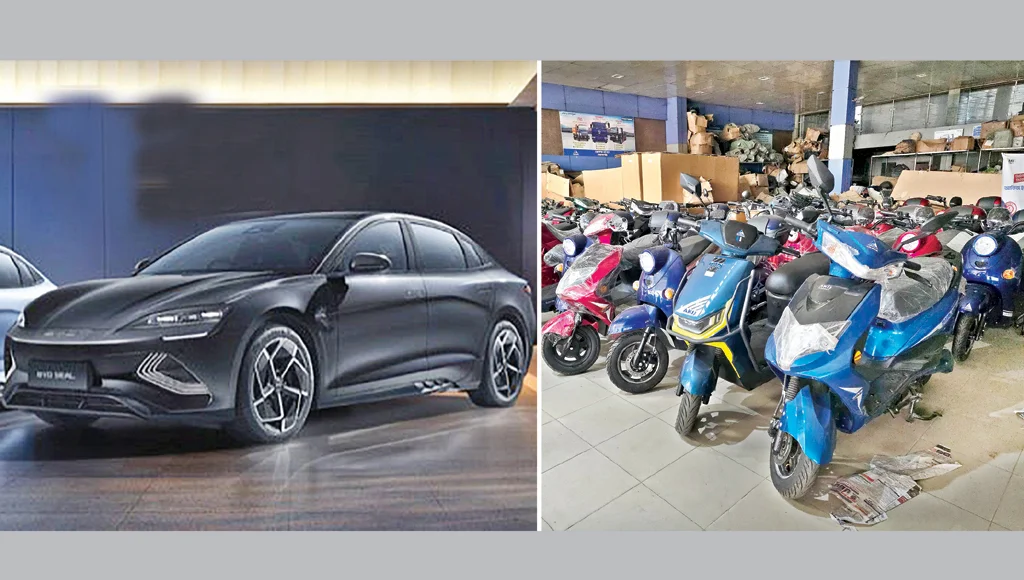
This combination photo shows electric cars of BYD and electric bikes in the capital recently. | New Age photo
Bangladesh’s transition toward electric mobility is taking shape as more than an environmental initiative, with the government positioning the electric vehicle (EV) sector at the centre of a broader strategy to strengthen energy security, reduce dependence on imported petroleum and promote sustainable industrialisation.
The National Budget for Fiscal Year 2026-27 and the Bangladesh Climate Budget Report 2026-27 outline a series of tax reductions and incentives designed to accelerate the adoption of environmentally friendly transportation while supporting the growth of a domestic EV ecosystem.
The move comes against the backdrop of Bangladesh’s heavy reliance on imported energy. According to the budget documents, the country currently imports approximately 95 percent of its petroleum requirements, making fuel dependency a significant national concern.
Finance minister Amir Khosru Mahmud Chowdhury underscored the strategic importance of the transition, saying, ‘A substantial increase in the use of solar power and electric vehicles will reduce the country’s dependence on imported fuel oil.’
To encourage EV adoption, the government has introduced substantial reductions in the total tax incidence (TTI) on imported electric vehicles. For EVs priced up to $25,000, the TTI has been reduced from 93 percent to 64 percent.
For vehicles priced between $25,000 and $50,000, the TTI has been lowered from 93 per cent to 80 per cent.
The budget also seeks to remove barriers to the expansion of charging infrastructure, a critical component of the electric mobility transition. The total tax incidence on EV chargers and charging stations has been reduced from 39.75 per cent to zero per cent.
At the same time, the withholding tax rate on the import of electric charging stations has been cut from 5 per cent to zero per cent.
Highlighting the government’s commitment to green transportation, the finance minister said, ‘To promote environmentally friendly transportation, the withholding tax rate on the import of electric buses, electric trucks, and electric charging stations will be reduced from 5 per cent to zero per cent.’
The budget introduces another major incentive by significantly reducing registration and renewal costs for electric vehicles. The existing flat Advance Income Tax (AIT) of Tk 200,000 has been replaced with a tiered structure.
Vehicles with capacities up to 200 KW will pay Tk 25,000, those between 200 KW and 300 KW will pay Tk 50,000, those between 300 KW and 400 KW will pay Tk 75,000, while vehicles above 400 KW will pay Tk 100,000.
Alongside measures to stimulate demand, the government is also encouraging domestic production. Enterprises undertaking high value-added processes, including body building, welding and painting of four-wheelers and three-wheelers, will enjoy exemption from all duties and taxes except a 3 percent import duty on raw materials and components.
Local manufacturers of electric buses and trucks will receive full exemption from all duties and taxes except a 5 per cent VAT on imported components, creating incentives for local industrial development in the EV sector.
The policy framework reflects a wider vision linking climate action with economic transformation. In the foreword to the Climate Budget Report, Amir Khosru Mahmud Chowdhury said, ‘Bangladesh stands at a critical juncture where climate vulnerability intersects with the pursuit of sustainable and inclusive development. ... In this context, climate finance is not merely a source of support; it is a key enabler of resilience, innovation, and sustainable development.’
He further said, ‘We are placing special emphasis on emerging and future-oriented economic sectors that hold significant potential... [including] the Green Economy... to build a sustainable, green, climate-resilient, and livable future for generations to come.’
The incentives announced in the FY27 budget collectively position electric mobility as a key pillar in the country’s pursuit of energy security, sustainable industrialisation and a greener future.
Bangladesh Sangbad Sangstha . Dhaka 26 June, 2026, 00:26
This combination photo shows electric cars of BYD and electric bikes in the capital recently. | New Age photo
Bangladesh’s transition toward electric mobility is taking shape as more than an environmental initiative, with the government positioning the electric vehicle (EV) sector at the centre of a broader strategy to strengthen energy security, reduce dependence on imported petroleum and promote sustainable industrialisation.
The National Budget for Fiscal Year 2026-27 and the Bangladesh Climate Budget Report 2026-27 outline a series of tax reductions and incentives designed to accelerate the adoption of environmentally friendly transportation while supporting the growth of a domestic EV ecosystem.
The move comes against the backdrop of Bangladesh’s heavy reliance on imported energy. According to the budget documents, the country currently imports approximately 95 percent of its petroleum requirements, making fuel dependency a significant national concern.
Finance minister Amir Khosru Mahmud Chowdhury underscored the strategic importance of the transition, saying, ‘A substantial increase in the use of solar power and electric vehicles will reduce the country’s dependence on imported fuel oil.’
To encourage EV adoption, the government has introduced substantial reductions in the total tax incidence (TTI) on imported electric vehicles. For EVs priced up to $25,000, the TTI has been reduced from 93 percent to 64 percent.
For vehicles priced between $25,000 and $50,000, the TTI has been lowered from 93 per cent to 80 per cent.
The budget also seeks to remove barriers to the expansion of charging infrastructure, a critical component of the electric mobility transition. The total tax incidence on EV chargers and charging stations has been reduced from 39.75 per cent to zero per cent.
At the same time, the withholding tax rate on the import of electric charging stations has been cut from 5 per cent to zero per cent.
Highlighting the government’s commitment to green transportation, the finance minister said, ‘To promote environmentally friendly transportation, the withholding tax rate on the import of electric buses, electric trucks, and electric charging stations will be reduced from 5 per cent to zero per cent.’
The budget introduces another major incentive by significantly reducing registration and renewal costs for electric vehicles. The existing flat Advance Income Tax (AIT) of Tk 200,000 has been replaced with a tiered structure.
Vehicles with capacities up to 200 KW will pay Tk 25,000, those between 200 KW and 300 KW will pay Tk 50,000, those between 300 KW and 400 KW will pay Tk 75,000, while vehicles above 400 KW will pay Tk 100,000.
Alongside measures to stimulate demand, the government is also encouraging domestic production. Enterprises undertaking high value-added processes, including body building, welding and painting of four-wheelers and three-wheelers, will enjoy exemption from all duties and taxes except a 3 percent import duty on raw materials and components.
Local manufacturers of electric buses and trucks will receive full exemption from all duties and taxes except a 5 per cent VAT on imported components, creating incentives for local industrial development in the EV sector.
The policy framework reflects a wider vision linking climate action with economic transformation. In the foreword to the Climate Budget Report, Amir Khosru Mahmud Chowdhury said, ‘Bangladesh stands at a critical juncture where climate vulnerability intersects with the pursuit of sustainable and inclusive development. ... In this context, climate finance is not merely a source of support; it is a key enabler of resilience, innovation, and sustainable development.’
He further said, ‘We are placing special emphasis on emerging and future-oriented economic sectors that hold significant potential... [including] the Green Economy... to build a sustainable, green, climate-resilient, and livable future for generations to come.’
The incentives announced in the FY27 budget collectively position electric mobility as a key pillar in the country’s pursuit of energy security, sustainable industrialisation and a greener future.