Home Watch Videos Wars Movies Login

[🇧🇩] Aviation Industry in Bangladesh

[🇧🇩] Aviation Industry in Bangladesh
77
6K
More threads by Saif

G Bangladesh Defense

Overview of the Domestic Aviation Industry in Bangladesh​

Syed Abid Ahsan
December 28, 2021
Domestic Aviation Industry


On January 1st, 1972 independent Bangladesh’s civil aviation journey began with Captain A. Rahim’s Cessna 150 aircraft. Since then, at least 32 airlines have registered in Bangladesh, many of which have come into operation and many have never operated flights, and a few are planning to launch flights very soon. Of these, at least 10 passenger airlines have been permanently shut down since the start of operations. Among the airlines currently in operation, there are a total of 45 aircrafts in the country including 21 aircrafts of Bangladesh Biman, 17 of US Bangla, 7 of NovoAir. Air travel has helped in the economic development of the country by making the transport sector more efficient.

Overview of Domestic Aviation Industry​

Established in February 1972, the state-owned Biman Bangladesh Airlines is the first airline company in Bangladesh. The first aircrafts in the aircraft fleet were a Vintage Douglas Dakota and Douglas DC-3. Domestic operations began with the purchase of four Fokker F27 aircraft, which were used to transport passengers from Dhaka to Chittagong and Sylhet. Until 1993, Bangladesh Biman had a monopoly in the aviation industry. Over the decades, the airline gradually expanded its fleet and routes.

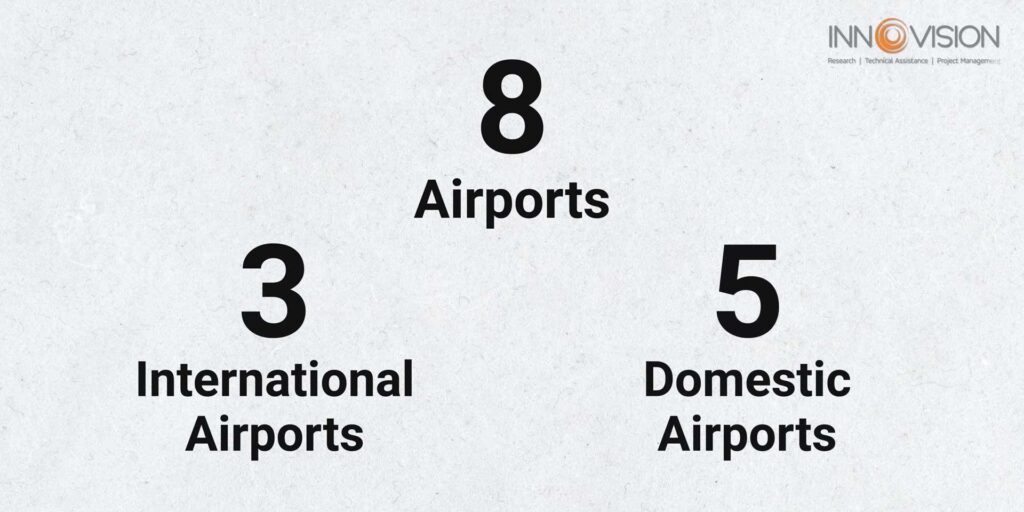
There are a total of 8 airports in Bangladesh, of which 3 are international and 5 are domestic. International airports include Hazrat Shahjalal International Airport-Dhaka, Shah Amanat International Airport-Chittagong and Osmani International Airport-Sylhet. On the other hand, domestic airports are located at Cox’s Bazar, Rajshahi, Jessore, Syedpur and Barisal.
Domestic Aviation Industry in Bangladesh


There are 3 international and 5 domestic airports in Bangladesh

After the Air Parabat in 1993, several other private airlines including GMG in 1996, United in 2005, A Royal Bengal in 2006, Regent in 2010, NovoAir in 2012 and US-Bangla in 2013 started their operations. Amongst the private airlines, only NovoAir and US-Bangla are currently operational. Regent has stopped their operations since the beginning of covid. In other words, at present there are 4 scheduled airlines in this industry including Biman Bangladesh, out of which 3 are operational. Many airlines have stopped operating in Bangladesh due to lack of proper business policy, improper marketing strategy, low brand image, air agreement rule violations, and financial crisis. Among the 3 private airlines, US-Bangla alone has acquired about 50% of the total market.

US-Bangla is the largest private airline in Bangladesh based on fleet size with 16 aircraft in its fleet and NovoAir is in the second position with 7 aircraft. Currently US-Bangla and NovoAir are providing domestic flight services to 8 destinations within the country which are: Dhaka, Chittagong, Jessore, Cox’s Bazar, Syedpur, Sylhet, Rajshahi and Barisal. In addition, a new airline has joined the domestic aviation industry, Air Astra which will launch commercial services in the first quarter of 2022.

Domestic Aviation Industry in Bangladesh


US-Bangla and NovoAir offer domestic flights to 8 different destinations across the country

In addition to scheduled airlines, there are two other categories in the domestic aviation industry – charter airlines and cargo airlines. Air chartering is the process of renting the entire aircraft in a non-scheduled manner . Charter Airlines currently has 10 operators, of which R&R Aviation, South Asian Airlines, BRB Air Limited, Square Air Limited and Bashundhara Airways are the most popular. Some airlines also provide air ambulance services.
Cargo airlines, on the other hand, are primarily involved in cargo transport. Such airlines act as sub-contractors to the major passenger transport airlines. At present there are 4 cargo service provider airlines in the country which provide services at domestic and international level. These are Bismillah Airlines, Hello Airlines, Easy Fly Express, and Skyair.

Domestic-Aviation-Industry-in-Bangladesh-gdp-e1640692384605-1.png


Air passenger growth rate has overtaken the GDP growth rate of the country.

According to the World Bank, along with the growth of GDP the number of airline users has also increased. The Rapid Growth of Business Environment, Improved Purchasing Power, and The Need to Saving Time can be mentioned as important factors for the growth of this industry.

In 2018, the sector provided 129,000 jobs and contributed 449 million to GDP, accounting for about 0.18% of the country’s total GDP (from domestic aviation alone). Industry experts have always been optimistic about this market. According to The Financial Express, Bangladesh’s aviation industry market has doubled between 2010 to 2017. Keeping in mind the trend of 2018, Bangladesh Aviation Industry was expected to grow by 168% in the next 20 years, which was forecast to create new job opportunities in the country and contribute more to GDP. In a recent interview with The Business Standard, the Minister of State for Civil Aviation and Tourism, Md. Mahbub Ali, hoped that the Bangladesh aviation industry could grow almost threefold in the next 15 years.

Despite having good potential, the downtrend of the aviation industry started from the very beginning of the coronavirus pandemic. Right after the outbreak of the virus, the passenger count on the domestic route dropped by 25 to 30%. However, after the lifting of the lockdown and with the resumption of aviation, the country’s tourism as well as the aviation industry began to turn around a bit. The Civil Aviation Authority of Bangladesh (CAAB) reports that between October ’20 and November ’20, domestic aviation grew by 75% to 80% compared to the pandemic situation. While the number of air travel passengers was 2.21 lakh in December 2020, it increased to 2.34 lakh in February 2021 (an increase of 5.88%) in the next two months. According to the Daily Star, the number of passengers almost tripled in the first three months of October 2021. However, despite recovering, the country’s aviation industry has suffered huge losses in the Corona epidemic. From the inception of Pandemic till October 2021, Biman Bangladesh Airlines lost Tk 1,300 crore, US-Bangla Airlines lost Tk 800 crore and NovoAir lost Tk 150 crore.

Biman, US-Bangla, and NovoAir lost 1300, 800, and 150 crore BDT respectively


Biman, US-Bangla, and NovoAir lost 1300, 800, and 150 crore BDT respectively

Current Trends & Opportunities​

Changes have also taken place in the domestic aviation of Bangladesh keeping pace with the economic trends. Some practices have gained quite a bit of popularity in recent years.

Increasing Demand of Air Travel​

Air travel is faster and more comfortable than other modes of transport. Due to the lack of proper maintenance on the highways of Bangladesh, the condition of many parts is bad, due to which the average speed of the roads decreases. As a result, air travel is more convenient for many. For example, the journey from Sylhet to Cox’s Bazar – 528 km by bus or car takes about 12 hours. However, the same route can be reached in just one and a half hours by air travel. It costs 3200 taka which is more than a bus or car. But many passengers nowadays prefer air travel in many cases considering associated Time, Cost and Inconvenience.

Especially businessmen who travel by air are able to return to Dhaka on the same day after finishing work in any other districts. Also Bangladesh’s per capita GDP rose from 418 in 2000 to 1968 in 2020. In other words, per capita income has increased more than four and a half (~ 4.71) times. For this reason, many people are now able to afford air travel. As a result, the growth rate of the aviation industry in Bangladesh from 2015 to 2019 alone was about 65-percent (64.7%). Moreover, the use of air ambulances for emergency transport of patients during recent times can be noticed in Bangladesh. The trend of chartered jet use has also started among many.

More Frequent Flights​

To meet this growing demand for air travel frequent flight scheduling is another significant trend in the aviation industry .There was a time when there were only a handful of flights a week from Dhaka to big destinations like Chittagong or Sylhet. But now with the increase in demand, there are multiple flights from Dhaka to different destinations of the country in different schedules of the day. As a result, a passenger can book a flight according to his convenience. At the same time, the airlines have started offering business classes on different routes as per the demand of the customers.

More International Airport​

Biman Bangladesh has recently launched direct flights on various domestic routes. Earlier, Dhaka was used as a hub for every domestic flight. For example, it is now possible to go directly from Sylhet to Chittagong. On the other hand, the Bangladesh government has undertaken a project to internationalize Cox’s Bazar and Syedpur airports. These airports will become regional hubs once these projects are completed. As a result, other commercial airlines can operate direct flights on these routes as well as increase the volume of international flights. But over the years, airlines as well as private companies have started international flights. US-Bangla started international operations on July 17, 2014 and is currently operating on 11 international routes. NovoAir also started international operations on December 1 of the following year and now operates flights on 1 international route.

Average Fleet Age​

Once operating flights with old or outdated aircraft, but in the last few years Biman Bangladesh has acquired new model brand new aircraft. 2 Boeing 787-8 Dreamliners and 2 Boeing 787-9 Dreamliners were added to the fleet in 2019 and 2 De Havilland Canada DHC-8-400 aircraft in 2020. Due to which the average age of ‘Biman-Bangladesh’ aircraft is currently 8.3 years. These new aircraft are attracting more passengers as well as reducing operating and maintenance costs by increasing fuel efficiency. In addition to the aircraft, US Bangla plans to add three new Boeing 737-800S and four ATR-72-600s aircraft to its fleet, according to the Dhaka Tribune.

Two new aircrafts were acquired by Biman Bangladesh in 2019 - the Boeing 787-8 and 787-9 Dreamliners


Two new aircrafts were acquired by Biman Bangladesh in 2019 – the Boeing 787-8 and 787-9 Dreamliners

Challenges​

In terms of size Bangladesh is a very small country. If two airports are located close to each other, it is not sustainable for the airlines to operate flights between those two airports. Also, when traveling short distances, it is more convenient to travel by road if considering the time spent at the airports and check-ins and check-outs. As a result, there is not much opportunity to add new air travel destinations within the country. Moreover, due to several ongoing mega projects, travel by road and rail will become much easier in future. As a result, it will be difficult for airlines to compete with other transports and sustain.

Many people in Bangladesh still do not consider air travel as a good option for transportation but as a luxury. As a result, customers do not consider air travel as a substitute for road and rail. This is a significant challenge in the path of growth of the aviation industry.

High Availability of Cars, Buses, Trains and Launches for Domestic Travel is a Threat for the Domestic Air Travel. On the other hand, low or no switching cost and multiple flights on the same route have made the industry quite price sensitive. As a result, pricing is very competitive among the companies operating in this industry.

Recently, almost all the airlines of Bangladesh Aviation Industry have come up with some mechanical problems. Among these are the recent failure of a Bangladesh Biman plane not being able to land for a long time due to a fault in the landing gear, mismanagement at Cox’s Bazar Airport due to a cow trespassing the runway during a plane take-off and the cow ending up being hit on the plane’s wheels. Incidents like the front wheel rupture during the landing of Novo Air planes in 2019 and 2021 have raised questions among the people about the infrastructure and safety of Bangladesh’s aviation industry. Moreover, due to the obsolescence of many airlines other than aircraft, their maintenance is complicated and the cost is high.

Suggestions​

Transport systems are developed at various major airports and cities around the world, integrating air travel with all other modes of transport. As a result, passengers are able to travel quickly and very easily in combination with other modes of transport with Aviation as it is connected to Aviation with buses, trains, metros, etc.

But all the airports in Bangladesh are a bit far from the city and isolated from other transport modes. Although there are currently plans to connect Dhaka Airport with Metrorail and the Metrorail with Kamalapur station, it will take time till 2030 to fully implement this plan. Until then, the airport can be temporarily linked with other transports.

Moreover, there is no plan to connect aviation with other transports in cities outside Dhaka. Below standard service complaints are often leveled against Bangladesh airlines. Airline staff need to be educated and trained in hospitality management and customer service. Again, the improvement of ground handling in the airports of Bangladesh has become a vital need. Because often the mismanagement of ground handling with luggage becomes an inconvenience for passengers. In the case of aviation, the Civil Aviation Authority charges the airlines for various services of which interest is added if the payment is not made on time. The global interest rate on this invoice is 12%, but CAAB charges 80%, which is not favorable for airline business. If this problem can be solved through mutual understanding, then the development of the aviation industry of this country can be expected.
 
Analyze

Analyze Post

Add your ideas here:
Highlight Cite Respond
  • Love (+3)
Reactions: Bilal9

Growth in Bangladesh aviation industry to triple in 15 years: State Minister​

Published :
Oct 15, 2023 19:48
Updated :
Oct 15, 2023 19:55

1707549484867.webp


The growth in the aviation industry of Bangladesh has doubled in the past 10 years and is set to be tripled in the next 15 years, said State Minister for Civil Aviation and Tourism Md Mahbub Ali.

Reiterating the government’s aspiration to transform Bangladesh into a global aviation hub, the state minister said: "Under the leadership of Prime Minister Sheikh Hasina, the government is working sincerely to make this possibility a reality."
He made the remarks while speaking as a chief guest at the 58th DGCA conference, organized by Bangladesh Civil Aviation Authority at a hotel in the capital.

As the country marks 50 years of its membership at the International Civil Aviation Organization (ICAO), the state minister said Prime Minister Sheikh Hasina is working to realize Banganbandhu’s dream to transform this country into an aviation hub.

Mahbub Ali said, "Under the leadership of Prime Minister Sheikh Hasina, the architect of modern Bangladesh, the aviation industry of Bangladesh has developed in the last 14 and a half years by ensuring international standards. "

"In order to ensure the rapid growth of the aviation industry and to maintain international standards, various development works including the construction of the third terminal of Hazrat Shahjalal International Airport have already been completed,” he added.

The state minister said several other development works are underway at all airports across the country, including timely infrastructure development and expansion, public efficiency development, safety improvement and safe aviation.

“Our goal is to make Bangladesh one of the world's aviation hubs, harnessing the potential and geographical importance of Bangladesh,” he added.
The state minister highlighted various sustainable and visionary initiatives taken by Prime Minister Sheikh Hasina to empower women and ensure gender equality in the aviation industry and beyond.

Chaired by Civil Aviation Authority Chairman Air Vice Marshal Md Mofidur Rahman, the inaugural ceremony of the 58th DGC Conference was also addressed by ICAO Council President Salvatore Sciacchitano, Secretary of the Ministry of Civil Aviation and Tourism Md Mokammel Hossain and ICAO Council Secretary General Juan Carlos Salazar.
 
Analyze

Analyze Post

Add your ideas here:
Highlight Cite Respond
  • Like (+1)
Reactions: Bilal9
I am thinking Civil Aviation probably belongs to Infrastructure section. I created a thread "Civil Aviation" under "infrastructure" there. Aviation Industry is generally seen as mfg. of airplanes, which we do have as a sector (but still small). You and I are both right, in a way - so up to you if you want to keep it here.
 
Last edited:
Analyze

Analyze Post

Add your ideas here:
Highlight Cite Respond
When I opened 'aviation industry' thread, I had one thing in my mind to discuss both military and civil aviation industries here. Unfortunately I am against dividing aviation industry as military and civil aviation at this moment. I want to keep both military and civil aviation industries under one big umbrella......'aviation industry'. Since the aviation industry is small in Bangladesh so if we divide it into military and civil aviation we won't have much to discuss. Hope you understand my point.
 
Analyze

Analyze Post

Add your ideas here:
Highlight Cite Respond
  • Like (+1)
Reactions: Bilal9
When I opened 'aviation industry' thread, I had one thing in my mind to discuss both military and civil aviation industries here. Unfortunately I am against dividing aviation industry as military and civil aviation at this moment. I want to keep both military and civil aviation industries under one big umbrella......'aviation industry'. Since the aviation industry is small in Bangladesh so if we divide it into military and civil aviation we won't have much to discuss. Hope you understand my point.

OK understood your points which are valid. I will close the civil aviation thread then and we can keep this one.
 
Analyze

Analyze Post

Add your ideas here:
Highlight Cite Respond
  • Like (+1)
Reactions: Saif
HSIA’S THIRD TERMINAL

Shaping Bangladesh’s future as an aviation hub​


1707587753068.png


Photo: Naimur Rahman

The adage 'first impressions are the last impressions, and often the most enduring' rings true, particularly in the context of cities and countries, where airports play a pivotal role in shaping these impressions.

Dhaka's old-fashioned Hazrat Shahjalal International Airport (HSIA), built in 1980, has not undergone any major renovations since then. Furthermore, the main gateway to the country by air does not align with the present state of the capital, especially as Bangladesh is advancing towards becoming a developing nation.

With this backdrop, the dream of constructing the iconic and spectacular third terminal at HSIA, which began in December 2019, has finally become a reality today. Prime Minister Sheikh Hasina will soft launch the third terminal amid celebrations.

"It's a dream come true. The eye-catching design and modern structure of the iconic terminal, along with world-class facilities, will redefine the passenger experience at Dhaka Airport," said Civil Aviation Authority of Bangladesh (CAAB) Chairman Air Vice Marshal M. Mafidur Rahman.

"With the usage of the third terminal, your journey will be a pleasant experience. The definition of people's airport experience will change with the full operation of this terminal," he added.

1707610823662.png


The CAAB chief explained that the third terminal is being built in a way that allows passengers to get a good idea of Bangladesh upon landing at the airport. All kinds of facilities will be available in this terminal.
Approximately 90 percent of the terminal's construction work is completed, with ongoing work on interior decoration and the installation of various types of equipment.

Bangladesh's prospects of becoming a regional aviation hub will brighten with the full operation of the third terminal, as many foreign carriers have already expressed interest in operating flights to and from Dhaka, which will also contribute to the country's economic growth.

The third terminal will remain connected to the airport route of the MRT Line-1 project, according to MA Malek, chief engineer of the CAAB. Therefore, anyone arriving at Kamlapur Rail Station from any part of the country will be able to reach the third terminal via the underground metro rail, which spans 19.87 kilometers from Kamlapur to the Airport and includes 12 stations.

The third terminal will also be connected to the Airport Railway Station, allowing travelers to access the terminal via an underground path between the Airport Rail Station and the third terminal, as explained by an official of the third terminal project.

Moreover, pilgrims will have the option to access the terminal through an underground tunnel connected to the Ashkona Hajj Camp. Additionally, an elevated expressway will provide convenient access to the terminal.

Inbound passengers arriving from different countries, like outbound travelers, will be able to exit the airport without any hassle or inconvenience.

Despite its soft opening, air travelers will have to wait until the end of next year to fully utilize the terminal's services. This is due to the necessary calibration and preparation of the equipment used in terminal operations, as clarified by the CAAB boss. However, airlines will be able to use the new parking apron and taxiway of this terminal.

With its existing two terminals, HSIA is already operating at full capacity, handling eight million passengers annually. Anticipating passenger numbers to reach 14 million by 2025 and 24.8 million by 2035, the urgent need for the construction of a world-class terminal became evident.

In parallel with the third terminal project, four additional works are underway, including the construction of two high-speed taxiways alongside the terminal, which will expedite aircraft runway clearance and reduce take-off wait times.

Currently, car parking is a major problem at this airport, but the new terminal will have a parking facility for around 1,230 cars.

The celebrated architect Rohani Baharin designed the third terminal, with construction undertaken by Mitsubishi and Fujita of Japan and Samsung of Korea.

Anticipating passenger numbers to reach 14 million by 2025 and 24.8 million by 2035, the urgent need for the construction of a world-class terminal became evident.

“Third terminal will offer world-class services like those at Changi and Dubai airports”​


1707587821814.png


Air Vice Marshal M. Mafidur Rahman, Chairman, CAAB

The iconic third terminal at Hazrat Shahjalal International Airport will be a game-changer for the country's aviation sector, and passengers' existing negative mindset will be transformed when they receive world-class service at this terminal.

Chairman of the Civil Aviation Authority of Bangladesh (CAAB), Air Vice Marshal M Mafidur Rahman, mentioned this in an interview with The Daily Star.
"At present, passengers using terminals 1 and 2 have a negative mindset as they witness a huge crowd and chaos at Dhaka airport, which is currently operating unsystematically," he explained.

Currently, departure and arrival formalities occur at the same place within the airport, resulting in long queues and crowds at immigration and the luggage belt, congested areas, and inadequate lighting, all contributing to passengers' negative perceptions.

Then there's the issue of service, which is not up to par at Dhaka airport presently.

"Now, people will feel relaxed after landing at Dhaka Airport, and they will get an image of the country—what it's like while using the third terminal," said the CAAB boss.

The aesthetic beauty, design, and spaciousness of the third terminal will provide passengers with world-class service comparable to Changi Airport in Singapore or Dubai Airport.

"It's a dream come true. The eye-catching design of the terminal and having world-class facilities will change the definition of providing passenger service at Dhaka Airport," Mafidur said.

An adequate number of wide glass lifts, escalators, lighting facilities, luggage conveyor belts, immigration and check-in counters, cabin and hold baggage X-ray machines, and body scanners will provide passengers with smooth service facilities.

Every system within the third terminal, including luggage handling, will be fully integrated and automated.

1707610895685.png


Regarding the operation and maintenance of the third terminal, the CAAB chairman said that it will be provided by a Japanese company, as they are already efficiently handling various international airports with a good reputation and maintaining international standards.

"We are hoping that passengers will receive better service with this new management of the third terminal," added Mafidur.

He also mentioned that a modernized approach will be ensured while distributing commercial entities at the third terminal, which was absent in terminals 1 and 2.

There was no system in place for allocating commercial shops at these two terminals. A completely non-standard pattern was followed in this regard. Food and beverage outlets, duty-free shops, airport lounges, and all other shops will be allocated following global international practices.

The third terminal was also built with an environmentally friendly approach, maximizing natural daylight and minimizing electricity usage.

Most of the technologies and equipment used in the airports of G7 countries were also used in the third terminal.

In the third terminal, passengers will not need any assistance as everything will be well-displayed. Furthermore, an artificial intelligence-based sensor will be incorporated in this third terminal in the next phase.

After the single security check, passengers will be able to board the aircraft directly, eliminating the existing six to seven check-ups at terminals 1 and 2, as explained by Mafidur.

"Considering all these factors, the third terminal will be a milestone for Bangladesh," he added.

Similarly, outbound travelers and inbound passengers arriving from different countries will also be able to exit the airport without any hassle or inconvenience.

"There is a saying that the first impression is the last impression. We have built the third terminal in such a way that any foreigners landing at Dhaka Airport can understand that Bangladesh has undergone significant changes and is progressing towards becoming a developed nation," he added.

The CAAB chief mentioned that with the launch of the third terminal, Bangladesh will also become a regional aviation hub. This will truly be a game-changer, positioning Bangladesh as the "Switzerland of the East" due to its global location.

He also noted that transit passengers will be able to spend their time comfortably at the third terminal.

"A large lounge has been constructed for transit passengers in the new terminal. It will serve 4 million passengers annually," he said, adding, "Passengers will also enjoy seamless travel transitions to and from the airport."

To meet passengers' needs during transit, a range of amenities is being introduced, including movie lounges and food courts designed to enhance the passenger experience.

Additionally, airline lounges and dayrooms will be available for travelers seeking comfort and relaxation.

A children's play area equipped with sleeper swings will be provided for young travelers to enjoy.
 
Analyze

Analyze Post

Add your ideas here:
Highlight Cite Respond
  • Like (+1)
Reactions: Saif

Govt moves to build airport near Kuakata beach​

GULAM RABBANI
Published :
Feb 17, 2024 10:58
Updated :
Feb 17, 2024 10:58


1708152379260.webp


The Civil Aviation Authority of Bangladesh (CAAB) has begun initial work on building a new airport at Kuakata, one of the country's most scenic tourist destinations, to improve access for visitors and facilitate commercial activities around the Payra Seaport.

A five-member team from the Ministry of Civil Aviation and Tourism and the Civil Aviation Authority visited Kuakata on Friday to begin a preliminary survey of the site.

Md Jahirul Islam, director (Administration) of the CAAB, leads the delegation.

He said the proposed airport may need at least 3000 acres of land. A site at Chakamaia union parishad under Kalapara upazila of Patuakhali district could be the potential spot.

Apart from land acquisition, building a new airport involves many technical considerations.

About Chakamaia, Mr Islam said, "This area is very close to the sea, so we need to assess tidal conditions, wind direction and other factors. We will submit a report to the ministry after our survey."

Following the initial survey, the ministry will conduct a feasibility study to determine the airport's structure and viability, added the official.

An airport in the region could boost commercial activity around the Payra Seaport and attract more tourists to Kuakata.

This southern district boasts the second-largest beach in the country after Cox's Bazar and draws a huge number of domestic and international tourists each year. Its 18 km-long, 3 km-wide sandy beach offers stunning sunrises and sunsets over the Bay of Bengal.

Apart from the natural beauty, Kuakata offers attractions like the diverse lifestyle of the Rakhine people, a historic well, ancient boats and Buddhist and Hindu temples.

Previously, the 13-14 hour journey from Dhaka to Kuakata included a perilous ferry ride across the Padma River. However, with the opening of the Padma Bridge, the travel time from the capital has been reduced to just five or six hours.

This has been drawing many visitors to travel to Kuakata for refreshments.

"Connectivity is key for tourism and commercial activities," says Shiblul Azam Koreshi, president of the Tour Operators Association of Bangladesh (TOAB).

"An airport in Kalapara would greatly benefit both tourism centred on Kuakata and commercial activities around the Payra Seaport."

Koreshi believes an airport could elevate Kuakata's importance as a tourist destination, similar to Cox's Bazar.​
 
Analyze

Analyze Post

Add your ideas here:
Highlight Cite Respond
  • Love (+3)
Reactions: Bilal9

AirArabia plans to expand business in Bangladesh: group CEO​

Bangladesh Sangbad Sangstha . Dhaka | Published: 18:50, Feb 17,2024
facebook sharing button

twitter sharing button
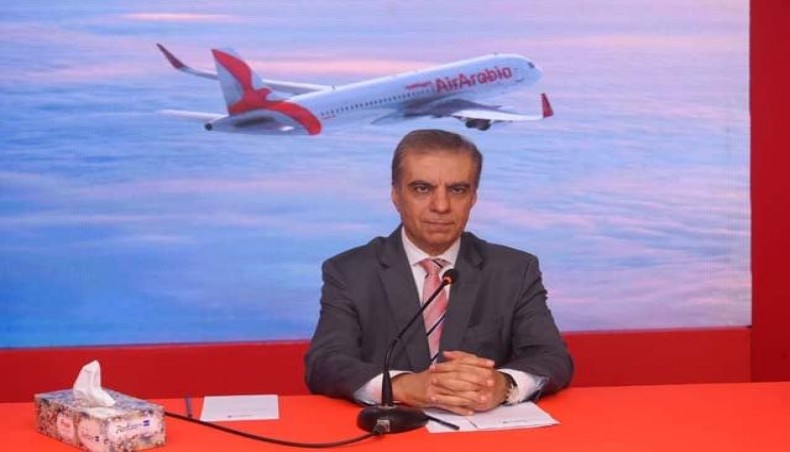
225727_142.JPG

-- BSS photo.

Terming Bangladesh as a key route, group chief executive officer of AirArabia Adel Abdullah Ali has said that his airline was planning to expand business here being optimistic to see its aviation growth.

‘The current trend of Bangladesh's aviation growth gives us a positive feeling that it will continue, we are looking at business opportunities...we have more plan regarding Bangladesh,’ he told BSS.

The CEO talked to the national news agency during his recent Dhaka visit marking the maiden tour of Bangladesh by a group CEO of Air Arabia in its 20 years of global and 17 years of operation in Bangladesh.

Ali said that Bangladesh is a suitable place for the aviation business as evidenced by Air Arabia's business growth by three to four per cent year-on-year.

Air Arabia, the first low-cost carrier in the Middle East and North Africa based in Sharjah, UAE, started operations in 2003 by introducing its low-cost business model to the region while it began operations in Bangladesh in 2007.

‘We have been doing business successfully in Bangladesh for the past 17 years. Bangladesh-UAE is one of the key routes of Air Arabia,’ Ali said.

Currently, Air Arabia is operating 57 non-stop weekly flights to and from two Bangladesh destinations - capital Dhaka and Port City Chattogram.

Regarding flight frequency, the group CEO said that AirArabia would think about increasing flights to and from Bangladesh depending on the situation.

He said that when the economy of a country like Bangladesh grew at a quick pace, more airlines come and the frequency of flights also increased, whichwas a win-win situation for everybody.

Currently, AirArbia with seven strategic hubs located in UAE, Morocco, Egypt, Armenia and Pakistan is operating more than 190 international and domestic routes in around 50 countries with the fleet size of 73 Airbus A320 and A321 planes.

The airline has an existing order for a total of 120 Airbus A320 family aircraft - 736 A320neo, 27 A3212neo-LR and 210 A321 XLR - with deliveries starting in 2025.

Ali said AirArbia will cover all European destinations within two years after getting the A321 XLR aircraft that can fly more than 8 hours.

The CEO said that his carrier brought a change the way air travel was perceived in the Arab world by opening it up to all segments of the community and putting air travel within everyone's reach with reasonable ticket price.

He said that the expatriate Bangladeshis in Middle East could visit their families back home once every three years in the past but currently the Air Arabia created the opportunities for them to visit their country even thrice in one year.

It is amongst the world's best-performing airlines in terms of operational efficiency and profitability, he added.

AirArabia regional general manager Rajesh Nurala and the airline's general sales agent (GSA) in Bangladesh MGH CEO Abdur Rahim were present.​
 
Analyze

Analyze Post

Add your ideas here:
Highlight Cite Respond

Members Online

Latest Posts

Back
 
G
O
 
H
O
M
E