New Tweets

Wars 2026 02/28 Israel-Iran War 3.0

G War Archive
Wars 2026 02/28 Israel-Iran War 3.0
29
228
More threads by RayKalm


Trump seeks to justify Iran war, but stated objectives shift

REUTERS
Published :
Mar 04, 2026 00:01
Updated :
Mar 04, 2026 00:01

1772584689912.webp


U.S. President Donald Trump sought to justify a broad, open-ended war on Iran in his most extensive public comments yet on an operation whose stated aims and timeline have shifted since it began over the weekend.

Trump said the U.S. and Israeli air attacks that began on Saturday had been projected to last four to five weeks but ‌could go on longer.

The military campaign has killed Supreme Leader Ayatollah Ali Khamenei, sunk at least 10 Iranian warships and struck more than 1,000 targets. Iran has responded by firing missiles and drones at neighboring Arab states and strangling shipping through the Strait of Hormuz, a key waterway for energy trade.

"We're already substantially ahead of our time projections. But whatever the time is, it's okay. Whatever it takes," Trump said at the White House on Monday, during his first public event since the conflict began.

He made no mention of regime change, saying the fight was needed to prevent Iran from developing a nuclear weapon, which Tehran denies seeking, and to thwart its long-range ballistic missile program.

"An Iranian regime armed with long-range missiles and nuclear weapons would be an intolerable threat to the Middle East, but also to the American people," Trump said.

In a social media post ⁠overnight, Trump said there was a "virtually unlimited supply" of U.S. munitions and that "wars can be fought 'forever,' and very successfully, using just these supplies."

The remarks followed days of sometimes conflicting statements from the president, who had discussed the attacks in two brief videos and one-on-one interviews with select journalists over the weekend but did not give a televised address to the nation, as is customary in moments of military action.

He took no questions from reporters at Monday's event.

White House Press Secretary Karoline Leavitt pushed back on suggestions the administration's messaging on the operation had been muddled.

On X, Leavitt said Trump had outlined "clear objectives," including preventing Iran’s proxies from launching attacks and stopping production of roadside bombs like those used against U.S. forces after the 2003 invasion of Iraq.​
 
Analyze

Analyze Post

Add your ideas here:
Highlight Cite Respond

Iran steps up attacks on Mideast economy in response to US-Israeli strikes
AFP
Riyadh, Saudi Arabia
Published: 03 Mar 2026, 21: 11

1772585196528.webp

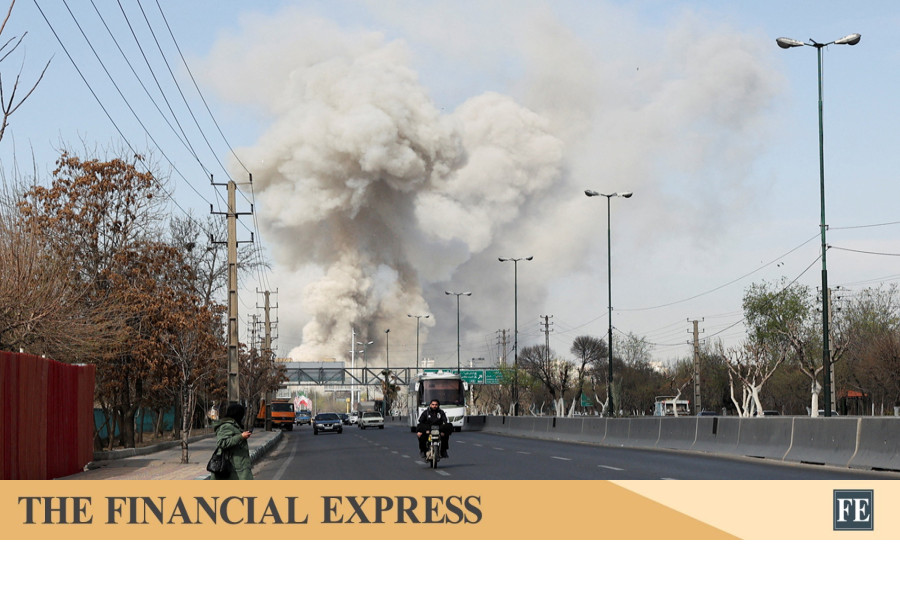
A tall plume of black smoke ascends following an explosion in the Fujairah industrial zone in UAE on 3 March, 2026. AFP

Iran stepped up its attacks on economic targets and US missions across the Middle East on Tuesday as President Donald Trump warned it was "too late" for the Islamic republic to seek talks to escape the war.

As drones and missiles crashed into oil facilities and US embassies in the Gulf, Washington's ally Israel bombarded targets in Iran and pushed troops deeper into Lebanon to battle the Tehran-backed militia Hezbollah.

"Their air defence, air force, navy, and leadership is gone. They want to talk. I said: 'Too late!'," Trump posted on his social media site, two days after he had agreed to talks and four days after US and Israeli strikes wiped out much of Iran's senior leadership.

As if to underline Trump's new stance, loud blasts echoed around downtown Tehran, AFP journalists in the city reported. According to Iranian media, US and Israeli strikes had targeted the building housing the committee that is to elect Iran's new supreme leader.

"The military has launched a ninth wave of strikes in Tehran. The Air Force has now begun a large-scale wave of strikes targeting the Iranian terror regime's infrastructure in Tehran," the Israeli military said.

At almost the same moment, the US embassy in Riyadh -- which was damaged and briefly caught fire overnight in an Iranian drone strike -- on Tuesday warned of an imminent attack in the eastern Saudi city of Dhahran, home to much of the kingdom's oil and gas installations along the Gulf coast.

"There is a threat of imminent missile and UAV (drone) attacks over Dhahran. Do not come to the US Consulate," the embassy posted on social media.

As Trump dismissed any remaining hope of a negotiated solution, Israel's Foreign Minister Gideon Saar urged foreign capitals to cut all ties with Tehran "following the Iranian regime's attacks on all its neighbours and the massacre of its own people".

China's Foreign Minister Wang Yi, according to the official Xinhua news agency, warned Saar in a call that Beijing opposes the strikes. "Force cannot truly solve problems -- instead, it will only bring new problems and severe after-effects," he said.

The United States and Israel triggered the rapidly spreading war on Saturday with a strike on Tehran that killed supreme leader Ayatollah Ali Khamenei and several more senior Iranian figures, followed by days of air and missile raids aimed at weakening the remaining government.

But Iran's armed forces responded with missile and drone attacks on Israel, US embassies and military bases and on its Arab neighbours around the Gulf, targeting oil and gas facilities, ports and airports, foreign missions and landmark hotels.

Qatar has shut down its massive LNG industry, shipping traffic through the strategic Straits of Hormuz has all but halted and thousands of flights have been cancelled, leaving foreign governments scrambling to rescue trapped travellers.

The war has already sent shockwaves through world markets. Energy prices are soaring and share prices are falling. Asian giant India added its concern to China's on Tuesday, with the foreign ministry expressing "great anxiety" for the fate of its 10 million citizens in the Gulf region.

"Our trade and energy supply chains also traverse this geography. Any major disruption has serious consequences for the Indian economy," ministry spokesman Randhir Jaiswal said.

Market shockwaves

Drones meanwhile struck a fuel tank in Oman and in the UAE an oil storage zone was hit by falling debris from an intercepted drone, as Iran apparently widened its targets beyond US assets.

Qatar's state-run QatarEnergy said it would halt some downstream production of substances including urea, polymers, methanol and aluminium after Iran attacked two gas processing plants.

The announcement prompted an immediate two percent rise in the price of aluminium on the London Metal Exchange.

In Oman, several drones targeted the port of Duqm on its eastern coast on Tuesday. The attack was the second on the port in three days, with the sultanate hit despite acting as a mediator between Iran and the United States just days prior to the war.

The UAE says it has been targeted with more than 800 drones and nearly 200 missiles since the war erupted.

Reporters in the Saudi capital Riyadh saw smoke damage on the walls and roof of the American embassy after two drones hit it overnight, starting a fire in one building.

Saudi police were swarming the diplomatic quarter and checking the IDs of everyone who entered. The Saudi foreign ministry described the attack as "heinous and unjustified".

Iran's Revolutionary Guards spokesman Ali Mohammad Naini meanwhile warned that "the gates of hell will open more and more, moment by moment, upon the United States and Israel".

United Nations rights chief Volker Turk said he was "deeply shocked" by the war's toll on civilians, and the UN nuclear watchdog said Iran's Natanz enrichment plant appeared in satellite imagery to have suffered "recent damage".

On Monday, the US State Department had urged "Americans to DEPART NOW" from all of the countries and territories of the Middle East "due to serious safety risks".

Israel, meanwhile, said it was seizing new forward positions inside southern Lebanon, after Hezbollah fired missiles in support of its backer Iran, provoking a furious Israeli bombardment.

Defence Minister Israel Katz said Israeli forces had been authorised "to advance and take control of additional strategic positions in Lebanon in order to prevent attacks on Israeli border communities".

Shortly afterwards, the military spokesman said: "In practice, Northern Command has moved forward... and is creating a buffer, as we promised, between our residents and any threat."

A Lebanese army source said Israeli forces had advanced from around Kfar Kila, in an apparent attempt "to establish a broad security belt in south Lebanon".

Death toll rises

According to a Lebanese military source, following Israel's "escalation", the Lebanese army redeployed troops posted near the southern border back to their bases. Hezbollah said it had launched strikes targeting three Israeli bases.

A spokesman for the UN refugee agency said 30,000 Lebanese had been driven from their homes and registered at collective shelters, while "many more slept in their cars on the side of roads".

Throughout the region, the death toll has steadily increased, with six US military personnel killed so far in the war, according to US Central Command.

Iranian media have reported hundreds of Iranian casualties, including scores at a girl's school, although AFP reporters have not been able to verify tolls independently.

The US-based Human Rights Activists News Agency (HRANA) on Tuesday said there were 101 casualties inside Iran on the third day of the war, including "85 civilian deaths and 11 military personnel killed".​
 
Analyze

Analyze Post

Add your ideas here:
Highlight Cite Respond

US-Israel attacks on Iran: Bangladeshi ship stranded at Qatar port

BSS
Dhaka
Published: 03 Mar 2026, 22: 05

1772585320973.webp

MV Banglar Joyjatra Collected

Shipping, Road Transport and Bridges and Railways Minister Sheikh Rabiul Alam has talked with the sailors of MV Banglar Joyjatra as the national flag carrier now stranded at Jebel Ali Port in Qatar.

The steel-laden ship owned by Bangladesh Shipping Corporation (BSC) got stranded at Jebel Ali Port in the United Arab Emirates after escalation of war in the Middle East on its way Bangladesh from Qatar.

The minister talked to the captain and sailors of the ship online today when he appreciated their bravery, patience and professionalism.

He oped that the crisis that has arisen will improve soon and all sailors and crews will come back home.

The Shipping Minister said they have already contacted with the families of 31 sailors of the ship and the government remains by their side in this difficult time.

The minister said Prime Minister Tarique Rahman has close contact with the Ministry of Foreign Affairs to have all information about the situation and providing necessary guidance.

Besides, BSC is maintaining contact with the ship through regular virtual meetings. A control cell has been formed at the BSC headquarters in Chattogram to provide necessary assistance to the seafarers and their families.

To keep strong the mental strength of the seafarers, he said, high-quality food and essential items have been ensured through additional supplies.

The minister said that the Bangladesh Embassy in Dubai is aware of the matter and is maintaining round-the-clock communication.

In addition, local agents and expatriate Bangladeshi entrepreneurs have also been kept ready to provide assistance if needed, he added.​
 
Analyze

Analyze Post

Add your ideas here:
Highlight Cite Respond

Hormuz shutdown worsens after US hits Iranian warship; tankers stranded for fifth day

REUTERS
Published :
Mar 04, 2026 19:59
Updated :
Mar 04, 2026 20:27

1772670059571.webp

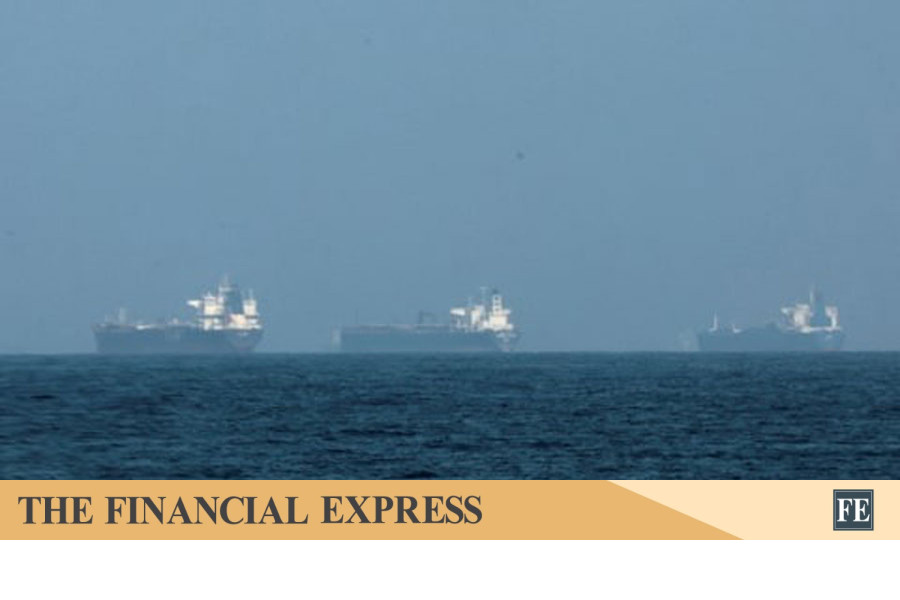
Tankers are seen off the coast of the Fujairah, as Iran vows to close the Strait of Hormuz, amid the US-Israel conflict with Iran, in Fujairah, United Arab Emirates, March 3, 2026. Photo : REUTERS/Amr Alfiky/Files

The US–Iran war widened on Wednesday after a US strike hit an Iranian warship off Sri Lanka, deepening a crisis that has paralysed shipping through the Strait of Hormuz for a fifth day and choked off vital Middle East oil and gas flows.

The US submarine strike on the Iranian vessel came as US President Donald Trump pledged to provide insurance and navy escorts to ships exporting oil and gas from the Middle East in a bid to contain soaring energy prices.

At least 200 ships, including oil and liquefied natural gas tankers as well as cargo ships, remained at anchor in open waters off the coast of major Gulf producers including Iraq, Saudi Arabia and Qatar, according to Reuters estimates based on ship-tracking data from the MarineTraffic platform.

Hundreds of other vessels remained outside Hormuz unable to reach ports, shipping data showed. The waterway is a ⁠key artery for around a fifth of the world's oil and LNG supply.

The Maltese-flagged container ship Safeen Prestige was also damaged by a projectile as it sailed toward the northern end of the Strait of Hormuz earlier, prompting the crew to abandon ship, shipping sources said.

Qatar suspended its gas output and Iraq cut its oil production as both ran out of storage for gas and oil, unable to load it in tankers. Saudi Arabia, the UAE and Kuwait were also struggling to load oil but it was not yet clear if they cut output.

RARE TANKER TRANSIT AMID SHIPPING FREEZE

Despite the gridlock, a rare voyage took place on Tuesday when the Suezmax tanker Pola sailed through the Strait of Hormuz to the UAE to load crude, according to industry sources and LSEG ship-tracking data.

The Pola had switched off its AIS transponder late on March 2 as it approached the Strait and reappeared the next day off Abu Dhabi.

Trump on Tuesday said he had instructed the US International Development Finance Corporation to provide political-risk ⁠insurance and financial guarantees for maritime trade in the Gulf.

"No matter what, the United States will ensure the free flow of energy to the world," he wrote in a social media post.

Oil prices dipped on Wednesday, having risen for the fourth day and gaining 12 per cent since the war started on Saturday, as US-Israeli strikes on Iran disrupted Middle East supplies. The pace of gains slowed from past sessions.

On Wednesday, Goldman Sachs raised its forecast for Brent crude oil in the second quarter by $10 to $76 per barrel. It also raised its prediction for WTI by $9 to $71 ⁠per barrel.

The bank said it sees longer-than-expected disruption to exports of oil and gas through the Strait of Hormuz and damage to oil production facilities as risks. It also assumes that low oil flows through Hormuz will lead to large declines in OECD inventories and Middle East production in March.

"Providing protection for all tankers operating in areas currently threatened by Iran is unrealistic ⁠as this would require a very high number of warships and other military assets," said Jakob Larsen, chief safety and security officer with shipping association BIMCO.

ASIA SCRAMBLES FOR REPLACEMENT BARRELS

Some Asian refiners face output cuts because they are unable to get prompt replacement cargoes from their suppliers in the Gulf due to the shipping standstill, four traders ⁠and three analysts said.

Asia sources 60 per cent of its oil from the Middle East, leaving the region vulnerable to the disruptions. Refiners in Indonesia and Japan are sourcing more oil from the US to replace the shortfall. India will consider buying more from Russia, sources at two companies have said.

Saudi Aramco's largest domestic refinery and key crude export terminal Ras Tanura was struck on Wednesday, four sources said.​
 
Analyze

Analyze Post

Add your ideas here:
Highlight Cite Respond

US sub sinks Iranian warship in India Ocean off Sri Lanka, at least 80 dead

Reuters
Galle, Sri Lanka/Washington
Published: 04 Mar 2026, 21: 33

1772671085582.webp


This frame grab from a video released by the US Department of Defense on March 4, 2026, shows what the Department of Defense says is periscope footage of a US Navy submarine firing on and sinking an Iranian warship in the Indian Ocean. AFP

A US submarine sank an Iranian warship off the southern coast of Sri Lanka, U.S. Defense Secretary Pete Hegseth said on Wednesday, dramatically widening Washington's pursuit of the Iranian navy.

Sri Lanka's deputy foreign minister said at least 80 people were killed in the attack on the ⁠frigate IRIS Dena, which was heading back to Iran from an eastern Indian port.


"An American submarine sank an Iranian warship that thought it was safe in international waters," Hegseth said at the Pentagon. "Instead, it was sunk by a torpedo. Quiet death".

The Iranian vessel had taken part in a naval exercise held in the Bay of Bengal from February 18 to 25, according to the drill's website.

Sri Lanka searching for survivors

Sri Lanka said it had launched a search-and-rescue operation to locate survivors after receiving a distress call, with 32 people rescued by its navy and treated at a hospital in the ⁠southern port city of Galle.

Foreign minister Vijitha Herath said 180 people were on board the ship.

Sri Lankan navy spokesman Commander Buddhika Sampath said boats that reached the location observed only an oil slick, adding that the incident took place outside Sri Lankan waters but Colombo was still committed to providing support.

"We are hopeful ⁠we can rescue more people and will continue (operations) until we are sure," Sampath said.

Ship took part in naval drill hosted by India

The website of the 'Milan' multilateral naval exercise hosted by India listed an Iranian ship named 'IRINS ⁠Dena' as having taken part in the drill, which was held in the Bay of Bengal off India's eastern coast.

IRIS - or Islamic Republic of Iran Ship - is the more commonly used ⁠prefix for Iranian naval vessels, while IRINS - or Islamic Republic of Iran Naval Ship - is sometimes used.​
 
Analyze

Analyze Post

Add your ideas here:
Highlight Cite Respond

Why the possibility of an Iran-Russia-China alliance is a major factor in the US war

4 March 2026, 15:43 PM
UPDATED 4 March 2026, 15:47 PM
Md. Himel Rahman

“The United States has always viewed the Middle East in two dimensions: its strategic location and its vast oil wealth.,” writes Abon Tsistiashvili in “Near East: Two Approaches to Conflict Resolution.” It provides context for the United States and Israel’s latest campaign of massive air and naval strikes against Iran, sparking a high-intensity war across the Middle East. The joint US-Israeli strikes resulted in the assassination of Iranian Supreme Leader Ayatollah Ali Khamenei, several high-ranking Iranian officials and considerable material losses among Iranian forces. In response, Iran, along with its Iraqi and Lebanese proxies, struck the territories of ten states — Bahrain, Iraq, Israel, Jordan, Kuwait, Oman, Qatar, Saudi Arabia, the United Arab Emirates (UAE), and the British overseas territories of Akrotiri and Dhekelia on the island of Cyprus, targeting US military facilities throughout the region and civilian and military infrastructure in the aforementioned states, as well as a French base in the UAE, and an Italian base in Kuwait. Moreover, at the time of writing, Iran has threatened the closure of the Strait of Hormuz, striking several ships, while the Yemen-based Houthis declared the resumption of attacks on shipping routes in the Red Sea, threatening the world economy with a potentially ruinous crisis.

From a series of statements of US President Donald Trump and Israeli Prime Minister Benyamin Netanyahu, it appears that the attack on Iran has three primary objectives: the replacement of the current Iranian government with a pro-Western one; the curtailment of Iran’s regional power; and the elimination of the “alleged Iranian nuclear weapons programme.” However, the expectations of a “short, victorious war,” encouraged by the US abduction of Venezuelan President Nicolas Maduro on January 3, 2026 in a spectacular and low-cost military-political operation, has been dashed due to fierce Iranian retaliation. The current Iranian regime is still in place, and the costs of the war for the US and its allies are rising. Meanwhile, with Iran’s leadership in disarray, population highly polarised, military capabilities substantially degraded, and ethnic minorities restless, the nation is confronted with serious political instability and economic ruin. Meanwhile, the Gulf Arab states, with their hydrocarbon-dependent economy, vulnerable civilian infrastructure, and relatively weak military capabilities, face severe economic dislocation in the case of a prolonged war.

The outbreak of the Iran-US-Israel war is a watershed event in the geopolitics and geo-economics of the 21st century. If the war is prolonged, it would have transformative effects on numerous states throughout the world.

Geopolitical roots

According to US geopolitician Nicholas Spykman, Iran constitutes a part of the Arabian-Middle Eastern Desert Land, which is one of the three constituents of the Rimland. Spykman posited that the control of the Rimland is the key to mastery over Eurasia and by extension, the whole world. Iran is located at a critical crossroads in West Asia, bordering Central Asia, Transcaucasia, Anatolia, the Arab Middle East, and South Asia, with crucial maritime territories in the Caspian Sea and the Persian Gulf. Its location anchors it into critical trade corridors, including the Russian-backed International North-South Transport Corridor (INSTC), the Chinese-backed China-Central Asia-West Asia Corridor, the Iranian-envisioned Persian Gulf–Black Sea Corridor, and the Istanbul-Tehran-Islamabad Railway. The US, the current global superpower, exerts control over the entirety of the core of the Arabian-Middle Eastern Desert Land, except Iran. Between 1946 and 1979, Iran was a crucial US ally of the “Northern Tier” against the Union of Soviet Socialist Republics (USSR), but since the overthrow of the pro-US monarchy in the 1979 Islamic Revolution, the Iranian government has pursued a highly independent, anti-US, and anti-Israeli policy.

Meanwhile, US geo-strategist and former National Security Advisor Zbigniew Brzezinski viewed Iran as a geopolitical pivot on the grand Eurasian chessboard, capable of influencing power dynamics between Europe, Russia and East Asia, and to a certain extent, as an independent geostrategic player. He cautioned that in the post-Cold War world, an alliance among Russia, China, and Iran would present a serious challenge to US hegemony over Eurasia, and by extension, the world. In another instance, US political scientist Samuel Huntington viewed Iran as a significant state within the Islamic civilization, and pointed that a potential Sino–Islamic axis, involving Iran, would present challenges for the then-dominant Western civilization. On the other hand, Russian geopolitician Aleksandr Dugin advocates for the creation and maintenance of a “Moscow-Tehran axis,” as crucial to the resurgence of Russia to counter the “Atlanticist” Western powers. Iran’s independent power base, including its unconventional warfare capabilities, its vast missile and drone arsenal, its comprehensive network of regional proxies, and its scientific and technological potential, makes an anti-US tripartite alliance among Russia, China, and Iran particularly concerning to Washington.

Also, Iran’s persistent anti-Israeli policy, manifested through the extensive support of proxies such as Ba’athist Syria, Lebanon-based Hezbollah, and Palestinian factions in the Gaza Strip, led Israel to view Iran as an existential threat. Since Israel lacks the military-political capabilities to bring about a regime in Iran, it has used its strong lobbying networks in the US to convince Washington to do it on its behalf. Israel, with substantial US backing, has largely dismantled Iran’s axis of resistance in recent years, through the elimination of the Ba’athist government in Syria and the destruction of its strategic military capabilities, the severe degradation of Hezbollah, and the genocidal devastation and bifurcation of the Gaza Strip. Afterwards, Israel and the US sought the dismantlement of the Iranian government in a systematic manner, by unleashing the 12-Day-War, and finally through the current war.

1772673054167.webp

China's Foreign Minister Wang Yi welcomed Russia's Deputy Foreign Minister Sergey Ryabkov and Iran's Deputy Foreign Minister Kazeem Gharibabadi before a meeting regarding the Iranian nuclear issue at the Diaoyutai State Guesthouse in Beijing on March 14, 2025. PHOTO: AFP

Hence, if the ongoing war results in a regime change in Iran, it would solidify US control over the Rimland and Eurasia, shatter the possibilities of Iranian alliance with Moscow and Beijing, and ensure Israel’s long-term strategic security. If the ongoing war fails to destroy the Iranian government, it will likely adopt an even more anti-US and anti-Israeli position, rebuild its military, and forge a stronger partnership with Moscow and Beijing. A US failure in Iran, after similar experiences in Afghanistan, Iraq, and Libya, would further erode US prestige and credibility in the international sphere, weaken its hold on the Rimland, and strengthen the conception of the Russian- and Chinese-backed multipolar world order instead of its own unipolar world order.

Geoeconomic roots

Based on recent data — with 209,000 millions of barrels of oil and 34 trillion cubic meters of natural gas, Iran contains the 3rd largest oil reserves and 2nd largest gas reserves in the world. If an independent, anti-US, and anti-Israeli Iran can tap into its hydrocarbon reserves, it will be able to finance its military modernisation, expand its proxy networks, and enhance its regional clout. Accordingly, the US has sought to throttle Iran economically by effectively imposing an economic blockade on the country for more than four decades, depriving it of the opportunity to trade its commodities in the formal international market.

Moreover, Iran’s geographical proximity to the Strait of Hormuz — a maritime chokepoint through which approximately 20-27 percent of the world’s seaborne oil and 20 percent of liquefied natural gas (LNG) pass annually — provides it with a unique opportunity to strangle the rentier economies of the Gulf Arab states and destabilise the global energy market. Meanwhile, the US itself is currently the world’s largest producer of oil and gas, and it imports heavily to its North American neighbours, particularly Canada which makes up 60 percent of total US imports. So, the US is not directly dependent on energy imports from the Middle East, but its traditional allies — Western Europe and Japan — are heavily dependent on Middle Eastern hydrocarbons, and the US has, since the Cold War, sought to control the supply of energy from the Middle East to maintain substantial influence on its allies and dictate their policies. Hence, Washington has consistently sought to control the oil-producing and gas-producing states of the Persian Gulf, including Iran.

Finally, the US seeks to preserve its global hegemony by keeping emerging and regional powers, such as China, Russia, and India, weakened through economic means. Hence, it is opposed to connectivity projects such as the Chinese-led Belt and Road Initiative (BRI), the Russian-backed INSTC, and the Indian-financed Chabahar Port project. Since Iran is a crucial component in all three, having a pro-Western government in Tehran would help the US throttle or at least weaken these projects. Washington pressurised India into exiting the Chabahar Port project shortly before the outbreak of the war, and if it succeeds in changing the regime in Iran, the other projects are likely to be shelved or delayed as well.

Endgame

While the current US administration with its quirks may struggle to present a coherent view of their objectives in Iran, the war’s roots lie in Iran’s strategic location and its vast hydrocarbon reserves. Iran is a great geopolitical prize for any great power, and the US is seeking to seize the prize for itself, while paving the way for Israel’s regional hegemony. However, so far, there has been no successful regime change through air operations alone, and if the Iranian government manages to maintain its cohesion, the US and Israel would have no way other than sending ground troops to Iran to attain their objectives. And if the mountains of Afghanistan and deserts of Iraq are any guide (Iran has both), the determined resistance of even a small but committed group of people can frustrate the designs of a much stronger and technologically superior power. The outcome of the war will be contingent upon the level of determination of the Iranian government to wage a war of attrition against the US and Israel, the degree of commitment of the US to sustain casualties in a war of choice, and the scale of effectiveness of US political machinations to bring about a Venezuela-style regime transition.

Md. Himel Rahman is a lecturer in the Department of International Relations, at Gopalganj Science and Technology University.​
 
Analyze

Analyze Post

Add your ideas here:
Highlight Cite Respond

Members Online

Latest Posts

Back
PKDefense - Recommended Toggle