Bangladesh Defense
Saif
Senior Member
- Jan 24, 2024
- 20,326
- 9,555
- Nation

- Residence
- Axis Group

ICG urges EU support for Bangladesh economy
An overwhelming support the interim government enjoyed in the immediate aftermath of Hasina's downfall has begun to wane and pressure to deliver concrete results mounts, International Crisis Group (ICG), an international agency, says and urges EU support for the Bangladesh economy. "But whil
Honeymoon period for interim govt truly over: ICG
ICG urges EU support for Bangladesh economy
Brussels-based nonprofit presents package dos for European Union
FE REPORT
Published :
Jan 31, 2025 00:38
Updated :
Jan 31, 2025 00:38

An overwhelming support the interim government enjoyed in the immediate aftermath of Hasina's downfall has begun to wane and pressure to deliver concrete results mounts, International Crisis Group (ICG), an international agency, says and urges EU support for the Bangladesh economy.
"But while the euphoria that accompanied Hasina's ouster translated into widespread support at the outset of Yunus's administration, the honeymoon is now over. Popular pressure has mounted on the government to start delivering not just on the promised reforms but also on improvements to day-to-day governance," says a report of the ICG.
The ICG report, titled 'The Dilemmas of a Democratic Transition', was released Thursday with a slew of recommendations for the European Union to come up with an aid package for Bangladesh now on the cusp of transition through wide-scale reforms.
The report is incorporated into 'EU Watchlist' prepared by the ICG to identify where the European Union and its member-states can enhance prospects for peace and stability.
"The challenges are likely to grow in the coming year, as opposition parties, student leaders, Islamist groups and other key players jockey for electoral advantage," the Brussels-based crisis-management group alerts in the report.
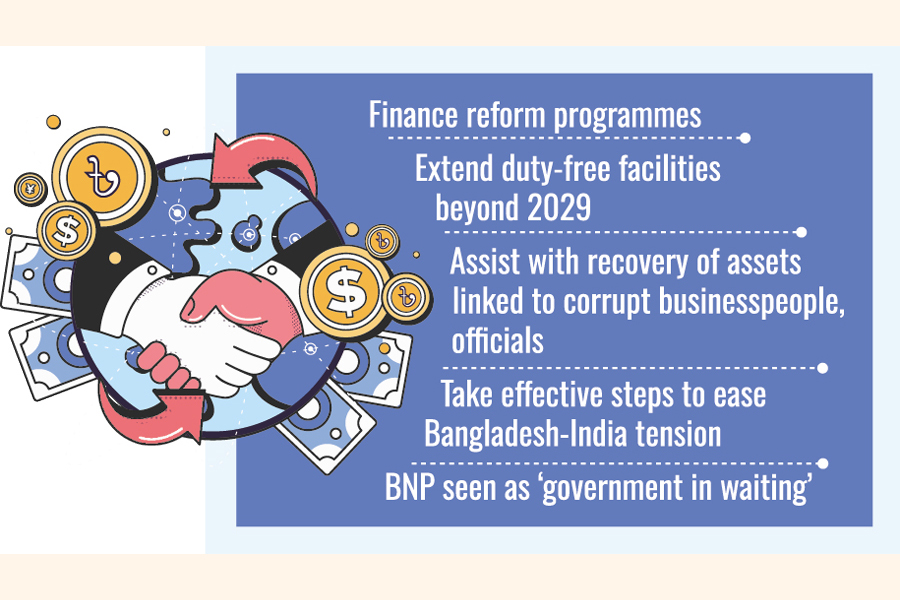
The ICG urges the EU to contribute to stabilising the national economy by using Europe's influence at international financial institutions to mobilise additional fiscal support for Bangladesh.
It also recommends that the EU help Bangladesh to create a more attractive environment for foreign investment, to support efforts to diversify the economy away from garment manufacturing, to assist with the recovery of assets linked to corrupt businesspeople and officials, and to continue negotiations with Dhaka on extending Bangladesh's preferential access to the European market beyond 2029.
In the geopolitical arena the ICG felt that the EU should take steps to limit tensions between Dhaka and New Delhi, including by quietly encouraging India, including through high-level engagements the EU is planning in 2025, to be more supportive of reform in Bangladesh.
"The EU should use its influence with both sides to overcome mistrust and shift relations onto a better footing." the report reads.
Free, fair and peaceful polls will be paramount for restoring the Bangladeshi people's faith in electoral politics, the ICG notes.
"To support Bangladesh, the EU and its member states should organise high-level visits and continue to emphasise support for the interim government's reforms in order to burnish the Yunus administration's public image domestically and weaken forces seeking to undermine its agenda," the report says, adding that the EU should also continue to pursue negotiations over a new Partnership and Cooperation Agreement.
"On 16 December, Dr Yunus said the vote would take place between December 2025 and June 2026, meaning that his administration would stay in office less than two years. The announcement has mostly, although not entirely, silenced the critics. But the prospect of polling day, even if it is distant, has also stirred up competition among the BNP, other political parties (such as the Islamist force Jamaat-e-Islami) and student leaders, who have now confirmed their plans to form a new political party," the report says narrating the present political landscape of the country.
However, it also points out that beyond the date, many of the details of the electoral process and the post-election period remain uncertain.
Preserving consensus among the various political forces at play will be "crucial for this process to succeed".
"With Hasina's AL banished to the political fringes, with its leaders in exile and its activists at home largely dormant, the BNP has become the country's largest political force. It is widely seen as the government in waiting," the report says, adding that many in Bangladesh are unnerved by this prospect for its tainted past when it ruled the country.
"When Yunus entered office, foreign-exchange reserves were dwindling, and food price inflation stood at almost 15 per cent. His actions, including installing competent officials at key institutions and ministries to improve policymaking and restore confidence, appear to have averted an economic crisis. But the economy has still taken a hit, due to political unrest and the uncertainty it has sown for businesses and investors," the Group mentions.
"Bangladeshis continue to suffer from stubbornly high inflation, particularly in the cost of food, while foreign-exchange shortages have contributed to widespread power cuts. The International Monetary Fund expects growth to rebound sharply and inflation to halve in the next fiscal year, but a buoyant economy will require reforms to encourage local and foreign investment, tackle corruption and red tape, and diversify into new sectors.
According to the report, "New Delhi's support for the ousted government made it deeply unpopular among Bangladeshis, and anti-Indian sentiment has grown since the uprising due to the perception that India is trying to undermine Yunus's government and engineer the AL's return."
It adds: "Indian authorities have not only sheltered Hasina in exile, but also made it difficult for Bangladeshis to get visas and, as noted above, regularly criticised Dhaka over minority and religious rights."
As such, Thomas Kean, Crisis Group's Senior Consultant on Myanmar and Bangladesh, concludes, "The honeymoon period for Bangladesh's interim government is now well and truly over. The political challenges are likely to increase this year as political parties and other key players negotiate over reforms and jockey for electoral advantage."
ICG urges EU support for Bangladesh economy
Brussels-based nonprofit presents package dos for European Union
FE REPORT
Published :
Jan 31, 2025 00:38
Updated :
Jan 31, 2025 00:38
An overwhelming support the interim government enjoyed in the immediate aftermath of Hasina's downfall has begun to wane and pressure to deliver concrete results mounts, International Crisis Group (ICG), an international agency, says and urges EU support for the Bangladesh economy.
"But while the euphoria that accompanied Hasina's ouster translated into widespread support at the outset of Yunus's administration, the honeymoon is now over. Popular pressure has mounted on the government to start delivering not just on the promised reforms but also on improvements to day-to-day governance," says a report of the ICG.
The ICG report, titled 'The Dilemmas of a Democratic Transition', was released Thursday with a slew of recommendations for the European Union to come up with an aid package for Bangladesh now on the cusp of transition through wide-scale reforms.
The report is incorporated into 'EU Watchlist' prepared by the ICG to identify where the European Union and its member-states can enhance prospects for peace and stability.
"The challenges are likely to grow in the coming year, as opposition parties, student leaders, Islamist groups and other key players jockey for electoral advantage," the Brussels-based crisis-management group alerts in the report.
The ICG urges the EU to contribute to stabilising the national economy by using Europe's influence at international financial institutions to mobilise additional fiscal support for Bangladesh.
It also recommends that the EU help Bangladesh to create a more attractive environment for foreign investment, to support efforts to diversify the economy away from garment manufacturing, to assist with the recovery of assets linked to corrupt businesspeople and officials, and to continue negotiations with Dhaka on extending Bangladesh's preferential access to the European market beyond 2029.
In the geopolitical arena the ICG felt that the EU should take steps to limit tensions between Dhaka and New Delhi, including by quietly encouraging India, including through high-level engagements the EU is planning in 2025, to be more supportive of reform in Bangladesh.
"The EU should use its influence with both sides to overcome mistrust and shift relations onto a better footing." the report reads.
Free, fair and peaceful polls will be paramount for restoring the Bangladeshi people's faith in electoral politics, the ICG notes.
"To support Bangladesh, the EU and its member states should organise high-level visits and continue to emphasise support for the interim government's reforms in order to burnish the Yunus administration's public image domestically and weaken forces seeking to undermine its agenda," the report says, adding that the EU should also continue to pursue negotiations over a new Partnership and Cooperation Agreement.
"On 16 December, Dr Yunus said the vote would take place between December 2025 and June 2026, meaning that his administration would stay in office less than two years. The announcement has mostly, although not entirely, silenced the critics. But the prospect of polling day, even if it is distant, has also stirred up competition among the BNP, other political parties (such as the Islamist force Jamaat-e-Islami) and student leaders, who have now confirmed their plans to form a new political party," the report says narrating the present political landscape of the country.
However, it also points out that beyond the date, many of the details of the electoral process and the post-election period remain uncertain.
Preserving consensus among the various political forces at play will be "crucial for this process to succeed".
"With Hasina's AL banished to the political fringes, with its leaders in exile and its activists at home largely dormant, the BNP has become the country's largest political force. It is widely seen as the government in waiting," the report says, adding that many in Bangladesh are unnerved by this prospect for its tainted past when it ruled the country.
"When Yunus entered office, foreign-exchange reserves were dwindling, and food price inflation stood at almost 15 per cent. His actions, including installing competent officials at key institutions and ministries to improve policymaking and restore confidence, appear to have averted an economic crisis. But the economy has still taken a hit, due to political unrest and the uncertainty it has sown for businesses and investors," the Group mentions.
"Bangladeshis continue to suffer from stubbornly high inflation, particularly in the cost of food, while foreign-exchange shortages have contributed to widespread power cuts. The International Monetary Fund expects growth to rebound sharply and inflation to halve in the next fiscal year, but a buoyant economy will require reforms to encourage local and foreign investment, tackle corruption and red tape, and diversify into new sectors.
According to the report, "New Delhi's support for the ousted government made it deeply unpopular among Bangladeshis, and anti-Indian sentiment has grown since the uprising due to the perception that India is trying to undermine Yunus's government and engineer the AL's return."
It adds: "Indian authorities have not only sheltered Hasina in exile, but also made it difficult for Bangladeshis to get visas and, as noted above, regularly criticised Dhaka over minority and religious rights."
As such, Thomas Kean, Crisis Group's Senior Consultant on Myanmar and Bangladesh, concludes, "The honeymoon period for Bangladesh's interim government is now well and truly over. The political challenges are likely to increase this year as political parties and other key players negotiate over reforms and jockey for electoral advantage."