Bangladesh Defense
Saif
Senior Member
- Jan 24, 2024
- 21,704
- 9,794
- Nation

- Residence
- Axis Group


Airbus wants Biman to consider aircraft deals on merit, not politics
Says Wouter van Wersch, executive vice president of the plane maker
Airbus wants Biman to consider aircraft deals on merit, not politics
Says Wouter van Wersch, executive vice president of the plane maker

Wouter van Wersch
Airbus, Europe's largest aeronautics and space company, wants Bangladesh to evaluate Biman Bangladesh Airlines' aircraft procurement based on the merits of the offers rather than political considerations, amid reports that Bangladesh has placed an order for 25 Boeing aircraft as part of a trade agreement with the United States aimed at reducing additional tariffs.
"The decision should be based on the offers, not politics. We want Biman to take the decision based on fact, based on commercial, technical and capacity-building value," Wouter van Wersch, executive vice president (International) of Airbus, said in an interview with The Daily Star and two other aviation reporters of Bangladesh during a visit to Dhaka last week.
He was accompanied by Edward Delahaye, vice president and head of customer accounts for India and South Asia. They also met top government and Biman officials during the short trip to pursue Airbus' offer.
Their visit came shortly after ambassadors and high commissioners from France, Germany, the United Kingdom, and the European Union in Dhaka jointly pressed the government to consider Airbus aircraft for Biman at a programme in early November.
Asked whether the EU would put political pressure like Boeing, Wouter said, "There is no political pressure. Airbus is an important European company, and Bangladesh-Europe relations are strong. That is why ambassadors speak up. They support us in many countries, not only Bangladesh."
Asked whether the EU would put political pressure like Boeing, Wouter said, "There is no political pressure. Airbus is an important European company, and Bangladesh-Europe relations are strong. That is why ambassadors speak up. They support us in many countries, not only Bangladesh."
"They are advocating for a fair, transparent evaluation — the same as we are. The decision must be based on the merits of the offers."
When asked whether the EU is using its export leverage to pressure Bangladesh to buy Airbus and reduce the trade deficit, he said, "Europe wants a level playing field and a factual evaluation. We do not want the aircraft choice to be political. The decision should be based on the offers, not politics."
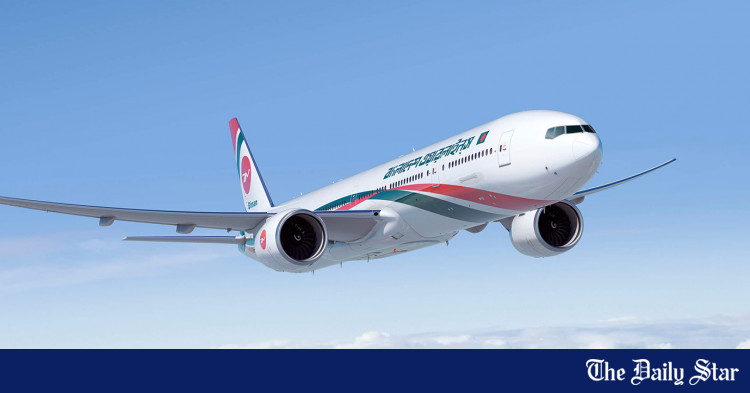
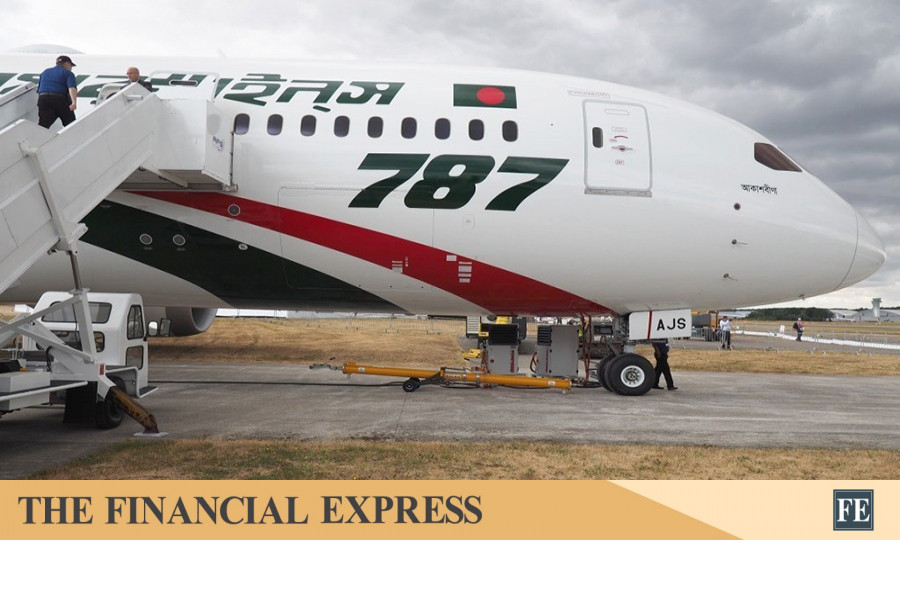
Biman's fleet is currently dominated by Boeing, with 14 of its 19 aircraft from the US manufacturer. Airbus recently submitted a fresh proposal to sell 14 aircraft to the national carrier.
Earlier in August, Bangladesh agreed to buying Boeing wide-body aircraft as part of a trade agreement with the United States aimed at reducing additional tariffs. According to media reports, citing commerce ministry officials, an order for 25 Boeing aircraft has been placed with the first aircraft expected by 2029.
Meanwhile, several experts have pointed out that when fleet expansion decisions are shaped by diplomacy rather than technical assessment, airlines often face downstream challenges: mismatched aircraft sizes, underutilised wide-bodies, expensive maintenance obligations, and gaps in route planning.
Biman's own experience over the past decade illustrates this. The airline has historically operated a mixed Boeing fleet but struggled with underutilisation of certain wide-body aircraft due to lack of long‑haul flights and pilots.
About expert criticism that a mixed fleet of Boeing and Airbus aircraft would burden Biman, Wersch said, "Even if Biman continues with Boeing, they would still need training for new aircraft. We have helped about 80 airlines transition from Boeing to Airbus. Our cockpit commonality – from A321 to A350 – saves significant cost because pilots can fly multiple types."
He added, "If Biman chooses a mixed fleet, we are ready. Many airlines operate mixed fleets, but Airbus offers major efficiency advantages due to cross-type commonality."
The Airbus executive also discussed aircraft availability before delivery. "We always do that with every customer. Our leasing team in Toulouse works closely with all major lessors who operate Airbus aircraft. We can help build a solution to source capacity before our own delivery slots."
"If Biman selects Airbus, we will push and convince lessors to provide aircraft as a bridge until our deliveries start. We are not a lessor, but we will facilitate availability depending on what lessors have," he added.
Asked how long it will take to secure leased aircraft, Wersch said, "If Biman selects Airbus aircraft, we are ready to work with lessors to secure earlier capacity and bridge the gap until our aircraft arrive."
On the A321neo and A350, he said their success contributes to longer lead times. "That is why we encourage all customers, including Biman, to decide early to secure delivery slots."
About the difference between Airbus' previous and latest proposal, he said, "We cannot go into commercial details. However, the number remains 14. We follow Biman's requirements fully."
He added, "We provide the correct economic and commercial conditions, and we believe our products bring strong value and profitability potential for Biman."
Asked whether the interim government can progress with the Airbus proposal, Wersch said, "We cannot comment on the government. Biman is our customer, and we are counting on them to progress the deal. We have seen the same information in the media about political decisions. What matters to us is that our offers are evaluated on their merits."
On whether Biman needs more aircraft beyond the 25 it intends to buy from Boeing, he said, "Regarding the market's perspective the answer is yes. The market is big enough. Bangladesh has significant traffic.
The presence of Emirates, Qatar, Kuwait, Saudia, Turkish – all operating large aircraft to Dhaka – shows the market is strong. Biman can take a larger share."
The senior Airbus official added that with the right aircraft and the new Dhaka terminal, "Biman can compete better… there is room for more than 25 aircraft. We believe in the growth potential of Bangladesh aviation. With the new terminal and the right fleet, Biman can grow significantly."
On the A350-900's cost-efficiency, fuel economy, and safety, he said, "Absolutely. It has the lowest seat-mile cost due to advanced aerodynamics, materials and engines. The cabin is award-winning and wider than the 787. Its range is also superior. The A350-1000 is the longest-range aircraft in the world."
"For Dhaka-Los Angeles or Dhaka-New York, the A350-900 is the only aircraft that can do it non-stop," he explained. "The A350-900 can fly the route non-stop with more passengers and more cargo. The 787 cannot do this today without a technical stop. Flying direct saves fuel, time and operational cost."
He also highlighted opportunities beyond commercial aircraft, including Earth observation satellites and potential additional units of the C295 transport aircraft. "Our defense products have been operating in Bangladesh for more than 10 years, and we continue supporting them," Wersch said.
He added that Airbus works with both Army Aviation and the Air Force. "The Army Aviation operates two C295s. Discussions continue, but we cannot disclose defence details. You can say that Airbus is ready to help Army Aviation increase its capabilities. Discussions on Earth observation are ongoing."
Says Wouter van Wersch, executive vice president of the plane maker
Wouter van Wersch
Airbus, Europe's largest aeronautics and space company, wants Bangladesh to evaluate Biman Bangladesh Airlines' aircraft procurement based on the merits of the offers rather than political considerations, amid reports that Bangladesh has placed an order for 25 Boeing aircraft as part of a trade agreement with the United States aimed at reducing additional tariffs.
"The decision should be based on the offers, not politics. We want Biman to take the decision based on fact, based on commercial, technical and capacity-building value," Wouter van Wersch, executive vice president (International) of Airbus, said in an interview with The Daily Star and two other aviation reporters of Bangladesh during a visit to Dhaka last week.
He was accompanied by Edward Delahaye, vice president and head of customer accounts for India and South Asia. They also met top government and Biman officials during the short trip to pursue Airbus' offer.
Their visit came shortly after ambassadors and high commissioners from France, Germany, the United Kingdom, and the European Union in Dhaka jointly pressed the government to consider Airbus aircraft for Biman at a programme in early November.
Asked whether the EU would put political pressure like Boeing, Wouter said, "There is no political pressure. Airbus is an important European company, and Bangladesh-Europe relations are strong. That is why ambassadors speak up. They support us in many countries, not only Bangladesh."
Asked whether the EU would put political pressure like Boeing, Wouter said, "There is no political pressure. Airbus is an important European company, and Bangladesh-Europe relations are strong. That is why ambassadors speak up. They support us in many countries, not only Bangladesh."
"They are advocating for a fair, transparent evaluation — the same as we are. The decision must be based on the merits of the offers."
When asked whether the EU is using its export leverage to pressure Bangladesh to buy Airbus and reduce the trade deficit, he said, "Europe wants a level playing field and a factual evaluation. We do not want the aircraft choice to be political. The decision should be based on the offers, not politics."
Biman's fleet is currently dominated by Boeing, with 14 of its 19 aircraft from the US manufacturer. Airbus recently submitted a fresh proposal to sell 14 aircraft to the national carrier.
Earlier in August, Bangladesh agreed to buying Boeing wide-body aircraft as part of a trade agreement with the United States aimed at reducing additional tariffs. According to media reports, citing commerce ministry officials, an order for 25 Boeing aircraft has been placed with the first aircraft expected by 2029.
Meanwhile, several experts have pointed out that when fleet expansion decisions are shaped by diplomacy rather than technical assessment, airlines often face downstream challenges: mismatched aircraft sizes, underutilised wide-bodies, expensive maintenance obligations, and gaps in route planning.
Biman's own experience over the past decade illustrates this. The airline has historically operated a mixed Boeing fleet but struggled with underutilisation of certain wide-body aircraft due to lack of long‑haul flights and pilots.
About expert criticism that a mixed fleet of Boeing and Airbus aircraft would burden Biman, Wersch said, "Even if Biman continues with Boeing, they would still need training for new aircraft. We have helped about 80 airlines transition from Boeing to Airbus. Our cockpit commonality – from A321 to A350 – saves significant cost because pilots can fly multiple types."
He added, "If Biman chooses a mixed fleet, we are ready. Many airlines operate mixed fleets, but Airbus offers major efficiency advantages due to cross-type commonality."
The Airbus executive also discussed aircraft availability before delivery. "We always do that with every customer. Our leasing team in Toulouse works closely with all major lessors who operate Airbus aircraft. We can help build a solution to source capacity before our own delivery slots."
"If Biman selects Airbus, we will push and convince lessors to provide aircraft as a bridge until our deliveries start. We are not a lessor, but we will facilitate availability depending on what lessors have," he added.
Asked how long it will take to secure leased aircraft, Wersch said, "If Biman selects Airbus aircraft, we are ready to work with lessors to secure earlier capacity and bridge the gap until our aircraft arrive."
On the A321neo and A350, he said their success contributes to longer lead times. "That is why we encourage all customers, including Biman, to decide early to secure delivery slots."
About the difference between Airbus' previous and latest proposal, he said, "We cannot go into commercial details. However, the number remains 14. We follow Biman's requirements fully."
He added, "We provide the correct economic and commercial conditions, and we believe our products bring strong value and profitability potential for Biman."
Asked whether the interim government can progress with the Airbus proposal, Wersch said, "We cannot comment on the government. Biman is our customer, and we are counting on them to progress the deal. We have seen the same information in the media about political decisions. What matters to us is that our offers are evaluated on their merits."
On whether Biman needs more aircraft beyond the 25 it intends to buy from Boeing, he said, "Regarding the market's perspective the answer is yes. The market is big enough. Bangladesh has significant traffic.
The presence of Emirates, Qatar, Kuwait, Saudia, Turkish – all operating large aircraft to Dhaka – shows the market is strong. Biman can take a larger share."
The senior Airbus official added that with the right aircraft and the new Dhaka terminal, "Biman can compete better… there is room for more than 25 aircraft. We believe in the growth potential of Bangladesh aviation. With the new terminal and the right fleet, Biman can grow significantly."
On the A350-900's cost-efficiency, fuel economy, and safety, he said, "Absolutely. It has the lowest seat-mile cost due to advanced aerodynamics, materials and engines. The cabin is award-winning and wider than the 787. Its range is also superior. The A350-1000 is the longest-range aircraft in the world."
"For Dhaka-Los Angeles or Dhaka-New York, the A350-900 is the only aircraft that can do it non-stop," he explained. "The A350-900 can fly the route non-stop with more passengers and more cargo. The 787 cannot do this today without a technical stop. Flying direct saves fuel, time and operational cost."
He also highlighted opportunities beyond commercial aircraft, including Earth observation satellites and potential additional units of the C295 transport aircraft. "Our defense products have been operating in Bangladesh for more than 10 years, and we continue supporting them," Wersch said.
He added that Airbus works with both Army Aviation and the Air Force. "The Army Aviation operates two C295s. Discussions continue, but we cannot disclose defence details. You can say that Airbus is ready to help Army Aviation increase its capabilities. Discussions on Earth observation are ongoing."