☕ Support Us
[🇧🇩] - Sea Ports/Air Ports/River Ports/Bridges/Mega Projects | Page 17 | PKDefense

[🇧🇩] Sea Ports/Air Ports/River Ports/Bridges/Mega Projects

Reply (Scroll)
Press space to scroll through posts
G Bangladesh Defense
[🇧🇩] Sea Ports/Air Ports/River Ports/Bridges/Mega Projects
163
6K
More threads by Saif


Ctg port deal beyond interim govt’s mandate: Tarique
It is making long-term commitments that will shape the country’s economic future, he says

1764035700040.webp

Tarique Rahman

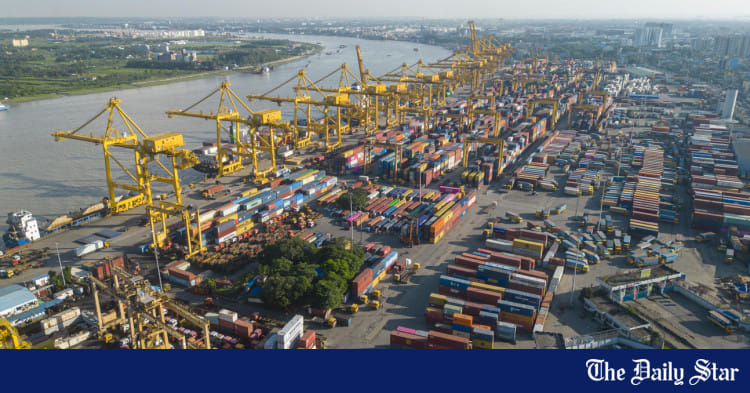
Criticising the interim government for its long-term contract to lease out a key container terminal of Chattogram port to a foreign company, BNP acting chairman Tarique Rahman today said such steps should not be made by an unelected government.

"Now look at Chattogram Port, the gateway to Bangladesh's economy. What happens there shapes the lives of millions more than any political speech ever will. Recent long-term decisions about the port are not routine," he said in a Facebook post Monday night.

Google News LinkFor all latest news, follow The Daily Star's Google News channel.
He added that these were "strategic commitments over a national asset, pushed forward by an interim government without a democratic mandate to bind future generations."

Tarique also added that moving ahead with Bangladesh's planned LDC graduation in 2026 without an elected government's mandate could increase economic pressure.

"The BNP has stated this before that moving ahead with the 2026 graduation timeline without keeping the option of deferral alive is purely a political decision, being taken by an interim government that does not carry an electoral mandate," he added.

"And yet, is making long-term commitments that will shape the country's economic future for decades," he added.

The BNP leader said the situation at the port mirrors the approach to LDC graduation, where "strategic options are shut off, public debate is dismissed as inconvenient, and valid concerns are ignored in the name of speed and inevitability."

Bangladesh remains on track to sustainable graduation from the least-developed country (LDC) category, reflecting its resilience and strong policy commitment, according to the annual country report sent by the government to the UN Committee for Development Policy (UNCDP). The report was submitted to the UN panel early this month.

Tarique, however, said workers and small factories will bear the immediate burden of any shock linked to LDC graduation.
Referring to small garment factories in Narayanganj and Gazipur, he said, "When export pressure builds, overtime disappears first. Then shifts are cut. Then jobs. These are not headlines. These are silent crises inside ordinary homes."

"They never voted on that decision. They were never asked. They were never shown the real numbers. That is why the debate around Bangladesh's LDC graduation matters so much more than official statements make it seem," he added.

He further said the public is being told that any delay is "impossible" and that even asking for a deferral would be considered a "humiliation," which the UN would not consider.

"But if we all look closer, history tells a more complex story. Countries such as Angola and Samoa have had their graduation timelines adjusted. The UN rules themselves allow flexibility when countries face economic shocks. Asking for time on country-shaping consequences is just responsible governance by an interim government," he said.

Tarique said even government documents acknowledge pressures already being felt in the banking sector, foreign exchange market, rising debt risks, and slowing exports.

"This is not an argument against graduation. Bangladesh has earned the right to move forward. But having the 'right' to graduate is not the same as being 'ready' to graduate," he said.

"I consider real national strength not as the absence of doubt in decision-making. Real national strength is to have the discipline to ask hard questions before the cost becomes irreversible," he added.

He also said the issue was not about personalities or attacking individuals but about "protecting institutions and the principle that decisions which shape decades of national life should be made by governments that are accountable to the people."

"No one is saying we should not graduate from LDC status or reform our ports. The argument is simpler, and more fundamental: the future of a nation should not be locked in by a government that the nation did not elect," he said.

Earlier, on September 16 this year, Tarique said Bangladesh's graduation from the UN's LDC category in November 2026 is a milestone, but warned that the accompanying risks and challenges to the economy and people must be addressed urgently to reap its benefits.​
 

International liner trade of Bangladesh--partnering with leading terminal operators

Khandaker R Zaman
Published :
Nov 27, 2025 00:04
Updated :
Nov 27, 2025 00:04

1764205298881.webp


The recent initiatives of the interim government of Bangladesh in the terminal operations of Chittagong port, awarding two terminals to global operators, as well as the operations of Pangaon inland terminal have raised controversies. Reading the reports and submissions at the apex court and arguments of our civil society, it appears that our people are oblivious of global trade patterns of date and happy to live in a cocoon. The economy of a nation and its progress are largely dependent on its external trade, and ports and terminals are vital to the competitiveness of its maritime trade. The world has gone through a transition from a closed economy to an open economy since the 1980s and free trade, i.e., liberalisation and privatisation has turned the world into a global village.

The fundamental criterion in privatisation or deregulation should be that there is a definitive gain in efficiency and assets are not merely given away as happened during the previous successive governments. Consideration for privatisation should have a certain set of criteria including first, the gains will be much more impressive than the current ones; second, it will make considerable technological and structural improvement; third, it will break up monopolies; and fourth, investor's capabilities because the success of an enterprise is largely dependent on the quality of management.

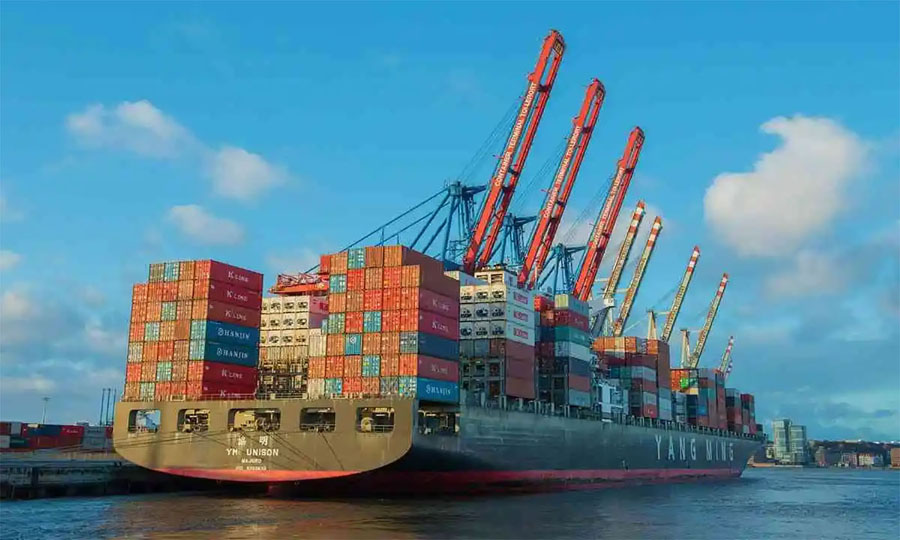
What is presently happening in the waterfronts of Bangladesh is that the interim government has invited and successfully engaged leading global port and terminal operators to invest and operate terminals of Chittagong port. In other words, the port is not given away as the reports suggest that has given rise to public misconceptions and hence the unsubstantiated controversies. Moreover, the concessions awarded to the global operators is not about surrendering the ownership but leasing out the operation of the assets so they could become as efficient and competitive as their global counterparts. One of the two terminals -- the New Mooring Container Terminal (NCT) is already built, and the UAE-based DP World is the contender to secure its operation. The other one is a green field, an empty land of Laldia char (shoal) which is awarded to AP Moeller Group of Denmark for development, which, once commissioned, is expected to be as good and efficient as any of its terminals in Europe. The inland river container terminal at Pangaon is reported to have been awarded to the logistics subsidiary of one of the leading container shipping lines, Mediterranean Shipping Company (MSC) of Switzerland. These are interesting developments, and all three operators fulfill the four criteria listed above in the privatisation of terminal operation but not of ownership.

So the question is why it is necessary for foreign investment in our ports and terminals and the answers are many, first, it will infuse substantial foreign investment, second, it will improve the efficiency and productivity making our external trade competitive, third, it will improve our knowledge and expertise in port and terminal management, fourth, it will remove corruption that currently is rampant at our ports, and fifth, it will support the growing traffic and generate revenue. Bangladesh does not have any real expertise in maritime sector including waterfront management, and currently it is in all practicality an administration, a branch of government, rather than a business or commercial entity. It is, therefore, necessary that it be positively managed rather than passively administered, and foreign operators will just do that because they will not be here to waste their resources but to earn a desired return on their investment and that can only happen if there is marked improvement in efficiency and productivity. They will be at liberty to make their own decisions as to the strategy in planning and development. It will be free from undue interference from any quarter including the mafia cartels which thrive on the inefficiency and corruption at the terminals of Chittagong port.

Questions may arise as to the terms and conditions of the agreement with foreign investors-cum-operators and whether national interests are well protected in the awards issued to foreign operators. Bangladesh, among the least developed countries (LDCs), boasts one of the fastest-growing economies and is poised to transition into a developing country. It is therefore all the more important for our external trade to be more competitive and diversified, and waterfronts play a vital role in the competitiveness of our trade. It is undeniable that Chittagong is one of the most inefficient ports in Asia, lagging significantly in capabilities and performance; therefore, one of the most effective ways to enhance capacity building is to allow foreign operators access to our waterfronts to invest, build and operate our seaports and terminals on par with the technological and commercial efficiency of those in Europe. The ideal option would have been a joint venture between the Chittagong Port Authority and the foreign operator, with both parties sharing equity in the venture. This arrangement should include terms and conditions that outline the purpose and objectives, responsibilities and liabilities, guarantees and indemnities, environmental protections, compliance with current and future laws and regulations, as well as dividend determinations for both parties involved. Furthermore, it would have been better to begin with a single project rather than hastily giving away all the opportunities, which could lead to regret later for missing out on options that might have been more beneficial for Bangladesh in future ventures.

Foreign investment at waterfronts is a common feature of world trade today, and even in the Indian subcontinent, foreign operators have been operating terminals for long. As a matter of fact, AP Moeller operates terminals at 60 ports in 33 countries, of which two are in India and one in Sri Lanka. DP World operates terminals at 91 ports in 42 countries, of which four are seaport terminals, including the most modern Nhava Sheva (NSICT), and five are ICDs in India, QICT Karachi terminal and one ICD in Pakistan. None of these countries ever raised any national security issue because port developments have nothing to do with defence or security; they merely interface the shore and the sea enhancing trade facilitation. It is therefore a fallacy to call foreign investment at our seaports a national security issue. I was very surprised to read in the news that a submission has been made to the apex court terming foreign investment in the waterfront a national security issue. I find we have a serious knowledge gap in maritime trade, including maritime law and business, that often leads to legal and administrative bottlenecks. We should concentrate on enhancing our knowledge in this area.

One of the demands of AP Moeller, as per information, has been to make the navigability of the channel to their proposed Laldia Container Terminal be maintained at an 11.5-metre permissible draught with an LoA of 250 metres. We have no data, so far, as to the length and number of berths of the proposed terminal, but presuming the terminal would have multiple berths, Bangladesh should insist on a guaranteed berth for Bangladesh flag vessels. Our national fleet presently does not have container vessels, but discussions are initiated on possibilities of developing a container fleet by procuring cellular container vessels to facilitate direct sailing from Chittagong to European ports, which, if materialised, will reduce the transit time, cut down the transportation costs and make our exports more competitive.

This idea is what I proposed in one of my earlier papers: that Bangladesh should look for the maximum size of gearless container vessels for procurement because they are less expensive than geared vessels and in the capacity range of 5000 TEU, provided the Laldia terminal offers a draft of 11.5 metres to avail the benefits of economies of scale. The rationale behind the argument is that garments dominate our exports that are very light with a payload of between 5 and 10 metric tonnes per TEU, and with 5000 containers on board, the loaded draft of the vessels should be within the permissible draught. People may also argue that imports from Europe to Bangladesh are few, and vessels are likely to incur losses on the return leg. Here comes the planning aspect of shipping and the solution is to schedule the sailings in a way that ensures vessels operate at optimum capacity, with the proposed routing being Chittagong > UK/Continent > Singapore > Chittagong. The flag vessel should be full on its outward voyage by invoking the Bangladesh Flag Vessels (Protection) Act, but to fill the space on the return voyage, it should come via Singapore. The rationale for the proposed route is that there is a regular volume of traffic between Europe and Singapore; therefore, flag vessels should participate in this traffic and then invoke flag protection to fully load on their voyage from Singapore to Chittagong in order to maximise the revenue of the national fleet.

Finally, the ultimate purpose of having efficient waterfronts is to facilitate convergence of carriers and cargo. However, this is not the primary objective. Like train stations, the objective is the journey but not the station. Similarly, the objective of ports is to facilitate maritime trade, the more efficient the port the more competitive is the trade. My focus therefore lies on establishing a national fleet to proudly fly the Bangladesh flag in our international liner trade, making our products cost-effective and competitive. This initiative, if taken and materialised, would help expand our external trade, improve the national economy, generate employment for seafarers and shore-based professionals, and partially reduce our reliance on imported shipping services by lowering the outward flow of foreign currency on account of freight charges. In other words, having a national fleet is the import substitute for shipping services.

The interim government has been relentlessly working on attracting foreign investment, and the participation of operators like AP Moeller in the development of our waterfronts, like Laldia Container Terminal, should serve our national interests and put the name of Chittagong Port among the leading ports of the world in terms of efficiency and performance.

Khandakar R Zaman, an alumnus of the Australian Maritime College, University of Tasmania, served in Australia and Bangladesh on maritime trade and transport.​
 

Foreign or local, Bangladesh cannot afford a port monopoly

1764206375959.webp

Bangladesh must adopt a clear anti-monopoly policy for port management because of its geopolitical location in the context of the Bay of Bengal. FILE PHOTO: RAJIB RAIHAN

Bangladesh's ports have always been at the centre of our economic life, shaping our ability to trade, compete, and connect with the world. As the global logistics landscape shifts and the Bay of Bengal takes on new geopolitical weight, the governance of our seaports has become a defining national issue. Foreign operators running terminals is a common practice across advanced and emerging economies. What matters is how a country selects these operators, enforces competition, and safeguards its long-term strategic interests. Foreign participation in port management is not inherently risky, but Bangladesh lacks the regulatory discipline in this sector that other countries—including those criticising us for appointing foreign operators—have long established.

Interestingly, India, whose media has been vocal about Bangladesh's recent port decisions, has itself handed numerous terminals to foreign operators—such as DP World, APM Terminals, PSA, and other international players—years ago. The difference is that India regulates them; their port policy includes explicit competition safeguards. As a result, no single operator can control multiple terminals in the same port region, and in several cases, operators are barred entirely from bidding for adjacent facilities. This ensures that no one company, domestic or foreign, can dominate a port's cargo flow or pricing power. In other words, India's criticism may be politically convenient, but the underlying principle that guides its own policy is sound.

Bangladesh, by contrast, has been moving towards a structure that risks concentration. The proposal to award the New Mooring Container Terminal (NCT)—our most advanced and profitable existing facility—to DP World, while also considering the same operator for one of the major terminals at the new Bay Terminal, effectively gives one foreign entity a dominant position in Chattogram. The concern is not mistrust of foreign firms such as DP World, but ensuring that no single operator, regardless of origin, has excessive control over our national logistics backbone. Globally, ports are among the sectors where monopolies are most closely regulated as efficiency gains can quickly be overshadowed by long-term dependency and loss of bargaining power. Bangladesh has not yet institutionalised these safeguards, which is a serious gap.

It is equally important to recognise the genuine value that foreign operators bring. When the Navy-backed team managed NCT temporarily, productivity rose noticeably within days, proving that managerial discipline, digital processes, and coordinated planning can dramatically improve efficiency without requiring new infrastructure. International operators have technology, systems, global network relationships, and operational depth to lift our performance even further. Their presence is not a threat to sovereignty; it is a chance to modernise. Yet, efficiency alone cannot justify opaque processes or rushed decisions. A strategic asset cannot be leased out with limited public disclosure or competitive bidding. An interim government, in particular, must operate with extra caution because commitments affecting decades should be built on extraordinary transparency and legitimacy.

Therefore, the main debate should be whether Bangladesh has created the right framework to invite foreign operators responsibly. A strong framework would begin with transparency. Port concessions are public-interest contracts; their financial terms, performance benchmarks, investment obligations, and dispute mechanisms should be disclosed. Opacity weakens public trust, fuels political suspicion, and diminishes the government's negotiating leverage for future concessions. While certain commercial details may be confidential, most of the agreement should be open to public scrutiny.

Equally essential is competitive tendering. Around the world, top operators prefer bidding in open, rules-based processes because it creates legitimacy and reduces the risk of political friction. Bangladesh has leaned heavily on government-to-government arrangements, which often bypass competition and create the impression—fair or not—that deals are being negotiated privately rather than secured through merit. Terminal operation is not the same as financing a mega-project; it is a commercial service best awarded through competitive processes. If we want the best global players and the best deal for the country, competition is our greatest ally.

The third critical pillar is a competition regime that prevents concentration. Bangladesh should adopt clear anti-monopoly rules, similar to those in India, Singapore, and the European Union (EU). No operator should be allowed to control more than a defined percentage of capacity within a port. Operators that run one terminal in a region should not automatically qualify for another unless a clear competitive case exists. Additionally, future concessions should be distributed across multiple partners to avoid the structural risk of having one actor, foreign or domestic, shaping the logistics flows of the entire country. This kind of diversification is not only a commercial safeguard; in the Bay of Bengal context, it is a strategic imperative.

The geopolitical reality cannot be ignored. Bangladesh sits at the intersection of major global rivalries. China, India, Japan, the US, and the Gulf states all view the Bay of Bengal as critical to their strategic and economic interests. Every port concession, therefore, has geopolitical weight. A balanced mix of partners spreads risk, enhances Bangladesh's negotiating power, and positions the country as a connector rather than a captive. If one state-linked corporation—whether from the Gulf, East Asia, or elsewhere—dominates multiple terminals, Bangladesh's strategic space narrows. Strategic diversification, rather than dependence, is what allows a small state to navigate big power competition with confidence.

Yet, the long-term goal cannot simply be diversified foreign participation. Bangladesh must also build its own capability. Every concession agreement should include mandatory commitments for training, technology transfer, and local managerial development. Ports are becoming digital, data-driven, and increasingly automated. Bangladesh must ensure that its young professionals and engineers gain the skills to eventually lead and innovate in this sector, rather than remain permanently subordinate to foreign expertise. The best global operators are accustomed to such arrangements and often welcome them; it strengthens the operation itself and builds goodwill. We should demand nothing less.

All these concerns—competition, transparency, geopolitics, and capability—have been voiced by experts as well as by young political and civic leaders. Their central message is not opposition to reform, but a call for rules, fairness, and long-term thinking. What they fear is the possibility that modernisation without safeguards will leave Bangladesh more vulnerable, not more empowered.

Bangladesh has an opportunity now to rethink its port governance in a way that aligns efficiency with sovereignty, global expertise with national interest, and foreign participation with domestic capability. If we adopt strong competition rules, enforce transparent bidding, and secure a balanced set of partners, our geography can become a source of enduring strength. Without these, we risk creating dependencies that future generations will have to undo at a great cost. We deserve modernisation that strengthens the country, not shortcuts that weaken its negotiating position. If we are thoughtful, disciplined, and transparent, our ports will not only become more efficient; they will become pillars of national power, economic resilience, and strategic autonomy in a rapidly changing region.

Ahamedul Karim Chowdhury is adjunct faculty at Bangladesh Maritime University and former head of the Kamalapur Inland Container Depot (ICD) and the Pangaon Inland Container Terminal under Chittagong Port Authority.​
 

Why we should prioritise Matarbari over Bay Terminal development

1764725561699.webp

Accelerating the completion of the Bay Terminal prematurely could undermine the Matarbari Deep Sea Port. FILE PHOTO: RAJIB RAIHAN

Bangladesh's port congestion has long shaped the popular perception that our maritime gateways are straining under unmanageable pressure. Images of vessels lining up at the outer anchorage, overflowing container yards and choking access roads have fuelled a narrative that the country is running out of port capacity. This conclusion, though emotionally compelling, is strategically misleading. Congestion does not necessarily signal failure; rather, it often signifies growth. It reflects an economy whose trade demands are expanding faster than its legacy infrastructure—exactly the pattern observed in Vietnam, India, Malaysia, and even China during their busiest years of industrial acceleration.

In other words, Bangladesh is emerging as a more active node in global commerce, which gives rise to a far more consequential question: how do we interpret this growth pressure, and which strategic choices will determine whether Bangladesh becomes a competitive logistics hub or remains tethered to outdated systems?

The answer hinges on the sequencing of our port investments. Bangladesh today stands at a pivotal juncture in its maritime and economic landscape. Global supply chains are undergoing dramatic realignment as multinational firms diversify production networks and shipping lines restructure their routes in response to geopolitical, environmental, and economic pressures. In this shifting environment, the Bay of Bengal is gaining unprecedented prominence. Carriers are consolidating port calls, preferring fewer, deeper, and more efficient gateways rather than fragmented networks reliant on feeder vessels. For Bangladesh, which aspires to move beyond its historical dependence on transshipment via Colombo, Singapore, or Port Klang, the moment is both urgent and potentially transformative. But it also requires clarity of purpose and discipline in prioritisation.

At the centre of this strategic crossroads sits the Matarbari Deep Sea Port. It is our only true deep-sea facility capable of receiving mainline vessels directly. The difference between a deep-sea port and a feeder port is not merely a matter of draft depth or quay length; it reflects a fundamental shift in economic identity. A deep-sea port can attract the world's largest carriers, reduce freight costs, shorten transit times, stimulate foreign investment, and anchor Bangladesh more firmly in regional and global value chains. Unlike Chattogram Port, which has served the country well but remains constrained by draft limitations and tidal windows, Matarbari offers a path toward a different future, one in which Bangladesh is not merely an endpoint of feeder routes but a strategic node in global shipping networks.

Recent updates underscore this potential. Construction progress at Matarbari has accelerated, with significant advancements in channel dredging, breakwater structures, and berth readiness. These milestones bring Phase-1 closer to operational reality and strengthen the case for Matarbari as the country's next-generation maritime gateway. Complementing this momentum is a major development involving Japan's JICA, which has advanced its proposal for extensive upgrades to the Chattogram-Cox's Bazar-Matarbari highway corridor.

A port's strength is defined not only by what arrives at its berths but by how efficiently cargo moves inland. Without robust and reliable connectivity, even the most advanced port becomes a stranded asset. Matarbari's viability depends directly on its road and rail links to the country's industrial and commercial heartlands, particularly Dhaka.

Yet, it is precisely here that Bangladesh faces its most significant bottleneck. Road capacity along the Matarbari-Karnaphuli Tunnel corridor remains limited, rail integration will require substantial engineering work and time, and Dhaka-bound routes remain chronically saturated. These constraints do not diminish Matarbari's potential; they merely emphasise the necessity of completing the inland connectivity before expecting deep-sea benefits to materialise. That is why the sequencing of national port projects is a matter of strategic importance rather than administrative preference.

In contrast to Matarbari's transformative potential, the Bay Terminal at Chattogram represents a different, though entirely valid, kind of project. It promises to expand the existing port's capacity, reduce dependence on lighterage operations, and improve operational efficiency. It is fundamentally an expansion of a legacy system—not the creation of a new strategic frontier. Over the past weeks, however, Bay Terminal has gained renewed political momentum, with discussions, meetings, and advocacy intensifying. While no one disputes the usefulness of Bay Terminal in the long run, accelerating it prematurely could undermine Matarbari at the very moment when Bangladesh needs to direct its full institutional, financial, and diplomatic energy toward the deep-sea gateway.

If Bay Terminal progresses too quickly, carriers could be drawn back into the traditional Chattogram ecosystem, cargo volumes could shift toward the familiar rather than the future, and investment attention could be diverted away from the inland infrastructure that Matarbari urgently requires. Bangladesh would risk reinforcing its dependence on feeder systems just as global shipping moves in the opposite direction.

This is why the argument is not about choosing between Matarbari and Bay Terminal. It is about sequencing—about recognising which project unlocks a new era of competitiveness and which project supports that transformation as a second step. Prioritising Matarbari does not diminish the importance of Bay Terminal; it simply ensures that Bangladesh does not dilute its deep-sea ambition at the most critical stage of its development.

An additional strategic layer further strengthens the case for Matarbari. Global shipping lines—including Mediterranean Shipping Company, Maersk, the French CMA CGM, and new cooperative ventures such as the Gemini Cooperation—are increasingly seeking integrated port-to-inland solutions rather than standalone terminals. They prefer ecosystems that combine deep-sea capabilities with predictable, multimodal inland logistics. Bangladesh is uniquely positioned to offer such a system by pairing Matarbari with the Pangaon Inland Container Terminal. Pangaon already provides direct access to Dhaka through river routes and is underutilised relative to its potential. By presenting Matarbari as the deep-sea gateway and Pangaon as the stable inland anchor, Bangladesh can offer carriers a seamless deep-sea-to-Dhaka corridor while longer-term road and rail upgrades are underway. This combination strengthens Bangladesh's ability to attract a major terminal operator or carrier partnership at a scale that could reshape the country's logistics landscape.

Meanwhile, congestion in the existing port system—though real—can be mitigated without rushing into large-scale infrastructure commitments that risk misalignment. Recent customs modernisation initiatives, including digital queueing, automated clearance processes, and improved container yard management, have already begun reducing inefficiencies. Upgrading off-dock inland container depot (ICD) capacity, streamlining inspections, and adopting predictive berth allocation systems can further improve flow without diverting national focus away from Matarbari. These reforms cost only a fraction of what new terminals require and provide immediate relief while the deep-sea strategy matures.

Bangladesh's maritime moment has arrived, shaped by global realignments that may not recur for decades. Seizing this moment requires disciplined prioritisation. The country must first invest where the return is highest: in building deep-sea capability, completing Matarbari's inland connectivity, and leveraging the Matarbari-Pangaon corridor to attract major international partners. Only after these foundations are laid should Bay Terminal move forward as a complementary and supportive expansion.

The future of Bangladesh's maritime advancement depends not on how quickly we build, but on how wisely we sequence what we build. Matarbari is the gateway to a new era in global trade. Pangaon is its inland anchor. Together, they offer Bangladesh an opportunity to move beyond its feeder-bound past and into a position of regional prominence. So, focus on the deep-sea future first, and build the rest in the right order.

Ahamedul Karim Chowdhury is adjunct faculty at Bangladesh Maritime University and former head of the Kamalapur Inland Container Depot (ICD) and the Pangaon Inland Container Terminal under Chittagong Port Authority.​
 

Members Online

Latest Posts

Latest Posts