Donate ☕
201 Military Defense Forums
[🇧🇩] - Bangladesh Police and Rapid Action Battalion | Page 29 | PKDefense
Home Login Forums Wars Watch Videos
Serious discussion on defense, geopolitics, and global security.

[🇧🇩] Bangladesh Police and Rapid Action Battalion

Reply (Scroll)
Press space to scroll through posts
G Bangladesh Defense
[🇧🇩] Bangladesh Police and Rapid Action Battalion
142
5K
More threads by Saif

'US for lifting Rab sanctions'
Salman F Rahman says after meeting Donald Lu

1715727483431.webp

US Assistant Secretary Donald Lu. Photo: Reuters

US Assistant Secretary of State for South and Central Asia Donald Lu yesterday told the government they will support the withdrawal of sanctions against Rapid Action Battalion, Prime Minister's Private Industry and Investment Adviser Salman F Rahman said.

The US also asked Bangladesh to ensure timely payments to American companies conducting business here.

Rahman was briefing journalists after a meeting with Donald Lu at his Gulshan residence last night.

However, neither Lu nor the US embassy in Dhaka spoke publicly about the meeting.

Lu has been in the region since May 10, visiting India and Sri Lanka, and arrived in Dhaka yesterday morning.

Rahman claimed the US side told him that the White House is also for the withdrawal of sanctions, but they have a procedure that needs to be followed. Sanctions are within the jurisdiction of the US Department of Justice.

The US last year announced a visa policy for Bangladesh, saying those undermining democratic elections would be denied visas. Earlier in 2021, it imposed sanctions on Rab and some of its officials.

Rahman also said that US wants to rebuild trust in its relationship with Bangladesh.

"We both agreed that our relationship should be better than what it was prior to the elections. There might have been misunderstandings earlier."

Rahman said there were some reservations in the run-up to the elections, and even afterwards, but when US President Joe Biden wrote to the PM, it was understood that they have accepted the elections.

Biden wrote to the PM in February iterating their willingness to help Bangladesh achieve its economic goals.

Rahman said they did not talk about visa restrictions last night but "there are no visa restrictions now".

Concerning delayed payments to American companies, he quoted Lu as saying that the US understands there is considerable pressure on Bangladesh's central reserves.

"We said we are hopeful that our export and remittance will increase since we have devalued the taka recently. We pointed out that although payments are being delayed, we haven't halted them," he added.

Bangladesh also sought funding under the US International Development Finance Corporation (DFC).

"They said Bangladesh needs to reform the labour sector as per the suggestions of the International Labour Organisation. We said we have amended the labour law and are continuing reforms. We hope to come to an understanding with ILO. Once done, we can get get DFC funding."

Bangladesh requested the US to put pressure on Myanmar for repatriation, said Rahman, adding that the US agreed to do so while also pointing out that since the situation in Myanmar is not safe, repatriation will take time.

The two also spoke about regional power connectivity between Bangladesh, Nepal and Bhutan, and the crisis in Gaza.

Dhaka's priority will be trade and economy, while Washington's will be security, especially advancing partnership under its Indo-Pacific Strategy, as Donald Lu holds meetings with the government high-ups today.

According to diplomatic sources and analysts, Washington is focused on strengthening its relations with the Indo-Pacific nations keeping China in mind, though it says it does not target any specific country.

Lu met with civil society members to discusse human rights, labour rights, environment, gender, and media freedom.

Today, he will hold a meeting with Foreign Secretary Masud Bin Momen and call on Foreign Minister Hasan Mahmud and Environment, Forest, and Climate Change Minister Saber Hossain Chowdhury.

"His trip will strengthen bilateral cooperation with each country and demonstrate US support for a free, open, and prosperous Indo-Pacific region," according to a statement issued by the US State Department ahead of Lu's visit to India, Sri Lanka, and Bangladesh.

At a recent briefing in Dhaka, Maxwell Martin, political officer at the US embassy in Dhaka, said Washington wants to see Bangladesh as a net security provider, meaning that the country can support regional countries in terms of security as the country has the capacity.

"We would hope that Bangladesh sees the Indo-Pacific Strategy as an opportunity to cooperate with us and our partners to help address some of Bangladesh's security concerns," he said.

Washington's push for democracy, human rights, and good governance is also part of the US-led strategy, Martin said, referring to last year's US public statements on free and fair elections.

Nilanthi Samaranayake, a visiting expert at the US Institute of Peace and adjunct fellow at the East-West Center in Washington, in an article on April 30 said while the US raised the temperature on Bangladesh regarding the conduct of its election process before January, it appears to now be focused on the way forward in the relationship.

"As a result, a discussion about Dhaka signing the ACSA and the GSOMIA is worth reengaging on, ahead of annual partner dialogues between the two countries," she wrote.

Prof Obaidul Haque, of Dhaka University's international relations department, said Lu may press for signing the two agreements -- Acquisition and Cross-Servicing Agreement on logistics and the General Security of Military Information Agreement -- to advance security and defense relationship.

"I don't think that Dhaka will sign the agreements now. It has a certain level of reluctance about it," he told The Daily Star yesterday.

In an email interview, Samaranayake said Dhaka is likely taking its time to study the specifics of the agreements and understand its options.

"The US agreements are bilateral and do not prevent Bangladesh from having partnerships with other countries such as China. Bangladesh's foreign policy approach is seen as open to multiple partnerships."

Besides, as a climate vulnerable country, Bangladesh needs huge funding from the developed countries. Bangladesh's annual funding requirement is of $9 billion for climate change initiatives, but the government allocates only $3 billion, resulting in a shortfall of $6 billion.

"We need funding as well as technologies. We would seek greater US contribution towards this. Also, the US has been the largest donor for Rohingyas, and we would seek their support for them," said a government official.

Bangladesh would also seek investments from the US, the single largest export market for Bangladesh.

Former ambassador M Humayun Kabir said Washington has great economic interests in Bangladesh, including in the oil and gas sectors.

US oil-gas company ExxonMobil has expressed interest in exploring oil and gas reserves in Bangladesh's offshore blocks.

"We need to decide everything from the view of our national interest," said Humayun.​
 
Analyze

Analyze Post

Add your ideas here:
Highlight Cite Fact Check Respond
Commission for disbanding RAB
Reforms in DGFI, NSI suggested


Staff Correspondent 06 January, 2026, 00:23

1767663395555.webp

The Commission of Inquiry on Enforced Disappearances holds a press conference at the commission’s office at Gulshan in Dhaka on Monday. | Star Mail photo

The Commission of Inquiry on Enforced Disappearances on Monday said that it had recommended disbanding the Rapid Action Battalion and reforming the intelligence agencies in its final report.

The commission chairperson, Justice Moyeenul Islam Chowdhury, made the remarks at a press conference held at the commission’s office in the capital’s Gulshan area.


He said that intelligence agencies, including the Directorate General of Forces Intelligence and the National Security Intelligence, required massive reforms.

‘We suggested reforms in the DGFI and the NSI so that they are not engaged in tasks such as bank and media house grabbing or interference in politics. This requires strong political will. We have submitted our recommendations to the interim government, which is non-political,’ Justice Moyeenul said while responding to a question about disbanding the DGFI like the RAB.

The country needs DGFI, but they need reforms, he said.

He said that the DGFI was involved in the Islami Bank grabbing for S Alam group during the Sheikh Hasina regime, which the commission did not want to occur again.

He said that the forces destroyed evidence and the commission asked the authorities not to destroy any evidence further.

‘Destruction of evidence is also a criminal offense,’ he said.

He said that they also recommended reconstituting the National Human Rights Commission.

‘If any human rights violation occurs, there will be no agency except the courts. The courts have 45,00,000 pending cases with only 2,000 judicial officers or judges,’ he said.

He said that Hummam Quader Chowdhury, son of executed Bangladesh Nationalist Party leader Salauddin Quader Chowdhury, was picked up by the Detective Branch of the police and was handed over to the DGFI. Political party merchandise


‘We have visited 40 detention centres, including 22 or 23 run by the RAB. These centres have a lot of cells,’ said a commission member, Sazzad Hossain.

He said that they had also found such centres in DGFI, NSI, Dhaka Metropolitan Police’s Detective Branch, and the Counter Terrorism and Transnational Crime unit.

He also said that the RAB destroyed most of the evidence.

Addressing the press conference, the commission chair Justice Moyeenul said that the Bangladesh Army was not involved in enforced disappearances as a force, but many officers on deputation in intelligence agencies like DGFI and NSI from the army, the Bangladesh Navy and the Bangladesh Air Force were involved in such acts.

‘Army high-ups knew about the matter, but they had nothing to do as DGFI was under the defense ministry, overseen by the prime minister, and NSI under the prime minister’s office,’ he said.

Referring to two interim reports, the commission chair said that they had recommended legal action against responsible persons and organisations.

He said that they also recommended organisational reforms and to enact the Enforced Disappearance Prevention and Redress Ordinance, 2025, and the National Human Rights Commission Ordinance 2025 for stopping the recurrence of enforced disappearances.

He said that they also recommended disbanding the RAB, removing the armed forces from maintaining internal law and order, scrapping or fundamentally amending the Anti-Terrorism Act, scrapping clause 13 of the Armed Police Battalion Ordinance 2003, adopting a victim-centric justice system, and ensuring compensation and rehabilitation for victims.

He said that they also suggested transforming the detention centres, commonly known as ‘Aynaghar’, into museums.

Commission member Nur Khan Liton said that political parties should come forward to stand against enforced disappearance and extrajudicial crimes.

The commission in its final report submitted to chief adviser Muhammad Yunus on Sunday, revealed that it had found evidence that the ousted prime minister Sheikh Hasina, her military adviser Tarique Ahmed Siddique, and former home minister Asaduzzaman Khan Kamal were directly involved in high-profile enforced disappearances.

The commission was formed by the interim government on August 27, 2024, to enquire into cases of enforced disappearances that occurred during the tenure of the Sheikh Hasina-led authoritarian Awami League regime that was ousted from power on August 5, 2024 amid a mass uprising.


‘A total of 1,913 complaints were filed with the commission. After intensive scrutiny, 231 were found to be duplicates. In many instances, the same case had been sent through multiple channels, for example, by email, courier, and in-person submission, or both an organisation and the affected individual had submitted separate complaints about the same incident, and left 1,682 unique complaints,’ the final report said.

After removing 231 duplicate files and 113 files of non-qualifying cases, the report said that they were left with 1,569 complaints involving potential enforced disappearance, which was about 82 per cent of all complaints.

‘Within these cases, 251 victims never returned and are presumed dead, while a further 36 bodies were recovered after periods of enforced disappearance, often following so-called ‘crossfire’ incidents or discovered in rivers with gunshot wounds,’ the report said.

It said that 287 deaths were plausibly associated with enforced disappearance.

Of the 1,569 potential enforced disappearance complaints, a total of 1,282 people reappeared after varying periods in illegal custody, the report said.

According to the report, the commission found political identity of 946 reappeared victims, including 476 of Jamaat, 236 of Islami Chhatra Shibir, 142 of the BNP, 46 of Jatiyatabadi Chhatra Dal, and 17 of Jatiyatabadi Juba Dal.

Of the 253 missing victims, BNP and its affiliates together constitute roughly 68 per cent and Jamaat and Shibir account for roughly 22 per cent.​
 
Analyze

Analyze Post

Add your ideas here:
Highlight Cite Fact Check Respond

RAB official killed in attack during operation in Jungle Salimpur, Chattogram

Staff Correspondent Dhaka
Published: 19 Jan 2026, 21: 58

1768870202591.webp


This road between the hills leads to the jungles of Salimpur and Alinagar Jewel Shill

A Rapid Action Battalion (RAB) official was killed in an attack by miscreants while conducting an arms recovery operation in Jungle Salimpur, Sitakunda, Chattogram.

He has been identified as Abdul Motaleb. He served as the deputy assistant director of RAB–7. Several others were injured in the incident. This occurred on Monday evening.

When contacted, Ahsan Habib Polash, deputy inspector general (DIG) of Chattogram Range, told Prothom Alo at 8:00 pm that a RAB officer of the DAD rank was killed during the operation in Jungle Salimpur, Sitakunda.

In a statement sent to the media at 8:30 pm, ARM Mozaffar Hossain, assistant director (media) of RAB–7, stated that RAB members were attacked by terrorists while conducting an operation in Jungle Salimpur.

Four were seriously injured in the attack, including one RAB member who later died while undergoing treatment. The remaining three are being treated at Chittagong Medical College Hospital.

Police and RAB sources said that when RAB conducted an arms recovery operation in Jungle Salimpur, miscreants present there launched a sudden attack on them. At one point, several RAB members were taken hostage, and firing was carried out openly.

Jungle Salimpur is located two kilometres west of Bayezid Bostami in Chattogram city, opposite Asian Women University, on the northern side of Link Road, covering an area of 3,100 acres.

Although it is in Sitakunda, it is largely inside the city. To the east lies Hathazari upazila and to the south, Bayezid police station.

Due to its remote hilly terrain, the area has become a safe haven for terrorists. Since 5 August last year, following changes in national politics, the area has witnessed clashes and killings over control. Recently, gunfights erupted between two factions of terrorists over territory, resulting in one death. The next day, two journalists were attacked while preparing a report there.

Over the past four decades, thousands of illegal settlements have been established by cutting hills. Hill cutting and plot trading continue, and to maintain control over this trade, terrorist groups have been formed in the area. The area remains under constant armed guard by these groups.

Residents require ID cards to enter; outsiders cannot enter. Even police and district administration personnel have been attacked multiple times while trying to enter.

Construction of a multi storied building underway on a piece of land which has been prepared by cutting a hill in Askardighir Par area in Chattogram. The hilly land was misclassified as nal (farmland). The photo was taken on 21 April 2025

On 14 September 2023, while returning from clearing illegal settlements in Chhinnamul Boroitola 2, at least 20 officials, including the then Executive Magistrate Md Umar Faruk and Sitakunda police officer-in-charge (OC) Tofail Ahmed, were injured in an attack. Residents of the area also threw crude bombs and bricks at administration officials, and police fired shots to control the situation.

Earlier, on 4 February 2022, gunfire exchanges occurred between RAB and terrorists in Jungle Salimpur. On 2 August 2022, the district administration faced obstruction while returning from an illegal housing demolition operation. On 8 September 2022, terrorists in Alinagar attacked police while administration officials tried to remove illegal settlements there.

It is notable that a report titled “Armed gang control area in Chattogram, attack police, administration on entry” was published in Prothom Alo on 21 October last year.​
 
Analyze

Analyze Post

Add your ideas here:
Highlight Cite Fact Check Respond

About 150,000 police receiving election training ahead of national polls: IGP

UNB
Published :
Jan 20, 2026 22:01
Updated :
Jan 20, 2026 22:01

1768955565234.webp


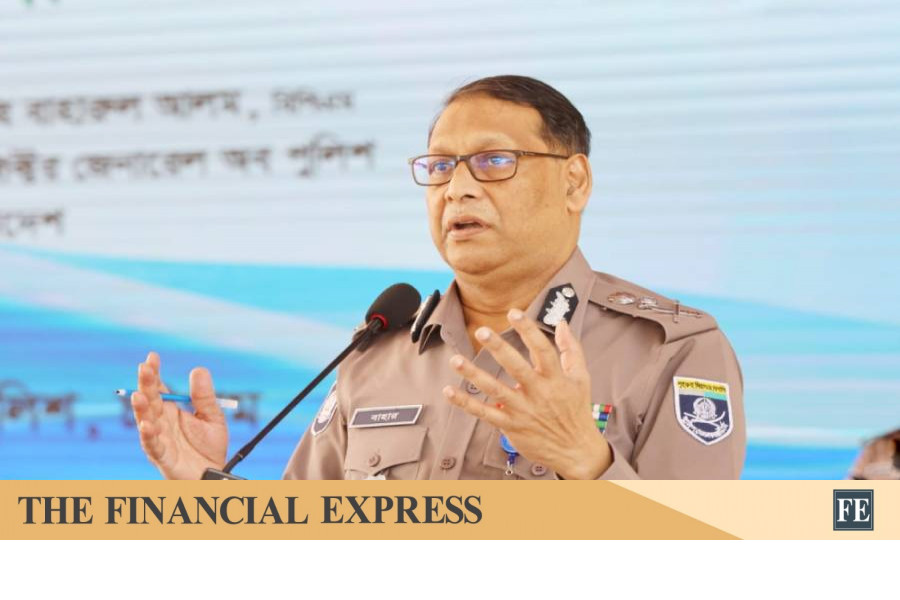
Inspector General of Police (IGP) Baharul Alam on Tuesday said that around 150,000 police personnel are being provided with election-related training for the first time ahead of the upcoming national parliamentary elections.

He said the training programme will be completed within this month.

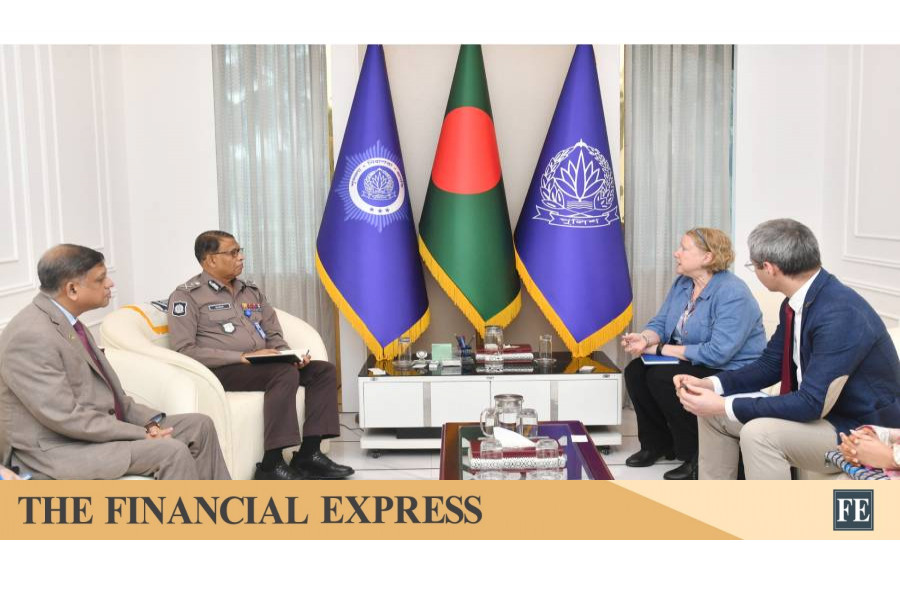
The IGP made the remarks during a courtesy call paid by a three-member delegation of UNESCO at the Police Headquarters. The delegation included UNESCO Bangladesh Office Country Director Dr Susan Vize and Team Leader of the Rule of Law and Freedom of Expression Section at UNESCO Headquarters Mehdi Benchelah.

The meeting was held in a cordial and friendly atmosphere, during which issues such as strengthening constructive and professional relations between police and journalists, rule of law, freedom of expression, and UNESCO’s role in preventing misinformation and disinformation were discussed.

The UNESCO delegation reiterated the organisation’s global mandate to promote freedom of expression, safety of journalists and access to information.

They also proposed organising training programmes on fact-checking for journalists and relevant stakeholders to enhance mutual trust and professionalism between police and the media.

Highlighting the importance of fact-checking in preventing misinformation, disinformation and rumours, the UNESCO delegation members said such training would help safeguard public interest and support crisis management.

Welcoming the delegation, the IGP briefed them on the country’s prevailing law and order situation, police preparations for the upcoming national parliamentary elections and other related issues.

He also outlined the overall measures taken to maintain peace and order during the election period.

Additional Inspector General of Police (Special Branch) Md Golam Rasul and other concerned police officials were present at the meeting.​
 
Analyze

Analyze Post

Add your ideas here:
Highlight Cite Fact Check Respond

Members Online

⤵︎

Latest Posts

Latest Posts