Bangladesh Defense
Saif
Senior Member
- Jan 24, 2024
- 21,077
- 9,688
- Nation

- Residence
- Axis Group

newagebd.net/post/opinion/284354/limping-railway-fails-passengers
Limping railway fails passengers

Bangladesh Sangbad Sangstha
THE Bangladesh Railway remains one of the most paradoxical public institutions. Every year, more than Tk 4,000 crore is poured into its operations, with an intent to improve the quality of passenger services. Much of this money is consumed by cleanliness drives, onboard services, the maintenance of engines and coaches and the procurement of essential spare parts. Yet, the experience of passengers suggests that the institution is drifting in the opposite direction. What should have been a slow but steady march towards reliability and comfort has instead become a landscape of familiar failures.
The railway’s financial data reveal the first layer of this exhaustion. For the first time since the Covid outbreak, revenue fell into the negative territory in the 2024–25 financial year. Earnings settled at Tk 1,845 crore, a 4.15 per cent decline from that of the previous year. While the current financial year has showed a small rebound with Tk 532 crore earned in its first quarter, the trajectory is hardly encouraging. The projected loss for 2025–26 is Tk 1,574 crore and, by the admission of officials, the figure is expected to grow as the year progresses. Even if revenue rises marginally, it is far from enough to narrow the widening gap between income and expenditure.
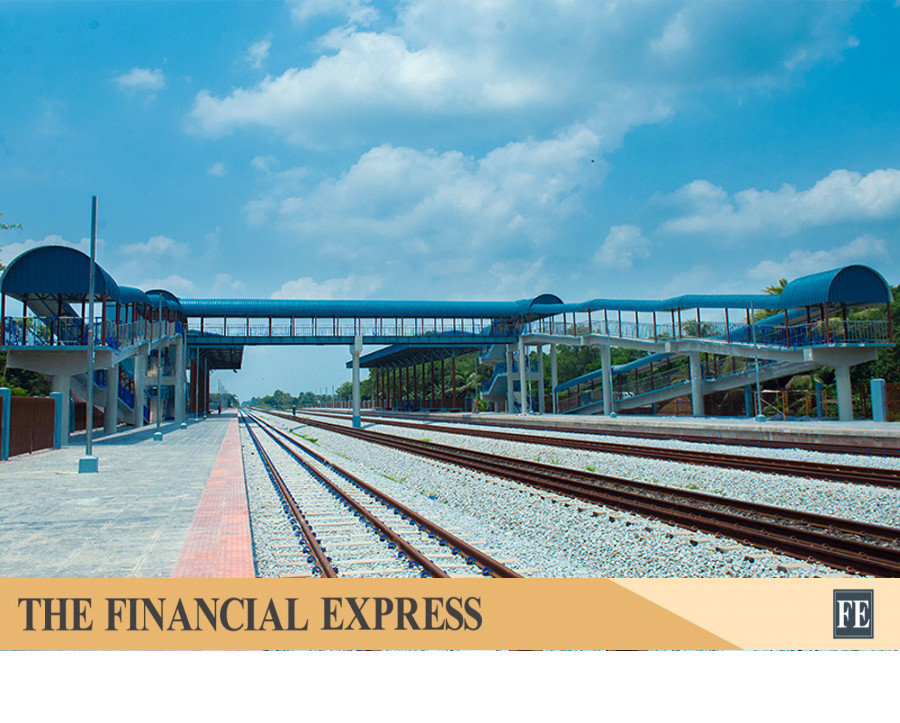
The rationale behind heavy operational spending has always been that improved services would eventually yield an increased number of passengers, higher revenue and better cost recovery. But the puzzle remains unresolved. Investment has expanded substantially over the past decade, including major line upgrades, new stations, new bridges and the procurement of rolling stock. But the quality of services, in the perception of passengers, remains where it was years ago, if not worse in some areas.
One of the deepest fault lines runs through the ticketing system. For years, the railway has failed to establish a transparent and reliable ticket sales mechanism. On high-demand routes, the bulk of tickets seem to dissipate before ordinary passengers even reach the counters or online portals. The persistence of syndicates signals a structural failure that goes far beyond petty corruption. When a public service cannot guarantee equitable access to something as basic as a ticket, it is already sliding into irrelevance.
The disappointment continues inside the train. The Bangladesh Railway allows standing tickets amounting to 25 per cent of intercity seats. That figure alone poses questions about safety and comfort. On top of this sanctioned crowding, the presence of unticketed passengers transforms compartments into congested aisles of discomfort. Ordinary passengers find themselves squeezed between standing commuters, crying children, luggage stacked haphazardly and the constant anxiety of theft.
The condition of washrooms has been a longstanding grievance. Even new and recently refurbished coaches fall quickly into deterioration, suggesting that both user behaviour and institutional maintenance culture are failing simultaneously. Toilets remain unclean, broken fixtures stay unattended for months, floors accumulate layers of dust and dirt, and water often remains unavailable. For a service that aspires to compete with road transport, the daily realities make the railway experience unattractive.
The problem intensifies when one examines the backbone of the system: its stations. Kamalapur, the country’s busiest railway hub, stands as a symbol of both promise and decay. Its size, traffic volume and strategic importance should have placed it at the forefront of service modernisation. Instead, passengers navigate the station with a sense of compromise. Restrooms are few and even fewer are usable. Fans installed for public comfort often remain switched off. Free drinking water is available, but hygiene concerns deter most passengers. Public spaces frequently serve as gathering spots for loiterers with questionable intentions and reports of theft inside the station area are far from rare.
If this is the state of the premier station, conditions in stations in district s would show the depth of the problem. Many lack even minimal amenities expected of a public transport hub. Passengers wait outdoors without shelter, lighting is inadequate, toilets are non-existent or unusable and platforms often resemble open dumps rather than public utilities.
The most alarming trend, however, concerns safety. In recent months, incidents of derailments and the detachment of bogies or engines during travel have created an atmosphere of constant unease. These are not isolated mechanical lapses but symptoms of deeper institutional erosion: rail joints in fragile condition, sleepers that have deteriorated and inconsistent maintenance cycles pointing to systemic neglect rather than unfortunate accidents. Each derailment or bogie separation is not simply a technical failure but a stark reminder of the risks embedded in the journey itself.
A significant portion of these problems stems from the railway’s maintenance culture. The institution’s factories, workshops, and maintenance yards operate with outdated technology and inadequate quality control. When maintenance becomes a ritual rather than a responsibility, accidents become inevitable. Even among officials, there is acknowledgment that maintenance is not functioning at the standard required for a national transport network.
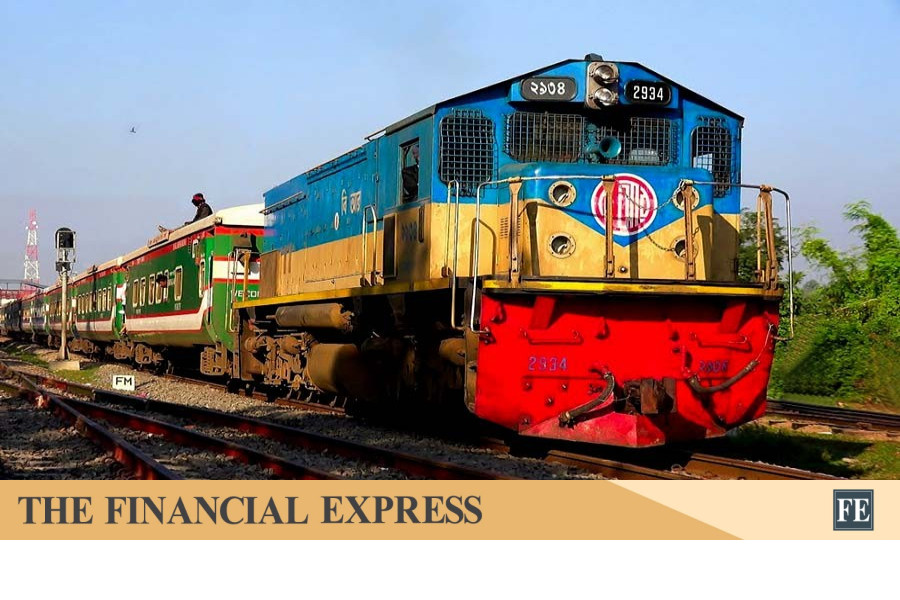
The issue is compounded by a shortage of engines and coaches. The system is running with rolling stock that is insufficient for current passenger demand. Even if orders are placed today, delivery takes years. The railway is stuck between its swelling demand and shrinking capacity and the result is a perpetual shortage that limits service expansion and compromises quality.
Yet, the operational ratio is used as a symbol of improvement. The ratio, previously around 2.4 meaning the railway spent Tk 2.40 for every Tk 1 earned, has reportedly been reduced to around 1.8. While this appears positive at the first glance, it reveals another uncomfortable truth: service quality is not improving in tandem with cost reduction. A lower operational ratio achieved without meaningful improvement in passenger experience indicates that the belt-tightening is happening where it should not, possibly in areas like maintenance, cleanliness and staff deployment.
The inability to meet revenue targets further destabilises the railway’s financial position. For the current fiscal year, an income target of Tk 3,173 crore was set. It has already been acknowledged that this will not be achieved, with revised expectations lowering the target to Tk 2,655 crore. Lower revenue amid rising costs makes the future trajectory of the railway even more uncertain.
All this points to a deeper structural failure. At its core, the Bangladesh Railway suffers from fragmented governance, weak internal accountability and a declining institutional ethos. Investment alone cannot repair these fractures. A modern train system is not merely an assortment of engines, coaches and rail tracks. It is a culture of discipline, cleanliness, punctuality, safety and public orientation. These are the qualities that define successful railway systems across the world.Travel guide book
The gaps are visible at every level: from the station floors to the coach interiors, from the ticket counters to the maintenance yards, from the management rooms to the rail lines themselves. The institution’s problems have become chronic because the corrective mechanisms needed to address them have never been allowed to mature.
The interim government assumed office with significant public expectations. Citizens believed that even if large-scale structural changes were unrealistic within a short time, at least the visible mismanagement, inefficiency and everyday suffering of passengers would be addressed. Instead, the system has continued operating in its familiar state of inertia.
If the railway is to be revitalised, the transformation cannot be cosmetic. It must begin with maintenance reforms, accountability within workshops, transparent ticketing, proper staff monitoring and a disciplined service culture. Clean coaches and functioning toilets should not be luxuries. Safe rail joints and reliable bogies should not depend on luck. Efficient stations should not be exceptions.
The Bangladesh Railway stands at a crossroads, pulled between its importance and dysfunction. Without a decisive cultural shift inside the institution, the country will continue pouring money into a system that delivers little more than frustration. A public railway should be a symbol of national progress, not a daily reminder of structural decay.
HM Nazmul Alam, an academic, journalist and political analyst, teaches at International University of Business Agriculture and Technology.
Bangladesh Sangbad Sangstha
THE Bangladesh Railway remains one of the most paradoxical public institutions. Every year, more than Tk 4,000 crore is poured into its operations, with an intent to improve the quality of passenger services. Much of this money is consumed by cleanliness drives, onboard services, the maintenance of engines and coaches and the procurement of essential spare parts. Yet, the experience of passengers suggests that the institution is drifting in the opposite direction. What should have been a slow but steady march towards reliability and comfort has instead become a landscape of familiar failures.
The railway’s financial data reveal the first layer of this exhaustion. For the first time since the Covid outbreak, revenue fell into the negative territory in the 2024–25 financial year. Earnings settled at Tk 1,845 crore, a 4.15 per cent decline from that of the previous year. While the current financial year has showed a small rebound with Tk 532 crore earned in its first quarter, the trajectory is hardly encouraging. The projected loss for 2025–26 is Tk 1,574 crore and, by the admission of officials, the figure is expected to grow as the year progresses. Even if revenue rises marginally, it is far from enough to narrow the widening gap between income and expenditure.
The rationale behind heavy operational spending has always been that improved services would eventually yield an increased number of passengers, higher revenue and better cost recovery. But the puzzle remains unresolved. Investment has expanded substantially over the past decade, including major line upgrades, new stations, new bridges and the procurement of rolling stock. But the quality of services, in the perception of passengers, remains where it was years ago, if not worse in some areas.
One of the deepest fault lines runs through the ticketing system. For years, the railway has failed to establish a transparent and reliable ticket sales mechanism. On high-demand routes, the bulk of tickets seem to dissipate before ordinary passengers even reach the counters or online portals. The persistence of syndicates signals a structural failure that goes far beyond petty corruption. When a public service cannot guarantee equitable access to something as basic as a ticket, it is already sliding into irrelevance.
The disappointment continues inside the train. The Bangladesh Railway allows standing tickets amounting to 25 per cent of intercity seats. That figure alone poses questions about safety and comfort. On top of this sanctioned crowding, the presence of unticketed passengers transforms compartments into congested aisles of discomfort. Ordinary passengers find themselves squeezed between standing commuters, crying children, luggage stacked haphazardly and the constant anxiety of theft.
The condition of washrooms has been a longstanding grievance. Even new and recently refurbished coaches fall quickly into deterioration, suggesting that both user behaviour and institutional maintenance culture are failing simultaneously. Toilets remain unclean, broken fixtures stay unattended for months, floors accumulate layers of dust and dirt, and water often remains unavailable. For a service that aspires to compete with road transport, the daily realities make the railway experience unattractive.
The problem intensifies when one examines the backbone of the system: its stations. Kamalapur, the country’s busiest railway hub, stands as a symbol of both promise and decay. Its size, traffic volume and strategic importance should have placed it at the forefront of service modernisation. Instead, passengers navigate the station with a sense of compromise. Restrooms are few and even fewer are usable. Fans installed for public comfort often remain switched off. Free drinking water is available, but hygiene concerns deter most passengers. Public spaces frequently serve as gathering spots for loiterers with questionable intentions and reports of theft inside the station area are far from rare.
If this is the state of the premier station, conditions in stations in district s would show the depth of the problem. Many lack even minimal amenities expected of a public transport hub. Passengers wait outdoors without shelter, lighting is inadequate, toilets are non-existent or unusable and platforms often resemble open dumps rather than public utilities.
The most alarming trend, however, concerns safety. In recent months, incidents of derailments and the detachment of bogies or engines during travel have created an atmosphere of constant unease. These are not isolated mechanical lapses but symptoms of deeper institutional erosion: rail joints in fragile condition, sleepers that have deteriorated and inconsistent maintenance cycles pointing to systemic neglect rather than unfortunate accidents. Each derailment or bogie separation is not simply a technical failure but a stark reminder of the risks embedded in the journey itself.
A significant portion of these problems stems from the railway’s maintenance culture. The institution’s factories, workshops, and maintenance yards operate with outdated technology and inadequate quality control. When maintenance becomes a ritual rather than a responsibility, accidents become inevitable. Even among officials, there is acknowledgment that maintenance is not functioning at the standard required for a national transport network.
The issue is compounded by a shortage of engines and coaches. The system is running with rolling stock that is insufficient for current passenger demand. Even if orders are placed today, delivery takes years. The railway is stuck between its swelling demand and shrinking capacity and the result is a perpetual shortage that limits service expansion and compromises quality.
Yet, the operational ratio is used as a symbol of improvement. The ratio, previously around 2.4 meaning the railway spent Tk 2.40 for every Tk 1 earned, has reportedly been reduced to around 1.8. While this appears positive at the first glance, it reveals another uncomfortable truth: service quality is not improving in tandem with cost reduction. A lower operational ratio achieved without meaningful improvement in passenger experience indicates that the belt-tightening is happening where it should not, possibly in areas like maintenance, cleanliness and staff deployment.
The inability to meet revenue targets further destabilises the railway’s financial position. For the current fiscal year, an income target of Tk 3,173 crore was set. It has already been acknowledged that this will not be achieved, with revised expectations lowering the target to Tk 2,655 crore. Lower revenue amid rising costs makes the future trajectory of the railway even more uncertain.
All this points to a deeper structural failure. At its core, the Bangladesh Railway suffers from fragmented governance, weak internal accountability and a declining institutional ethos. Investment alone cannot repair these fractures. A modern train system is not merely an assortment of engines, coaches and rail tracks. It is a culture of discipline, cleanliness, punctuality, safety and public orientation. These are the qualities that define successful railway systems across the world.Travel guide book
The gaps are visible at every level: from the station floors to the coach interiors, from the ticket counters to the maintenance yards, from the management rooms to the rail lines themselves. The institution’s problems have become chronic because the corrective mechanisms needed to address them have never been allowed to mature.
The interim government assumed office with significant public expectations. Citizens believed that even if large-scale structural changes were unrealistic within a short time, at least the visible mismanagement, inefficiency and everyday suffering of passengers would be addressed. Instead, the system has continued operating in its familiar state of inertia.
If the railway is to be revitalised, the transformation cannot be cosmetic. It must begin with maintenance reforms, accountability within workshops, transparent ticketing, proper staff monitoring and a disciplined service culture. Clean coaches and functioning toilets should not be luxuries. Safe rail joints and reliable bogies should not depend on luck. Efficient stations should not be exceptions.
The Bangladesh Railway stands at a crossroads, pulled between its importance and dysfunction. Without a decisive cultural shift inside the institution, the country will continue pouring money into a system that delivers little more than frustration. A public railway should be a symbol of national progress, not a daily reminder of structural decay.
HM Nazmul Alam, an academic, journalist and political analyst, teaches at International University of Business Agriculture and Technology.