[🇧🇩] Bangladesh Railway

Quick Reply ✓ Posted!
[🇧🇩] Bangladesh Railway
98
6K
More threads by Saif

G Bangladesh Defense

EIB pledges €705m support for Bangladesh's rail sector

JAHIDUL ISLAM

Published :
Apr 24, 2026 09:09
Updated :
Apr 24, 2026 09:09

1777075828154.webp


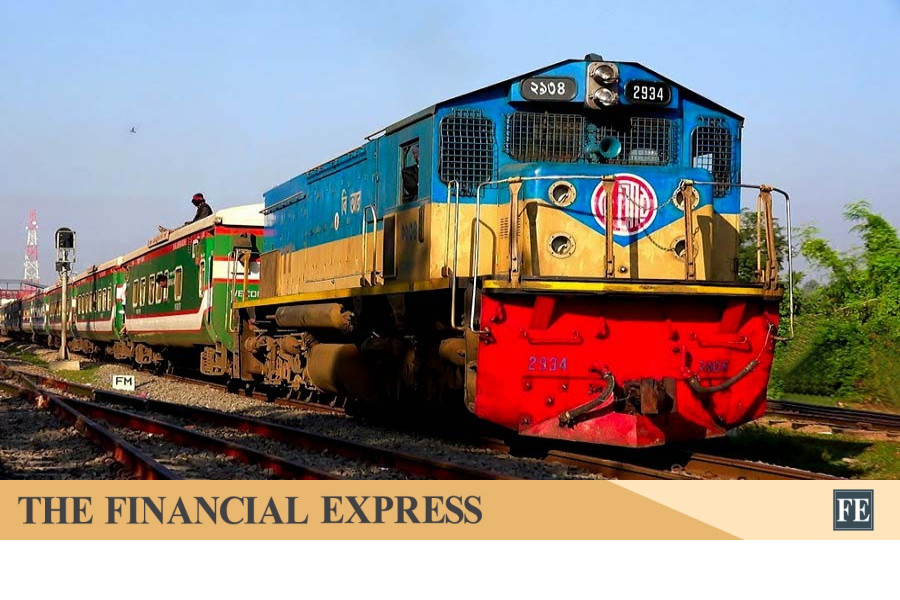
The European Investment Bank (EIB) has pledged to support Bangladesh's railway sector through financing for key infrastructure projects, rolling-stock procurement and capacity development.

The assurance came at a bilateral meeting between the Economic Relations Division (ERD) and a delegation from the European Union (EU) and the EIB on Thursday, where the lender indicated total support amounting to €705 million, ERD officials said.

ERD Secretary Shahriar Kader Siddiky led the Bangladesh side at the meeting held at Sher-e-Bangla Nagar in the capital, while Libuše Soukupová, Head of Sector for South Asian Countries at the Directorate-General for International Partnerships (DG INTPA), led the EU side.

As part of the engagement, the EIB expressed interest in financing the Laksam-Chattogram dual-gauge double-track project and the electrification of the Joydebpur-Dhaka-Narayanganj commuter line.

Bangladesh also sought EU support for manufacturing European-standard locomotives, coaches and wagons.

Officials said the government requested assistance to upgrade railway workshops in Saidpur, Ishwardi and Chattogram, including the supply of machinery and training to strengthen local capacity.

The EIB is expected to co-finance the Laksam-Chattogram dual-gauge project alongside the Asian Development Bank (ADB). Under the proposed arrangement, the EIB will provide €600 million in loans, while the ADB will extend $400 million in the first tranche.

Another project -- the Tongi-Bhairab Bazar-Akhaura dual-gauge double-track railway -- is also expected to receive ADB financing, according to ERD sources.

Meanwhile, the EIB has indicated €105 million in loan support for implementing the country's first electric traction railway project on the Narayanganj-Dhaka-Joydebpur corridor. Beyond railways, the EU delegation expressed interest in supporting regional power connectivity among Bangladesh, India, Bhutan, Nepal and Sri Lanka, including investments in cross-border electricity generation and transmission.

The EU also signalled willingness to provide technical assistance for banking sector reforms, alongside grant support.

The focus will be on reducing non-performing loans (NPLs), while the EU advised against recapitalising banks facing capital shortages, officials said.

On average, the EU provides development assistance to Bangladesh worth around €90-100 million annually, entirely in the form of grants. Priority areas include economic development, human rights, governance and environmental sustainability.​
 

Revolution in the railway, if...

Mohiuddin Ahmad
Published: 01 May 2026, 13: 48

1777680341558.webp


Last week, I went on a quick trip to three western districts. First Khulna, then Rajshahi, and finally Kushtia. The entire journey was by broad-gauge train. So, this seems like a good opportunity to write a bit about trains and railways.

Two Englishmen, Richard Trevithick and George Stephenson, were pioneers in the invention of the locomotive or steam engine, In 1804, Richard Trevithick built the world’s first successful steam locomotive. Later, in 1825, George Stephenson developed “Locomotion No. 1” for the world’s first public railway. Another of his famous engines was the “Rocket.”

At that time, India was the largest and most valuable colony of the British, a proverbial "milch cow". Formal railway travel there began on 16 April 1853. The first passenger train in India ran 34 kilometers from Bori Bunder in Bombay (now Mumbai) to Thane.

In what is now Bangladesh, the first railway line was introduced by the Eastern Bengal Railway Company. On 15 November 1862, a 53-kilometer line was opened from Darshana (Chuadanga) to Jagati (Kushtia). Gradually, the railway network expanded to other parts of the country.

There was a time when railway engines ran on steam produced by burning coal, huffing and puffing down the track. Those engines are no longer in use. Diesel has replaced coal.

Sometimes getting on or off train carriages can be a hazard. Many people slip and fall under the wheels, leading to serious injury or even death.

In our country, railway station platforms were not passenger-friendly. One had to climb steep metal steps holding onto the carriage handle.

Recently, there has been some change. Platforms have been raised, so now one can simply enter the carriage straight through the door, even with a wheelchair. Still, many stations remain unchanged. Even in the capital’s Kamalapur, a new platform has been built for the railway line heading toward the Padma Bridge. I fail to understand why this platform was not elevated.

Kushtia Court Station lies within the town. Its platform also remains as low as before. Children, women and the elderly find it a struggle while boarding or alighting the train. I noticed several banners at the station reading: “We demand implementation of the Kushtia Court Station platform elevation project.”

We have a reputation for building one mega project after another, often with borrowed money. The leaders under whose tenure these projects are undertaken are elevated to almost divine status. We give them all the credit. We say that development would be impossible without them. Small, low-budget improvements do not catch their attention. Or perhaps the place lacks political or commercial importance. Is Kushtia such a place? This town and its surrounding areas are associated with several figures we can take pride in, such as Lalon Shah, Kangal Harinath, Gagan Harkara, Rabindranath Tagore and Mir Mosharraf Hossain.

Rabindranath’s Kuthibari in Shilaidaha and Lalon’s shrine in Cheuriya are essentially cultural pilgrimage sites. Yet they seem to be falling into crude and clumsy hands. The structures built around them lack both planning and aesthetic sense, concrete boxes resembling warehouses. If instead there were only greenery, flower gardens, and open spaces, one might find a sense of transcendental peace there. The problem is, the minds of the authorities are always filled with brick, stone, rods, cement, and sand.

There are instances where even bamboo has been used instead of steel rods.

Beside Lalon’s shrine, an unwieldy auditorium has been constructed. Within a stone’s throw of the Kuthibari, a guesthouse has been built. In the adjacent open area, a stage has sprung up for music and speeches. None of this was necessary. One wonders what ''fertile'' mind produces such absurd ideas.

The road transport lobby in the country is very powerful and does not allow the railway system to become profitable. There are also demands to acquire vast amounts of agricultural land to build airports in various districts.

Of course, we may not have to tolerate these for long. As a certain group of zealots continues demolishing shrines one after another in the name of religious doctrine, it is uncertain how long Lalon’s shrine will survive. And Rabindranath? Who knows when he will be branded as an agent or a collaborator of tyranny, and his beloved Kuthibari reduced to rubble? Not long ago, we saw a rehearsal of such tendencies in Dhaka.

I stayed in Khulna for two nights. One evening, I went to see the Rupsa River. It is a port area, with many cargo ships anchored nearby. Along the riverbank, people sat on plastic chairs and stools, some locals, others visitors. Most come here for chotpoti and fuchka. However, the place is not tourist-friendly at all. I nearly broke my bones slipping while trying to descend from the road to the riverbank. Yet, if a simple walkway were built along the slope with some open space, it could become a wonderful evening spot.

In Rajshahi, the groyne known as “T-Bandh” along the Padma River, built by the Water Development Board, can be considered the city’s lungs. Residents flock there in the evenings for fresh air. Vendors there sell chotpoti, fuchka, and ice cream. Something similar could be done along the Rupsa.

Rajshahi is truly a beautiful city. Compared to any other district town in Bangladesh, its distinctiveness stands out. One can tell that those who managed the city had a sense of aesthetics. It is not just about spending money, taste matters.

Returning to rail travel, this was my first journey across the Padma Bridge by train. I also crossed the Hardinge Bridge for the first time. It was a remarkable experience. I keep thinking about the Hardinge Bridge. This 1,800-meter-long bridge was completed in 1915, taking six years to build. Even after more than a century, it remains intact. It can truly be called an engineering monument.

There was a time when trains ran from Kolkata to Siliguri and Assam via the Hardinge Bridge. After the Indo-Pak war of 1965, this route was closed. India then constructed the Farakka Barrage across the Padma. It is not just a dam, it is a four-in-one structure. It carries both a road and a railway line, generates hydroelectric power, and includes a system to divert water from the Padma into the Bhagirathi. This has had negative consequences for Bangladesh: we receive less water in the dry season and more during the monsoon. We often refer to the Farakka Barrage as a “death trap.”

The idea of such a structure dates back to the British era, when it was considered necessary to maintain the navigability of the Kolkata port. At that time, there was no India-Pakistan divide. The context was entirely different. After Hardinge Bridge became inaccessible to India, the construction of the barrage became immediately important for them. This is what one might call cutting off one’s nose to spite another.

Be that as it may, the Padma Bridge, Hardinge Bridge, and Jamuna Bridge have effectively turned Bangladesh into a more unified country. It was not quite so before. There were notions of East Bengal, North Bengal, and South Bengal, if not in geography, then certainly in mindset. These bridges have tied us together. Now, we can travel from one end of the country to the other in much less time.

I recently traveled from Dhaka to Khulna, Rajshahi, and Kushtia, all by train. It was the most comfortable rail journey I have experienced so far. If the entire country could be covered by broad-gauge rail, it would spark a true revolution in train travel.

However, there is a challenge: the road transport lobby in the country is very powerful and does not allow the railway system to become profitable. There are also demands to acquire vast amounts of agricultural land to build airports in various districts. Yet, if the railway system were improved, the demand for domestic flights would decrease significantly.

We inherited most of our railway network from the British. What we now need are more locomotives, more coaches, increased train frequency, and better passenger services. Investment in this sector is essential for the public good.

* Mohiuddin Ahmad is a writer and researcher​
 

Bangladesh Railway’s service woes persist
Its mismanaged system needs more than investment

View attachment 22473
VISUAL: STAR

Bangladesh Railway (BR) continues to bleed financially and fail its passengers despite years of heavy investment. According to a recent Bonik Barta report, the government currently spends over Tk 4,000 crore annually on railway operations, with much of it directed towards maintenance, cleaning, and on-board services. Yet, passengers have seen little return from this investment, as complaints about dirty trains and stations, irregular schedules, ticket black marketeering, and technical failures persist. What's more baffling is that investment in the rail sector has increased significantly over the last 10 to 15 years, yet neither its services nor its profits have improved much.

In the fiscal year 2023-24, the Ministry of Railways was allocated a total of Tk 19,010.69 crore, including both operating and development expenditure. BR's income fell to Tk 1,845 crore in FY2024-2025—down 4.15 percent from the previous year—marking its first post-pandemic negative growth. While revenues rose slightly in the first quarter of FY2025-26, losses are projected to exceed Tk 1,574 crore for the fiscal year.

Meanwhile, even at the busiest station of the country in the capital's Kamalapur, there are still not enough toilets, waiting rooms, or functioning fans. Existing facilities are unhygienic, and many passengers have little choice but to wait on crowded platforms. Similar conditions exist at regional stations. Inside trains, passengers face broken seats, unclean toilets, and overcrowded compartments, often filled with "standing" and ticketless commuters beyond official capacity. Frequent derailments and incidents of coaches detaching mid-journey indicate a serious lapse in maintenance. Such conditions contradict the official claim that the purpose of increased operating expenditure is to improve passenger service.

Experts attribute the failures to inefficiency and lack of accountability. The railways ministry's adviser further admitted that the maintenance system "is not functioning properly" and that many of the workshops lack the required technical standards. Although the ministry claims to have reduced the operating ratio from 2.4 to 1.8, the improvement has not translated into visible benefits for passengers. Furthermore, cases of wasteful procurement, including non-operational track machines and defective train models, have been reported in recent years. These incidents point to a pattern of project design driven more by bureaucratic and procurement interests than by service needs.

To address these issues, BR must move beyond ad-hoc spending and prioritise structural reforms. Regular technical audits, transparent procurement, and independent monitoring of ongoing projects are essential. Resources should be directed towards maintenance, safety upgrades, and passenger facilities rather than ill-conceived projects. Without strict accountability and long-term planning, even large budget allocations will continue to yield little improvement in railway service or its financial performance.​

The reasons for frequent derailments in Bangladesh are because they always choose and source third rate low class low weight Indian rail trackage, 40/50 lbs at best.

The high speed bullet rain trackage used in USA (and Korea as well, as I've personally observed) is 100 lbs or 50 KGs. Yes - Koreans also source Indian made Rail Track sections for all their rail lines (even bullet train lines), but their quality acceptance standards are very strict. Indians know that they can pass on third-rate trackage product to corrupt Bangladesh Railway haramis by bribing them.

Mainline rail track sections in India for broad gauge are 52 kg and 60 kg rails. The 52 kg rail is designed for speeds up to 130 km/h, while the 60 kg rail is suitable for speeds up to 160 km/h.

In Bangladesh, they use very low weight Indian rail track, low stability ties (slippers), low quality ballast, rail fasteners and rail joints - so derailments happen on a regular basis and speeds cannot be raised beyond 70 km/h (even with powerful US made locomotives and quality Chinese or Indonesian passenger coaches/carriages).

Both India and Pakistan have higher quality mainline tracks as well as high quality passenger coaches and it helps that they don't have to contend with flooding and moisture.

Bangladesh Railway corrupt senior manager haramis who steal money from Railway funds like this should be all lined up and shot (or at least publicly named and shamed).
 
Last edited:

Revolution in the railway, if...

Mohiuddin Ahmad
Published: 01 May 2026, 13: 48

View attachment 26202

Last week, I went on a quick trip to three western districts. First Khulna, then Rajshahi, and finally Kushtia. The entire journey was by broad-gauge train. So, this seems like a good opportunity to write a bit about trains and railways.

Two Englishmen, Richard Trevithick and George Stephenson, were pioneers in the invention of the locomotive or steam engine, In 1804, Richard Trevithick built the world’s first successful steam locomotive. Later, in 1825, George Stephenson developed “Locomotion No. 1” for the world’s first public railway. Another of his famous engines was the “Rocket.”

At that time, India was the largest and most valuable colony of the British, a proverbial "milch cow". Formal railway travel there began on 16 April 1853. The first passenger train in India ran 34 kilometers from Bori Bunder in Bombay (now Mumbai) to Thane.

In what is now Bangladesh, the first railway line was introduced by the Eastern Bengal Railway Company. On 15 November 1862, a 53-kilometer line was opened from Darshana (Chuadanga) to Jagati (Kushtia). Gradually, the railway network expanded to other parts of the country.

There was a time when railway engines ran on steam produced by burning coal, huffing and puffing down the track. Those engines are no longer in use. Diesel has replaced coal.

Sometimes getting on or off train carriages can be a hazard. Many people slip and fall under the wheels, leading to serious injury or even death.

In our country, railway station platforms were not passenger-friendly. One had to climb steep metal steps holding onto the carriage handle.

Recently, there has been some change. Platforms have been raised, so now one can simply enter the carriage straight through the door, even with a wheelchair. Still, many stations remain unchanged. Even in the capital’s Kamalapur, a new platform has been built for the railway line heading toward the Padma Bridge. I fail to understand why this platform was not elevated.

Kushtia Court Station lies within the town. Its platform also remains as low as before. Children, women and the elderly find it a struggle while boarding or alighting the train. I noticed several banners at the station reading: “We demand implementation of the Kushtia Court Station platform elevation project.”

We have a reputation for building one mega project after another, often with borrowed money. The leaders under whose tenure these projects are undertaken are elevated to almost divine status. We give them all the credit. We say that development would be impossible without them. Small, low-budget improvements do not catch their attention. Or perhaps the place lacks political or commercial importance. Is Kushtia such a place? This town and its surrounding areas are associated with several figures we can take pride in, such as Lalon Shah, Kangal Harinath, Gagan Harkara, Rabindranath Tagore and Mir Mosharraf Hossain.

Rabindranath’s Kuthibari in Shilaidaha and Lalon’s shrine in Cheuriya are essentially cultural pilgrimage sites. Yet they seem to be falling into crude and clumsy hands. The structures built around them lack both planning and aesthetic sense, concrete boxes resembling warehouses. If instead there were only greenery, flower gardens, and open spaces, one might find a sense of transcendental peace there. The problem is, the minds of the authorities are always filled with brick, stone, rods, cement, and sand.

There are instances where even bamboo has been used instead of steel rods.

Beside Lalon’s shrine, an unwieldy auditorium has been constructed. Within a stone’s throw of the Kuthibari, a guesthouse has been built. In the adjacent open area, a stage has sprung up for music and speeches. None of this was necessary. One wonders what ''fertile'' mind produces such absurd ideas.

The road transport lobby in the country is very powerful and does not allow the railway system to become profitable. There are also demands to acquire vast amounts of agricultural land to build airports in various districts.

Of course, we may not have to tolerate these for long. As a certain group of zealots continues demolishing shrines one after another in the name of religious doctrine, it is uncertain how long Lalon’s shrine will survive. And Rabindranath? Who knows when he will be branded as an agent or a collaborator of tyranny, and his beloved Kuthibari reduced to rubble? Not long ago, we saw a rehearsal of such tendencies in Dhaka.

I stayed in Khulna for two nights. One evening, I went to see the Rupsa River. It is a port area, with many cargo ships anchored nearby. Along the riverbank, people sat on plastic chairs and stools, some locals, others visitors. Most come here for chotpoti and fuchka. However, the place is not tourist-friendly at all. I nearly broke my bones slipping while trying to descend from the road to the riverbank. Yet, if a simple walkway were built along the slope with some open space, it could become a wonderful evening spot.

In Rajshahi, the groyne known as “T-Bandh” along the Padma River, built by the Water Development Board, can be considered the city’s lungs. Residents flock there in the evenings for fresh air. Vendors there sell chotpoti, fuchka, and ice cream. Something similar could be done along the Rupsa.

Rajshahi is truly a beautiful city. Compared to any other district town in Bangladesh, its distinctiveness stands out. One can tell that those who managed the city had a sense of aesthetics. It is not just about spending money, taste matters.

Returning to rail travel, this was my first journey across the Padma Bridge by train. I also crossed the Hardinge Bridge for the first time. It was a remarkable experience. I keep thinking about the Hardinge Bridge. This 1,800-meter-long bridge was completed in 1915, taking six years to build. Even after more than a century, it remains intact. It can truly be called an engineering monument.

There was a time when trains ran from Kolkata to Siliguri and Assam via the Hardinge Bridge. After the Indo-Pak war of 1965, this route was closed. India then constructed the Farakka Barrage across the Padma. It is not just a dam, it is a four-in-one structure. It carries both a road and a railway line, generates hydroelectric power, and includes a system to divert water from the Padma into the Bhagirathi. This has had negative consequences for Bangladesh: we receive less water in the dry season and more during the monsoon. We often refer to the Farakka Barrage as a “death trap.”

The idea of such a structure dates back to the British era, when it was considered necessary to maintain the navigability of the Kolkata port. At that time, there was no India-Pakistan divide. The context was entirely different. After Hardinge Bridge became inaccessible to India, the construction of the barrage became immediately important for them. This is what one might call cutting off one’s nose to spite another.

Be that as it may, the Padma Bridge, Hardinge Bridge, and Jamuna Bridge have effectively turned Bangladesh into a more unified country. It was not quite so before. There were notions of East Bengal, North Bengal, and South Bengal, if not in geography, then certainly in mindset. These bridges have tied us together. Now, we can travel from one end of the country to the other in much less time.

I recently traveled from Dhaka to Khulna, Rajshahi, and Kushtia, all by train. It was the most comfortable rail journey I have experienced so far. If the entire country could be covered by broad-gauge rail, it would spark a true revolution in train travel.

However, there is a challenge: the road transport lobby in the country is very powerful and does not allow the railway system to become profitable. There are also demands to acquire vast amounts of agricultural land to build airports in various districts. Yet, if the railway system were improved, the demand for domestic flights would decrease significantly.

We inherited most of our railway network from the British. What we now need are more locomotives, more coaches, increased train frequency, and better passenger services. Investment in this sector is essential for the public good.

* Mohiuddin Ahmad is a writer and researcher​

This "researcher" needs to do a bit more "research" about railway history (even Bangladesh Railway related history) in his retirement. My apologies, his article reminds me of the American truisms "Captain Obvious" and "No $hit - Sherlock!"
 
The reasons for frequent derailments in Bangladesh are because they always choose and source third rate low class low weight Indian rail trackage, 40/50 lbs at best. The high speed bullet rain trackage used in USA (and Korea as well, as I've personally observed) is 100 lbs or 50 KGs. Yes - Koreans also source Indian made Rail Track sections, but their quality acceptance standards are very strict. Indians know that they can pass on third-rate trackage product to corrupt Bangladesh Railway haramis by bribing them.

Mainline rail track sections in India for broad gauge are 52 kg and 60 kg rails. The 52 kg rail is designed for speeds up to 130 km/h, while the 60 kg rail is suitable for speeds up to 160 km/h.

In Bangladesh, they use very low weight Indian rail track, low stability ties (slippers), low quality ballast, rail fasteners and rail joints - so derailments happen on a regular basis and speeds cannot be raised beyond 70 km/h (even with powerful US made locomotives and quality Chinese or Indonesian passenger coaches/carriages).

Both India and Pakistan have higher quality mainline tracks as well as high quality passenger coaches and it helps that they don't have to contend with flooding and moisture.

Bangladesh Railway corrupt senior manager haramis who steal money from Railway funds like this should be all lined up and shot (or at least publicly named and shamed).
Bangladesh should work with China and Indonesia to manufacture railway coaches domestically. We have factories to maintain and repair railway coaches which can be turned into railway production facilities with technological help from China and Indonesia.
 

PKDefense Forums: Country-by-Country Military Discussions

Log In Register Forums
Videos
Back