[🇧🇩] Bangladesh Railway

Quick Reply ✓ Posted!
[🇧🇩] Bangladesh Railway
98
6K
More threads by Saif

G Bangladesh Defense

Govt plans modern, time-efficient nationwide rail network

UNB

Published :
Jun 16, 2026 22:02
Updated :
Jun 16, 2026 22:02

1781669413857.webp


The government has decided to develop a seamless and time-efficient rail communication network across the country, aiming to modernise Bangladesh’s railway system.

The decision was taken at a meeting on the future planning of Bangladesh Railway held on Tuesday morning at the Cabinet Division’s Public Administration Room at the Secretariat, chaired by Prime Minister Tarique Rahman.

Briefing reporters, Prime Minister’s Deputy Press Secretary Hasan Shiplu said the meeting discussed both medium- and long-term development plans for the railway sector.

“Detailed discussions were held on the modernisation of Bangladesh Railway, including phased conversion of metre-gauge lines from Panchagarh to Cox’s Bazar into broad-gauge lines and upgrading the signalling system,” he said.

Shiplu also said issues related to financing of these plans were discussed at the meeting, with the Prime Minister giving necessary directives.

Railways Minister Shaikh Rabiul Alam, State Minister Habibur Rashid, State Minister for Local Government, Rural Development and Co-operatives Mir Shahe Alam, Prime Minister’s Adviser Rashed Al Mahmud Titumir, Principal Secretary ABM Abdus Sattar, Railways Secretary Md Fahimul Islam, and Director General of Bangladesh Railway Afzal Hossain, among others, were present.​
 

Cord line project in budget
Dhaka to Chattogram by train in three and a half hour

Sujan Ghose
Chattogram
Published: 18 Jun 2026, 14: 10

1781827217412.webp

Chattogram station File photo

Although the distance between Dhaka and Chattogram is currently 248 kilometres by road, the railway route extends to 320 kilometres. At present, trains take between five and six hours to travel from Dhaka to Chattogram.

To shorten this lengthy journey, the long-discussed Dhaka–Cumilla Cord Line, or direct railway connection project, has once again come to the forefront.

Finance Minister Amir Khasru Mahmud Chowdhury announced the project in the proposed national budget for fiscal year 2026-27.

According to Bangladesh Railway officials, implementing the project would reduce the Dhaka–Chattogram rail route by nearly 80 kilometres and reduce travel time to approximately three and a half hours.

The officials emphasised that this is not merely a passenger transport project.

They believe it could also become a crucial piece of infrastructure for future freight transportation associated with Chattogram Port, the planned Bay Terminal, and the Matarbari Deep-Sea Port.

Cord line returns to the budget agenda

During his budget speech in the Jatiya Sangsad (National Parliament), the finance minister stated that Bangladesh Railway had already completed the feasibility study for constructing a cord line on the Dhaka–Cumilla section of the Dhaka–Chattogram railway corridor.

Among three proposed alignments, planners have provisionally selected a route extending from Shyampur in Narayanganj to Cumilla.

The budget speech further stated that freight trains carrying goods from Chattogram Port, the Bay Terminal, and the Matarbari Deep-Sea Port would be able to use the existing Chattogram–Feni–Cumilla–Brahmanbaria–Bhairab–Narsingdi railway line to connect directly with the proposed Dhirashram Inland Container Depot (ICD).

We have completed the feasibility study. Among the three alternative alignments, we have provisionally selected a route from Shyampur in Narayanganj to Lalmai in Cumilla. This route will reduce the distance between Dhaka and Chattogram by 80 to 90 kilometres and save approximately two hours of travel time-------Md Afzal Hossain , Bangladesh Railway Director General.

This connection would strengthen both the national economy and the country's logistics sector.

The Bangladesh Nationalist Party (BNP), in its election manifesto, pledged to revitalise the railway system as the central backbone of the national transport network. The budget speech reflected that commitment.

However, the budget did not specify any separate allocation for the project, its estimated cost, or a timeline for implementation.

Railway officials said they are currently preparing the detailed design for the project. They aim to finalise the Development Project Proposal (DPP) by June next year.

Why cord line is necessary

At present, trains travelling between Dhaka and Chattogram operate via Cumilla, Brahmanbaria, Bhairab, and Narsingdi. As a result, the railway route is considerably longer than the road route.

According to Bangladesh Railway, passenger trains require between five and six hours to travel from Dhaka to Chattogram.

In practice, various operational factors often increase the journey time further. Meanwhile, following the opening of the four-lane highway, road travel in many cases now takes less time than rail travel.

Railway officials said they are currently preparing the detailed design for the project. They aim to finalise the Development Project Proposal (DPP) by June next year.

The proposed cord line would bypass the lengthy Akhaura–Bhairab detour and establish a direct railway connection through Dhaka–Narayanganj–Cumilla.

This would reduce both travel time and transportation costs for passengers and freight services alike.

According to information published by Bangladesh Railway and various media outlets, the concept of the Dhaka–Chattogram Cord Line is not new.

Discussions first began in 1968. Although successive governments revived the proposal at different times, none advanced it to the implementation stage.

Speaking about this, Bangladesh Railway Director General Md Afzal Hossain told Prothom Alo, “We have completed the feasibility study. Among the three alternative alignments, we have provisionally selected a route from Shyampur in Narayanganj to Lalmai in Cumilla. This route will reduce the distance between Dhaka and Chattogram by 80 to 90 kilometres and save approximately two hours of travel time.”

Railway officials emphasise that this is not merely a passenger transport project. They believe it could also become a crucial piece of infrastructure for future freight transportation associated with Chattogram Port, the planned Bay Terminal, and the Matarbari Deep-Sea Port.

Md Afzal Hossain added, “We will also move forward gradually with the necessary preparatory work, including land acquisition, to implement the project.”

Significant potential for freight transportation

The Dhaka–Chattogram corridor is the country's most important economic corridor. Chattogram hosts Bangladesh’s principal seaport.

The planned Bay Terminal and the Matarbari Deep-Sea Port will further expand the region’s strategic importance. Once these facilities become fully operational, demand for freight transportation will increase substantially.

Business leaders in Chattogram have long argued that, despite hosting the country’s principal seaport, the city still lacks a fast and reliable railway connection with the capital.

Consequently, freight transportation remains heavily dependent on road networks.

At present, freight trains require between 12 and 15 hours to travel between Dhaka and Chattogram. In some cases, shortages of locomotives and train services force businesses to wait even longer.

According to Bangladesh Railway data, the freight transportation sector has not achieved its expected level of growth.

In the previous financial year, Bangladesh Railway generated Tk 723.1 million in revenue from freight operations.

In the current financial year, revenue has declined to Tk 650.9 million, despite a target exceeding Tk 2.27 billion.

During the first eight months of the 2024–25 financial year, 1,838 freight trains operated on the network. During the same period of the current financial year, only 985 freight trains operated.

In other words, the number of freight trains has fallen by almost half within a year. During the same period, Bangladesh Railway had set a target of transporting 199,715 wagons but transported only 49,476 wagons.

Railway officials identify locomotive shortages as the principal cause of this decline. Although operations require an average of 13 locomotives each day, only three to four are available.

As a result, freight train services face continual disruption, and businesses are losing confidence in rail transport.

According to railway officials, the introduction of the cord line would allow operators to run more trains within the same timeframe. This would increase capacity for both passenger and freight transportation.

Business community expectations

Business leaders in Chattogram have advocated the construction of the cord line for many years.

Amirul Haque, president of the Chattogram Chamber, told Prothom Alo, “The implementation of the Dhaka–Chattogram Cord Line will bring a transformative change to both passenger and freight transportation. As economic activities continue to expand around Chattogram Port, the Bay Terminal, and the Matarbari Deep-Sea Port, the country also requires railway connectivity that matches this growth.”

“The announcement of the project in the budget has made us optimistic. However, to address the logistics challenges of the future, there is no alternative to a 10-lane expressway,” he added.​
 

Investment in BR deserves better scrutiny

Published :
Jun 24, 2026 23:58
Updated :
Jun 24, 2026 23:58

1782343683129.webp


Almost a decade ago, Bangladesh Railway launched a 30-year master plan to expand rail coverage to all 64 districts of the country and modernise its services. The master plan included a total of 230 projects scheduled to be implemented by 2045 in six phases at a cost of Taka 5.53 trillion. As one-third of the plan period is ending this year, it is imperative to assess the progress made so far. The railway ministry, apparently, is not interested in making such an assessment. Rather, it is venturing into yet another expansion drive. It has decided to implement 13 projects worth Tk 839.90 billion over next 15 years. A report published in this paper Tuesday last noted that funding support from development partners for execution of the projects has been largely confirmed.

It is not known whether these projects are among the master plan projects. But the FE report has indicated that most of these projects are in the master plan and those have now been prioritised for implementation, If so, it is a positive move on the part of the BR because it suggests continuity with the initiatives taken earlier for the greater good of the country's railway system. However, some projects now prioritised require extensive review before any implementation decisions, particularly those that could severely affect densely populated areas and neighbouring ecosystems.

There is no denying that railway is a secure, economical, and environment-friendly mode of transport and, as such, it needs expansion. An efficient railway can transfer, transit and mobilise millions of commuters without much trouble, which is not possible by road transports. Unfortunately, five and a half decades after its independence, Bangladesh is yet to optimise its railway services. At present, it covers only about 3,500 route kilometres across the country, whereas the road network is about 23,000 km long. As a result, 73 per cent of passengers and 82 per cent of cargoes are transported using road transports, although demand for railway remains high. By over-focusing on the road network, successive governments have pushed back the required extension of the rail network. Instead, a number of rail projects have been taken up to feed a section of rent-seekers having political backing. The addition of 20 Diesel Electric Multiple Unit (DEMU) trains to the railway fleet in 2013, at a cost of Tk 6.86 billion, is an example. Though the claimed lifespan is 20 years, most of the trains have become inoperative, and the rest will be abandoned shortly. No question has been asked about the wastage of taxpayers' money. Unfortunately, there have been no coordinated efforts to establish a well-designed, well-integrated rail-road-river transportation system. More than 90 per cent of passenger train services have been incurring losses for decades, clearly showing their operational inefficiency. Again, a large part of the existing rail tracks is in a dilapidated condition, resulting in slower train speeds and occasional derailment.

To move forward, the key priority should be to modernise and introduce dual rail tracks across the network. Concurrently, setting up more railway workshops is essential. The truth is, the BR is still far away from introducing a modern and efficient railway service though billions of taka has been spent on its improvement. The government policymakers, seemingly, are also not serious about ensuring a better railway service when a number of far and near countries are operating fast and ultra-modern trains.​
 

Govt should change obsolete railway law to better services

THE state of the Bangladesh Railway’s legal framework is concerning. A New Age report says that efforts by successive governments to amends the 136-year-old British-era railway law with a view to improving passenger services, safety and preventing fraud have remained stalled for seven years without any tangible progress. Railways ministry officials say that the Railway Act 1890 needs to be revised to reflect technological advancement, incorporate provisions against digital fraud and update fines for various offences, many of which have become outdated and ineffective. They also say that the proposed reform would provide for harsher punishments for offences, improve passenger services and address allegations of underhand ticket sales by dishonest railway employees despite the introduction of online ticketing. The government has initiated a fresh review of the draft amendment to the law prepared during the previous administration after deciding that the earlier draft was inadequate. Officials, however, have indicated that the process of finalising the legislation will require further reviews and consultations and could still take several years. The proposed law with 157 sections is expected to replace the existing law and incorporate modern provisions aimed at better protection of passengers and railway property.

The prolonged failure to update the law has implications that extend far beyond an outdated statute. A legal framework that does not keep pace with technological and operational changes weakens the state’s ability to prevent emerging forms of fraud, hold offenders accountable and protect passenger rights. The introduction of online ticketing was expected to improve transparency. Yet, studies find that mismanagement, corruption and procedural weaknesses continue to undermine service quality and public confidence, indicating that technological innovation alone cannot overcome institutional shortcomings. The reported resistance of vested interests to stronger penalties further suggests that the reform process is constrained by institutional interests rather than guided by passenger welfare. Such resistance should reinforce, rather than weaken, the government’s resolve to enact meaningful reforms. The Anti-Corruption Commission earlier identified corruption in at least 10 areas of the Bangladesh Railway, including ticket sales, procurement, recruitment and land management, and recommended measures to improve accountability. The proposed legislation should, therefore, be accompanied by transparent implementation rules, digital audit mechanisms, regular independent oversight and defined accountability for officials responsible for enforcing the law. The new law is, otherwise, unlikely to deliver the institutional transformation necessary to improve governance, curb corruption and restore public confidence.

The government should, therefore, expedite the amendment process and ensure that the new law is accompanied by robust enforcement mechanisms, independent oversight and institutional accountability instead of allowing it to remain another delayed legal exercise. Legal reform will have little practical value if the institutions entrusted with implementing it continue to operate under the same culture of impunity that has impeded efficient railway services.​
 

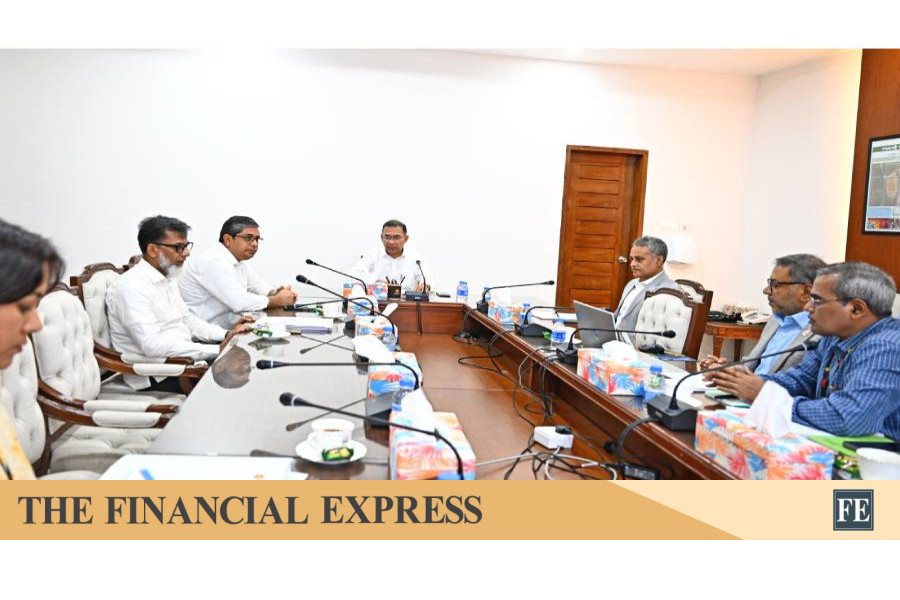
Fast-tracking railway's latest master plan

1787354097109.webp


The Bangladesh Railway (BR), one of the oldest public transport systems in the country, has remained for far too long a neglected sector despite the railway emerging globally as the most modern, efficient and rapidly developing mode of land-based mass transport. Against this backdrop, the report that the BR has drafted its third master plan, envisaging an investment of around Tk2.9 trillion by 2060, is no doubt a development worth noting. The draft, prepared reportedly with BR's own resources, proposes 118 civil projects focusing on demand-based track development, electrification, unification of the mixed-gauge network and expansion of railway services to 10 more districts. Priority schemes include the Bogura-Sirajganj, Joydebpur-Ishwardi, Akhaura-Sylhet and Tongi-Bhairab dual-gauge double lines. What is more, the plan is expected to integrate track development with procurement of coaches and locomotives, maintenance facilities, workshops and manpower development. This is important because railway development cannot simply mean laying new tracks while trains, skilled hands and maintenance facilities remain in short supply.

Indeed, Bangladesh's experience with railway planning has not always been an enviable one. The first master plan, approved in 2013, envisaged 235 projects, while its revised version, approved in 2019, proposed 215 projects to be completed by 2045. Some important schemes including the Padma Bridge rail link and the Dohazari-Cox's Bazar line have since been completed, yet many projects under the existing plan are unlikely to be implemented within its stipulated period. Meanwhile, the country now has around 3,400 kilometres of rail network, but shortages of locomotives, coaches and operational facilities have often prevented the infrastructure already built from being utilised fully. More significantly, railway's share in freight movement remains below 5.0 per cent, though the government's transport strategy reportedly aims to raise it to at least 20 per cent. Small wonder that expansion of tracks alone has failed to transform the BR into a dependable passenger and freight carrier a densely-populated and fast-urbanizing economy needs. The third master plan should, therefore, learn from the mismatch between physical expansion and actual service delivery.

At this point, however, the government needs to distinguish between what can be delivered now and what necessarily belongs to the longer horizon. Projects capable of improving the quality, frequency and reliability of train services within the tenure of the incumbent government should be identified and put on the fast track. Issues like double-tracking congested corridors, completing missing links, modernising signalling, procuring adequate locomotives and carriages, introducing electric traction on suitable busy routes and so on are hardly ambitions that should remain on paper for decades. In particular, the proposed electrification of the Narayanganj-Dhaka-Joydebpur corridor and its extension towards Chattogram deserves serious attention. The point is that people should be able to experience visible improvement in railway service during the present government's term. Otherwise, another long list of projects extending to 2060 may end up becoming yet another catalogue of aspirations whose deadlines are repeatedly shifted and costs revised.

Long-term planning should not be confined to catching up with what other countries have achieved. Notably, high-speed rail is expanding rapidly, with over 56,000 kilometres in operation globally, and Bangladesh cannot indefinitely remain outside that transition. In fact, there is history of earlier moves to explore a high-speed railway between Dhaka and Chattogram. Even if today's fiscal realities do not permit immediate construction of such an expensive system, the third master plan should reserve corridors, undertake feasibility studies, protect land and create infrastructure standards compatible with high-speed trains. For a small, densely populated country where major economic centres are separated by manageable distances, faster rail can change the geography of travel, business and regional development. But visions for 2060 will have value only if today's basic railway is first made efficient, safe and reliable. So, the government would do well to act fast on achievable railway modernisation projects while laying the infrastructural groundwork for the high-speed railway in the future.​
 

PKDefense Forums: Country-by-Country Military Discussions

Log In Register Forums
Videos
Back