[🇧🇩] Bangladesh Railway

[🇧🇩] Bangladesh Railway
86
5K
More threads by Saif

G Bangladesh Defense
Bangladesh also sought EU support for manufacturing European-standard locomotives, coaches and wagons.

Officials said the government requested assistance to upgrade railway workshops in Saidpur, Ishwardi and Chattogram, including the supply of machinery and training to strengthen local capacity.

Banglkadesh has to decide first whether it will model its locomotives on European-standard or US standard locomotives, coaches and wagons. They are very different in practice and usage.

US standard locomotives, coaches and wagons are simpler and far more robust in comparison. Although standard gauge is used in the USA, unlike broad gauge in Bangladesh and India, carriages and freight infra are not very different.

Both India and China have long licensed and used US-made GE and EMD locomotives, though Indian high speed carriages have been modeled after European (German) LHB technologies. LHB joint venture passenger carriage products made in India were initially built at Kapurthala Coach factory in Punjab (who supplied them to Bangladesh), but nowadays these LHB designed coaches were built at other Indian coach factories like the Integral Coach Factory in Chennai and the Modern Coach Factory at Raebareli.

If Bangladesh decides to build passenger coaches locally according to LHB or other EU designs, that will be a good step.

However - Locomotives should be license built from American/Canadian designs, which most experts say, are suited to conditions in the subcontinent and are more or less indestructible. Even China license built GE and EMD designs for locos. For the limited number needed in Bangladesh, we can try assembly from parts first.

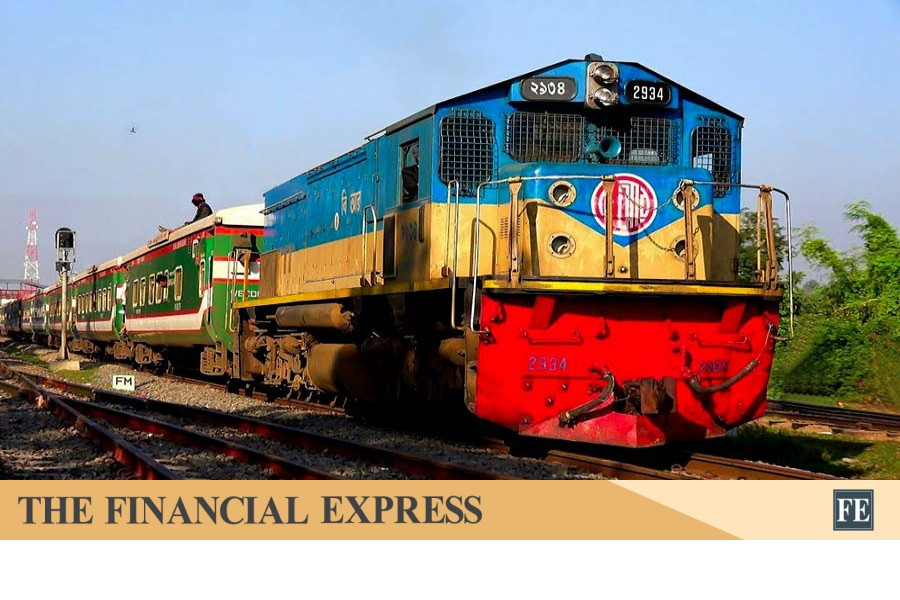
Here is an 80 year old Canadian Meter gauge GMD-Ontario-Made loco (EMD B-12) deployed in East Pakistan in 1953 or so - and still working pulling container and tanker trains between Dhaka and Chittagong port to this day. This was oldest diesel electric loco deployed in the subcontinent (yes, ahead of India as well when most of their locos were vintage steam locos).

The EMD B12 (classified by Bangladesh Railway as the Class 2000) holds a legendary status as the first diesel-electric locomotive series to operate in the region. Manufactured by General Motors Diesel (GMD) in Canada (Canadian division of EMD USA) between 1953 and 1956, a total of 40 units were delivered to the then Eastern Bengal Railway (later named East Pakistan Railway or EPR). Affectionately nicknamed "Dadu Vai" (Grandpa) by local rail enthusiasts due to their age, these meter-gauge locomotives are powered by a 12-cylinder EMD 567C engine producing approximately 1,125 hp.

1777683716350.webp

.
 

Bangladesh Railway eastern zone
Rail revenue up Tk 1.5b; questions over service quality remain

Sujan Ghose
Chattogram
Published: 05 May 2026, 08: 13

1777947646699.webp


Bangladesh Railway File photo.


In the first nine months of the current fiscal year, Bangladesh Railway’s Eastern Zone has earned Tk 1.50 billion more than the previous year. Most of this income has come from passenger transport. However, revenue from freight transport has declined again this year.

Until March of the current fiscal year, the Eastern Zone earned about Tk 9.10 billion, which is higher than the target. In the same period last fiscal year, earnings were over Tk 7.59 billion.

The railway earns revenue from a total of eight sectors, but the main sources are passenger and freight transport. This time, 86.5 per cent of total revenue came from passenger transport. Income from freight and parcel transport stood at Tk 717.7 million, which is only 7.9 per cent of total earnings.

Although passenger transport revenue has increased due to various charges and withdrawal of previous benefits, there have been no effective measures to improve passenger service quality. Issues such as trains not running on schedule, failing to reach destinations on time, engine failures en route, derailments, suffering despite having tickets but not getting seats, and stone-throwing incidents on popular routes continue.

Freight transport has failed to meet targets this year, and revenue has declined compared to last year. Due to an engine shortage, the organisation is struggling to run freight trains. In contrast, neighbouring India and many other countries emphasise freight transport.

The Eastern Zone of the railway includes Dhaka, Chattogram, Sylhet, and Mymensingh divisions. While there is a large gap between passenger and freight revenue in this zone, the situation in South Asian countries like India and Pakistan is different.

In the last fiscal year (2024–25), Indian Railways earned over 2.65 trillion rupees. Of this, over 1.71 trillion rupees came from freight transport, while passenger revenue was 753.67 billion rupees—meaning freight earnings were 2.3 times higher than passenger earnings.

Once, the railway offered distance-based concessions to attract passengers. According to railway data, passengers received a 20 per cent discount for travel between 101–250 km, 25 per cent for 251–400 km, and 30 per cent for distances over 401 km. However, these were withdrawn in April 2024.

In the same fiscal year, Pakistan Railways earned 83 billion rupees, including 42 billion from passenger services and 29 billion from freight, with the rest coming from other sectors.

Passenger revenue rises due to added charges

Analysis of railway data shows that passenger transport is now the main source of income. Revenue from passenger transport reached Tk 7.87 billion, compared to over Tk 6.23 billion in the previous year. That means an increase of about Tk 1.64 billon, or 26 per cent, within one year.

In the first nine months of the current fiscal year (July to March), about 37 million people travelled by train in Dhaka and Chattogram divisions. The target was about 28 million passengers. That means nine million more passengers travelled than the target.

Railway officials say the increase in passenger numbers is due to traffic congestion on roads, risk of accidents, higher fares, time savings, and avoidance of various hassles. New routes, including Cox’s Bazar, have been introduced. Interest in train travel has increased significantly as people seek safer and more comfortable journeys.

However, as interest in trains has grown, the railway has imposed various charges and withdrawn earlier benefits. Previously, there was no VAT on first-class non-AC coaches, but a 15 per cent VAT was imposed in 2022.

Once, the railway offered distance-based concessions to attract passengers. According to railway data, passengers received a 20 per cent discount for travel between 101–250 km, 25 per cent for 251–400 km, and 30 per cent for distances over 401 km. However, these were withdrawn in April 2024.

To increase passenger revenue, additional coaches have been added to intercity trains, and upon application, reserved AC tickets carry an extra 30 per cent charge and non-AC tickets 20 per cent above normal fare.

Most recently, in December last year, the railway introduced a pontage charge for bridges longer than 100 meters, increasing fares by Tk 5 to Tk 226 depending on train and seat.

In the first eight months of the 2024–25 fiscal year, some 1,838 freight trains operated. In the same period of the current fiscal year, only 985 trains ran—nearly half. The target was to transport 199,715 wagons, but only 49,476 wagons were carried, about one-fourth of the target.

According to the railway, a pontage charge is an additional fee applied when a bridge or similar infrastructure is included in the route. In such cases, a 100-meter bridge is counted as 2.5 kilometers in distance, effectively increasing the calculated travel distance.

Mahbubur Rahman, Chief Commercial Manager of the Eastern Zone, told Prothom Alo that various measures have been taken to increase revenue. For example, long-distance seats on intercity trains often remained empty, while mid-distance passengers were discouraged by higher fares. The quota system for tickets was revised to allocate more seats to stations with higher demand, increasing both passenger numbers and revenue.

Freight revenue declining; investment not yielding results

Despite overall revenue growth, the situation in freight transport remains disappointing. The railway has failed to take effective measures in this sector, and revenue has not increased. For 11 fiscal years, income in this sector has been declining. Although there was a slight increase in between, it could not be sustained. In the 2015–16 fiscal year, freight revenue was Tk 731 million. From 2021–22 to 2023–24, it crossed Tk 1 billion annually. However, in the last fiscal year, it dropped to Tk 775 million.

This year, revenue from this sector is lower than last year. While it was Tk 723 million last year, it has fallen to Tk 651 million this year, against a target of Tk 2.27 billion. Additionally, parcel sector income was Tk 57 million, against a target of Tk 188 million.

During the 15 years of the Awami League government, which was ousted following the mass uprising of students and the public, more than Tk 1 trillion was invested in railway development. However, most of the spending went into building new rail lines, without corresponding investment in new engines. As a result, while rail lines increased, the number of operating trains declined—especially freight trains.

In the first eight months of the 2024–25 fiscal year, some 1,838 freight trains operated. In the same period of the current fiscal year, only 985 trains ran—nearly half. The target was to transport 199,715 wagons, but only 49,476 wagons were carried, about one-fourth of the target.

The main reason is a shortage of engines. While 13 engines are needed daily to maintain normal freight operations, only three to four are available, and sometimes even fewer. Due to disrupted train operations, businesses are losing interest in using rail for freight transport.

Experts and railway officials say that despite massive investment, the railway has effectively ‘derailed’ due to poor planning, corruption, inefficiency, and waste. A major example is the purchase of luggage vans. In 2023, as many as 125 luggage vans were bought for Tk 3.58 billion with the aim of making rail profitable through freight transport. However, instead of generating profit, they have become a burden.

Railway documents show that 125 new luggage vans were added in September 2023. Previously, there were 50 old vans, of which only 18 were operational.

Before adding the new vans, revenue from parcel transport in the first three months (July–September) of the 2023–24 fiscal year was Tk 22 million. Even after adding the vans, revenue did not increase significantly. In the first nine months of the current fiscal year, parcel revenue was only Tk 67 million. Although the vans were expected to transport 882 quintals of goods, they carried only 286 quintals.

Professor Md Shamsul Hoque, a transport expert at Bangladesh University of Engineering and Technology (BUET), told Prothom Alo that despite heavy investment, neither service quality nor passenger capacity has improved significantly. This indicates that investments were not well planned.

According to him, many purchases were made in ways that benefited suppliers, with luggage vans being a prime example. These were bought without proper assessment of utility and ultimately failed to deliver results.​
 

Six more trains set to go private

BR says move will improve revenue; activists criticise outsourcing

Sifayet Ullah

1780186245744.webp


  • Move will take number of privately managed trains in the zone to 14​
  • Private firms will handle onboard services, ticket checks, cleaning, passenger management​
  • Officials cite manpower shortages, ticketless travel as key reasons for outsourcing​

Bangladesh Railway has approved handing over six more trains to private operators in its Eastern Zone, aiming to increase revenue and improve services by expanding private involvement in passenger train operations.

The trains are Jharia Local, Joydebpur Commuter, Narsingdi Commuter, Noakhali Express, Samatat Express, and Nazirhat Local. They operate on routes covering Dhaka, Chattogram, Mymensingh, and Noakhali.

With the latest move, 14 trains will be privately managed under BR’s Eastern Zone.

Officials said BR has increasingly relied on outsourcing in recent years amid persistent manpower shortages and rising operational losses. They said privately operated trains have generated relatively stable revenue.

Under the arrangement, private firms oversee onboard services, ticket verification, cleaning, and passenger management, while core train operations remain under BR’s control, said Mohammed Mahbubur Rahman, chief commercial manager of BR’s Eastern Zone.

He said monthly earnings from privately run trains increased by 15-25 percent compared with previous railway-run operations.

For example, before being handed over to private management, the Mohua Commuter generated Tk 68.55 lakh in revenue in the 2014-15 fiscal year. In FY 2024-25, the same train earned Tk 2.78 crore, according to BR’s Eastern Zone commercial department.

The same has been the case for all other seven trains previously handed over to private operators, officials said.

An official of the department, wishing anonymity, said passengers often travel without tickets as proper checking is not always possible because of BR’s manpower shortage.

“Private operators, however, strictly ensure fare collection as their revenue depends on it,” he said.

BR data from 2025 show that only 11,522 posts are filled against 22,358 approved posts in the Eastern Zone. The shortage is particularly acute in operational support services, maintenance, and field-level management.

However, passenger rights activists criticised the move.

BR is following a dual policy by investing public funds to improve services while simultaneously handing over trains for private operations, said Md Mozammel Hoque Chowdhury, secretary general of the Bangladesh Jatri Kalyan Samity.

He questioned how private operators were able to generate profits from the same services if BR itself could not.

If private operators can run train operations profitably with existing passengers and fares, why can’t BR do the same? This indicates corruption and a lack of transparency within the railway, he said.

Instead of expanding private operations, the government should take action against syndicates and irregularities within the railway system, Mozammel added.

Contacted, Md Subakhtgeen, general manager of BR’s Eastern Zone, said all outsourced services would continue under railway supervision and ticket prices would remain fixed by the government.

Therefore, even under private operation, passengers have no reason to be concerned about fares or service conditions, he added.​
 
Bangladesh Architectural firm VOLUMEZERO Limited (Architect Mohammad Foyez Ullah, Dhaka, Bangladesh) designed the new Iconic Railway Station at Cox’s Bazar, Bangladesh


Railway burdened by longstanding neglect

THE derailment of the power car of a passenger train on the Dhaka–Jamalpur route in Mymensingh on June 10, followed by the derailment of a relief train sent for recovery on the same track, exposes a disturbing level of vulnerability in railway infrastructure. The fact that both incidents occurred within hours on the same section, disrupting train communications for around three hours, underscores not merely an operational failure but a deep structural weakness. In April, train communication between Sylhet and the rest of the country was suspended after a train carrying fuel derailed at the Mantala station of Madhabpur in Habiganj. In March, at least 66 passengers were injured in the derailment of the Nilsagar Express at Bagbaria in Bogura. While authorities have suggested that the investigation will determine the cause of the recent derailment, the recurrence of such incidents on ageing tracks draws attention to the condition of the railway network. Passengers are, thus, left to travel on sections officially acknowledged as vulnerable, awaiting long-promised repairs that have yet to materialise.

The railway sector is burdened with longstanding neglect and systemic underinvestment. Official acknowledgements have pointed to old sleepers, deteriorating tracks and the need for urgent rehabilitation across key routes, including the Dhaka–Tangail corridor, which branches into the affected Dhaka–Jamalpur line and is reportedly in a poor condition. Despite multiple rehabilitation projects now being under way, the pace of renewal remains slow relative to the rate of deterioration. A 2019 study jointly presented by Paribesh Banchao Andolan and the Work for Better Bangladesh Trust found that nearly 75 per cent of derailments were linked to poor track condition, with a similar proportion of lines falling below acceptable standards because of insufficient maintenance, inadequate machinery, staff shortage and a lack of proper ballast stones. The findings highlight a pattern of institutional neglect rather than isolated technical faults. Compounding the problem is the absence of a comprehensive, updated assessment of vulnerable points across the network. Without a clear mapping of risk-prone sections, maintenance becomes reactive rather than preventive, responding to accidents rather than anticipating them.

The repeated derailments should serve as a wake-up call for the government to prioritise railway modernisation as a core infrastructure agenda. It should, therefore, take steps for an urgent nationwide safety audit to identify and publicly document all high-risk railway segments. The rehabilitation should shift from piecemeal repairs to comprehensive track renewal, supported by modern equipment and adequate funding. The Bangladesh Railway should invest in predictive maintenance systems, including digital monitoring of track conditions, to reduce dependence on crisis-driven repairs. Equally important is to strengthen institutional capacity through skilled human resources, transparent procurement and accountability mechanisms that ensure the timely execution of projects.​
 

Govt plans modern, time-efficient nationwide rail network

UNB

Published :
Jun 16, 2026 22:02
Updated :
Jun 16, 2026 22:02

1781669413857.webp


The government has decided to develop a seamless and time-efficient rail communication network across the country, aiming to modernise Bangladesh’s railway system.

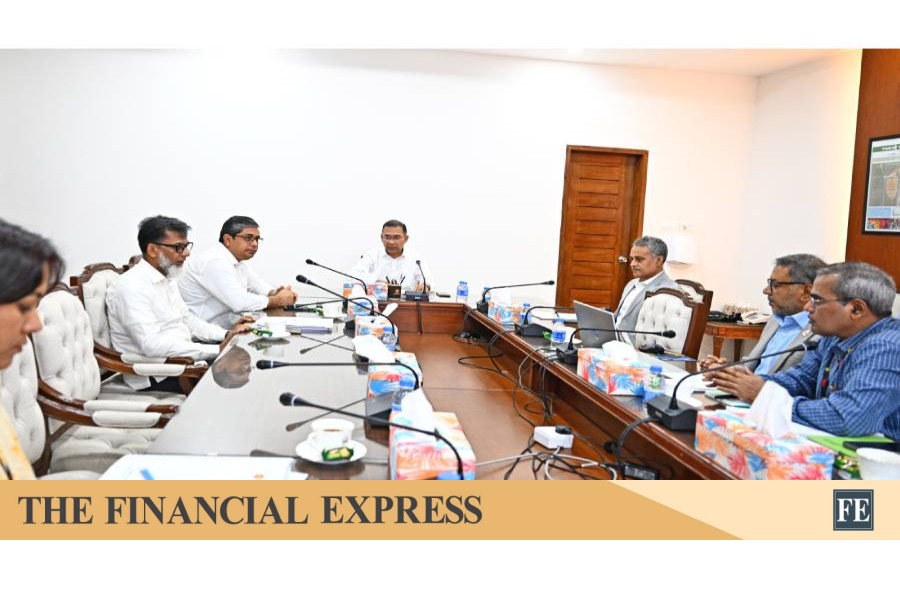
The decision was taken at a meeting on the future planning of Bangladesh Railway held on Tuesday morning at the Cabinet Division’s Public Administration Room at the Secretariat, chaired by Prime Minister Tarique Rahman.

Briefing reporters, Prime Minister’s Deputy Press Secretary Hasan Shiplu said the meeting discussed both medium- and long-term development plans for the railway sector.

“Detailed discussions were held on the modernisation of Bangladesh Railway, including phased conversion of metre-gauge lines from Panchagarh to Cox’s Bazar into broad-gauge lines and upgrading the signalling system,” he said.

Shiplu also said issues related to financing of these plans were discussed at the meeting, with the Prime Minister giving necessary directives.

Railways Minister Shaikh Rabiul Alam, State Minister Habibur Rashid, State Minister for Local Government, Rural Development and Co-operatives Mir Shahe Alam, Prime Minister’s Adviser Rashed Al Mahmud Titumir, Principal Secretary ABM Abdus Sattar, Railways Secretary Md Fahimul Islam, and Director General of Bangladesh Railway Afzal Hossain, among others, were present.​
 

Cord line project in budget
Dhaka to Chattogram by train in three and a half hour

Sujan Ghose
Chattogram
Published: 18 Jun 2026, 14: 10

1781827217412.webp

Chattogram station File photo

Although the distance between Dhaka and Chattogram is currently 248 kilometres by road, the railway route extends to 320 kilometres. At present, trains take between five and six hours to travel from Dhaka to Chattogram.

To shorten this lengthy journey, the long-discussed Dhaka–Cumilla Cord Line, or direct railway connection project, has once again come to the forefront.

Finance Minister Amir Khasru Mahmud Chowdhury announced the project in the proposed national budget for fiscal year 2026-27.

According to Bangladesh Railway officials, implementing the project would reduce the Dhaka–Chattogram rail route by nearly 80 kilometres and reduce travel time to approximately three and a half hours.

The officials emphasised that this is not merely a passenger transport project.

They believe it could also become a crucial piece of infrastructure for future freight transportation associated with Chattogram Port, the planned Bay Terminal, and the Matarbari Deep-Sea Port.

Cord line returns to the budget agenda

During his budget speech in the Jatiya Sangsad (National Parliament), the finance minister stated that Bangladesh Railway had already completed the feasibility study for constructing a cord line on the Dhaka–Cumilla section of the Dhaka–Chattogram railway corridor.

Among three proposed alignments, planners have provisionally selected a route extending from Shyampur in Narayanganj to Cumilla.

The budget speech further stated that freight trains carrying goods from Chattogram Port, the Bay Terminal, and the Matarbari Deep-Sea Port would be able to use the existing Chattogram–Feni–Cumilla–Brahmanbaria–Bhairab–Narsingdi railway line to connect directly with the proposed Dhirashram Inland Container Depot (ICD).

We have completed the feasibility study. Among the three alternative alignments, we have provisionally selected a route from Shyampur in Narayanganj to Lalmai in Cumilla. This route will reduce the distance between Dhaka and Chattogram by 80 to 90 kilometres and save approximately two hours of travel time-------Md Afzal Hossain , Bangladesh Railway Director General.

This connection would strengthen both the national economy and the country's logistics sector.

The Bangladesh Nationalist Party (BNP), in its election manifesto, pledged to revitalise the railway system as the central backbone of the national transport network. The budget speech reflected that commitment.

However, the budget did not specify any separate allocation for the project, its estimated cost, or a timeline for implementation.

Railway officials said they are currently preparing the detailed design for the project. They aim to finalise the Development Project Proposal (DPP) by June next year.

Why cord line is necessary

At present, trains travelling between Dhaka and Chattogram operate via Cumilla, Brahmanbaria, Bhairab, and Narsingdi. As a result, the railway route is considerably longer than the road route.

According to Bangladesh Railway, passenger trains require between five and six hours to travel from Dhaka to Chattogram.

In practice, various operational factors often increase the journey time further. Meanwhile, following the opening of the four-lane highway, road travel in many cases now takes less time than rail travel.

Railway officials said they are currently preparing the detailed design for the project. They aim to finalise the Development Project Proposal (DPP) by June next year.

The proposed cord line would bypass the lengthy Akhaura–Bhairab detour and establish a direct railway connection through Dhaka–Narayanganj–Cumilla.

This would reduce both travel time and transportation costs for passengers and freight services alike.

According to information published by Bangladesh Railway and various media outlets, the concept of the Dhaka–Chattogram Cord Line is not new.

Discussions first began in 1968. Although successive governments revived the proposal at different times, none advanced it to the implementation stage.

Speaking about this, Bangladesh Railway Director General Md Afzal Hossain told Prothom Alo, “We have completed the feasibility study. Among the three alternative alignments, we have provisionally selected a route from Shyampur in Narayanganj to Lalmai in Cumilla. This route will reduce the distance between Dhaka and Chattogram by 80 to 90 kilometres and save approximately two hours of travel time.”

Railway officials emphasise that this is not merely a passenger transport project. They believe it could also become a crucial piece of infrastructure for future freight transportation associated with Chattogram Port, the planned Bay Terminal, and the Matarbari Deep-Sea Port.

Md Afzal Hossain added, “We will also move forward gradually with the necessary preparatory work, including land acquisition, to implement the project.”

Significant potential for freight transportation

The Dhaka–Chattogram corridor is the country's most important economic corridor. Chattogram hosts Bangladesh’s principal seaport.

The planned Bay Terminal and the Matarbari Deep-Sea Port will further expand the region’s strategic importance. Once these facilities become fully operational, demand for freight transportation will increase substantially.

Business leaders in Chattogram have long argued that, despite hosting the country’s principal seaport, the city still lacks a fast and reliable railway connection with the capital.

Consequently, freight transportation remains heavily dependent on road networks.

At present, freight trains require between 12 and 15 hours to travel between Dhaka and Chattogram. In some cases, shortages of locomotives and train services force businesses to wait even longer.

According to Bangladesh Railway data, the freight transportation sector has not achieved its expected level of growth.

In the previous financial year, Bangladesh Railway generated Tk 723.1 million in revenue from freight operations.

In the current financial year, revenue has declined to Tk 650.9 million, despite a target exceeding Tk 2.27 billion.

During the first eight months of the 2024–25 financial year, 1,838 freight trains operated on the network. During the same period of the current financial year, only 985 freight trains operated.

In other words, the number of freight trains has fallen by almost half within a year. During the same period, Bangladesh Railway had set a target of transporting 199,715 wagons but transported only 49,476 wagons.

Railway officials identify locomotive shortages as the principal cause of this decline. Although operations require an average of 13 locomotives each day, only three to four are available.

As a result, freight train services face continual disruption, and businesses are losing confidence in rail transport.

According to railway officials, the introduction of the cord line would allow operators to run more trains within the same timeframe. This would increase capacity for both passenger and freight transportation.

Business community expectations

Business leaders in Chattogram have advocated the construction of the cord line for many years.

Amirul Haque, president of the Chattogram Chamber, told Prothom Alo, “The implementation of the Dhaka–Chattogram Cord Line will bring a transformative change to both passenger and freight transportation. As economic activities continue to expand around Chattogram Port, the Bay Terminal, and the Matarbari Deep-Sea Port, the country also requires railway connectivity that matches this growth.”

“The announcement of the project in the budget has made us optimistic. However, to address the logistics challenges of the future, there is no alternative to a 10-lane expressway,” he added.​
 

Latest Posts

Back