[🇧🇩] Bangladesh Railway

Quick Reply ✓ Posted!
[🇧🇩] Bangladesh Railway
98
6K
More threads by Saif

G Bangladesh Defense

US Ambassador highlights American engineering in Bangladesh’s railway connectivity

Staff Correspondent
Published: 01 Sep 2026, 20: 30

1788306978772.webp

US Embassy in Dhaka

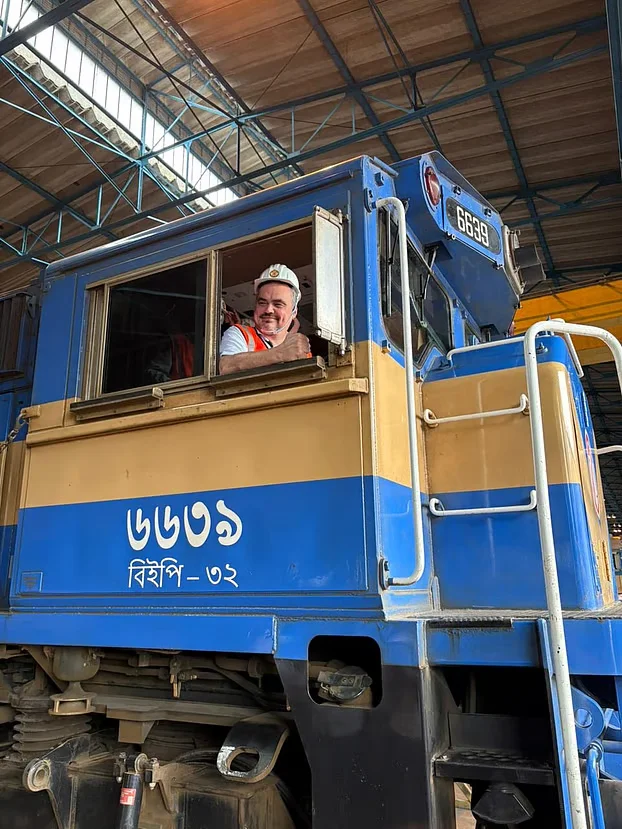
US Ambassador Brent T Christensen visited Bangladesh Railway’s Central Locomotive Workshop in Parbatipur, where Bangladeshi technicians maintain American-made locomotives supporting passenger and freight transportation across the country.

The US Embassy in Dhaka said this in a press release sent to the media by US Mission spokesperson Poornima Rai on Tuesday.

1788307008930.webp

US Embassy in Dhaka

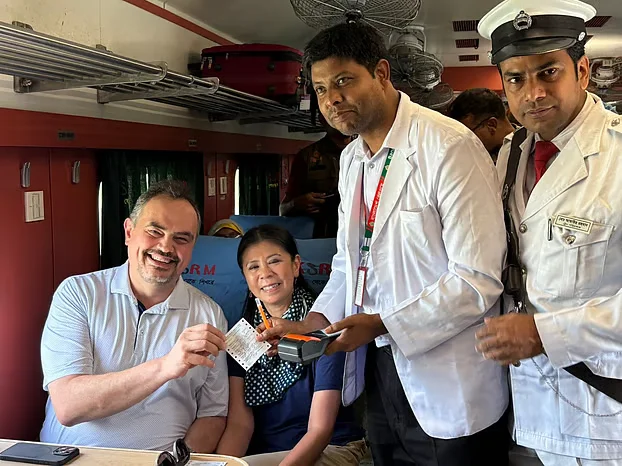
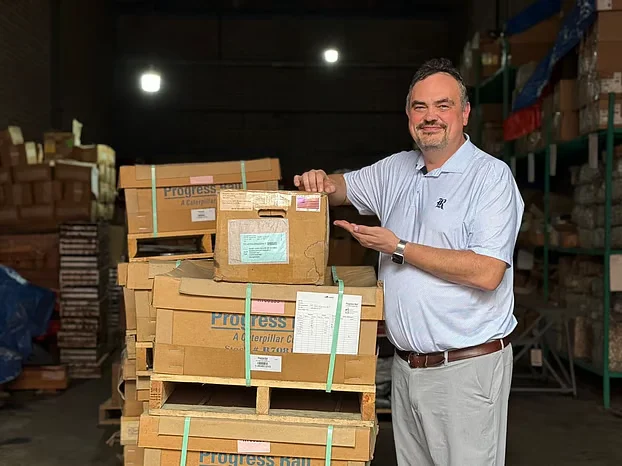
Ambassador Christensen toured the workshop, viewed a locomotive manufactured by US company Progress Rail, and met the Bangladeshi railway professionals who maintain the locomotives.

He then traveled by train to Saidpur, spoke with passengers, and visited the historic Saidpur Railway Workshop and Museum.
1788307041006.webp

US Embassy in Dhaka

Bangladesh Railway’s purchase of 40 Progress Rail locomotives demonstrates how US exports and technology can support Bangladesh’s infrastructure and development priorities.

The visit highlighted the practical and enduring value of expanded trade and commercial cooperation between the United States and Bangladesh.​
 

Bangladesh Railway plans first electric train project worth Tk 38.23b

Project likely to be placed before the ECNEC today


1789533602353.webp


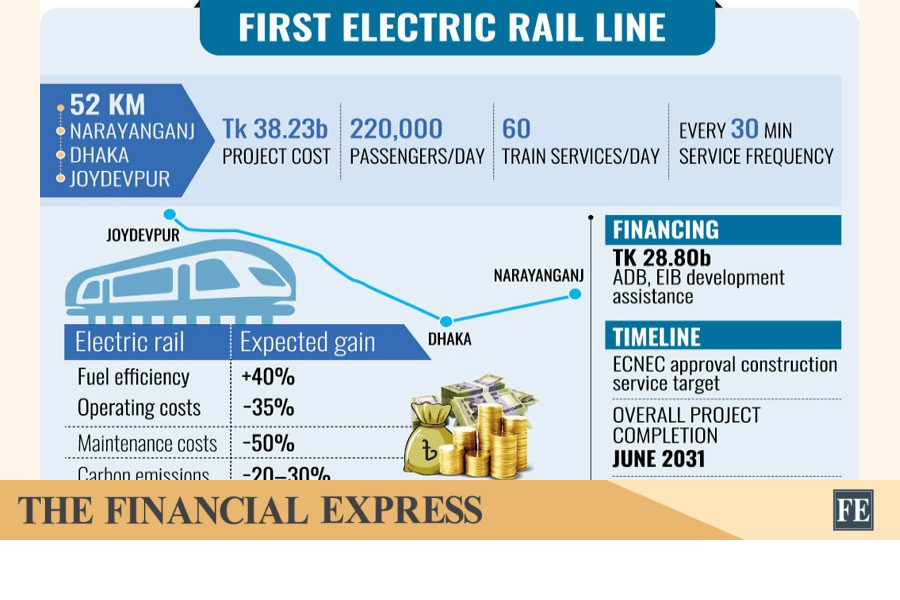
Bangladesh Railway is set to take its first major step towards electrifying the country's rail network with a Tk38.23-billion project to build an electric train line connecting Narayanganj, Dhaka and Joydevpur.

Upon its completion, the project aims to run 60 daily services every 30 minutes and carry around 220,000 passengers a day on the 52-kilometre route, BR officials said.

Each of the trains will carry up to 3,600 passengers, with five-car EMUs (Electric Multiple Units) plying the route, they said.

Two sets of EMUs will operate every 30 minutes from 6:00am to midnight, the BR said.

The project is likely to be placed before the ECNEC (Executive Committee of the National Economic Council) today (Wednesday) for approval.

"It will be our first initiative to build an electric train line in Bangladesh. If the ECNEC approves the project, we will go ahead with constructing the railway line," said a senior official at the Ministry of Railways (MoR).

He said the train would be a commuter service carrying thousands of passengers daily between Narayanganj, Dhaka and Joydevpur.

Dhaka is one of the busiest cities in the world and suffers from massive traffic gridlock. The proposed electric train will operate at a higher speed than conventional trains.

According to the BR, a workshop for electric trains and EMUs will be constructed somewhere between Joydevpur and Mouchak in Gazipur.

According to the BR project proposal, the Asian Development Bank (ADB) and the European Investment Bank (EIB) will provide Tk28.80 billion in development assistance.

The project is scheduled to be implemented by June 2031, BR officials said.

Electric trains offer 40 per cent greater fuel efficiency and are expected to reduce operating costs by 35 per cent and maintenance costs by up to 50 per cent compared with current levels. Additionally, carbon emissions are expected to decrease by 20 to 30 per cent.

Initially, the service will operate across three districts, with plans also in place to introduce electric trains on the Dhaka-Chittagong route.

The Development Project Proposal (DPP) states that electric trains will bring significant changes to the economy and transport sector.

Electric trains can accelerate and decelerate much faster than diesel engines, allowing them to reach top speeds quickly after departing from stations.

Consequently, travel time on the Narayanganj-Dhaka-Joydevpur route is expected to be cut by more than half.

Bangladesh Railway currently uses diesel-electric traction. Official documents say the proposed electric system will be roughly 40 per cent more fuel-efficient and allow significantly higher operating speeds.

Indian Railways has electrified 99.6 per cent of its broad-gauge network, completing one of the world's largest infrastructure transformation programmes in a decade.

Switzerland is the first country to have 100 per cent electric train lines across the country.​
 

Three more trains to be handed over to private management to increase revenue

Sujan Ghose
Chattogram

1790381496020.webp

Bangladesh Railway File photo.

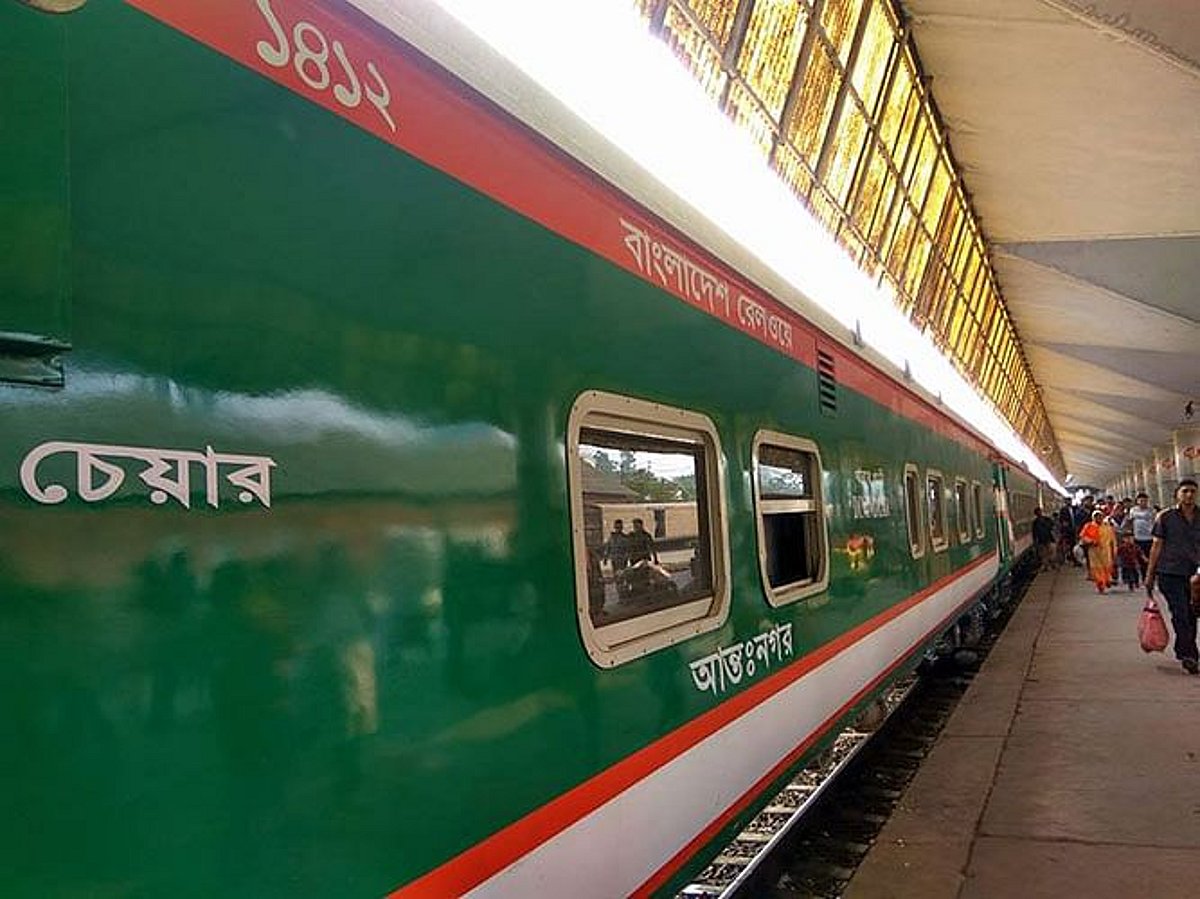
Railway Eastern Zone has taken an initiative to hand over the commercial operations of three more trains to private management to increase revenue. The trains are the Jaria Local on the Mymensingh–Jaria Jhajhaingail route, Narayanganj Commuter on the Dhaka–Narayanganj route and Narsingdi Commuter on the Dhaka–Narsingdi route.

At present, eight trains in the Eastern Zone are operated under private management. With the addition of the three new trains, the number will rise to 11.

Railway officials say that because of a shortage of manpower, tickets cannot be checked regularly for all passengers. Many people board trains without tickets. Others buy tickets for shorter distances but travel to destinations farther away.

Against this backdrop, the three trains are being considered for private management. Officials expect this to make ticket sales, ticket inspection and fare collection more effective.

Sujit Kumar Biswas, chief commercial manager of Railway Eastern Zone, told Prothom Alo that the railway expects to earn more revenue from the three trains once they are placed under private management.

The eight trains currently operating under private management in the Eastern Zone are Karnaphuli Commuter on the Dhaka–Chattogram route, Sagarika Commuter on the Chattogram–Chandpur route, Balaka Commuter on the Dhaka–Jaria Jhajhaingail route, Titas Commuter on the Dhaka–Akhaura route, Titas Commuter on the Dhaka–Brahmanbaria route, Mahua Commuter on the Dhaka–Mohanganj route, Jamalpur Commuter on the Dhaka–Dewanganj Bazar route and Dewanganj Commuter.

Decision taken for six trains, three for now

According to railway sources, a decision was taken in April this year to place six trains under private management to improve passenger services and increase revenue.

Besides Jaria Local, Narayanganj Commuter and Narsingdi Commuter, the list included Samatat Express on the Noakhali–Laksam route, Noakhali Express on the Noakhali–Dhaka route and Nazirhat Local on the Chattogram–Nazirhat route.

However, sources in Railway Eastern Zone said only three trains are being handed over to private management for now. Samatat Express and Noakhali Express are currently out of service because of a shortage of locomotives.

Nazirhat Local, meanwhile, is not being handed over to private management at this stage because an initiative has been taken to upgrade its coaches. Once the upgrade is complete, the train is also planned to be placed under private management.

The Jaria Local, which is being considered for private management for now, operates eight times a day (four pairs), Narayanganj Commuter 16 times (eight pairs) and Narsingdi Commuter twice (one pair). Railway recently published a tender notice to appoint private contractors to handle the commercial operations of the three trains. Tender forms can be collected until 5 October, and the deadline for submitting bids is 6 October.

Ticket inspection difficult

Railway officials say passenger turnover is high on local and commuter trains. These trains operate over short distances and stop at many stations along the way. As a result, large numbers of passengers board and get off at each station. Adequate manpower is needed to check their tickets and manage passengers.

However, the railway has been facing a manpower shortage for a long time. In particular, because of shortages in the commercial department, including ticket examiners, it is not possible to check tickets regularly on all trains.

As a result, passengers can sometimes board trains without buying tickets at the station. Others travel to destinations farther away after buying tickets for only part of the journey. This causes revenue losses for the railway. Railway officials believe that assigning responsibility for ticket sales and inspection, fare collection and record-keeping to private companies could help reduce the number of passengers travelling without tickets.

Three trains generate nearly Tk 45 million

According to railway data, Narayanganj Commuter, Narsingdi Commuter and Jaria Local generated Tk 44.4 million in revenue in the latest 2025–26 fiscal year. During the period, the three trains carried 1.095 million passengers. Railway officials expect these trains to generate more revenue after being placed under private management.

According to railway data, the eight trains whose commercial operations are currently being managed privately generated Tk 105.1 million in revenue when they were last operated under government management. After being placed under private management, they generated Tk 263.3 million in the 2024–25 fiscal year. That means revenue increased by Tk 158.2 million.​
 

Increase carriages for freight compared to passengers in Railways: JS committee


1791157566876.webp


A parliamentary committee has recommended increasing the number of freight carriages compared with passenger carriages to boost Bangladesh Railway’s revenue and help turn the sector into a profitable one.

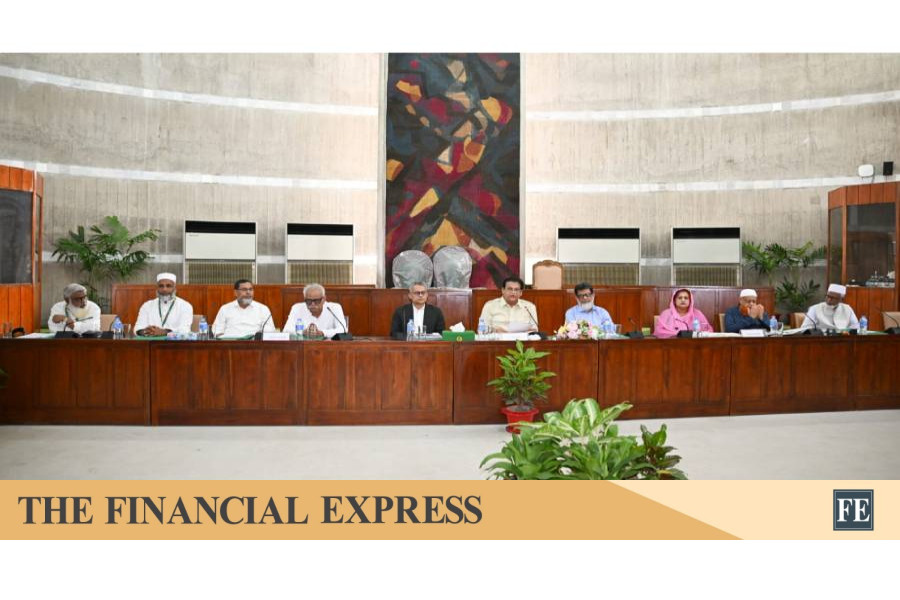
The recommendation was made at a meeting of the Parliamentary Standing Committee on the Ministry of Railways held at the Jatiya Sangsad on Sunday, according to a press release issued by the Parliament Secretariat after the meeting.

The committee directed the Ministry of Railways to increase freight carriages to raise the railway’s income. It also recommended increasing revenue through the export of cargo from Bangladesh by rail.

The committee further advised taking necessary measures to transform the railway sector from a loss-making sector into a profitable one.

At the meeting, officials presented information on Bangladesh Railway’s existing digital services, initiatives to manufacture locomotives according to specified requirements and increase their number, and measures taken by the ministry to stop ticket black-marketing.

The progress of the proposed Panchagarh-Cox’s Bazar railway line was also discussed at the meeting.

The meeting was chaired by committee chairman Mohammad Ali Asgar.

Railways Minister Sheikh Rabiul Alam, State Minister Habibur Rashid, and committee members Abdul Mohit Talukdar, Israt Sultana Elen Bhutto, Md Abu Said Chand, Md Robiul Awal, Mizanur Rahman, Muhammad Azizur Rahman and Golam Rabbani attended the meeting.​
 

Elevated chord line to cut Dhaka-Ctg rail distance by 80km


1791933464691.webp


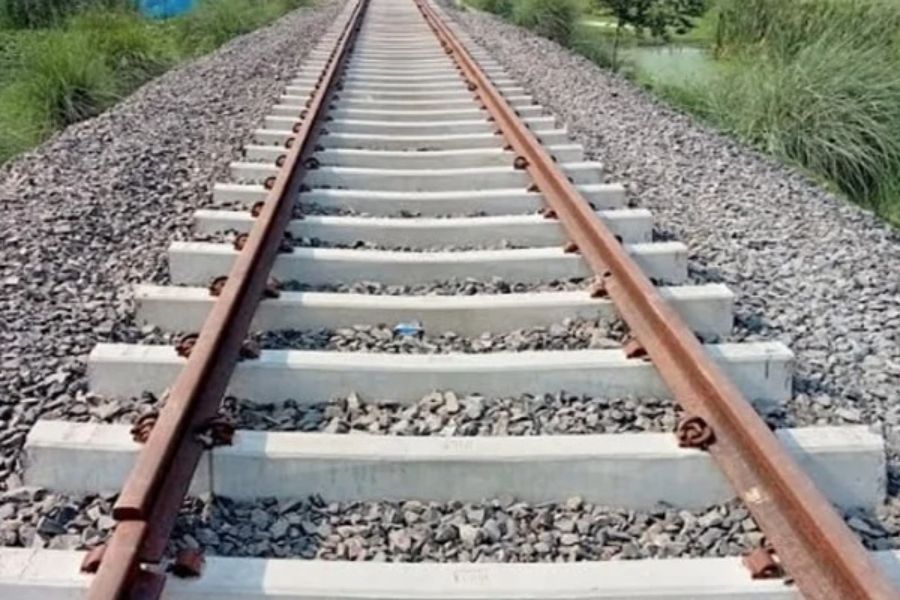
The government plans to construct an 81-kilometre elevated railway line from Shyampur in Dhaka to Cumilla to shorten the Dhaka-Chattogram rail distance by 80 kilometres and reduce travel time by around 1.5 to two hours.

Prime Minister's Information and Broadcasting Adviser Dr Zahed Ur Rahman disclosed the plan at the weekly press briefing at the Press Information Department (PID) on Tuesday..

The proposed double-track broad-gauge railway line will have a maximum design speed of 160 kilometres per hour and an operational speed of 140 kilometres per hour. It will also include provisions for operating high-speed electric trains in the future, reports BSS.

The initial estimated cost of the fully elevated railway project is Tk 83,901 crore, while construction is expected to take four years after the completion of land acquisition.

The elevated structure is expected to save around 322 acres of land. An initial proposal for the project was submitted to the Ministry of Railways on October 5.

The briefing also revealed that data collection has begun nationwide to develop a central database covering an estimated 4.45 crore families by December under the Family Card programme.

The database will incorporate near-field communication (NFC) and quick response (QR) code technologies to facilitate women's empowerment and strengthen social protection.

The government has allocated Tk 14,500 crore for the programme in the 2026-27 fiscal year, including Tk 12,300 crore for direct allowances.

Another 40 lakh women heads of households will be brought under the programme during the current fiscal year, with the government aiming to cover all eligible household heads within three years.

Senior Deputy Principal Information Officer Most. Mobassera Kadery and officials from the relevant ministries attended the briefing.​
 

PKDefense Forums: Country-by-Country Military Discussions

Log In Register Forums
Videos
Back