Bangladesh Defense
Saif
Senior Member
- Joined
- Jan 24, 2024
- Messages
- 21,327
- Likes
- 9,697
- Nation

- Residence
- Axis Group


Mayhem of Saint Martin's Island
The country's only coral island Saint Martin's Island, known for its rich marine bio-diversity, once again, is making news for all the wrong reasons. Pictorial reports carried in a few contemporaries show that construction of tourist resorts and cottages on the island are going on in defiance of th
Mayhem of Saint Martin's Island
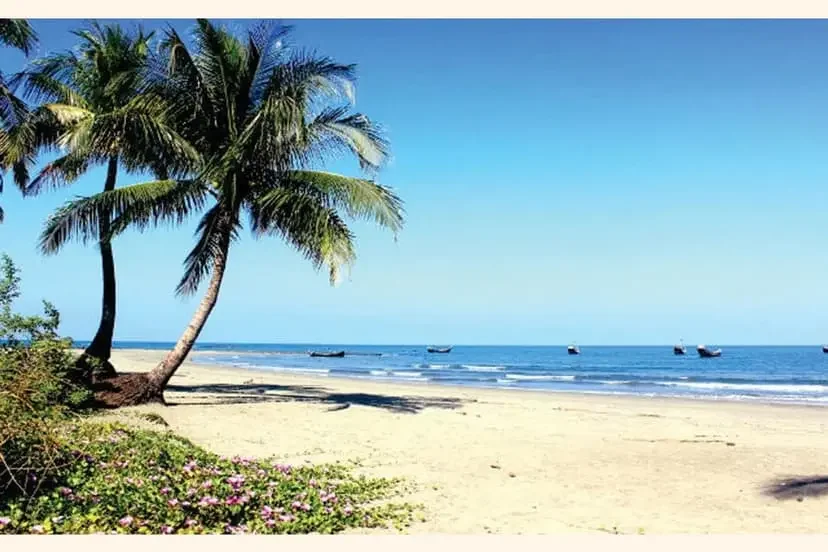
The country's only coral island Saint Martin's Island, known for its rich marine bio-diversity, once again, is making news for all the wrong reasons. Pictorial reports carried in a few contemporaries show that construction of tourist resorts and cottages on the island are going on in defiance of the ban on all kinds of permanent constructions. The island was declared an Ecologically Critical Area (ECA) as early as 1989. A formal gazette notification was issued in 1999, confirming the ECA status and prohibiting construction of all unauthorised buildings. In 2022, the island was further designated as a Marine Protected Area.
However, the irony is that no fewer than 230 resorts and cottages were constructed there in the past three decades. Right now 12 such permanent buildings are under construction. Their construction started after the July 2024 uprising. During the last leg of Awami League rule, 70 such resorts and cottages were built. At a time when the island is declared a Marine Protected Area, resorts and cottages also come up undeterred. The contradiction and hypocrisy could not be more glaring. If the fresh batch of resorts under construction is completed, the total number would be more than 300. That is too much for this small island.
On August 8 last, State Minister for Environment, Forest and Climate Change Sheikh Faridul Islam paid a visit to St. Martin and instructed Cox's Bazar development authority, district administration and the Department of Environment to take action against such construction. What kind of actions those authorities are supposed to take? His instruction is vague and far from precise. In such cases, the authorities usually impose fines on the lawbreakers. But there was need for a clear order to dismantle the permanent structures under construction. This is unlikely to happen.
Carrying construction materials to the island is legally restricted but it is clear that the restriction has been circumvented by those who have started the illegal construction. These are undesirable developments and the authorities do nothing more than paying lip services to this critical ecosystem of the island. First of all, the island has lost many of its marine resources because of unplanned and illegal constructions. Once, there were 1076 species including migrant birds that found a safe sanctuary there. Excessive and mindless tourism is also responsible for spoilage of its fragile environment.
Indeed, many of the lost species cannot be brought back but some can still be given a new lease of life. The ban on tours to the island for nine months during the caretaker government helped recover the island to a large extent. The bushes of screw pines (kewda) had lush growth allowing crabs to proliferate and tortoise to lay eggs there. Even the coral reefs showed clear evidence of recuperation. But the latest spree of construction is damaging the screw pine bushes so important for keeping the sandy barrier intact against storms and cyclones.
What is particularly worrying is that a Tk 89-million project under implementation for recovery of the island against the climate change will face a stiffer challenge if the latest construction of resorts and cottages is allowed. The project will fail to achieve its stated objective if the screw pine bushes are destroyed and the invasion of tourists continues. Tourism should be restricted and the structures under construction dismantled immediately. Those who have initiated the illegal construction should be held accountable for violating the legal provisions.
The island has to be saved at all costs. No political considerations should prove overriding over the ecological sustainability of the island. If the island faces the danger of getting wiped out because of human infringement, even the resorts and cottages already constructed or being constructed will have no existence. This small island can survive only when its ecological sustainability is maintained by restorative projects like the one already in progress. The minister concerned must live up to the challenge before it is too late.
The country's only coral island Saint Martin's Island, known for its rich marine bio-diversity, once again, is making news for all the wrong reasons. Pictorial reports carried in a few contemporaries show that construction of tourist resorts and cottages on the island are going on in defiance of the ban on all kinds of permanent constructions. The island was declared an Ecologically Critical Area (ECA) as early as 1989. A formal gazette notification was issued in 1999, confirming the ECA status and prohibiting construction of all unauthorised buildings. In 2022, the island was further designated as a Marine Protected Area.
However, the irony is that no fewer than 230 resorts and cottages were constructed there in the past three decades. Right now 12 such permanent buildings are under construction. Their construction started after the July 2024 uprising. During the last leg of Awami League rule, 70 such resorts and cottages were built. At a time when the island is declared a Marine Protected Area, resorts and cottages also come up undeterred. The contradiction and hypocrisy could not be more glaring. If the fresh batch of resorts under construction is completed, the total number would be more than 300. That is too much for this small island.
On August 8 last, State Minister for Environment, Forest and Climate Change Sheikh Faridul Islam paid a visit to St. Martin and instructed Cox's Bazar development authority, district administration and the Department of Environment to take action against such construction. What kind of actions those authorities are supposed to take? His instruction is vague and far from precise. In such cases, the authorities usually impose fines on the lawbreakers. But there was need for a clear order to dismantle the permanent structures under construction. This is unlikely to happen.
Carrying construction materials to the island is legally restricted but it is clear that the restriction has been circumvented by those who have started the illegal construction. These are undesirable developments and the authorities do nothing more than paying lip services to this critical ecosystem of the island. First of all, the island has lost many of its marine resources because of unplanned and illegal constructions. Once, there were 1076 species including migrant birds that found a safe sanctuary there. Excessive and mindless tourism is also responsible for spoilage of its fragile environment.
Indeed, many of the lost species cannot be brought back but some can still be given a new lease of life. The ban on tours to the island for nine months during the caretaker government helped recover the island to a large extent. The bushes of screw pines (kewda) had lush growth allowing crabs to proliferate and tortoise to lay eggs there. Even the coral reefs showed clear evidence of recuperation. But the latest spree of construction is damaging the screw pine bushes so important for keeping the sandy barrier intact against storms and cyclones.
What is particularly worrying is that a Tk 89-million project under implementation for recovery of the island against the climate change will face a stiffer challenge if the latest construction of resorts and cottages is allowed. The project will fail to achieve its stated objective if the screw pine bushes are destroyed and the invasion of tourists continues. Tourism should be restricted and the structures under construction dismantled immediately. Those who have initiated the illegal construction should be held accountable for violating the legal provisions.
The island has to be saved at all costs. No political considerations should prove overriding over the ecological sustainability of the island. If the island faces the danger of getting wiped out because of human infringement, even the resorts and cottages already constructed or being constructed will have no existence. This small island can survive only when its ecological sustainability is maintained by restorative projects like the one already in progress. The minister concerned must live up to the challenge before it is too late.