New Tweets

[🇧🇩] Bangladesh Tourism

G Bangladesh Defense
[🇧🇩] Bangladesh Tourism
72
4K
More threads by Saif


Make tourism safe and sustainable
Incidents of obstruction in Sylhet tourist spots concerning

1749687581003.webp

VISUAL: STAR

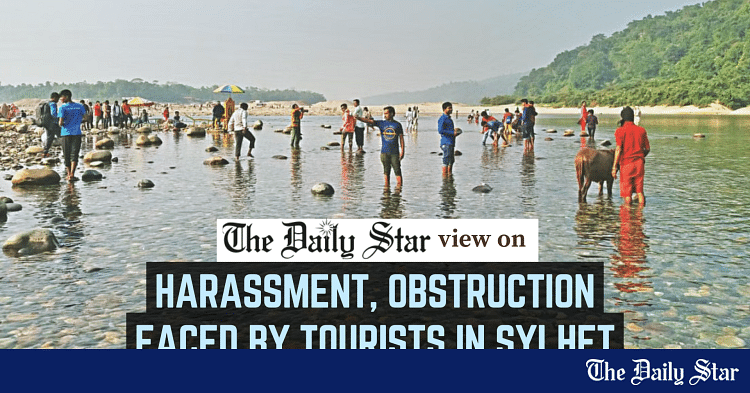
It is troubling to learn of some recent incidents of harassment and obstruction faced by tourists in Sylhet. While such incidents in tourist spots are nothing new, the latest development brought two issues to the fore: growing tension surrounding unregulated mass tourism, and the disturbing role played by religious actors in it. According to our report, people visiting the Utmachhara tourist spot in Companiganj on Sunday (the first day of Eid) were asked to leave by members of the Companiganj unit of Jubo Jamiat, the youth wing of Jamiat Ulema-e-Islam Bangladesh. In a video that has since gone viral, the group members are heard telling visitors of a local decision to bar tourism due to alleged "immoral activities" like drinking and indecent behaviour. The following day, a scuffle broke out between some locals and tourists near the Jaflong BGB camp, although no injuries were reported.

These issues demand critical reflection as mass tourism continues to boom in Bangladesh. There is clearly a fine line to walk here. First of all, tourism is vital for the local economy as it creates employment and supports small businesses. But with too many people rushing to the beauty spots accessible in a small country like Bangladesh, unregulated tourism can be hugely disruptive. We, therefore, must find a way to make this sustainable.

These incidents illustrate how mass tourism can sometimes overwhelm local communities. Complaints about environmental degradation, littering, and disruptive behaviour by visitors are natural in areas where tourist footfall has surged without adequate infrastructure or enforcement of behavioural norms. This creates resentment among locals, who may feel their culture and environment are being disrespected or exploited. But imposing restrictions on tourism—instead of seeking constructive solutions through regulation, education, or improved civic oversight—sets a dangerous precedent. What makes this especially alarming is the involvement of religious groups. While their concerns are shared by many in local communities, their actions—policing public behaviour and dictating who can access shared natural resources—undermine both the rule of law and the inclusive spirit of tourism.

These issues demand critical reflection as mass tourism continues to boom in Bangladesh. There is clearly a fine line to walk here. First of all, tourism is vital for the local economy as it creates employment and supports small businesses. But with too many people rushing to the beauty spots accessible in a small country like Bangladesh, unregulated tourism can be hugely disruptive. We, therefore, must find a way to make this sustainable. Part of the reason for the unregulated mass tourism in Bangladesh is its unregulated development—we cannot address one without addressing the other. Other issues underscored by recent trends involve safety both on the roads and while at the tourist spots. There have been reports of road crashes, criminal activities, and drowning as holidaymakers move to different locations, including Cox's Bazar, which has seen a huge footfall this holiday.

Clearly, to make tourism safe and sustainable, we need to address the persistent lack of safety infrastructure, enforcement of rules, and coordination among all stakeholders. Ensuring community voices are heard while also defending the right to safe and responsible tourism must be the priority. This calls for a comprehensive tourism policy that not only fosters economic opportunities but also protects local culture, the environment, and the safety of tourists. The government may also consider decentralising tourism by investing in new destinations to reduce pressure on existing hotspots. The rise in tourist numbers during holidays is welcome, but without proactive planning and inclusive governance, such growth will only bring more chaos. On their part, Sylhet local administrations must also prevent a repeat of what happened recently and hold to account anyone obstructing tourists.​
 
Analyze

Analyze Post

Add your ideas here:
Highlight Cite Respond

Tourists allowed back to Debotakhum as weather improves in Bandarban

1750898199252.webp

Photo: Mong Sing Hai Marma

The heavy rainfall in Bandarban has ceased, and with the weather now favourable, tourists will once again be allowed to visit Debotakhum -- a popular tourist destination in Rowangchhari upazila -- from today, according to the local administration.

Previously, due to continuous heavy rain and the risk of landslides, the upazila administration had imposed a one-week ban on visiting Debotakhum from June 18 to 25 to avoid putting tourists at risk.

Speaking to The Daily Star yesterday, Rowangchhari Upazila Nirbahi Officer (UNO) Md Saiful Islam said, "Rainfall has significantly reduced in Bandarban over the past few days. The weather appears stable, and the overall situation in the area is good. Therefore, from Thursday, there should be no problem visiting Debotakhum. Tourists can travel as they did before."

"Since it's monsoon season, the hills take on a different form during this time. However, sudden rainfall upstream can trigger flash floods. So, wearing life jackets is mandatory for everyone, and all visitors must travel with caution. We've already instructed the local guides accordingly," he added.

He also mentioned that if the weather deteriorates again due to rain, temporary travel restrictions may be reinstated.

Located in the Loi-ra-going or Kachhaptali area of Rowangchhari upazila, Debotakhum is about 30 to 35 kilometres from Bandarban town. Tourists typically travel by open jeep (locally known as chander gari) or three-wheelers/auto-rickshaws to Kachhapatali in Rowangchhari. From there, it takes about 40 minutes to an hour of trekking through hilly trails to reach the spot.​
 
Analyze

Analyze Post

Add your ideas here:
Highlight Cite Respond

Sylhet needs more focus for tourism: Naser
Zaman Monir . Sylhet 05 July, 2025, 22:31

1751847301010.webp


Despite having diverse natural environment and scenic places as well as many resorts and tourist spots, tourism in Sylhet region cannot fully flourish because of absence of proper infrastructural facilities and easy communication system.

Tourism-related business personalities of Sylhet urged the government to come up with urgent projects to build up sustainable infrastructural facilities and better communication system and focus on the needs of tourists.

Government extended its allout support to tourist spots in Chattogram and Cox’s Bazar region, but remained indifferent to nurturing the growing potentialities of tourism in Sylhert region, said Naser Rahman, a leading tourism entrepreneur and political personality of the region.

In particular, it is very crucial to strengthen the security of visitors, construct adequate number of quality wash blocks at all tourist spots and provide with tourism-oriented entertainment facilities, said Naser, son of former finance minister late Saifur Rahman.

With the development of tourism industry, employment opportunity can be created side by side with the enhancement of revenue, he commented.

New Age talked to Naser Rahman, owner of DuSai Resort and Spa, a quality tourist resort situated along Shrimangal Raod in Moulvibazar, about the prospects and dilemmas of tourism industry in Moulvibazar as well as in the Sylhet division.New Age merchandise

His spontaneous conversation brought out the overall scenario of the tourism sector in Sylhet region, its prospective and limitation. Along with Moulvibazar and Sylhet, he also talked about the overall tourism industry of the country, which could be helpful for further improvement of the sector.

Naser Rahman said that Sylhet division, the northeastern part of Bangladesh, is an ideal place for tourists because of its attractive natural landscape consisting diverse forests, hills, plain land and haors.Bangladesh-themed souvenirs

In 2008, the then caretaker government had recognized only two places of the country as tourist spots and these are Cox’s Bazar and Moulvibazar.

The previous government upgraded the Cox’s Bazar Airport to an international airport,

Chattogram-Cox’s Bazar Road to a national highway, constructed a fresh rail route and Cox’s Bazar-Teknaf Marine Drive Road, which the tourists enjoy much. ‘But, nothing has been done in Moulvibazar to attract tourists,’ Naser Rahman lamented.

‘Work is underway now to turn the Dhaka-Sylhet highway into six-lane. It’s a good initiative. Tourists could reach Moulvibazar within 3 hours and Sylhet in three and a half hours or 4 hours from Dhaka after completion of the ongoing project,’ he commented.

Another disappointing issue is the consistent crisis of train tickets as the online ticketing system has not actually benefited the travelers, he said demanding immediate step to increase the train compartments.

He said that the inter-city trains run on Dhaka-Sylhet and Chattogram-Sylhet routes do not have any air-conditioned coach for Moulvibazar. After a longstanding demand, recently a decision has been taken to allocate only one AC coach for Moulvibazar.

‘In this perspective, I have requested the interim government’s railway affair adviser to launch a tourist dedicated train to operate only between Shrimangal and Dhaka. Because, Shrimangal is the main tourism hub of Moulvibazar as train journey is cost-effective.

It, however, does not need any additional infrastructure, just a few AC coaches and sleeping berths would be sufficient. Because visitors do not want to travel by normal coach in summer, Naser Rahman commented.

Moreover, an airport is also needed if we want to develop Moulibazar as a popular tourist destination, he added. There is an Air Force Base here in Shamsher Nagar near the Moulvibazar twon. Civil aviation also had operated flights here during the Pakistan period. The Air Force Base was operative even after the War of Independence as well. Later, it abandoned in 1973, he stated.

‘following my proposal in this regard, civil aviation ministry already decided to make it operative again,’ Naser Rahman said, adding that they did not want an international airport like Cox’s Bazar, rather a small domestic airport will be sufficient.

Responding to a query, he said that not only the India, Thailand is also rejecting now the visa applications of outbound tourists of Bangladesh. Cashing in the situation, tourist spots of Sylhet region recently experienced a huge crowd of visitors. All resorts, quality hotels, motels and guesthouses were packed with tourists during the vacation of Eid-ul-Azha this year.Bangladesh-themed souvenirs

‘Eighty rooms of DuSai Resort were house full till June 14, the last day of the 10-day Eid holiday,’ he said, adding that it was a good sign for the tourism-oriented businesses.

Naser Rahman, however, observed that developing foreigner-oriented tourism in Bangladesh is very tough. Foreign tourists visit five countries out the seven South Asia countries, except Bangladesh and Pakistan.

Foreign tourists need entertainment along with sightseeing. After a whole day of touring, what is there for them to do at night? Most hotels of our country do not have a bar license because getting a license requires to offer bribe and face many hassles, Naser Rahman alleged.Bangladesh-themed souvenirs

Various entertaining events like traditional music and dance shows as well as concert can be arranged for a certain period in our local cultural institutions like Shilpakala Academy. We can hold a two-hour programme every evening in the academy for tourists and that would be amazing to the foreigners, he continued.

Changing mindset also matters a lot in our society. Cause, only constructing a building and arranging some furniture is not sufficient to establish a quality resort. It needs some other aspects to make it attractive and enjoyable atmosphere for the foreign tourists.

There is no shortage of hotels in the Cox’s Bazar, but the number of standard hotels is very few. So we have to move in a planned way to develop scopes of quality entertainments to attract foreign tourists, he added.

‘Cox’s Bazar has the longest sea beach in the globe, it is a positive aspect. But steps have to be taken to make the environment there safer and more comfortable for foreigners’ movement,’ Naser Rahman commented.

Apart from these, he emphasised the importance of marketing globally the tourism industry of Bangladesh. He said foreign tourists need to be informed that why they should come to Bangladesh?Bangladesh-themed souvenirs

‘If we can overcome these shortcomings, I’m hopeful, Moulvibazar, Sylhet and Cox’s Bazar will one day become popular as gorgeous tourist destinations in the world,’ he added.​
 
Analyze

Analyze Post

Add your ideas here:
Highlight Cite Respond

INNOVATIONS FOR FAST-GROWING ECONOMIC SECTOR
Tourist havens overwhelmed, potential new products emergent


Jasim Uddin Haroon
Published :
Jul 12, 2025 00:30
Updated :
Jul 12, 2025 00:30

1752279961847.webp


Tourist havens like beaches and bewitching forests across Bangladesh being overwhelmed with backpackers, potential new tourism products are now envisaged for the fast-growing economic sector.

The country's tourism sector is evolving into a significant economic pillar, contributing around 4.0 per cent of GDP and supporting over 2.0 million jobs as of now.

Its projected market volume is worth US$3.46 billion by 2029, with revenue reaching US$2.40 billion. The hotels market is expected to be the largest within the sector, with a projected market volume of US$1.21 billion in 2025.

The country now needs a shift toward sustainable and alternative forms of tourism, such as agro-tourism, rural tourism, community-based tourism, and river tourism, to ease pressure on the buzzing tourist spots and ensure long-term preservation of its natural and cultural assets, according to tourism experts and operators.

They think these new and unconventional tourism models are gaining traction as the mainstream tourist spots - Cox's Bazar, the Chittagong Hill Tracts, the Sundarbans mangrove forests and Sylhet sites - are overwhelmed with visitor surges during peak seasons.

Such influxes not only strain local infrastructure and ecosystems but also degrade the quality of travel experience, they argue.

"Our iconic tourist destinations become overcrowded during peak periods, and visitors often no longer find the peace or relief they seek," says Md. Rafeuzzaman, President of the Tour Operators Association of Bangladesh (TOAB).

"For this reason, many prefer agro-tourism, rural and community-based tourism, river tourism, and even spiritual tourism where they get peaceful habitat."

These forms of tourism promote sustainability, diversify the travel experience, and generate economic opportunities in rural areas.

But industry stakeholders say coordinated government support and aligned policies are essential to scale these alternatives.

"We need the government to take this seriously - to develop detailed policies, improve infrastructure, and support training and marketing," he adds.

The tour operators say agro-tourism and community tourism in the CHT allow tourists to explore local farms, experience indigenous cuisine, and learn about organic "zoom" farming practices.

River tourism, meanwhile, could offer guided journeys through Bangladesh's vast crisscrossing river networks, blending scenic pastoral beauty with cultural immersion.

The International Centre for Integrated Mountain Development (ICIMOD), based in Kathmandu, has initiated community-based tourism projects in Bandarban's Ruma upazila, empowering indigenous communities to participate in and benefit from tourism.

"This type of tourism increases local income by involving communities in activities such as homestays, guiding, cultural performances, and handicrafts," says Md. Kabir Uddin, ICIMOD's Bangladesh representative.

Despite such early progress, tour operators say that government support remains inadequate.

"There are many resorts in places like Gazipur, greater Sylhet, and CHT," says Khabir Uddin Ahmed, the founder-president of the Tourism Resort Industries of Bangladesh.

"But a lack of road connectivity and basic infrastructure frustrates both domestic and foreign tourists. We offer green and rural tourism, but without support, we struggle to expand," Mr. Ahmed adds.

M. Nasir Uddin Badal, chairman of Aral Sea Limited, echoes similar sentiments about the prospects and necessary action for the income-and job-generating hospitality and recreation industry.

"We built a resort in Dakop upazila, called Sundori Eco Resort, where tourists enjoy viewing the Sundarbans by boat through the canals. Ecotourism is expanding fast, but it needs government facilitation."

Some tour operators have urged the interim government to include tourism-sector reforms in its policy initiatives.

"We have potential, but image issues and lack of facilitation hold us back," says Syed Habib Ali, president of the Tourism Developers Association of Bangladesh.

While several tourism master plans have been proposed over the years, implementation has been slow, often failing to prioritize sustainability or local community engagement.

The Bangladesh Resorts Association also warns that without proper zoning, quality standards, and investment in emerging destinations, the country risks overexploiting existing hotspots while leaving culturally rich areas underdeveloped.

Experts say Bangladesh urgently needs a national strategy that integrates environmental protection, economic inclusivity, and cultural preservation - a model that could relieve overcrowded destinations and provide tourists with more meaningful, authentic experiences.​
 
Analyze

Analyze Post

Add your ideas here:
Highlight Cite Respond

Govt prioritising sustainable, green tourism: Adilur
Bangladesh Sangbad Sangstha . Dhaka 04 August, 2025, 22:57

Industries adviser Adilur Rahman Khan today said that the interim government has been prioritising sustainable and green tourism by taking various initiatives to strike a balance between economic growth, environmental protection, and cultural conservation.

‘Despite its vast potential, the contribution of the tourism sector to Bangladesh’s national economy remains low. Compared to other countries, Bangladesh’s tourism sector is still lagging behind,’ he said.

The Industries Adviser made the remarks while inaugurating a four-day international workshop titled ‘Workshop on Sustainable Practices in Green Tourism’ at a hotel in Dhaka.

According to a press release issued by the Ministry of Industries, Chowdhury Ashik Mahmud Bin Harun, executive chairman of the Bangladesh Investment Development Authority (BIDA), attended the event, which was presided over by ministry secretary Md Obaidur Rahman.

Adilur said Bangladesh is home to the world’s largest mangrove forest-the Sundarbans-and the longest sea beach in Cox’s Bazar. The country also boasts historic sites like Mahasthangarh, Paharpur, Sonargaon, Rampal, Bajrayogini, and the naturally scenic Chattogram Hill Tracts, which attract both domestic and foreign tourists.

Speaking at the event, BIDA executive chairman Chowdhury Ashik Mahmud Bin Harun said green tourism is one of the fastest-growing sectors globally. He noted that the global eco-tourism market is worth around $600 million but remains largely concentrated in small communities.

Ashik emphasized that Bangladesh has significant potential for developing sustainable and green tourism.

The National Productivity Organization (NPO), Bangladesh, and the Asian Productivity Organization (APO), Japan, have jointly organized the workshop. Representatives, policymakers, researchers, and tourism entrepreneurs from 24 APO member countries are attending the event. Md. Nurul Alam, Director General of NPO, delivered the welcome address.

The four-day workshop will feature 15 sessions focused on tourism, sustainable eco-tourism, and climate change. Representatives from APO member countries will present research papers and concept notes on sustainable tourism.​
 
Analyze

Analyze Post

Add your ideas here:
Highlight Cite Respond
Barisal and countryside of Bangladesh

 
Analyze

Analyze Post

Add your ideas here:
Highlight Cite Respond

Treasure trove of tourism in Bangladesh still untapped
By Kamrun Nahar Sumy 04 April, 2024, 23:36

1764122516772.webp


Marzia Islam is a young professional with an unwavering passion for exploring her country whenever she can steal a break from her bustling life.

However, her solo adventures often leave her feeling weary due to security concerns, and she seeks the comforting company of her family or friends, even though the destinations are always teeming with enthusiastic travellers.

Many people involved in the tourism industry, including avid travellers like Marzia Islam, a schoolteacher in Dhaka, consistently express their frustration.

They believe that despite the immense potential of places ranging from enchanting coastlines to majestic mountains, religious, historical, or archaeological sites, Bangladesh is still struggling to showcase its treasures to foreign tourists who frequently visit other South and Southeast Asian countries in close proximity.

Despite recent improvements in connectivity and infrastructure development across the country, the tourism industry has yet to realise its full potential, primarily due to various lingering barriers.

They believe there should be a special focus on ensuring the safety and security of women travellers, considering that almost half of the country's population is female.

However, many believe that if Bangladesh could capitalise on the treasure trove of its scenic beauty, historical, religious, and archaeological potentials, the country could earn a significant amount of foreign currency, much like its counterparts in South and Southeast Asia.

People in the sector believe it could have been a game-changer.

With the recent development of transportation infrastructures and connectivity, there is also an added opportunity.

While domestic travel in Bangladesh has risen significantly in recent years, the vast potential to tap foreign currency through this sector mostly remains untapped due to the lack of branding, irregularities, and bureaucratic complexity.Best vacation packages

Bangladesh, endowed with scenic natural beauties and diverse historical and archaeological sites, along with various ethnic communities, has a broad scope to make tourism a major source of foreign exchange earnings and create employment opportunities, much like the Readymade Garments (RMG) industry, which is the main source of the country’s foreign currency earning.

According to the Bangladesh Bureau of Statistics, based on the data of the 2018-19 fiscal year, tourism's contribution to the gross domestic product (GDP) is estimated at 3.02 per cent or Tk 76,690.7 crore, with more than 90 per cent coming from domestic tourism. In contrast, tourism in neighbouring India accounts for 4.6 per cent of its GDP, Sri Lanka nearly 12 per cent, Nepal 6.7 per cent, and Maldives more than 28 per cent, with the majority coming from international tourists.

Although the country has witnessed a boost in domestic tourism, largely due to available information shared on social media, insiders in the tourism sector blame inadequate branding, visa complications, limited real-time online/offline information, a tendency to charge excessive prices from tourists, and social conservatism for the meagre number of foreign tourists.

The country currently ranks 100th out of 117 countries in the world on the Travel and Tourism Development Index 2021, released by the World Economic Forum in 2022, while Asian countries like Singapore, Thailand, India, Sri Lanka, and Pakistan rank 9th, 36th, 54th, 74th, and 83rd, respectively.

Shiblul Azam Koreshi, the president of the Tour Operators Association of Bangladesh (TOAB), highlighted that foreign tourists, especially those who arrive with visas on arrival, endure three to four hours of lengthy and complex procedures at airports.

These procedures naturally create a negative impression of the country.

Additionally, visiting the Chittagong Hill Tracts, one of the main tourist attractions, requires government permission due to security concerns in the region. It may take 15 to 20 days to obtain approval, and sometimes tourists have to return without visiting the area, noted the TOAB President.

He suggested easing visa-on-arrival, immigration, and customs procedures, introducing e-visas, and increasing the number of countries offering on-arrival visas.

He also proposed promoting Bangladesh abroad through high commissions and other means to encourage foreign tourists to consider Bangladesh as an extended destination.

Sohag Biswas, who frequently travels both domestically and internationally on a bicycle, mentioned that inadequate accommodation and poor hygiene outside Dhaka pose significant challenges for the tourism sector to flourish.

‘You may find accommodation in districts, but it is almost impossible to find accommodation in upazilas,’ said the excursionist.

Established in 1972 with the aim of transforming Bangladesh into an appealing tourist destination, Bangladesh Parjatan Corporation (BPC), a statutory board under the Ministry of Civil Aviation and Tourism, operates 23 hotels and motels, along with seven restaurants and 11 bars across the country, as per the BPC website.

Additionally, projects worth Tk 305 crore to establish hotels and motels are being implemented in some districts, including Bagerhat and Barishal.

Md. Rahat Anwar, the chairman of BPC, stated that BPC, which focuses on nature and archaeology-based tourism, has played a pioneering role in promoting tourism across the country by developing tourist destinations that have subsequently attracted investments from the private sector.

He believes that while BPC has made good progress as a profitable entity with 50 commercial units, initiatives to attract more domestic and foreign tourists need to be taken by enhancing accommodation facilities, food quality, and promotional activities.

To attract and facilitate tourists, especially foreigners, BPC has introduced several tourist buses with skilled tour guides, cultural programs presented by local ethnic communities, and souvenir shops. Most of these initiatives are currently available in Cox's Bazar and the Chittagong Hill Tracts.

Additionally, BPC has trained approximately 60,000 people through its National Hotel & Tourism Training Institute.

In 2022, around 529,000 foreigners visited the country on tourist visas, although there is no data on how many visited Bangladesh solely for touring purposes, according to an official from the Bangladesh Tourism Board.

The visitors were predominantly from India (around 80 per cent) and China (approximately 10 per cent).

In the country with a population of over 169.8 million, there are approximately two crore domestic travellers, and an estimated 38 lakh Bangladeshi residents travel abroad yearly, as per BTB data.

Tourism experts anticipate a significant increase in the number of domestic and foreign tourists, thanks to the recent inauguration of the Padma Bridge, which links 21 districts in the southern region of the country.

The forthcoming opening of the Dhaka and Dhaka-Cox's Bazar rail line and the Karnaphuli Tunnel are expected to enhance travel convenience to the popular tourist district further.

The Bangladesh Tourism Board (BTB), responsible for marketing and branding the tourism industry at home and abroad, has initiated a few promotional activities but has yet to complete a comprehensive travel database.Best vacation packages

Abu Tahir Muhammad Zaber, the CEO of BTB, mentioned that BTB currently has no promotional activities specifically for domestic travellers.

Instead, it promotes Bangladesh through social media sites, a website named 'Beautiful Bangladesh,' and high commissions to attract foreign tourists.

With the goal of attracting around 56 lakh international tourists and increasing employment to two crore and 20 lakhs by 2041 (from the current 51,30,000 formal and informal employees), Bangladesh has prepared its first-ever tourism master plan to develop sustainable tourism in the country.

The master plan identified 1,498 tourist spots in the country and laid out a strategy to promote them both domestically and internationally by setting up unique entertainment facilities with separate zones for foreigners, according to a BTB official.

The national tourism organisation, which promotes the country with slogans such as 'Beautiful Bangladesh' and 'Mujib’s Bangladesh,' is currently working on building a comprehensive travel database and developing an app.

This app will enable tourists to easily book hotels, flights, and rental cars and provide information about tourist attractions.

Professor Santus Kumar Deb, chairman of the Tourism and Hospitality Management Department at Dhaka University, emphasised that proper branding is crucial not only to generate foreign currency from this sector but also to attract more domestic tourists.

He pointed out that tourists are only aware of around 100 to 150 popular spots and stressed the importance of promoting other tourist destinations.

He added that promotion through digital marketing, especially social media, should be emphasised, as online travel marketing is considered an effective tool to reach many people at once.

In 2022, the online travel market in Southeast Asia was estimated to be about $17 billion, with forecasts indicating it could reach $44 billion by 2025.

Apu Nazrul, a tour operator at Bangladesh Tourism Guide, believes that Bangladesh has yet to establish sustainable tourism due to the unplanned commercialization of tourist spots, which is destroying the natural beauty of these locations. He also mentioned a tendency to charge excessive prices from tourists, especially during holidays and weekends when tourists visit with friends and family.

Furthermore, tourists and service providers often litter the sites, polluting the environment, causing disappointment.

Professor Santus emphasised the need to monitor hotels, motels, and restaurants to mitigate price-related issues and maintain quality hygiene.

Ensuring safety and security, establishing an adequate number of planned accommodations with reservations for female tourists, and implementing a proper waste management plan are essential steps to make the sector sustainable.

However, the tourism sector is yet to become female-friendly, considering that over 50.43 per cent or more than 8.57 crore of the country's population are females.

Nusrat Jahan Rizvy, a tour coordinator for a women's travel group with around 75,000 members named Vromonkonna- Travelettes of Bangladesh, stated that service providers seldom allow female travellers to book accommodation outside Dhaka. Female travellers can only secure rooms in hotels that are relatively expensive, such as 3-star hotels in popular spots like Cox's Bazar. She also mentioned that using public transportation at night, staying outside after evening hours, or exploring hard-to-reach areas poses significant challenges for female tourists due to security concerns and social norms.

The BPC chairman suggested that females can easily book accommodations offered by BPC.

He believes that district administrations should enhance security measures for tourists and establish a pricing chart for food, accommodation, and transportation, with regular monitoring in place.

While infrastructure development has improved the prospects of the tourism industry, unplanned infrastructure has also negatively impacted its success. Some regions have experienced unusual and prolonged floods attributed to this unplanned development and the ongoing climate crisis in recent years.

The BPC chairman noted that the number of tourists has declined due to floods in the CHT and recommended inter-departmental cooperation among government agencies for development plans.

The World Travel and Tourism Council forecasted that the sector would grow its GDP contribution to $15.5 trillion by 2033, representing 11.6 per cent of the global economy and employing 430 million people worldwide, with almost 12 per cent of the working population employed in the sector.

Bangladesh can also unlock its vast potential by implementing a sustainable tourism plan and adopting effective branding strategies, as the country owns three UNESCO World Heritage Sites – the world's largest mangrove forest housing the Royal Bengal Tigers in the Sundarbans, the historic Buddhist Vihara at Paharpur, and the iconic Saat Gombuj Mosque in Bagerhat – along with the world's longest sea beach, stunning mountains, picturesque rivers, and a culture rich in hospitality and local traditions.​
 
Analyze

Analyze Post

Add your ideas here:
Highlight Cite Respond
Analyze

Analyze Post

Add your ideas here:
Highlight Cite Respond

Members Online

No members online now.

Latest Posts

Back
PKDefense - Recommended Toggle