
 Bangladesh Defense
Saif
Senior Member
- Jan 24, 2024
- 21,494
- 9,744
- Nation

- Residence
- Axis Group


From pharmacy student to cancer researcher
My path was not built around a perfect roadmap. It developed one opportunity at a time.
From pharmacy student to cancer researcher
The journey of the Bangladeshi researcher who is working in cancer research at Harvard Medical School and Mass General Hospital, Bertolet Lab.
Mina Akter
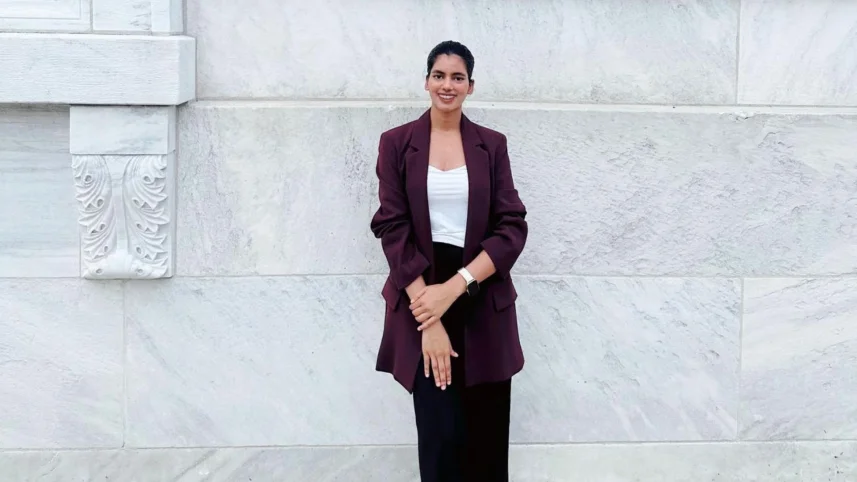
Photo: Courtesy
Growing up in Bangladesh, I never imagined that my academic journey would eventually bring me to cancer research at Johns Hopkins University and now to Harvard Medical School and Massachusetts General Hospital.
My path was not built around a perfect roadmap. It developed one opportunity at a time. I completed my undergraduate degree in pharmacy at Primeasia University in Dhaka. At that stage, I was interested in science, but I did not yet have a clear picture of what my long-term career would look like. Research gradually became more interesting to me because it gave me the chance to ask questions that did not always have immediate answers. That curiosity eventually brought me to the United States, where I pursued a fully funded Master of Science (MS) degree in Pharmaceutical Sciences at South Dakota State University.
For my MS thesis, I studied a natural compound called 2,3,4-trihydroxybenzoic acid, found in fruits and vegetables, to see if it could stop cancer cells from growing. Think of cancer cells as cars with a broken brake pedal – they keep dividing out of control. In the lab, I found that this compound helped switch the brakes (proteins called p21 and p27) back on inside colon and breast cancer cells, which blocked the "engine" (enzymes called cyclin-dependent kinases) that causes cells to divide. Once the engine was blocked, the cancer cells could no longer multiply.
But beyond the science, graduate school was also where I grew as a person. I still remember the long hours in the lab, where I realised just how much I enjoyed the slow, careful work of hands-on laboratory research. Moving from Bangladesh to the US taught me to speak up, build connections, and keep going forward. Over time, those experiences made me more independent, and they taught me the importance of persistence.
After completing my graduate studies, I joined Johns Hopkins University in the Department of Radiation Oncology and Molecular Radiation Sciences; that experience became an important turning point in my scientific journey. At Johns Hopkins, I worked on preclinical research – studying a new type of radiation treatment called “proton FLASH radiotherapy”, which delivers radiation at ultra-high speeds. One major question in this field is whether radiation can still treat cancer effectively without causing a great deal of damage to healthy tissues.
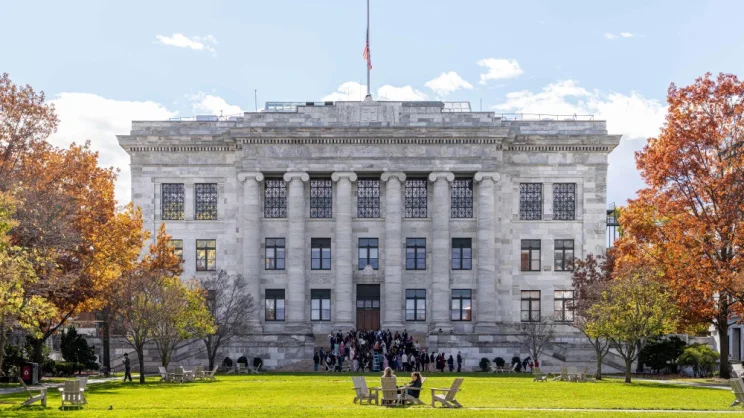
Harvard Medical School in Massachusetts in 2025.
Our team studied how radiation treatment affects the brain, with an emphasis on children’s brain cancer. I worked with a preclinical mouse model to study the hippocampus, which is important for memory, and the cerebral cortex, which helps with thinking and learning. For memory, we used a simple object test. We showed the mice two objects, then later replaced one of them with a new object. If the mouse spent more time exploring the new object, it showed that the mouse remembered the old one.
We also used a touchscreen test to check learning and thinking. Microglia, which are immune cells in the brain, were studied as well. Radiation can change how these cells respond and may affect brain inflammation. By looking at memory, learning, and microglial changes, we could compare how different radiation treatments affected brain function.
During my time there, I had the opportunity to present my work at the Johns Hopkins Radiation Oncology department’s annual retreat, contribute to a poster at an international pediatric neuro-oncology conference, and co-author a research paper on this topic. This work was published in Neuro-Oncology Pediatrics as “Impact of proton FLASH delivery technique on memory preservation and microglial response following whole-brain irradiation”.
My time at Johns Hopkins deepened my interest in radiation biology and prepared me for the next step. This August, I joined Harvard Medical School and Massachusetts General Hospital as a Research Technician II in the Radiology department, Bertolet Lab. My current work involves building on my experience and venturing into radiopharmaceutical therapy and targeted radiation approaches.
Radiopharmaceutical therapy uses radioactive medicine to treat cancer from inside the body. Our lab studies not merely how much radioactive drug is given, but also how much radiation reaches the tumour and healthy tissues, and what effect that radiation has.
My role is to support the biological side by studying how cancer cells and healthy tissues respond to that radiation. By connecting the radiation dose with the biological response, our goal is to help make treatment more precise and personalised.
I did not achieve such feats on my own. Mentorship, teamwork, and the support of my family played a big role in my journey. My path from pharmacy in Dhaka to radiation oncology and now radiopharmaceutical research was not something I planned from the beginning, but each experience helped shape the next step. I’m deeply grateful to my parents, my uncle, and the mentors who have guided and supported me along the way. I especially remember my mother and sister, who passed away, with love and gratitude. Their encouragement, sacrifices, and support continue to inspire me.
I am still early in my career, and my long-term goal is to keep growing as a researcher in cancer and radiation biology. I also hope that one day I can give back to Bangladesh by helping strengthen scientific training and research opportunities there. My journey has taught me that careers do not always follow a straight line. They are built one step at a time, and sometimes the unexpected turns are what connect the dots.
The author is a cancer and radiation biology researcher with multidisciplinary experience spanning radiopharmaceutical therapy, radiation oncology, molecular biology, and preclinical cancer research at Harvard Medical School and Massachusetts General Hospital.
The journey of the Bangladeshi researcher who is working in cancer research at Harvard Medical School and Mass General Hospital, Bertolet Lab.
Mina Akter
Photo: Courtesy
Growing up in Bangladesh, I never imagined that my academic journey would eventually bring me to cancer research at Johns Hopkins University and now to Harvard Medical School and Massachusetts General Hospital.
My path was not built around a perfect roadmap. It developed one opportunity at a time. I completed my undergraduate degree in pharmacy at Primeasia University in Dhaka. At that stage, I was interested in science, but I did not yet have a clear picture of what my long-term career would look like. Research gradually became more interesting to me because it gave me the chance to ask questions that did not always have immediate answers. That curiosity eventually brought me to the United States, where I pursued a fully funded Master of Science (MS) degree in Pharmaceutical Sciences at South Dakota State University.
For my MS thesis, I studied a natural compound called 2,3,4-trihydroxybenzoic acid, found in fruits and vegetables, to see if it could stop cancer cells from growing. Think of cancer cells as cars with a broken brake pedal – they keep dividing out of control. In the lab, I found that this compound helped switch the brakes (proteins called p21 and p27) back on inside colon and breast cancer cells, which blocked the "engine" (enzymes called cyclin-dependent kinases) that causes cells to divide. Once the engine was blocked, the cancer cells could no longer multiply.
But beyond the science, graduate school was also where I grew as a person. I still remember the long hours in the lab, where I realised just how much I enjoyed the slow, careful work of hands-on laboratory research. Moving from Bangladesh to the US taught me to speak up, build connections, and keep going forward. Over time, those experiences made me more independent, and they taught me the importance of persistence.
After completing my graduate studies, I joined Johns Hopkins University in the Department of Radiation Oncology and Molecular Radiation Sciences; that experience became an important turning point in my scientific journey. At Johns Hopkins, I worked on preclinical research – studying a new type of radiation treatment called “proton FLASH radiotherapy”, which delivers radiation at ultra-high speeds. One major question in this field is whether radiation can still treat cancer effectively without causing a great deal of damage to healthy tissues.
Harvard Medical School in Massachusetts in 2025.
Our team studied how radiation treatment affects the brain, with an emphasis on children’s brain cancer. I worked with a preclinical mouse model to study the hippocampus, which is important for memory, and the cerebral cortex, which helps with thinking and learning. For memory, we used a simple object test. We showed the mice two objects, then later replaced one of them with a new object. If the mouse spent more time exploring the new object, it showed that the mouse remembered the old one.
We also used a touchscreen test to check learning and thinking. Microglia, which are immune cells in the brain, were studied as well. Radiation can change how these cells respond and may affect brain inflammation. By looking at memory, learning, and microglial changes, we could compare how different radiation treatments affected brain function.
During my time there, I had the opportunity to present my work at the Johns Hopkins Radiation Oncology department’s annual retreat, contribute to a poster at an international pediatric neuro-oncology conference, and co-author a research paper on this topic. This work was published in Neuro-Oncology Pediatrics as “Impact of proton FLASH delivery technique on memory preservation and microglial response following whole-brain irradiation”.
My time at Johns Hopkins deepened my interest in radiation biology and prepared me for the next step. This August, I joined Harvard Medical School and Massachusetts General Hospital as a Research Technician II in the Radiology department, Bertolet Lab. My current work involves building on my experience and venturing into radiopharmaceutical therapy and targeted radiation approaches.
Radiopharmaceutical therapy uses radioactive medicine to treat cancer from inside the body. Our lab studies not merely how much radioactive drug is given, but also how much radiation reaches the tumour and healthy tissues, and what effect that radiation has.
My role is to support the biological side by studying how cancer cells and healthy tissues respond to that radiation. By connecting the radiation dose with the biological response, our goal is to help make treatment more precise and personalised.
I did not achieve such feats on my own. Mentorship, teamwork, and the support of my family played a big role in my journey. My path from pharmacy in Dhaka to radiation oncology and now radiopharmaceutical research was not something I planned from the beginning, but each experience helped shape the next step. I’m deeply grateful to my parents, my uncle, and the mentors who have guided and supported me along the way. I especially remember my mother and sister, who passed away, with love and gratitude. Their encouragement, sacrifices, and support continue to inspire me.
I am still early in my career, and my long-term goal is to keep growing as a researcher in cancer and radiation biology. I also hope that one day I can give back to Bangladesh by helping strengthen scientific training and research opportunities there. My journey has taught me that careers do not always follow a straight line. They are built one step at a time, and sometimes the unexpected turns are what connect the dots.
The author is a cancer and radiation biology researcher with multidisciplinary experience spanning radiopharmaceutical therapy, radiation oncology, molecular biology, and preclinical cancer research at Harvard Medical School and Massachusetts General Hospital.


