[🇧🇩] Evolving Strategic Relationship between Bangladesh and France

[🇧🇩] Evolving Strategic Relationship between Bangladesh and France
12
2K
More threads by Saif

G Bangladesh Defense

France urges Bangladesh to consider Airbus proposal seriously

FE ONLINE REPORT
Published :
Mar 16, 2026 20:08
Updated :
Mar 16, 2026 20:08

1773707338296.webp


The French ambassador in Dhaka, Mr Jean-Marc Séré-Char-let, on Monday urged Bangladesh to give serious consideration to a proposal to purchase aircraft from Airbus, saying the European manufacturer produces high-quality planes and could offer a promising avenue for long-term cooperation.

Speaking to reporters after a meeting with Shama Obaed, Bangladesh’s state minister for foreign affairs, at the foreign ministry, the envoy said discussions with the government covered broader areas of cooperation between France and Bangladesh, including trade, business ties and potential engagement with French companies.

When asked whether defence cooperation and the Airbus purchase had been discussed, the ambassador said the talks had not focused on any single issue but confirmed that the aircraft proposal remained important for France.

“For us, Airbus is an important issue,” he said, adding that the company manufactures high-quality aircraft and should be taken seriously as Bangladesh considers future aviation procurement.

The envoy said Airbus was continuing its discussions with the government and with Biman Bangladesh Airlines regarding the proposal.

“We hope Airbus will be considered by the government and by Biman,” he said.

Asked whether bilateral relations could be affected if Bangladesh ultimately decides not to purchase Airbus aircraft, Mr Char-let said discussions were still ongoing.

“Airbus is still discussing the issue with the government. We are still in discussions and we hope Airbus will be taken seriously,” he said.

Responding to another question on whether the new government should review earlier decisions related to aircraft procurement, including a possible purchase from Boeing, the envoy said the matter rested entirely with the Bangladeshi authorities.

“It is up to the government. Now it depends on Biman. This is a new government and we leave the decision to them,” he said.

The ambassador also emphasised the longstanding ties between the two countries, noting that France was among the earliest nations to recognise Bangladesh after its independence.

“France is a long-standing partner. It was one of the first countries to recognise Bangladesh,” he said.

He added that the meeting with the state minister was an opportunity to review cooperation and explore ways to strengthen relations.

“We are here to improve the relationship between France and Bangladesh. It was time to meet and discuss cooperation,” he said.

According to the envoy, discussions also touched on ways to expand economic engagement between the two countries, particularly through greater involvement of French businesses in Bangladesh.

He stressed that while governments do not make decisions on behalf of private companies, they can help create a favourable environment for business.

“It is important to attract companies and provide them with a level playing field,” he said.

The ambassador expressed optimism about the future of bilateral relations, saying France wanted to deepen cooperation with Bangladesh in the coming years.

“Bangladesh is still in our hearts and we want to cooperate more in the coming months and years,” he said, adding that both sides were interested in creating a new atmosphere of partnership.

Later, talking to the reporters, Shama Obaed said that Bangladesh’s policy is to maintain equal ties with all the countries.

“We will follow the ‘Bangladesh First’ policy”, she said when asked whether the government would review the interim government’s decision to purchase Boeing.​
 

Bastille Day and the quiet rise of Bangladesh–France strategic relations

Zillur Rahman

1783816060154.webp

French President Emmanuel Macron’s historic visit to Dhaka in September 2023 was the first by a French president to Bangladesh in more than three decades and marked a milestone in bilateral relations. Photo: PID

Every year on July 14, France celebrates its national day—Bastille Day. This day is dedicated to the ideals of freedom, citizenship, and republicanism. For Bangladesh, this date means much more than another opportunity to congratulate a friendly nation. It is a chance to reflect on the strategic partnership that has quietly evolved from mutual friendship into a relationship shaped by a changing geopolitical context.

Relations between France and Bangladesh began immediately after Bangladesh gained independence, but the emotional foundations of these relations had been laid even before the independence movement. France has always been one of the countries where people expressed sympathy for Bangladesh’s struggle for freedom. André Malraux—the renowned French intellectual and former Minister of Cultural Affairs—symbolises these ties.

Throughout decades of diplomatic, cultural, development, and economic engagement, this relationship has been sustained. Today, however, it is no longer only about friendship.

France is not only a European power. It is also an Indo-Pacific power, with territories, citizens, a military presence, and strategic interests in the Indian and Pacific Oceans. In an increasingly fragmented geopolitical landscape, France has sought to establish strategic partnerships with countries that can help it maintain greater stability and strategic balance. Bangladesh, situated at the heart of the Bay of Bengal, fits naturally into this vision.

This is why the relationship has acquired a new significance. Bangladesh is no longer simply a market for exports, a recipient of development assistance, or a source of cheap labour. It is a rapidly developing middle power with a growing economy, a large population, a strategic maritime location, and increasing diplomatic confidence. For France, Bangladesh offers an opportunity to deepen its presence in one of Asia’s most dynamic regions. For Bangladesh, France offers technology, investment, defence cooperation, climate partnership, and an important European voice during an increasingly uncertain period in global politics.

President Emmanuel Macron’s visit to Dhaka in September 2023 became a milestone in the development of relations between the two countries. It was the first visit by a French president to Bangladesh in more than three decades. More importantly, it signalled that Paris was prepared to regard Bangladesh as a strategic partner. The jointly emphasised values of peace, prosperity, people-centred connectivity, and strategic autonomy reflected a new phase in the relationship.

There are several areas that now require special attention.

First, there is trade and investment. Bilateral trade has been growing, but it remains heavily imbalanced. It is driven largely by Bangladeshi exports, mainly ready-made garments. This benefits Bangladesh, but at the same time it demonstrates the limitations of the current economic relationship. The next stage should place greater emphasis on diversification. Pharmaceuticals, agro-processing, the leather industry, information technology, renewable energy, logistics, and high-value manufacturing could all become part of a new economic agenda.

French companies are already present in Bangladesh in industries such as cement, energy, logistics, consumer goods, and industrial services. However, French investment remains well below its potential. Bangladesh needs more European investment as it prepares to graduate from LDC status. France can become an important partner in raising standards, facilitating technology transfer, promoting green production, and expanding access to the European market.

Secondly, there is climate and development cooperation. Bangladesh is widely regarded as one of the countries most vulnerable to climate change. France, as the host of the Paris Agreement and a leading advocate of climate finance, is well placed to become one of Bangladesh’s key partners in this area. France’s development cooperation in urban infrastructure, water management, clean energy, and climate resilience should be expanded. For Bangladesh, climate diplomacy is not merely an important global issue. It is a matter of survival, adaptation, and economic development.

Thirdly, there is technology and aerospace. Bangladesh’s first satellite, Bangabandhu-1, was built by the French company Thales. Discussions on Airbus aircraft and cooperation in the space sector demonstrate that this partnership has the potential to expand into high-technology industries. This is essential because Bangladesh’s future development cannot depend solely on inexpensive labour and traditional exports. It must become part of the global economy of digital infrastructure, aviation, artificial intelligence, satellites, and advanced services.

Fourthly, there is defence and maritime cooperation. Bangladesh’s future development is closely linked to the Bay of Bengal. Maritime security, disaster response, the blue economy, illegal fishing, search and rescue operations, and maritime domain awareness—all these fields are becoming increasingly important. France, with its presence in the Indian Ocean and its naval capabilities, can be a valuable partner in this regard. Of course, Bangladesh does not need to become a member of any military bloc. It simply needs to strengthen its capacities through a range of partnerships.

Perhaps this is the main lesson Bangladesh should draw from this experience. Bangladesh’s relations with France should not be seen as a choice against other countries. Dhaka does not need to choose between France, China, India, Japan, the United States, and Europe. Its interests lie in maintaining a broad range of partnerships. The more diverse Bangladesh’s international relationships are, the greater its strategic autonomy will be.

France is also important because it represents a different diplomatic language. It speaks of sovereignty, strategic autonomy, climate responsibility, and multilateralism. All these principles are highly relevant to Bangladesh’s own foreign policy priorities. At a time when more powers are seeking alignment, Bangladesh needs partners who understand the importance of flexibility.

However, opportunity does not automatically translate into achievement. Bangladesh must approach France with a well-designed agenda. It must identify priority sectors, remove barriers to investment, strengthen institutional coordination, and develop educational and policy dialogue. Symbolic warmth in bilateral relations is valuable, but this partnership now needs structure, continuity, and tangible results.

Bastille Day proves once again that history can change when a nation imagines a different future. Relations between Bangladesh and France are not revolutionary in this sense, but they are entering a period of quiet transformation. What began as a friendship forged in the aftermath of Bangladesh’s Liberation War has evolved into a strategic partnership with significant economic and technological opportunities.

For Bangladesh, the French connection is not only about Paris. It is about Europe, the Indo-Pacific, climate diplomacy, maritime security, and future development. If managed wisely, France can become one of Bangladesh’s most important partners in the coming decade.

In a world of strategic competition and geopolitical realignment, Bangladesh needs partners that broaden its choices. France can be one of them.

Zillur Rahman is a political analyst and President of the Centre for Governance Studies (CGS). He hosts Tritiyo Matra on Channel i and writes on geopolitics, strategic affairs, and governance.​
 

Enhancing Bangladesh-France economic, strategic cooperation stressed


1784168837281.webp


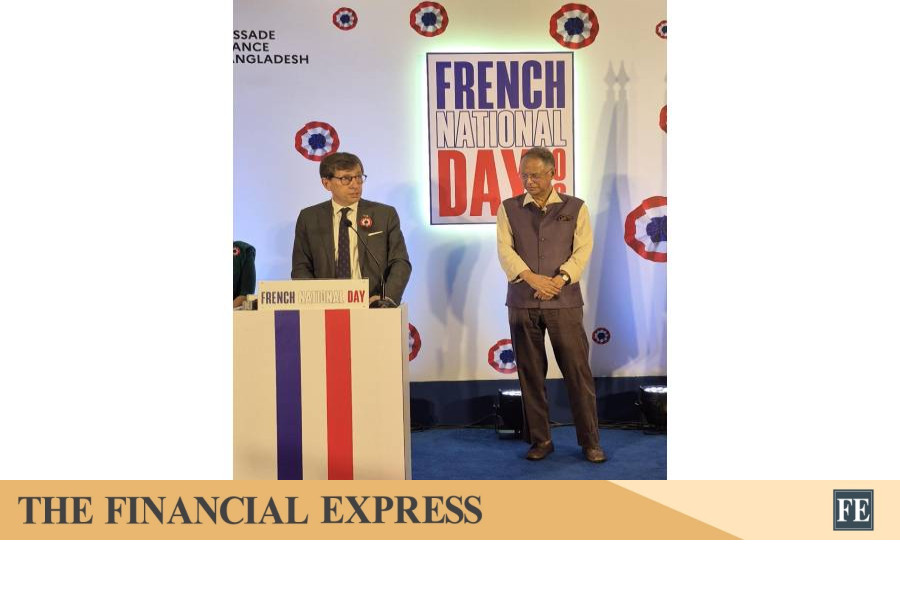
French Ambassador to Bangladesh Jean-Marc Séré-Charlet has stressed the need for enhancing economic and strategic cooperation between Bangladesh and France, saying the two countries have significant potential to expand collaboration in trade, investment, climate action, technology, culture and regional stability.

Speaking at a reception marking France’s National Day (Bastille Day) in Dhaka on Tuesday evening, the ambassador said France considers Bangladesh an important partner and wants to develop a long-term relationship based on mutual interests and stronger connections between businesses, students, researchers, artists and people of both countries.

Power, Energy and Mineral Resources Minister Iqbal Hassan Mahmood attended the event as the chief guest. Diplomats, government officials, business leaders and representatives of various sectors were also present.

Recalling Bangladesh’s recent political developments, the ambassador said the country had gone through a significant transition, moving from an interim government to an elected government through a democratic process.

He said France and the European Union were encouraged by Bangladesh’s return to the community of democracies, praising the commitment of the Bangladeshi people to democracy.

The French envoy said one of his key missions after being appointed ambassador by French President Emmanuel Macron was to revitalise bilateral relations and create new avenues of cooperation between the two countries.

“France and Bangladesh share a long-standing partnership that goes beyond governments and is based on the friendship between the two peoples,” he said.

He said France is already engaged with Bangladesh in several important sectors, including culture, education, development cooperation, climate resilience, infrastructure, aviation and technology.

The ambassador said the French Development Agency (AFD), which has been operating in Bangladesh since 2012, has provided nearly €2 billion in financing for projects, particularly in climate adaptation, biodiversity conservation, poverty reduction and women’s empowerment.

He said French companies are also active in Bangladesh in sectors such as aerospace, civil aviation, fashion, water management and infrastructure, while France is keen to further expand its business presence.

Describing Bangladesh as a country with strong economic potential, a growing economy, skilled workforce and strategic geographic importance, Séré-Charlet said France wants to build a comprehensive partnership with Bangladesh.

He said cooperation between the two countries should not be limited to economic issues but should also focus on regional peace, stability and cooperation in the Indo-Pacific region.

Highlighting climate cooperation as a major area of partnership, Séré-Charlet said France recognises Bangladesh as one of the countries most vulnerable to climate change. He said more than 80 percent of AFD’s annual projects in Bangladesh are focused on climate mitigation, resilience and biodiversity conservation.

The ambassador said France is also keen to expand cooperation in emerging technologies, noting that the country has become one of Europe’s leading hubs for artificial intelligence and innovation.

He also highlighted the European Union’s longstanding trade partnership with Bangladesh, saying preferential market access provided over the past 25 years had contributed significantly to the growth of the country’s ready-made garment sector.

Séré-Charlet said France and the European Union want to continue supporting Bangladesh but also expect greater reciprocity and a level playing field to further strengthen economic relations.

Energy Minister in his speech highlighted the importance of the longstanding partnership between Bangladesh and France under the leadership of Prime Minister Tarique Rahman.

He said bilateral cooperation spans various sectors, including trade, investment, defense, civil aviation, energy, education, culture, science, technology, climate action, and technology.

“Bangladesh values France’s support in its development journey and seeks to strengthen this partnership with a forward-looking approach” he said emphasising the significance of energy as a pillar of bilateral cooperation, with Bangladesh committed to energy security and a transition to cleaner, sustainable energy.​
 

Buying Airbus aircraft important for advancing Bangladesh's relations with Europe: French ambassador

Diplomatic Correspondent
Dhaka


1790134250377.webp

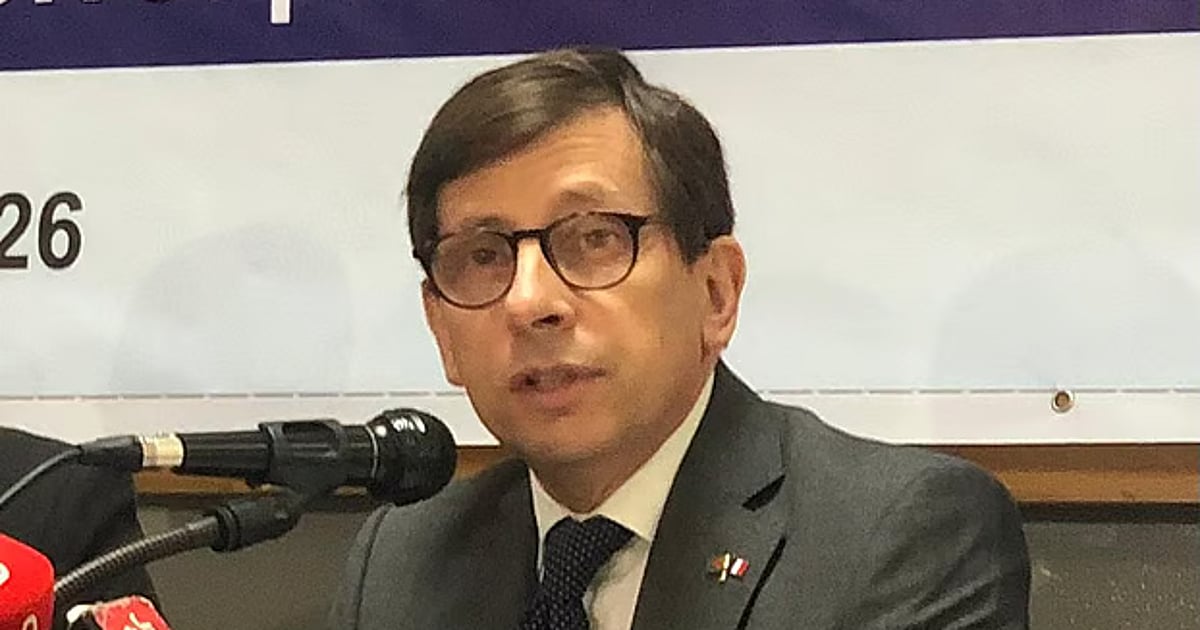
Jean-Marc Séré-Charlet, the French Ambassador to Bangladesh. Today, Tuesday, at the National Press Club in the capital during 'DCAB Talk'. Photo: Prothom Alo

Advancing relations between Europe and Bangladesh involves the important Airbus issue, commented French Ambassador to Bangladesh, Jean-Marc Séré-Charlet.

He stated that decisions made in Dhaka concerning the Airbus issue are significant for determining the long-term good relations with Europe. This is because nearly 50 per cent of Bangladesh's ready-made garments are exported to Europe, making the relationship with Europe a major interest for Bangladesh.

Today, Tuesday, the French ambassador made these remarks at the ‘DCAB Talk’ held at the National Press Club in the capital. The Diplomatic Correspondents Association, Bangladesh (DCAB) organised the event.

The French ambassador mentioned that neither France nor Europe is concerned about Bangladesh’s agreement with Boeing. France or Europe does not believe in imposing relationships. Instead, Europe aims to be a genuinely trustworthy partner on Bangladesh's path to development. The Airbus is crucial for advancing the relationship with Europe.

Jean-Marc Séré-Charlet noted that several years ago, after technical evaluation and discussions based on significance, Biman Bangladesh Airlines expressed interest in purchasing Airbus. Having Airbus in the fleet of Biman Bangladesh was important and advantageous for them. Major airlines worldwide include both types of aircraft in their fleets, using both Airbus and Boeing.

The French ambassador stated that one does not have to rely on a single company. Choices can be made by comparing the benefits of both. For instance, there is an aircraft capable of flying directly to the east coast of the United States from Dhaka without any breaks. And it is not a Boeing, but an Airbus. It is the only aircraft in the world capable of doing so. Therefore, for many logical and technical reasons, Biman Bangladesh chose Airbus, not for any political reasons.

Jean-Marc Séré-Charlet mentioned that it is evident how many hundreds of airlines worldwide are using Airbus. Hence, there was no doubt or error in Biman's decision. They have learned that the American Boeing has been able to sell some aircraft, which will be delivered around 2031 or 2035. This is a commercial matter for them. However, Biman Bangladesh Airlines still maintains an interest in Airbus. Discussions are still ongoing.

In response to another question about Airbus, the French ambassador stated, "We know these things take time. We wish for the discussions to conclude in the most beautiful and perfect manner, so no one can later say there was a mistake or that it needs to be started anew. Hence, it may take time. But I assure you, the discussions are still progressing on the right track and positive outcomes will emerge. I will not provide detailed technical discussions because I am not authorised. I am not a direct contract negotiator on behalf of Airbus. This is not a contract of the French or UK government; it is a direct contract of Airbus Company, which will be signed between Biman and Airbus in due course. Hence, I am not at all worried about this. I certainly emphasise fair opportunities.”

When asked about democratic reforms in Bangladesh, the French ambassador said that France is monitoring Bangladesh's reforms according to the July Charter.

France consistently presents its opinions to the government regarding the freedom of Bangladesh’s general population and media.

DCAB President AKM Moinuddin presided over the event, with the welcome speech delivered by the organisation's General Secretary, Abu Hena Imrul Kayes.​
 

AFD launches sovereign risk assessment


1791242668793.webp


Presuming that risk of over-indebtedness of Bangladesh economy rising gradually, the French Development Agency (AFD) starts assessing the country's sovereign risk and economic and financial vulnerabilities, officials said, pending its post-graduation assistance.

The development-financing agency of the European Union country says the risk of over-indebtedness in Bangladesh is increasing due mainly to higher debt servicing and dependence on domestic bank financing.

Also, the agency wants to assess the performance of the growth trajectory of the economy.

A monitoring mission of the AFD began Monday the four-day assessment in Dhaka with meetings with relevant top government officials, including Finance Division, Financial Institutions Division, Power Division, and Ministry of Environment, Forestry, and Climate Change.

The AFD team on the day had meetings with top officials from the Macroeconomic wing, SOE wing, Government Debt and Financial Asset wing, Management wing, and Planning, Development and Reform wing of the Finance Division.

A senior Finance Division official says the AFD conducts country-and sovereign-risk assessment of Bangladesh every four years.

The last country risk-analysis mission to Bangladesh took place in July 2021.

"The latest country assessment aims to find how the agency can provide financial support more effectively as the LDC graduation will bring significant changes in terms trade and economy of Bangladesh," he said.

Since 2012, the AFD has made commitment of 2.0 billion euros in loans and 47.2 million euros in grants for Bangladesh. Of the released amount, 41 per cent was invested in the water and sanitation sector while 22 per cent in power and energy sector.

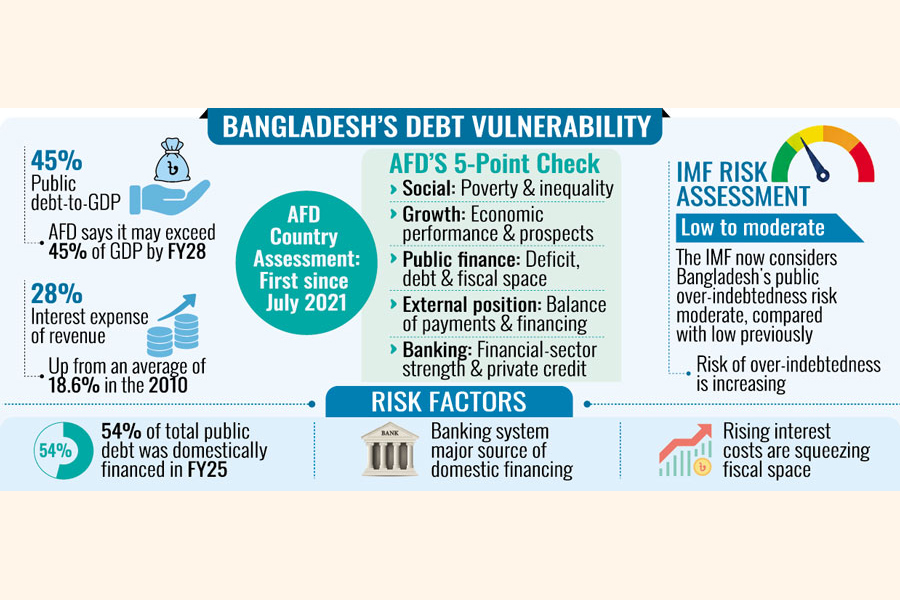
The AFD predicts Bangladesh's public finance-deficit is fuelling the rise in the public-debt ratio, which could exceed 45 per cent of gross domestic product (GDP) in FY'28.

The domestic share, 54 per cent of total debt in FY'25, is largely financed by the banking system, which constitutes a major point of vulnerability given the ongoing banking crisis, it says, adding that interest expense exceeded 28 per cent of revenue in FY25, compared to 18.6 per cent on average in the 2010s.

The International Monetary Fund (IMF) now considers the risk of public over-indebtedness to be moderate, compared to previously rated low. "The risk of over-indebtedness is increasing, linked to higher debt service and dependence on domestic bank financing."

The AFD is conducting the assessment based on the analysis of the five pillars of the method developed by the Department of Public Economic and Political Diagnostics of AFD focusing social situation, growth, public finance, external position, and banking sector.

During the spot appraisal, the mission will gather information on the social background and analyse the progress achieved in poverty-and inequality reduction, review the growth performance in order to assess the prospects for growth, and focus on the budget balance and the capacity to finance the necessary infrastructure and the level and structure of public indebtedness.

Moreover, the mission will analyse the structure of the balance of payments and the financing means, and assess the quality of the banking sector and its ability to provide sufficient credit to meet the development needs of the private sector.

The AFD says Bangladesh's economy has slowed sharply during the last three years due to inflation, the fragility of the banking sector, and political uncertainties. The economic model, focused on textiles and migrant transfers, shows structural limits, including a lack of diversification.

The country is also highly vulnerable and exposed to climate change-induced risks with significant economic consequences.

"With government revenue averaging only 8.6 per cent of GDP in the 2010 decade, Bangladesh's fiscal burden is among the lowest in the world and limits fiscal space," it has said.​
 

Latest Posts

Back