New Tweets

[🇧🇩] Bangladeshi PM Hasina Flees country amid deadly riots

G Bangladesh Defense
[🇧🇩] Bangladeshi PM Hasina Flees country amid deadly riots
More threads by PakistanProud


‘Hasina still in India’
Says Ministry of External Affairs spokesperson; declines to comment over ICT arrest warrant against her

1729211893590.webp

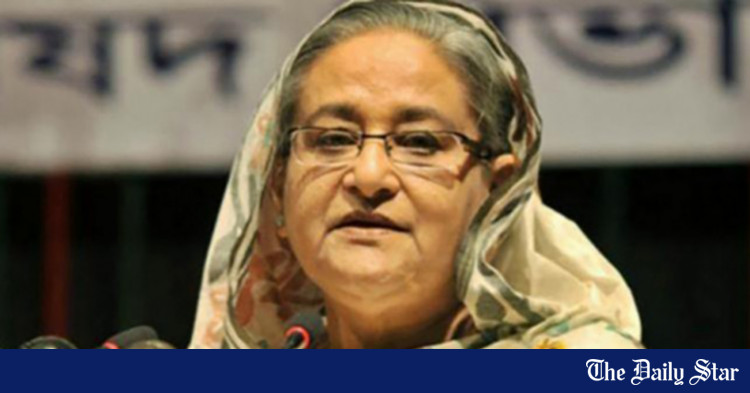
Former Prime Minister Sheikh Hasina. File photo

India today said it has seen reports about the International Crimes Tribunal (ICT) in Bangladesh issuing arrest warrant against former prime minister Sheikh Hasina in connection with alleged crimes against humanity committed during the July-August uprising but declined to offer any comment.

"We have seen some reports to this effect. Other than that, I don't have any comment to offer," Ministry of External Affairs spokesman Randhir Jaiswal said in reply to a question at the weekly media briefing in New Delhi.

He recalled his earlier statement that Hasina had come to India at a "short notice for safety reasons" and said, "She continues to be."

Asked when would India would resume normal visa operations in Bangladesh, Jaiswal said "We are already issuing medical visas and visas for emergency requirements. Once the law and order situation (in Bangladesh) improves and the situation becomes conducive to our resumption of normal visa operations, we will do that."

In this context, he pointed out that India in the past issued statements on attacks on minorities and Hindus in Bangladesh and violence on Puja pandals and said, "The assurances given by the Bangladesh authorities on the protection of minorities and their rights must be implemented."

The MEA spokesman did not answer a question on the interim government in Bangladesh cancelling a number of national holidays, including the one commemorating the historic March 7, 1971 speech by Bangabandhu Sheikh Mujibur Rahman, reports our New Delhi correspondent.​
 
Analyze

Analyze Post

Add your ideas here:
Highlight Cite Respond

Granting asylum to Hasina means sheltering a killer: Rizvi

1729297166363.webp

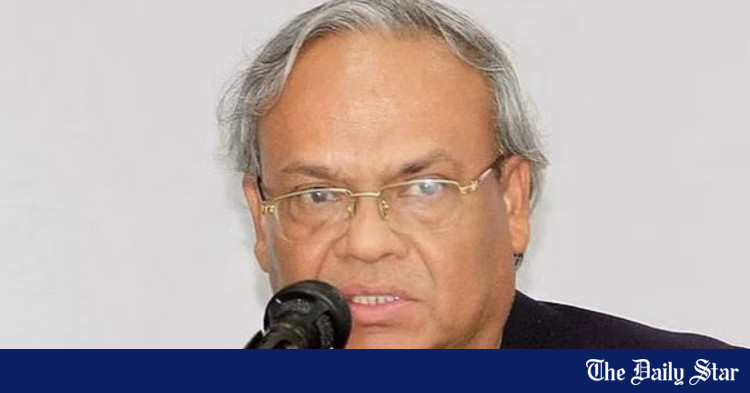
Ruhul Kabir Rizvi. File photo

BNP Senior Joint Secretary General Ruhul Kabir Rizvi today said giving asylum to Sheikh Hasina is like providing shelter to a "killer".

He said this while speaking to journalists after paying tributes to BNP founder Ziaur Rahman at his mausoleum in the capital, marking the silver jubilee of Ziaur Rahman Foundation.

Referring to a statement of a neighbouring country regarding providing shelter to Hasina, the BNP leader said they have clearly said that Hasina is in their country and their behaviour to this end is that of a "big brother".

"We have extradition treaty with India. Arrest warrant has been issued against Sheikh Hasina. We have to bring her back to the country through due diplomatic process under the treaty," he said.

Otherwise, the top criminals of Bangladesh will get a chance to seek refuge in different foreign countries, including India, he said.

Referring to the shutdown on Thursday by a section of officials from various Palli Bidyut Samity (PBS) units under the Rural Electrification Board (BREB), Rizvi said they are yet to become free from the clutches of the autocracy as the cohorts of the fascist government are still in the administration and are out to create chaos in the country.

"We have said several times about the conspiracy. If they have any demands, they can place it before the government. But why did they announce the shutdown instead of informing the government of their demands? This is part of a deep-rooted conspiracy. It is sabotage," he said.

They did not take such a programme during the regime of Hasina, he observed.

The senior BNP leader called upon the government to be cautious, otherwise, the journey towards democracy which has started with the sacrifices of lives of the students would be halted.

"It will create doubt among people as you [interim government] are making delay (in holding election) in the name of reforms. If you have sincerity, give power of the people in their hands after making necessary reforms at the quickest possible time," he said.

Rizvi continued: "Don't create complication by raising the issue of proportionate voting system. Many countries across the globe returned from proportionate voting."​
 
Analyze

Analyze Post

Add your ideas here:
Highlight Cite Respond
  • Like (+1)
Reactions: Bilal9

আওয়ামী লীগের শীর্ষস্থানীয় নেতারা কীভাবে পালালেন, তদন্ত করছি: শফিকুল আলম
গণহত্যার সঙ্গে জড়িত যারা এখনো বাংলাদেশে আছেন, তাদের গ্রেপ্তারের চেষ্টা চলছে।

1729382858278.webp

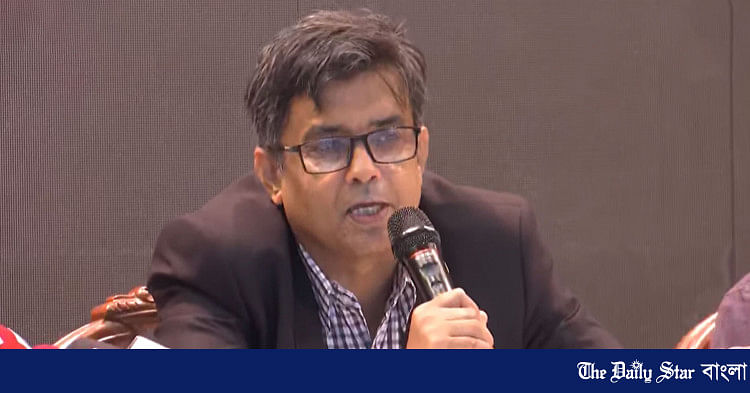
শফিকুল আলম | ছবি: টেলিভিশন থেকে নেওয়া

আওয়ামী লীগের শীর্ষস্থানীয় নেতারা কীভাবে পালালেন, সে ব্যাপারে তদন্ত করা হচ্ছে বলে জানিয়েছেন অন্তর্বর্তী সরকারের প্রধান উপদেষ্টার প্রেস সচিব শফিকুল আলম।

তিনি আরও জানান, গণহত্যার সঙ্গে জড়িত যারা এখনো বাংলাদেশে আছেন, তাদের গ্রেপ্তারের চেষ্টা চলছে।

রাজধানীর ফরেন সার্ভিস একাডেমিতে শনিবার আয়োজিত এক সংবাদ সম্মেলনে তিনি এ কথা বলেন।

শফিকুল আলম বলেন, 'এই ব্যাপারে সরকারের অবস্থান খুবই স্পষ্ট। আমরা এই বিষয় তদন্ত করছি—কেন, কীভাবে উনারা পার পেয়ে গেলেন, পালাতে পারলেন। একটি বিষয় স্পষ্ট, সেটি হলো ৫ থেকে ৮ আগস্ট পর্যন্ত কিন্তু কোনো সরকার ছিল না। প্রায় এক সপ্তাহের মতো পুলিশ স্ট্রাইকে ছিল।'

তিনি বলেন, 'অনেক ক্ষেত্রে আমরা শুনেছি যে, এই লোকটা পালাচ্ছেন। পুলিশ দিয়ে তাকে ধরতে হবে। ওই জায়গায় সেই সময় একটি গ্যাপ ছিল।'

'আমাদের সর্বোচ্চ চেষ্টা ছিল এদের গ্রেপ্তার করার। আমরা এখনো চেষ্টা করছি, যারা যারা বাংলাদেশে আছেন—গণহত্যার সঙ্গে জড়িত, তাদের গ্রেপ্তার করার,' যোগ করেন তিনি।​
 
Analyze

Analyze Post

Add your ideas here:
Highlight Cite Respond
  • Like (+1)
Reactions: Bilal9

After The Print's report, Hindustan Times also says Hasina staying in Delhi's VVIP zone

A day after India's news portal The Print reported that former Bangladesh Prime Minister Sheikh Hasina has been residing in the VVIP area of Lutyens' Delhi, Hindustan Times reported today, citing intelligence sources, that she is staying in a secure bungalow in the VVIP area located in central Delhi near India Gate and Khan Market.

Multiple layers of security shield Hasina, who continues to face "a slew of death threats" over alleged atrocities committed during her term, Hindustan times said citing intelligence officials with knowledge of developments said.

India Gate and Khan Market are quite close to Pandara Road locality where Hasina had stayed for six years after the assassination of her father Bangabandhu Sheikh Mujibur Rahman on August 15, 1975.

Hindustan Times said Hasina's new residence was an Intelligence Bureau (IB) safehouse which could not be disclosed due to threats to her life.

Hasina has been living in Lutyens Delhi since she shifted from Hindon air base in neighbouring Ghaziabad, Uttar Pradesh,where she landed from Dhaka on August 5 after fleeing Bangladesh, according to The Print.

Quoting a Financial Times report last month, Hindustan Times said Hasina was spotted at Lodhi Garden, a popular place for walkers in central Delhi.

The inner and outer security cordon of all in the safe house, one of three such facilities in central Delhi, is taken care of by the officials of the Indian central agencies while "watchers and spotters" from the commando unit of the Delhi police are deployed around the bungalows to keep a vigil on suspicious activities and people, Hindustan Times said quoting an official.

A second official said that a sub-inspector from Delhi police was tagged with the officials of the IB and the Ministry of External Affairs (MEA) for a couple of days when Hasina was brought to Delhi from Hindon.

"The sub-inspector was given very clear instructions -- not to disclose details about the secret operation and the address of the safe house to anyone in his personal and professional circles. The sub-inspector was told that he shouldn't be revealing any information even if the Delhi police chief or any of his supervisory officers asked for the same," the second official said, requesting anonymity, according to Hindustan Times.

The sub-inspector was withdrawn from the security protocol after two or three days as IB and central Home Ministry officials took over the security arrangements, according to the daily's portal.

The second officer said Hasina's daughter, Saima Wazed, the South East Asian regional director of the World Health Organisation (WHO) who lives in Delhi, was also provided security cover by the Delhi police. The two have met a few times in the past two months under tight and secret security protocols, said the officials.​
 
Analyze

Analyze Post

Add your ideas here:
Highlight Cite Respond
  • Like (+1)
Reactions: Bilal9

Jharkhand CM asks BJP why Hasina was given refuge in India


1730792181223.webp

Photo: Collected

India's Jharkhand Chief Minister Hemant Soren on Sunday fired back at BJP over accusing his party, Jharkhand Mukti Morcha (JMM), of fostering Bangladeshi infiltration in the state.

Soren questioned the central government's decision to provide refuge to ousted Bangladeshi prime minister Sheikh Hasina, pressing for clarity on the BJP's stance on relations with Bangladesh.

He also criticised the supply of electricity from Jharkhand's Godda power plant to Bangladesh "while locals bear the environmental cost", reports our New Delhi correspondent.

Speaking at a rally in Ranka, Garhwa, the CM challenged the BJP's infiltration claims, saying, "I would like to know whether BJP has some sort of internal understanding with Bangladesh," while demanding an explanation for Hasina's landing in India.

"Infiltrators from Bangladesh enter India through BJP-ruled states. They are saying it themselves," he added.

Soren's remarks followed a speech by Indian Home Minister Amit Shah, who accused Jharkhand's government of sheltering Bangladeshi infiltrators for electoral gains.

"You have given shelter to infiltrators. You made infiltrators your vote bank," Shah said, promising to "drive out infiltrators" if BJP is elected.

In response, Soren underscored that border security is the central government's responsibility. "Infiltrators enter India through states ruled by you (BJP). Why don't you check infiltration there?" he said, accusing BJP of divisive tactics and alleging conspiracies against his administration since 2019.

Soren also criticised the Godda power plant agreement, saying, "electricity produced in Jharkhand is being supplied to Bangladesh while the people of the state are left to deal with the pollution."

Elections to the 81-member Jharkhand Assembly will take place in two phases on November 13 and 20, and votes will be counted on November 23.

Ruling JMM will contest elections as a part of the Opposition's INDIA bloc, having fielded candidates in 43 assembly seats. Its ally Congress has been allocated 30 seats.​
 
Analyze

Analyze Post

Add your ideas here:
Highlight Cite Respond
  • Like (+1)
Reactions: Bilal9

India considers Hasina as Bangladesh’s former PM
Staff Correspondent 07 November, 2024, 21:55

1731028774716.webp

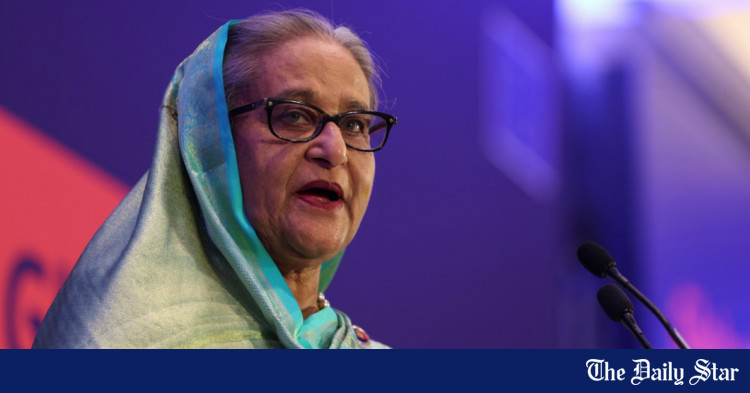
Sheikh Hasina | Collected photo

Indian external affairs ministry’s spokesperson said that India considered Sheikh Hasina as a former prime minister of Bangladesh.

During his weekly media briefing, the spokesperson, Randhir Jaiswal, was asked whether India considers Hasina as a former PM of Bangladesh or a ‘PM in exile’.

‘We have repeatedly said that she [Sheikh Hasina] is a former prime minister, that is where it stands,’ Jaiswal replied at the ministry in New Delhi on Thursday.

He made the statement in response to an Indian journalist, who pointed out that the Awami League in a statement congratulated Donald Trump on his US presidential election win where Sheikh Hasina, also AL president, was described as ‘Bangladesh PM’.

Sheikh Hasina fled to India in the face of student-led mass uprising on August 5 and has continued to stay there.​
 
Analyze

Analyze Post

Add your ideas here:
Highlight Cite Respond
  • Like (+1)
Reactions: Bilal9

Loyalists and apologists of fallen regime
Asjadul Kibria
Published :
Nov 24, 2024 00:11
Updated :
Nov 24, 2024 00:11

1732410214203.webp

A huge gathering in Dhaka city during student-people uprising against Hasina's autocratic regime - FE file photo

The dramatic change in Bangladesh's political landscape during the first week of August this year has yet to be accepted by some at home and abroad. It is a harsh reality that a bloody mass uprising ultimately compelled the authoritarian Prime Minister Sheikh Hasina to step down and flee to India. Most of her party men are now on the run, and the party's supporters face people's wrath for obvious reasons. The Hasina loyalists abroad are, however, spreading disinformation about the country.

It is difficult for any autocratic regime and its loyalists to accept the fall, whether in an electoral process or in the face of a mass uprising. So, they used to manufacture elections in various ways. The Hasina regime, which lacked fairness and transparency, did the same to show that it resumed power through election. The process started in 2014 and continued in 2019 and 2024. The lack of fairness and transparency in these national parliamentary elections in Bangladesh was quite evident, and the legitimacy of the polls was seriously questioned. Nevertheless, Hasina did not bother to care about the polls' legitimacy as she successfully retained power, perpetuating an unjust and undemocratic regime.

Despite being authoritarian or autocratic, many such regimes retain some domestic support based on a kind of narrative. Such unconditional support base becomes a strength of the dictatorial regime to continue its deeds and misdeeds. The persistent repression of opposition political parties and critics to uphold the narrative is a fundamental characteristic of any authoritarian regime. The supporters and loyalists actively participate in repression and intimidation besides the government agencies and forces as they become a parallel administration under different banners.

Bangladesh witnessed the same thing during the last one and a half decades. Bangladesh Chattra Legue (BCL), the student wing of Hasina's ruling party, was in forefront in this regard. The leaders and activists of the organisation, now banned in the country, unleashed a reign of terror and intimidation through torture, murder, rape and harassment in various educational institutions across the country.

Authoritarian regimes in different countries are sometimes backed by bigger and stronger countries for their interests, compelling the regimes to compromise the greater interests of the countries. The Hasina regime has set a classic example in this regard. Backed by India, her government could overlook various international pressures, particularly those from Western countries, to ensure good governance, human rights, and democratic values.

Hasina claimed that she and her party, Bangladesh Awami League (BAL), were accountable to the people of Bangladesh. In reality, her loyalty to India has proved again and again. So, after the fall of Hasina, India extended support to her by giving her a safe shelter and indicated that it would continue to do so. The indication is a great relief for Hasina loyalists at home and abroad. There is also an allegation that India, through its proxies, trying to destabilise the country to undermine the interim government.

Bangladesh is now going through a phase of difficult transition, and Hasina loyalists will continue to defame the country using various tools. Many of these loyalists have benefited dramatically from corruption and money laundering during the last one and a half decades. So they have no shortage of finance to invest to reverse the course. It will definitely be a big challenge not only for the interim government but also for the whole country. The ill effort to create instability in the country by these loyalists will be intensified in the coming days. Harassment of an adviser in Geneva airport by a group of Hasina loyalist is an example in this connection.

It is also not surprising that most of these loyalists are unrepentant about the crimes and misdeeds of Hasina that distorted the country's socio-economic balance. To them, killing of more than 1,500 people during the July movement along with wounding more than 10 thousand people is no crime but right thing. To them, money and power at any cost is everything. So, their support to Hasina is understandable.

Among the Hasina loyalists, some are apologists who acknowledged that there were some misdeeds during the last 15 years. They, however, try to justify all these misdeeds as unintentional and part of the governance system.

These apologists also say that some repressive steps taken were necessary to ensure the country's stability and long-term development. The long list of development works reflected in the economic growth of Bangladesh must be credited to the Hasian regime, they further argued.

Similar arguments have also been made by many Indian politicians, intellectuals, journalists and social media activists. To them, the brutal repression and mass killing of students and youths in July-August by Hasina is obscure. Labelling the ousted regime as corrupt and despotic is wrong to them. They also overlooked Hasina's undermining the electoral process and distorting the institutions in Bangladesh. All these are fine to them as long as it helps retain a friendly and loyal regime in to power.

All these loyalists and apologists also argue that it was the Haisna regime that upheld the spirit of independence of Bangladesh. They also back the narrative of the country's war of independence in 1971, initiated by Awami League, only to justify the oppressive regime of Hasina. To them, anyone raising any question about the AL's 1971 narrative is anti-liberation or pro-Pakistani. The mass uprising of 2024, however, successfully challenges the biased, distorted, one-sided narrative of 1971 and breaks the taboo, imposed by Hasina and her loyalists. As these loyalists and apologists will continue to try to spread false, distorted and misleading information, it is necessary to fight against the damaging propaganda and activities with facts and information.​
 
Analyze

Analyze Post

Add your ideas here:
Highlight Cite Respond
  • Like (+1)
Reactions: Bilal9

Building a lasting defence against fascism

1732840449693.webp

It's important to understand that, if we're not careful, fascism can emerge from the inside as well as from the outside. FILE PHOTO: STAR

People often understand democracy and its virtues, but when it comes to the practical side of fighting fascism, there's still much confusion. We might have challenged governments and confronted authoritarianism, but does this mean the problem has been solved? Or are these efforts just temporary fixes, like putting a band-aid on a wound that needs surgery? We may have seen the fall of one fascist regime, but have we truly eradicated fascism itself?

Think of fascism like cancer. Imagine you have a cancerous tumour—it's painful, causing the most immediate problems, and you might decide to have a bloody surgery to remove it. Removing the tumour is essential, but does it cure the cancer? Not necessarily. If the cancerous cells remain, there's always a risk that it could come back. It might not be the same tumour or in the same place—it could reappear in your brain, your lungs, or somewhere else in your body.

Fascism is similar to a sickness in society. Fascist "germs" can still be found today, deeply ingrained in societal norms and myths. These stories continue to be told in many social circles, frequently with the backing of those who gain from them. Similar to cancer, fascism can be subtle. It silently spreads across society's shadowy nooks and crannies, feasting on greed and misinformation, fear, and power struggles.

What steps can we take to truly eradicate fascism? We need to focus on three key points. While these are not exhaustive, they can still serve as a foundation upon which to build.

The first step is achieving independence from any external interference in our political structure. Foreign policy and international relations will always have economic and diplomatic influences, that's a given. But the core of our political system—the building blocks of our democracy—must be free from external control. Influence is acceptable in measured stances, but control is not. When external forces interfere, they often validate or create narratives that serve their interests, not ours.

This outside influence may pose a threat. Because it depends more on outside assistance than on the mandate of its own constituents, it might strengthen a political party or government that is exempt from public scrutiny. Because these regimes are more accountable to foreign forces than to their constituents, such situations frequently result in authoritarianism eventually turning to fascism. An example of this is our previous regime's democratic beginning in 2009, which became more authoritarian as the government's external support increased.

We might think of the nations that supported the Soviet Union vigorously during the Cold War. An authoritarian regime ultimately emerged in many of these countries as a result of foreign influence creating a dependency, whereby the local government lost interest in answering to the people.

Our cultural mindset is the subject of the second point. Many conquered nations throughout history have fostered a culture of deference to authority. Long after we gained our independence, this submissiveness persisted and permeated our national consciousness. Because individuals are more likely to accept authority than to question it, it impedes democratic progress.

Instead of focusing on any one political party, we need to invest time and resources to find out the remaining germs of fascism. As the mechanism for fascism still persists, it won't take long for a different party or entity to replace the old one.

In many post-colonial societies, there is a tendency to respect and obey authority figures unquestioningly. This mindset is a hangover from the colonial era when people were taught to see themselves as subjects rather than citizens. Even today, in Bangladesh, when a senior official or politician enters a room, people stand up out of respect—a practice rooted in colonial traditions. In Bangladesh, every leader is looked at through a lens of kingship. Whether they come to power through an election or in some other manner, it seems like an ascension. We all seem to forget that they are there to serve the people and the nation, not the other way around.

This is why we have corrupt institutions filled with corrupt individuals. It's due to the lack of accountability and the superior feeling that people in power gain, which allows them to normalise selfish and corrupt behaviour. When these sorts of individuals fill an institution or organisation, the whole entity becomes like a kingdom. You cannot question it. We are merely subjects of it. It doesn't belong to us but rather to the individuals who run it.

In contrast, in many democratic societies, there isn't the same level of deference to authority. People see themselves as equal participants in governance, not subjects. They speak to their leaders by name and aren't afraid to express their concerns, and an attitude of accountability prevails. Authoritarianism and fascism can flourish when people fail to see that they are the real owners of their nation and that the government should work for them, not the other way around.

The third argument, related to the first two, concerns Bangladesh's idea of nationalism. Our political discourse has been influenced by outmoded colonial-era ideas or outside forces for far too long. We need a narrative developed by our own people, for our own people—one that is rooted in our unique cultural, social, and political context.

Our current idea of nationalism needs a lot more work to reach the state where it can truly serve our people. For the moment, the nationalistic ideas or practices that we have all seem self-serving to a large extent. We are only observing national holidays that the ruling government of the time aligns with, declaring them unimportant when the government changes. This tradition has gone on too long. We are only appreciating our sports teams when they manage a win. We don't pay heed when the women's football team hasn't received their salary in months. We only try to get Geographical Indicators for products that draw interest from nations other than ours. We impose our own conservative or liberal views with nationalism to get an edge on our arguments.

We can look at alternative examples like Japan. It simultaneously embraces its cultural heritage and history while regularly setting the stage for one of the most technologically advanced countries in the world. The preservation of their traditional practices, such as tea ceremonies and martial arts, doesn't hold them back from also having the reputation of precision manufacturing in the global arena.

On the other hand, the US has "The American Dream." The idea is that regardless of background, anyone can be successful through hard work. This narrative of independent identity, freedom, and economic prospects shapes the national idea of the US.

Bangladesh today, more than ever, needs a unified idea of Bangladeshi nationalism. For us, our national identity could potentially accommodate the love for language, as even today we remain the only nation to have shed blood fighting for it. Next could be our fight for democracy. In the 1971 Liberation War, the 90's anti-Ershad movement, and the 2024 July uprising, every time the countrymen came to the streets to fight the suppression of democracy in one way or another. Lastly, our moderate Muslim majority identity, similar to Indonesia and Malaysia, can also play a role.

What does all of this signify for our efforts to combat fascism? It implies that winning elections and overthrowing dictators are not the only goals of the struggle. It involves constructing robust institutions, altering people's perspectives, and promoting an accountable and democratic culture. It's important to understand that, if we're not careful, fascism can emerge from the inside as well as from the outside.

Instead of focusing on any one political party, we need to invest time and resources to find out the remaining germs of fascism. As the mechanism for fascism still persists, it won't take long for a different party or entity to replace the old one.

So, while we have made some progress, we need to remain vigilant, build stronger democratic institutions, foster a culture of accountability, and, most importantly, empower ourselves as citizens to take ownership of our country. Before that, we also have to figure out what we, as individuals, want to do for our country to create our own inception of Bangladeshi nationalism. Only then can we ensure that our victories against fascism are not just temporary, but permanent.

Ashfaq Zaman is the founder of Dhaka Forum and a strategic international affairs expert.​
 
Analyze

Analyze Post

Add your ideas here:
Highlight Cite Respond

Latest Posts

Back
PKDefense - Recommended Toggle