Home Watch Videos Wars

[🇧🇩] Banking System in Bangladesh

[🇧🇩] Banking System in Bangladesh
275
9K
More threads by Saif

G Bangladesh Defense

Islamic banking to be off limits to regular banks
Draft law aims at levelling the playing field


1731198454155.webp


A bank will not be able to do Islamic banking business along with conventional banking at the same time, according to the draft 'Islami Bank Company Act-2024', as the central bank looks to level the playing field for Shariah-based banks.

As of June, 30 conventional banks provide Islamic banking services through their 33 branches and 688 windows.

The banks will have to change their banking business model or form a subsidiary company to provide Islamic banking services when the law is effective.

"If the conventional banks are allowed to do Islamic banking, then there will not be a level playing field as the Islamic banks do not have the opportunity to do conventional banking," said Mohammad Shahriar Siddiqui, the head of the committee that prepared the draft.

Globally, this is the practice but, in some countries, there are provisions to open an Islamic banking window, he said.

The basic difference between conventional banking and Islamic banking is interest. Conventional banks are offering and taking interest by providing banking services but Shariah-based banks cannot. Shariah banks can share profits.

The need for the draft came as Shariah-based banking, which began in Bangladesh in 1983, is expanding rapidly without any law or effective guidelines.

The Islamic banking sector accounts for 23.65 percent of the total assets in the banking sector, 26.23 percent in the case of deposits and 28.24 percent in investment as of June.

At present, there are 10 full-fledged Shariah-based banks, and some of them have been involved in irregularities and scams in recent years.

The committee has prepared the draft in accordance with the international best practices by reviewing the existing BB provisions for Shariah-based banks and the existing laws of Islamic banks in different countries, said Siddiqui, also the assistant spokesperson of BB.

The banking regulator is now taking opinions on the draft law, which was approved by the BB governor on October 9.

The 30 conventional banks that are currently offering Islamic banking will have to inform the central bank in writing about their preferred type of banking within six months of the effective date of the act.

The banks will then get three years to become full-fledged Islamic lenders or wrap up their Shariah-based operations. In special cases, the tenure may be extended by a year.

However, the banks can continue the other type of banking business until the liabilities are not paid or the term for the deposits or loans has expired.

All Islamic banking companies licensed under the act will have to use the word Islamic in their name.

An Islamic banking company will not be able to purchase controlling shares in any existing company for the purpose of forming a subsidiary company or converting it into a subsidiary company for any purpose other than providing Islamic banking services.

The central bank will form a central Shariah advisory council to fulfil the adjective of the Act.

The Islamic bank companies will not be involved in any business where Shariah is not allowed, it said.

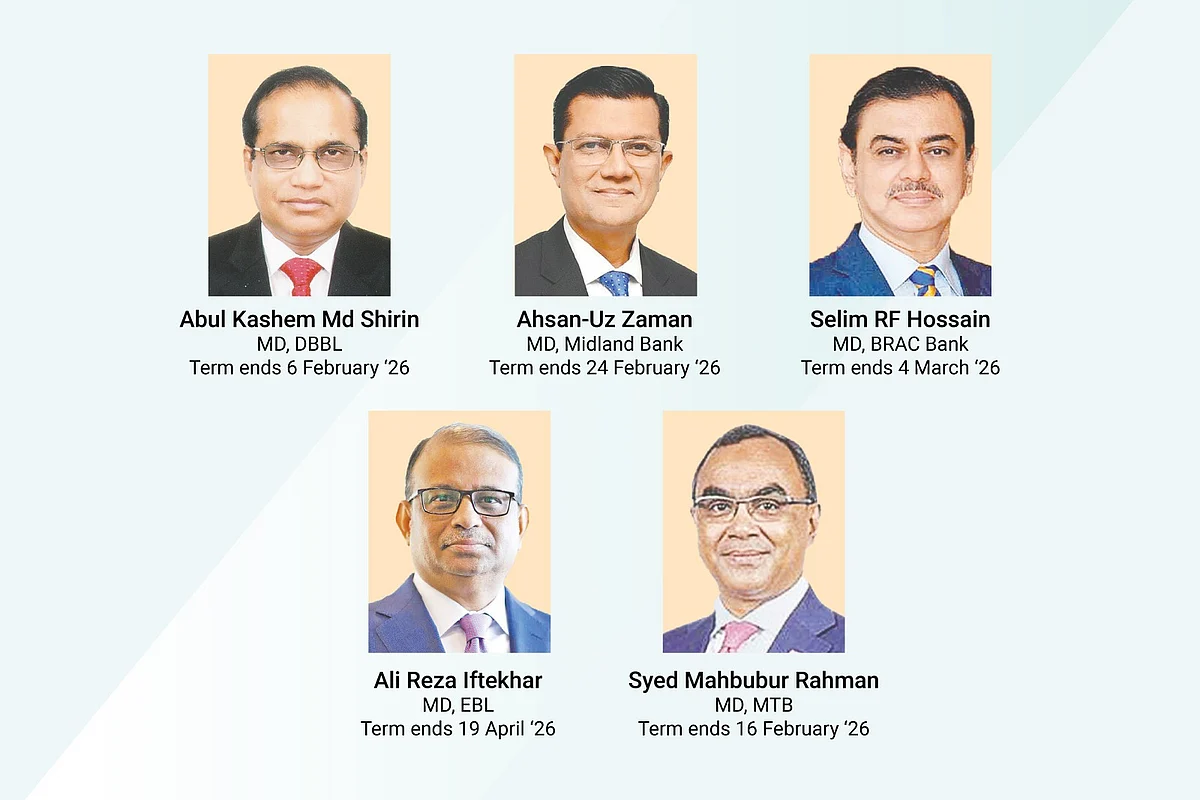
"You can say that we welcome the law, which is needed. But this is not the right time to impose a bar on conventional banks to do Islamic banking," said Syed Mahbubur Rahman, managing director of Mutual Trust Bank.

The financial health of Shariah-based banks save for two or three has deteriorated.

"Amid this situation, the customers of conventional banks (Shariah branches or windows) will not find any suitable alternative if the bar was imposed in the law. The customers will be impacted."

Now, the Islamic banking branches and windows are doing better than the full-fledged Islamic banks, he said.

"If we can manage the balance sheet separately then there is no problem to do Islamic banking," he said, adding that foreign banks like Standard Chartered are doing both conventional banking and Islamic banking.

The guidelines and supervision are more important than the bar, said Rahman, also the former chairman of the Association of Bankers Bangladesh.

Conventional banks in Bangladesh opened Islamic banking branches and windows when they saw that there was a huge possibility for making high profits and attracting clients, said Md Main Uddin, professor and former chairman of the department of banking and insurance at Dhaka University.

If the law is passed, including those clauses, then the lenders will concentrate their business in specialised areas and their investment will also increase, which is primarily a positive thing, he said.

The barrier should not be imposed for a long time, he said, adding that the service quality and competition will increase when there will be no barrier.

There is a possibility of the service quality deteriorating if there is no competition.

Some banks can come under the merger and acquisition or liquidation process as there are so many banks in the country considering the size of the economy, he added.​
 
Analyze

Analyze Post

Add your ideas here:
Highlight Cite Fact Check Respond
  • Like (+1)
Reactions: Bilal9

Islami Bank: Tk 120m gift allocation also vanishes into thin air
Shanaullah Sakib
Dhaka
Updated: 09 Nov 2024, 13: 27


1731203947308.webp

Islami Bank: Tk 120m gift allocation also vanishes into thin air

When different financial irregularities came to light in 2023, Islami Bank plunged into a liquidity crisis. The authorities took special initiative to boost deposit collection and set individual targets for officials.

Later, the board of directors decided to reward 13,500 successful officers with suit pieces. No officials received any suit piece till date, but the allocation – Tk 63 million – has already been spent.

In the same year, Islami Bank took an initiative to boost remittance to tackle the dollar crisis. It decided to purchase 100,000 umbrellas to give to top remitters. No umbrellas were ever provided to the bank, but Tk 55 million has been withdrawn on this purpose.

The bank spent around Tk 120 million on two fictitious purchases between August and October last year, according to internal documents. However, the real beneficiaries of the funds remain untraced.

The funds for the suit fabric were funneled through a businessman’s account in Chattogram and then transferred to three other accounts on the same day. The total amount was withdrawn immediately. Thus, the beneficiaries kept themselves out of sight.

Where did the money go?

Islami Bank, in a board meeting on 26 July 2023, decided to reward a total of 13,522 officials with suit fabric. Its client Belmonte Fabrics was awarded the order.

On 29 August, invoices and bills were submitted on behalf of Belmonte, though no fabric was delivered in reality. Despite being aware of the issue, the bank’s chief financial officer, Farid Uddin, requested authorisation to process the payment, while managing director Mohammed Monirul Moula approved it immediately.

According to records, Islami Bank transferred an amount of Tk 63.5 million to the client’s account on 30 August. On the same day, the fund was withdrawn from Belmonte's account with two cheques.

Belmonte owes nearly Tk 500 million to the Elephant Road branch of Islami Bank, and with a signed cheques submitted as security. When a loan defaults, the bank uses the cheque to file a case. A bank official said the amount was withdrawn using two security cheques of Belmonte.

In this regard, the managing director of Belmonte, Mohammad Badsha, said, “We received an order to supply suit fabric. As far as I recall, the order was never delivered. We have around Tk 500 million in loans at the bank, and security cheques are submitted against it. The funds might be withdrawn using those cheques.”

According to documents, a total of Tk 60 million – Tk 40 million and Tk 20 million in two phases – was deposited in cash from the Elephant Road branch to Masud Fish Processing and Ice Cream Limited of the Khatunganj branch in Chattogram. The entire amount was withdrawn from the branch through three cheques on the same day.

Masud Fish is an old client of Islami Bank and has a loan of Tk 500 million from the Khatunganj branch. It also submitted signed cheques for security.

Ashraf Hossain Masud, managing director of Masud Fish, claimed to have no connection with S Alam Group. “Though we are from Patiya, we have no relations with S Alam Group. Upon a request from the Khatunganj branch manager and second officer, I allowed them to use my account. Now, I have understood that it was a mistake to allow them to use my account and three cheques.”

He also said that they have been a client of the bank since 1988-89, but faced non-cooperation from the bank during the last few years. Hence, he permitted the bank to use his account, in the face of pressure.

During all these transactions, Islami Bank was under the control of Chattogram-based S Alam Group, led by Saiful Alam. His personal secretary and some other close associates were in leading positions in the bank, including the position of deputy managing director. Officials said the particular officers were engaged in clearing the fund.

Allocation for umbrellas

In its 329th board meeting on 20 September last year, the bank approved the purchase of 100,000 umbrellas and awarded the contract to Express Communications. It submitted invoices and bills on 10 October, without delivery of the umbrellas.

CFO Farid Uddin requested the funds, and MD Mohammed Monirul Moula approved it. Later, the bank issued a pay order of Tk 55 million to Express Communications, and it was cashed immediately.

Deepak Ghosh, owner of Express Communications, said, “I had a business partner named Abul Khair. He handled the delivery process of the gifts to the bank. However, he has no longer been with us for the last six to seven months.”

When asked about the issue, Abul Khair said, “I have no idea about the issue.”

The managing director of Islami Bank, MD Mohammed Monirul Moula, could not be reached for comment, while the central bank said a forensic audit could reveal the real beneficiaries of these irregularities in the future.​
 
Analyze

Analyze Post

Add your ideas here:
Highlight Cite Fact Check Respond
  • Like (+1)
Reactions: Bilal9

Bangladesh Bank restructures board
BSS
Published :
Nov 10, 2024 20:51
Updated :
Nov 10, 2024 20:51

1731286824809.webp


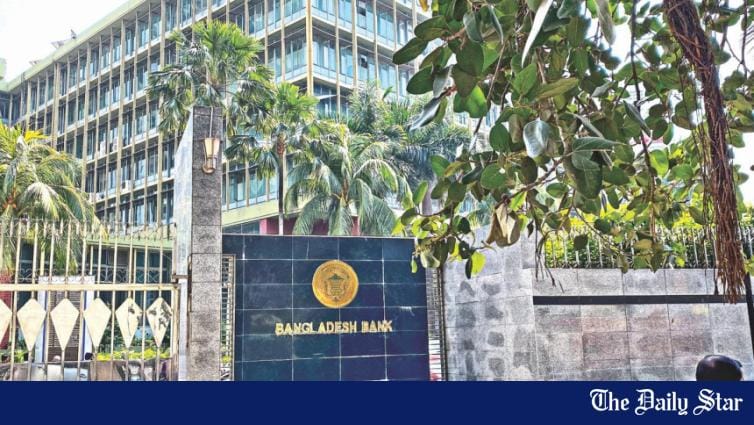
Bangladesh Bank (BB) has restructured its Board of Directors by adding three new members.

The development came through a board meeting held on Sunday at the BB headquarters in the city, said Husne Ara Shikha, BB Executive Director and spokesperson, after the meeting.

The three new directors are Fahmida Khatun, executive director of the Centre for Policy Dialogue (CPD), Md Habibur Rahman, deputy governor of Bangladesh Bank, and Nazma Mubarek, the secretary of the Financial Institutions Division.

Shikha said today’s board meeting also set and passed the area of responsibility of the six-member taskforce which was formed back in September to conduct reform works in the banking sector.

The central bank spokesperson said the board today was also formally briefed about the writ petition regarding the Beximco Group.​
 
Analyze

Analyze Post

Add your ideas here:
Highlight Cite Fact Check Respond
  • Like (+1)
Reactions: Bilal9

Banking sector needs drastic reforms to restore trust: BB governor
UNB
Published :
Nov 16, 2024 21:54
Updated :
Nov 16, 2024 21:54

1731804807728.webp


Bangladesh Bank (BB) Governor Dr Ahsan H Mansur has said that the banking sector requires drastic reforms, describing it as the backbone of the financial sector.

Speaking as the chief guest at the 'Mastercard Excellence Awards 2024' held at a hotel on Saturday evening, the governor acknowledged past irregularities in the sector and the central bank's shortcomings in regulatory affairs.

He, however, assured that drastic reforms would be implemented to ensure fairness and restore trust. "Irregularities happened in banks for a long period with state sponsors. It will take time to restore trust in our banking system domestically and globally," Dr Mansur said.

He said that banking sector reforms alone would not be enough and highlighted the need for other state organs and political commitment to achieve a robust financial system.

Dr Mansur dismissed fears of Bangladesh facing a crisis like Sri Lanka's, affirming that there are no severe risks in the banking sector at present. "The government is confident in restoring good governance in the financial sector," he added.

Trishita Maula, Acting Deputy Chief of Mission at the US Embassy in Dhaka, attended the event. CEOs of several leading banks, fintech companies, and merchants were also present.

The Mastercard Excellence Awards 2024 recognised 26 organisations for their contributions to building a sustainable digital economy and advancing financial inclusion.

Mastercard, which began its operations in Bangladesh in 1991 and became the first global payments operator to establish a local presence in 2013, continues to play a pivotal role in strengthening the country's digital ecosystem.

Over the years, the company has collaborated with government and private stakeholders to transform the payments industry with its world-class products and solutions.

Syed Mohammad Kamal, Country Manager for Bangladesh at Mastercard, said, "Mastercard remains committed to digital innovation and fostering inclusive growth in the country. The company is pleased to collaborate with leading banks, fintechs, and merchants as partners."​
 
Analyze

Analyze Post

Add your ideas here:
Highlight Cite Fact Check Respond
  • Like (+1)
Reactions: Bilal9

Default loans soar to Tk 2.85 trillion, actual scenario emerges
Staff Correspondent
Dhaka
Updated: 17 Nov 2024, 20: 00

1731893589143.webp


The volume of defaulted loans increased to Tk 284,977 crore (about Tk 2.85 trillion) at the end of September, with a humongous rise of bad loans by Tk 735.86 billion in the banking sector in three months.

This is the first time the information of defaulted loans became available since the fall of the government on 5 August, revealing the actual amount of the bad loans.

The money that was taken out from banks during the regime of Sheikh Hasina-led government of Bangladesh Awami League (AL) until it was ousted in the face of a student-people uprising, is now being identified as defaulted loans.

As a result, nearly 17 per cent of the loans disbursed by the banks in the country have become defaulted, which was 12.56 per cent at the end of June.

According to the Bangladesh Bank (BB), the amount of defaulted loans at that time was just over Tk 2.11 trillion.

When the Bangladesh Awami League formed the government in 2009, the amount of defaulted loans in the country was Tk 224.81 billion. Since then the bad loan has seen a steep rise in the last 15 and a half years.

The economists, for a long time, have been alleging that under the state patronage, a huge amount of the money has been looted from the banks in the name of defaulted loans and laundered abroad.

Even different types of initiatives were taken so that the banks could disburse a huge amount of money as loans to the influential people and show the amount less in the banks’ ledger books.

The central bank, the Bangladesh Bank, however, has shifted its stance from that policy.

According to the regulatory body, the role of private banks was more than the state-owned banks in the rise of defaulted loans from June to September.

The bad loans increased by Tk 236.28 billion at the state-owned banks against the amount of Tk 498.85 billion at private banks in the three months.

The six Islamic banks that were under the control of the controversial S Alam Group have started revealing the actual state of their financial conditions following the fall of the government.

Besides, former prime minister Sheikh Hasina’s adviser Salman F Rahman’s Beximco Group, Bashundhara Group and S Alam and a few other large business conglomerates have become defaulted, leading to exacerbating the situation.

The people related to the banking sector, however, think the actual amount of defaulted loans is far more than the amount published.

They pointed out that the central bank could not count the loans written off and on the list of stay orders due to the court order.

Top officials of the central bank think the actual scenario would be revealed more in the coming days due to the steps the interim government has taken for reforming the banking sector.​
 
Analyze

Analyze Post

Add your ideas here:
Highlight Cite Fact Check Respond
  • Like (+1)
Reactions: Bilal9

Members Online

Latest Posts

Back
 
G
O
 
H
O
M
E