โ˜• Support Us โ˜•
[๐Ÿ‡ง๐Ÿ‡ฉ] - Banking System in Bangladesh | Page 19 | PKDefense

[๐Ÿ‡ง๐Ÿ‡ฉ] Banking System in Bangladesh

Reply (Scroll)
Press space to scroll through posts
G Bangladesh Defense
[๐Ÿ‡ง๐Ÿ‡ฉ] Banking System in Bangladesh
245
8K
More threads by Saif


Bridging banking divide for balanced growth

Published :
Jun 16, 2025 00:17
Updated :
Jun 16, 2025 00:17

1750028713740.png


The issue of disparity between the rich and the poor, as well as between urban and rural areas, is a frequent topic of discussion, especially in seminars and academic forums. Today's reliance on the market system has only exacerbated this economic imbalance by disregarding the interest of the non-competitive people. A recent Financial Express report brings to light yet another dimension of this divide. Citing data from Bangladesh Bank, the report reveals a disturbing disparity in bank loan disbursement: while over 68 per cent of the population resides in rural areas, only 8 per cent of total bank credit is directed there. This stark imbalance not only reflects skewed development priorities but also entrenches structural inequalities by depriving rural enterprises of vital financial support.

In the absence of bank loans or due to the difficulty in accessing them, microfinance institutions (MFIs), particularly non-governmental organizations (NGOs), have become a primary source of credit in rural areas. Despite the relatively high interest rates charged by NGOs, rural borrowers often turn to them due to the unavailability of credit from traditional banks or the stringent conditions imposed by formal financial institutions. Although MFI interest rates have declined in recent years due to increased competition among microlenders in rural regions, interest rates on microcredit are still considerably higher than those offered by banking channels. These high-cost loans drive up production costs and undermine the competitiveness of rural entrepreneurs.

Meanwhile, although the prevalence of mahajans or loan sharks has decreased following the expansion of MFIs, moneylenders have not disappeared. In many areas, rural borrowers continue to turn to informal lenders to meet urgent financial needs, largely due to limited access to formal banking services. A recent research report by the Bangladesh Institute of Development Studies (BIDS) reveals that moneylenders charge an average interest rate of 145 per cent. Despite such exorbitant rates, 20-30 per cent of rural borrowers still rely on moneylenders, while around 50 per cent obtain loans from NGOs.

This limited access to formal banking channels in rural Bangladesh is not merely a matter of inadequate banking penetration - it poses a serious threat to the very notion of balanced and sustainable development. When rural clients are systematically excluded from access to capital, it stunts their economic potential and limits opportunities for upward mobility. Growth becomes increasingly urban-centric, while poverty and underemployment become deeply entrenched in the countryside. Farmers and rural entrepreneurs, who play a vital role in the national economy, are left to grapple with persistent financial challenges - often worsened by natural disasters such as floods. Strengthening credit availability at reasonable rates is, therefore, essential to easing these constraints and promoting sustainable development in rural areas.

To this end, long-term policies must be adopted that prioritise rural financial inclusion and ensure that credit reaches underserved populations effectively. Financial institutions - both banks and NGOs - need to simplify loan procedures by minimising paperwork and tailoring requirements to the realities of rural borrowers. Encouragingly, mobile financial services (MFS) and agent banking have begun to transform the financial landscape in rural Bangladesh. These innovations are bringing banking services closer to the doorstep of rural residents, eliminating the need for physical travel to distant branches. Agent banking, in particular, is gaining traction as a viable banking channel. Expanding credit facilities through agent banking and MFS platforms could significantly transform rural access to finance by providing faster, more accessible, and user-friendly services. Ultimately, bridging the rural-urban banking divide is a must for achieving equitable economic growth.​
 

ABSENTEE BIG ACCOUNT-HOLDERS, CHANGED ACCOUNTING MAJOR FACTORS
Classified bank loans balloon fast to a record high
NPLs rise by Tk750b in three months to Tk4.20t by March end


JUBAIR HASAN
Published :
Jun 16, 2025 00:32
Updated :
Jun 16, 2025 00:32

1750028997431.png


Classified loans in Bangladesh's banking industry made a quantum leap by around Tk 750 billion in just three months to a record high as of March, stoking concerns across the sector.

With such leaps in the volume of non-performing loans (NPLs), the aggregate hit Tk 4.20 trillion by the end of March 2025, accounting for 24.13 per cent of the entire loans worth Tk 17.42 trillion disbursed by the country's 61 commercial banks.

Constrained by such a record volume of dud money, banks have become extremely conservative and limit their credit supply to the borrowers. Besides, banks' profitability is also dented as they have to maintain a portion of funds for NPL provisioning.

The country's central bank, Bangladesh Bank (BB), predicts that the rising trend in NPLs would continue in the coming quarters as it revised overdue-status-counting system for term lending to a curtailed tenure of six months from previous nine months.

According to the central bankers, this counting arithmetic will be revised further from March 31, 2025 onwards when such loans will be classified within three months instead of the current six months.

According to the data, the share of classified loans rose to 24.13 per cent of the total outstanding loans during the period under review from 11.11 per cent a year before.

Classified loans include substandard, doubtful and bad/loss of total outstanding credits. Of the classified loans, the share of bad loans was 81.38 per cent or Tk 3.41 trillion.

In terms of the category of banks, the ratio of classified loans in the state-owned commercial banks (SoCBs), like on other occasions, remained high.

During the period, the total amount of NPLs with six state-owned SoCBs rose to Tk 1.64 trillion or 45.79 per cent.

On the other hand, the total amount of classified loans with 43 private commercial banks (PCBs) reached Tk 2.64 trillion or 20.16 per cent until March last.

The NPLs of nine foreign commercial banks (FCBs), on the other hand, rose to Tk 32.38 billion or 4.83 per cent during the period under review.

The classified loans with three specialised banks (SBs), however, rose to Tk 64.94 billion (14.47 per cent) by end of March last from 64.32 billion in Q4 of 2024.

Such faster NPL buildup in banks caused serious concerns to bankers who fear further pressure on their liquidity situation in the months ahead. Managing Director and CEO of City Bank Mashrur Arefin says the rise in the volume of NPLs was expected as a "vicious circle took control of some of the banks and laundered public money from banking system" during the previous regime.

Also were there lots of business accounts opened in the last 15 years by people blessed by the then ruling government. But, after the changeover in state power following the July-August mass uprising, those business accounts went into hibernation in terms of sales turnover or cash-flow generation, which also contributed to the significant rise in the NPLs.

"Moreover, the compliance with international standards of classified- loan recognition as of 31st March played a significant role," he further notes about the reasons why such a spurt in non-performing loans.

Mr Mashrur, also ABB Vice Chairman, feels that the banks here need to understand that it is a business of high credit risk, including the investment risk in capital market. "So, right Credit Risk Management (CRM) framework and Board Risk Management Committee (BRMC) are a must to have."

Managing director and chief executive officer of Mutual Trust Bank (MTB) Syed Mahbubur Rahman says the real picture of NPL in banks started getting exposed in the changed context now.

He feels the volume of dud loans could increase further in the months ahead following implementation of a new classified-loan-counting system.

Apart from steps to ensure governance, the experienced banker suggests that the business-hurting external factors need to be in favour to ensure smooth business operations.

"We need to be more careful in future," he says in an alert note over the rapidly-changing global scenarios affecting trade and business.

Managing director and CEO of the country's largest state-owned lender, Sonali Bank, Md. Shawkat Ali Khan says they have intensified their cash-recovery drive which is a top priority to cut down the burden of NPL significantly.

"And people will see its results in the coming quarters. We want to convert the non-performing loans to performing assets and lend it to CMSMEs. It's our target now--and we'll do it anyhow," he told The Financial Express Sunday.

Currently, Sonali bank has 19-percent NPL, the lowest among the state-owned commercial banks.​
 

Money changes course back into banks
Drained deposits worth Tk 190b return in a single month


JUBAIR HASAN
Published :
Jun 21, 2025 00:49
Updated :
Jun 21, 2025 00:49

1750547285844.png


Currency buildups outside banks are waning fast with the money flowing back into vaults in a latest pivot that gives some respite to the commercial lenders from a crisis-bred liquidity crunch.

Out-flowed deposits amounting to Tk 190 billion returned into the banking sector in a month, last April, amid a lax investment regime as well as gradual restoration of confidence in banking operations after a past rout, official data show and analysts believe.

Central bankers and money-market analysts say depositors took away a large volume of their deposits from the banking system during Ramadan and Eid-ul-Fitr, which enhanced the volume of currency outside the banks -- euphemistically called mattress money-- to a record high in March 2025.

But, after the largest religious festival in the Muslim-majority economy was all over, the deposits began changing course back into the banking system in absence of other investment opportunities under the prevailing economic sluggishness, according to them.

According to the latest data available with the central bank, the cache of currency outside banks dropped to Tk 2.77 trillion at the end of April, from the March count of Tk 2.96 trillion.

The deposit outflows from banks had been on stream since October 2024 following reports of gross irregularities in some commercial banks. The amount rose to a record-high Tk 2.96 trillion in March 2025, before a climbdown began with the money changing its course over again.

Seeking anonymity, a BB official says people normally takes away deposits in large volumes ahead of any major festivals, like Eid. Because of the fact, the volume of money outside the banks increased by Tk 250 billion in just a month in March when the country observed Ramadan and Eid-ul-fitr.

"That's why the volume of mattress money rose to Tk 2.96 trillion in March from February's count of Tk 2.71 trillion. After the festival, it dropped to Tk 2.77 trillion in the following month," the official told the FE writer in explaining the latest switch on the money market.

The central banker predicted the figure would increase again in May once the post-Eid data were conflated.

Syed Mahbubur Rahman, managing director and CEO of Mutual Trust Bank (MTB), says people probably do not feel comfort in keeping money outside the banks for a long time by taking the current law-and-order situation into consideration.

On the other hand, the experienced banker mentions, banks have been offering relatively better rates for the depositors while the yields on treasury bills and bonds are still lucrative for the investors.

"These factors might attract the deposits that out-flew in recent times to return to the banking system, which is a good sign," the banker adds.

Contacted, Policy Exchange of Bangladesh chairman Dr M Masrur Reaz said there were very limited investment instruments for common people here and this makes them pivot back to banks.

Excepting banks, potential investment areas were savings certificate and capital market. But the share market is unhealthy and putting money in stocks is becoming extremely risky while the rates on savings certificates are not as lucrative as the savers desire.

"That is why people are now returning back to banks, which is a good sign," says Mr Reaz about the turnaround.

The development especially bears significance for happening at a time when the interim government is trying to restore shaken client confidence in banks and putting the banking system back in order through major reforms that include mergers of those weakened through alleged mismanagement and plunder in the past.

The cleanup recipe also includes drives for repatriating funds siphoned off the banks and enterprises as well as freezing suspect bank accounts of runaway or detained tycoons.​
 

No financial liability for banks in contract-based imports: Bangladesh Bank

Published :
Jun 24, 2025 21:01
Updated :
Jun 24, 2025 21:01

1750805995774.png


The Bangladesh Bank has clarified that commercial banks will not bear any financial liability in the case of contract-based imports, in a move aimed at streamlining import procedures and encouraging greater engagement from banks.

In a circular issued on Tuesday, the central bank said importers should not be restricted from executing import transactions solely on the basis of sales contracts, UNB reports.

The directive comes in response to banksโ€™ longstanding reluctance to handle such transactions, stemming from the misconception that contract-based imports placed the financial burden on them.

The circular explicitly clarifies that banks will be responsible only for managing payment procedures using funds provided by the importers themselves and thereby absolving them of any financial risk.

Insiders see this clarification as a major policy shift, correcting confusion caused by a 2022 circular that led banks to reject contract-based import payments and disrupted import flows.

Industry stakeholders believe the latest move will bolster confidence among banks, simplify import operations, and facilitate a smoother flow of foreign trade.

โ€œThis is a timely decision. By clearly stating that banks have no financial liability, it will help reduce import costs and foster a more conducive business environment,โ€ said one importer.​
 

What is the purpose of bank merger?

SYED MUHAMMED SHOWAIB
Published :
Jun 27, 2025 22:35
Updated :
Jun 27, 2025 22:35

1751066822107.png


Hollywood is famous for making thrilling bank heist movies, several of which have earned a place among the best ever made. However, the real-life bank heists that have taken place in Bangladesh are just as astonishing, if not more. Over the past 15 years, hundreds of billions of taka have been siphoned off from multiple banks, pushing many to the brink of collapse. Powerful individuals responsible for these embezzlements have reportedly used the money to acquire luxury homes, hotels and businesses abroad, living in opulence while the banks they looted struggle to survive. For a time, the interim government made efforts to recover the lost money. But with little to show, the authorities now seem to have lost interest in the chase.

Now, the same authorities are shifting their focus to merging some of these weak banks under the Bank Resolution Ordinance. Reports suggest that five struggling Islamic banks may soon be consolidated into a large Sharia-based bank, primarily intended to finance small and medium enterprises (SMEs). The government even plans to inject initial capital into this new entity.

But why is the government stepping in to rescue these failing banks, and with taxpayers' money? After all, banks are fundamentally businesses that either profit or incur losses. The key difference is that they operate with other people's money. Like any other business, banks can and do fail. This is a relatively common occurrence in Western financial systems. For instance, in the United States, 568 banks have failed since 2000, averaging 25 closures annually. The worst years were 2010 and 2009, which respectively saw 157 and 104 failures.

Generally, governments refrain from intervening when private banks succeed or fail, as such outcomes are considered part of the risks inherent in private enterprise. Intervention typically occurs only when a bank or financial institution is deemed too big to fail, that is, its collapse would have severe repercussions for the broader economy. A well-known example is Lehman Brothers in the United States. The government's decision not to bail it out triggered a liquidity crisis, widespread panic and a major global economic downturn. In contrast, none of the banks that Bangladesh Bank is now considering for mergers and initial capital support pose such a risk. This naturally prompts the question about the justification for pouring in public funds for their rescue.

Among the five banks slated for merger, four were under the control of the S Alam Group, representing a single business family. They are First Security Islami Bank, Global Islami Bank, Union Bank and Social Islami Bank. The fifth, EXIM Bank, was operated by a businessman closely aligned with the previous government. In Bangladesh, banking regulations limit single-family ownership to 10 per cent of a bank's shares. Yet these individuals found ways around to gain majority control. Once in charge, they are alleged to have siphoned off billions overseas using methods like manipulating trade values where export prices were reported lower and import prices higher than actual.

Collectively, these banks hold Tk1.45 trillion in deposits but have loaned out Tk 2.15 trillion, covering the shortfall by borrowing from Bangladesh Bank and other sources. A large portion of these loans went to related parties. In fact, 90 per cent of Union Bank and Global Islami Bank's loan portfolios went to S. Alam Group, and are now classified as bad debts. Similarly, 70 per cent of loans at First Security Islami Bank and 20 per cent at Social Islami Bank went to the same group. Meanwhile, 10 per cent of loans at EXIM Bank are tied to businesses associated with its former chairman. Banking regulations prohibit lending more than 25 per cent of a bank's capital to a single borrower. This is a safeguard to protect against excessive risk. So, what were the regulators doing when these individuals made a mockery of that limit? How many red flags were ignored for these violations to occur? Reports suggest that S Alam used these funds to build overseas business ventures worth billions. Given the scale of this self-serving lending, the collapse of these banks was only a matter of time.

The current struggles of these banks are undeniably the result of failures by both banks themselves and their regulators. In the end, people reap what they sow. There is no getting around it. The same principle applies to the consequences facing the banking sector. The pressing question now is what the central bank's decision to merge five banks will actually achieve. After the merger and the injection of public funds to restore the newly formed entity, can anyone guarantee it won't once again become a target of political plunder? Have the necessary lessons been learned to prevent a repeat of past mistakes? Without fundamental reforms in the banking sector and strict enforcement of accountability, mergers alone will amount to nothing more than a temporary fix.

There are also serious concerns regarding Bangladesh Bank's policy guidelines on bank mergers. According to the policy, directors of a weak bank or financial institution may return to the board of the merged entity after five years, provided they meet certain conditions. These are often the same people who drove their banks into crisis, and this provision effectively grants a form of immunity by allowing their return after a brief absence. It is imperative that individuals who contributed to the plundering of banks face the consequences of their actions, rather than being given a chance to repeat them.

To bring about a real change, the old playbook must be discarded. Change in the banking sector demands reforms that put structural safeguards in place, mechanisms that would actively prevent violations of single borrower exposure limits or avenues for misinvoicing. Loopholes, after all, are invitations for abuse. Only when such protections are firmly established can bank mergers be expected to produce lasting, positive outcomes. Otherwise it is simply setting the stage for another collapse.​
 

IMF cannot avoid responsibility for corruption in Bangladesh: Dr Anisuzzaman

FE ONLINE DESK
Published :
Jun 28, 2025 19:53
Updated :
Jun 28, 2025 19:53

1751152200592.png


Dr Anisuzzaman Chowdhury, special assistant to the Ministry of Finance (with the rank of State Minister), said that international lenders like the International Monetary Fund (IMF) cannot deny their role in enabling corruption in Bangladesh.

โ€œThey gave loans despite witnessing corruptionโ€”why didnโ€™t they impose governance conditions then?โ€ he questioned, as per local media reports.

Speaking at a seminar titled "Current Challenges in the Banking Sector: Borrowersโ€™ Perspective", held at the DCCI auditorium, Dr Anisuzzaman said Bangladesh has come out of an economic ICU thanks to divine blessings and a people's uprising that changed the government.

Otherwise, the economy would have collapsed, Dr Chowdhury remarked.

He also criticised the central bank for relying solely on interest rate hikes to control inflation, calling it a "paracetamol solution."

Citing China, Mr Anisuzzaman argued that inflation can be controlled through alternative policies without raising interest rates.​
 

Reforming Bangladesh Bank
Independence, governance, and strategic challenges

Forrest Cookson and M Kabir Hassan

Published :
Jun 30, 2025 22:15
Updated :
Jun 30, 2025 22:15

1751325439413.png

A front view of the headquarters of Bangladesh Bank in Dhaka โ€”FE File Photo

Bangladesh Bank, the central bank of Bangladesh, was established in 1971 following the country's independence. Initially staffed by former employees of the State Bank of Pakistan (SBP), it has since evolved into one of the most successful public institutions in the nation. Over the past five decades, the Bank has played a crucial role in maintaining inflation stability and implementing key financial sector reforms. Notably, the Financial Sector Reform Program of the 1990s marked a turning point, enhancing the regulatory framework, establishing credit and bankruptcy systems, promoting private banking, and liberalising foreign exchange controls.

By 1993, the Bangladesh Bank had achieved significant independence from the Ministry of Finance. However, in the last decade, this autonomy has been progressively undermined by increasing ministerial interference in areas such as interest rate determination, exchange rate policy, and bank governance.

Global literature strongly advocates for central bank independence, warning that political control can lead to destabilising policies, such as unsustainable deficit financing or favouritism in bank regulation. Micro-level political interference, particularly the tolerance of non-performing loans (NPLs), remains a critical issue in Bangladesh, potentially suppressing gross domestic product (GDP) growth by 1.25-1.75 percentage points.

Central banks must be entrusted with achieving national macroeconomic targets, including low inflation and financial stability, while maintaining operational independence. Bangladesh Bank, like the United States (US) Federal Reserve, is tasked with controlling inflation and supporting economic growth. However, despite its nominally floating exchange rate regime, Bangladesh Bank and the Ministry of Finance have regularly interfered. This has led to an overvalued exchange rate, leading to a distortionary multiple exchange rate system.

The governance structure of the central bank is also problematic. Its Board, dominated by current and former government officials, lacks the independence necessary for credible oversight. The Board should be responsible for determining monetary policy and supervising the condition of the banking system. A reformed Board should comprise professionals from diverse fields such as banking, law, accountancy, and academia, and exclude active or retired civil servants. Board members should be full time officers with appropriate compensation. Transparent eligibility and vetting criteria must be instituted to ensure merit-based appointments.

OPERATIONAL AUTONOMY AND BUDGETARY GOVERNANCE: The central bank should limit its intervention in private banks to enforcing prudential regulations and ensuring financial integrity, avoiding undue influence over human resources or compensation policies. Any behaviour by the central bank officials involving nepotism or solicitation of employment or financial contributions from private banks must be explicitly prohibited and penalised.

Bangladesh Bank must uphold ethical standards, resisting the misuse of its regulatory authority for personal gain. Regular training and seminars on ethical conduct should be instituted.

In terms of budgeting, the central bank should enjoy autonomy from the executive branch, with oversight provided by the appropriate Parliamentary committee. Key budgetary components include: (1) Staff compensation - determined independently from civil service scales; (2) Staffing levels - aligned with operational needs, including on-site supervision; (3) Technology investments - particularly in cybersecurity; (4) Training and capacity development - including international exposure and advanced degrees; (5) Capital and maintenance expenditures - for infrastructure and logistics.

The Governor should also play an advisory role to the Government, formally engaging with the Prime Minister and Minister of Finance on matters including fiscal deficits, balance of payments, state-owned banks, and systemic risks. Public testimony before Parliament should occur biannually, promoting transparency and accountability.

STRENGTHENING BANK SUPERVISION: Supervision of commercial banks is a critical function of Bangladesh Bank. Effective on-site inspections are essential for: (a) Validating the recognition and provisioning of NPLs; (b) Monitoring large loans and loan rescheduling; (c) Ensuring foreign exchange compliance and preventing money laundering; (d) Verifying IT system security; (e) Evaluating the overall risk profile of banks.

A rigorous, CAMEL-based assessment (Capital, Assets, Management, Earnings, Liquidity) must be implemented. Special attention is required for large loans and listed companies, and inspectors must be adequately trained, including through mandatory stints at commercial banks.

Anti-corruption measures must be strengthened to maintain public confidence.

MANAGING PROBLEM BANKS: The Bangladesh Bank has historically struggled to effectively manage problem banks, defined as institutions with high non-performing loan (NPL) ratios and eroding capital bases. Such banks often spiral into insolvency due to poor governance or deliberate malpractice.

Once a private has been earmarked as a problem bank, a decisive approach is required: (1) Replace the Board and senior management; (2) Conduct independent audits and assess the potential for loan recovery; (3) Implement cost-cutting and branch rationalisation; (4) Bangladesh Bank may inject capital contingent on a viable recovery plan and with a sovereign risk guarantee; (5) As appropriate, deposits greater than the maximum of Deposit Insurance would be converted into shares or zero-coupon bonds; (6) Sell the rehabilitated bank to qualified investors.

The recovery period to reach capital adequacy should be no longer than three years. If recovery is unfeasible, a merger may be an option. If all of this proves unsuccessful, the Bank should be closed, depositors paid up to the limit of the Deposit Insurance, and loans transferred to an Asset Management Company.

A dedicated department should oversee problem banks and manage deposit insurance premiums.

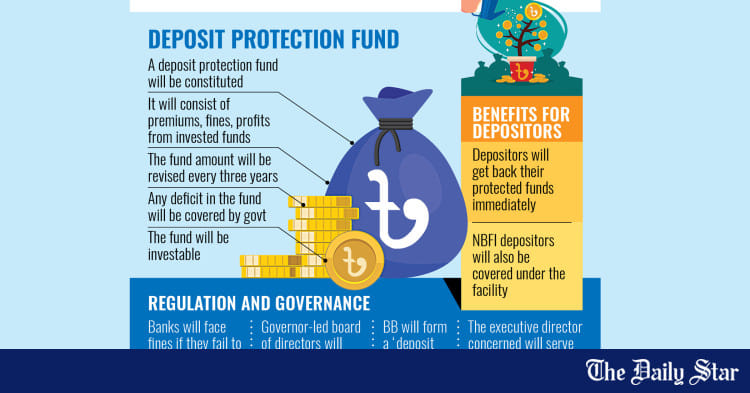
Deposit insurance coverage should be increased significantly. [The current level of Deposit Insurance covers all deposits of Tk 2 lakh or less. For private and Islamic Banks, this covers 92 per cent of the number of deposits and 6 per cent of the value.] Additionally, an independent Asset Recovery Organisation (ARO) and dedicated Tribunal should be established to expedite loan recovery.

The proposed framework ensures timely identification and restructuring of problem banks, safeguarding depositor interests while minimizing fiscal costs. The Bangladesh Bank must adopt a proactive and transparent approach to ensure the resilience of the financial sector.

STATE-OWNED BANKS: These banks are insolvent, failing to meet capital adequacy requirements, and are operating without Central Bank Forbearance on required provisions. Historically, these have been centres of corruption and channels for inappropriate Government projects. The following actions are needed: (a) Abolish the position of Secretary, Financial Institutions Division, and turn over the regulation of the State-Owned Banks to the Bangladesh Bank; (b) Stop all lending to the private sector by State-Owned Banks; (c) All loans to State Owned Enterprises should have sovereign guarantees; (d) If capital adequacy cannot be achieved in five years, then banks are merged, privatised, or closed.

CONCLUSION: Bangladesh Bank stands at a crossroads. Its legacy of competence and service must now be matched with renewed independence, enhanced governance, and institutional reform. A professional, autonomous central bank, guided by ethical leadership and empowered by robust legal and budgetary frameworks, is crucial for Bangladesh's sustained economic progress.

Dr Forrest Cookson, economist, Development in Democracy. Dr M Kabir Hasan, Professor of Finance, University of New Orleans.​
 

Part 2 Inside banking
Few banks thrived, others bled in 2024

Three broke into Tk 1,000cr profit club while nine saw record Tk 9,500cr losses

1751331216168.png


For three banks, 2024 brought cause for celebration as they crossed the milestone of Tk 1,000 crore in annual profits for the first time. But for nine others, it was a year of reckoning, marked by mounting losses and a desperate fight for survival.

This stark divide followed sweeping reforms in the banking sector that were introduced following the July uprising last year. As political influence lost its grip on the industry, governance improved, and long-buried toxic assets began to surface.

The fault lines separating strong lenders from struggling institutions became clearer, bringing the governance issue to the forefront.

Leveraging good governance and capitalising on solid customer trust last year, three banks joined the Tk 1,000 crore profit club, while nine of their market peers posted a combined loss of Tk 9,500 crore, according to an analysis by The Daily Star.

The findings are based on the latest available financial statements of 50 banks. Islami Bank Bangladesh, the country's largest shariah-based lender, was not included in the review as it has yet to publish its report.

Islami Bank made headlines during the previous regime several times over allegations of loan irregularities and corruption. Had its data been available, the divide in fortunes would likely have appeared even more dramatic.

Standard Chartered Bank led the profit-makers, posting a record-breaking Tk 3,300 crore in profits last year, the highest annual profit ever recorded by a bank in Bangladesh. This marked a 41 percent jump from its 2023 figure of Tk 2,335 crore, shows the analysis.

BRAC Bank, HSBC Bangladesh, and City Bank also crossed the Tk 1,000 crore profit threshold for the first time. BRAC Bank's earnings surged by 73 percent year-on-year, while City Bank saw a 60 percent increase.

"The real game-changer here is governance," said Asif Khan, president of CFA Society Bangladesh, a platform for investment professionals.

He said that many banks were overwhelmed by bad loans, which dented public confidence. Depositors grew more cautious and began shifting their funds to well-managed banks, even if it meant accepting lower interest rates.

"As a result, stronger banks attracted deposits at relatively low costs while earning solid returns from treasury bonds. That translated into healthy profits," Khan said.

Meanwhile, troubled banks began to falter. With closer scrutiny and stricter regulations in place, they were forced to acknowledge long-concealed non-performing loans and set aside hefty provisions. The financial hit was swift and severe, according to the investment analyst.

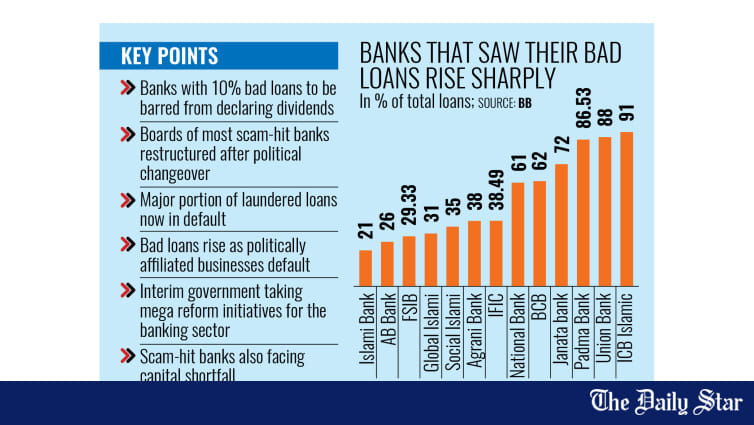
According to the analysis, bad loans of the 50 banks increased by 158 percent year-on-year, reaching Tk 348,892 crore in 2024. The worst-affected banks were those plagued by questionable lending activities during the previous regime.

Janata Bank reported the highest loss at Tk 3,066 crore, followed by AB Bank at Tk 1,968 crore and National Bank at Tk 1,707 crore. Collectively, these three banks accounted for Tk 108,738 crore โ€” nearly a third of the total bad loans across the banking sector.

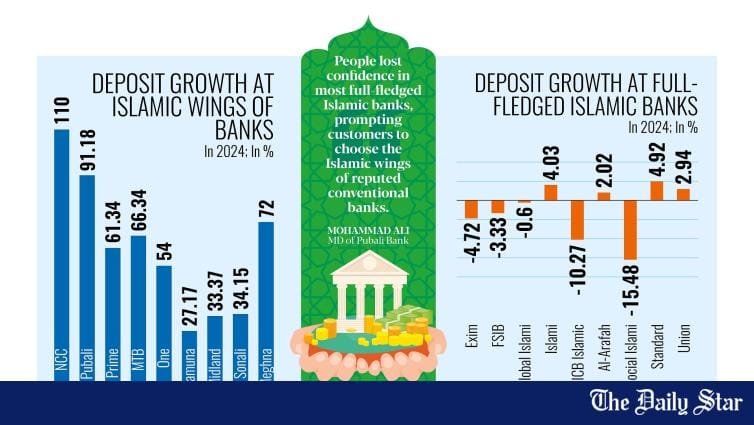
Others in the red included First Security Islami Bank, Social Islami Bank, BASIC Bank, Agrani Bank, Bangladesh Commercial Bank, and IFIC Bank. Deposits at these nine banks shrank by 3.3 percent, or roughly Tk 15,000 crore, while deposits across the sector rose by 12 percent, or Tk 136,665 crore.

"These banks were not just inefficient, they were victims of systemic theft and loan scams under the previous regime," said Khan.

He commented that many banks had earlier painted an artificially healthy picture of their books, concealing the true extent of bad loans. "Now they are acknowledging reality. As they begin provisioning properly, profits are taking a hit, but this transparency is ultimately a step in the right direction."

Md Mazibur Rahman, managing director of Janata Bank, admitted that his bank's losses came from a reclassification of assets following the political changeover.

"Many of our assets, previously shown as regular, were classified. That wiped out expected income from those and dragged down our bottom line," he said.

Janata Bank's bad loans soared by 171 percent in 2024, reaching Tk 62,805 crore.

Rahman, however, said things have begun to improve. "Our cash recovery in the last six months has already surpassed the total recovery made in 2024. We are selling off defaulters' assets, and field-level collections are also up. It will take time, but we are on the road to recovery."

ZM Babar Khan, managing director and CEO (CC) of AB Bank, said over the past few years, they have faced significant challenges due mainly to non-performing loans.

As of December 2023, the bank's classified loan ratio stood at 30 percent, including deferred loans, which the bank hoped to recover within 2024.

"But due to political instability last year, many of our large corporate borrowers were unable to meet their commitments. As a result, we fully recognised the non-performing loans in our financial statements, which led to a substantial suspension of interest income," said Khan.

Khan said they are now pursuing a comprehensive recovery plan, and the bank has mobilised deposits totalling Tk 6,400 crore over the past six months.​
 

A roadmap to restore banking sector stability

I have been writing about the danger of non-performing loans (NPLs) and the related threat to the stability of the banking sector since 2012. Some 13 years later, the problem has escalated astronomically with little signs of reversal. The problem was somewhat muted between FY2012 and FY2020, but has gotten out of hand since then. The total value of NPL surged from a low of Tk 22,700 crore in FY2012 to a peak of Tk 4,20,300 crore in FY2025. In terms of share of the total loan portfolio, gross NPLs surged from six percent in FY2011 to 24 percent in FY2025.

The underlying factors for this rapid deterioration in the quality of the banking portfolio are well-known. Poor banking sector governance such as corruption in bank management, poor lending and loan recovery practices, especially in public banks, large scale thefts often aided by political intervention, ineffective banking sector supervision, and dual banking oversight arrangement under which the public banks are managed by the government while private banks are supervised by the Bangladesh Bank (BB), are such factors.

With the induction of the interim government, it was expected that there would be a sea change in the management, regulation and supervision of the banking sector that would usher in visible positive outcomes.

Indeed, starting in mid-August of 2024, some swift actions were taken by the BB to restore the financial health of the 14 weakest-performing private banks. These included board and management changes, injection of new liquidity, and tighter supervision. To improve transparency, asset classification norms were modified to comply with Basel III norms. Banks were instructed to pursue vigorously the recovery of NPLs. A Bank Resolution Ordinance-2025, which allows BB to take swift actions against any financial institution to protect the stability of the sector, was adopted in May 2025. Several task forces were established to comprehensively address the ills. These include a task force to strengthen the independence of the Bangladesh Bank, another to develop specific resolution strategies for handling the problematic banks, and another to pursue asset recovery options at both home and abroad.

Many of the banking problems and solutions are long-term in nature. Yet, some visible signs of progress have emerged. Most prominently, the bleeding of the banks through outright theft has stopped. The liquidity situation of several problematic banks has improved, enabling them to service the deposits of their customers, thereby preventing a threat to the rundown on deposits. Lending decisions are now more professionally managed. The supervision oversight of BB has been strengthened. The progress with asset recovery, however, has been very limited.

What then explains the near doubling of NPLs between FY2024 and FY2025? BB argues that this reflects the application of internationally accepted asset classification norms. Previously, the true value of NPL was hidden through manipulation of the accounting norms, and now we have a correct picture of the problem at hand.

While there is no doubt that the true picture of NPL was hidden previously through accounting gimmicks, it is nevertheless important to do a holistic diagnosis of the NPL problem and changes over the past 10 months. The economy has been going downhill, with GDP growth sliding to four percent or less in FY2025. Businesses have been complaining regularly about cost escalation and weak profitability, especially in the manufacturing sector. It is hard to imagine that these factors had no impact on the banking portfolio, and the near doubling of NPL is all explained by a change in accounting norms.

A comprehensive resolution of the NPL problem will require two types of interventions: policies that address the flow of new NPLs, and policies that address the outstanding stock based on the adoption of Basel III loan classification norms for all banks, including public banks.

Regarding new NPL flows, first and foremost, the actions already taken by BB to stop the bleeding in the problem private banks must be extended to public banks as well. The system of dual banking supervision, where public banks are supervised by the Banking Division of the Ministry of Finance, must be stopped. All banks, public or private, must be regulated and supervised by the BB with full application of Basel-III norms.

Secondly, to the extent that the surge in NPL reflects the underlying economic downturn, swift policy actions are needed to reverse these trends. With the implementation of comprehensive reforms in fiscal policy, trade policy, investment climate, including establishing the rule of law, improvements in trade logistics and energy supply, acceleration of ITC adoption, and investment in critical skills are recommended. The government must understand that not all banking problems are necessarily due to theft and corruption. A significant part may be related to the downturn in the economy and has to be addressed accordingly.

Regarding the stock of NPL, the steps taken by BB are in the right direction, but they have to be substantially strengthened, and implementation must be stepped up. The necessary comprehensive approaches are: restoring the financial solvency of the distressed banks; ensuring the profitability of the rescued banks; closing the inherently unprofitable banks down; and strengthening built-in mechanisms for preventing future banking crises.

Restoring the financial solvency of distressed banks is relatively easy when the number of problem banks is limited, recovery prospects for outstanding loans are good, and there is adequate fiscal space. On all three counts, Bangladesh seems to be in a very difficult situation. BB will need to do a full workout of the amount of new financing required to restore the banks that are rescuable and can be put back in the market on a profitable basis. Once this amount is known, a financing strategy needs to be developed. This, arguably, will pose the biggest challenge to the banking reforms.

The financing can be a combination of additional financing from the treasury, additional funding from BB, new financing from current owners, and money raised from the capital market by new shareholders. Given the dire fiscal situation and the inflationary risk from BB financing, much of it will have to come from current and future owners. The government may also seek financial support from multilateral development financing institutions like the World Bank. Where public financing is involved, new capital must be injected only into potentially viable banks that can be restored with adequate operational reforms to earn profits from future operations. Furthermore, steps have to be taken to ensure that the treasury/BB has first claim on profits of the restructured banks to fully recover injected funds.

International experience shows that ensuring the profitability of rescued banks is easier said than done. This requires comprehensive banking reforms including sharp improvements in bank management, quality staffing and IT systems, strengthening financial accounting and auditing standards to international norms, strong internal mechanisms for loan supervision and recovery, strong internal controls and risk assessment, and sound outcome-based BB supervision.

Some banks are simply non-viable and suffer from inherent governance problems. These typically belong to the public sector. Even though the lending share of public banks has fallen to 25 percent of total loans, these banks present a huge fiscal risk.

Policy options include: privatisation of all except the Sonali Bank that will only pursue treasury functions; full corporatisation and stock market divestment with management control to private shareholders; and converting the four large public banks into narrow banks that allow deposit holding and investment in treasury bills but excludes lending, while closing down the two small banksโ€”Basic Bank and the Bangladesh Development Bank.

Some private problem banks are also candidates for closure unless owners are willing to invest new capital to restore financial solvency and readiness to face the market with full compliance with Basel-III prudential norms.

Finally, there is an urgent need to strengthen the banking crisis prevention mechanisms. The most important policy reform is the need to sharply enhance the deposit insurance scheme. The US Federal Deposit Insurance Corporation is a good example of how a strong deposit insurance scheme can prevent a large-scale banking crisis. A second built-in mechanism is to increase the share of equity by increasing the tier-1 capital requirements beyond Basel-III minimum standards to provide an incentive to bank owners against undue risks. A third reform is the strict implementation of Basel-III supervision norms for all banks with no exceptions. A fourth crisis prevention action would be to establish a system of bank-risk ratings based on independent credit agencies. This information should be publicly available.

Sadiq Ahmed is the vice-chairman of the Policy Research Institute of Bangladesh.​
 

Bangladesh Bank eases loan rules to attract foreign investors

UNB
Published :
Jul 02, 2025 23:03
Updated :
Jul 02, 2025 23:04

Bangladesh Bank has revised its foreign exchange policy to ease local borrowing for foreign-owned or foreign-controlled companies operating in the country.

In a circular issued by the Foreign Exchange Policy Department on Wednesday, the central bank announced an increase in the allowable debt-equity ratio for such companies from 50:50 to 60:40.

The move is aimed at facilitating access to Taka term loans for capacity expansion or BMRE (Balancing, Modernisation, Rehabilitation and Expansion) purposes.

The updated provision applies to foreign-owned or controlled companies engaged in manufacturing or service output activities in Bangladesh for at least three years.

Bangladesh received $2.7 billion remittances in 29 days of June

These entities are now eligible to secure term loans from the domestic market irrespective of the local content in their equity, as long as they comply with applicable credit norms and prudential regulations, including the single borrower exposure limit.

โ€œAll other instructions in this regard shall remain unchanged,โ€ said the circular, signed by Monoar Uddin Ahmed, Director of the Foreign Exchange Policy Department.

The updated policy is part of broader efforts to attract and retain foreign investment by offering more flexible financing options.​
 

Members Online

No members online now.

Latest Posts

Latest Posts