Home Watch Videos Wars

[🇧🇩] Banking System in Bangladesh

[🇧🇩] Banking System in Bangladesh
275
9K
More threads by Saif

G Bangladesh Defense

12 banks to get new managing directors
Shanaullah Sakib
Dhaka
Updated: 15 Mar 2025, 14: 43

1742084706483.webp


Some 10-12 banks in the private sector are going to get new managing directors (MDs). They will be appointed gradually in the next two years.

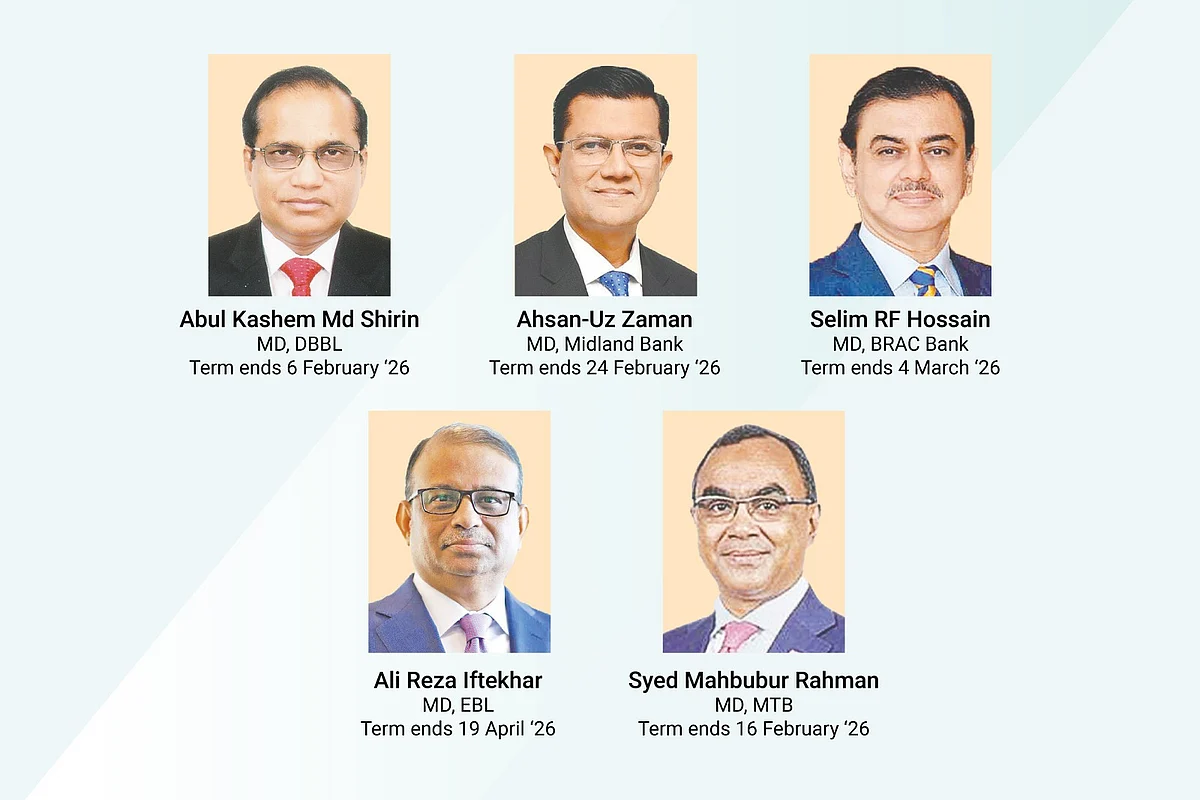
The move came in the context that several experienced MDs are going to retire soon. The list includes the MDs of BRAC Bank, Dutch-Bangla Bank, Mutual Trust Bank, Eastern Bank and Midland Bank.

At the same time, MDs of six banks, which are on verge of being dissolved due to irregularities, have been sent on enforced leaves. It is highly unlikely that they would return. They are likely to step down before completing their terms.

So, these 10-12 banks will see new faces in the top post, relevant banking sector sources say.

According to the Bangladesh Bank policy, although the age limit for bankers is 59 years, MDs can serve until 65 years maximum. The MD must have 20 years of experience as a banker and might be over 45 years of age.

The search of efficient MDs

Although the bank owners would exert influence to appoint corrupted persons in the MD posts in the past, the central bank is not allowing this to happen anymore. The Bangladesh Bank has prepared a new policy to prevent controversial bankers like PK Halder or ABM Mokammel Haque Chowdhury from taking over.

Now, a MD candidate will have to make a commitment to reach the commercial target of the bank and pass a viva at the central bank. Each of these MDs will be in charge for three years, which was five years during the term of the previous government.

Relevant persons say although many are interested in the MD post given the hefty salary, other facilities and the power associated with it, a very few of the bankers get the opportunity. Most of the incumbent private bank MDs started their careers with foreign banks. The same goes for many of the deputy managing directors (DMDs). They are also interested in the top post.

Speaking to several private bank entrepreneurs, it has been learnt the bank business is under a tough challenge due to the endless irregularities and forgery in the sector in the last 15 years. Therefore, everyone is looking for efficient persons with a good image for these posts.

However, officials with such criteria are rare in the local banks. So contacts have been made with Bangladeshi bankers at top positions in foreign banks. There has already been some progress in this regard. Singapore-based international banking and fintech consultancy agency Asia FIIT co-founder Osman Ershad Fayez has already joined the Eastern Bank as an additional MD. He also served as the MD and chief executive director at Standard Chartered Singapore. Another bank is in talks with a banker who served as the chief executive of Standard Chartered Bank’s operations in Bangladesh.

The banks to have new MDs

It has been learnt that Dutch-Bangla Bank Limited (DBBL) MD Abul Kashem Md Shirin will retire on 6 February next year. He took charge of the bank in 2016. The term of Midland Bank MD Ahsan-Uz Zaman ends on 24 February, next year. He has been serving the bank as the MD since 2014.

BRAC Bank MD Selim RF Hossain will retire on 4 March next year. He was also the MD of IDLC Finance from 2010 to 2015. He was appointed the BRAC Bank MD in October, 2015. Easter Bank Limited MD Ali Reza Iftekhar will end his term on 19 April, 2026. He has been in the post since 2007.

Mutual Trust Bank managing director Syed Mahbubur Rahman will retire on 16 February 2027. He became the MD of the bank in 2010. He also worked with the BRAC Bank and Dhaka Bank. He was the only one among the private bank MDs, who was vocal against different irregularities and corruption in the banking sector in the last 15 years.

These soon to be retired MDs have been in the leadership of Association of Bankers Bangladesh, an organisation of managing directors in the banking sector. They are also known as influential bankers. They have roles in legislation of different laws and policies of the banking sector.

Apart from that, Community Bank managing director Mashihul Haque Chowdhury has already retired. The recruitment procedure for a new MD at the bank is underway. The term of Citizens Bank MD Mohammad Masum ended last 27 February. The board of directors of the bank has decided to appoint Bank Asia deputy managing director (DMD) Alamgir Hossain as the MD. The appointment will be finalised upon approval from the central bank.

Sheikh Mohammad Maruf joined as the MD of Dhaka Bank in October last year. Before that, he served as the additional MD at City Bank. There have been discussions that several of the vacant posts of MDs are to be filled up by the additional MDs of different banks.

Meanwhile, international auditors started surveys on the six week banks under vulnerable situations due to irregularities in January. The MDs of these banks have sent on forced leaves for three months for this. The six banks are – First Security Islami Bank, Social Islami Bank, Global Islami Bank, Union Bank, Exim Bank and ICB Islami Bank.

Former executive director of Bangladesh Bank Md Humayun Kabir has already joined as the Union Bank MD. The ICB Islami Bank board of directors has proposed the name of former central bank executive director Anwarul Islam for the MD post. Meanwhile, former Shahjalal Islami Bank officials M Akhter and Abdul Aziz have joined the Exim Bank as additional MDs.

Speaking to Prothom Alo regarding this, DBBL managing director Abul Kashem Md Shirin said, “My term as the MD ends next year. Before that, I want to further strengthen the bank.”

*This report appeared on the print and online versions of Prothom Alo and has been rewritten in English by Ashish Basu​
 
Analyze

Analyze Post

Add your ideas here:
Highlight Cite Fact Check Respond

Banking reforms on the move

1742170546239.webp


The Bangladesh Bank has embarked on a series of banking reforms with quiet determination. Most recently, it has tightened regulations regarding dividend payouts by scheduled banks, exemplifying the strategy of seizing low-hanging fruit in the pursuit of structural reforms.

Concurrently, an announcement was made to establish four new departments at the BB head office to bolster its operations and enhance oversight of the financial sector.

Just a few days prior, BB reformed the exit policy for non-performing loans (NPLs), specifically targeting defaulters who were not deemed to have failed in repayment due to wilful neglect or deceptive practices to evade payment.

The new regulations introduced by the BB, combining firmness with strategic leniency, lay the groundwork for a sturdy financial system. This article focuses on the most recent reform concerning dividend payouts, an addition to BB's collection of quickly attainable yet impactful initiatives.

Observed dividend practices

Banks notorious for holding not just bad loans but also poor cash placements have distributed dividends amounting to 10 percent or more of their net paper profits after tax. These profits, termed as 'paper' due to their origins in creative accounting and lenient regulatory oversight, do not reflect real earnings.

Out of the 61 banks in Bangladesh, merely five achieved net profits exceeding Tk 1,000 crore in 2024, primarily due to a flight to safety amidst financial instability. The net interest income, typically the main revenue source for banks, paled in comparison to the returns from government securities.

Depositors shifted funds to institutions perceived as more secure, prioritising financial safety over profitability. Growth of nonperforming loans has outpaced deposit growth for longer than old, aged memories can recall.

Yet, practices in listed banks of Bangladesh show an increasing trend in dividend payments. This is puzzling with pieces that just don't fit together. In a system plagued by tight liquidity, pervasive insolvency, and shaky confidence, positive and often high (above 10 percent) dividend yields observed in reality for a large number of listed financial corporates challenge understanding the drivers of their dividend policy.

Politically influential individuals took out funds and laundered them abroad. At the end of 2024, over one-fifth of the total loans in the banking sector were sour, largely due to embezzlement by owners. Distressed assets are probably two and a half to three times the reported NPLs.

This does not prevent cash dividends. On the contrary, there is a significant and positive association between business risk and dividend payout ratio in the banking sector. Banks with higher business risks tend to pay higher dividends.

This reflects a "milking the property" strategy. Several banks appear to be prioritising dividend payments over maintaining financial stability.

Towards better prudence

These practices exacerbate the long-term damage to banks already weakened by fraud and defaults. For commercial banks, a sound dividend policy is essential for maintaining a robust capital base to absorb potential losses and comply with regulatory capital requirements. During times of economic and political instability, such as those we currently face on a daily basis, a conservative dividend policy that emphasises retaining earnings is imperative.

BB's new dividend policy could reportedly restrain 23 out of 61 banks from making dividend payouts at the risk of depositors' and minority shareholders' interests. Banks that have taken a deferral facility to maintain provisioning requirements cannot pay dividends, nor can those with NPLs exceeding 10 percent of their total loans or incurring penalty or fine due to shortfall in the cash reserve ratio and statutory liquidity ratio.

Cash dividends are restricted to the profits generated within the current calendar year; they cannot be distributed from past accumulated profits. Banks that maintain a risk-adjusted capital adequacy ratio (CAR) of at least 15 percent can issue cash and stock dividends up to 50 percent of their net profit after tax. This limit drops to 40 percent if the CAR is between 12.5 percent and 15 percent. No cash dividends can be paid if the CAR falls between 10 percent and 12.5 percent.

Such tightening is particularly warranted when the BB is pressed to provide liquidity support to distressed banks. After the political changeover last year, the BB provided money to troubled banks to prevent a bank run. It has provided around Tk 25,000 crore in liquidity support to ensure they could meet withdrawal demands.

The BB needed to make sure such withdrawals do not include cash dividends paid by liquidity and capital-constrained banks. The crisis-hit banks are yet to repay the funds to the BB. Further asset quality deterioration is on the cards with declining growth, high inflation, and continuing social unrest.

The dividend payout reform encourages banks to retain earnings. By prioritising protecting depositors from potential risks, it should help banks navigate challenging economic conditions by promoting financial prudence.

Readiness for deeper reforms

Although the new regulation might initially face backlash in the stock market, particularly from short-term-focused investors, their long-term advantages for both the economy and the market are remarkable. Enhancing banks' capital foundations will strengthen the overall health of the banking sector.

These measures align with the upcoming tighter NPL recognition criteria and the simplified provisioning framework set to be implemented this April. They also complement the Prompt Corrective Action (PCA) framework announced in December 2023 with a commitment to implement by end March 2025. The PCA outlines specific strategies for addressing banks based on the severity of their balance sheet issues.

Currently, it is hoped that banks can no longer leverage political protection to operate as freely with impunity as they did under the previous regime. Now is opportune moment for reforming the prudential framework encompassing dividend payments, NPL recognition, provisioning requirements, and disciplined exits.

Those disadvantaged by these reforms are currently at a significant political disadvantage. The call for financial stability has never been stronger, both from local stakeholders and international partners.

These reforms are especially handy as comprehensive efforts to overhaul the banking system, including the BB, are in progress, albeit still in their infancy. The impact of these changes will become more apparent once a substantial number of reforms have been sustainably implemented over time.

The writer is a former lead economist of the World Bank's Dhaka office​
 
Analyze

Analyze Post

Add your ideas here:
Highlight Cite Fact Check Respond

Reforms on the move

1742172218065.webp


The Bangladesh Bank has embarked on a series of banking reforms with quiet determination. Most recently, it has tightened regulations regarding dividend payouts by scheduled banks, exemplifying the strategy of seizing low-hanging fruit in the pursuit of structural reforms.

Concurrently, an announcement was made to establish four new departments at the BB head office to bolster its operations and enhance oversight of the financial sector.

Just a few days prior, BB reformed the exit policy for non-performing loans (NPLs), specifically targeting defaulters who were not deemed to have failed in repayment due to wilful neglect or deceptive practices to evade payment.

The new regulations introduced by the BB, combining firmness with strategic leniency, lay the groundwork for a sturdy financial system. This article focuses on the most recent reform concerning dividend payouts, an addition to BB's collection of quickly attainable yet impactful initiatives.

Observed dividend practices

Banks notorious for holding not just bad loans but also poor cash placements have distributed dividends amounting to 10 percent or more of their net paper profits after tax. These profits, termed as 'paper' due to their origins in creative accounting and lenient regulatory oversight, do not reflect real earnings.

Out of the 61 banks in Bangladesh, merely five achieved net profits exceeding Tk 1,000 crore in 2024, primarily due to a flight to safety amidst financial instability. The net interest income, typically the main revenue source for banks, paled in comparison to the returns from government securities.

Depositors shifted funds to institutions perceived as more secure, prioritising financial safety over profitability. Growth of nonperforming loans has outpaced deposit growth for longer than old, aged memories can recall.

Yet, practices in listed banks of Bangladesh show an increasing trend in dividend payments. This is puzzling with pieces that just don't fit together. In a system plagued by tight liquidity, pervasive insolvency, and shaky confidence, positive and often high (above 10 percent) dividend yields observed in reality for a large number of listed financial corporates challenge understanding the drivers of their dividend policy.

Politically influential individuals took out funds and laundered them abroad. At the end of 2024, over one-fifth of the total loans in the banking sector were sour, largely due to embezzlement by owners. Distressed assets are probably two and a half to three times the reported NPLs.

This does not prevent cash dividends. On the contrary, there is a significant and positive association between business risk and dividend payout ratio in the banking sector. Banks with higher business risks tend to pay higher dividends.

This reflects a "milking the property" strategy. Several banks appear to be prioritising dividend payments over maintaining financial stability.

Towards better prudence

These practices exacerbate the long-term damage to banks already weakened by fraud and defaults. For commercial banks, a sound dividend policy is essential for maintaining a robust capital base to absorb potential losses and comply with regulatory capital requirements. During times of economic and political instability, such as those we currently face on a daily basis, a conservative dividend policy that emphasises retaining earnings is imperative.

BB's new dividend policy could reportedly restrain 23 out of 61 banks from making dividend payouts at the risk of depositors' and minority shareholders' interests. Banks that have taken a deferral facility to maintain provisioning requirements cannot pay dividends, nor can those with NPLs exceeding 10 percent of their total loans or incurring penalty or fine due to shortfall in the cash reserve ratio and statutory liquidity ratio.

Cash dividends are restricted to the profits generated within the current calendar year; they cannot be distributed from past accumulated profits. Banks that maintain a risk-adjusted capital adequacy ratio (CAR) of at least 15 percent can issue cash and stock dividends up to 50 percent of their net profit after tax. This limit drops to 40 percent if the CAR is between 12.5 percent and 15 percent. No cash dividends can be paid if the CAR falls between 10 percent and 12.5 percent.

Such tightening is particularly warranted when the BB is pressed to provide liquidity support to distressed banks. After the political changeover last year, the BB provided money to troubled banks to prevent a bank run. It has provided around Tk 25,000 crore in liquidity support to ensure they could meet withdrawal demands.

The BB needed to make sure such withdrawals do not include cash dividends paid by liquidity and capital-constrained banks. The crisis-hit banks are yet to repay the funds to the BB. Further asset quality deterioration is on the cards with declining growth, high inflation, and continuing social unrest.

The dividend payout reform encourages banks to retain earnings. By prioritising protecting depositors from potential risks, it should help banks navigate challenging economic conditions by promoting financial prudence.

Readiness for deeper reforms

Although the new regulation might initially face backlash in the stock market, particularly from short-term-focused investors, their long-term advantages for both the economy and the market are remarkable. Enhancing banks' capital foundations will strengthen the overall health of the banking sector.

These measures align with the upcoming tighter NPL recognition criteria and the simplified provisioning framework set to be implemented this April. They also complement the Prompt Corrective Action (PCA) framework announced in December 2023 with a commitment to implement by end March 2025. The PCA outlines specific strategies for addressing banks based on the severity of their balance sheet issues.

Currently, it is hoped that banks can no longer leverage political protection to operate as freely with impunity as they did under the previous regime. Now is opportune moment for reforming the prudential framework encompassing dividend payments, NPL recognition, provisioning requirements, and disciplined exits.

Those disadvantaged by these reforms are currently at a significant political disadvantage. The call for financial stability has never been stronger, both from local stakeholders and international partners.

These reforms are especially handy as comprehensive efforts to overhaul the banking system, including the BB, are in progress, albeit still in their infancy. The impact of these changes will become more apparent once a substantial number of reforms have been sustainably implemented over time.

The writer is former lead economist of the World Bank's Dhaka office.​
 
Analyze

Analyze Post

Add your ideas here:
Highlight Cite Fact Check Respond

Restructuring banking sector
M Fazlur Rahman
Published :
Mar 17, 2025 23:03
Updated :
Mar 17, 2025 23:03

1742258588611.webp


Bangladesh's economic achievements over the past decades are at risk due to severe financial sector challenges. The banking sector is facing a crisis, with non-performing loans (NPLs) exceeding 30 per cent, capital and liquidity shortages, weak governance, and regulatory inefficiencies. Meanwhile, the capital market remains underdeveloped, lacking both investor confidence and proper oversight.

Without bold, structured reforms, these systemic weaknesses are likely to lead to financial instability, economic stagnation, rising inflation, and increased business costs. Immediate action is essential to restore banking sector resilience, rebuild capital market trust, and ensure long-term economic sustainability. A comprehensive financial sector restructuring strategy, prioritising national interests over political and vested interests, must align with global best practices.

The banking sector is facing critical challenges that threaten its stability and growth. These challenges include soaring NPLs, averaging over 35 per cent, with some banks exceeding 60 per cent, compared to the global norm of below 10 per cent; capital and liquidity shortages; weak governance and political interference; regulatory inefficiency; technological gaps; corruption and fraud; macroeconomic instability; and rising global pressure to adopt green financing and sustainable practices-all of which require a strategic shift in lending models and alignment with economic goals.

Bangladesh must adopt proven reform models from countries like the USA, India, Japan, South Korea, and Indonesia, which have successfully tackled banking crises through structured transformations.

As the country is failing to manage NPLs with existing tools, we can follow the models of countries like Japan, the USA, India, and South Korea, which have successfully tackled the problem of NPLs.

Other models could also be followed to strengthen governance and reduce political interference, enhance regulatory frameworks, foster digital transformation and cybersecurity, improve financial inclusion and literacy, manage macroeconomic risks, combat corruption and fraud, and promote green financing and ESG compliance.

Bangladesh should categorise banks by specialisation to prevent excessive diversification, such as retail banks that mainly provide consumer-focused services, corporate and SME banks for industrial financing, Islamic banks for Shariah-compliant financial models, digital and fintech banks that provide mobile financial services, and remittance and expatriate banks specifically for serving the NRB community.

The government should buy back NPLs from banks or issue low-interest bonds to absorb bad assets.

Alternatively, the government could issue long-term bonds to the general public and use the proceeds to replace NPLs on bank balance sheets. This would inject liquidity into the system while ensuring public participation in financial stability. In addition, stricter legal penalties should be imposed on willful defaulters and bank loan fraudsters.

To maintain inflation at a stable rate and ensure sustainable economic growth, stricter lending criteria should be enforced. However, lending should also be made available at lower costs to productive sectors to stimulate business growth.

By implementing these measures, Bangladesh can restructure its banking sector, eliminate NPL burdens, ensure liquidity flow, and create a more resilient financial system for steady economic growth.

Institutional reforms in the country's banking sector should include, importantly, strengthening Bangladesh Bank's autonomy, creating specialised agencies, adopting technology to prioritise digital infrastructure and cybersecurity, maintaining global standards by aligning with Basel III, FATF AML guidelines, and ESG frameworks, fostering public-private partnerships, decoupling banking decisions from political influence, and publishing NPL data while involving civil society in oversight to ensure public accountability.

The banking sector is the backbone of Bangladesh's economy, and its restructuring must be driven by national interest, financial discipline, and long-term sustainability. Without immediate reforms, investor confidence will weaken, business costs will rise, and financial instability will persist.

Bangladesh must replicate global successes by strengthening institutions, leveraging technology, and enforcing zero tolerance for corruption. By adopting global best practices and ensuring governance reforms, Bangladesh can build a resilient, liquid, and efficient banking sector, supporting SME growth, industrialisation, and foreign investment.

The time for debate is over-bold, immediate, and structured actions are necessary to secure Bangladesh's financial future.

The writer is a former Managing Director of private commercial bank.​
 
Analyze

Analyze Post

Add your ideas here:
Highlight Cite Fact Check Respond

A paradigm shift in banking
IFRS 9 and expected credit-loss provisioning
Md Touhidul Alam Khan
Published :
Mar 17, 2025 22:57
Updated :
Mar 17, 2025 22:57

1742258788674.webp

Customers depositing cash at a bank branch in Dhaka. Photo : FE/Files

The global banking sector is undergoing a significant transformation with the introduction of the International Financial Reporting Standard 9 (IFRS 9), which mandates using the Expected Credit Loss (ECL) framework for credit loss provisioning. This shift from the traditional incurred-loss model to a forward-looking ECL approach represents a fundamental change in how banks recognise and account for credit losses. For Bangladesh's banking sector, this transition, as outlined in Bangladesh Bank's BRPD Circular No. 03, dated January 23, 2025, marks a critical step toward aligning with international best practices and enhancing financial transparency. This article delves .into the key aspects of IFRS 9, the ECL framework, and its implications for the banking sector, particularly in Bangladesh.

THE EVOLUTION FROM INCURRED LOSS TO EXPECTED CREDIT LOSS: For decades, banks worldwide have relied on the incurred-loss model, which recognises credit losses only after they occur. While this approach is straightforward, it has been widely criticised for its reactive nature and inability to account for future risks. The incurred-loss model often results in delayed recognition of credit losses, which can exacerbate financial instability during economic downturns.

IFRS 9, issued by the International Accounting Standards Board (IASB) in July 2014, introduces a more proactive approach through the ECL framework. Under IFRS 9, banks are required to recognize credit losses based on expected future defaults rather than past events. This forward-looking approach considers past events, current conditions, and forecast information, ensuring that credit losses are recognized in a more timely and accurate manner. The ECL framework is designed to mitigate procyclicality and provide a more realistic assessment of credit risk, thereby enhancing the resilience of the banking sector.

THE ECL FRAMEWORK: SCOPE AND APPLICATION: Under IFRS 9, financial assets are classified based on the business model for managing them and their cash flow characteristics. Financial assets such as loans, lease receivables, loan commitments, and financial guarantee contracts are subject to the ECL framework if they meet specific criteria. For simplicity, this article focuses on the application of the ECL framework to loans.

THE ECL FRAMEWORK REQUIRES BANKS TO RECOGNIZE CREDIT LOSSES IN THREE STAGES: Stage 1: When a loan is originated or purchased, banks recognise 12-month ECLs, which represent the expected credit losses resulting from default events that are possible within the next 12 months. A loss allowance is established, and interest revenue is calculated on the loan's gross carrying amount.

Stage 2: If a loan's credit risk increases significantly since its initial recognition, banks recognise lifetime ECLs. The calculation of interest revenue remains the same as in Stage 1.

Stage 3: If a loan becomes credit-impaired, banks recognise lifetime ECLs and interest revenue is calculated based on the loan's amortised cost (gross carrying amount less the loss allowance).

TWELVE-MONTH VS. LIFETIME EXPECTED CREDIT LOSSES:

The ECL framework distinguishes between 12-month ECLs and lifetime ECLs. Twelve-month ECLs represent the portion of lifetime ECLs associated with the possibility of a loan defaulting within the next 12 months. It is not the expected cash shortfalls over the next 12 months but the effect of the entire credit loss on a loan over its lifetime, weighted by the probability that this loss will occur in the next 12 months.

Lifetime ECLs, on the other hand, represent the expected present value of losses that arise if a borrower defaults on its obligation throughout the life of the loan. These losses are calculated as a weighted average of credit losses, with the probability of default serving as the weight. Even if a bank expects to be paid in full but later than the contractual due date, a credit loss is recognized.

DISCLOSURE REQUIREMENTS: IFRS 9 mandates that banks disclose detailed information about their ECL calculations, including the basis for measuring ECLs and assessing changes in credit risk. Banks must also provide a reconciliation of the opening and closing ECL amounts and carrying values of the associated assets, categorized by asset class and type of ECL (12 months or lifetime). These disclosure requirements enhance transparency and enable stakeholders to better understand a bank's credit risk profile.

REGULATORY TREATMENT OF ACCOUNTING PROVISIONS: The timely recognition of credit losses is crucial for promoting safe and sound banking systems. The Basel Committee on Banking Supervision (BCBS) has long recognized the close relationship between capital and provisions. In October 2016, the BCBS released a consultative document and discussion paper on the regulatory treatment of accounting provisions under the Basel capital framework, in light of the shift to ECL by both the IASB and the US Financial Accounting Standards Board.

Given the diversity of accounting and supervisory policies across jurisdictions, the BCBS decided to retain the current regulatory treatment of provisions for an interim period. However, the BCBS has set out optional transitional arrangements for the impact of ECL accounting on regulatory capital and corresponding Pillar 3 disclosure requirements. These arrangements provide flexibility for individual jurisdictions as they transition to the ECL framework.

BANGLADESH'S JOURNEY TOWARD IFRS 9 IMPLEMENTATION: Bangladesh's banking sector is poised to embrace IFRS 9 and the ECL framework by 2027, as outlined in Bangladesh Bank's BRPD Circular No. 03 of this year. This transition represents a significant departure from the traditional rule-based loan classification system and underscores the central bank's commitment to enhancing risk management and financial transparency.

To facilitate a smooth transition, Bangladesh Bank has laid out a detailed roadmap with specific timelines and milestones. Key steps include the formation of IFRS 9 Implementation Teams, the development of comprehensive databases for ECL calculations, and extensive training programs for bank employees. By December 2027, the ECL-based loan classification and provisioning system is expected to be fully operational across the banking sector.

PREPARING FOR SUCCESS: Successful implementation of IFRS 9 requires significant institutional readiness. Banks must review and upgrade their internal systems, accounting standards, and IT infrastructure to meet the demands of the new framework. The IFRS 9 Implementation Team, comprising officials from Credit Risk Management, Financial Accounts, IT, and Internal Control and Compliance (ICC), will play a pivotal role in ensuring compliance and operational efficiency.

To maintain transparency and accountability, banks must submit quarterly progress reports to their Board of Directors (BODs), with summaries shared with the Banking Regulation and Policy Department (BRPD). These reports will provide a clear picture of the implementation status, highlight challenges, and outline corrective actions. Additionally, banks are encouraged to seek technical assistance from external experts to address complex implementation issues and ensure a smooth transition.

A BRIGHTER FUTURE FOR BANKING: The adoption of IFRS 9 and the ECL framework represents a transformative step for Bangladesh's banking sector. By following the structured roadmap and prioritizing capacity building, banks can ensure a seamless transition to the ECL-based provisioning system. This shift will not only strengthen the financial health of banks but also bolster investor confidence and contribute to the overall stability of the economy.

As Bangladesh's banking sector embarks on this journey, it stands poised to emerge as a more resilient, transparent, and globally competitive player in the financial landscape. The road ahead may be challenging, but the rewards-greater stability, transparency, and trust-are well worth the effort.

The introduction of IFRS 9 and the ECL framework marks a new era for the global banking sector, and Bangladesh is no exception. By adopting a forward-looking approach to credit loss provisioning, banks can better manage risks, enhance financial transparency, and build trust among stakeholders. Successful implementation of IFRS 9 will require careful planning, robust systems, and a commitment to capacity building. However, the long-term benefits of a more resilient and transparent banking sector make this transition a critical step toward a brighter financial future.

Dr. Md. Touhidul Alam Khan is an experienced banker and cost & management accountant from the Institute of Cost & Management Accountants of Bangladesh (ICMAB).​
 
Analyze

Analyze Post

Add your ideas here:
Highlight Cite Fact Check Respond

Members Online

No members online now.

Latest Posts

Back
 
G
O
 
H
O
M
E