Home Watch Videos Wars

[🇧🇩] Banking System in Bangladesh

[🇧🇩] Banking System in Bangladesh
275
9K
More threads by Saif

G Bangladesh Defense

Bangladesh Bank governor agrees to reschedule Bashundhara’s loan
bdnews24.com
Published :
Mar 07, 2025 20:50
Updated :
Mar 07, 2025 20:50

1741393876873.webp


Bangladesh Bank Governor Ahsan H Mansur has agreed to allow Bashundhara Group to restructure its loan ‘if proper procedures are followed’.

Central bank spokesperson Arif Hossain Khan said Bashundhara Group Chairman Ahmad Akbar Sobhan met the governor on Thursday, where they discussed the loan rescheduling issue.

The meeting also involved Bangladesh Bank Deputy Governors Zakir Hossain Chowdhury and Kabir Ahmed.

Sobhan was accompanied by Ahmed Jamal, the group's advisor and former deputy governor of the central bank.

“He [Sobhan] came to the governor and said they are not in default with any bank,” Bangladesh Bank spokesperson told bdnews24.com on Friday.

Sobhan informed the governor that the Criminal Investigation Department, or CID’s, report on money laundering had caused problems for them both at home and abroad.

He also pointed out that this had strained their relationships with banks.

Arif said, “The governor told him that these reports have no connection with Bangladesh Bank. If he [Sobhan] wishes to reschedule the loan, he can, but a down payment will be required.”

“He must make the down payment as per regulations. If he does, it will also benefit banks facing liquidity crises.”

The spokesperson continued, “Bangladesh Bank has already set policies for commercial banks on how they can reschedule loans.

“Therefore, no approval from the central bank is needed for Bashundhara Group to proceed with loan rescheduling.”

The governor also confirmed that Bangladesh Bank would not shut down any business, including Beximco.

He emphasised that it is the central bank’s job to encourage businesses.

“If the required down payment is 10 percent, but the client says they can only pay 5 percent, the bank will send the matter to Bangladesh Bank for approval, which may or may not be granted,” Arif said.

He added that Bangladesh Bank would review how many banks Bashundhara Group is involved with.

The central bank may hold another meeting with the business conglomerate at a later time.

The spokesperson said, "The governor told him [Sobhan] that no company accounts have been frozen so far, only individual accounts have been frozen."

An official from Bangladesh Bank said Sobhan clarified that his four sons operate separate businesses and have taken loans from different banks.

As a result, their loans do not exceed the limit for a single customer.

He continued, “Bangladesh Bank responded by saying that, according to [Registrar of Joint Stock Companies] Form-12, his name appears as the chairman of all the companies. Therefore, they will not be considered separate groups.”

“The loan must be reduced to the prescribed limit, following the proper regulations,” the official concluded.​
 
Analyze

Analyze Post

Add your ideas here:
Highlight Cite Fact Check Respond

Remittances through agent banking rises to Tk 1,73,390cr
Bangladesh Sangbad Sangstha . Dhaka 07 March, 2025, 21:53

1741396519629.webp


Disbursement amount of inward remittances through agent banking rose 21.16 per cent to Tk 1,73,390.72 crore at the end of December 2024.

At the end of December 2023, the figure was Tk 143,113.28 crore, which increased in September 2024 to Tk 165,659 crore, according to the quarterly report on agent banking published by the Bangladesh Bank (BB).

In September 2024 quarter, the amount of inward remittances collected and disbursed by agents has increased by 4.67 percent over the previous quarter.

Talking to BSS, a senior official of the central bank said this increase in inward remittances through agent banking is supposed to be a positive outcome of the government’s initiative of providing 2.5 per cent cash incentive on inward remittances.

Moreover, banks’ financial literacy campaigns focusing on the theme ‘Enhance Social Awareness to send Remittance through Legal Channel’, announced by Bangladesh Bank is expected to have a positive impact on remittance inflow, he added.

He said agents are contributing promisingly in this regard since customers are likely to get doorstep banking services within shortest possible time.

Thus, Agent Banking is becoming popular channel for inward remittance distribution, he added.

According to the report, agent banking accounts opened in rural areas have always been the major recipients of the remittance disbursed, as they received 90.12 percent of December 2024’s total.

Of the total, only around 10 percent or Tk 7,731 crore was received by those with agent banking accounts in urban areas.

The top five banks have 95.75 per cent share of the total inward remittances distributed through agent banking till December 2024. Islami Bank Bangladesh PLC ranks the top with Tk 92,300.11 crore, which is 53.23 per cent of the total inward remittances distributed through agent banking.

Dutch-Bangla Bank PLC distributed 26.92 per cent while Bank Asia PLC 7.98 per cent, Al-Arafah Islami Bank PLC 4.43 percent and Agrani Bank PLC 3.19 percent.

Abdul Quaium Chowdhury, deputy managing director of Premier Bank PLC, said that the rising trend of agent banking, especially in rural areas, indicates that there is a remarkable potential to bring the rural unbanked people under the umbrella of formal banking services.

He said the flow of remittances into the country shows upward trend as the government has taken measures to streamline the legal channel for encouraging non-resident Bangladeshis (NRBs) to send money to the country.

Bangladesh Bank introduced agent banking in Bangladesh in 2013 with a view to providing a safe alternate delivery channel of banking services. The targeted customers of this service were the under-served population who generally live in geographically remote locations that are hard to reach by the formal banking networks.

Customers can avail various banking services including deposits, loans, overseas and local remittances, payment services (such as utility bills, taxes), and receiving government social safety-net benefits through agent banking outlets.

This model is thus gaining popularity as a cost-effective and convenient delivery channel to the mass people who would otherwise have remained beyond the reach of conventional banking services.

Banks are operating their agent banking activities in line with the Prudential Guidelines for Agent Banking Operation in Bangladesh, issued by Bangladesh Bank on 18 September 2017, covering various aspects, including the agent approval process, permissible activities, responsibilities of the banks and the agents.

It also focuses on the requirements for anti-money laundering and combating financing of terrorism (AML/CFT), and customer protection and business continuity to facilitate safe and effective proliferation of agent banking in the country.​
 
Analyze

Analyze Post

Add your ideas here:
Highlight Cite Fact Check Respond

Fixing the problems of Islamic banks
Asjadul Kibria
Published :
Mar 08, 2025 22:55
Updated :
Mar 08, 2025 22:55

1741482665250.webp


Despite various criticisms, Islamic banking has been growing continuously worldwide for a long time due to its profit-risk sharing structure, inclusiveness, and real asset-backed transactional features. This growth signifies the potential of Islamic banking to transform the financial landscape. Islamic banking is defined as a banking system that is in line with the spirit, ethic, and value system of Islam and governed by the principles laid down by Islamic Shariah. That's why Islamic banking or financial services is described as 'shariah-compliant'. It avoids interest, encourages partnership, and rejects harmful investment, offering a hopeful alternative to conventional banking.

Islamic banking is thus described as the transformation of conventional money lending into transactions based on tangible assets and real services. There are some shortcomings in Islamic banking for obvious reasons. Nevertheless, today, it is an industry worth more than US$4.0 trillion spread over more than 80 countries worldwide, although highly concentrated in 10 countries with a Muslim majority, including Bangladesh.

More than four decades ago, Islamic banking activities started in Bangladesh by opening the first branch of Islami Bank Bangladesh Ltd in Dhaka. Today, there are 10 full-fledged Islamic banks in the country operating with 1,697 branches. In addition to this, 34 Islamic banking branches of 16 conventional commercial banks and 825 Islamic banking windows of 20 conventional commercial banks are also providing Islamic financial services in the country, according to Bangladesh Bank statistics.

However, Islamic banking activities in the country passed another gloomy year in 2024, mainly due to poor governance and irregularities in some major banks. The decline in the market share of the Islamic banks to the total banking industry indicates the overall weakness of the sector. At the end of December 2024, the share of Islamic banks in the country's total banking industry was 24.75 per cent in deposits, which was 25.35 per cent at the end of December 2023. In terms of investment, which is loan and advance in conventional banking terms, the ratio stood at 28.15 per cent at the end of last year against 28.92 per cent at the end of 2023.

Despite a strong public demand for Islamic financing, Islamic banking in Bangladesh has faced significant challenges in the last decade, largely due to the turmoil in the country's overall financial sector. The previous regime, led by Hasina, was accused of systematically distorting the country's financial sector, especially the banks, by allowing scams, corruption, and irregularities. This regime's actions, including undermining Islamic financing, have significantly impacted the health of the Islamic banks.

An oligarch, closely associated with the ousted Hasina regime, literally grabbed the major Islamic banks only to deteriorate the health of the banks. In the name of removing the anti-liberation force from the country's pioneer and leading Islamic bank, Islami Bank Bangladesh PLC (IBBL), to be precise, the Hasina regime backed the Chattogram-based oligarch to take over the bank, defying all rules and norms in 2017. Despite being the country's central bank, Bangladesh Bank played a shameful role in this regard by allowing the forceful transfer of ownership and management in an unprecedented manner. Foreign investors also left the bank gradually. The bank has also started to go through a series of irregularities, weakening its financial strength and eroding its reputation. As IBBL alone shares around one-third of the Islamic banking industry's total deposit and investment, any disturbance in the bank negatively affects the whole industry. Nevertheless, IBBL has developed a solid foundation for over three decades and has attained customer trust for long. That's why, despite the persistent assault on the bank since 2017, its operation could not be stopped. The oligarch also grabbed three more Islamic banks and also put those under serious trouble.

A section of economists and intellectuals, unconditionally loyal to the Hasina regime, started a virulent campaign against overall Islamic finance in general, especially before the national parliament election in 2013. They argued that there was no such thing as Islamic financing or interest-free banking and alleged that the country's Islamic banks are deceiving people. Some of them also produced research papers to show that these banks are financing religious fundamentalism in the country. They particularly targeted the IBBL, alleging that the anti-liberation force operated the bank. Some leading newspapers and media also joined the campaign without trying to understand the nature and structure of Islamic finance. In this process, Hasina-loyalist intellectuals created a hostile atmosphere for Islamic financing in the country. These intellectuals, however, raised little voice against the persistent state-backed irregularities in the country's banking sector. Even a few of them were involved in some severe irregularities like foreign exchange reserve heist, BASIC Bank scam, Hall-Mark scam in Sonali Bank, and AnonTex Group fraud in Janata Bank.

Again, some of the politicians of Bangladesh Awami League and the partisan intellectuals spread Islamophobia over the last decade and used it as a tool against the country's Islamic financing. The net result is bad governance in Islamic banks, leading to various mismanagement and corruption in the sector.

Undoubtedly, Islamic banking in Bangladesh is not free from flaws. Some bankers, businessmen, and investors also misuse Islamic financing and exploit depositors and ordinary people. This misuse underscores the urgent need for better regulation in the industry. The previous government's distorted attitude towards Islamic financing was a serious obstacle to properly controlling the sector. The absence of necessary policies to support Islamic financing has worsened the situation further. For instance, despite repeated calls for introducing Shariah-compliant instruments to manage the liquidity crisis of the Islamic banks, the central bank did not take any effective steps. Thus, the excess liquidity of the Islamic banks in terms of total liquidity in the banking sector dropped to 4.40 per cent at the end of the last year and from 15.42 per cent at the end of 2021.

As the interim government has been trying to fix the problems of the country's overall banking sector, it's crucial that Islamic banks are also included in the process. As a critical part of the country's overall financial system, the banks require adequate attention for proper functioning. The role of the Islamic banks in the financial system is significant, and their proper functioning is essential for the stability and growth of the economy.​
 
Analyze

Analyze Post

Add your ideas here:
Highlight Cite Fact Check Respond

ADB lending $500m bailout for BD banks
Dozen banks in disarray for forged lending, NPL buildups
FHM HUAMAYN KABIR
Published :
Mar 15, 2025 00:52
Updated :
Mar 15, 2025 00:52

1741999281462.webp


Bangladesh's interim government hopes to get a US$500-million bailout package from the ADB for the banking sector as some banks seemed in disarray following past forged lending and NPL buildups.

The government has already completed negotiations with the Asian Development Bank (ADB) for the policy-support loan and it is expecting the financial support at the first go next month, Economic Relations Division (ERD) officials said Friday.

"We have completed discussion with the ADB. The lender is convinced for Bangladesh's ongoing reforms in the financial and relevant sectors. Now it has decided to provide the funds for facilitating further reforms in the banking sector," a senior ERD official told the FE correspondent.

"We are expecting that the budgetary-support proposal will be cleared at the ADB board meeting in April and then a loan agreement would be signed immediately," he added.

Bangladesh's financial sector has been destroyed by the ousted Sheikh Hasina government and her associates through violating the banking regulations, looting hundreds of billions of takas and laundering billions of dollars, the officials deplored.

The banking-sector non-performing loans (NPLs) are rated to be on the highest level in the history of Bangladesh.


The ratio of NPLs had reached 20.20 per cent of the total outstanding loans in the banking sector till December last year, central bank's data showed.

Some corporates, seen as lackeys of the past Hasina government, borrowed huge money from banks but did not pay back the loans, which weakened the financial institutions and their operations.

"At least a dozen commercial banks appear in the red category for their vulnerability with their huge NPLs, deposit shortfalls and scams in operations," said the official.

Another ERD official says the proposed $500 million will be under the subprogramme-1 of the "Banking-sector reform-policy-based lending" by the ADB.

Another $500 million (Subprogramme-2) is likely to be processed after the success of this sub-programme, he added.

The Manila-based lender has already provided some reform proposals to the Bangladesh government regarding the financial sector and relevant others for getting the budgetary support, the ERD official said.

Meanwhile, on December 18 last year, the ADB confirmed $600 million worth of budget support titled 'Strengthening Economic Management and Governance Programme, Subprogramme 1' to support Bangladesh's preparation for graduation from the least-developed country (LDC) status.​
 
Analyze

Analyze Post

Add your ideas here:
Highlight Cite Fact Check Respond

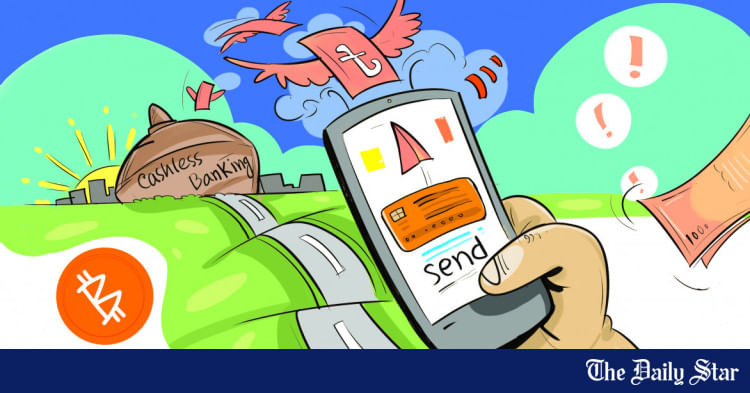
Transforming banking with digital innovation

1742083502155.webp


The banking industry is profoundly transformed by changing customer behaviour, technological advancements, and competitive pressures. Customers are increasingly demanding personalised, convenient, and transparent services. They expect seamless interactions across digital platforms and are more willing than ever to switch service providers if their needs are not met. Fintech companies, with their customer-centric digital offerings, have set new standards, pushing traditional banks to innovate.

The journey towards smart and digital banking begins with a thorough assessment of the bank's existing technology stack. It is crucial to evaluate architecture flexibility, cloud deployment models, and integration capabilities. Migrating data from legacy systems to modern core banking solutions can help streamline operations and improve efficiency. Banks must prioritise the implementation of interfaces that facilitate seamless integration with other business applications to enhance functionality and customer experience.

To compete effectively, banks need to develop a roadmap of products and services aligned with market best practices. This involves leveraging digital tools and technologies to provide personalised customer service, enabling customer self-resolution, and digitising processes to achieve faster processing times. Digital transformation is not just about technology; it's about redefining customer engagement. Banks must adopt multi-channel marketing strategies to improve customer interactions and conversion rates. Centralising and scaling client acquisition infrastructure can enhance wealth management penetration and drive incremental revenue. By utilising customer analytics and segmentation techniques, banks can gain deeper insights into customer behaviours, enabling tailored offerings that meet specific needs.

A successful digital transformation requires a modular architecture approach and customer experience transformation. Delivering a first-rate digital experience can significantly reduce IT running costs and drive incremental revenue through new product offerings. Establishing a "single customer view" can provide a data foundation for understanding customer segments, unlocking opportunities for increased sales and conversion.

Foundational technologies, such as blockchain, AI, and cloud intelligence, play a pivotal role in enabling digital banking. Banks should explore blockchain for secure, transparent transactions and AI for enhanced customer service and risk management. Cloud intelligence facilitates easier integrations, allowing banks to establish platforms for new business journeys or enhance existing ones. Integrating robust data governance, warehousing, lake house architectures, and business intelligence into a bank's digital strategy enhances growth and innovation. A comprehensive data governance framework not only ensures data integrity, compliance, and security but also fosters a culture of accountability and transparency.

As banks move towards digital platforms, cybersecurity becomes a paramount concern. Banks need to invest in state-of-the-art security technologies to protect against cyber threats and data breaches. Implementing advanced encryption protocols, multi-factor authentication, and regular security audits can fortify digital banking infrastructure. Additionally, banks should incorporate AI-driven threat detection systems to proactively identify and mitigate potential risks.

Digital transformation in banking also involves navigating complex regulatory environments. Banks must ensure compliance with evolving regulations while maintaining agility in their operations. A successful digital transformation requires a cultural shift within the organisation. Banks must foster a culture of innovation, agility, and collaboration. Encouraging cross-functional teams and leveraging digital innovation workshops can inspire creativity and drive change. By aligning on a North Star vision, banks can guide future decisions and inspire excitement for the possibilities that digital channels and AI can bring.

The path to becoming a true digital bank is multifaceted, involving strategic planning, technological innovation, and cultural transformation. By embracing digital tools, optimising operations, and prioritising customer experience, banks can position themselves as leaders in the financial services industry. As the digital landscape continues to evolve, banks must remain agile, continuously adapting their strategies to meet the ever-changing needs of their customers. Through a comprehensive digital transformation, banks can secure their future and thrive in the digital age.

The writer is the chairman at Financial Excellence Ltd​
 
Analyze

Analyze Post

Add your ideas here:
Highlight Cite Fact Check Respond

Posts you haven't read yet..

Members Online

No members online now.

Latest Posts

Back
 
G
O
 
H
O
M
E